Terpenoidi
I terpenoidi, noti anche come isoprenoidi, sono la più grande classe di composti organici naturali, derivati da unità di isoprene a cinque atomi di carbonio. Si trovano in una varietà di piante e sono noti per le loro proprietà aromatiche, oltre al loro ruolo nella difesa e nella segnalazione delle piante. I terpenoidi sono stati ampiamente studiati per i loro effetti terapeutici, tra cui proprietà antinfiammatorie, antimicrobiche e antitumorali. Sono utilizzati nelle industrie farmaceutiche, cosmetiche e alimentari per i loro benefici per la salute e le qualità aromatiche. Da CymitQuimica troverete un'ampia selezione di terpenoidi, essenziali per la ricerca in biologia vegetale, farmacologia e sintesi di prodotti naturali.
Sottocategorie di "Terpenoidi"
- Diterpeni (C₂₀)(671 prodotti)
- Emiterpeni (C₅)(21 prodotti)
- Monoterpeni (C₁₀)(709 prodotti)
- Sesquiterpeni (C₂₅)(452 prodotti)
- Tetraterpeni (C₄₀)(63 prodotti)
- Triterpeni (C₃₀)(1.130 prodotti)
Trovati 1423 prodotti di "Terpenoidi"
Ordinare per
Purezza (%)
0
100
|
0
|
50
|
90
|
95
|
100
(1S)-(-)-(-)-Verbenone
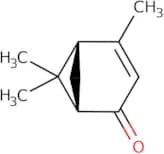
CAS:<p>(1S)-(-)-(-)-Verbenone is a bicyclic monoterpene, which is a type of terpenoid compound. It is naturally sourced from various plants, predominantly from the essential oils of pines and other coniferous trees. The mode of action of Verbenone is intriguing; it acts as an anti-aggregation pheromone in certain beetle species, disrupting their communication and reducing infestation levels. This mechanism is particularly effective against bark beetles, which are known to cause significant damage to forestry ecosystems.</p>Formula:C10H14OPurezza:Min. 98 Area-%Colore e forma:Clear LiquidPeso molecolare:150.22 g/molCucurbitacin I
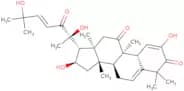
CAS:Prodotto controllatoInhibitor of STAT3/JAK2 signaling; radiosensitizerFormula:C30H42O7Purezza:Min. 98 Area-%Colore e forma:White PowderPeso molecolare:514.65 g/molCynaropicrin - Cynara cardunculus (artichoke)
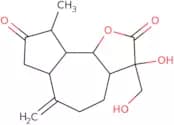
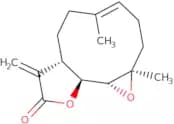
CAS:Cynaropicrin is a sesquiterpene lactone, which is a bioactive compound derived from Cynara cardunculus, commonly known as the artichoke. The source of this compound is primarily the leaves and flowering parts of the plant, which have been traditionally used in herbal medicine. Cynaropicrin exhibits its biological activity through the inhibition of various inflammatory pathways, particularly by modulating the NF-κB signaling pathway, which is crucial in the regulation of immune response and inflammation.Formula:C19H22O6Purezza:Min. 95%Colore e forma:PowderPeso molecolare:346.37 g/molKaurenoic acid
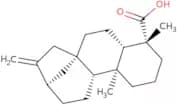
CAS:<p>Selective antibacterial and anti-inflammtory activity; uterine relaxant</p>Formula:C20H30O2Purezza:Min. 98 Area-%Colore e forma:White PowderPeso molecolare:302.45 g/molSteviolbioside
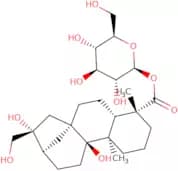
CAS:<p>Steviolbioside is a high-intensity sweetening compound, classified as a steviol glycoside. It is derived from the plant Stevia rebaudiana, a member of the Asteraceae family, which is native to South America. The mode of action of Steviolbioside involves interacting with sweet taste receptors on the human tongue, specifically the TAS1R2 and TAS1R3 receptor heterodimer, mimicking the sweetness perceived from traditional sugars but without eliciting a caloric response.</p>Formula:C32H50O13Purezza:Min. 95%Colore e forma:PowderPeso molecolare:642.73 g/molGibberellic acid
CAS:<p>Gibberellic acid is a plant growth regulator, which is derived from fungal species, particularly Gibberella fujikuroi. It functions by stimulating and regulating various growth and developmental processes within plants. Gibberellic acid works through promoting cell elongation, breaking seed dormancy, and influencing enzyme production that leads to plant growth and development.Gibberellic acid is extensively utilized in agricultural and horticultural applications to enhance plant growth, improve fruit size, and increase yields. It is also employed in seed treatment to facilitate more uniform and quicker germination. Additionally, gibberellic acid is used to regulate flowering and to promote the development of certain plant species under controlled environmental conditions. This compound plays a critical role in research, providing insights into plant physiology and the hormonal interactions that govern plant development.</p>Formula:C19H22O6Peso molecolare:346.38 g/mol11,13-Dihydroxy-3-oxo-10(14)guaien-12,6-olide - Cynara cardunculus (artichoke)
CAS:11,13-Dihydroxy-3-oxo-10(14)guaien-12,6-olide is a bioactive compound, which is a phytochemical derived from Cynara cardunculus, commonly known as the artichoke. This compound belongs to a class of organic compounds known as sesquiterpene lactones. It is primarily sourced from the leaves and flower buds of the artichoke plant, which are rich in various polyphenolic and terpenoid components.Formula:C15H20O5Purezza:Min. 95%Colore e forma:PowderPeso molecolare:280.32 g/molParthenolide
CAS:<p>Parthenolide is a sesquiterpene lactone, which is a bioactive compound derived from the plant species Tanacetum parthenium, commonly known as feverfew. This compound is primarily isolated from the aerial parts of the plant, where it is found in highest concentrations within the flowers and leaves. Parthenolide exerts its effects through several biochemical pathways, including the inhibition of nuclear factor-kappa B (NF-κB) signaling, which plays a critical role in inflammatory and immune responses. Additionally, it disrupts the activity of certain kinases and modulates the expression of genes involved in cell cycle regulation and apoptosis.</p>Formula:C15H20O3Purezza:Min. 98 Area-%Colore e forma:White Off-White PowderPeso molecolare:248.32 g/molGinsenoside Rh3
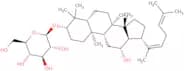
CAS:<p>Ginsenoside Rh3 is a bioactive saponin compound, which is a principle component isolated from Panax ginseng, a perennial plant widely known for its medicinal properties. This compound represents a specific form of ginsenoside with distinct pharmacological characteristics derived through the deglycosylation process of other ginsenosides during processing or digestion.</p>Formula:C36H60O7Purezza:Min. 95%Colore e forma:White Off-White PowderPeso molecolare:604.86 g/molSaikosaponin D
CAS:<p>Saikosaponin D is a bioactive compound, specifically a triterpenoid saponin, which is derived from the roots of Bupleurum species, plants commonly used in traditional Chinese medicine. Its mode of action involves modulating key pathways in inflammation and apoptosis. This compound targets cellular mechanisms by interacting with inflammatory mediators and apoptotic proteins, thereby influencing immune responses and cellular survival.</p>Formula:C42H68O13Purezza:Min. 98 Area-%Colore e forma:White PowderPeso molecolare:780.98 g/molCofaryloside
CAS:Please enquire for more information about Cofaryloside including the price, delivery time and more detailed product information at the technical inquiry form on this pageFormula:C26H42O10Purezza:Min. 95%Peso molecolare:514.61 g/molGinsenoside Rd
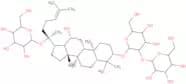
CAS:<p>Ginsenoside Rd is a bioactive compound, classified as a saponin, which is derived from the roots of Panax ginseng. This ginsenoside is a dammarane-type triterpenoid saponin and is one of the major active components found in ginseng extracts. The mode of action of Ginsenoside Rd involves multiple biochemical pathways, including anti-inflammatory, antioxidant, and neuroprotective effects. It modulates signaling pathways such as MAPK and PI3K/Akt, resulting in diverse biological activities.</p>Formula:C48H82O18Purezza:Min. 95%Colore e forma:White PowderPeso molecolare:947.18 g/mol10-epi-Elemol
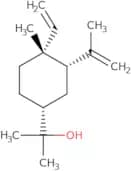
CAS:<p>10-epi-Elemol is a sesquiterpene alcohol, which is derived from natural plant sources, primarily obtained through the essential oils of particular species. Its molecular structure includes a complex arrangement of carbon rings and an alcohol group, characterizing it as a prominent component among sesquiterpenes.</p>Formula:C15H26OPurezza:Min. 95%Peso molecolare:222.37 g/molCurcumol
CAS:<p>Curcumol is a bioactive compound, which is a sesquiterpenoid alcohol primarily extracted from the rhizome of the plant Curcuma wenyujin, a member of the Zingiberaceae family. The source plant is native to parts of Asia and has been traditionally used in herbal medicine. The mode of action of Curcumol involves modulation of multiple biochemical pathways, including anti-inflammatory and antioxidant pathways. It has been observed to influence cellular signaling cascades that regulate apoptosis, cell proliferation, and angiogenesis, making it a compound of interest in oncology research.</p>Formula:C15H24O2Purezza:Min. 95%Colore e forma:PowderPeso molecolare:236.35 g/molDeoxygedunin
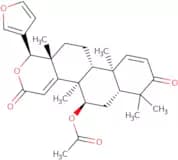
CAS:<p>Deoxygedunin is a natural limonoid, which is a type of chemical compound often derived from plant sources, particularly in the Meliaceae family. This compound is primarily isolated from the seeds of the Indian neem tree (Azadirachta indica) and the African mahogany tree (Khaya senegalensis). It exhibits its biological effects through activation of the Nrf2 pathway, an essential cellular defense mechanism against oxidative stress. By promoting the expression of antioxidant proteins, deoxygedunin enhances cellular resilience to oxidative damage.</p>Formula:C28H34O6Purezza:Min. 95%Peso molecolare:466.57 g/molMonotropein
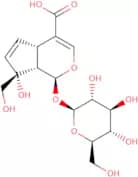
CAS:<p>Monotropein is a bioactive compound, which is an iridoid glycoside derived from natural sources such as plants in the Gentianaceae and Rubiaceae families. Its mode of action primarily involves anti-inflammatory and antioxidant pathways, exerting effects through modulation of specific molecular targets like NF-kB and various oxidative stress-related enzymes. These actions contribute to its efficacy in reducing inflammation and protecting against cellular oxidative damage.</p>Formula:C16H22O11Purezza:Min. 95 Area-%Colore e forma:PowderPeso molecolare:390.34 g/molGinkgolide B
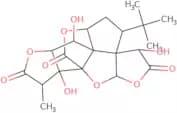
CAS:<p>Ginkgolide B is a diterpenoid lactone, which is a secondary metabolite isolated from the leaves of the Ginkgo biloba tree. This compound is primarily sourced from the extract of Ginkgo biloba, a plant that has been utilized for centuries in traditional medicine systems.</p>Formula:C20H24O10Purezza:Min. 90 Area-%Colore e forma:White PowderPeso molecolare:424.4 g/molDehydrocostus lactone
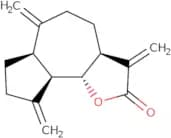
CAS:Dehydrocostus lactone is a sesquiterpene lactone, which is a natural compound extracted from plants, notably from the roots of Saussurea lappa, a plant known for its therapeutic properties. This compound exerts its mode of action primarily through the inhibition of key inflammatory pathways, including the NF-κB pathway. By interfering with these pathways, dehydrocostus lactone can modulate the expression of pro-inflammatory cytokines, thereby exhibiting anti-inflammatory effects.Formula:C15H18O2Purezza:Min. 95%Peso molecolare:230.3 g/molSoyasaponin Bb
CAS:Soyasaponin Bb is a naturally occurring saponin, which is a type of glycoside, derived from soybeans (Glycine max). It is primarily sourced from the seeds and roots of the soybean plant. The mode of action of soyasaponin Bb involves its ability to interact with lipid membranes, affecting cellular pathways and exerting antioxidant and anti-inflammatory effects. Additionally, it has been shown to modulate cholesterol metabolism and exhibit potential anticancer activities through apoptosis induction and inhibition of tumor cell proliferation.Formula:C48H78O18Purezza:Min. 94.0 Area-%Peso molecolare:943.12 g/molRef: 3D-Q-100575
1gPrezzo su richiesta50mgPrezzo su richiesta100mgPrezzo su richiesta250mgPrezzo su richiesta500mgPrezzo su richiesta-Unit-mgmgPrezzo su richiestaGinsenoside Re
CAS:<p>Ginsenoside Re is a naturally occurring saponin, which is a bioactive compound sourced primarily from the root of Panax ginseng. It operates through multiple biochemical pathways, including the modulation of immune responses, anti-inflammatory effects, and protective antioxidant activities. Ginsenoside Re exerts its actions by interacting with cellular receptors, influencing signaling pathways such as the PI3K/Akt and MAPK pathways, ultimately impacting gene expression and cellular responses.</p>Formula:C48H82O18Purezza:Min. 98 Area-%Colore e forma:White PowderPeso molecolare:947.18 g/mol