Terpenoidi
I terpenoidi, noti anche come isoprenoidi, sono la più grande classe di composti organici naturali, derivati da unità di isoprene a cinque atomi di carbonio. Si trovano in una varietà di piante e sono noti per le loro proprietà aromatiche, oltre al loro ruolo nella difesa e nella segnalazione delle piante. I terpenoidi sono stati ampiamente studiati per i loro effetti terapeutici, tra cui proprietà antinfiammatorie, antimicrobiche e antitumorali. Sono utilizzati nelle industrie farmaceutiche, cosmetiche e alimentari per i loro benefici per la salute e le qualità aromatiche. Da CymitQuimica troverete un'ampia selezione di terpenoidi, essenziali per la ricerca in biologia vegetale, farmacologia e sintesi di prodotti naturali.
Sottocategorie di "Terpenoidi"
- Diterpeni (C₂₀)(671 prodotti)
- Emiterpeni (C₅)(21 prodotti)
- Monoterpeni (C₁₀)(709 prodotti)
- Sesquiterpeni (C₂₅)(452 prodotti)
- Tetraterpeni (C₄₀)(63 prodotti)
- Triterpeni (C₃₀)(1.130 prodotti)
Trovati 1423 prodotti di "Terpenoidi"
Ordinare per
Purezza (%)
0
100
|
0
|
50
|
90
|
95
|
100
Momordin 1c
CAS:<p>Momordin 1c is a triterpenoid saponin, a type of secondary metabolite, extracted primarily from species of the plant genus *Momordica*, such as *Momordica charantia*—commonly known as bitter melon. This compound is characterized by its unique structure, which contributes to its biological activities.</p>Formula:C41H64O13Purezza:Min. 95%Colore e forma:PowderPeso molecolare:764.94 g/molPseudolaric acid B
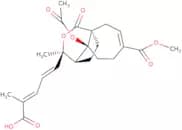
CAS:<p>Pseudolaric acid B is a diterpenoid acid, which is isolated from the roots and bark of the Pseudolarix amabilis, a tree native to China. This compound exhibits a complex mode of action, primarily disrupting microtubule dynamics, which interferes with cell division. Pseudolaric acid B targets the polymerization of tubulin, thereby inhibiting mitotic spindle formation and leading to cell cycle arrest. Its bioactivity has been extensively studied for its potential applications in both anti-fungal and anti-cancer therapies. In the context of cancer research, pseudolaric acid B is of particular interest due to its ability to selectively induce apoptosis in tumor cells. As an anti-fungal agent, it has been shown to possess efficacy against various pathogenic fungi, offering potential utility in agricultural contexts as well. The multi-faceted mechanisms of action and broad application possibilities make Pseudolaric acid B a subject of ongoing research in pharmacology and biotechnology.</p>Formula:C23H28O8Purezza:Min. 98 Area-%Colore e forma:White PowderPeso molecolare:432.46 g/molCiwujianoside E
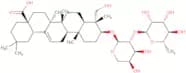
CAS:<p>Ciwujianoside E is a natural compound, which is a saponin derived from the roots of *Eleutherococcus senticosus*, commonly known as Siberian ginseng. This plant is native to regions in Northeast Asia, and it belongs to the Araliaceae family. Ciwujianoside E is one of several bioactive constituents found in the root extracts, which are traditionally used in herbal medicine.</p>Formula:C40H62O11Purezza:Min. 95%Colore e forma:Beige PowderPeso molecolare:718.91 g/molDihydroartemisinic acid
CAS:<p>Artemisinin precursor</p>Formula:C15H24O2Purezza:Min. 95%Colore e forma:PowderPeso molecolare:236.35 g/molGinsenoside Rg1
CAS:Ginsenoside Rg1 is a bioactive compound, which is primarily derived from the roots of Panax ginseng, a traditional medicinal herb. It belongs to the family of ginsenosides, which are glycosylated triterpenoid saponins known for their diverse pharmacological activities. The mechanism of action of Ginsenoside Rg1 involves modulation of various cellular signaling pathways, including the regulation of reactive oxygen species, apoptosis, and inflammation. It also exhibits neuroprotective effects by promoting neuronal growth and differentiation.Formula:C42H72O14Purezza:Min. 95%Colore e forma:White PowderPeso molecolare:801.03 g/molBayogenin
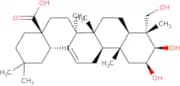
CAS:Prodotto controllatoBayogenin is a steroidal sapogenin, which is a bioactive compound originating from plant sources such as certain species of the Dioscorea genus (wild yams). It is primarily extracted through processes that involve saponin hydrolysis to yield the sapogenin itself. Bayogenin, like other sapogenins, serves as a precursor in the synthesis of steroidal compounds. Its mode of action involves serving as a substrate in organic synthesis, where it facilitates the production of various steroidal drugs and hormones.Formula:C30H48O5Purezza:Min. 98 Area-%Colore e forma:PowderPeso molecolare:488.7 g/molNimbolide
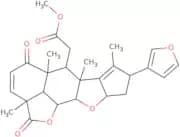
CAS:A triterpenoid with anti-cancer propertiesFormula:C27H30O7Purezza:Min. 96 Area-%Colore e forma:Yellow PowderPeso molecolare:466.52 g/molMomilactone A
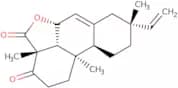
CAS:Prodotto controllato<p>Secondary plant metabolite with antimicrobial properties produced in response to plant infection and exposure to UV light. This diterpenoid phytoalexin is found only in rice (Oryza sativa) and moss (Hypnum plumaeforme).</p>Formula:C20H26O3Purezza:Min. 95 Area-%Peso molecolare:314.42 g/molGinkgolide M
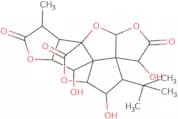
CAS:<p>Ginkgolide M is a diterpenoid trilactone, which is a natural compound derived from the leaves of the Ginkgo biloba tree. Ginkgo biloba is an ancient plant species known for its resilient nature and traditional medicinal use. The mode of action of Ginkgolide M involves antagonism of platelet-activating factor (PAF) receptors. By this mechanism, it influences various biological processes such as platelet aggregation and inflammation, which are critical pathways in numerous physiological and pathological states.</p>Formula:C20H24O10Purezza:Min. 95%Peso molecolare:424.4 g/mol(+/-)-Geosmin
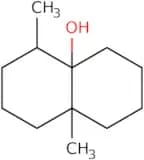
CAS:<p>Geosmin is an "earth" smelling aromatic compound that is produced by soil bacteria. Together with other substances, geosmin is a key constituent of petrichor, the pleasant scent released into the air following rainfall, after impact of water droplets with soil.</p>Formula:C12H22OPurezza:Min. 95%Colore e forma:Clear LiquidPeso molecolare:182.3 g/molAsiaticoside A
CAS:Pentacyclic triterpene; anti-inflammatory, anti-oxidant & anti-ageingFormula:C48H78O20Purezza:Min. 95%Colore e forma:White PowderPeso molecolare:975.12 g/molDigoxin
CAS:<p>Digoxin and its derivatives are the most widely used as cardiac glycosides. Digoxin is isolated from the foxglove plant, Digitalis lanata, and has pharmacokinetic properties that are intermediate between digitoxin and the short acting strophanthus glycosides. Digoxin is regarded as the drug of choice for the treatment of congestive heart failure as its main assets are the rapid onset of action, good absorption ratio and the medium half-life which makes toxic reactions easier to manage (Albrecht, 1999).</p>Formula:C41H64O14Purezza:Min. 95%Colore e forma:PowderPeso molecolare:780.94 g/molα-Hederin
CAS:Antispasmodic, moliscicidic, anthelmithic and inhibitor of cell proliferationFormula:C41H66O12Purezza:Min. 98 Area-%Colore e forma:White PowderPeso molecolare:750.96 g/molMedicagenic acid 3-O-glucoside
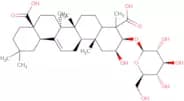
CAS:<p>Medicagenic acid 3-O-glucoside is a bioactive phytochemical compound, which is a type of saponin glucoside. It is derived from the genus Medicago, particularly from species such as alfalfa, known for their medicinal and nutritional properties. The mode of action of Medicagenic acid 3-O-glucoside involves interactions with cellular membranes, where it can influence permeability and modulate immune responses. These interactions are attributed to its surfactant properties that enable the saponin to disrupt lipid bilayers and influence signal transduction pathways that mediate inflammatory and immune processes.</p>Formula:C36H56O11Purezza:Min. 95%Colore e forma:PowderPeso molecolare:664.82 g/molCimigenoside
CAS:Cimigenoside is a naturally occurring triterpene saponin, which is a phytochemical compound extracted primarily from the roots of the Cimicifuga species, such as Cimicifuga racemosa, commonly known as black cohosh. The source of this compound is rooted in traditional medicinal practices, where these plants have been used for their therapeutic benefits.Formula:C35H56O9Purezza:Min. 95%Colore e forma:Off-White PowderPeso molecolare:620.81 g/molCycloastragenol
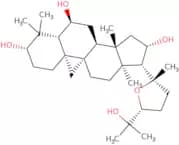
CAS:<p>Triterpenoid saponin with many suggested pharmacological properties</p>Formula:C30H50O5Purezza:Min. 98 Area-%Colore e forma:White PowderPeso molecolare:490.72 g/molLasiokaurin
CAS:Lasiokaurin is a sesquiterpene lactone, which is a type of terpenoid compound primarily found in certain plant species. It is derived from the plants of the Asteraceae family, where it is biosynthesized as part of the plant's secondary metabolites. This compound is characterized by its complex structure, which includes a lactone ring, contributing to its biological activity.Formula:C22H30O7Purezza:Min. 95%Colore e forma:Yellow PowderPeso molecolare:406.47 g/molS-Petasin - Petasites japonicus (sweet coltsfoot)
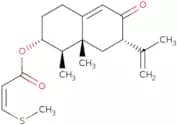
CAS:<p>S-Petasin is a standard botanical extract derived from Petasites japonicus, commonly known as sweet coltsfoot. This product is characterized by its anti-inflammatory properties, primarily sourced from bioactive sesquiterpenes naturally occurring in the plant. The mode of action of S-Petasin involves the inhibition of leukotriene synthesis and the modulation of inflammatory pathways, which can reduce allergic reactions and inflammatory processes.</p>Formula:C19H26O3SPurezza:Min. 95%Colore e forma:PowderPeso molecolare:334.47 g/molParthenolide
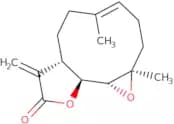
CAS:<p>Parthenolide is a sesquiterpene lactone, which is a bioactive compound derived from the plant species Tanacetum parthenium, commonly known as feverfew. This compound is primarily isolated from the aerial parts of the plant, where it is found in highest concentrations within the flowers and leaves. Parthenolide exerts its effects through several biochemical pathways, including the inhibition of nuclear factor-kappa B (NF-κB) signaling, which plays a critical role in inflammatory and immune responses. Additionally, it disrupts the activity of certain kinases and modulates the expression of genes involved in cell cycle regulation and apoptosis.</p>Formula:C15H20O3Purezza:Min. 98 Area-%Colore e forma:White Off-White PowderPeso molecolare:248.32 g/molGinsenoside Rh3
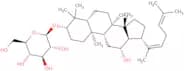
CAS:<p>Ginsenoside Rh3 is a bioactive saponin compound, which is a principle component isolated from Panax ginseng, a perennial plant widely known for its medicinal properties. This compound represents a specific form of ginsenoside with distinct pharmacological characteristics derived through the deglycosylation process of other ginsenosides during processing or digestion.</p>Formula:C36H60O7Purezza:Min. 95%Colore e forma:White Off-White PowderPeso molecolare:604.86 g/mol