Lignani
I lignani sono una classe di composti fenolici presenti nelle piante, in particolare nei semi, nei cereali integrali e nelle verdure. Sono noti per le loro proprietà antiossidanti ed estrogeniche, che li rendono oggetto di ricerca nella prevenzione del cancro e nella salute cardiovascolare. I lignani sono anche coinvolti nei meccanismi di difesa delle piante e hanno potenziali applicazioni terapeutiche nelle malattie ormono-correlate e nello stress ossidativo.
Trovati 296 prodotti di "Lignani"
Ordinare per
Purezza (%)
0
100
|
0
|
50
|
90
|
95
|
100
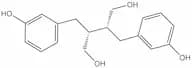
Enterodiol
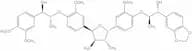
CAS:PolyphenolFormula:C18H22O4Purezza:≥ 95.0 % (HPLC)Colore e forma:PowderPeso molecolare:302.37Manassantin b
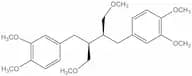
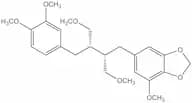
CAS:Compound with non-condensed furan ringFormula:C41H48O11Purezza:≥ 98.0 % (HPLC)Colore e forma:PowderPeso molecolare:716.83Phyllanthin
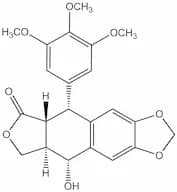
CAS:Ether phenolFormula:C24H34O6Purezza:≥ 95.0 % (HPLC)Colore e forma:CrystalsPeso molecolare:418.53Podophyllotoxin
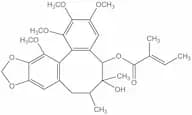
CAS:LactoneFormula:C22H22O8Purezza:≥ 95.0 % (HPLC)Colore e forma:PowderPeso molecolare:414.41Schisantherin b
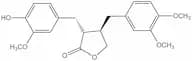
CAS:Carboxylic acid with additional oxygen functionsFormula:C28H34O9Purezza:≥ 95.0 % (HPLC)Colore e forma:PowderPeso molecolare:514.57Arctigenin
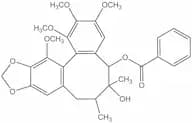
CAS:LactoneFormula:C21H24O6Purezza:≥ 98.0 % (HPLC)Colore e forma:PowderPeso molecolare:372.42Schisantherin a
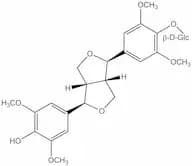
CAS:Carboxylic acid with additional oxygen functionsFormula:C30H32O9Purezza:≥ 95.0 % (HPLC)Colore e forma:PowderPeso molecolare:536.58(-)-syringaresinol 4-o-β-d-glucoside
CAS:Natural glycosideFormula:C28H36O13Purezza:≥ 98.0 % (HPLC)Colore e forma:PowderPeso molecolare:580.58Niranthin
CAS:<p>Oxygen-heterocyclic compound</p>Formula:C24H32O7Purezza:≥ 95.0 % (HPLC)Colore e forma:PowderPeso molecolare:432.51Honokiol
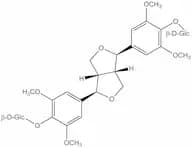
CAS:PolyphenolFormula:C18H18O2Purezza:≥ 95.0 % (HPLC)Colore e forma:PowderPeso molecolare:266.34(-)-syringaresinol 4,4'-di-o-β-d-glucoside
CAS:Natural glycosideFormula:C34H46O18Purezza:≥ 95.0 % (HPLC)Colore e forma:PowderPeso molecolare:742.72Fargesin
CAS:<p>Fargesin is a naturally occurring compound that is a bioactive constituent of Magnolia flowers. It is derived from the dried buds of Magnolia fargesii, a plant traditionally used in herbal medicine. The compound exhibits a mode of action that involves anti-inflammatory and anti-allergic properties. It operates through the inhibition of the release of pro-inflammatory mediators, thereby reducing inflammation and allergic responses.</p>Formula:C21H22O6Purezza:Min. 95%Colore e forma:PowderPeso molecolare:370.4 g/molHonokiol - 98%
CAS:<p>Honokiol - 98% is a high-purity bioactive compound derived from the bark of Magnolia species. This natural lignan is obtained through advanced extraction and purification techniques to achieve a concentration of 98%, ensuring its efficacy for research and potential therapeutic applications.</p>Formula:C18H18O2Purezza:Min. 95%Colore e forma:PowderPeso molecolare:266.33 g/molStyraxlignolide F
CAS:<p>Styraxlignolide F is a bioactive compound, which is a sesquiterpene lactone derived from plants of the Styrax genus. These compounds are naturally occurring metabolites known for their structural complexity and diverse biological activities. Styraxlignolide F, in particular, has shown promising potential in the realm of pharmacology.</p>Formula:C27H34O11Purezza:Min. 95%Colore e forma:PowderPeso molecolare:534.55 g/molMagnolol
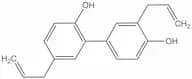
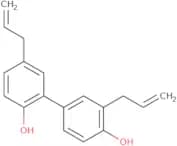
CAS:<p>Magnolol is a bioactive compound, which is a type of lignan extracted from the bark of the magnolia tree, primarily Magnolia officinalis. It exhibits a diverse range of pharmacological activities, primarily attributed to its anti-inflammatory and antioxidant properties. Through the modulation of various signaling pathways, including the NF-κB pathway, magnolol effectively inhibits the activation of inflammatory mediators and scavenges free radicals.</p>Formula:C18H18O2Purezza:Min. 95%Colore e forma:PowderPeso molecolare:266.33 g/mol(+)-Syringaresinol, 98%
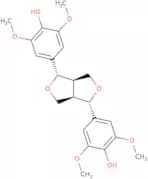
CAS:<p>(+)-Syringaresinol, 98% is a lignan compound, which is a type of phenolic compound found in a variety of plant sources. It is primarily derived from the wood and bark of specific plant species, most notably those within the Syringa genus. The mode of action of (+)-Syringaresinol involves its function as an antioxidant, where it can scavenge free radicals and inhibit oxidative stress within biological systems.</p>Formula:C22H26O8Purezza:Min. 95%Colore e forma:White PowderPeso molecolare:418.44 g/molSalvadoraside
CAS:<p>Salvadoraside is a glycosylated natural compound, which is derived from the plant Salvadora persica, commonly known as the toothbrush tree. This compound is primarily extracted from the stems and roots of the plant. Its mode of action involves a variety of biochemical pathways, including potential antioxidative, antimicrobial, and anti-inflammatory activities. Salvadoraside interacts with cellular pathways by modulating the expression of specific enzymes and receptors, offering promising avenues in medicinal chemistry.</p>Formula:C34H48O18Purezza:Min. 95 Area-%Colore e forma:PowderPeso molecolare:744.73 g/mol(-)-Asarinin
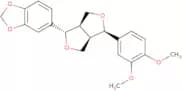
CAS:<p>(-)-Asarinin is a naturally occurring lignan, which is an organic compound extracted primarily from the bark and roots of plants in the family Lauraceae, notably Asarum species. This compound is widespread in several traditional medicinal plants used in East Asia.</p>Formula:C20H18O6Purezza:Min. 95%Colore e forma:PowderPeso molecolare:354.35 g/molPinoresinol dimethyl ether
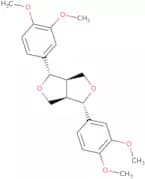
CAS:Pinoresinol dimethyl ether is a lignan compound, which is a type of polyphenolic substance. It is naturally sourced from various plant materials, prominently found in seeds, bark, and roots of certain plant species. The compound exhibits significant antioxidant activity, which is attributed to its ability to scavenge free radicals and protect cells from oxidative stress.Formula:C22H26O6Purezza:Min. 95%Colore e forma:PowderPeso molecolare:386.44 g/molDehydropodophyllotoxin
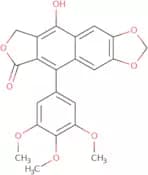
CAS:<p>Dehydropodophyllotoxin is a lignan compound, which is derived from the roots and rhizomes of the plant genus Podophyllum. It exhibits its activity primarily as an inhibitor of microtubule assembly. Microtubules are essential components of the cell cytoskeleton, playing a critical role in cell division and intracellular transport. By interfering with microtubule dynamics, dehydropodophyllotoxin disrupts mitosis, leading to cell cycle arrest and potential apoptosis in rapidly dividing cancer cells.</p>Formula:C22H18O8Purezza:Min. 95%Colore e forma:PowderPeso molecolare:410.37 g/mol