Acidi gallici
Gli acidi gallici sono composti fenolici comunemente presenti nelle galle, nel sommacco e nelle foglie di tè. Essi mostrano forti proprietà antiossidanti e sono stati studiati per i loro potenziali effetti terapeutici, comprese le attività antimicrobiche, antinfiammatorie e antitumorali. Gli acidi gallici sono essenziali nella ricerca sullo stress ossidativo e le malattie croniche.
Trovati 31 prodotti di "Acidi gallici"
Ordinare per
Purezza (%)
0
100
|
0
|
50
|
90
|
95
|
100
Ref: 4Z-G-166012
5mgPrezzo su richiesta10mgPrezzo su richiesta25mgPrezzo su richiesta50mgPrezzo su richiesta100mgPrezzo su richiestaRef: 4Z-G-166014
5mgPrezzo su richiesta10mgPrezzo su richiesta25mgPrezzo su richiesta50mgPrezzo su richiesta100mgPrezzo su richiestaRef: 4Z-G-166007
5mgPrezzo su richiesta10mgPrezzo su richiesta25mgPrezzo su richiesta50mgPrezzo su richiesta100mgPrezzo su richiestaRef: 4Z-G-166006
5mgPrezzo su richiesta10mgPrezzo su richiesta25mgPrezzo su richiesta50mgPrezzo su richiesta100mgPrezzo su richiestaRef: 4Z-G-166004
5mgPrezzo su richiesta10mgPrezzo su richiesta25mgPrezzo su richiesta50mgPrezzo su richiesta100mgPrezzo su richiestaRef: 4Z-G-166010
5mgPrezzo su richiesta10mgPrezzo su richiesta25mgPrezzo su richiesta50mgPrezzo su richiesta100mgPrezzo su richiestaRef: 4Z-G-166015
5mgPrezzo su richiesta10mgPrezzo su richiesta25mgPrezzo su richiesta50mgPrezzo su richiesta100mgPrezzo su richiestaGallic Acid-d2
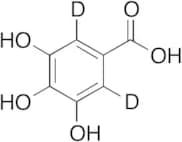
CAS:Prodotto controllato<p>Applications Gallic Acid-d2 is the labelled analogue of Gallic acid (G188978) which is a phenolic acid with antioxidant activity. Gallic acid was found to protect human cells against oxidative damage and showed cytotoxicity against cancer cells. Gallic Acid and its esters also show antiviral and antifungal activities.<br>References Yen, G. et al.: Food Chem., 79, 307 (2002); Chen, C. et al.: Mol. Nutrit. Food Res., 51, 962 (2007); Kratz, J. et al.: Mem. Inst. Oswaldo Cruz, 103, 437 (2008); Osborne, L. et al.: Infect. Immun., 33, 769 (1981);<br></p>Formula:C72H2H4O5Colore e forma:NeatPeso molecolare:172.13Gallic Acid
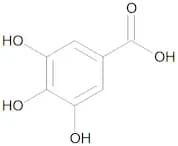
CAS:Prodotto controllato<p>Applications Gallic Acid exhibits a number of cellular effects including apoptosis and inhibits the growth of calf pulmonary arterial endothelial cell (CPAEC);Also, it is a polyphenol widely found in numerous fruits and vegetables that has been reported to exert anticancer effects, including apoptosis, against cancer cell lines.<br>References Park, W. H.: Mol. Med. Rep., 16, 7805-7812 (2017); Yang, C., et al.: RSC Adv., 8, 12449-12458 (2018)<br></p>Formula:C7H6O5Colore e forma:White To Light BrownPeso molecolare:170.12b-Glucogallin
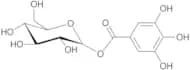
CAS:Prodotto controllato<p>Stability Moisture Sensitive<br>Applications β-Glucogallin is used as a novel aldose reductase (ALR2) inhibitor, one of the factors regulating the secondary complications arising from diabetes mellitus.<br>References Puppala, M. et al.: PLoS. One., 7, 31399 (2012);<br></p>Formula:C13H16O10Colore e forma:NeatPeso molecolare:332.26Mixture of p-Digallic Acid and m-Digallic Acid
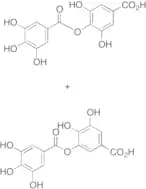
CAS:Prodotto controllato<p>Stability Hygroscopic<br>Applications Digallic Acid is an intermolecular ester of Gallic acid (G188900), a phenolic acid with antioxidant activity. Gallic acid was found to protect human cells against oxidative damage and showed cytotoxicity against cancer cells. Gallic Acid and its esters also show antiviral and antifungal activities.<br>References Yen, G. et al.: Food Chem., 79, 307 (2002); Chen, C. et al.: Mol. Nutrit. Food Res., 51, 962 (2007); Kratz, J. et al.: Mem. Inst. Oswaldo Cruz, 103, 437 (2008); Osborne, L. et al.: Infect. Immun., 33, 769 (1981)<br></p>Formula:MixtureVisitourWebsiteColore e forma:NeatPeso molecolare:Mixture - Visit our Website