Flavonoidi
I flavonoidi sono un gruppo di metaboliti vegetali con proprietà antiossidanti che contribuiscono al colore di frutti e fiori. Svolgono un ruolo significativo nella protezione delle piante dai raggi UV e dai patogeni. I flavonoidi sono studiati per i loro potenziali benefici per la salute, tra cui proprietà antinfiammatorie, antivirali e anticancro. Sono ampiamente studiati nei campi della farmacologia, della nutrizione e della biologia molecolare.
Sottocategorie di "Flavonoidi"
- Antocianidine(46 prodotti)
- Antocianina(46 prodotti)
- Catechina(88 prodotti)
- Chalcones(237 prodotti)
- Pterocarpani(28 prodotti)
Trovati 2408 prodotti di "Flavonoidi"
Ordinare per
Purezza (%)
0
100
|
0
|
50
|
90
|
95
|
100
3'-Hydroxy-3,5,7,8,4'-pentamethoxyflavone
CAS:<p>3'-Hydroxy-3,5,7,8,4'-pentamethoxyflavone is a specialized flavonoid compound, which is typically derived from various plant sources. This compound is part of the flavone subclass of flavonoids, known for their wide presence in the plant kingdom, contributing to the plant's pigmentation and offering various physiological benefits. The mode of action for 3'-Hydroxy-3,5,7,8,4'-pentamethoxyflavone primarily involves antioxidant activity, where it functions to neutralize free radicals and reduce oxidative stress within biological systems. This property is crucial in mitigating cellular damage, thus playing a role in the prevention of various degenerative diseases.</p>Formula:C20H20O8Purezza:Min. 95%Peso molecolare:388.37 g/mol3,7,8,2',4'-Pentamethoxyflavone
CAS:3,7,8,2',4'-Pentamethoxyflavone is a naturally occurring flavonoid, which is a type of polyphenolic compound, broadly found in various plants. This compound is typically isolated from plant sources known for their rich bioactive profiles, such as certain species within the Rutaceae and other plant families. The distinctive feature of flavonoids, including 3,7,8,2',4'-Pentamethoxyflavone, lies in their diverse biological activities, which are attributed to their multi-targeted mode of action.Formula:C20H20O7Purezza:Min. 95%Peso molecolare:372.37 g/molFlavanone hydrazone - 99%
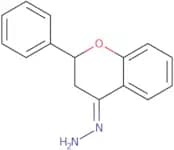
CAS:<p>Flavanone hydrazone - 99% is a highly pure chemical compound that serves as an important intermediate in organic synthesis. It originates primarily from synthetic processes involving hydrazides and flavanones, which are derivatives of flavonoids noted for their wide range of biological activities. The mode of action of flavanone hydrazone involves the introduction of a hydrazone group, which can facilitate the formation of various heterocyclic compounds. This makes it valuable in the construction of complex organic molecules, a process crucial in the fields of medicinal chemistry and drug discovery.</p>Formula:C15H14N2OPurezza:(%) Min. 99%Colore e forma:PowderPeso molecolare:238.28 g/mol2'-O-Methylisoliquiritigenin
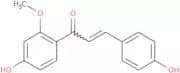
CAS:<p>2'-O-Methylisoliquiritigenin is a methylated flavonoid, which is a specialized biologically active compound found naturally in certain plants, most notably in licorice species. It is an analog of isoliquiritigenin, produced through methylation at the 2' position of the molecule, which enhances its chemical stability and potential bioactivity. The primary mode of action for 2'-O-Methylisoliquiritigenin involves the modulation of various biological pathways, including anti-inflammatory and antioxidant mechanisms. It has been shown to interact with key cellular signaling pathways influencing gene expression, cell cycle regulation, and apoptosis.</p>Formula:C16H14O4Purezza:Min. 95%Colore e forma:PowderPeso molecolare:270.28 g/mol3-Hydroxy-7,8,2',4'-tetramethoxyflavone
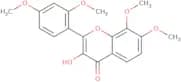
CAS:<p>3-Hydroxy-7,8,2',4'-tetramethoxyflavone is a specialized flavonoid compound, which is a type of polyphenolic metabolite derived primarily from certain plant sources. This compound belongs to a class of naturally occurring flavones that are isolated from plants known for their diverse biological activities. Its mode of action involves interacting with cellular pathways and receptors, potentially modulating enzymatic activity and affecting signal transduction processes.</p>Formula:C19H18O7Purezza:Min. 95%Peso molecolare:358.34 g/molDaidzin
CAS:<p>Daidzin is an isoflavone compound, which is a naturally occurring chemical extracted from the root of the plant Pueraria lobata, commonly known as kudzu. Its primary mode of action involves the inhibition of the enzyme aldehyde dehydrogenase (ALDH). This enzyme plays a significant role in the metabolism of alcohol, as it converts acetaldehyde, a toxic intermediate, into acetic acid, which is less harmful to the body.</p>Formula:C21H20O9Purezza:Min. 95%Colore e forma:White Off-White PowderPeso molecolare:416.38 g/molIsoflavan
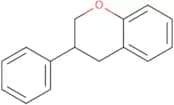
CAS:<p>Isoflavan is a naturally occurring isoflavonoid derivative, which is primarily sourced from soybeans and other legumes. These compounds are secondary metabolites found in the plant kingdom, notable for their structural similarity to estrogens. Isoflavans act as phytoestrogens, binding to estrogen receptors and exerting both estrogenic and antiestrogenic effects depending on the presence of endogenous hormones. They exhibit a multifaceted mode of action, encompassing antioxidant activities by neutralizing free radicals and modulating oxidative stress pathways.</p>Formula:C15H14OPurezza:Min. 95%Peso molecolare:210.27 g/mol3'-Hydroxy-8-O-methylretusin
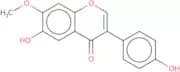
CAS:<p>3'-Hydroxy-8-O-methylretusin is a naturally occurring flavonoid, which is derived from various plant sources, primarily within the Leguminosae family. It exhibits a range of bioactivities attributed to its molecular structure, characterized by hydroxylation and methylation processes that enhance its stability and reactivity.</p>Formula:C17H14O6Purezza:Min. 95%Peso molecolare:314.29 g/mol3-Hydroxy-7,8,3'-trimethoxyflavone
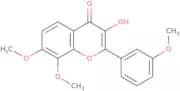
CAS:3-Hydroxy-7,8,3'-trimethoxyflavone is a specialized flavonoid compound, which is isolated predominantly from certain plant sources known for their diverse array of secondary metabolites. The compound belongs to the flavone subclass, characterized by its distinctive hydroxyl and methoxy functional groups, which are crucial in determining its biochemical properties and interactions.Formula:C18H16O6Purezza:Min. 95%Peso molecolare:328.32 g/mol5-Demethylnobiletin
CAS:<p>5-Demethylnobiletin is a bioactive flavonoid compound, which is primarily isolated from citrus peels, particularly those of the genus Citrus. This compound belongs to the polymethoxyflavone class, well-known for their diverse biological activities. 5-Demethylnobiletin exerts its effects primarily through the modulation of cellular signaling pathways, particularly those involved in inflammatory responses. It has been shown to influence the expression of cytokines and enzymes associated with inflammation, potentially impacting pathways such as NF-kB and MAPK.</p>Formula:C20H20O8Purezza:Min. 95%Colore e forma:SolidPeso molecolare:388.37 g/molKakkatin
CAS:<p>Kakkatin is a natural antimicrobial agent, which is derived from specific plant extracts known for their inherent bioactive properties. It functions by disrupting the cellular membranes of pathogenic microorganisms, leading to their subsequent inactivation. This mode of action is attributed to its unique phytochemical constituents, which interact with microbial cell structures to inhibit growth and proliferation.</p>Formula:C16H12O5Purezza:Min. 95%Peso molecolare:284.26 g/molGenkwanin-4'-glucoside
CAS:Genkwanin-4'-glucoside is a flavonoid glycoside, which is a natural compound derived from various plant sources, including members of the Thymelaeaceae family such as Daphne and Wikstroemia species. This compound is characterized by the attachment of a glucose molecule to the aglycone genkwanin, enhancing its solubility and bioavailability.Formula:C22H22O10Purezza:Min. 95%Peso molecolare:446.4 g/molDihydrowogonin
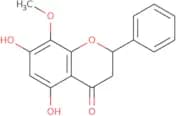
CAS:Dihydrowogonin is a flavonoid compound, predominantly sourced from plants such as Scutellaria baicalensis. It is a derivative of wogonin, exhibiting significant pharmacological properties. As a bioactive compound, dihydrowogonin interacts with various molecular targets, modulating intracellular signaling pathways, thereby exerting anti-inflammatory and neuroprotective effects.Formula:C16H14O5Purezza:Min. 95%Peso molecolare:286.28 g/molNaringenin-7-glucoside
CAS:<p>Naringenin-7-glucoside is a flavonoid glycoside, which is primarily sourced from citrus fruits and certain herbs. This compound is a glucoside derivative of naringenin, a type of flavanone commonly found in a variety of plant species. With its distinct chemical structure, Naringenin-7-glucoside exerts its effects primarily through antioxidant and anti-inflammatory mechanisms. The compound works by scavenging free radicals and modulating cell signaling pathways, thereby reducing oxidative stress and inflammation at the cellular level.</p>Formula:C21H22O10Purezza:Min. 95%Colore e forma:White Off-White PowderPeso molecolare:434.39 g/mol3,5,4'-Trihydroxy-7-methoxyflavone
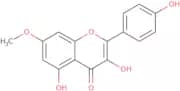
CAS:3,5,4'-Trihydroxy-7-methoxyflavone is a naturally occurring flavonoid compound, which is a type of polyphenolic compound found in various plants. This flavonoid is often isolated from plant sources and is of significant interest due to its potential biochemical and therapeutic properties.Formula:C16H12O6Purezza:Min. 98 Area-%Colore e forma:PowderPeso molecolare:300.26 g/molGalangin-3-rutinoside
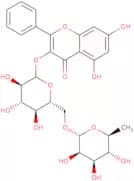
CAS:<p>Galangin-3-rutinoside is a flavonoid glycoside, which is derived from natural plant sources such as members of the Zingiberaceae family, often found in various medicinal herbs. The mode of action of Galangin-3-rutinoside involves its ability to scavenge free radicals and inhibit oxidative stress, while also modulating inflammatory pathways by downregulating pro-inflammatory cytokines and enzymes.</p>Formula:C27H30O14Purezza:Min. 95%Colore e forma:PowderPeso molecolare:578.52 g/mol3-Hydroxy-7,8,2'-trimethoxyflavone
CAS:3-Hydroxy-7,8,2'-trimethoxyflavone is a specialized flavone compound, which is a naturally occurring polyphenolic product found in certain plants. It is derived from various botanical sources, where it functions as a secondary metabolite, contributing to the plant's defense mechanisms against pathogens and environmental stress.Formula:C18H16O6Purezza:Min. 95%Peso molecolare:328.32 g/mol7,8-Dibenzyloxy-4'-methoxyisoflavone
CAS:<p>7,8-Dibenzyloxy-4'-methoxyisoflavone is a synthetic isoflavone derivative, which is a type of organic compound often studied for its potential pharmacological properties. Isoflavones are primarily sourced from certain leguminous plants, where they are naturally occurring phytoestrogens and have been associated with various biological activities.</p>Formula:C30H24O5Purezza:Min. 95%Peso molecolare:464.51 g/molQuercetin-3-O-sophoroside
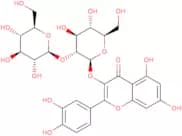
CAS:<p>Quercetin-3-O-sophoroside is a flavonoid glycoside, which is a naturally occurring compound found in various plant sources, such as fruits, vegetables, and herbs. This compound is formed by the binding of the flavonoid quercetin with the disaccharide sophorose. The molecular structure of this compound enables it to exert potent antioxidant effects, scavenging free radicals and reducing oxidative stress at a cellular level.</p>Formula:C27H30O17Purezza:Min. 95%Colore e forma:PowderPeso molecolare:626.52 g/molLuteolin-7-O-D-glucopyranoside
CAS:Luteolin-7-O-D-glucopyranoside is a flavonoid glycoside, which is a type of naturally occurring compound found predominantly in plants. It serves as a significant bioactive compound and is usually sourced from various plant species, including leaves, flowers, and fruits. The mode of action of Luteolin-7-O-D-glucopyranoside primarily involves its ability to scavenge free radicals, thereby exhibiting strong antioxidant properties. This glycoside form enhances the solubility and stability of luteolin, facilitating its biological activities.Formula:C21H20O11Purezza:Min. 98 Area-%Colore e forma:Yellow PowderPeso molecolare:448.38 g/mol