Flavonoidi
I flavonoidi sono un gruppo di metaboliti vegetali con proprietà antiossidanti che contribuiscono al colore di frutti e fiori. Svolgono un ruolo significativo nella protezione delle piante dai raggi UV e dai patogeni. I flavonoidi sono studiati per i loro potenziali benefici per la salute, tra cui proprietà antinfiammatorie, antivirali e anticancro. Sono ampiamente studiati nei campi della farmacologia, della nutrizione e della biologia molecolare.
Sottocategorie di "Flavonoidi"
- Antocianidine(46 prodotti)
- Antocianina(46 prodotti)
- Catechina(88 prodotti)
- Chalcones(237 prodotti)
- Pterocarpani(28 prodotti)
Trovati 2408 prodotti di "Flavonoidi"
Ordinare per
Purezza (%)
0
100
|
0
|
50
|
90
|
95
|
100
8-Prenylpinocembrin
CAS:<p>8-Prenylpinocembrin is a specialized flavonoid compound, which is a part of the prenylflavonoid class. It is derived from natural sources, primarily plants within the Fabaceae family and propolis from honeybees. The compound is characterized by its prenyl group attached to the flavonoid pinocembrin, enhancing its biological activity through increased lipophilicity and membrane permeability.</p>Formula:C20H20O4Purezza:Min. 95%Peso molecolare:324.37 g/mol8-Hydroxygenistein-7,8,4'-trimethyl ether
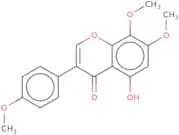
CAS:<p>8-Hydroxygenistein-7,8,4'-trimethyl ether is a phytochemical derivative, which is sourced from plant metabolites, specifically isoflavonoids. This compound is modified through methylation processes to enhance its stability and lipophilicity, making it a subject of interest in various biochemical studies. Its mode of action primarily involves interaction with cellular signaling pathways, influencing antioxidant mechanisms and potentially affecting gene expression related to oxidative stress.</p>Formula:C18H16O6Purezza:Min. 95 Area-%Colore e forma:Yellow PowderPeso molecolare:328.32 g/molCinnamtannin B-1
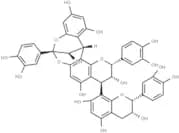
CAS:Cinnamtannin B-1 (LDN 0022358) is an A-type proanthocyanidin contained in several plant species such as Vaccinium vitis-idaea, Laurus nobilis L., CinnamomumFormula:C45H36O18Purezza:99.72%Colore e forma:SolidPeso molecolare:864.76Baicalin 7-b-D-glucuronide
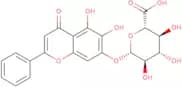
CAS:<p>Baicalin 7-b-D-glucuronide is a flavonoid metabolite, which is primarily derived from the root of the plant *Scutellaria baicalensis*, commonly known as Chinese skullcap. This compound occurs as part of the extensive array of flavonoids in traditional medicinal plants used in various ethnic medicine systems.</p>Formula:C21H18O11Purezza:Min. 95 Area-%Colore e forma:White PowderPeso molecolare:446.36 g/molHinokiflavone
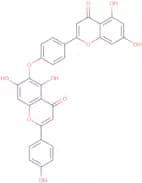
CAS:<p>A cytotoxic biflavonoid from Toxicodendron succedaneum, Juniperus sp., and Chamaecyparis obtusa (hinoki).</p>Formula:C30H18O10Purezza:Min. 97 Area-%Colore e forma:PowderPeso molecolare:538.46 g/mol6-Methoxyflavone
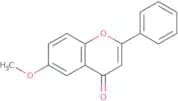
CAS:<p>6-Methoxyflavone is a flavonoid compound, which is a naturally occurring product found in certain plants. It is characterized by the presence of a methoxy group attached to the flavone backbone. This compound is typically extracted from plant sources such as citrus fruits and certain herbs that have a high content of polyphenolic compounds. Its mode of action involves modulating various biochemical pathways, including the inhibition of specific enzymes and interaction with cellular receptors, potentially affecting oxidative stress and inflammation pathways.</p>Formula:C16H12O3Purezza:Min. 95%Colore e forma:White PowderPeso molecolare:252.26 g/molIridin
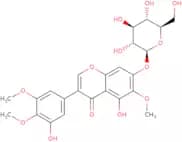
CAS:<p>Iridin is an isoflavone glycoside derived primarily from the rhizomes of certain species of the Iris plant. As a phytochemical compound, its source is botanical, particularly extracted from Iris versicolor, known commonly as the Blue Flag plant. The mode of action for Iridin involves its role as a glycoside compound, which influences various biochemical pathways in the body. Glycosides like Iridin are known for their potential to modulate enzyme activities, interact with cellular signals, and participate in the process of detoxification within the liver.</p>Formula:C24H26O13Purezza:Min. 98 Area-%Colore e forma:Off-White Yellow PowderPeso molecolare:522.46 g/molJamaicin
CAS:Jamaicin (AnCoA4), an isoflavone derived from the chickweed plant, is an inhibitor of the STIM1-Orai1 channel that blocks calcium ion influx.Formula:C22H18O6Purezza:99.32%Colore e forma:SolidPeso molecolare:378.373'-Methoxy-3,7,4'-trihydroxyflavone
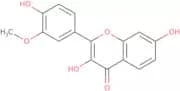
CAS:<p>3'-Methoxy-3,7,4'-trihydroxyflavone is a naturally occurring flavonoid compound, which is derived from various plant sources, such as fruits, vegetables, and medicinal herbs. This compound is known for its potent antioxidant activity, which is primarily achieved through the scavenging of reactive oxygen species and the inhibition of oxidative stress pathways.</p>Formula:C16H12O6Purezza:Min. 95%Colore e forma:PowderPeso molecolare:300.26 g/molQuercetagetin-7-O-glucoside
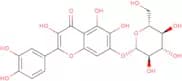
CAS:<p>Quercetagetin-7-O-glucoside is a flavonoid glycoside, which is a type of phytochemical compound. It is derived from various plant sources, notably plants in the Asteraceae family. The compound consists of the flavonoid quercetagetin and a glucose molecule, forming a glycoside linkage. Its mode of action primarily involves antioxidant activity, where it scavenges free radicals and chelates metal ions, thus potentially reducing oxidative stress in biological systems.</p>Formula:C21H20O13Purezza:Min. 95%Peso molecolare:480.38 g/mol3'-Prenylnaringenin
CAS:3'-Prenylnaringenin is a potent phytoestrogen, a type of compound that is found in hops (Humulus lupulus), specifically in the female flowers or cones. This prenylflavonoid is particularly notable for its strong estrogenic activity attributed to its binding affinity to estrogen receptors. As such, it functions as an agonist, modulating estrogen receptor-mediated pathways and influencing gene expression related to estrogenic activity.Purezza:Min. 95%Demethylretusin
CAS:<p>Demethylretusin is a naturally occurring flavonoid, which is derived primarily from various plant sources, including soybeans and other legumes. It functions as a bioactive compound with the capability to modulate multiple biochemical pathways. The mode of action of Demethylretusin involves interacting with cellular receptors and enzymes, ultimately influencing cell signaling pathways and exhibiting antioxidative, anti-inflammatory, and potential anticancer properties.</p>Formula:C15H10O5Purezza:Min. 95%Colore e forma:PowderPeso molecolare:270.24 g/mol(+)-Pinocembrin
CAS:<p>(+)-Pinocembrin is a flavonoid compound, which is a naturally occurring phytochemical. It is predominantly sourced from propolis, a resinous substance produced by bees, and also found in various plants such as honey and ginger root. The mode of action of (+)-Pinocembrin involves its potent antioxidant and antimicrobial properties. It acts by scavenging free radicals, thereby protecting cells from oxidative stress, and it also interferes with microbial cell membranes, leading to antimicrobial effects.</p>Formula:C15H12O4Purezza:Min. 98 Area-%Colore e forma:PowderPeso molecolare:256.25 g/molNaringenin-7-rutinoside
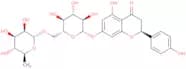
CAS:<p>Naringenin-7-rutinoside is a flavonoid glycoside, which is naturally sourced from citrus fruits, such as grapefruits and oranges. This compound is characterized by its unique molecular structure where the flavonoid naringenin is bound to the disaccharide rutinose. The mode of action of naringenin-7-rutinoside primarily involves its antioxidant properties, which allow it to scavenge free radicals and reduce oxidative stress in biological systems.</p>Formula:C27H32O14Purezza:Min. 98 Area-%Colore e forma:White PowderPeso molecolare:580.53 g/molKaempferol-7,4'-dimethyl ether
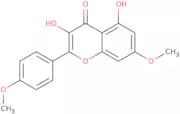
CAS:<p>Kaempferol-7,4'-dimethyl ether is a flavonoid derivative, which is a naturally occurring compound predominantly found in certain plant species. As a derivative of kaempferol, it is an O-methylated flavonoid, often isolated from various members of the Leguminosae family. Its mode of action involves interacting with multiple biological pathways, typically exhibiting antioxidant and anti-inflammatory properties. This potent flavonoid modulates signaling pathways and can influence cellular energy metabolism, often impacting reactive oxygen species (ROS) levels.</p>Formula:C17H14O6Purezza:Min. 95 Area-%Colore e forma:PowderPeso molecolare:314.29 g/molDimoxystrobin
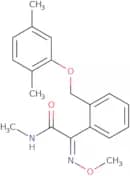
CAS:Dimoxystrobin is a fungicidal compound, which is a synthetic chemical derived from the strobilurin class of fungicides. It is sourced from natural antifungal compounds originally discovered in certain mushroom species. Dimoxystrobin's mode of action involves inhibiting mitochondrial respiration in fungi by binding to the Qo site of the cytochrome bc1 complex. This interference disrupts energy production in fungal cells, leading to their effective control and eventual death.Formula:C19H22N2O3Purezza:Min. 95%Peso molecolare:326.39 g/molIsovitexin
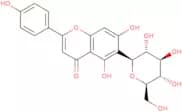
CAS:<p>Isovitexin is a naturally occurring flavonoid compound, specifically a C-glycosyl flavone, which is found in a variety of plants, including green tea, passionflower, and barley leaves. Derived from these botanical sources, isovitexin is characterized by its structural complexity, contributing to its biological activity. The mode of action of isovitexin involves its ability to scavenge free radicals and inhibit oxidative stress. It exhibits strong antioxidant properties that allow it to stabilize reactive oxygen species (ROS), thereby preventing cellular damage. Additionally, isovitexin has been studied for its potential anti-inflammatory and neuroprotective effects, attributed to its influence on signaling pathways and enzyme activities related to inflammation and cell survival. Isovitexin is primarily utilized in the context of scientific research to explore its pharmacological potentials. Researchers study its application in fields such as neuroprotection, cardioprotection, and its role in mitigating the effects of metabolic disorders. Its broad spectrum of activity makes it a compound of interest in both the development of therapeutic agents and the enhancement of nutritional supplements.</p>Formula:C21H20O10Purezza:Min. 98 Area-%Colore e forma:Off-White Yellow PowderPeso molecolare:432.38 g/molQuercetin-7-O-β-D-glucopyranoside
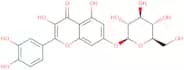
CAS:<p>Quercetin-7-O-β-D-glucopyranoside is a flavonoid glycoside, which is a specialized type of bioactive compound found predominantly in various plants. Structurally, it constitutes quercetin—a well-known flavonoid—conjugated with a glucose molecule, specifically at the 7th position of the quercetin structure. This compound is primarily sourced from fruits, vegetables, and various herbs.</p>Formula:C21H20O12Purezza:Min. 95%Colore e forma:Yellow PowderPeso molecolare:464.38 g/molQuercetin 3,4'-diglucoside
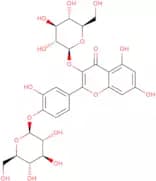
CAS:<p>Quercetin 3,4'-diglucoside is a flavonoid glycoside, which is a compound naturally derived from various plant sources, including certain fruits and vegetables. This compound is known for its significant role as an antioxidant. It operates by scavenging free radicals, thereby mitigating oxidative stress at the cellular level. This mode of action makes it a compound of interest in studies related to inflammation, aging, and chronic diseases.</p>Formula:C27H30O17Purezza:Min. 95%Colore e forma:PowderPeso molecolare:626.52 g/molFlavanone hydrazone, 93%
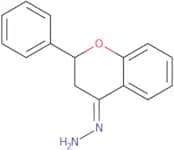
CAS:<p>Flavanone hydrazone (FH) is a natural compound that has been found to have antiviral activity against a number of viruses, including the papilloma virus and picornavirus. The antiviral activity of FH is due to its ability to inhibit the shikimate pathway, which is required for the synthesis of aromatic amino acids from chorismate. This inhibition prevents the production of viral proteins, leading to cell death. FH also has an inhibitory effect on hepatitis C virus and leukoplakia by inhibiting fatty acid synthesis. It may also be used in the treatment of inflammatory diseases such as rheumatoid arthritis and ulcerative colitis.</p>Formula:C15H14N2OPurezza:(%) Min. 93%Colore e forma:PowderPeso molecolare:238.28 g/mol