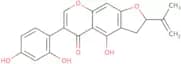
Flavonoidi
Sottocategorie di "Flavonoidi"
- Antocianidine(46 prodotti)
- Antocianina(46 prodotti)
- Catechina(88 prodotti)
- Chalcones(237 prodotti)
- Pterocarpani(28 prodotti)
Trovati 2408 prodotti di "Flavonoidi"
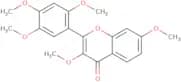
3,7,2',4',5'-Pentamethoxyflavone
CAS:3,7,2',4',5'-Pentamethoxyflavone is a naturally occurring flavonoid compound, which is a type of polyphenolic product. It is commonly found in various plant species, serving potential protective and adaptive functions within these organisms. The mode of action of 3,7,2',4',5'-Pentamethoxyflavone involves interaction with multiple biological pathways, including modulation of enzyme activity and influence over cellular signaling pathways. Its biochemical interactions often result in antioxidant, anti-inflammatory, and possible antiproliferative effects.Formula:C20H20O7Purezza:Min. 95%Peso molecolare:372.37 g/molLuteolin 3'-O-β-D-glucuronide
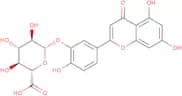
CAS:Luteolin 3'-O-β-D-glucuronide is a flavonoid glucuronide, which is primarily derived from various plant sources, including fruits, vegetables, and certain herbs. As a metabolite of luteolin, it is formed through the addition of a glucuronic acid moiety, enhancing its solubility and bioavailability in biological systems.
Formula:C21H18O12Purezza:Min. 97 Area-%Colore e forma:White PowderPeso molecolare:462.36 g/mol3',4',5',5,6,7-Hexamethoxyflavone
CAS:3',4',5',5,6,7-Hexamethoxyflavone is a polymethoxylated flavone, which is a type of phytochemical or secondary metabolite. It is primarily found in citrus fruits, particularly in the peels, where it serves as a protective compound. This flavone is notable for its complex structure featuring multiple methoxy groups.Formula:C21H22O8Purezza:Min. 95%Colore e forma:White Clear LiquidPeso molecolare:402.39 g/mol7,8,2',4'-Tetrabenzyloxyisoflavone
7,8,2',4'-Tetrabenzyloxyisoflavone is a synthetic chemical compound derived from the modification of the isoflavone structure. It is designed for research purposes and acts as a biochemical tool in studying the effects and interactions of isoflavones and their derivatives. The compound is synthesized through a series of benzylation reactions involving isoflavone, sourced primarily from plant-based materials like soybeans, known for their phytoestrogen properties.
Formula:C43H34O6Purezza:Min. 95%Peso molecolare:646.73 g/molKaempferol 3-b-glucopyranoside
CAS:Kaempferol 3-b-glucopyranoside is a flavonoid glycoside, which is a compound typically isolated from a variety of plants, including tea, broccoli, and fruits such as apples and grapes. It represents a crucial category of secondary metabolites prevalent in the plant kingdom, often serving roles in plant defense and pigmentation. The mode of action of Kaempferol 3-b-glucopyranoside is primarily attributed to its antioxidant properties, effectively scavenging free radicals and thereby mitigating oxidative stress. Furthermore, it is known to modulate various cellular signaling pathways, including those related to apoptosis and inflammation, by influencing kinase activity and gene expression.
Formula:C21H20O11Purezza:Min. 95%Colore e forma:PowderPeso molecolare:448.38 g/molPoncirin
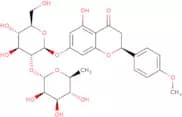
CAS:Poncirin is a natural flavonoid glycoside, which is derived from the fruit of Poncirus trifoliata, commonly known as bitter orange. This compound is extracted from the plant materials using solvents followed by purification processes to isolate the active flavonoid.Formula:C28H34O14Purezza:Min. 95%Colore e forma:PowderPeso molecolare:594.56 g/molKaempferol 3-O-neohesperidoside
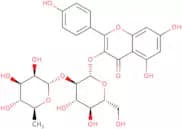
CAS:Kaempferol 3-O-neohesperidoside is a flavonoid glycoside, which is a plant-derived secondary metabolite. It is commonly found in various fruits, vegetables, and herbs, including citrus fruits and certain medicinal plants. The compound consists of the flavonoid kaempferol linked to a neohesperidose sugar moiety.
Formula:C27H30O15Purezza:Min. 95%Colore e forma:SolidPeso molecolare:594.52 g/molKaempferol-3-O-glucorhamnoside - 65%
CAS:Kaempferol-3-O-glucorhamnoside - 65% is a flavonoid glycoside, which is derived from various plant sources such as tea, broccoli, and apples. This compound is a conjugate of the flavonoid kaempferol with sugar moieties, specifically glucose and rhamnose. Its biochemical mode of action involves modulating various signaling pathways, including those related to oxidative stress and inflammation. By influencing these pathways, it may inhibit the production of reactive oxygen species (ROS) and regulate the expression of inflammatory cytokines.Formula:C27H30O15Purezza:Min. 95%Colore e forma:PowderPeso molecolare:594.52 g/molEriodictyol - 98%
CAS:Eriodictyol - 98% is a flavonoid compound, which is a type of plant-based molecule. It is primarily sourced from multiple plant species, including certain herbs and bark, notably from the Eriodictyon genus. As a bioactive compound, eriodictyol functions by modulating cellular oxidative stress responses through its ability to scavenge free radicals and inhibit reactive oxygen species.Formula:C15H12O6Purezza:Min. 98 Area-%Colore e forma:White PowderPeso molecolare:288.25 g/molPseudobaptigenin
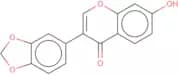
CAS:Pseudobaptigenin is a naturally occurring flavonoid, which is primarily isolated from plant sources. As a type of secondary metabolite, flavonoids like pseudobaptigenin are synthesized by plants and often found in a variety of legumes and other plant species. These compounds typically play a role in plant defense mechanisms and contribute to pigmentation.Formula:C16H10O5Purezza:Min. 95%Colore e forma:PowderPeso molecolare:282.25 g/molKaempferol-3,7,4'-trimethyl ether
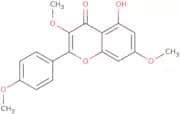
CAS:Kaempferol-3,7,4'-trimethyl ether is a methylated flavonoid compound, which is naturally derived from various plant sources known for their rich polyphenol content. This compound is characterized by its three methoxy groups attached to the kaempferol structure, enhancing its hydrophobic nature and overall stability. The primary mode of action of Kaempferol-3,7,4'-trimethyl ether involves modulation of various cellular signaling pathways, including those related to antioxidant and anti-inflammatory processes. It exerts its effects by interacting with key enzymes and receptors, leading to the modulation of gene expression linked to cellular stress responses.
Formula:C18H16O6Purezza:Min. 98 Area-%Colore e forma:PowderPeso molecolare:328.32 g/molTrifloxystrobin
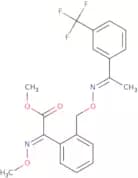
CAS:Trifloxystrobin is a broad-spectrum fungicide, which is a synthetic compound derived from the strobilurin class of fungicides. Its mode of action involves the inhibition of mitochondrial respiration in fungi, specifically by binding to the Qo site of the cytochrome bc1 complex, thereby disrupting electron transport and energy production within fungal cells.Formula:C20H19F3N2O4Purezza:Min. 95%Colore e forma:PowderPeso molecolare:408.37 g/molHerbacetin-8-glucoside-3-sophoroside
CAS:Herbacetin-8-glucoside-3-sophoroside is a flavonoid glycoside derivative, which is a bioactive compound commonly found in plant sources, particularly within the flavonoid subclass. This compound is notable for its multifunctional biological activities and potential health benefits. It is primarily sourced from plant materials, where it can be extracted and isolated for further study and application.Formula:C33H40O22Purezza:Min. 95%Peso molecolare:788.66 g/mol7-Hydroxy-2',4',5'-trimethoxyisoflavone
CAS:7-Hydroxy-2',4',5'-trimethoxyisoflavone is a naturally occurring flavonoid, which is commonly isolated from various plant sources, including legumes and other flavonoid-rich botanical species. This compound exhibits a unique structural configuration characterized by hydroxyl and methoxy functional groups, contributing to its notable bioactivity.
Formula:C18H16O6Purezza:Min. 95%Colore e forma:PowderPeso molecolare:328.32 g/mol7,3'-Dihydroxyisoflavone
CAS:7,3'-Dihydroxyisoflavone is a bioactive compound belonging to the isoflavone class of flavonoids, which is derived primarily from leguminous plants, such as soy and red clover. The substance displays significant antioxidant activities due to its structure, which allows it to neutralize free radicals and reduce oxidative stress within biological systems. This mode of action involves scavenging reactive oxygen species and chelating metal ions, thereby offering protective effects against cellular damage and inflammation.Formula:C15H10O4Purezza:Min. 95%Colore e forma:PowderPeso molecolare:254.24 g/mol7-Benzyloxy-2',4',5'-trimethoxyisoflavone
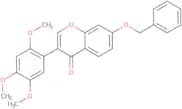
CAS:7-Benzyloxy-2',4',5'-trimethoxyisoflavone is a specialized type of isoflavone, which is a class of naturally occurring organic compounds related to flavonoids. It is typically derived from plant sources, showcasing the vast chemical diversity and potential bioactivity present in botanicals. This compound operates through various biochemical pathways, often interacting with specific cellular receptors or enzymes to exert its effects. Its mode of action can include antioxidant activity or modulation of signaling pathways, which are crucial for maintaining cellular homeostasis and function. The applications of 7-Benzyloxy-2',4',5'-trimethoxyisoflavone are primarily in the realm of pharmacological research, where it is explored for its potential therapeutic uses. It may be investigated for its roles in combating oxidative stress or influencing pathways associated with inflammation and cellular growth. científicos pursue its study to uncover new medical insights and develop novel therapeutic strategies.
Formula:C25H22O6Purezza:Min. 95%Peso molecolare:418.44 g/mol3',4'-Dihydroxyflavanone
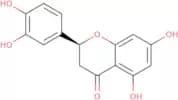
3',4'-Dihydroxyflavanone is a type of flavonoid, which is a class of polyphenolic compounds known for diverse biological activities. This compound is primarily sourced from various plants, where it plays a role in plant defense mechanisms due to its antioxidant properties. The mode of action of 3',4'-Dihydroxyflavanone involves the scavenging of free radicals, thereby mitigating oxidative stress at the cellular level. This activity is facilitated by its dihydroxy structure, which allows it to donate hydrogen atoms to neutralize reactive oxygen species.
Formula:C15H10O4Purezza:Min. 95%Peso molecolare:254.24 g/molDerrone-4'-methyl ether
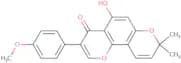
CAS:Derrone-4'-methyl ether is a flavonoid derivative, which is a compound class known for diverse biological activities. This compound is sourced from the isoflavonoid family, predominantly found in legumes and other plant species. Isoflavonoids are secondary metabolites that play crucial roles in plant defense mechanisms and interactions with the environment.Formula:C21H18O5Purezza:Min. 95%Peso molecolare:350.36 g/molSakuranetin
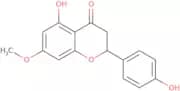
CAS:Sakuranetin is a flavonoid, which is a natural compound derived predominantly from cherry blossoms and various citrus plants. As a phytochemical, it is primarily sourced from plants where it functions as a natural defense mechanism against environmental stressors. The mode of action of sakuranetin involves the inhibition of key pro-inflammatory pathways, notably blocking the activation of NF-κB, a protein complex that plays a crucial role in controlling the transcription of DNA, cytokine production, and cell survival.Formula:C16H14O5Purezza:Min. 95%Colore e forma:PowderPeso molecolare:286.28 g/molLupinisoflavone A
CAS:Lupinisoflavone A is a naturally occurring bioactive compound, specifically an isoflavone, which is extracted from the seeds and other parts of lupine plants. The lupine species are known for their rich phytochemical profile, which includes various bioactive compounds with potential health benefits. Lupinisoflavone A is structurally characterized by its isoflavone backbone, contributing to its diverse biological effects.
Formula:C20H16O6Purezza:Min. 95%Peso molecolare:352.34 g/mol