Flavonoidi
I flavonoidi sono un gruppo di metaboliti vegetali con proprietà antiossidanti che contribuiscono al colore di frutti e fiori. Svolgono un ruolo significativo nella protezione delle piante dai raggi UV e dai patogeni. I flavonoidi sono studiati per i loro potenziali benefici per la salute, tra cui proprietà antinfiammatorie, antivirali e anticancro. Sono ampiamente studiati nei campi della farmacologia, della nutrizione e della biologia molecolare.
Sottocategorie di "Flavonoidi"
- Antocianidine(46 prodotti)
- Antocianina(46 prodotti)
- Catechina(88 prodotti)
- Chalcones(237 prodotti)
- Pterocarpani(28 prodotti)
Trovati 2408 prodotti di "Flavonoidi"
Ordinare per
Purezza (%)
0
100
|
0
|
50
|
90
|
95
|
100
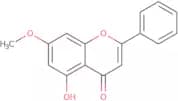
7-Methoxyflavonol
CAS:7-Methoxyflavonol is a naturally-occurring flavonoid with intriguing biochemical properties, identified primarily in various plant species. This compound is derived from natural sources such as herbs and fruits, where it contributes to the plant's defense mechanisms. The mode of action of 7-Methoxyflavonol involves modulation of enzymatic activities and interaction with cellular signaling pathways, exhibiting potential antioxidant and anti-inflammatory effects.Formula:C16H12O4Purezza:Min. 95%Peso molecolare:268.26 g/mol7,8-Methylenedioxy-4'-methoxyisoflavone
CAS:7,8-Methylenedioxy-4'-methoxyisoflavone is a synthetic isoflavone, which is a type of organic compound typically derived from plant sources, known for their diverse biological activities. This compound is structurally characterized by a methoxy group and a methylenedioxy bridge, contributing to its unique chemical behavior. Although synthetic, its structure is inspired by naturally occurring isoflavones found in plants such as soy.Formula:C17H12O5Purezza:Min. 95%Peso molecolare:296.27 g/mol4',7-Dimethoxyisoflavone
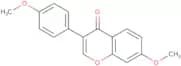
CAS:4',7-Dimethoxyisoflavone is a synthetic isoflavone, which is structurally related to compounds naturally found in certain plants, particularly legumes. This compound is engineered to mimic the bioactive properties of naturally occurring isoflavones, which have been studied for their potential health benefits. The mode of action of 4',7-Dimethoxyisoflavone involves modulating signaling pathways that are related to cellular growth and hormonal activity. It may influence pathways such as estrogen receptor signaling, although it possesses distinct properties compared to phytoestrogens found in soy products.Formula:C17H14O4Purezza:Min. 95%Colore e forma:PowderPeso molecolare:282.29 g/molCalycosin
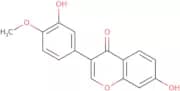
CAS:<p>Calycosin is a naturally occurring isoflavone, which is a class of organic compounds. It is derived primarily from the root of Astragalus membranaceus, a plant widely used in traditional Chinese medicine. As a prominent phytoestrogen, Calycosin exhibits a mode of action that includes binding to estrogen receptors, thereby influencing various estrogen-mediated biological processes.</p>Formula:C16H12O5Purezza:Min. 95%Colore e forma:White PowderPeso molecolare:284.26 g/mol3,2',4',5',6-Pentahydroxyflavone
CAS:3,2',4',5',6-Pentahydroxyflavone is a flavonoid compound, often studied for its intricate chemical properties. It is derived from various plant sources, where it occurs naturally as a secondary metabolite. As a flavonoid, it is notable for its polyphenolic structure, contributing to its role as an antioxidant. The mode of action involves neutralizing free radicals and chelating metal ions, thereby reducing oxidative stress within biological systems.Formula:C15H10O7Purezza:Min. 95%Colore e forma:PowderPeso molecolare:302.24 g/molAcacetin-7-neohesperidoside
CAS:Acacetin-7-neohesperidoside is a chemical compound that is classified as a flavonoid glycoside. Derived from various plant sources, particularly those within the Asteraceae family, it serves as a key subject in scientific investigations due to its diverse biological activities. The mode of action is primarily linked to its ability to modulate signaling pathways within cells, exhibiting potential anti-inflammatory and antioxidant effects. As a researcher, understanding its interaction with cellular pathways is crucial for advancing therapeutic applications.Formula:C28H32O14Purezza:Min. 98 Area-%Colore e forma:Pale yellow solid.Peso molecolare:592.55 g/mol7,2'-Dibenzyloxy-3',4'-dimethoxyisoflavone
CAS:7,2'-Dibenzyloxy-3',4'-dimethoxyisoflavone is a synthetic isoflavone derivative, which is primarily synthesized from organic intermediates using specialized chemical procedures. This compound belongs to the isoflavone class, a group of compounds often studied for their potential bioactive properties. The mode of action of 7,2'-Dibenzyloxy-3',4'-dimethoxyisoflavone involves interactions with cellular signaling pathways, which could influence various biological activities, such as enzyme inhibition or receptor binding.Formula:C31H26O6Purezza:Min. 95%Peso molecolare:494.53 g/mol4'-O-Methyl quercetin
CAS:4'-O-Methyl quercetin is a naturally occurring flavonoid, which is a derivative of quercetin. It is primarily sourced from various plants where it functions as part of the plant’s defense mechanism. This compound exhibits its mode of action by influencing cellular pathways, particularly those involved in oxidative stress and inflammation. It achieves this by modulating signaling pathways and interacting with cellular receptors, thereby exerting antioxidant and anti-inflammatory effects.Formula:C16H12O7Purezza:Min. 95%Colore e forma:Yellow SolidPeso molecolare:316.26 g/molEriodictyol - 90%
CAS:<p>Eriodictyol - 90% is a highly purified flavonoid, specifically a flavanone, commonly derived from the Eriodictyon californicum plant, also known as yerba santa. This compound, noted for its significant antioxidant properties, interacts with cellular signaling pathways by modulating oxidative stress and inhibiting inflammatory enzymes. Eriodictyol achieves these effects primarily through its ability to scavenge free radicals and modulate the activity of various kinases and transcription factors involved in the inflammatory response.</p>Formula:C15H12O6Purezza:Min. 95%Colore e forma:White PowderPeso molecolare:288.25 g/molQuercetin-3-arabinoglucoside
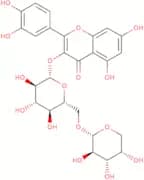
CAS:Quercetin-3-arabinoglucoside is a flavonoid glycoside, which is a phytochemical derived primarily from a variety of plant sources, including fruits, vegetables, and medicinal plants. This compound acts as a potent antioxidant by scavenging free radicals, thereby protecting cells from oxidative stress, which can lead to cellular damage and various diseases.Formula:C26H28O16Purezza:Min. 95%Colore e forma:PowderPeso molecolare:596.49 g/mol7,3',4',5'-Tetra methoxyflavone
CAS:7,3',4',5'-Tetra methoxyflavone is a polymethoxyflavone, which is a type of flavonoid compound. This compound is typically derived from various plant sources, particularly those in the Citrus genus. It possesses structural complexity due to its four methoxy groups, which contribute to its biological activity.Formula:C19H18O6Purezza:Min. 95%Peso molecolare:342.34 g/mol5,7,8,2'-Tetramethoxyflavone
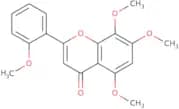
CAS:5,7,8,2'-Tetramethoxyflavone is a naturally occurring flavone compound, which is classified as a polyphenolic molecule commonly found in certain plant species. As a flavonoid, it is derived from plant sources, often extracted from species within the Rutaceae family, among others. These compounds are known for their complex biosynthetic pathways, which involve modified phenylpropanoid and acetate pathways.Formula:C19H18O6Purezza:Min. 95%Peso molecolare:342.34 g/molQuercetin-3-arabinofuranoside
CAS:<p>Quercetin-3-arabinofuranoside is a flavonoid, a type of plant-derived polyphenolic compound. It is sourced from various plant species, particularly fruits, vegetables, and grains, where it functions as a secondary metabolite. This compound acts primarily through antioxidant mechanisms, neutralizing free radicals and reducing oxidative stress in biological systems. Additionally, it may interact with various cellular signaling pathways, modulating enzyme activities and gene expression.</p>Formula:C20H20O11Purezza:Min. 95%Peso molecolare:436.37 g/molTectochrysin
CAS:Tectochrysin is a naturally occurring flavonoid, which is derived from the heartwood of certain trees, such as those from the genus Albizzia. This compound exhibits its effects primarily through antioxidant and anti-inflammatory activities, mediated by the modulation of various signaling pathways. Specifically, Tectochrysin has been shown to inhibit the activity of nuclear factor-kappa B (NF-κB) and other pro-inflammatory mediators, while also enhancing the expression of antioxidative enzymes.Formula:C16H12O4Purezza:Min. 95%Colore e forma:PowderPeso molecolare:268.26 g/mol3,7,3',4',5'-Pentamethoxyflavone
CAS:3,7,3',4',5'-Pentamethoxyflavone is a polymethoxyflavone, which is a class of flavonoids characterized by multiple methoxy groups. It is predominantly found in certain citrus fruits, particularly in the peels. The compound is isolated through extraction and purification processes that leverage the natural abundance in these sources.Formula:C20H20O7Purezza:Min. 95%Peso molecolare:372.37 g/molDihydrorobinetin
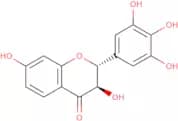
CAS:<p>Dihydrorobinetin is a flavonoid derivative, which is a naturally occurring compound found in certain plant sources. It belongs to the larger group of polyphenolic compounds known for their diverse biological activities. Dihydrorobinetin is primarily extracted from plants such as locust trees, where it occurs as a secondary metabolite.</p>Formula:C15H12O7Purezza:Min. 95%Colore e forma:PowderPeso molecolare:304.25 g/mol3,7,8,4'-Tetramethoxyflavone
CAS:<p>3,7,8,4'-Tetramethoxyflavone is a naturally occurring flavonoid, which is derived from various plant sources, including certain traditional medicinal herbs. Flavonoids like this one are noted for their diverse biological activities and potential therapeutic applications.</p>Formula:C19H18O6Purezza:Min. 95%Peso molecolare:342.34 g/mol3'-Prenylbiochanin A
CAS:<p>3'-Prenylbiochanin A is a prenylated isoflavone, which is a type of natural compound often derived from plants such as those in the Fabaceae family. Its unique structure incorporates a prenyl group, which is a 5-carbon isoprene unit, added to the biochanin A framework. This structural modification can significantly influence the compound's biological activity by enhancing its lipophilicity and bioavailability in cellular environments.</p>Formula:C21H20O5Purezza:Min. 95%Peso molecolare:352.38 g/molalpha-Naphthoflavanol
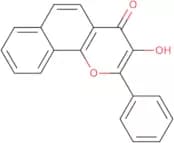
CAS:<p>**Alpha-Naphthoflavanol** is a synthetic compound, which is categorized as a flavanol derivative. It is synthesized from the naphthalene compound, a polycyclic aromatic hydrocarbon, through a series of chemical reactions involving hydroxylation and other functional group modifications. This compound is designed to specifically interfere with biological pathways by acting as an inhibitor or modulator in cellular processes.</p>Formula:C19H12O3Purezza:Min. 95%Peso molecolare:288.30 g/mol3-Hydroxy-5,2',3'-trimethoxyflavone
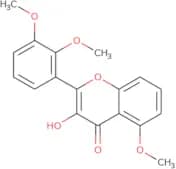
CAS:<p>3-Hydroxy-5,2',3'-trimethoxyflavone is a naturally occurring flavone, which is a type of polyphenolic compound found in various plants. This compound is derived from natural sources and is often isolated from specific plant species such as certain herbs and fruits. The mode of action of 3-Hydroxy-5,2',3'-trimethoxyflavone often involves interaction with biological pathways at the cellular level, potentially including antioxidant activity, modulation of enzyme function, and influence on signal transduction pathways.</p>Formula:C18H16O6Purezza:Min. 95%Peso molecolare:328.32 g/mol