Pterocarpani
Trovati 27 prodotti per "Pterocarpani".
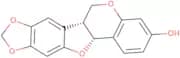
(+/-)-Maackiain
CAS:(+/-)-Maackiain is an isoflavonoid compound, which is derived from natural sources such as plants in the legume family, including Maackia amurensis. This compound plays a critical role in the defense mechanism of plants, exhibiting notable antifungal and antioxidant activities. The mode of action of (+/-)-Maackiain involves the inhibition of fungal growth by disrupting the cell wall integrity and interfering with enzymatic functions essential for fungal survival. Additionally, its antioxidant properties help in scavenging free radicals, thus protecting cells from oxidative stress.Formula:C16H12O5Purezza:Min. 95%Peso molecolare:284.26 g/molGlyceollin I, II & III (mixture)
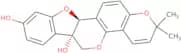
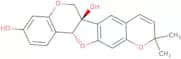
CAS:Glyceollin I, II & III (mixture) is a complex of phytoalexins, which are natural antimicrobial compounds. These are derived from soy plants, particularly when the plant experiences stress conditions such as pathogen attack, UV radiation, or other environmental stressors. The mode of action of glyceollins involves disruption of cellular processes and inhibition of growth and development in invading pathogens. Additionally, glyceollins exhibit various bioactive properties that include antioxidant, anti-inflammatory, and estrogenic activities, making them significant in research contexts.
Formula:C20H18O5Purezza:Min. 95%Colore e forma:PowderPeso molecolare:338.35 g/molDemethylmedicarpin
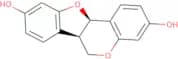
CAS:Demethylmedicarpin is a phytoalexin, which is a naturally occurring antimicrobial compound. It is typically derived from leguminous plants, such as alfalfa and other species within the Fabaceae family. The plant synthesizes this compound as a defense mechanism in response to pathogen attack, environmental stress, or injury.
Formula:C15H12O4Purezza:Min. 95%Colore e forma:PowderPeso molecolare:256.25 g/mol(+)-Maackiain
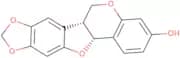
CAS:(+)-Maackiain is a naturally occurring isoflavonoid, which is derived from various leguminous plants such as Maackia amurensis. It possesses notable antifungal and antimicrobial properties. As an isoflavonoid, (+)-Maackiain exerts its activity through the inhibition of specific enzymes or pathway components involved in microbial growth and proliferation, making it a subject of interest in the development of therapeutic agents.Formula:C16H12O5Purezza:Min. 95%Peso molecolare:284.26 g/molCalopocarpin
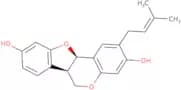
CAS:Please enquire for more information about Calopocarpin including the price, delivery time and more detailed product information at the technical inquiry form on this pageFormula:C20H20O4Purezza:Min. 95%Peso molecolare:324.37 g/molTuberosin
CAS:Tuberosin is an isoflavonoid compound derived from tuberous plant species. It is primarily sourced from various leguminous plants where it functions as a secondary metabolite. Its mode of action involves the modulation of biological pathways, such as antioxidant, anti-inflammatory, and antimicrobial activities, which are being examined for their therapeutic potential.
Formula:C20H18O5Purezza:Min. 95%Peso molecolare:338.35 g/molPisatin
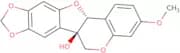
CAS:Pisatin is an isoflavonoid compound, which is a type of phytoalexin commonly found in leguminous plants, particularly in peas. It is synthesized by these plants as a natural defense mechanism. In terms of its mode of action, Pisatin inhibits fungal growth by disrupting the integrity of fungal cell membranes, thereby interfering with the pathogen's cellular processes.
Formula:C17H14O6Purezza:Min. 95%Colore e forma:Beige PowderPeso molecolare:314.29 g/mol