Cannabinoidi
I cannabinoidi sono una classe di composti chimici diversi derivati dagli acidi grassi o dai polichetoidi, che agiscono sui recettori dei cannabinoidi nelle cellule, alterando il rilascio di neurotrasmettitori nel cervello. Presenti principalmente nelle piante di cannabis, cannabinoidi come il THC e il CBD sono ampiamente studiati per i loro effetti terapeutici, tra cui il sollievo dal dolore, le proprietà anti-infiammatorie e il loro potenziale utilizzo nelle malattie neurodegenerative. Da CymitQuimica troverai una vasta gamma di cannabinoidi per la ricerca in farmacologia, neurobiologia e chimica medica.
Trovati 318 prodotti di "Cannabinoidi"
Ordinare per
Purezza (%)
0
100
|
0
|
50
|
90
|
95
|
100
SAD-448
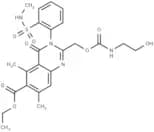
CAS:SAD-448 is a cannabinoid receptor type 1 (CB1) agonist. SAD-448 controls spasticity via action on the peripheral nerve CB1 receptor.Formula:C24H28N4O8SColore e forma:SolidPeso molecolare:532.57CAY10508
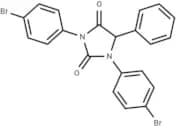
CAS:CAY10508 is a potent and selective inverse agonist for the central cannabinoid (CB1) receptor with therapeutic potential for treating obesity and drug dependence, lacking psychotropic effects. It exhibits a Ki value of 243 nM and an EC50 of 195 nM. At a concentration of 10 µM, CAY10508 displaces [3H]-CP-55,940 with 100% efficacy at the CB1 receptor and 35% at the peripheral cannabinoid (CB2) receptor. Its inverse agonist activity at the CB1 receptor was confirmed through a [35S]-GTPγS binding assay.Formula:C21H14Br2N2O2Colore e forma:SolidPeso molecolare:486.2O-2050
CAS:O-2050: strong CB1 antagonist (Ki 2.5 nM), CB2 inhibitor (Ki 0.2 nM); reduces mouse food intake, increases activity.Formula:C23H31NO4SPurezza:98%Colore e forma:SolidPeso molecolare:417.56CB1 inverse agonist 1
CAS:MRL-650 is an oral, selective CB1 agonist; IC50: CB1=7.5 nM, CB2=4100 nM; anorexigenic effects noted.Formula:C25H18Cl3N3O3Purezza:99.92%Colore e forma:SolidPeso molecolare:514.79(R)-Monlunabant
CAS:<p>(R)-Monlunabant ((R)-MRI-1891) serves as a CB1 receptor antagonist utilized in obesity and metabolic disease research [1].</p>Formula:C26H22ClF3N6O3SPurezza:98%Colore e forma:SolidPeso molecolare:591CB1 antagonist 1
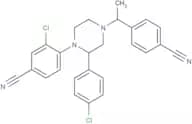
CAS:CB1 antagonist 1 is a CB1 receptor antagonist, used in the research of obesity and metabolic syndrome, neuroinflammatory disorders, cognitive disorders, andFormula:C26H22Cl2N4Purezza:98%Colore e forma:SolidPeso molecolare:461.39CB 65
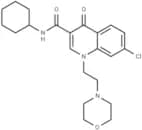
CAS:CB 65 is a high affinity and selective CB2 receptor agonist with Ki values of 3.3 and > 1000 nM for CB2 and CB1 receptors respectively.Formula:C22H28ClN3O3Purezza:99.53%Colore e forma:SolidPeso molecolare:417.93PF 514273
CAS:PF 514273 is a CB1 receptor antagonist.Formula:C21H17Cl2F2N3O2Purezza:98%Colore e forma:SolidPeso molecolare:452.28GSK494581A
CAS:GSK494581A is a GPR55 agonist and glycine transporter subtype 1 inhibitor.Formula:C27H28F2N2O4SPurezza:98%Colore e forma:SolidPeso molecolare:514.58O-2545 hydrochloride
CAS:O-2545 is a potent water-soluble central cannabinoid (CB1) and peripheral cannabinoid (CB2) receptor agonist with Ki values of 1.5 and 0.32 nM, respectively. Typically, cannabinoid agonists are highly lipophilic and require solubilization through surfactant agents or binding to water miscible substances like albumin, Tween 80, or Emulphor for use. When dissolved in saline, O-2545 has shown high efficacy in mouse behavioral models, administered either intravenously or intracerebroventricularly.Formula:C26H36N2O2HClColore e forma:SolidPeso molecolare:445GW405833 hydrochloride
CAS:GW405833 hydrochloride, a potent and selective agonist of the cannabinoid-2 (CB2) receptor (EC 50 = 0.65 nM; maximum inhibition = 44.6%), exhibits significant antihyperalgesic effects in various rodent pain models [1] [2] [3].Formula:C23H25Cl3N2O3Colore e forma:SolidPeso molecolare:483.822-Linoleoyl Glycerol
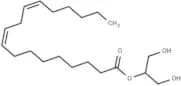
CAS:2-Arachidonoyl glycerol (2-AG), a natural endocannabinoid ligand for the CB1 receptor, was isolated from porcine brain and characterized. Its congener, 2-linoleoyl glycerol (2-LG), which has a linoleoyl group instead of an arachidonoyl group, also exists alongside 2-AG in vivo. While 2-LG exhibits low intrinsic activity, it enhances the activity of 2-AG and other endocannabinoids through an "entourage" effect, attributed to the inhibition of breakdown and reuptake pathways that typically decrease endocannabinoid levels post-release.Formula:C21H38O4Colore e forma:SolidPeso molecolare:354.531Heptadecanoyl ethanolamide
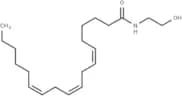
CAS:Heptadecanoyl ethanolamide, an endogenous cannabinoid, serves as a synthetic analog of PEA, featuring an odd-numbered (17-carbon) fatty acid chain [1].Formula:C19H39NO2Colore e forma:SolidPeso molecolare:313.52Tedalinab
CAS:Tedalinab is an effective and selective cannabinoid receptor 2 agonist.Formula:C19H21F2N3OPurezza:98%Colore e forma:SolidPeso molecolare:345.39Tricosanoyl Ethanolamide
CAS:Tricosanoyl ethanolamide, a fatty N-acyl ethanolamine within the endocannabinoid family, has an ethanolamine metabolite whose significance remains to be established.Formula:C25H51NO2Colore e forma:SolidPeso molecolare:397.688Hemopressin(rat) TFA
CAS:Hemopressin(rat) TFA, a nonapeptide from hemoglobin α1-chain, selectively inhibits CB1 receptors and reduces inflammatory pain.Formula:C55H78F3N13O14Colore e forma:SolidPeso molecolare:1202.28CB-25
CAS:CB-25 is a partial agonist ligand of CB1 cannabinoid receptors, augmenting Forskolin-induced cAMP formation in cancer cells, though not affecting hCB1-CHO cellsFormula:C25H41NO3Purezza:98%Colore e forma:SolidPeso molecolare:403.6CB2R-IN-1
CAS:CB2R-IN-1 is a potent inverse agonist of the cannabinoid CB2 receptor (Ki: 0.9 nM).Formula:C23H27F3N4O6S3Purezza:98%Colore e forma:SolidPeso molecolare:608.67γ-Linolenoyl monoethanolamide
CAS:γ-Linolenoyl monoethanolamide, a fatty N-acyl ethanolamine, acts as an endocannabinoid [1] [2].Formula:C20H35NO2Colore e forma:SolidPeso molecolare:321.505PF-03550096
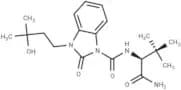
CAS:PF-03550096, an orally active synthetic cannabinoid (CB), selectively binds to peripheral CB2 receptors with a Ki value of 7.9 nM, demonstrating analgesic activity [1].Formula:C19H28N4O4Colore e forma:SolidPeso molecolare:376.45PSNCBAM-1
CAS:PSNCBAM-1 (PSNCBAM 1) is a CB1 receptor negative allosteric modulator (EC50 = 0.1 μM) with hypophagic effects in vivo.Formula:C22H21ClN4OPurezza:99.86%Colore e forma:SolidPeso molecolare:392.88AM841
CAS:AM841, a high-affinity electrophilic ligand, covalently interacts with a cysteine residue in helix six, thus activating the CB1 cannabinoid receptor.Formula:C26H39NO3SPurezza:98%Colore e forma:SolidPeso molecolare:445.66URB447
CAS:URB447, a peripherally restricted CB1 cannabinoid antagonist with IC50 values of 313 nM for rat CB1 receptor and 41 nM for human CB2 receptor, effectively reduces food intake and body weight gain in mice. It achieves these effects without penetrating the brain or antagonizing central CB1-dependent responses, making it a potential research tool for obesity studies [1].Formula:C25H21ClN2OColore e forma:SolidPeso molecolare:400.9CB-52
CAS:<p>CB-52 acts as a neutral antagonist and ligand for the CB2 cannabinoid receptor [1].</p>Formula:C26H43NO3Colore e forma:SolidPeso molecolare:417.62Amauromine
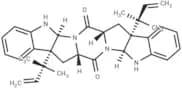
CAS:Amauromine is a peripherally selective and potent cannabinoid receptor type 1 (CB1) receptor antagonist, a novel alkaloid with vasodilatory activity.Formula:C32H36N4O2Colore e forma:SolidPeso molecolare:508.65Isopropyl dodec-11-enylfluorophosphonate
CAS:Isopropyl dodec-11-enylfluorophosphonate (IDEFP) is an organophosphorus ester functioning as a central cannabinoid receptor (CB1) antagonist and exhibitsFormula:C15H30FO2PPurezza:98%Colore e forma:SolidPeso molecolare:292.37OMDM-5
CAS:OMDM-5 is a potent vanilloid receptor type 1 (TRPV1, EC50 = 75 nM) agonist, showing weak ligand activity at cannabinoid type 1 receptor (CB1, Ki=4.9 μM).Formula:C26H44N2O3Purezza:99.73%Colore e forma:SolidPeso molecolare:432.64GP 1a
CAS:<p>GP 1a: potent CB2 receptor agonist (EC50=7.1), 30x CB2 over CB1 preference, boosts P-ERK1/2, aids skin healing, anti-inflammatory.</p>Formula:C23H22Cl2N4OPurezza:99.79%Colore e forma:SolidPeso molecolare:441.35GW 833972A
CAS:<p>GW 833972A: selective CB2 agonist; reduces neural depolarization and citric acid cough in animals.</p>Formula:C18H14Cl2F3N5OPurezza:99.93%Colore e forma:SoildPeso molecolare:444.24Cannabichromevarin
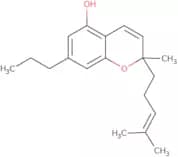
CAS:Prodotto controllato<p>Cannabichromevarin is a phytocannabinoid naturally found in very low levels compared to other cannabinoids from which it differs in having a propyl chain in place of a pentyl chain1. Based on its structure, it is believed to act as a potent anandamine inhibitor similarly to cannabichromene, however, the majority of its pharmacological and toxicological properties are currently unknown. In vitro assays have shown cannabichromevarin protect against oxidative stress in vitro in macrophages2. It was recently shown to be effective for treatment-resistant epilepsy in a patented combination with cannabidiol in a recent open-ended clinical trial3.</p>Formula:C19H26O2Purezza:Min. 95%Peso molecolare:286.41 g/molAc-Atovaquone
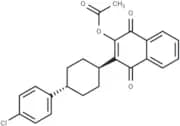
CAS:Ac-Atovaquone, an ester-acetylated derivative of atovaquone, acts as a potent inhibitor of cytochrome bc1 (cytochrome bc1). This compound shows potential for use in malaria research.Formula:C24H21ClO4Colore e forma:SolidPeso molecolare:408.87CB2 receptor antagonist 1
CAS:Compound 29 is a potent, CB2-selective antagonist/reverse agonist. Derivatives 23 & 24 offer antinociception; 24 activates cannabinoid/TRPV1 receptors.Formula:C28H47NO3Colore e forma:SolidPeso molecolare:445.68Taranabant
CAS:<p>Taranabant: potent CB1 receptor inverse agonist; inhibits agonists with 0.13 nM Ki in vitro.</p>Formula:C27H25ClF3N3O2Purezza:99.06% - 99.06%Colore e forma:SolidPeso molecolare:515.96MDMB-FUBICA
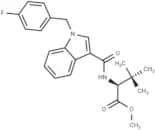
CAS:MDMB-FUBICA is a potent agonist of the cannabinoid receptors and exhibits psychoactive properties. It can be utilized in e-cigarettes.Formula:C23H25FN2O3Colore e forma:SolidPeso molecolare:396.455AM8936
AM8936: potent CB1 agonist, EC50 rCB1=8.6nM/hCB1=1.4nM, Ki rat CB1=0.55nM; potential for CNS, metabolic, pain, glaucoma research.Formula:C25H33NO3Colore e forma:SolidPeso molecolare:395.53BNS808
CAS:<p>BNS808 is an orally active, selective CB1R antagonist with an IC50 of 0.8 nM, demonstrating significant selectivity for CB2R and minimal brain penetration. It is being studied for the treatment of obesity and related metabolic complications, such as metabolic dysfunction-associated steatotic liver disease (MASLD). BNS808 reduces drug exposure to the central nervous system, enhancing safety, and minimizes drug interactions through high plasma protein binding.</p>Formula:C25H20Cl3N3O3SColore e forma:SolidPeso molecolare:548.869Bzo-poxizid
CAS:Bzo-poxizid is a synthetic cannabinoid and a psychoactive substance.Formula:C20H21N3O2Colore e forma:SolidPeso molecolare:335.40CB1/2 receptor-1
CAS:CB1/2 receptor-1 (compound 5.3) serves as an agonist for CB1/2 receptors and is utilized in angiogenesis research.Formula:C33H48O2Colore e forma:SolidPeso molecolare:476.73Cannabigerovarin
CAS:Cannabigerovarin (CBGV) is a compound categorized as a phytocannabinoid.Formula:C19H28O2Peso molecolare:288.42PSB-KK1415
CAS:PSB-KK1415 is a selective agonist for the human orphan G protein-coupled receptor GPR18, with an EC50 of 19.1 nM.Formula:C24H23ClN6O2Peso molecolare:462.93HU 433
CAS:<p>HU 433, a synthetic cannabinoid, acts as a CB2 receptor agonist and is an enantiomer of HU 308. It provides anti-inflammatory and neuroprotective effects by binding to the CB2 receptor, primarily found on immune cells, thereby modulating immune responses and inflammation. Additionally, HU 433 influences microglial signaling pathways, particularly LPS and IFNγ-mediated routes, affecting the phosphorylation of MAPKs, including ERK1/2, JNK, p38, and Akt. This compound is valuable in researching neuroinflammation and retinal diseases.</p>Formula:C27H42O3Colore e forma:SolidPeso molecolare:414.62AM11638
CAS:AM11638 is an endogenous cannabinoid analogue that targets cannabinoid receptors (CB1 and CB2 receptors), exhibiting analgesic properties. It shows potential for research in neurological disorders and inflammation-related diseases.Formula:C27H41NO2Colore e forma:SolidPeso molecolare:411.62TM38837
CAS:<p>CB1 antagonist 4 is an inverse agonist of cannabinoid receptor 1 (CB1) with an IC50 of 0.4 nM. It can reduce body weight, improve plasma inflammatory markers, and enhance glucose homeostasis [1].</p>Formula:C27H20Cl2F3N7OColore e forma:SolidPeso molecolare:586.40HU-308
CAS:<p>HU-308, a synthetic cannabinoid analogue, is a highly selective agonist of the CB2 receptor. It demonstrates an affinity for the CB2 receptor that is over 440 times greater than its affinity for the CB1 receptor, which are predominantly found in immune cells. This compound plays a crucial role in modulating the immunosuppressive effects of the endocannabinoid system (ECS). Additionally, HU-308 possesses anti-inflammatory and neuroprotective properties, and it regulates the function of microglia. Its potential applications include research into neuroinflammation and retinal diseases.</p>Formula:C27H42O3Colore e forma:SolidPeso molecolare:414.62MDA7
CAS:<p>MDA7 is a selective agonist of the cannabinoid receptor 2 (CB2), demonstrating an EC50 of 128 nM in human CB2 receptors and 67.4 nM in rat CB2 receptors. The compound exhibits good affinity for CB2 receptors, with Ki values of 422 nM for humans and 238 nM for rats. In rat models, MDA7 shows analgesic activity.</p>Formula:C22H25NO2Colore e forma:SolidPeso molecolare:335.439CBR Agonist-1
CBR Agonist-1 targets CB1R and CB2R with Ki of 0.18 μM and 1.22 μM, useful for studying cannabinoid-related diseases.Formula:C27H27FN4OColore e forma:SolidPeso molecolare:442.53GAT564
GAT564, an allosteric CB1R modulator, shows EC50s of 87 nM (cAMP) & 320 nM (β-arrestin2) and lowers IOP effectively in glaucoma mice.Formula:C20H16N2O2SColore e forma:SolidPeso molecolare:348.42BAY 38-7271
CAS:BAY 38-7271: potent neuroprotective, selective CB1/CB2 agonist, Ki of 1.85 nM (CB1) & 5.96 nM (CB2).Formula:C20H21F3O5SPurezza:98%Colore e forma:SolidPeso molecolare:430.441'-Naphthoyl-2-methylindole
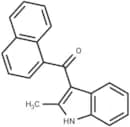
CAS:1'-Naphthoyl-2-methylindole (Compound 88) acts as a cannabinoid mimic and an inhibitor of Win 55212-2, displaying a 34% inhibition of [3H]Win 55212-2 binding to cannabinoid receptors at a concentration of 3 μM.Formula:C20H15NOColore e forma:SolidPeso molecolare:285.34FDU-PB-22
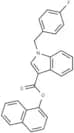
CAS:<p>FDU-PB-22, a novel synthetic cannabinoid, undergoes rapid metabolism in human liver microsomes (HLM) with a half-life of 12.4 minutes.</p>Formula:C26H18FNO2Colore e forma:SolidPeso molecolare:395.43