Zuccheri e nucleobasi della spina dorsale
Gli zuccheri dello scheletro e le basi azotate sono componenti essenziali degli acidi nucleici come DNA e RNA. Lo scheletro è composto da gruppi zuccheri e fosfati, mentre le basi azotate formano il codice genetico attraverso l'appaiamento delle basi. Questi composti sono fondamentali nello studio della genetica e della biologia molecolare. Presso CymitQuimica, è possibile trovare una varietà di zuccheri dello scheletro e basi azotate per la ricerca e l'uso in laboratorio.
Trovati 1001 prodotti di "Zuccheri e nucleobasi della spina dorsale"
Ordinare per
Purezza (%)
0
100
|
0
|
50
|
90
|
95
|
100
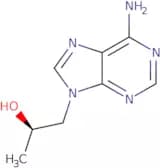
(R)-(+)-9-(2-Hydroxypropyl)adenine
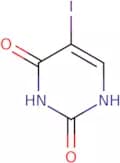
CAS:<p>(R)-(+)-9-(2-Hydroxypropyl)adenine (HPA) is a carbocyclic nucleoside that has been shown to be effective against the human immunodeficiency virus (HIV). HPA inhibits the reverse transcriptase and integrase enzymes, which are necessary for HIV replication. It also inhibits phosphorylation of host cell proteins, leading to decreased viral protein synthesis. The reaction yield of this compound is high and it can be industrially produced with a synthetic process. HPA is synthesized from adenosine by the addition of two hydroxyl groups on the adjacent carbon atoms. HPA has a low energy ring-opening reaction with hydrogen chloride, which leads to its potent inhibition of HIV infection.</p>Formula:C8H11N5OPurezza:Min. 95%Colore e forma:PowderPeso molecolare:193.21 g/mol5-Iodouracil
CAS:<p>5-Iodouracil is an irreversible inhibitor of 5-hydroxytryptamine 2B receptor (5-HT2B) that is a group p2 molecule. It has been found to be effective in the treatment of various types of cancer, including colorectal cancer. 5-Iodouracil inhibits cell proliferation by blocking the binding of the growth factor to its receptor on the surface of cells. The drug also inhibits the enzyme activities of human serum albumin and tyrosine phosphatase.</p>Formula:C4H3IN2O2Purezza:Min. 97 Area-%Colore e forma:White PowderPeso molecolare:237.98 g/mol5-Bromo-6-azauracil
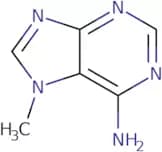
CAS:<p>5-Bromo-6-azauracil is a nucleophilic compound that can be used to treat wastewater. It is also able to lyse cells and has been used as an immobilizing agent. The reactive nature of 5-Bromo-6-azauracil enables it to undergo nucleophilic substitutions with amines, which are present in the cell wall and other biomolecules. This process results in the formation of amide bonds, which leads to the inhibition of protein synthesis. 5-Bromo-6-azauracil has shown inhibitory effects on glucans, which may be due to its ability to form covalent bonds with glucose molecules.</p>Formula:C3H2BrN3O2Purezza:Min. 95%Colore e forma:White To Off-White SolidPeso molecolare:191.97 g/mol7-Methyladenine
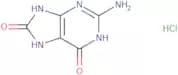
CAS:<p>7-Methyladenine is a nitrogen-containing compound that has been shown to cause an increase in renal blood flow. It is also a synthetic estrogen. 7-Methyladenine is mainly metabolized by methylation, and it can be detected in urine samples. This substance has been shown to have a direct effect on cardiac contractility and blood pressure. 7-Methyladenine also has the ability to stimulate the growth of cells and tissues, as well as being able to inhibit the synthesis of certain proteins.</p>Formula:C6H7N5Purezza:Min. 95%Colore e forma:White To Off-White SolidPeso molecolare:149.15 g/mol8-Hydroxyguanine hydrochloride
CAS:<p>8-Hydroxyguanine hydrochloride is a fine chemical that is used as a building block in the synthesis of pharmaceuticals, agrochemicals and other organic compounds. It is also used as a reagent for research into the mechanisms of DNA damage. CAS No. 1246818-54-1 8-Hydroxyguanine hydrochloride is a complex compound that can be used as a versatile building block for the synthesis of many different types of molecules, including valuable intermediates and scaffolds for drug discovery.</p>Formula:C5H5N5O2•HClPurezza:Min. 90 Area-%Colore e forma:White PowderPeso molecolare:203.59 g/mol8-Azahypoxanthine
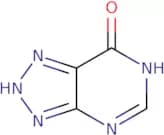
CAS:<p>8-Azahypoxanthine is a hydroxyl analog of hypoxanthine. It contains a nitrogen atom in place of the oxygen atom on the 2-position. 8-Azahypoxanthine has been shown to be an effective inhibitor of purine biosynthesis in yeast cells and can be used as a replacement for xanthine during the synthesis of adenosine triphosphate (ATP) from uracil. 8-Azahypoxanthine was found to have good detection sensitivity, with an estimated detection limit of 0.2 µM. The optimum pH for this compound is 7.8, which is similar to that of wild type strain and tissue culture media. Mutants resistant to 8-azahypoxanthine were generated by exposure to high concentrations (>100 mM) for long periods (>2 days). Mutant strains showed no detectable enzyme activity against orotic acid or glycosidic bond formation with erythromycin</p>Purezza:Min. 95%Colore e forma:PowderPeso molecolare:137.1 g/mol5-Trifluorothymine
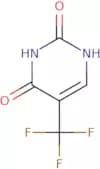
CAS:<p>Intermediate in the synthesis of tipiracil + trifluridine</p>Formula:C5H3F3N2O2Purezza:Min. 95%Colore e forma:PowderPeso molecolare:180.08 g/mol1,3-Dipropylxanthine
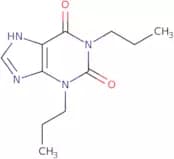
CAS:Prodotto controllato<p>1,3-Dipropylxanthine is a congener of caffeine. It is a nonselective adenosine receptor antagonist that binds to the adenosine receptors in the kidney. 1,3-Dipropylxanthine has been shown to increase renal blood flow and increase urine output. This drug may be used as a mobilisation agent for patients who are bedridden or have limited mobility. It should not be given to patients with heart disease or high blood pressure. 1,3-Dipropylxanthine has also been shown to inhibit the binding of pyrimido [1,2-a]benzimidazole (PPIM) and furyl derivatives to the adenosine receptor.</p>Formula:C11H16N4O2Purezza:Min. 95%Colore e forma:PowderPeso molecolare:236.27 g/mol5-Iodocytosine
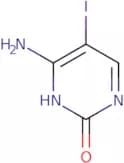
CAS:<p>5-Iodocytosine (5-IC) is an analog of cytosine that can be used as a precursor for the synthesis of thymine. 5-IC has been shown to cross-couple with DNA, which may contribute to its antiviral potency. 5-IC is also a potent inhibitor of dna replication and herpes simplex virus. The biochemical properties of 5-IC have been extensively studied, including its ability to react with hydrochloric acid to form the corresponding tautomers. The hydrolysis rate increases at higher pH values and decreases at lower pH values. Bioconjugate chemistry has been applied to synthesize a bioconjugated prodrug of 5-IC for cancer treatment.</p>Formula:C4H4IN3OPurezza:Min. 95%Colore e forma:PowderPeso molecolare:237 g/mol6-Ethoxypurine
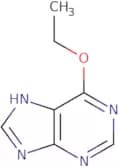
CAS:<p>6-Ethoxypurine is a nucleoside analog that inhibits the enzyme ribonucleotide reductase, which converts ribonucleotides to deoxyribonucleotides. It is used in cell culture to measure the effects of radiation and hydrochloric acid on the production of ATP. 6-Ethoxypurine has been shown to inhibit influenza virus replication with an IC50 of 10 μM. This compound has reactive hydroxyl groups that allow it to participate in hydrogen bonding, which can be beneficial for interactions with other molecules. 6-Ethoxypurine also exhibits nucleophilic properties, which allows it to react with other chemical species and can be useful for generating new chemical compounds.</p>Formula:C7H8N4OPurezza:Min. 95%Colore e forma:PowderPeso molecolare:164.16 g/mol6-Chloro-1,3-dimethyluracil
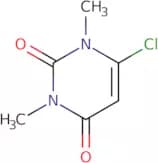
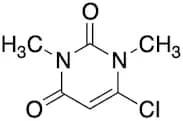
CAS:<p>6-Chloro-1,3-dimethyluracil is a nucleoside analog that has been shown to be cytotoxic in vitro. This compound can be synthesized by reacting naphthalene with a nucleophilic nitrogen source, such as sodium carbonate and chlorinating the resulting product with trifluoroacetic acid. 6-Chloro-1,3-dimethyluracil can also be synthesized by reacting malonic acid with cyclen and uridine in the presence of copper metal. The reaction mechanism is believed to involve photoelectron transfer from the copper metal to the uridine ring.</p>Formula:C6H7ClN2O2Purezza:Min. 95%Colore e forma:White PowderPeso molecolare:174.58 g/mol7-Methylguanine
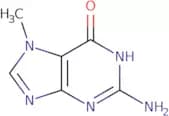
CAS:<p>Temozolomide is an anticancer drug that is used in the treatment of malignant brain tumors. It is a prodrug which undergoes conversion to its active form 7-methylguanine by deamination and oxidation. Temozolomide inhibits viral replication by inhibiting the synthesis of nuclear DNA and blocking the progression of RNA polymerase. The reaction mechanism involves oxidative injury to DNA, leading to crosslinking and breakage with subsequent inhibition of polymerase chain reaction amplification. Temozolomide has been shown to have carcinogenic potential in laboratory animals. This drug has been shown to have biochemical properties that are similar to those found in other drugs such as cisplatin, vinblastine, and adriamycin, which also inhibit cellular growth through reactive oxygen species (ROS) production. Structural analysis has revealed that temozolomide binds tightly to nuclear DNA with a conformation that is similar to the natural substrate for DNA gyrase, top</p>Formula:C6H7N5OPurezza:Min. 95 Area-%Colore e forma:Slightly Brown PowderPeso molecolare:165.15 g/mol2-Thiothymine
CAS:<p>2-Thiothymine is a nucleotide that can be synthesized by the polymerase chain reaction. It is used as a probe for determining the sequence of DNA duplexes. 2-Thiothymine binds to dna and forms hydrogen bonds with the nitrogen atoms in dna bases, which prevents them from being able to bind with other dna bases, thereby disrupting the binding of dna strands. This leads to chain reactions that result in high temperatures and could cause damage to the cells. 2-Thiothymine has been shown to be toxic to both bacteria and human cells. It was found to inhibit HIV infection by binding to viral RNA and preventing it from being translated into protein, leading to cell death.</p>Formula:C5H6N2OSPurezza:Min. 95%Colore e forma:Off-White PowderPeso molecolare:142.18 g/molN9-Methyladenine
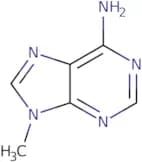
CAS:<p>N9-Methyladenine is a purine derivative that has been shown to be an antagonist at the adenosine receptor. It can be synthesized by reacting N6-benzoyladenine with methanol, followed by treatment with aqueous sodium hydroxide and hydrogen peroxide. The molecule is planar, with a neutral pKa of 7.4. Proton and nitrogen NMR spectra were obtained for this compound, which showed it to have two hydrogen bonds and one intermolecular hydrogen bond. The proton resonances are observed at 2.97 ppm (H1) and 3.27 ppm (H2).</p>Formula:C6H7N5Purezza:Min. 95%Colore e forma:PowderPeso molecolare:149.15 g/molXanthine
CAS:<p>Xanthine is a reactive, oxidized form of purine. It is found in the human body as a product of xanthine oxidase (XO) metabolism of xanthine and hypoxanthine. Xanthine is known to have antioxidant properties and has been shown to inhibit the activity of xanthine oxidase in vitro. Xanthine, when combined with other anticancer drugs such as doxorubicin, can be used as an anticancer agent. This drug has been shown to cause oxidative injury in humans and animal models at physiological levels.</p>Formula:C5H4N4O2Purezza:Min. 98 Area-%Colore e forma:Off-White PowderPeso molecolare:152.11 g/mol6-Methyl-5-nitrouracil
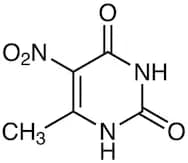
CAS:Formula:C5H5N3O4Purezza:>95.0%(T)(HPLC)Colore e forma:Light orange to Yellow to Green powder to crystalPeso molecolare:171.11Azathioprine
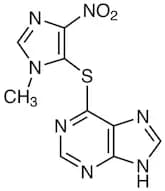
CAS:Formula:C9H7N7O2SPurezza:>98.0%(T)(HPLC)Colore e forma:Light yellow to Yellow to Green powder to crystalPeso molecolare:277.26Eritadenine
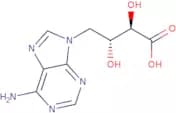
CAS:<p>Eritadenine is a glycoside that has been found in the edible roots of plants belonging to the family Euphorbiaceae. Eritadenine is an inhibitor of malonic acid, which is a precursor for fatty acid synthesis. It has also been shown to have biological properties, such as inhibiting fat cell growth and reducing cholesterol levels in rats. Eritadenine can be detected with an analytical method that uses high-performance liquid chromatography coupled with a photodiode array detector. This method separates and identifies eritadenine from other compounds using polymerase chain reaction amplification on camp levels and sodium salts. Eritadenine can also be found in samples of liver cells or ethanolamine.</p>Formula:C9H11N5O4Purezza:Min. 95%Colore e forma:PowderPeso molecolare:253.21 g/molλ DNA
<p>Lambda DNA is a double stranded linear DNA of 48,502 base pairs in length. It is isolated from bacteriophage Lambda. The Lambda Phage is a bacterial virus (bacteriophage), that infects the bacterial species E. coli. The phage is isolated from the heat inducible lysogen E. coli strain.</p>Colore e forma:Liquid, Colourless, ClearDH5a Competent Cells for Subcloning
DH5α Competent Cells are ideal cells that are made efficient chemically for transformation techniques. They are recommended for routine subcloning into plasmid vectors giving a transformation efficiency of ≥1 × 10â¶cfu/μg. Subcloning efficiency cells are not suitable for the generation of cDNA libraries. The φ80dlacZΔM15 marker provides α-complementation of the β-galactosidase gene from pUC or similar vectors to allow blue/white colony screening on bacterial agar plates containing X-Gal and similar chemicals.Autoinduction Medium (AIM) Solution
Autoinduction Medium (AIM) Solution for protein expression that needs little user intervention after inoculation of the culture. The principle of AIM media is based on carbon sources in the medium that are metabolized differentially to promote high density cell growth and automatically induce protein expression from lac promoters. This solution constitutes a unique combination of carbon source concentrations. AIM with pH 7.2 provides an efficient way to produce recombinant proteins for functional characterizations. This solution is useful in the study of intensity of induction, expression at different cell densities, or investigation of induction in early-, mid-, or late-log conditions of proteins of focused interest.Colore e forma:Liquid, Dark Yellow to Brown, ClearN6-Isopentenyladenine-9-glucoside
CAS:<p>Please enquire for more information about N6-Isopentenyladenine-9-glucoside including the price, delivery time and more detailed product information at the technical inquiry form on this page</p>Formula:C16H23N5O5Purezza:Min. 95%Colore e forma:PowderPeso molecolare:365.38 g/molBHQ-1 NHS
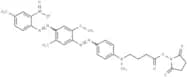
CAS:<p>BHQ-1 NHS is a compound that is directly labeled with fluorescently labeled nucleotide.</p>Formula:C30H31N7O7Colore e forma:SolidPeso molecolare:601.617-Hydroxy-4-methyl-2(1H)-quinolone
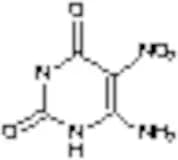
CAS:<p>Fluorescent 7-Hydroxy-4-methylquinolone detects DNA hydroxyl radicals; store in dark.</p>Formula:C10H9NO2Colore e forma:SolidPeso molecolare:175.1846-Amino-5-nitrouracil
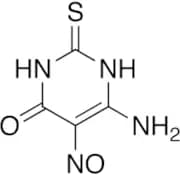
CAS:Prodotto controllato<p>Applications 6-Amino-5-nitrouracil (cas# 3346-22-3) is a compound useful in organic synthesis.<br>References Graves, A., et al.: J. Mol. Biol., 377, 914 (2008),<br></p>Formula:C4H4N4O4Colore e forma:NeatPeso molecolare:172.106-Amino-5-nitroso-2-thiouracil
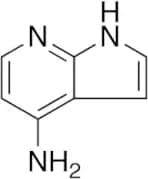
CAS:Prodotto controllato<p>Applications Pyrimidine with the ability to form complexes with heavy metal ions.<br>References Iltzsch, M., et al.: Biochem. Pharmacol., 48, 781 (1994),<br></p>Formula:C4H4N4O2SColore e forma:NeatPeso molecolare:172.171,7-Dideazaadenine
CAS:Prodotto controllato<p>Applications Used in the preparation of pyrrolotriazines.<br></p>Formula:C7H7N3Colore e forma:NeatPeso molecolare:133.152-O-Ethylthymidine
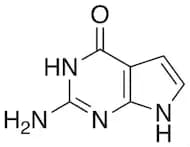
CAS:Prodotto controllatoFormula:C12H18N2O5Colore e forma:NeatPeso molecolare:270.287-Deazaguanine
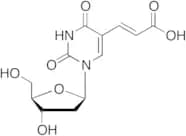
CAS:Prodotto controllato<p>Applications 7-Deazaguanine (cas# 7355-55-7) is a compound useful in organic synthesis.<br></p>Formula:C6H6N4OColore e forma:NeatPeso molecolare:150.14(E)-5-(2-Carboxyvinyl)-2’-deoxyuridine
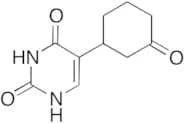
CAS:Prodotto controllatoFormula:C12H14N2O7Colore e forma:NeatPeso molecolare:298.2495-(3-Keto-cyclohexyl)uracil
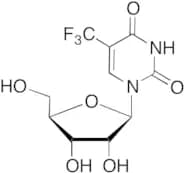
Prodotto controllatoFormula:C10H12N2O3Colore e forma:NeatPeso molecolare:208.2145-(Trifluoromethyl)uridine
CAS:Prodotto controllatoFormula:C10H11F3N2O6Colore e forma:NeatPeso molecolare:312.199(E)-5-(2-Carboxvinyl)uracil
CAS:Prodotto controllato<p>Applications (E)-5-(2-Carboxvinyl)uracil (cas# 57412-59-6) is a compound useful in organic synthesis.<br></p>Formula:C7H6N2O4Colore e forma:NeatPeso molecolare:182.136-Chloro-1,3-dimethyluracil
CAS:Prodotto controllatoFormula:C6H7ClN2O2Colore e forma:NeatPeso molecolare:174.586-Chloro-1,3-dimethyl-5-nitrouracil
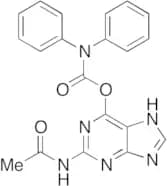
CAS:Prodotto controllatoFormula:C6H6ClN3O4Colore e forma:NeatPeso molecolare:219.583N2-Acetyl-O6-diphenylcarbamoylguanine
CAS:Prodotto controllato<p>Applications N2-Acetyl-O6-diphenylcarbamoylguanine is a reactant in the synthesis of 1',2'-oxetane-nucleosides bearing 2'-C-Me substituents with anti-HCV activity.<br>References Komsta, Z., et. al.: Tetrahedron Lett., 55, 6216 (2014)<br></p>Formula:C20H16N6O3Colore e forma:NeatPeso molecolare:388.385-Azauridine
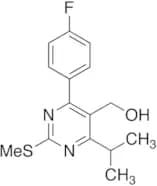
CAS:Prodotto controllato<p>Applications 5-Azauridine (cas# 1476-82-0) is a useful research chemical.<br></p>Formula:C8H11N3O6Colore e forma:NeatPeso molecolare:245.1894-(4-Fluorophenyl)-5-hydroxymethyl-6-isopropyl-2-methylthiopyrimidine
CAS:Prodotto controllato<p>Applications 4-(4-Fluorophenyl)-5-hydroxymethyl-6-isopropyl-2-methylthiopyrimidine (cas# 895129-11-0) is a compound useful in organic synthesis.<br></p>Formula:C15H17FN2OSColore e forma:NeatPeso molecolare:292.376-Chloro-7-deazaguanine
CAS:Prodotto controllato<p>Applications 6-Chloro-7-deazaguanine (cas# 84955-31-7) is a compound useful in organic synthesis.<br></p>Formula:C6H5ClN4Colore e forma:NeatPeso molecolare:168.58N7-(2-Hydroxyethyl)adenine
CAS:Prodotto controllato<p>Applications A DNA adduct ethylene oxide hydroxyethylnitrosourea. It is also used in the preparation of acyclic nucleosides and nucleotides as antiviral agents.<br>References Snoeck, R., et al.: Antimicrob. Agents Chemother., 32, 1839 (1988), Bronson, J., et al.: J .Med. Chem., 32, 1457 (1989), Balzarini, J., et al.: J. Biol. Chem., 266, 8686 (1991),<br></p>Formula:C7H9N5OColore e forma:NeatPeso molecolare:179.1796-Azauridine
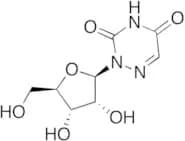
CAS:Prodotto controllato<p>Stability Hygroscopic<br>Applications 6-Azauridine is can be applied in antiviral studies.<br></p>Formula:C8H11N3O6Colore e forma:NeatPeso molecolare:245.192-Deoxy-3,5-di-O-p-toluoyl-D-ribofuranosyl Chloride
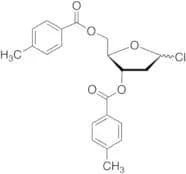
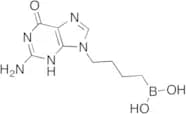
CAS:Prodotto controllatoFormula:C21H21ClO5Colore e forma:NeatPeso molecolare:388.849-(4-Dihydroxyborylbutyl)guanine
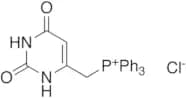
CAS:Prodotto controllatoFormula:C9H14BN5O3Colore e forma:NeatPeso molecolare:251.056-Uracilylmethylene Triphenylphosphonium Chloride
CAS:Prodotto controllatoFormula:C23H20N2O2P•ClColore e forma:NeatPeso molecolare:422.845,6-Diaminouracil Sulfate
CAS:Prodotto controllato<p>Applications 5,6-Diaminouracil sulfate is an intermediate in the synthesis of Paraxanthine (P192500) and Paraxanthine analogs.<br>References Mueller, C.E., et al.: J. Med. Chem., 36, 3341 (1993),<br></p>Formula:C6H4Cl2FNColore e forma:NeatPeso molecolare:180.007Tris(trimethylsilyl)guanine
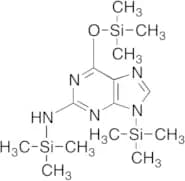
CAS:Prodotto controllato<p>Applications Tris(trimethylsilyl)guanine is an intermediate used in the synthesis of 9-(2-Hydroxyethyl)guanine (H942035), which is an impurity of the antiviral agent Acyclovir (A192400). 9-(2-Hydroxyethyl)guanine is a nucleoside phosphotransferase acceptor.<br>References Kamimura, A. et al.: Agric. Biol. Chem., 37, 2037 (1973);<br></p>Formula:C14H29N5OSi3Colore e forma:NeatPeso molecolare:367.672,4-Dithiouridine
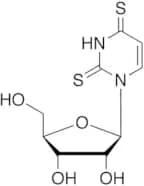
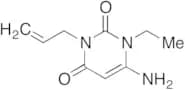
CAS:Prodotto controllato<p>Stability Hygroscopic<br>Applications 2,4-Dithiouridine (cas# 13239-96-8) is a compound useful in organic synthesis.<br></p>Formula:C9H12N2O4S2Colore e forma:NeatPeso molecolare:276.333-Allyl-6-amino-1-ethyluracil
CAS:Prodotto controllatoFormula:C9H13N3O2Colore e forma:NeatPeso molecolare:195.2185-Bromodihydrouracil
CAS:Prodotto controllatoFormula:C4H5BrN2O2Colore e forma:NeatPeso molecolare:192.999