Nucleotidi
Sottocategorie di "Nucleotidi"
Trovati 2636 prodotti di "Nucleotidi"
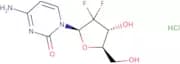
Gemcitabine HCl
CAS:Anticancer nucleoside; DNA synthesis interference
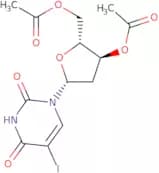
Formula:C9H11F2N3O4·HClPurezza:Min. 98 Area-%Colore e forma:White PowderPeso molecolare:299.66 g/mol3',5'-Di-O-acetyl-2'-deoxy-5-iodouridine
CAS:3',5'-Di-O-acetyl-2'-deoxy-5-iodouridine is an inorganic, deoxyribonucleoside. It is the acetyl derivative of 2'-deoxy-5-iodouridine, which is an analog of uracil. 3',5'-Di-O-acetyl-2'-deoxy-5-iodouridine has been shown to have antiviral properties against herpes simplex virus type 1 (HSV1) and herpes simplex virus type 2 (HSV2) in animals. This drug also has antiangiogenic properties, inhibiting the growth of new blood vessels and tissues at the site of a tumour. Studies have shown that 3',5'-di-O acetyl 2'-deoxyuridine can be incorporated into exudates from human cancer patients and can inhibit tumor cell proliferation in vivo.
Formula:C13H15IN2O7Purezza:Min. 95%Peso molecolare:438.18 g/molRef: 3D-ND08349
Prodotto fuori produzioneN6-Benzoyl-3'-O-tert-butyldimethylsilyl-2'-O-(2-methoxyethyl)adenosine
N6-Benzoyl-3'-O-tert-butyldimethylsilyl-2'-O-(2-methoxyethyl)adenosine is a modified nucleoside with antiviral activity. This compound is synthesized by a modified method that avoids the use of phosphoramidites, which are usually used to synthesize nucleosides. N6-Benzoyl-3'-O-tert-butyldimethylsilyl-2'-O-(2-methoxyethyl)adenosine is an activator of viral RNA polymerase and has been shown to be active against HIV and herpes simplex virus type 1.
Purezza:Min. 95%Ref: 3D-NB158817
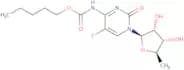
Prodotto fuori produzioneCapecitabine
CAS:Pro-drug of 5-FU; anti-cancer agent
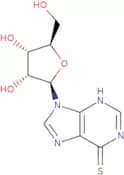
Formula:C15H22FN3O6Purezza:Min. 95%Colore e forma:PowderPeso molecolare:359.35 g/mol6-Thioinosine
CAS:6-Thioinosine is a nucleoside analog that is chemically related to 6-mercaptopurine. It inhibits the polymerase chain reaction and has been shown to inhibit aerobic metabolism in aerobacter aerogenes. It also inhibits the growth of hl-60 cells, which are derived from human leukemia cells. 6-Thioinosine has been shown to have anti-inflammatory properties, which may be due to its ability to inhibit prostaglandin synthesis. It also blocks the activity of certain receptors and has a disease activity against infectious diseases such as systemic candidiasis, bacterial endocarditis, and bowel disease.
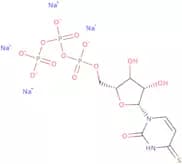
Formula:C10H12N4O4SPurezza:Min. 98 Area-%Colore e forma:PowderPeso molecolare:284.29 g/mol4-Thiouridine-5'-triphosphate sodium salt - aqueous solution
CAS:4-Thiouridine-5'-triphosphate sodium salt - aqueous solution (4TUTP) is an analog of uridine and can be used as a template for the synthesis of single-stranded DNA. 4TUTP has been shown to have a high affinity for dsDNA, allowing it to form a ternary complex with DNA polymerase and single-stranded DNA template. 4TUTP can also be used to prepare samples for profiling experiments or other molecular studies. It is reactive, so should be handled with caution in order to avoid unwanted crosslinking. 4TUTP may also be used in chloroplast research.Formula:C9H15N2O14P3S·xNaPurezza:Min. 95 Area-%Colore e forma:Clear LiquidPeso molecolare:500.20 g/mol2'(3')-O-(4-Benzoyl)benzoyladenosine-5'-triphosphate triethylammonium salt
CAS:2'(3')-O-(4-Benzoyl)benzoyladenosine-5'-triphosphate triethylammonium salt is a nucleoside analog of Adenosine-5'-triphosphate (ATP), a key player in cellular energy transfer. 2'(3')-O-(4-Benzoyl)benzoyl has been added to this molecule as well as a triethylammonium salt which helps to increase the stability of the molecule in solutions. 2'(3')-O-(4-Benzoyl)benzoyladenosine-5'-triphosphate triethylammonium salt has potential use as a tool for understanding how cells use ATP and how changes to ATP affect cellular processes. Other possible uses are in the study of how ATP interacts with enzymes.
Formula:C24H24N5O15P3·C6H15NPurezza:Min. 75 Area-%Colore e forma:White PowderPeso molecolare:816.58 g/mol2',5'-Dideoxyadenosine
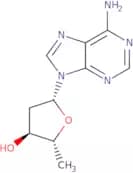
CAS:2',5'-Dideoxyadenosine is a nucleotide analog that inhibits the enzyme adenylate cyclase, by binding non-competitively via the P-site
Formula:C10H13N5O2Purezza:Min. 95%Colore e forma:White Off-White PowderPeso molecolare:235.25 g/mol2',3'-Dideoxy-5'-O-DMT-uridine
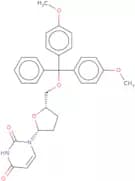
CAS:2',3'-Dideoxy-5'-O-DMT-uridine is a nucleoside for use in research applications
Formula:C30H30N4O6Purezza:Min. 95%Colore e forma:White To Off-White SolidPeso molecolare:514.58 g/mol5-Chloro-2'-deoxyuridine
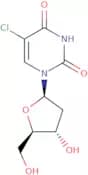
CAS:5-Chloro-2'-deoxyuridine is a nucleoside analog that inhibits DNA synthesis by inhibiting the enzyme thymidylate synthetase. It has been used for the treatment of bladder cancer and may also be beneficial in treating other cancers such as colon cancer. 5-Chloro-2'-deoxyuridine is taken up from the intestine by cells, where it is converted to thymidine monophosphate and then to thymidine diphosphate, which inhibits DNA synthesis by interfering with cell division. The mechanism of action is similar to that of cytosine arabinoside, but it does not require activation by intracellular enzymes. 5-Chloro-2'-deoxyuridine can cause cell lysis and can inhibit protease activity during cell culture, which makes it a useful tool for purifying proteins or peptides. The drug has been shown to be an analog of cytosine arabinos
Formula:C9H11ClN2O5Purezza:Min. 98 Area-%Colore e forma:White PowderPeso molecolare:262.65 g/molStavudine 5'-triphosphate sodium salt - 100 mM aqueous solution
Stavudine 5'-triphosphate sodium salt is a modified nucleoside analog with antiviral and anticancer properties. It is a phosphoramidate of stavudine, which has been modified by the replacement of the L-cysteine moiety with a 2-thiophenecarboxamide group. The novel chemical structure of stavudine 5'-triphosphate sodium salt leads to higher solubility in water than other analogues and improved pharmacokinetics. Stavudine 5'-triphosphate sodium salt is an activator for the synthesis of DNA, RNA, and protein. It also inhibits viral replication by interfering with viral DNA polymerase and ribonucleotide reductase, which are essential enzymes for viral replication.Formula:C10H17N2O13P3·xNaPurezza:Min. 95 Area-%Colore e forma:Clear LiquidPeso molecolare:466.17 g/mol5-(Methylaminomethyl)-2-thiouridine
CAS:5-(Methylaminomethyl)-2-thiouridine is a nucleotide that is important for both DNA and RNA synthesis. It is the methyl donor in the formation of dTMP, an essential component of DNA. 5-(Methylaminomethyl)-2-thiouridine is synthesized by the enzyme thioredoxin reductase using NADPH and glutathione as cofactors. The synthesis of this nucleotide is regulated by hydrogen bonding, which may be due to its ability to form a cationic surfactant with a molecule such as typhimurium. This activity may be due to the presence of a disulfide bond that can react with other molecules such as guanine nucleotides.
5-(Methylaminomethyl)-2-thiouridine has been shown to have structural analysis and chemical biology applications when used in conjunction with E. coli K-12 cells, MethanobrevibFormula:C11H17N3O5SPurezza:(¹H-Nmr) Min. 95 Area-%Colore e forma:PowderPeso molecolare:303.34 g/molRef: 3D-NM159475
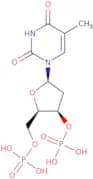
Prodotto fuori produzioneThymidine-3',5'-diphosphate sodium salt
CAS:Thymidine-3',5'-diphosphate sodium salt is a nucleoside that is used in the synthesis of oligonucleotides. It is an antiviral and anticancer agent. Thymidine-3',5'-diphosphate sodium salt has been shown to inhibit DNA synthesis, leading to cell death. It also has been shown to be effective against Hepatitis B virus and HIV-1.
Formula:C10H16N2O11P2·xNaPurezza:Min. 98 Area-%Colore e forma:White PowderPeso molecolare:402.19 g/molRef: 3D-NT09781
Prodotto fuori produzione3'-O-Acetyl-5'-tert-butyldiphenylsilyl-2'-deoxy-2'-fluoro-5-methyluridine
3'-O-Acetyl-5'-tert-butyldiphenylsilyl-2'-deoxy-2'-fluoro-5-methyluridine is a synthetic nucleoside that has antiviral activity. It is a modified nucleoside that contains a monophosphate group, which makes it an activator of DNA polymerase. 3'-O-Acetyl-5'-tert-butyldiphenylsilyl-2'-deoxy-2'-fluoro-5-methyluridine is novel because it contains an acetyl group at the 3' position and a silyl ether on the 2' oxygen atom. 3'-O-Acetyl-5'-tert-butyldiphenylsilyl-2'-deoxy-2'-fluoro -5 -methyluridine has CAS No. 62768‑36‑3 and is available in high purity.Purezza:Min. 95%Adenosine 5'-triphosphate disodium salt hydrate
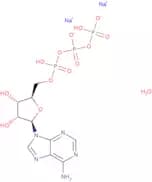
CAS:Adenosine 5'-triphosphate disodium salt hydrate (ATP 2Na) is a nucleoside triphosphate acting as the essential part of energy storage and metabolism in vivo. It plays a crucial role in many biological processes including neurotransmission, signal transduction, muscle contraction and cardiac function, often described as the "molecular unit of currency" for intracellular energy transfer.
Formula:C10H14N5Na2O13P3·xH2OPurezza:Min. 97 Area-%Colore e forma:White PowderPeso molecolare:551.14 g/molTenofovir disoproxil fumarate
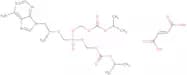
CAS:Anti-viral; reverse transcriptase inhibitor
Formula:C23H34N5O14PPurezza:Min. 97.5 Area-%Colore e forma:White Off-White PowderPeso molecolare:635.52 g/mol2',3'-Dideoxyadenosine
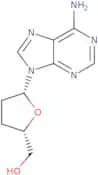
CAS:2',3'-Dideoxyadenosine is a nucleoside analog that inhibits HIV replication and is a competitive inhibitor of adenylyl cyclase. This latter action reduces levels of cyclic adenosine monophosphate (cAMP)
Formula:C10H13N5O2Purezza:Min. 95%Colore e forma:PowderPeso molecolare:235.25 g/molN4-Methylcytidine
CAS:N4-Methylcytidine is a member of the group P2. Its chemical structure consists of two nitrogen atoms, one carbon atom, and four hydrogen atoms. It is a nucleoside analogue that inhibits synthesis of human mitochondrial DNA by inhibiting bacterial enzyme uridine-cytidine kinase, which converts uridine to cytidine in the mitochondria. N4-Methylcytidine has been shown to be potent against viruses such as HIV and herpes simplex virus type 1 (HSV-1) in cell culture studies. This antiviral effect is due to the interference with viral dna replication and protein synthesis by preventing incorporation of uracil into dna and ribosomal RNA.
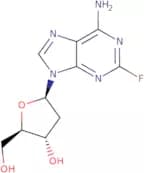
Formula:C10H15N3O5Purezza:Min. 95%Colore e forma:PowderPeso molecolare:257.24 g/mol2'-Deoxy-2-fluoroadenosine
CAS:2'-Deoxy-2-fluoroadenosine is an adenosine member and an organofluorine compound
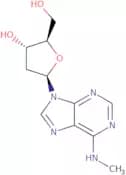
Formula:C10H12FN5O3Purezza:Min. 98 Area-%Colore e forma:White PowderPeso molecolare:269.23 g/mol2'-Deoxy-N6-methyladenosine
CAS:2'-Deoxy-N6-methyladenosine (2DMA) is a nucleoside that has been found to inhibit the phosphorylation of p2y receptors in rat kidney cells. 2DMA inhibits the production of collagen, which may have a matrix effect on cells. Studies have shown that 2DMA can be used as a sample preparation reagent for nuclear DNA. It has also been shown to be effective at inhibiting transcription and replication of human mitochondrial DNA.
Formula:C11H15N5O3Purezza:Min. 95%Colore e forma:White PowderPeso molecolare:265.27 g/molPolyinosinic acid tripotassium salt
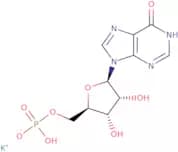
CAS:Polyinosinic acid is a single stranded RNA analog which is combined with polycytidylic acid (poly C) to form a stable duplex structure known as Polyinosinic acid-polycytidylic acid (Poly I:C). PolyI:C stimulates the secretion of pro-inflammatory cytokines and type I interferon through its interaction with endosomal Toll-like receptor 3 (TLR-3) and the cytoplasmic receptors melanoma differentiation-associated gene 5 (MDA-5) and retinoic acid-inducible gene I (RIG-I). This immunostimulant activity makes Poly I:C a useful vaccine adjuvant and is used in vaccine formulations. Poly I:C and its stabilized analogs (e.g., poly-ICLC) are also being actively researched for their dual role in oncology: directly targeting tumors and acting as immune potentiators. For example Poly I:C can induce apoptosis in tumor cells and stimulate immunogenic cell death and is therefore being explored alongside chemotherapy, radiotherapy, and checkpoint inhibitors, helping to overcome resistance mechanisms and strengthen treatment outcomes. We can supply PolyI:C to all stages of your project - from R&D and preclinical phases right up to GMP commercial manufacture. Contact our team for custom Poly I:C products.
For more on poly I:C read out blog 'Poly I:C: A Vaccine Adjuvant With Oncological Potential.'Purezza:Min. 95%4-[(1Z)-2-(4-Chlorophenyl)vinyl]pyridine
CAS:4-[(1Z)-2-(4-Chlorophenyl)vinyl]pyridine is a modified nucleoside that is used in anticancer drugs. It has shown antiviral and antitumor effects. 4-[(1Z)-2-(4-Chlorophenyl)vinyl]pyridine is synthesized by condensing 4-chlorobenzaldehyde and 2,3-dichloropyridine. The nucleoside has been modified to be phosphorylated at the 5′ position and contains a ribonucleotide moiety and a deoxyribonucleotide moiety. This product is of high purity and quality, with an activator group at the 5′ position.
Formula:C13H10ClNPurezza:Min. 95%Peso molecolare:215.68 g/molRef: 3D-NC65881
Prodotto fuori produzione3'-Azido-3'-deoxythymidine-b-D-glucuronide sodium salt
CAS:3'-Azido-3'-deoxythymidine-b-D-glucuronide sodium salt is an antiviral and anticancer agent that inhibits the synthesis of DNA, RNA, and protein. It has shown to be effective against a variety of viruses including HIV-1, herpes simplex virus type 1, influenza A virus, vaccinia virus, and vesicular stomatitis virus. 3'-Azido-3'-deoxythymidine-b-D-glucuronide sodium salt also inhibits the growth of cancer cells in vitro. This drug is a modified nucleoside with a phosphoramidite backbone and a 3'-azido group at one end. The other end contains a beta D glucuronic acid moiety. The modifications allow for the inhibition of DNA synthesis by blocking the incorporation of deoxyribonucleotides into DNA chains.
Formula:C16H20N5NaO10Purezza:Min. 95%Colore e forma:PowderPeso molecolare:465.35 g/molRef: 3D-NA06316
Prodotto fuori produzioneCyclic inosine diphosphate ribose
CAS:Cyclic inosine diphosphate ribose is a synthetic, fluorescent compound that can be used as a probe for assays. It has been synthesized by the solid-phase synthesis of a specific antibody and is bioconjugated with an oligo(ethylene glycol) moiety. Cyclic inosine diphosphate ribose can be used to measure lymphocyte activation, which is important for the study of autoimmune diseases and cancer. Cyclic inosine diphosphate ribose has also been shown to bind to the ryanodine receptor, which causes an increase in intracellular calcium concentration.
Formula:C15H20N4O14P2Purezza:Min. 95%Peso molecolare:542.29 g/molNicotinic acid-13C6 riboside
CAS:Please enquire for more information about Nicotinic acid-13C6 riboside including the price, delivery time and more detailed product information at the technical inquiry form on this page
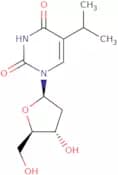
Formula:C6C5H13NO6Purezza:Min. 95%Peso molecolare:260.17 g/mol5-Isopropyl-2'-deoxyuridine
CAS:5-Isopropyl-2'-deoxyuridine is a nucleoside analog that is used in the treatment of inflammatory bowel disease. It has been shown to be effective in the treatment of Crohn's disease, ulcerative colitis, and indeterminate colitis. 5-Isopropyl-2'-deoxyuridine inhibits bacterial growth by inhibiting RNA synthesis, which leads to cell death. This drug also inhibits the production of inflammatory mediators such as prostaglandins and leukotrienes that are released from cells infected with bacteria. 5-Isopropyl-2'-deoxyuridine is converted into an active form by hydrolysis or oxidation followed by phosphorylation. This drug binds to the 5' end of bacterial DNA and prevents the formation of hydrogen bonds between adjacent bases, causing strand breakage.
Formula:C12H18N2O5Purezza:Min. 95%Peso molecolare:270.28 g/molRef: 3D-NI16765
Prodotto fuori produzione2',3',5'-Tri-O-acetylinosine
CAS:2′,3′,5′-Tri-O-acetylinosine is a protected form of the nucleoside inosine, with potential for use in the preparation of modified nucleotides and nucleoside analogs.
Formula:C16H18N4O8Purezza:Min. 95%Colore e forma:White To Off-White SolidPeso molecolare:394.34 g/mol5-Methyl-L-uridine
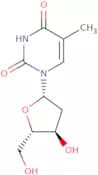
CAS:5-Methyl-L-uridine is an antiviral drug which belongs to a class of compounds called nucleoside analogues. It is used in the treatment of chronic hepatitis B and C, as well as for prevention of hepatitis A and B. 5-Methyl-L-uridine inhibits the virus by turning off the production of viral DNA and RNA, through interactions with the virus's polymerase chain reaction process. This drug also prevents protein synthesis in cells infected with viruses such as HIV, herpes simplex virus type 1, and influenza A virus. 5-Methyl-L-uridine is a prodrug that is converted to its active form, uridine monophosphate, by enzymes in the liver. The cytotoxic effects of 5-methyluridine on cancer cells have been shown to be due to inhibition of cellular DNA synthesis and repair pathways.
Formula:C10H14N2O6Purezza:Min. 95%Colore e forma:White PowderPeso molecolare:258.23 g/molRibavirin 5'-triphosphate triethylammonium salt - 10 mM aqueous solution
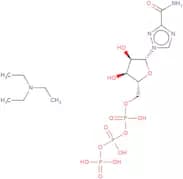
CAS:Ribavirin triphosphate is the biologically active metabolite of antiviral nucleoside analog ribavirin. In cells, the prodrug ribavirin gets triphosphorylated and in it inhibits viral RNA polymerases, interfering with the synthesis of newly formed RNA.
Formula:C8H15N4O14P3•(C6H15N)xPurezza:Min. 95 Area-%Colore e forma:Clear LiquidPeso molecolare:789.735'-O-Tosylthymidine
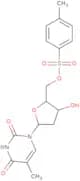
CAS:5'-O-Tosylthymidine is a bifunctional reagent that is used in the synthesis of DNA. It is a nucleophilic, inorganic compound that reacts with the electrophilic acrylonitrile group on 5'-hydroxythymidine to form a stable thiophosphate linkage. The reaction takes place stepwise and is catalyzed by an enzyme called DNA polymerase. This product has been used as an antimetabolite in medicine, mainly for treating leukemia.
Formula:C17H20N2O7SPurezza:Min. 95%Peso molecolare:396.42 g/molRef: 3D-NT10016
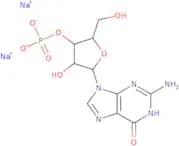
Prodotto fuori produzione3′-Guanylic acid disodium
CAS:3′-Guanylic acid disodium is a nucleoside analog that inhibits viral replication and tumor growth. It is an antiviral agent that is active against herpes simplex virus type 1 and type 2, as well as cytomegalovirus. 3′-Guanylic acid disodium is also an anticancer agent that has shown promising results in animal models of glioma, lymphoma, lung cancer, and breast cancer. The molecule inhibits the synthesis of DNA by competitively inhibiting the action of ribonucleotide reductase. 3′-Guanylic acid disodium also inhibits protein synthesis by blocking the conversion of ribonucleotides to deoxyribonucleotides. This drug has been shown to have a high purity and quality with no detectable impurities or contaminants.
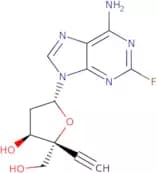
Formula:C10H14N5O8P•Na2Purezza:Min. 95%Peso molecolare:409.2 g/mol2'-Deoxy-4'-ethynyl-2-fluoroadenosine
CAS:2'-Deoxy-4'-ethynyl-2-fluoroadenosine (EFdA) is an analog of adenosine. EFdA is a potent inhibitor of HIV replication, and has been shown to be effective against other viruses such as influenza virus, herpes simplex virus, and vesicular stomatitis virus. EFdA was the first nucleoside analog to show antiviral activity in tissue culture against these viruses. This drug also inhibits the synthesis of mitochondrial rRNA and reduces the formation of mitochondrial DNA in human cells by inhibiting mitochondrial DNA polymerase γ. EFdA also prevents the binding of monoclonal antibodies to human B lymphocytes, which may be due to its steric interactions with plasma RNA. This drug is metabolized by cytochrome P450 2C8 and 2C9 into a variety of metabolites that are excreted in urine as glucuronides or sulfates. EFdA has a long
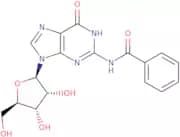
Formula:C12H12FN5O3Purezza:Min. 95%Peso molecolare:293.25 g/molN2-Benzoylguanosine
CAS:N2-Benzoylguanosine is a nucleotide derivative that is formed by the acetylation of guanosine. It has been shown to act as a buffer in alkaline solutions and isomerizes to its n-oxide form when heated. N2-Benzoylguanosine reacts with peroxides such as hydrogen peroxide, glyoxal, and organic peroxides, forming hydroperoxide intermediates that can be converted into other products. The acidic hydrolysis of N2-benzoylguanosine yields the corresponding 6-benzoyladenosines. It has been shown to enhance the activity of uridine in inhibiting bacterial growth, while also acting as an inhibitor of viral RNA synthesis. This compound also reacts with nitrous acid to form an n6-benzoyladenosine derivative that inhibits the formation of RNA chains during transcription.
Formula:C17H17N5O6Purezza:Min. 95%Colore e forma:White to beige solid.Peso molecolare:387.35 g/molRef: 3D-NB06331
Prodotto fuori produzione5′-O-DMT-LNA N-Bz adenosine
CAS:5′-O-DMT-LNA N-Bz adenosine is a novel nucleoside that has been modified with an aminooxy group. The compound is synthesized by the phosphoramidite method and it is designed for use in antiviral and anticancer research. 5′-O-DMT-LNA N-Bz adenosine can be used as a substrate for DNA polymerases and other enzymes to produce nucleic acid strands. This product is CAS No. 206055-74-5, monophosphate, Phosphoramidites, Synthetic, Deoxyribonucleosides, Anticancer, Ribonuclesides, High purity.
Formula:C39H35N5O7Purezza:Min. 95%Peso molecolare:685.73 g/mol2'-O-(2-Methoxyethyl)guanosine 5'-monophosphate
CAS:10umol is approx 5mg.2'-O-(2-Methoxyethyl)guanosine 5'-monophosphate is a novel nucleoside phosphorylated on the 5' position
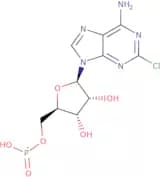
Purezza:Min. 95%2-Chloroadenosine 5'-monophosphate triethylamine salt
CAS:2-Chloroadenosine 5'-monophosphate triethylamine salt is a phosphoramidite that has anticancer and antiviral activities. It is synthesized by reacting 2-chloroadenosine with triethylamine. This product has a novel chemical structure and it can be used as an activator for the synthesis of modified DNA, RNA, and other nucleosides. It is also used in the manufacture of deoxyribonucleosides, ribonucleosides, and other nucleotides.
Formula:C10H13ClN5O7P·C12H30N2Purezza:Min. 95%Peso molecolare:584.05 g/mol







![4-[(1Z)-2-(4-Chlorophenyl)vinyl]pyridine](/_next/image/?url=https%3A%2Fstatic.cymitquimica.com%2Fproducts%2F3D%2Fthumb-webp%2FNC65881.webp&w=3840&q=75)