Nucleotidi
Sottocategorie di "Nucleotidi"
Trovati 2635 prodotti di "Nucleotidi"
1-(2’-Deoxy-2’-fluoro-arabinofuranosyl)-5-hydroxymethyluracil
CAS:1-(2’-Deoxy-2’-fluoro-arabinofuranosyl)-5-hydroxymethyluracil (also abbreviated as FMAU-OH) is a modified nucleoside analog. It consists of a fluorinated sugar moiety (2’-deoxy-2’-fluoro-arabinofuranose) attached to a uracil base with a hydroxymethyl (-CH₂OH) group at the 5-position. The 2’-fluoro substitution and arabinose sugar configuration can enhance its stability and affect its incorporation into DNA or RNA. It has the potential to be used as an inhibitor of viral polymerases and can be used in research.
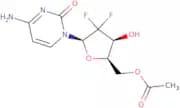
Formula:C10H13FN2O6Purezza:Min. 95%Colore e forma:PowderPeso molecolare:276.22 g/mol5'-O-Acetyl-2'-deoxy-2',2'-difluorocytidine
5'-O-Acetyl-2'-deoxy-2',2'-difluorocytidine is a novel nucleoside that can be used as an antiviral and anticancer agent. It has shown to be more potent than other nucleosides in inhibiting the synthesis of viral DNA and RNA, which makes it a potential candidate for treating HIV infection and cancer. This drug can also act as an activator by stimulating the production of deoxyribonucleotides and ribonucleotides. 5'-O-Acetyl-2'-deoxy-2',2'-difluorocytidine has been shown to have high purity and quality, making it a good candidate for use in various fields of research.
Formula:C11H13F2N3O5Purezza:Min. 98 Area-%Colore e forma:PowderPeso molecolare:305.23 g/molIsoguanosine hydrate
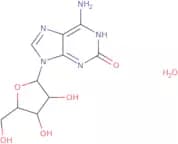
CAS:An isomer of guanosine, used as a synthesis intermediate.
Formula:C10H13N5O5·xH2OPurezza:Min. 95%Colore e forma:White PowderPeso molecolare:283.24 g/mol2'-Deoxyadenosine-5'-monophosphate free acid
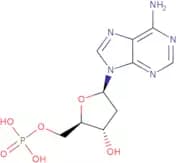
CAS:2'-Deoxyadenosine-5'-monophosphate free acid (2DAMP) is a nucleoside analogue that can be used as a fluorescent probe for detecting water vapor. 2DAMP has been shown to have cytotoxic activity against solid tumours in vitro, and may act by hydrogen bonding interactions with the active site of the enzyme form. 2DAMP is also an important cofactor in the polymerase chain reaction, and can inhibit cellular proliferation by inhibiting nuclear DNA synthesis. This drug has been used as an active antiretroviral therapy, where it inhibits HIV-1 reverse transcriptase. 2DAMP's mechanism of action involves the inhibition of p-nitrophenyl phosphate reductase (PNPPR), which is responsible for converting p-nitrophenyl phosphate into p-nitrophenol.Formula:C10H14N5O6PPurezza:Min. 95%Colore e forma:White PowderPeso molecolare:331.23 g/molN6-Isopentenyladenosine-5'-monophosphate disodium
CAS:N6-Isopentenyladenosine-5'-monophosphate sodium salt is an adenosine conjugate acid. It is a monomer of polyribonucleotide chain, which is necessary for the formation of ribonucleic acid (RNA) and deoxyribonucleic acid (DNA). N6-Isopentenyladenosine-5'-monophosphate sodium salt is a conjugate base that has the ability to bind to DNA. This binding prevents the formation of a complex with RNA polymerase, thereby inhibiting transcription and replication.
Formula:C15H22N5O7P•Na2Purezza:Min. 95 Area-%Colore e forma:PowderPeso molecolare:461.32 g/molAdenosine 3',5'-cyclic monophosphate
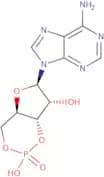
CAS:Second messenger in intracellular signal transduction
Formula:C10H12N5O6PPurezza:(%) Min. 95%Colore e forma:White PowderPeso molecolare:329.21 g/molClevudine
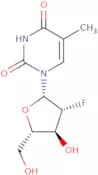
CAS:Clevudine is a synthetic pyrimidine analogue effective against the hepatitis B virus (HBV). Once inside the cell, it is converted into its active forms, clevudine monophosphate and clevudine triphosphate. The triphosphate form competes with thymidine to be incorporated into viral DNA, leading to DNA chain termination and inhibition of the HBV DNA polymerase (reverse transcriptase). Due to its long half-life, clevudine significantly reduces covalently closed circular DNA (cccDNA), making relapse less likely after treatment ends.
Formula:C10H13FN2O5Purezza:Min. 95%Colore e forma:White PowderPeso molecolare:260.22 g/mol9-(b-D-Arabinofuranosyl)hypoxanthine
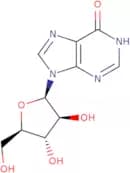
CAS:9-(b-D-Arabinofuranosyl)hypoxanthine is a glycosylated analogue of the incretin hormone glucagon-like peptide-1 (GLP-1). It has been shown to inhibit Streptococcus pyogenes and other bacteria. 9-(b-D-Arabinofuranosyl)hypoxanthine has also been shown to have inhibitory properties against zirconium oxide, pulmonary vasodilation, squamous cell carcinoma, and rate constant. This drug has not been studied in clinical trials for antiviral prophylaxis or arabinoside. The only known side effects are drug interactions with cyclin D2 and nitrate reductase.
Formula:C10H12N4O5Purezza:Min. 98 Area-%Colore e forma:White PowderPeso molecolare:268.23 g/mol2'-O-Methylpseudouridine
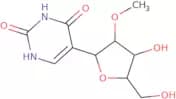
CAS:2'-O-methylpseudouridine is a modified nucleoside that belongs to the group of modified nucleosides. It is found in ribonucleic acid (RNA) and deoxyribonucleic acid (DNA). 2'-O-methylpseudouridine is a derivative of pseudouridine and can be categorized as a modified nucleotide. The chemical structure of this compound has been shown using reversed-phase high-performance liquid chromatography. This technique can help identify modifications in RNA, such as 5-carbamoylmethyluridine. 2'-O-methylpseudouridine is an epigenetic marker that may be used to study tissues or sequences.Purezza:Min. 95%Colore e forma:PowderPeso molecolare:258.23 g/mol5-Methylcytidine
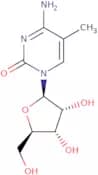
CAS:5-Methylcytidine is a nucleoside that is found in DNA and RNA. It is used in structural biology to probe the structure of DNA. 5-Methylcytidine binds to the enzyme methyl transferase, which catalyzes the transfer of a methyl group from S-adenosylmethionine to produce 5-methyluridine. This reaction occurs in long-term toxicity studies using primary cells, such as lymphocytes and fibroblasts. 5-Methylcytidine has been shown to inhibit tumour growth in mice by binding to nuclear dna polymerase and blocking transcription. The binding site for this drug on the polymerase is located at the same site as that for nucleoside analogues like azidothymidine (AZT) and zidovudine (AZT).
Formula:C10H15N3O5Purezza:Min. 95%Colore e forma:White PowderPeso molecolare:257.24 g/mol2'-O-(2-Methoxyethyl)uridine
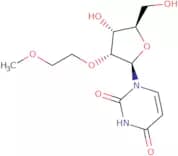
CAS:2'-O-(2-Methoxyethyl)uridine is a nucleoside analog that inhibits the synthesis of DNA, RNA and protein. It can be used as an antimetabolite to treat cancer and prevents tumor growth by interfering with cell division. 2'-O-(2-Methoxyethyl)uridine is often used in combination with other chemotherapeutic drugs. This drug is not active against bacteria and does not inhibit the growth of bacteria. The major disadvantage of this drug is its lack of efficacy against tumors, which may be due to the lack of penetration through the cell membrane or damage to DNA caused by radiation, abiotic factors, or malfunctioning enzymes. 2'-O-(2-Methoxyethyl)uridine has been shown to cause damage to cells by altering their metabolism and affecting the function of their mitochondria. Damage can cause cells to die through apoptosis or necrosis.Formula:C12H18N2O7Purezza:Min. 95 Area-%Colore e forma:PowderPeso molecolare:302.28 g/mol8-Bromocyclic adenosine diphosphate ribose sodium
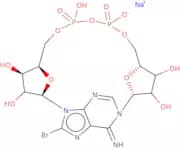
CAS:8-Bromocyclic adenosine diphosphate ribose sodium salt (8BCAR) is a cytosolic cyclase inhibitor that inhibits the synthesis of cyclic adenosine monophosphate (cAMP). 8BCAR blocks the activation of protein kinase A, which is an enzyme involved in the phosphorylation of cAMP. 8BCAR has been shown to inhibit cardiac hypertrophy induced by growth factor-β1 and to increase mitochondrial membrane potential, as well as to suppress cardiomyocyte apoptosis. In addition, this drug can be used for the treatment of cancers such as leukemia and lymphoma.
Formula:C15H19BrN5NaO13P2Purezza:Min. 95%Colore e forma:PowderPeso molecolare:642.19 g/mol2',5'-Dideoxyguanosine
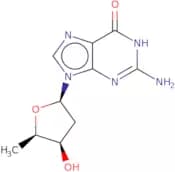
CAS:2',5'-Dideoxyguanosine is a modified nucleoside analog of guanosine, one of the four natural nucleosides found in RNA and DNA. This synthetic molecule has hydroxyl groups removed from the 2' and 5' positions of the sugar component, which alters its ability to participate in nucleic acid synthesis.
Formula:C10H13N5O3Purezza:Min. 97 Area-%Colore e forma:White PowderPeso molecolare:251.25 g/molGemcitabine HCl
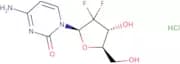
CAS:Anticancer nucleoside; DNA synthesis interference
Formula:C9H11F2N3O4·HClPurezza:Min. 98 Area-%Colore e forma:White PowderPeso molecolare:299.66 g/mol1-(b-D-Arabinofuranosyl)uracil
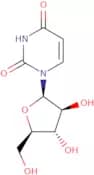
CAS:1-(b-D-Arabinofuranosyl)uracil is a nucleoside analog containing uracil, a nitrogenous base found in RNA, and a β-D-Arabinofuranose sugar. This compound could be used to study its effects on DNA/RNA synthesis.
Formula:C9H12N2O6Purezza:Min. 95%Colore e forma:White PowderPeso molecolare:244.2 g/mol2'-O-Methyl-5-methylcytidine
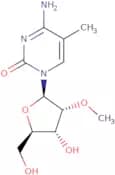
CAS:2'-O-Methyl-5-methylcytidine is a nucleoside that is categorized as a modified nucleic acid. It is structurally similar to cytidine, but has an additional methyl group. 2'-O-Methyl-5-methylcytidine stabilizes the conformational structure of nucleic acids and can be used to regulate the activity of enzymes. This modified nucleoside has been shown to have thermophilic characteristics when it interacts with human cells. The stability of 2'-O-Methyl-5-methylcytidine increases with increasing temperature, making it possible for this molecule to regulate gene expression in organisms that live at high temperatures.Formula:C11H17N3O5Purezza:Min. 95%Colore e forma:White Off-White PowderPeso molecolare:271.27 g/molL-Adenosine
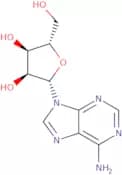
CAS:L-Adenosine is a nucleoside that is naturally synthesized in the body and is also found in certain foods. It has a variety of functions, including as an adenosine receptor agonist, a transport agent, and a substrate for metabolic pathways. In addition to its function as an adenosine receptor agonist, L-adenosine can be transported into mammalian cells by facilitated diffusion. The uptake of L-adenosine into cells is dependent on the concentration of extracellular adenosine and its concentration-response curve has been determined experimentally. L-Adenosine also acts as an inhibitor of phosphodiesterase enzyme which increases cAMP levels in cells. This increase in cAMP leads to increased calcium ion influx into the cell, which may lead to activation of protein kinase A (PKA) and protein kinase C (PKC). L-Adenosine has been shown to have cardiac effects at high concentrations. These effects may be
Formula:C10H13N5O4Purezza:Min. 95%Colore e forma:White PowderPeso molecolare:267.24 g/molS-(5'-Adenosyl)-L-homocysteine dihydrate
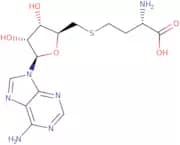
CAS:S-(5'-Adenosyl)-L-homocysteine dihydrate is the active form of homocysteine. It has been shown to inhibit the growth of HL-60 cells and induce apoptosis in these cells. S-(5'-Adenosyl)-L-homocysteine dihydrate binds to dsDNA as a methyltransferase inhibitor, which leads to DNA methylation and inhibits DNA binding. The inhibition of DNA binding prevents transcription, leading to cell death. This drug has also been shown to have an anti-atherosclerotic effect in a model system by inhibiting the adenosine receptor.Formula:C14H20N6O5S•(H2O)2Purezza:Min. 98 Area-%Colore e forma:PowderPeso molecolare:420.44 g/mol3-(3-Amino-3-carboxypropyl)uridine
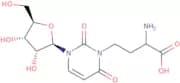
CAS:3-(3-Amino-3-carboxypropyl)uridine is an uridine analog that is used in the study of protein synthesis. It can be used to determine the amino acid sequence of a protein, or to identify proteins with similar sequences. 3-(3-Amino-3-carboxypropyl)uridine can also be used to study enzymatic reactions, such as those involved in the synthesis of polypeptides. This molecule has been shown to produce disulfide bonds and form covalent bonds with other molecules. The three-dimensional structure of this molecule has been determined by NMR spectroscopy and X-ray crystallography.
Formula:C13H19N3O8Purezza:Min. 95%Colore e forma:PowderPeso molecolare:345.31 g/molAdenosine 5'-triphosphate magnesium salt
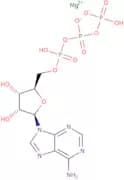
CAS:Adenosine-5'-triphosphate (ATP) is a nucleotide found in all living cells. It is used as a coenzyme for adenosine kinase, adenosine phosphokinase, and adenosine deaminase. ATP also acts as an important signaling molecule and has been shown to be involved in the regulation of cell metabolism, muscle contraction, and other cellular processes. The human body normally produces enough ATP to meet its needs through aerobic metabolism of glucose or fatty acids, but under certain conditions such as intense muscular activity or insufficient oxygen, more ATP must be produced by anaerobic metabolism. In these situations the mitochondria use glycolysis to produce lactic acid which is then converted into pyruvic acid by the enzyme lactate dehydrogenase. Pyruvic acid is then oxidized by the enzyme pyruvate dehydrogenase complex to produce acetyl-CoA which is further oxidized by the enzyme complex called Krebs
Formula:C10H18N5O13P3•xMgPurezza:Min. 95 Area-%Colore e forma:White Off-White PowderPeso molecolare:509.20 g/mol