Nucleotidi
I nucleotidi sono composti organici che fungono da mattoni per la costruzione degli acidi nucleici, essenziali per la formazione del DNA e dell'RNA. Ogni nucleotide è composto da una base azotata, una molecola di zucchero e uno o più gruppi fosfato. Questi nucleotidi si uniscono per formare lunghe catene, creando il materiale genetico che porta e trasmette informazioni genetiche in tutti gli organismi viventi. In questa sezione, troverai una vasta gamma di nucleotidi cruciali per la ricerca in genetica, biologia molecolare e biochimica. Sono fondamentali per studiare i processi genetici, sintetizzare acidi nucleici e sviluppare strumenti diagnostici e terapeutici. Da CymitQuimica, offriamo nucleotidi di alta qualità per supportare la tua ricerca scientifica e applicazioni, garantendo precisione e affidabilità nei tuoi esperimenti.
Sottocategorie di "Nucleotidi"
Trovati 2634 prodotti di "Nucleotidi"
Ordinare per
Purezza (%)
0
100
|
0
|
50
|
90
|
95
|
100
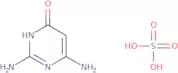
2,4-Diamino-6-hydroxypyridine sulphate
CAS:2,4-Diamino-6-hydroxypyridine sulphate is a nucleoside for use in research applicationsFormula:C4H6N4O•(H2SO4)xPurezza:Min. 95%Colore e forma:PowderPeso molecolare:224.2 g/mol8-Methyladenosine
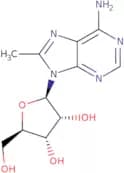
CAS:<p>8-Methyladenosine is an acid conjugate that can be found in the urine of healthy people. It is a protonated molecule that binds to a p2 subtype of the G protein-coupled receptor, which is activated by adenosine and 8-methyladenosine. This drug has been used in clinical trials for the treatment of herpes simplex virus and cervical cancer. The intramolecular hydrogen bond between the methyl group and the adenosine ring is responsible for its high binding affinity for this receptor. The glycosidic bond is formed when an 8-methyladenosine molecule attaches to a receptor on a cell surface, forming an intramolecular hydrogen bond with the receptor's amino acid side chain. This bond is broken when a protonated molecule of 8-methyladenosine enters the cell and interacts with the receptor, resulting in activation of this receptor.</p>Formula:C11H15N5O4Purezza:Min. 95%Colore e forma:White PowderPeso molecolare:281.27 g/mol1-(β-D-Arabinofuranosyl)thymine
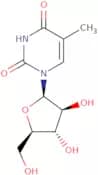
CAS:<p>1-(β-D-Arabinofuranosyl)thymine is a nucleoside analog. It has a similar structure to thymidine. It has possible applications in research into the specificity and kinetics of thymidine kinases and has demonstrated antiviral activity against some viruses.</p>Formula:C10H14N2O6Purezza:Min. 95%Colore e forma:White PowderPeso molecolare:258.23 g/mol5-Methyl-2-thiouracil
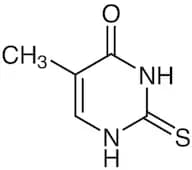
CAS:Formula:C5H6N2OSPurezza:>98.0%(T)(HPLC)Colore e forma:White to Almost white powder to crystalPeso molecolare:142.18dNTP pre-mixes, 10 mM aqueous solution
CAS:<p>dATP, dTTP, dCTP and dGTP pre-mixed in a single vial</p>Formula:C10H16N5O12P3Purezza:Min. 95%Colore e forma:Clear LiquidPeso molecolare:491.18 g/molAdenosine 5'-diphosphate bis(cyclohexylammonium) salt
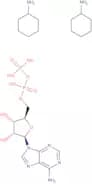
CAS:Adenosine 5'-diphosphate bis(cyclohexylammonium) salt is a novel antiviral agent that has been shown to be an activator of the adenylate cyclase enzyme. It also inhibits DNA and RNA synthesis in viruses, which prevents viral replication. Adenosine 5'-diphosphate bis(cyclohexylammonium) salt is active against cancer cells and has been shown to inhibit tumor growth and prolong survival in animal models. This compound can be synthesized by reacting the monophosphate with phosphoramidites or deoxyribonucleosides.Formula:C10H15N5O10P2·2C6H13NPurezza:Min. 98 Area-%Colore e forma:PowderPeso molecolare:625.55 g/mol2'-O-Methyluridine
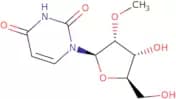
CAS:<p>2'-O-Methyluridine is a chemical compound that is used in the synthesis of RNA. It is an analog of uridine and has been shown to have antiviral and anticancer properties. 2'-O-Methyluridine inhibits protein synthesis by competing with uridine for the active site of the enzyme ribonucleotide reductase, which converts ribonucleotides to dNMPs. This compound also inhibits RNA synthesis by disrupting the pairing of adenine and cytosine residues in RNA strands. 2'-O-Methyluridine has been shown to inhibit growth in some types of cancer cells, including colorectal adenocarcinoma cells. It may also be useful as a chemotherapeutic agent against HIV, as it inhibits virus replication by inhibiting reverse transcription and DNA synthesis.</p>Formula:C10H14N2O6Purezza:Min. 98 Area-%Colore e forma:White Off-White PowderPeso molecolare:258.23 g/mol5'-O-DMT-N2-isobutyrylguanosine
CAS:<p>5'-O-DMT-N2-isobutyrylguanosine is a novel phosphoramidite monophosphate, which has been modified with an isobutyryl group. This compound was synthesized in order to be used as a nucleoside analogue and antimetabolite for the treatment of cancer. It also has antiviral properties and inhibits the replication of DNA by inhibiting transcription. 5'-O-DMT-N2-isobutyrylguanosine is an anticancer agent that can be used to treat tumors that are resistant to other chemotherapy drugs. It also inhibits the growth of cells by preventing the synthesis of proteins needed for cell division.</p>Formula:C35H37N5O8Purezza:Min. 95%Colore e forma:White PowderPeso molecolare:655.7 g/mol5-Carboxymethylaminomethyluridine
CAS:5-Carboxymethylaminomethyluridine is a nucleoside analogue that is used in molecular modeling studies to investigate the role and interactions of uridine in the mitochondrial ribosome. It has been shown to bind to the mitochondrial ribosome, which may be due to hydrogen bonding interactions with adenine. 5-Carboxymethylaminomethyluridine also inhibits protein synthesis at the level of translation by inhibiting group P2 of eukaryotic cytosolic ribosomes. This inhibition results in decreased production of proteins necessary for mitochondrial biogenesis.Formula:C12H17N3O8Purezza:Min. 95 Area-%Colore e forma:White Off-White PowderPeso molecolare:331.28 g/moldNTP bundle, 4 x 100mM aqueous solution
CAS:Each dNTP supplied in a separate vialPurezza:Min. 99 Area-%Colore e forma:Clear LiquidUridine 3'-monophosphate disodium salt
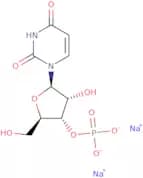
CAS:Uridine 3'-monophosphate disodium salt is a nucleotide that is part of the pyrimidine family. It is synthesized from uridine and phosphoric acid in a reaction that requires hydrogen bonding and the presence of an enzyme. Uridine 3'-monophosphate disodium salt has been shown to inhibit the production of eosinophil cationic protein, which may be due to its ability to denature proteins. This drug also has an effect on the synthesis of proteins by inhibiting enzymes such as acetylcholinesterase and catalase. The synthesis of glycosidic bonds is also inhibited, which may lead to an increase in body mass index (BMI).Formula:C9H11N2Na2O9PPurezza:Min. 95%Colore e forma:White PowderPeso molecolare:368.15 g/mol2'-O-Methylinosine
CAS:2'-O-Methylinosine is a nucleoside that is structurally related to inosine. It has been shown to induce apoptotic cell death in HIV-infected cells by inhibiting the synthesis of rRNA and by inhibiting the activity of the transcriptase enzyme. 2'-O-Methylinosine has also been shown to inhibit the replication of RNA viruses, such as herpes simplex virus and cytomegalovirus, and it can be used as an experimental model for studying apoptosis. 2'-O-Methylinosine can be synthesized from inosine using a chromatographic method that utilizes hydroxylamine. The chemical structure of this nucleoside is amphipathic, which allows it to bind both DNA and RNA strands.Formula:C11H14N4O5Purezza:Min. 99 Area-%Colore e forma:White PowderPeso molecolare:282.25 g/molAdenosine 5'-diphosphate disodium salt
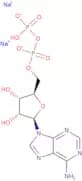
CAS:<p>Adenosine 5'-diphosphate disodium salt is a sodium salt of adenosine 5'-diphosphate. It is found in the extract of plants such as salvianolic acid and rhizoma gastrodiae, as well as in dinucleotide phosphate. This product has been shown to have cardioprotective effects against ischemia reperfusion injury in animal models. It also has congestive heart failure activity, which may be due to its ability to relax vascular smooth muscle and increase the diameter of lymphatic vessels. Adenosine 5'-diphosphate disodium salt has been shown to inhibit the binding of serotonin (5-hydroxytryptamine) to 5-HT2 receptors, which are present in heart tissue.</p>Formula:C10H13N5Na2O10P2Purezza:Min. 95 Area-%Colore e forma:White PowderPeso molecolare:471.16 g/mol4-(b-D-Ribofuranosyl)-vic-triazolo[4,5-b]pyridin-5-one
CAS:<p>Ribonucleosides, Deoxyribonucleosides and Activator are a group of synthetic compounds that are used in the synthesis of DNA. Ribonucleosides and Deoxyribonucleosides are nucleotides that contain ribose or deoxyribose as the sugar moiety. Activator is an activator for DNA polymerase, which catalyses the formation of a phosphodiester bond between two adjacent 3'-5' phosphate groups on a single strand of DNA. Ribonuclesides, Deoxyribonucleosides and Activator are used in recombinant DNA technology to synthesize DNA molecules containing modified bases. The CAS number for Ribonuclesides, Deoxyribonucleosides and Activator is 59892-40-9.</p>Formula:C10H12N4O5Purezza:Min. 95%Peso molecolare:268.23 g/mol2'-Deoxy-N2-phenoxyacetylguanosine
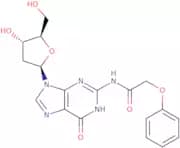
CAS:2'-deoxy-N2-phenoxyacetylguanosine is a synthetic nucleoside that is used as a substrate in experiments to study the properties of guanine. The compound can be synthesized by the reaction of 2'-deoxy-N2-phenoxyacetaldehyde with guanine. The synthesis starts with the condensation of 2'-deoxyribose and N2-phenoxyacetaldehyde, followed by the oxidation of the resulting anhydride to give aldehyde, which reacts with guanine to form a Schiff base. This then undergoes hydrolysis to yield 2'-deoxy-N2-phenoxyacetylguanosine.Formula:C18H19N5O6Purezza:Min. 95%Peso molecolare:401.38 g/mol2-Chloroadenosine hemihydrate
CAS:2-Chloroadenosine hemihydrate is a synthetic purine nucleoside analog, closely related to adenosine, with a chlorine atom substituted at the 2-position on the adenine ring. This molecule has potential application in research.Formula:C10H12ClN5O4H2OPurezza:Min. 95%Colore e forma:PowderPeso molecolare:310.69 g/molCytidine-5-carboxylic acid sodium
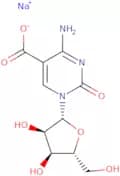
CAS:Cytidine-5-carboxylic acid sodium salt is a nucleoside that is used as an activator for the synthesis of phosphoramidites. It is also used in anticancer and antiviral research as a component of DNA. Cytidine-5-carboxylic acid sodium salt is available in high purity, with a monophosphate form and diphosphate forms available.Formula:C10H13N3O7•NaPurezza:Min. 95%Colore e forma:PowderPeso molecolare:310.21 g/mol2'-O-(2-Methoxyethyl)cytidine
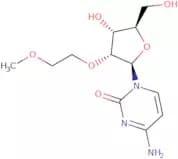
CAS:2'-O-(2-Methoxyethyl)cytidine is a nutrient that is used to maintain the dry weight of Lactobacillus acidophilus cultures. It is also used as a texturizing agent in food products. 2'-O-(2-Methoxyethyl)cytidine has been shown to increase the rate of lactose hydrolysis and reduce the viscosity of yogurt by activating L. acidophilus. 2'-O-(2-Methoxyethyl)cytidine is also used as a dietary supplement for people with intestinal disorders, such as irritable bowel syndrome. It can be found in sodium salts and n-methyl-d-glucamine.Formula:C12H19N3O6Purezza:Min. 95%Colore e forma:PowderPeso molecolare:301.3 g/molQueuosine
CAS:Queuosine is a modified nucleoside found in the tRNA of both eukaryotic and prokaryotic organisms. It is primarily sourced from the gut microbiota and obtained through dietary intake, as humans lack the biosynthetic machinery to produce it endogenously. Queuosine plays a crucial role in cellular processes by contributing to the accuracy of protein synthesis, impacting cellular growth and maintenance. Its importance extends to understanding the molecular mechanisms underpinning various physiological processes and the potential for dysregulation in diseases. Ongoing research is exploring queuosine's implications in cellular metabolism, including its role in cancer biology and neurobiology. Understanding the pathways and effects of queuosine incorporation into tRNA may provide insights into novel therapeutic avenues for targeting metabolic disorders and diseases associated with translational fidelity.Formula:C17H23N5O7Purezza:Min. 95 Area-%Colore e forma:PowderPeso molecolare:409.39 g/mol2'-O-(tert-Butyldimethylsilyl)-5'-O-DMT-N2-isobutyryl-guanosine
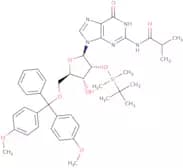
CAS:2'-O-(tert-Butyldimethylsilyl)-5'-O-DMT-N2-isobutyryl-guanosine is a synthetic nucleoside that has been modified with a tert-butyldimethylsilyl group. This modification is used to improve the efficiency of coupling reactions between nucleosides and phosphoramidites in oligonucleotide synthesis. The 2'-O-(tert-Butyldimethylsilyl)-5'-O-DMT-N2-isobutyryl guanosine is also used as a chromophore in spectroscopy experiments and as a ligand in metal coordination chemistry.Formula:C41H51N5O8SiPurezza:Min. 98 Area-%Colore e forma:Off-White PowderPeso molecolare:769.96 g/mol






![4-(b-D-Ribofuranosyl)-vic-triazolo[4,5-b]pyridin-5-one](/_next/image/?url=https%3A%2Fstatic.cymitquimica.com%2Fproducts%2F3D%2Fthumb-webp%2FNR04971.webp&w=3840&q=75)