Nucleotidi
I nucleotidi sono composti organici che fungono da mattoni per la costruzione degli acidi nucleici, essenziali per la formazione del DNA e dell'RNA. Ogni nucleotide è composto da una base azotata, una molecola di zucchero e uno o più gruppi fosfato. Questi nucleotidi si uniscono per formare lunghe catene, creando il materiale genetico che porta e trasmette informazioni genetiche in tutti gli organismi viventi. In questa sezione, troverai una vasta gamma di nucleotidi cruciali per la ricerca in genetica, biologia molecolare e biochimica. Sono fondamentali per studiare i processi genetici, sintetizzare acidi nucleici e sviluppare strumenti diagnostici e terapeutici. Da CymitQuimica, offriamo nucleotidi di alta qualità per supportare la tua ricerca scientifica e applicazioni, garantendo precisione e affidabilità nei tuoi esperimenti.
Sottocategorie di "Nucleotidi"
Trovati 2634 prodotti di "Nucleotidi"
Ordinare per
Purezza (%)
0
100
|
0
|
50
|
90
|
95
|
100
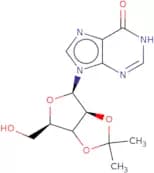
2',3'-O-Isopropylideneinosine
CAS:<p>2',3'-O-Isopropylideneinosineis a nucleoside for use in research applications</p>Formula:C13H16N4O5Purezza:Min. 95%Colore e forma:PowderPeso molecolare:308.3 g/molCaffeoyl-coenzym A
CAS:Please enquire for more information about Caffeoyl-coenzym A including the price, delivery time and more detailed product information at the technical inquiry form on this pageFormula:C30H42N7O19P3SPurezza:Min. 95%Peso molecolare:929.68 g/molLamivudine-5'-triphosphate tetratriethylammonium salt - ca.15 mM Aqueous solution
Lamivudine-5'-triphosphate tetratriethylammonium salt - ca.15 mM Aqueous solution is an antiviral drug used to treat HIV/AIDS and hepatitis B infections. It is a potent inhibitor of human immunodeficiency virus type 1 (HIV-1) replication, acting by blocking the viral enzyme reverse transcriptase. Lamivudine-5'-triphosphate tetratriethylammonium salt - ca.15 mM Aqueous solution also inhibits cellular viral DNA synthesis and has been shown to exhibit anticancer activity in vitro and in vivo. This product is synthesized from raw materials through a novel process that involves modification of the phosphoramidite monophosphate with tetratriethylammonium salts.Formula:C32H74N7O12P3SPurezza:Min. 95%Peso molecolare:873.96 g/molGuanosine 5'-diphosphate sodium
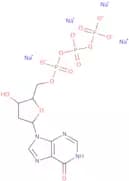
CAS:<p>Pyruvate kinase substrate</p>Formula:C10H15N5O11P2•Na2Purezza:Min. 95%Colore e forma:PowderPeso molecolare:466.19 g/mol2'-Deoxyinosine-5'-triphosphate sodium,100mM aqueous solution
CAS:<p>2'-Deoxyinosine-5'-triphosphate sodium (2'-dITP) is a modified nucleotide that has antiviral and anticancer properties. It has been shown to be an activator for ribonucleosides, deoxyribonucleosides, and DNA. 2'-DITP has also been shown to inhibit the growth of human breast cancer cells in vitro.</p>Formula:C10H11N4Na4O13P3Purezza:Min. 95%Colore e forma:Clear LiquidPeso molecolare:580.09 g/molGuanosine5'-diphosphate
CAS:Pyruvate kinase substrateFormula:C10H15N5O11P2Purezza:Min. 95%Colore e forma:PowderPeso molecolare:443.2 g/molFludarabine phosphate
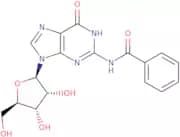
CAS:<p>Fludarabine phosphate is an antileukemic drug that inhibits DNA polymerase α and β, as well as other enzymes in the nucleotide synthesis pathway. It is used to treat patients with chronic myelogenous leukemia (CML) who have developed resistance to other treatments. Fludarabine phosphate has been shown to induce a cytotoxic effect against tumor cells by binding to ATP-binding cassette transporter proteins on the cell membrane and inhibiting intracellular targets such as DNA, RNA, and protein synthesis. Fludarabine phosphate has also been shown to inhibit the growth of tumor cells through synergistic interactions with other anticancer drugs such as hydroxyurea or busulfan, which may be due to its ability to inhibit enzyme activities such as erythrocyte alkaline phosphatase.</p>Formula:C10H13FN5O7PPurezza:Min. 98 Area-%Colore e forma:PowderPeso molecolare:365.21 g/molN2-Benzoylguanosine
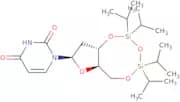
CAS:<p>N2-Benzoylguanosine is a nucleotide derivative that is formed by the acetylation of guanosine. It has been shown to act as a buffer in alkaline solutions and isomerizes to its n-oxide form when heated. N2-Benzoylguanosine reacts with peroxides such as hydrogen peroxide, glyoxal, and organic peroxides, forming hydroperoxide intermediates that can be converted into other products. The acidic hydrolysis of N2-benzoylguanosine yields the corresponding 6-benzoyladenosines. It has been shown to enhance the activity of uridine in inhibiting bacterial growth, while also acting as an inhibitor of viral RNA synthesis. This compound also reacts with nitrous acid to form an n6-benzoyladenosine derivative that inhibits the formation of RNA chains during transcription.</p>Formula:C17H17N5O6Purezza:Min. 95%Colore e forma:White to beige solid.Peso molecolare:387.35 g/mol2'-Deoxy-3',5'-O-(1,1,3,3-tetraisopropyl-1,3-disiloxanediyl)uridine
CAS:2'-Deoxy-3',5'-O-(1,1,3,3-tetraisopropyl-1,3-disiloxanediyl)uridine is a novel and synthetic nucleoside analog with antiviral activity. It inhibits the synthesis of DNA by binding to the enzyme ribonucleotide reductase. This compound has been shown to be an activator of PPARs in vitro.Formula:C21H38N2O6Si2Purezza:Min. 95%Peso molecolare:470.72 g/molKinetin riboside-5'-monophosphate sodium salt
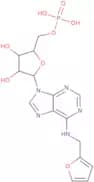
CAS:Kinetin riboside-5'-monophosphate sodium salt is a synthetic nucleotide that has been modified to include a phosphate group at the 5' position. Kinetin riboside-5'-monophosphate sodium salt is an activator of DNA synthesis and can be used for the treatment of viral infections. It also shows anticancer activity and is effective against cancer cells that are resistant to other cancer drugs.Formula:C15H16N5Na2O8P·H2OPurezza:Min. 95%Colore e forma:PowderPeso molecolare:489.29 g/mol2-Fluoroadenosine
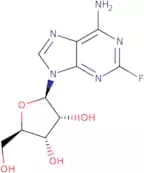
CAS:<p>2-Fluoroadenosine is a nucleoside that has shown high resistance to the enzyme cyclase. This property may be due to its structural and conformational properties, which are different from those of adenosine. 2-Fluoroadenosine has been shown to inhibit the synthesis of ATP in ventricular myocardium and fat cells, as well as increase levels of adenylate kinase in blood. It has also been shown to have potential as a drug target for autoimmune diseases, such as multiple sclerosis. 2-Fluoroadenosine can be used for biochemical and pharmacokinetic studies because it is rapidly metabolized by the liver and excreted in urine.<br>2-Fluoroadenosine can also be used to measure changes in the ratio of adenylate kinase:adenylate kinase reductase (AKAR) in blood plasma.</p>Formula:C10H12FN5O4Purezza:Min. 95%Colore e forma:White Slightly Yellow PowderPeso molecolare:285.23 g/mol5-Bromo-2'-deoxycytidine
CAS:5-Bromo-2'-deoxycytidine is a synthetic nucleoside analogue that is used to treat diabetic neuropathy. It is structurally similar to cytidine, and inhibits the enzyme DNA polymerase by intramolecular catalysis. This causes deamination of the 5-bromo group, which prevents further synthesis of DNA. 5-Bromo-2'-deoxycytidine has been shown to be effective in vivo in a mouse model for inflammatory bowel diseases, including colitis and eosinophilic enteritis. The drug was also found to inhibit the production of Eosinophil peroxidase from HL-60 cells in vitro.Formula:C9H12BrN3O4Purezza:Min. 95%Colore e forma:Off-White PowderPeso molecolare:306.11 g/mol3'-Phosphoadenosine-5'-phosphosulfate lithium salt hydrate
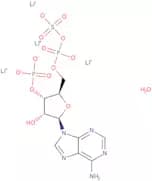
CAS:Universal sulfonate donor for in vivo sulfonation by sulfotransferasesFormula:C10H15N5O13P2S·xLi·yH2OPurezza:Min. 60 Area-%Colore e forma:White PowderPeso molecolare:507.27 g/mol8-Aza-7-deaza-2'-deoxyguanosine
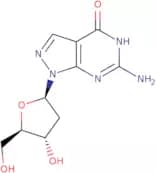
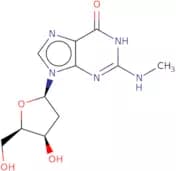
CAS:<p>8-Aza-7-deaza-2'-deoxyguanosine is an alkynylated, cross-linked, single stranded nucleic acid. It has been shown to be effective at cross-linking and cross-linking nucleic acids. 8-Aza-7-deaza-2'-deoxyguanosine binds to the 7 deazapurine residues in DNA, forming a covalent bond between the two strands of the helix. This binding prevents the strand from unwinding and prevents the replication of DNA. The thermodynamic data for this compound shows that it is stable in both hot and cold water, which makes it a good candidate for use in research as well as in clinical settings.</p>Formula:C10H13N5O4Purezza:Min. 95%Colore e forma:PowderPeso molecolare:267.24 g/mol2'-Deoxy-N2-methylguanosine
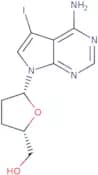
CAS:<p>2'-Deoxy-N2-methylguanosine is a nucleoside with anticancer properties. It is a phosphoramidite, which is an analog of the natural nucleotide guanosine, where the 2'-hydroxyl group has been replaced by a methylene group. This compound is used in DNA synthesis and RNA synthesis. It can be used as a monophosphate or diphosphate. It also has antiviral and anti-inflammatory activities, as well as N2-methylamino moiety that can be used for the treatment of cancer and inflammatory diseases such as arthritis.</p>Formula:C11H15N5O4Purezza:Min. 95%Colore e forma:White PowderPeso molecolare:281.27 g/mol7-Deaza-2',3'-dideoxy-7-iodoadenosine
CAS:7-Deaza-2',3'-dideoxy-7-iodoadenosine is a nucleoside analogue that is used as an antiviral, anticancer, and antifungal agent. It is a modified form of adenosine which inhibits viral replication by inhibiting the activity of reverse transcriptase. 7-Deaza-2',3'-dideoxy-7-iodoadenosine has also been shown to inhibit DNA synthesis in cells by blocking the incorporation of dCTP into DNA. This nucleoside analogue has shown potential for use as an activator in phosphoramidite chemistry and as a deoxyribonucleoside in oligonucleotide synthesis.Formula:C11H13IN4O2Purezza:Min. 95%Colore e forma:PowderPeso molecolare:360.15 g/molStearoyl coenzyme A free acid hydrate
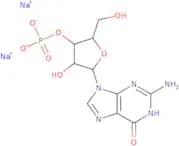
CAS:<p>Stearoyl coenzyme A free acid hydrate is a natural, non-synthetic lipid molecule that belongs to the group of fatty acids. It is found in the form of a white crystalline powder and has a melting point at approximately 56°C. Stearoyl CoA free acid hydrate is an essential component of cellular metabolism, carrying out reactions such as desaturase, dextran sulfate, and other enzyme activities. Stearoyl CoA free acid hydrate may have therapeutic applications for metabolic disorders and obesity. The enzyme complex that catalyzes the synthesis of stearoyl CoA free acid hydrate in adipocytes is ATP-binding cassette transporter (ABC) A1 and ABCG1, which are members of the superfamily of ATP-binding cassette (ABC) transporters. It also plays a role in regulating immune responses via Toll-like receptor 4 (TLR4).</p>Formula:C39H70N7O17P3S•H2OPurezza:Min. 92 Area-%Colore e forma:White PowderPeso molecolare:1,052.01 g/mol3′-Guanylic acid disodium
CAS:<p>3′-Guanylic acid disodium is a nucleoside analog that inhibits viral replication and tumor growth. It is an antiviral agent that is active against herpes simplex virus type 1 and type 2, as well as cytomegalovirus. 3′-Guanylic acid disodium is also an anticancer agent that has shown promising results in animal models of glioma, lymphoma, lung cancer, and breast cancer. The molecule inhibits the synthesis of DNA by competitively inhibiting the action of ribonucleotide reductase. 3′-Guanylic acid disodium also inhibits protein synthesis by blocking the conversion of ribonucleotides to deoxyribonucleotides. This drug has been shown to have a high purity and quality with no detectable impurities or contaminants.</p>Formula:C10H14N5O8P•Na2Purezza:Min. 95%Peso molecolare:409.2 g/mol5-Methoxyuridine-5'-triphosphate sodium, 100mM aqueous solution
CAS:5-Methoxyuridine-5'-triphosphate is a monophosphate nucleoside that serves as a precursor for the synthesis of 5-methoxyuridine (5MU) and other nucleosides. It has antiviral effects, and is used in the treatment of herpes zoster infection. 5-Methoxyuridine-5'-triphosphate is an analog of uridine and deoxyribonucleosides with antiviral activity, which can be used to treat herpes zoster infection. This drug also has anticancer properties, which may be due to its ability to inhibit DNA synthesis by inhibiting ribonucleotide reductase and DNA polymerase, leading to cell death.Formula:C10H17N2O16P3•NaxPurezza:Min. 95%Colore e forma:Clear LiquidPeso molecolare:514.17 g/molUridine diphosphate choline (UDPC) sodium
CAS:<p>Uridine diphosphate choline (UDPC) sodium is a nucleotide that is used as a phosphoramidite for DNA synthesis. The chemical formula for UDPC is C8H14N4O8P. The activation of the molecule occurs in acidic conditions, which may be due to the formation of an amide bond between the terminal phosphate and the amino group on the phosphorylcholine. This same reaction can also occur in alkaline conditions. UDPC has been shown to inhibit viral replication, including HIV-1, by blocking reverse transcription of viral RNA into DNA. It also has anticancer effects, as it inhibits cell proliferation and induces apoptosis in cancer cells. UDPC does not have any known side effects or toxicity.</p>Formula:C14H25N3O12P2•NaPurezza:Min. 95%Colore e forma:PowderPeso molecolare:512.3 g/mol