Nucleotidi
Sottocategorie di "Nucleotidi"
Trovati 2636 prodotti di "Nucleotidi"
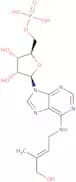
trans-Zeatin riboside-5'-monophosphate sodium salt
CAS:Trans-zeatin riboside-5'-monophosphate sodium salt is a growth rate inhibitor that inhibits protein synthesis by binding to the 30S subunit of the ribosome. This compound has been shown to inhibit cell growth and proliferation in vitro when applied to tissue cultures of tabacum l. and other plants. Trans-zeatin riboside-5'-monophosphate sodium salt is not active against plant tissues grown in vivo, which may be due to its inability to cross the plasma membrane or cell wall.Formula:C15H20N5O8PNa2Purezza:Min. 95 Area-%Colore e forma:PowderPeso molecolare:475.3 g/molL-Guanosine
CAS:L-Guanosine is an enantiomer of adenosine. It has been shown to be effective in the treatment of autoimmune diseases and viruses, such as HIV. L-Guanosine is activated by phosphorylation, which leads to its binding with DNA and inhibition of viral replication. L-Guanosine is also a potent inhibitor of mammalian cell proliferation. It binds to the enzyme adenosyltransferase, thereby inhibiting the production of nucleotides, which are necessary for DNA synthesis. This inhibition causes cell death due to lack of DNA synthesis and protein production.
Formula:C10H13N5O5Purezza:Min. 95%Colore e forma:White PowderPeso molecolare:283.24 g/mol5-Cyanouridine
CAS:5-Cyanouridine is a pyrimidine nucleoside that is synthesized from uracil. It is a potent inhibitor of the enzyme decarboxylase, which catalyzes the conversion of 5-cytosine to 5-uracil, and has been used for the treatment of malignant lymphoma. 5-Cyanouridine is also a substrate for DNA replication and can be used as a target for antiviral drugs. The drug inhibits viral RNA synthesis by acting on the vesicular stomatitis virus (VSV) in two different ways: first, by inhibiting viral RNA polymerase activity; second, by incorporation into viral DNA. This incorporation can lead to chain termination or to translesion synthesis. 5-Cyanouridine has been shown to inhibit VSV replication in cell culture at concentrations as low as 1 μM.Formula:C10H11N3O6Purezza:Min. 95%Colore e forma:PowderPeso molecolare:269.21 g/mol5,6-Dihydro-5-methyluridine
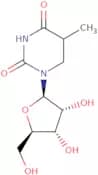
CAS:5,6-Dihydro-5-methyluridine is a nucleoside that is found in the human genome. It is a precursor of uridine and can be used to synthesize 5-methylcytosine, which is an epigenetic modification that occurs in DNA. This modification can affect the expression of genes by changing the structure of chromatin. This drug has been identified as a potential drug target for cancer treatment and other diseases. Structural analysis has shown that this compound has a number of hydrogen bonds with oxygen atoms and hydroxyl groups, which may make it more effective than other drugs currently being studied. 5,6-Dihydro-5-methyluridine forms a phylogenetic tree with other compounds that are also found in the human genome, suggesting that it may have evolved through natural selection.Formula:C10H16N2O6Purezza:Min. 95%Colore e forma:White Off-White PowderPeso molecolare:260.24 g/molAdenosine 5'-phosphosulfate sodium salt, 10 mM in water
CAS:Adenosine 5′-phosphosulfate sodium salt has been used quantify pyrophosphate and in enzyme-linked bioluminescence assay for adenosine triphosphate (ATP).Product provided as 10 mM solution in water.Formula:C10H14N5O10PSPurezza:Min. 90.0 Area-%Peso molecolare:427.28 g/mol5-Carboxyhydroxymethyluridine
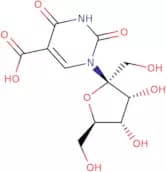
CAS:5-Carboxyhydroxymethyluridine is a hydroxylated nucleoside that is used to study DNA repair. It is a nucleotide analogue that has been modified at the hydroxyl group by methylation. 5-Carboxyhydroxymethyluridine can be converted back to uridine by escherichia coli hydroxylases, but this conversion does not occur in vivo. 5-Carboxyhydroxymethyluridine can be used as a substrate for methyltransferase enzymes, which are involved in DNA repair. The enzyme 5'-methylthioadenosine phosphorylase converts 5-carboxyhydroxymethyluridine into S-adenosylhomocysteine and adenine. This conversion can be reversed by the enzyme methionine synthase. Some homologues of 5-carboxyhydroxymethyluridine have been found in nature and other modifications have been made on theFormula:C11H14N2O9Purezza:Min. 95%Colore e forma:PowderPeso molecolare:318.24 g/mol5'-O-DMT-2'-O-methylcytidine
CAS:5'-O-DMT-2'-O-methylcytidine is a monophosphate nucleoside of cytidine. It is used as an antiviral agent and has been shown to have anticancer effects in vitro. 5'-O-DMT-2'-O-methylcytidine is synthesized by modification of the natural deoxyribonucleosides, which are then phosphoramidited to form a 5'-O-DMT-2'-O-methylcytidine monophosphate. The synthesis process also produces diphosphate and triphosphate forms of the nucleoside, which can be used for other purposes.
Formula:C31H33N3O7Purezza:Min. 95%Peso molecolare:559.61 g/molGlycinamide ribonucleotide
CAS:Glycinamide ribonucleotide (GAR) is a reactive metabolite that is formed from glycinamide, which is an intermediate in the synthesis of purines. GAR has been shown to bind to intracellular targets and inhibit their enzyme activities. GAR has been shown to inhibit the activity of enzymes that are involved in the synthesis of purines, such as ribonucleotides and nucleoside phosphates. These enzymes have been found in human tissues. GAR also inhibits the polymerase chain reaction (PCR) by binding to DNA and inhibiting its replication. This drug has also been shown to be effective against bowel disease by binding to bacterial dna gyrase, dna topoisomerase, and rna synthesis.
Formula:C7H15N2O8PPurezza:Min. 80 Area-%Colore e forma:PowderPeso molecolare:286.18 g/molN1-Methyladenosine
CAS:N1-Methyladenosine is a nucleoside that has been shown to inhibit the synthesis of proteins in the ribosome, which are essential for all cellular functions. N1-Methyladenosine has been shown to be effective against HIV infection, and has also been used as a chemotherapeutic agent in cancer cells. The optimum concentration of this drug is unknown, but it is known that at high concentrations, it can cause cellular death. N1-Methyladenosine has also been shown to be effective in treating metabolic disorders and autoimmune diseases.Formula:C11H15N5O4Purezza:Min. 95%Colore e forma:White PowderPeso molecolare:281.27 g/molC2-Methyladenosine
CAS:C2-Methyladenosine is a x-ray crystal structure of the mutant strain of Mycobacterium tuberculosis that has an efficient method for binding to the substrate. The uptake of C2-methyladenosine by the wild type strain was found to be at least four times higher than that of adenosine. The analog was also shown to have pharmacokinetic properties in fat cells, which leads to a decrease in ATP levels.
Formula:C11H15N5O4Purezza:Min. 96 Area-%Colore e forma:White PowderPeso molecolare:281.27 g/molN3-Methylcytidine methosulfate
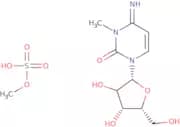
CAS:N3-Methylcytidine methosulfate is a novel antiviral agent that inhibits the synthesis of DNA and RNA. It has been shown to be effective against hepatitis B virus, herpes simplex virus, varicella-zoster virus, human immunodeficiency virus, and cytomegalovirus. N3-Methylcytidine methosulfate was found to be active in a variety of animal models including mice and rats. This drug has anticancer properties in the treatment of leukemia, lymphoma, and breast cancer. The phosphoramidite derivative of N3-methylcytidine methosulfate is used as an activator for oligonucleotide synthesis.
Formula:C10H15N3O5·CH4SO4Purezza:Min. 98 Area-%Colore e forma:PowderPeso molecolare:369.35 g/molN6-Ethenoadenosine
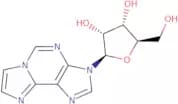
CAS:N6-Ethenoadenosine is a fluorescent derivative that is used in biology to study the binding of receptor molecules to DNA. N6-Ethenoadenosine binds to the dinucleotide phosphate, which is an important component for many metabolic processes. It also has been shown to be an effective inhibitor of DNA duplexes and ATPase activity. N6-Ethenoadenosine has a glycosidic bond with p-nitrophenyl phosphate, which is a substrate of creatine kinase and can be used as an indicator of its activity. This product is also used as a marker for damaged DNA.Formula:C12H13N5O4Purezza:Min. 95%Colore e forma:White PowderPeso molecolare:291.26 g/molGuanosine 3',5'-cyclic monophosphate
CAS:Guanosine 3',5'-cyclic monophosphate (cGMP) is a nucleotide that functions as a second messenger in the cell. It is involved in many cellular processes, including mitochondrial functions and energy metabolism. cGMP is synthesized from guanosine triphosphate (GTP) by the enzyme guanine nucleotide-binding protein, which hydrolyzes the phosphate group from GTP to form cGMP. cGMP has been shown to be involved in neuronal death, axonal growth, and glucose uptake in cells. Optimum concentrations of cGMP have been found to be between 1-10 μM. It has also been shown to be an important mediator of cyclic axonal growth and bowel disease. Guanosine 3',5'-cyclic monophosphate can also act as a polymerase chain reaction primer for DNA amplification in vitro.Formula:C10H12N5O7PPurezza:Min. 98 Area-%Colore e forma:White PowderPeso molecolare:345.21 g/mol2-Chloroisonicotinic acid
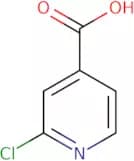
CAS:2-Chloroisonicotinic acid is a halogenated derivative of isonicotinic acid where a chlorine atom is substituted at the 2-position of the pyridine ring (next to the carboxylic acid group).Formula:C6H4ClNO2Purezza:Min. 95%Colore e forma:PowderPeso molecolare:157.55 g/mol2'-Deoxy-2',2'-difluorocytidine 5'-triphosphate triethylammonium salt - Aqueous solution
CAS:2'-Deoxy-2',2'-difluorocytidine 5'-triphosphate triethylammonium salt - Aqueous solution is a nucleoside analog for research purposesFormula:C9H14F2N3O13P3·C24H60N4Colore e forma:Colorless PowderPeso molecolare:907.9 g/molN4-Ethenocytidine
CAS:N4-Ethenocytidine is a nucleoside analogue that has been synthesized and shown to be an effective inhibitor of the hepatitis C virus. N4-Ethenocytidine prevents the synthesis of viral RNA by attacking the 3'-hydroxyl group of uridine, which is involved in the formation of ribonucleotides. This compound can also inhibit rat liver microsomes through a hydrated attack on carbonyl groups. The reaction products are trifluoroacetic acid and chloride ions. N4-Ethenocytidine's fluorescence properties have been used to identify its reaction intermediates, which include uridylic acid and 4-etheno-N6-isopentenyladenosine.
Formula:C11H13N3O5Purezza:Min. 95%Colore e forma:White Off-White PowderPeso molecolare:267.24 g/mol5'-O-DMT-2'-O-methyluridine
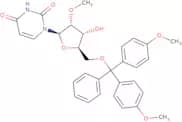
CAS:5'-O-DMT-2'-O-methyluridine (5'-OMeT) is a phosphoramidite building block of a modified nucleoside that is used in biological research. The stability of 5'-OMeT has been studied by thermal denaturation studies and found to be more stable than other analogues such as 6-azacytidine, 6-azauridine, and 6-azathymidine. This may be due to its increased resistance to endonucleolytic cleavage. 5'-OMeT has not shown any significant biological activity in vivo or in vitro.Formula:C31H32N2O8Purezza:Min. 95%Colore e forma:White PowderPeso molecolare:560.61 g/mol8-(4-Chlorophenylthio)adenosine 3',5'-cyclic monophosphate monosodium salt
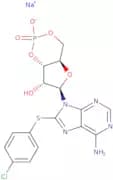
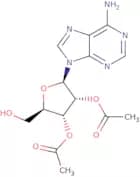
CAS:8-(4-Chlorophenylthio)adenosine 3',5'-cyclic monophosphate monosodium salt (8-CPT-cAMP) is a cytosolic second messenger that regulates physiological processes. It interacts with the G protein coupled receptor 2-adrenergic receptor, and activates adenylyl cyclase to produce cAMP. 8-CPT-cAMP also induces mitochondrial membrane potential depolarization and Ca2+ release from the endoplasmic reticulum, which leads to cell death. The pro-apoptotic protein Bax is upregulated by 8-CPT-cAMP in cells and contributes to cell death.Formula:C16H14ClN5NaO6PSPurezza:Min. 97 Area-%Colore e forma:PowderPeso molecolare:493.79 g/mol2',3'-Di-O-acetyladenoside
CAS:2',3'-Di-O-acetyladenoside is a nucleoside for use in research applicationsFormula:C14H17N5O6Purezza:Min. 97 Area-%Colore e forma:White PowderPeso molecolare:351.31 g/mol2'-O-Methylguanosine
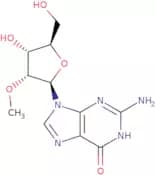
CAS:2'-O-Methylguanosine is a nucleoside that contains a 2'-O-methyl group at the 2' position of the ribose. It is a component of many nucleic acids and is usually found as a minor component in RNA. 2'-O-Methylguanosine has been shown to be an inhibitor of DNA polymerase and an activator of RNA polymerase, which may be due to its ability to form hydrogen bonds with the phosphate backbone. This compound has also been shown to act as a competitive inhibitor for both wild-type and mutant bacterial strains, suggesting that it can inhibit DNA synthesis in bacteria by binding to the enzyme's active site. 2'-O-Methylguanosine is present in relatively high concentrations in tissues, such as liver and muscle, where it is involved in metabolism or energy production. The optimum concentration for detection by analytical methods varies depending on the type of detector used.Formula:C11H15N5O5Purezza:Min. 95%Colore e forma:White PowderPeso molecolare:297.27 g/mol