Nucleotidi
I nucleotidi sono composti organici che fungono da mattoni per la costruzione degli acidi nucleici, essenziali per la formazione del DNA e dell'RNA. Ogni nucleotide è composto da una base azotata, una molecola di zucchero e uno o più gruppi fosfato. Questi nucleotidi si uniscono per formare lunghe catene, creando il materiale genetico che porta e trasmette informazioni genetiche in tutti gli organismi viventi. In questa sezione, troverai una vasta gamma di nucleotidi cruciali per la ricerca in genetica, biologia molecolare e biochimica. Sono fondamentali per studiare i processi genetici, sintetizzare acidi nucleici e sviluppare strumenti diagnostici e terapeutici. Da CymitQuimica, offriamo nucleotidi di alta qualità per supportare la tua ricerca scientifica e applicazioni, garantendo precisione e affidabilità nei tuoi esperimenti.
Sottocategorie di "Nucleotidi"
Trovati 2634 prodotti di "Nucleotidi"
Ordinare per
Purezza (%)
0
100
|
0
|
50
|
90
|
95
|
100
5-Bromo-2'-deoxyuridine
CAS:<p>5-Bromo-2'-deoxyuridine (5-BrDU) is a nitrate reductase inhibitor that prevents the reduction of nitrate to nitrite by inhibiting the enzyme nitrate reductase. It is a genotoxic agent that has been shown to cause DNA damage and cell death in vitro. 5-BrDU has been shown to induce preconditioning in vivo, reducing neuronal injury after ischemia. This drug also binds to NMDA receptors and may be useful as a model system for studying neurodegenerative diseases such as Alzheimer's disease. 5-BrDU has been shown to inhibit the polymerase chain reaction in wild-type strains of bacteria, but not in strains with a mutation in their DNA gyrase genes.</p>Formula:C9H11BrN2O5Purezza:Min. 99 Area-%Colore e forma:White Off-White PowderPeso molecolare:307.1 g/mol2'-Deoxyadenosine-5'-triphosphate disodium salt
CAS:2'-Deoxyadenosine-5'-triphosphate disodium salt is a nucleotide that is formed from adenosine triphosphate (ATP) and deoxyadenosine monophosphate (dAMP). It is an intermediate in the biosynthesis of fatty acids, which are important components of cell membranes. This nucleotide can be used to measure the light exposure of bacteria. 2'-Deoxyadenosine-5'-triphosphate disodium salt has been shown to have antibacterial activity against some Gram-positive bacteria, such as Staphylococcus aureus. The effective dose for these bacteria is 5 µg/mL with a linear model. The biological properties of this nucleotide are still not fully understood, but it is thought to play a role in blood pressure regulation through its effects on fatty acid synthesis.Formula:C10H14N5O12P3Na2Purezza:Min. 95%Colore e forma:White PowderPeso molecolare:535.15 g/molCoenzyme A sodium salt hydrate
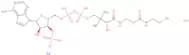
CAS:Coenzyme A is a biochemical that is required for the synthesis of fat molecules. It also plays an important role in the activation of fatty acids, as well as in the production of collagen and growth factor-β1. Coenzyme A sodium salt hydrate (CAS) is a cofactor that participates in various metabolic processes, including process optimization and conjugation reactions. It has been shown to increase the transcription of insulin-sensitive genes, which may be due to its ability to inhibit the activity of nonsteroidal anti-inflammatory drugs. This product can be used in transfection experiments and fluorescence assays for cervical cancer or insulin sensitivity.Formula:C21H36N7O16P3SNaPurezza:Min. 95%Colore e forma:PowderPeso molecolare:790.53 g/mol5-Aminouridine
CAS:<p>5-Aminouridine is an analog of uridine that is used in the synthesis of RNA. It inhibits the synthesis of RNA by viruses, and it may also inhibit the synthesis of RNA by cells, including muscle cells. 5-Aminouridine has been shown to inhibit protein synthesis in muscle cells incubated with orotic acid. The drug may also interact with other drugs metabolized by UDP-glucose pyrophosphorylase, such as carbamazepine and phenytoin. This interaction may lead to decreased serum levels of these drugs following treatment with 5-aminouridine.</p>Formula:C9H13N3O6Purezza:Min. 90 Area-%Colore e forma:PowderPeso molecolare:259.22 g/molN4-Benzoyl-5-methylcytidine
CAS:N4-Benzoyl-5-methylcytidine is a labile chemical that can be uniquely prepared using biochimie. It has been shown to have anticodon activity in assays and is synthesized chemically. The nucleoside is phosphoramidite, which is methylated and reproducible. N4-Benzoyl-5-methylcytidine has been shown to inhibit the growth of cells by blocking the synthesis of purines and pyrimidines. It may also have biophysical properties that are related to its ability to bind to DNA.Formula:C17H19N3O6Purezza:Min. 95%Colore e forma:PowderPeso molecolare:361.35 g/molN4-Benzoyl-2'-deoxy-5'-O-DMT-cytidine
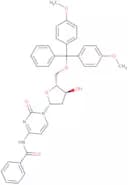
CAS:<p>N4-Benzoyl-2'-deoxy-5'-O-DMT-cytidine is a pesticide that is used as an acaricide, insecticide, and nematicide. It has been shown to be effective in controlling the growth of E. coli and insects by binding to their membranes and inhibiting lipid synthesis. N4-Benzoyl-2'-deoxy-5'-O-DMT-cytidine binds to the polypeptides in the bacterial cell membrane and inhibits their function, leading to cell death. This drug also has a low toxicity for mammals.</p>Formula:C37H35N3O7Purezza:Min. 98 Area-%Colore e forma:White Off-White PowderPeso molecolare:633.69 g/mol2'-Deoxy-2',2'-difluoro-5-methyluridine
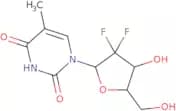
CAS:<p>2'-Deoxy-2',2'-difluoro-5-methyluridine is a synthetic nucleoside analog for use in research</p>Formula:C10H12F2N2O5Purezza:Min. 95%Peso molecolare:278.21 g/mol2'-O-Methyladenosine 5'-triphosphate lithium - 100 mM aqueous solution
CAS:<p>2'-O-Methyladenosine 5'-triphosphate lithium is a novel nucleotide that has been synthesized to act as an antiviral and anticancer agent. It can be used in the production of ribonucleosides, deoxyribonucleosides, and modified DNA. It is also a high quality phosphoramidite that can be used in the synthesis of DNA and RNA. 2'-O-Methyladenosine 5'-triphosphate lithium has been shown to inhibit the replication of HIV-1 and other viruses by inhibiting viral transcription. It is also active against cancer cells, with an IC50 value of 0.2 μM for HL-60 cells.</p>Formula:C11H18N5O13P3•Li3Purezza:Min. 95%Peso molecolare:542 g/mol7-Deazaguanosine
CAS:7-Deazaguanosine is a low energy analog of guanosine that has been shown to be activated by trifluoroacetic acid, which is a chemical reagent that can be used for the activation of nucleosides. 7-Deazaguanosine is used in the treatment of human serum and urine viruses such as hepatitis B virus, herpes simplex virus, and cytomegalovirus. The compound has also been shown to have receptor agonism activity on toll-like receptors. 7-Deazaguanosine has been shown to have antiviral effects against HIV and influenza A (H1N1). 7-Deazaguanosine binds at the viral receptor site and blocks the entry process into cells. This drug also stimulates macrophages to produce cytokines, which are proteins that regulate immune responses.Formula:C11H14N4O5Purezza:Min. 95%Colore e forma:Off-White PowderPeso molecolare:282.26 g/molN4-Benzoyl-2'-deoxy-5'-O-DMT-5-methylcytidine
CAS:N4-Benzoyl-2'-deoxy-5'-O-DMT-5-methylcytidine is a connector that is used in optical devices. It is a ligand that binds to the constant region of the antibody, which is part of the molecule that protects against bacteria and viruses. The residue has been shown to have variable conformation in tetrahydrofuran and ethyl group. This molecule can be injected into dimethylformamide with an anion chloride or pyrrolidine ring.Formula:C38H37N3O7Purezza:Min. 95%Colore e forma:White PowderPeso molecolare:647.72 g/mol2′-O-2-Methoxy-2-oxoethyl-5-methyl-cytidine
<p>2′-O-2-Methoxy-2-oxoethyl-5-methylcytidine (2′OMeC) is a synthetic ribonucleoside that is used in DNA synthesis. 2′OMeC is a nucleotide analog that inhibits DNA and RNA synthesis by competitively inhibiting the enzyme activity of DNA polymerase, RNA polymerase, and other enzymes involved in the process. This drug has been shown to inhibit the replication of human immunodeficiency virus type 1 (HIV-1) and hepatitis C virus (HCV). It also has anticancer properties through its ability to inhibit protein synthesis. The novel structure of this drug gives it high quality and purity.</p>Formula:C13H19N3O7Purezza:Min. 95%Peso molecolare:329.31 g/mol6-Azauridine
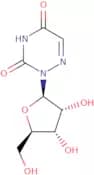
CAS:<p>Inhibitor of uridine monophosphate synthase</p>Formula:C8H11N3O6Purezza:Min. 95%Colore e forma:White PowderPeso molecolare:245.19 g/mol2,4-Diamino-6-hydroxy-5-nitrosopyrimidine
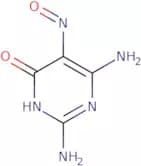
CAS:<p>2,4-Diamino-6-hydroxy-5-nitrosopyrimidine is a nucleoside for use in research applications</p>Formula:C4H5N5O2Purezza:Min. 95%Colore e forma:PowderPeso molecolare:155.12 g/mol2′-O-[2-(Methylamino)-2-oxoethyl]guanosine
CAS:2′-O-[2-(Methylamino)-2-oxoethyl]guanosine is a monophosphate nucleoside with anticancer properties. It has been shown to activate the transcription of genes that regulate cell growth and differentiation, and to induce apoptosis in tumor cells. This compound is an analog of guanosine, which is not modified at the 2′ position. It has been used to synthesize phosphoramidites for oligonucleotide synthesis, and may be useful as a novel therapeutic agent for cancer treatment.Formula:C13H18N6O6Purezza:Min. 95%Peso molecolare:354.32 g/molUridine 5'-diphosphate disodium salt
CAS:Agonist of P2Y6 purinoceptor; antagonist of P2Y14Formula:C9H12N2O12P2Na2Purezza:Min. 95%Colore e forma:White PowderPeso molecolare:448.12 g/mol2'-O-Methyladenosine 5'-triphosphate lithium salt - 100 mM aqueous solution
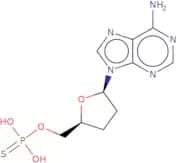
CAS:2'-O-Methyladenosine 5'-triphosphate lithium salt - 100 mM aqueous solution is a modified nucleoside that has antiviral, anticancer, and antimalarial properties. It also has been shown to activate DNA synthesis and inhibit the growth of cancer cells.Formula:C11H18N5O13P3·xLiPurezza:Min. 95%Colore e forma:PowderPeso molecolare:521.21 g/mol2',3'-Dideoxyadenosine-5'-monothiophosphate
CAS:<p>2',3'-Dideoxyadenosine-5'-monothiophosphate is a nucleoside for use in research applications</p>Formula:C10H14N5O4PSPurezza:Min. 95%Colore e forma:Clear liquid.Peso molecolare:331.29 g/mol2'-C-Methyladenosine 5'-triphosphate triethyl ammonium salt - Aqueous solution
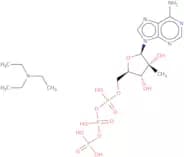
CAS:<p>2'-C-Methyladenosine 5'-triphosphate triethyl ammonium salt is a synthetic nucleotide analog of adenosine triphosphate (ATP), modified at the 2'-carbon of the ribose ring. This molecule has potential applications in biochemical, enzymatic, and antiviral research, particularly in studies involving RNA synthesis and viral RNA polymerases.</p>Formula:C35H79N9O13P3Purezza:Min. 95%Colore e forma:Colorless PowderPeso molecolare:926.98 g/molFludarabine
CAS:Fludarabine is a purine analog and works by interfering with DNA synthesis, which helps to stop the growth of cancer cells.Formula:C10H12FN5O4Purezza:Min. 95%Colore e forma:White PowderPeso molecolare:285.23 g/mol2'-Deoxy-5-hydroxymethyluridine-5'-triphosphate triethylammonium
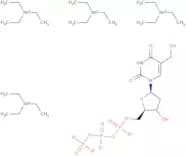
CAS:2'-Deoxy-5-hydroxymethyluridine-5'-triphosphate triethylammonium salt (dHMUTP) is a noncompetitive inhibitor of transcriptase activity. It inhibits the synthesis of DNA by binding to RNA polymerase on the template strand, thereby blocking the progress of the enzyme along the DNA. This drug has been shown to be effective in inhibiting viral production and growth in mammalian cells, as well as cancer cell culture. Dihydrofolate reductase is required for dHMUTP to function, and it is metabolized in vivo through hydrolysis by glycosylases or antineoplastic properties by nucleotide excision repair enzymes. These enzymes are present in human cells but absent in bacteria and yeast. The drug also has antineoplastic properties due to its ability to inhibit tumor cell proliferation.Formula:C10H16N2O15P3·C6H16NPurezza:Min. 70 Area-%Colore e forma:PowderPeso molecolare:599.36 g/mol







![2′-O-[2-(Methylamino)-2-oxoethyl]guanosine](/_next/image/?url=https%3A%2Fstatic.cymitquimica.com%2Fproducts%2F3D%2Fthumb-webp%2FNM182884.webp&w=3840&q=75)