Nucleotidi
I nucleotidi sono composti organici che fungono da mattoni per la costruzione degli acidi nucleici, essenziali per la formazione del DNA e dell'RNA. Ogni nucleotide è composto da una base azotata, una molecola di zucchero e uno o più gruppi fosfato. Questi nucleotidi si uniscono per formare lunghe catene, creando il materiale genetico che porta e trasmette informazioni genetiche in tutti gli organismi viventi. In questa sezione, troverai una vasta gamma di nucleotidi cruciali per la ricerca in genetica, biologia molecolare e biochimica. Sono fondamentali per studiare i processi genetici, sintetizzare acidi nucleici e sviluppare strumenti diagnostici e terapeutici. Da CymitQuimica, offriamo nucleotidi di alta qualità per supportare la tua ricerca scientifica e applicazioni, garantendo precisione e affidabilità nei tuoi esperimenti.
Sottocategorie di "Nucleotidi"
Trovati 2634 prodotti di "Nucleotidi"
Ordinare per
Purezza (%)
0
100
|
0
|
50
|
90
|
95
|
100
4'-Thioadenosine
CAS:4'-Thioadenosine is a nucleoside that has been shown to inhibit the growth of leukemia cells by binding to adenosine receptors. It is also able to inhibit the activity of the mammalian phosphodiesterase PDE4, which is responsible for hydrolyzing cAMP. The cellular effects of 4'-thioadenosine can be seen in HL-60 human cells, and this drug has also shown promising results in animal models of kidney fibrosis and liver cirrhosis. 4'-Thioadenosine has been shown to have anti-inflammatory properties, which may be due to its ability to inhibit prostaglandin synthesis.Formula:C10H13N5O3SPurezza:Min. 95 Area-%Colore e forma:PowderPeso molecolare:283.31 g/molThymidylyl-3'-5'-thymidine ammonium
CAS:<p>Thymidylyl-3'-5'-thymidine ammonium is a cytotoxic drug that belongs to the class of thymidylate synthase inhibitors. It inhibits enzymes responsible for DNA synthesis and repair by binding to the active site of these enzymes and forming covalent bonds with amino acid residues. Thymidylyl-3'-5'-thymidine ammonium can be used as a therapeutic agent in radiation therapy because it is more effective than other drugs at inhibiting cell growth. Thymidylyl-3'-5'-thymidine ammonium has been shown to inhibit the activity of carcinogenic compounds, such as benzo[a]pyrene and benzene, in a model system. Thymidylyl-3'-5'-thymidine ammonium also has the ability to form covalent bonds with dna duplexes and change their conformational properties.</p>Formula:C20H27N4O12P·NH3Purezza:Min. 98 Area-%Colore e forma:White PowderPeso molecolare:563.45 g/mol6-(β-D-2-Deoxyribofuranosyl)-3,4-dihydro-8H-pyrimido[4,5-c][1,2]oxazin-7-one
CAS:6-(β-D-2-Deoxyribofuranosyl)-3,4-dihydro-8H-pyrimido[4,5-c][1,2]oxazin-7-one is a novel nucleoside that has been shown to have anticancer and antiviral properties. In vitro studies have shown the compound to activate both DNA and RNA synthesis in cells. The compound also inhibits the replication of HIV viruses. 6-(β-D-2-Deoxyribofuranosyl)-3,4-dihydro-8H-pyrimido[4,5-c][1,2]oxazin-7-one is synthesized from ribonucleosides or deoxyribonucleosides through phosphoramidite chemistry. This product is available in high purity and high quality.Formula:C11H15N3O5Purezza:Min. 95%Colore e forma:PowderPeso molecolare:269.25 g/molGuanosine 5'-diphosphate disodium salt
CAS:Guanosine 5'-diphosphate (GDP) disodium salt is a nucleoside dipsphate and a pyruvate kinase substrate, which converts GDP to GTP.Formula:C10H13N5O11P2·2NaPurezza:Min. 90 Area-%Colore e forma:White PowderPeso molecolare:487.17 g/mol5-Fluorouridine
CAS:<p>5-Fluorouridine, also called 1-(b-D-ribofuranosyl)-5-fluorouracil and 5-fluoro-D-uridine (FUrd), is a modified uridine nucleoside with a fluorine atom at position 5 of the uracil. 5-Fluorouridine is a highly cytotoxic metabolite of 5-fluorouracil, a drug used to treat a variety of cancers, on the market with the trade name Adrucil. Prodrugs of 5-fluorouridine have been investigated for anti-tumour properties in their own right and are close structural analogues of 5'-deoxy-5-fluorouridine, a cytostatic agent in chemotherapy.</p>Formula:C9H11FN2O6Purezza:Min. 95%Colore e forma:White PowderPeso molecolare:262.2 g/mol2'-Deoxycytidine
CAS:<p>2'-Deoxycytidine is a deoxyribonucleotide that is used in the synthesis of DNA. It has been shown to have potent antitumor activity against solid tumours and may be useful for the treatment of leukemic mice. This compound has been shown to inhibit the kinase activity of IL-2 receptor and Toll-like receptor, which are proteins that regulate the immune response. 2'-Deoxycytidine also inhibits DNA polymerase activity and thermal expansion, which may make it a good candidate as an anticancer drug.</p>Formula:C9H13N3O4Purezza:Min. 99 Area-%Colore e forma:PowderPeso molecolare:227.22 g/mol1-(3'-5'-Di-O-benzoyl-2'-deoxy-2'-fluoro-α-L-arabinofuranosyl)thymine
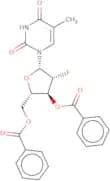
1-(3`-5`-Di-O-benzoyl-2`-deoxy-2`-fluoro-alpha-L-arabinofuranosyl)thymine is a nucleoside analog with modifications that influence its biological activity. It is made up of a thymine base, benzoyl groups that protect hydroxyl functionalities during chemical synthesis and a α-L-linkage, which impacts its biological interactions compared to β-L-nucleosides. This molecule also contains the sugar 2'-Deoxy-2'-fluoro-α-L-arabinofuranose which has a L-arabinose configuration, an α-Anomeric linkage and a 2'-Fluoro substitution. The latter modification has the potential to increase the molecule's metabolic stability and resistance to enzymatic degradationFormula:C24H21FN2O7Purezza:Min. 95%Peso molecolare:484.89 g/molThymidine
CAS:<p>Thymidine is a nucleoside that is found in cells and is involved in the synthesis of DNA. Thymidine has been shown to inhibit the growth of tumor cells through apoptosis. In addition, thymidine can be used for the treatment of bowel disease by reducing inflammation and increasing the production of mucin. The mechanism by which thymidine exerts its effects on tumor cells is not well understood, but it may involve interactions with dna binding activity and enzyme activities.</p>Formula:C10H14N2O5Purezza:Min. 99 Area-%Peso molecolare:242.23 g/molRef: 3D-Q-201829
1kgPrezzo su richiesta5kgPrezzo su richiesta250gPrezzo su richiesta500gPrezzo su richiesta2500gPrezzo su richiesta-Unit-kgkgPrezzo su richiesta2'-Deoxy-6-thioguanosine
CAS:2'-Deoxy-6-thioguanosine is a purine nucleoside analog that inhibits the activation of transcription factors such as nuclear factor kappa-B (NF-κB) and activator protein 1 (AP-1). It also inhibits the synthesis of proinflammatory cytokines, such as IL-1β, IL-6, and TNFα. The matrix effect is an important factor in the prevention of tumor progression. 2'-Deoxy-6-thioguanosine has been shown to inhibit cell proliferation and induce apoptosis in squamous cell carcinoma cells by modulating the expression of HLA class II molecules on tumors. It also prevents invasion by blocking matrix metalloproteinase activity. 2'-Deoxy-6-thioguanosine has been found to be effective against bowel diseases such as ulcerative colitis and Crohn's disease, as well as infectious diseases such as HIV/AIDS.Formula:C10H13N5O3SPurezza:Min. 97 Area-%Colore e forma:PowderPeso molecolare:283.31 g/mol5'-O-DMT-a-thymidine
<p>5'-O-DMT-a-thymidine is a modified nucleoside that is used in the synthesis of DNA and RNA. This product is a high quality and pure monophosphate, which has been modified to reduce its potential for activation by phosphatases. It is suitable for use in anticancer drugs and antiviral agents.</p>Formula:C31H32N2O7Purezza:Min. 95%Peso molecolare:544.6 g/mol2'-Deoxy-L-cytidine
CAS:<p>2'-Deoxy-L-cytidine is a nucleoside that is naturally found in the cells of E. coli K-12. It is an antioxidant compound that prevents lipid peroxidation and scavenges free radicals, which are generated by certain chemical reactions. 2'-Deoxy-L-cytidine has been shown to have antiviral potency in vitro, but its antiviral activity has not been evaluated in vivo. This compound also inhibits the growth of bacteria that are resistant to tetracycline, such as Mycobacterium tuberculosis and Helicobacter pylori. 2'-Deoxy-L-cytidine may cause drug interactions with other medications because it is metabolized by the CYP450 system and inhibits the activity of cytochrome P450 enzymes.</p>Formula:C9H13N3O4Purezza:Min. 98 Area-%Colore e forma:PowderPeso molecolare:227.22 g/mol8-Oxoguanosine
CAS:<p>8-Oxoguanosine is an oxidative DNA lesion that has been shown to be a potential biomarker for the detection of cancer cells. 8-Oxoguanosine is produced by a number of pharmacological agents and reactive oxygen species, such as hydrogen peroxide and nitric oxide. It has been shown to bind to DNA duplexes, inhibiting their replication and repair, which may lead to cancer development. The electrochemical detector can detect 8-oxoguanosine at concentrations as low as 1 μM in biological samples.</p>Formula:C10H13N5O6Purezza:Min. 98 Area-%Colore e forma:White Off-White PowderPeso molecolare:299.24 g/mol3'-Deoxyguanosine
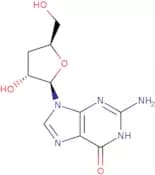
CAS:3'-Deoxyguanosine is a nucleic acid that is involved in the synthesis of polysaccharides and proteins. It has been shown to have an inhibitory effect on the synthesis of collagen, which may be due to its ability to increase hydrogen bonding between the nitrogen atoms and oxygen atoms. 3'-Deoxyguanosine has also been shown to have a protective effect on wheat germ extract, which may be due to its ability to inhibit oxidation reactions. The chemical structure of 3'-deoxyguanosine can be synthesized by reacting deoxyribose with sodium nitrate in the presence of sulfuric acid. This reaction can be monitored using electrochemical impedance spectroscopy (EIS).Formula:C10H13N5O4Purezza:Min. 95%Colore e forma:White Off-White PowderPeso molecolare:267.25 g/mol2'-Deoxy-5-fluorocytidine
CAS:<p>2'-Deoxy-5-fluorocytidine is a methyltransferase inhibitor that inhibits the activity of DNA methyltransferases. It has been shown to inhibit the activity of DNA methyltransferases in vitro and in vivo, leading to tumor cell death. 2'-Deoxy-5-fluorocytidine has been shown to target intracellular targets, such as histones and ribosomes, which are involved in cancer development. The toxicity of this drug has been studied extensively and it has been shown to have low toxicity in mice. This drug is not toxic for normal cells or animals when administered at high doses.</p>Formula:C9H12FN3O4Purezza:Min. 98 Area-%Colore e forma:White PowderPeso molecolare:245.21 g/mol2',3',5'-Tri-O-acetyl-5-bromouridine
CAS:2',3',5'-Tri-O-acetyl-5-bromouridine is a nucleoside analog of uridine, a basic building block of RNA. It has the addition of a bromine atom and three acetyl groups. 2',3',5'-Tri-O-acetyl-5-bromouridine can be used in researchFormula:C15H17BrN2O9Purezza:Min. 90%Peso molecolare:449.21 g/mol2'-Deoxy-5'-O-DMT-inosine
CAS:2'-Deoxy-5'-O-DMT-inosine is a chain congener of uridine and cytidine. It is an analog of guanosine, which is found in DNA. 2'-Deoxy-5'-O-DMT-inosine has shown to have cytotoxic effects on the cardiovascular system, as well as inflammatory properties. This drug can also inhibit nitric oxide production and chloride transport. The nitro group in 2'-deoxy-5'-O-DMT-inosine can be removed by ammonolysis or debenzoylation and glycosylation can be added to the molecule with the addition of glucose.Formula:C31H30N4O6Purezza:Min. 95%Colore e forma:White PowderPeso molecolare:554.61 g/mol3'-O-Methylinosine
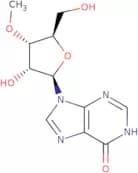
CAS:<p>3'-O-Methylinosine is a synthetic nucleoside that inhibits the synthesis of viral DNA and RNA by interacting with the enzyme ribonucleotide reductase. This antiviral agent has been shown to be effective against a wide range of viruses, including human cytomegalovirus, herpes simplex virus type 1, varicella-zoster virus, and influenza A virus. 3'-O-Methylinosine has also been shown to inhibit the growth of cancer cells in vitro and in vivo.</p>Formula:C11H14N4O5Purezza:Min. 95%Colore e forma:White PowderPeso molecolare:282.25 g/mol2-Amino-2'-O-methyladenosine
CAS:<p>2-Amino-2'-O-methyladenosine is a modified nucleoside based on adenosine with a 2-amino group on the base, and a 2'-O-methyl group on the sugar.</p>Formula:C11H16N6O4Purezza:Min. 97 Area-%Colore e forma:White PowderPeso molecolare:296.28 g/mol(E)-5-(2-Carboxyvinyl)-2'-deoxyuridine
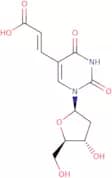
CAS:<p>(E)-5-(2-Carboxyvinyl)-2'-deoxyuridine is a nucleoside for a range of applications</p>Formula:C12H14N2O7Purezza:Min. 97 Area-%Colore e forma:White PowderPeso molecolare:298.25 g/molGuanosine 2',3'-cyclic monophosphate sodium
CAS:<p>Guanosine 2',3'-cyclic monophosphate sodium is a novel antiviral agent that has been shown to be effective against HIV, herpesviruses, and vaccinia virus. It is an activator of guanosine 3'-5' cyclic monophosphate (cGMP) and can be used as a substitute for the nucleoside guanosine 5'-triphosphate (GTP). Guanosine 2',3'-cyclic monophosphate sodium inhibits DNA synthesis by inhibiting the activity of ribonucleotide reductase and DNA polymerase. This drug also has anticancer properties, which may be due to its ability to inhibit the production of tumor necrosis factor-α (TNF-α) in mice with lung cancer.</p>Formula:C10H11N5NaO7PPurezza:Min. 97 Area-%Colore e forma:PowderPeso molecolare:367.19 g/molAdenosine 5'-diphosphate
CAS:<p>Adenosine 5'-diphosphate (ADP) is a nucleoside that is an important component of the cell's energy pathways. ADP plays a role in platelet activation and nitrate reductase, which are enzymes that maintain the integrity of bacterial DNA. Adenosine 5'-diphosphate also has been shown to inhibit neural cell injury and protein oxidation.</p>Formula:C10H15N5O10P2Purezza:Min. 95 Area-%Colore e forma:White Off-White PowderPeso molecolare:427.2 g/mol8-Bromo-2'-deoxyadenosine
CAS:8-Bromo-2'-deoxyadenosine (8-BrdA) is a reactive chemical that can be used in the study of DNA. It is used to measure the kinetics of oxidative dna damage and to study glycosidic bond cleavage reactions. 8-BrdA reacts with eosinophil peroxidase to yield an oxidant, which can then react with dna duplexes. This reaction has been shown to affect both intramolecular and intermolecular hydrogen bonds. 8-BrdA also has been shown to induce cell death in vitro by apoptosis.Formula:C10H12BrN5O3Purezza:Min. 98 Area-%Colore e forma:PowderPeso molecolare:330.14 g/mol3'-Deoxy-3'-fluorothymidine
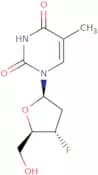
CAS:3'-Deoxy-3'-fluorothymidine is a nucleoside analog that is used to diagnose and treat cancer. It is a prodrug that is metabolized intracellularly by deoxycytidine kinase to the 3'-deoxy-3'-fluoro derivative of thymidine, which competes with natural thymidine for incorporation into DNA. Uptake of 18F-flouride (18F-FDG) in tumor cells has been shown to be proportional to the rate constant (k) of cellular uptake. This process can be quantified using positron emission tomography imaging. The cell cycle inhibitor activity of 3'-deoxy-3'-fluorothymidine has also been demonstrated in vitro and in vivo, inhibiting the proliferation of tumor cells and normal cells in culture, respectively.Formula:C10H13FN2O4Purezza:Min. 97 Area-%Colore e forma:White Off-White PowderPeso molecolare:244.22 g/mol5-Chloro-2-pyridinecarboxylic acid methyl ester
CAS:<p>5-Chloro-2-pyridinecarboxylic acid methyl ester is a monophosphate nucleoside that can be used in the synthesis of DNA and RNA. It is also an antiviral, anticancer, and anticoagulant agent. 5-Chloro-2-pyridinecarboxylic acid methyl ester has been shown to inhibit DNA replication and transcription by inhibiting the activity of enzymes involved in these processes. It can be used as a building block for the synthesis of DNA and RNA. The purity of this product is high, with no detectable impurities at levels above 0.1%.</p>Formula:C7H6ClNO2Purezza:Min. 95%Colore e forma:PowderPeso molecolare:171.58 g/molGuanylyl-3'-5'-cytidine ammonium salt
CAS:<p>Guanylyl-3'-5'-cytidine ammonium salt is a nucleoside that is classified as a diphosphate. It has high quality and novel, anticancer and cytotoxic effects. Guanylyl-3'-5'-cytidine ammonium salt is synthesized from guanosine monophosphate (GMP) and cytidine monophosphate (CMP).</p>Formula:C19H25N8O12P·NH3Purezza:Min. 95 Area-%Colore e forma:PowderPeso molecolare:605.46 g/mol9-(2'-Deoxy-2'-fluoro-β-D-arabinofuranosyl)hypoxantine
CAS:9-(2'-Deoxy-2'-fluoro-β-D-arabinofuranosyl)hypoxantine is a synthetic nucleoside that can be phosphorylated to form 9-(2'-Deoxy-2'-fluoro-β-D-arabinofuranosyl)hypoxantine 5'-triphosphate. This compound has been shown to have antitumor and antiviral activities. It inhibits DNA synthesis by inhibiting the activity of DNA polymerase and RNA polymerase, which are enzymes necessary for the replication of cellular DNA and RNA, respectively. 9-(2'-Deoxy-2'-fluoro-β-D-arabinofuranosyl)hypoxantine is high quality, novel, and CAS No. 98983-40-5.Formula:C10H11FN4O4Purezza:Min. 95%Colore e forma:White Off-White PowderPeso molecolare:270.22 g/molIsocytidine
CAS:<p>Isocytidine, also known as 2-amino-1-β-D-ribofuranosyl-4(1H)-pyrimidinone, have broad antitumor activity targeting indolent lymphoid malignancies.</p>Formula:C9H13N3O5Purezza:Min. 95%Colore e forma:PowderPeso molecolare:243.22 g/molN7-Methylguanosine
CAS:<p>N-7-Methylguanosine is a nucleotide that has potent anti-viral activity. It inhibits viral replication by binding to the effector proteins of a virus and preventing translation, transcriptional regulation, and other biochemical processes. N7-Methylguanosine also binds to the x-ray crystal structures of the viral genome and blocks the binding of RNA polymerase to DNA. This drug can be used as an antiviral agent for the treatment of HIV infection and hepatitis B infection. N7-Methylguanosine is not active against some viruses such as herpes simplex virus type 1 or 2, influenza virus type A/B, or rhinovirus type 2.<br>N7-Methylguanosine has been shown to have an effect on body mass index in humans by reducing weight gain in patients with metabolic syndrome. It also has an enzyme form that can be used for therapeutic use in human serum.</p>Formula:C11H15N5O5Purezza:Min. 95%Colore e forma:White PowderPeso molecolare:297.27 g/molOrotidine 5'-monophosphate trisodium salt
CAS:<p>Ribonuclesides is a novel nucleoside that contains the 2'-deoxyribose phosphate moiety. It is an anticancer drug that inhibits DNA synthesis and blocks viral replication. Ribonucleosides are phosphoramidites and can be used for the synthesis of DNA or RNA, which are important for cellular metabolism. Ribonucleosides also have antiviral properties and can inhibit protein synthesis by blocking the enzyme ribonucleotide reductase.</p>Formula:C10H10N2O11PNa3Purezza:Min. 95%Colore e forma:White PowderPeso molecolare:434.14 g/mol2'-Deoxy-N6-(2-hydroxyethyl)adenosine
CAS:2'-Deoxy-N6-(2-hydroxyethyl)adenosine is a synthetic nucleoside that is used as a building block for the chemical synthesis of oligonucleotides. It is also an antiviral agent and has been shown to have anticancer properties. 2'-Deoxy-N6-(2-hydroxyethyl)adenosine is used in the manufacture of phosphoramidites, deoxyribonucleosides, and ribonucleosides. This product can be synthesized at high purity and quality, with CAS No. 137058-94-7.Formula:C12H17N5O4Purezza:Min. 95%Peso molecolare:295.29 g/mol2'-Deoxy-2'-fluorouridine
CAS:2'-Deoxy-2'-fluorouridine is a nucleoside analog that inhibits the replication of wild-type viruses by binding to the viral RNA.Formula:C9H11FN2O5Purezza:Min. 95%Colore e forma:White Off-White PowderPeso molecolare:246.2 g/mol2'-O-Methylguanosine-5'-triphosphate sodium salt - 100mM aqueous solution
CAS:<p>2'-O-Methylguanosine-5'-triphosphate sodium salt is a nucleotide that is synthesized by the phosphorylation of guanosine at the 5' position. It has been shown to have significant activation of cardiac protein synthesis and translation. This nucleotide has also been shown to stabilize RNA in vitro, which may be due to its ability to activate adenylate cyclase activity. 2'-O-Methylguanosine-5'-triphosphate sodium salt is a potent inhibitor of hepatitis B virus replication, but does not inhibit the replication of other viruses.</p>Formula:C10H18N3O14P3·NaPurezza:Min. 95%Colore e forma:Clear LiquidPeso molecolare:520.17 g/molS-(4-Nitrobenzyl)-6-thioinosine
CAS:S-(4-Nitrobenzyl)-6-thioinosine (SBT) is a nucleoside with biochemical properties that are similar to those of adenosine. SBT is an equilibrative nucleoside, which means that it can bind to both DNA and RNA. It has been shown to be effective in inhibiting the growth of cancer cells in vitro by binding to DNA. SBT binds to the purine nucleotide transporter and prevents the uptake of uridine, adenosine, and other nucleosides into the cell. This process leads to a decrease in intracellular concentrations of these nucleosides. SBT also binds to divalent metal ions such as copper or zinc, which may affect its activity on cancer cells.Formula:C17H17N5O6SPurezza:Min. 98 Area-%Colore e forma:White Off-White PowderPeso molecolare:419.41 g/mol5'-(4-Fluorosulfonylbenzoyl)adenosine HCI
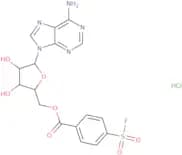
CAS:<p>5'-(4-Fluorosulfonylbenzoyl)adenosine HCI is an inhibitor of adenosine deaminase. It has been used as a tool in the diagnosis of autoimmune diseases. 5'-(4-Fluorosulfonylbenzoyl)adenosine HCI binds to the α subunit of mitochondrial ATPase and inhibits its function, leading to a drop in mitochondrial membrane potential. This can be measured by electron paramagnetic resonance spectroscopy, which can detect changes in redox potentials and the presence of disulfide bonds. 5'-(4-Fluorosulfonylbenzoyl)adenosine HCI also binds to DNA synthetase and metal chelate, inhibiting protein synthesis.<br>5'-(4-Fluorosulfonylbenzoyl)adenosine HCI has been shown to inhibit various enzymes such as phosphofructokinase, glycogen phosph</p>Formula:C17H17ClFN5O7SPurezza:Min. 97.0 Area-%Peso molecolare:489.86 g/molRef: 3D-W-203807
1gPrezzo su richiesta100mgPrezzo su richiesta250mgPrezzo su richiesta500mgPrezzo su richiesta2500mgPrezzo su richiesta-Unit-ggPrezzo su richiesta5'-Deoxyuridine
CAS:5'-Deoxyuridine is an inorganic, phosphite, and isomeric compound. It can be used as a chromatographic analog to purify uridylic acid. The epimerization reaction of 5'-deoxyuridine with galactose can be catalyzed by dehydrogenase or ion-exchange resin. In addition, 5'-deoxyuridine has the same chemical formula as uridine (C5H5N3O3) but has a different structure: in place of the hydroxyl group on carbon number 5, it has a hydrogen atom. 5'-Deoxyuridine has two isomers: one with the hydroxyl group on carbon number 4 and another with the hydroxyl group on carbon number 2.Formula:C9H12N2O5Purezza:Min. 95%Colore e forma:White PowderPeso molecolare:228.21 g/mol5-Formylcytidine
CAS:5-Formylcytidine is a nucleoside that belongs to the group of pyrimidine nucleosides. It is structurally similar to cytidine, but with a formyl group in place of the hydroxymethyl group on the C5 position. 5-Formylcytidine has been shown to have an inhibitory effect on mitochondrial protein synthesis and cellular functions in mammalian cells.Formula:C10H13N3O6Purezza:Min. 97 Area-%Colore e forma:White Off-White PowderPeso molecolare:271.23 g/mol5'-O-Trityluridine
CAS:<p>5'-O-Trityluridine is a nucleoside analogue that has been prepared as an oriented, oxidized, hydrogenated, xylene derivative of uridine. It is composed of ribofuranoside and uridine. The orientation is controlled by the use of trityl groups on the 5' and 3' hydroxyl groups. The alkali metal salt isomers are analysed using HPLC and GC. This compound interacts with phosphotriesters and cyclic phosphodiesters.</p>Formula:C28H26N2O6Purezza:Min. 95%Colore e forma:White Off-White PowderPeso molecolare:486.52 g/moltrans-Zeatin Riboside
CAS:Cytokinins are plant hormones involved in developmental processes and in the modulation of plant immune system. Zeatin was identified as the first naturally occurring cytokinin from the endosperm of corn (latin: Zea mays). Water-soluble trans-Zeatin Riboside is a major long-distance signaling molecule in xylem vessels and its action depends on metabolic conversion in proximity to the site of action. Trans-Zeatin Riboside is a powerful agent used in horticulture to improve shoot growth or to induce callus formation (e.g. in tomato). It is used for plant regeneration from leaf explants (e.g. in potato) and for the direct initiation of shoot cultures from bract axils of many plant species.Formula:C15H21N5O5Peso molecolare:351.37 g/molRef: 3D-Z-3000
1gPrezzo su richiesta50mgPrezzo su richiesta250mgPrezzo su richiesta500mgPrezzo su richiesta2500mgPrezzo su richiesta-Unit-ggPrezzo su richiesta2'-Deoxy-2'-fluorocytidine-5'-triphosphate sodium, 100mM aqueous solution
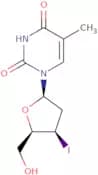
2'-Deoxy-2'-fluorocytidine-5'-triphosphate sodium, 100mM aqueous solution is a nucleoside analog that is modified at both the 2' position of the sugar (deoxyribose) with a fluoro group and the 5' position with a triphosphate group. This compound is an important tool in biochemistry, molecular biology, and drug development, particularly for studying nucleic acid synthesis and genetic processes.Formula:C9H15FN3O13P3•NaxPurezza:Min. 95%Peso molecolare:485.15 g/mol3'-Deoxy-3'-iodothymidine
CAS:<p>3'-Deoxy-3'-iodothymidine is a nucleoside that is found in DNA. It has a constant of -1.5 and can be protonated to form the anion. The molecule has a reactive radical anion, which is stabilized by electron delocalization with the aromatic rings. 3'-Deoxy-3'-iodothymidine has been studied for use as a medicine for cancer treatment, but it also has applications in biology and chemistry. This compound can be used in conductometry and electron spectroscopy, as well as other chemical experiments that require ionic compounds or radiation.</p>Formula:C10H13IN2O4Purezza:Min. 95%Colore e forma:PowderPeso molecolare:352.13 g/mol2'-Deoxy-2'-fluoroguanosine-5'-triphosphate tetralithium salt
CAS:2'-Deoxy-2'-fluoroguanosine-5'-triphosphate tetralithium salt is a chemically modified nucleotide used in molecular biology and pharmaceutical research. It is a guanosine analog featuring both a 2'-fluoro substitution on the sugar and a 5'-triphosphate group, with tetralithium as the counterion to improve solubility and stability.Formula:C10H15FN5O13P3·xLiPurezza:Min. 95 Area-%Colore e forma:PowderPeso molecolare:525.17 g/mol[1',2',3',4',5'-¹³C5]-Kinetin riboside
<p>[1',2',3',4',5'-13C5]-Kinetin riboside is an adenine derivative linked to a ribose sugar moiety. It has also been labeled with ¹³C, a stable isotope of carbon.</p>Formula:C5C10H17N5O5Purezza:Min. 95%Colore e forma:White Clear LiquidPeso molecolare:352.29 g/mol2'-Deoxy-5-methylcytidine-5'-triphosphate sodium salt - 10 mM aqueous solution
CAS:<p>2'-Deoxy-5-methylcytidine-5'-triphosphate sodium salt - 10 mM aqueous solution is an inhibitor of the methyl transferase domain that is found in all DNA methyltransferases. It has been shown to inhibit transcriptional regulation and cellular transformation, as well as to induce DNA damage. The optimum pH for this compound is 7.4 and it hydrolyzes at pH levels lower than 5.0.</p>Formula:C10H18N3O13P3Purezza:Min. 95%Colore e forma:PowderPeso molecolare:481.18 g/mol2'-C-Methylguanosine 5'-monophosphate triethyl ammonium salt - Aqueous solution
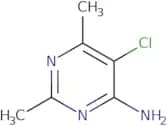
<p>2'-C-Methylguanosine 5'-monophosphate triethyl ammonium salt - Aqueous solution is a synthetic nucleotide analog for use in research</p>Formula:C11H16N5O8P·C12H32N2Purezza:Min. 95%Colore e forma:Clear liquid.Peso molecolare:581.64 g/mol4-Amino-5-chloro-2,6-dimethylpyrimidine
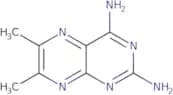
CAS:<p>4-Amino-5-chloro-2,6-dimethylpyrimidine is a supramolecular complex that is characterized by the coordination geometry of its metal ion and the donor atoms. It has been proposed as a potential drug for the treatment of bacterial infections, such as tuberculosis. The 4-Amino-5-chloro-2,6,dimethylpyrimidine is structurally similar to nucleobases and may be able to form hydrogen bonds with water molecules. This molecule also has a high melting point and is not soluble in water. It can be protonated at different pH values and forms complexes with hydroxyl groups found in nucleic acids.</p>Formula:C6H8ClN3Purezza:Min. 95%Colore e forma:PowderPeso molecolare:157.6 g/mol2,4-Diamino-6,7-dimethylpteridine
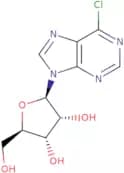
CAS:<p>2,4-Diamino-6,7-dimethylpteridine is a ligand that can bind to an orphan cytosine opposite an abasic site in RNA duplexes</p>Formula:C8H10N6Purezza:Min. 95%Colore e forma:PowderPeso molecolare:190.21 g/mol6-Chloro-9-(b-D-ribofuranosyl)purine
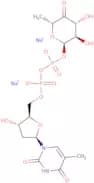
CAS:<p>6-Chloro-9-(b-D-ribofuranosyl)purine is a purine analog that inhibits the synthesis of DNA, RNA, and protein. It has been shown to have physiological effects in cells, and it has been used as a positive control for enzyme activity studies. 6-Chloro-9-(b-D-ribofuranosyl)purine binds to an enzyme called hydroxymethylbilane synthase (HMBS), which inhibits the production of a molecule called tetrahydrobiopterin (THB). THB is essential for the synthesis of nitric oxide (NO), an important neurotransmitter that regulates neuronal death. 6-Chloro-9-(b-D-ribofuranosyl)purine also has significant cytotoxicity against melanoma cells in vitro.</p>Formula:C10H11ClN4O4Purezza:Min. 96 Area-%Colore e forma:PowderPeso molecolare:286.68 g/molThymidine-5'-diphosphate-4-keto-6-deoxy-D-glucose disodium salt
CAS:Thymidine-5'-diphosphate-4-keto-6-deoxy-D-glucose disodium salt is a precursor in the synthesis of nucleoside sugars in pathways such as rhamnose biosynthesis.Formula:C16H22N2O15P2Na2Purezza:Min. 85 Area-%Colore e forma:White PowderPeso molecolare:590.28 g/molN6-Benzoyl-3'-O-tert-butyldimethylsilyl-2'-O-(2-methoxyethyl)adenosine
<p>N6-Benzoyl-3'-O-tert-butyldimethylsilyl-2'-O-(2-methoxyethyl)adenosine is a modified nucleoside with antiviral activity. This compound is synthesized by a modified method that avoids the use of phosphoramidites, which are usually used to synthesize nucleosides. N6-Benzoyl-3'-O-tert-butyldimethylsilyl-2'-O-(2-methoxyethyl)adenosine is an activator of viral RNA polymerase and has been shown to be active against HIV and herpes simplex virus type 1.</p>Purezza:Min. 95%N6-Cyclopentyl-2'-C-methyl-adenosine
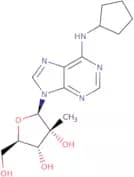
CAS:N6-Cyclopentyl-2'-C-methyl-adenosine is an antiviral agent that inhibits the synthesis of DNA by preventing the formation of RNA from DNA. It has been shown to be effective against HIV and other retroviruses. N6-Cyclopentyl-2'-C-methyl-adenosine is a synthetic nucleoside that is activated by phosphorylation in cells, which leads to the synthesis of monophosphate (5'-AMP). This compound is used for the treatment of cancer and HIV infection.Formula:C16H23N5O4Purezza:Min. 95%Colore e forma:PowderPeso molecolare:349.39 g/mol


![6-(β-D-2-Deoxyribofuranosyl)-3,4-dihydro-8H-pyrimido[4,5-c][1,2]oxazin-7-one](/_next/image/?url=https%3A%2Fstatic.cymitquimica.com%2Fproducts%2F3D%2Fthumb-webp%2FND145587.webp&w=3840&q=75)














![[1',2',3',4',5'-¹³C5]-Kinetin riboside](/_next/image/?url=https%3A%2Fstatic.cymitquimica.com%2Fproducts%2F3D%2Fthumb-webp%2FNK161877.webp&w=3840&q=75)