Vitamine
Le vitamine sono composti organici richiesti in piccole quantità per funzioni fisiologiche essenziali e per la salute generale. Svolgono ruoli cruciali nel metabolismo, nella funzione immunitaria e nel mantenimento cellulare. In questa categoria troverete una vasta gamma di vitamine, includendo tipi solubili in acqua e in grassi, necessari per la ricerca in nutrizione, biochimica e scienze della salute. Da CymitQuimica, offriamo vitamine di alta qualità per supportare i vostri sforzi di ricerca e sviluppo, garantendo la precisione e l'efficacia dei vostri studi sulle funzioni e le carenze vitaminiche.
Trovati 1124 prodotti di "Vitamine"
Ordinare per
Purezza (%)
0
100
|
0
|
50
|
90
|
95
|
100
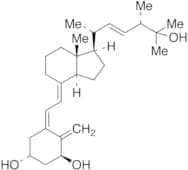
1α,25-Dihydroxy Vitamin D2
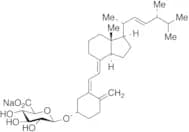
CAS:Prodotto controllatoFormula:C28H44O3Colore e forma:NeatPeso molecolare:428.65Vitamin D2 β-D-Glucuronide Sodium Salt
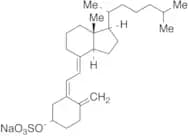
CAS:Prodotto controllatoFormula:C34H51O7·NaColore e forma:NeatPeso molecolare:594.754Vitamin D3 Sulfate Sodium Salt (Technical Grade)
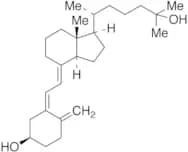
CAS:Prodotto controllatoFormula:C27H43O4S·NaColore e forma:NeatPeso molecolare:486.683-epi-25-Hydroxy Vitamin D3
CAS:<p>Stability Light Sensitive, Temperature Sensitive<br>Applications The epimer metabolite of Calcifediol or 25-hydroxyvitamin D3 (C125700).<br> Not a dangerous good if item is equal to or less than 1g/ml and there is less than 100g/ml in the package<br>References Sakaki, T., et al.: Eur. J. Biochem., 267, 6158 (2000), Kamao, M., et al.: J. Biol. Chem., 278, 1463 (2003),<br></p>Formula:C27H44O2Colore e forma:NeatPeso molecolare:400.64(24S)-24,25-Epoxycholesterol
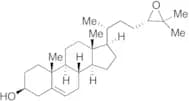
CAS:Prodotto controllato<p>Applications (24S)-24,25-Epoxycholesterol is a derivative of 4β-Hydroxy Cholesterol (H917980), a metabolite of Cholesterol. It is formed from Cholesterol by the drug-metabolizing enzyme cytochrome P 450 3A4. A potential ligand for the nuclear receptor LXR and also a new endogenous CYP3A marker.<br>References Breuer, O., et al.: J. Lipid Res., 36, 2275 (1995), Pikuleva, I., et al.: J. Biol. Chem., 273, 18153 (1998), Chawla, A., et al.: Science, 294, 1866 (2001), Bodin, K., et al.: J. Biol. Chem., 276, 38685 (2001),<br></p>Formula:C27H44O2Colore e forma:NeatPeso molecolare:400.637SR9243
CAS:Prodotto controllato<p>Applications SR9243 is used in new compounds targeting warburg effcts, killing cancer cells and inhibiting lipid production.<br>References Anon.: Cancer Discovery, 5, 898 (2015)<br></p>Formula:C31H32BrNO4S2Colore e forma:NeatPeso molecolare:626.62Vitamin K
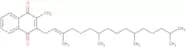
CAS:Vitamin K is a fat-soluble vitamin, which is primarily sourced from leafy green vegetables, and is also synthesized by gut microbiota. Its mode of action involves functioning as a crucial cofactor for the enzyme gamma-glutamyl carboxylase, which catalyzes the carboxylation of specific glutamic acid residues on proteins required for blood coagulation. This modification enables the calcium-binding capacity of these proteins, facilitating essential physiological processes such as coagulation, bone metabolism, and vascular biology.Formula:C31H46O2Purezza:Min. 95%Peso molecolare:450.7 g/molCalcipotriol monohydrate
CAS:<p>Calcipotriol monohydrate, a Vitamin D3 analog, binds well to the vitamin D receptor, used in psoriasis research.</p>Formula:C27H42O4Purezza:99.95%Colore e forma:SolidPeso molecolare:430.623-Butyl-1,10-ethylidenealloxazinium chloride
CAS:3-Butyl-1,10-ethylidenealloxazinium chloride is a synthetic organic compound, which is a cationic dye derived from the alloxazinium class of compounds. Its molecular structure is characterized by the presence of an alloxazine core, which serves as the electron-releasing moiety, coupled with ethylidene and butyl groups that contribute to its solubility and electron-density properties.Formula:C16H17N4O2·ClPurezza:Min. 95%Peso molecolare:332.78 g/molTachysterol
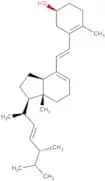
CAS:<p>Tachysterol is a sterol derivative that serves as a vitamin D analog, primarily sourced from the photochemical isomerization of ergosterol or lumisterol. Tachysterol undergoes further conversion processes to become active vitamin D metabolites that play crucial roles in calcium and phosphorus homeostasis. Though not biologically active in its original form, tachysterol is a precursor in the metabolic pathway, with conversion into active forms such as calcitriol occurring in the body.</p>Formula:C28H44OPurezza:90% MinColore e forma:PowderPeso molecolare:396.65 g/molRiboflavin
CAS:Riboflavin is a water-soluble vitamin, which is primarily sourced from dietary intake, including milk, eggs, lean meats, green vegetables, and nuts. It acts as a precursor to the coenzymes flavin mononucleotide (FMN) and flavin adenine dinucleotide (FAD), essential for redox reactions in cellular metabolism. These coenzymes play a critical role in the electron transport chain and oxidative phosphorylation, facilitating the conversion of nutrients into energy via ATP production.Formula:C17H20N4O6Purezza:Min. 98 Area-%Peso molecolare:376.36 g/molRef: 3D-W-104132
1kgPrezzo su richiesta5kgPrezzo su richiesta10kgPrezzo su richiesta25kgPrezzo su richiesta2500gPrezzo su richiesta-Unit-kgkgPrezzo su richiestagamma-Tocotrienol
CAS:<p>Gamma-Tocotrienol is a form of vitamin E, which is a lipid-soluble antioxidant sourced predominantly from certain plant oils, including palm oil, rice bran oil, and annatto seeds. It possesses an unsaturated isoprenoid side chain, which differentiates it from tocopherols and contributes to its differing biological activities.</p>Formula:C28H42O2Purezza:Min. 95%Peso molecolare:410.63 g/molMaxacalcitol
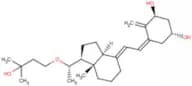
CAS:Maxacalcitol (22-Oxacalcitriol) is a ligand of VDR-like receptors and a non-serum calcium vitamin D3 analogue.Formula:C26H42O4Purezza:≥98%Colore e forma:SolidPeso molecolare:418.61beta-Tocotrienol
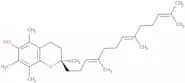
CAS:<p>Beta-Tocotrienol is a biochemical compound that belongs to the vitamin E family. It is derived from sources such as palm oil, rice bran, and certain cereal grains. This compound exhibits its mode of action through the modulation of oxidative stress pathways and inhibition of certain enzymes involved in cell proliferation and cholesterol synthesis, which differentiates it from other tocopherols.</p>Formula:C28H42O2Purezza:Min. 97 Area-%Colore e forma:Clear LiquidPeso molecolare:410.63 g/molβ-Tocopherol
CAS:β-Tocopherol is a type of product known as a naturally occurring form of vitamin E, which is a crucial lipid-soluble antioxidant. This compound is sourced primarily from plant-based oils, such as those derived from nuts, seeds, and vegetables. As an antioxidant, β-Tocopherol plays a pivotal role in the biological systems by scavenging free radicals. It interrupts the propagation of free radical chain reactions, thereby protecting cell membranes from oxidative damage. This is achieved through the donation of hydrogen atoms, which neutralize harmful free radicals.Formula:C28H48O2Purezza:Min. 95%Peso molecolare:416.68 g/molalpha-Tocotrienol
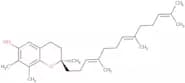
CAS:<p>alpha-Tocotrienol is a chemical compound known as a vitamin E isoform, which is derived primarily from certain plant oils, such as palm oil, rice bran oil, and annatto. This compound exhibits a unique unsaturated side chain, distinguishing it from tocopherols and enabling it to integrate into cellular membranes with greater efficiency.</p>Formula:C29H44O2Purezza:Min. 95%Peso molecolare:424.66 g/molD-Biotin - 2%
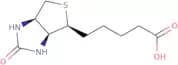
CAS:<p>Biotin is a water-soluble vitamin, also known as vitamin B7. Biotin is an essential coenzyme for five carboxylases in mammalian cells, which play key roles in the metabolism of glucose, amino acids and fatty acids (Zempleni, 2014). Biotin is also used in biochemistry in affinity purification of proteins in the biotin-avidin and biotin-streptavidin systems. Herein, free biotin is used in the elution step to release the recombinant protein from the resin (Diamandis and Christopoulos, 1991).Remainder of the material is maltodextrin.</p>Formula:C10H16N2O3SPurezza:Min. 95%Colore e forma:PowderPeso molecolare:244.31 g/molVitamin D3 - 0.5m IU/g=500000 IU/g
CAS:<p>Vitamin D3 is a fat-soluble vitamin that can be obtained from some fish, mushrooms, and dairy products. The most common form of the vitamin is cholecalciferol (vitamin D3) which can be converted in the liver to calcidiol (25-hydroxycholecalciferol) and in the kidneys to calcitriol (1,25-dihydroxycholecalciferol). Vitamin D3 has been shown to have a positive effect on calcium absorption and bone mineralization. It also has important physiological functions such as regulation of cell growth and differentiation. The solubility of vitamin D3 is dependent on the presence of a hydroxy group at position 3' or 25'. This liquid chromatography method uses an experimental solubility data set for the determination of solubility data for compounds with a hydroxy group at position 3'.</p>Formula:C27H44OPurezza:Min. 95%Colore e forma:PowderPeso molecolare:384.64 g/molRiboflavin-2,4,4α,10α-13C4-1,3-15N2
CAS:<p>Riboflavin-2,4,4α,10α-13C4-1,3-15N2 is a stable isotope-labeled form of riboflavin, which is a type of vitamin B2 molecule. This compound is synthesized with carbon-13 and nitrogen-15 isotopes, providing a distinct mass that enables precise tracking in metabolic studies. The source of this compound is derived from isotopically enriched materials, employing advanced chemical synthesis processes to incorporate stable isotopes into the riboflavin structure without altering its fundamental biochemical properties.</p>Formula:C13C4H20N2N2O6Purezza:Min. 95%Peso molecolare:382.32 g/mol