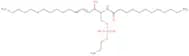
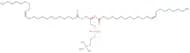
Fosfolipidi
Trovati 389 prodotti per "Fosfolipidi".
17:0 PC
CAS:17:0 PC is a fatty acid found in human serum and tissue samples. It is a major component of the lipidome, accounting for approximately 20% of all lipids. 17:0 PC has been shown to be associated with insulin resistance, as well as other diseases such as hepatitis. The analytical method for determining the presence of 17:0 PC in tissue samples is based on vibrational spectroscopy. A sample preparation procedure involves drying the sample at room temperature, which causes phase transition from liquid to solid state. This procedure also facilitates the separation of fats from water by using a vacuum pump to evacuate air from a closed container containing the sample and then heating it up to evaporate all water content. This leaves only dry solids that can be analyzed using vibrational spectroscopy.Formula:C42H84NO8PPurezza:Min. 95%Peso molecolare:762.09 g/mol1-Octanoyl-2-hydroxy-sn-glycero-3-phosphocholine
CAS:Lecithin is a lipid that is found in the cell membranes of all living organisms. It is made up of glycerol and fatty acids, with an ester bond between the two. Lecithin can be hydrolyzed by phospholipase to produce lysolecithin and glycerophosphoric acid. Lecithin has been shown to have a high content of choline, which can be used as an energy source for cells. Lecithin also has a high content of other lipids such as cholesterol, phosphatidylcholine, and stearic acid. The lecithins are classified into four groups based on their fatty acid composition: monoglycerides (MG), diglycerides (DG), triglycerides (TG), and phosphatidylcholines (PC). The MG lecithins are found in animal sources while DG, TG, and PC lecithins are mainly found in plantFormula:C16H34NO7PPurezza:Min. 95%Peso molecolare:383.42 g/mol19:0 PC
CAS:19:0 PC is a fatty acid that is found in phospholipids and glycolipids. It can be detected by a lipidomic technique called phase chromatography. This technique separates lipids based on the length of their acyl chains. The detection sensitivity of this technique is 0.1% of the total lipid content in the sample and it has been used to detect fatty acids that are not easily detectable by other techniques, such as gas chromatography or thin-layer chromatography. 19:0 PC has been shown to play an important role in metabolic disorders and in the regulation of cb2 receptor activity. It also participates in biosynthesis and cellular metabolism, where it plays a role in membrane fluidity and stability. 19:0 PC has also been shown to be important for lipidome analysis, which studies the metabolites produced by cells during lipid metabolism.Formula:C46H92NO8PPurezza:Min. 95%Peso molecolare:818.2 g/mol06:0 PE
CAS:06:0 PE is a supramolecular polymer that has been developed as an efficient method for the detection of infectious diseases. It is based on the interaction energies between the polymeric scaffold and the fluorescent probe molecules, which are attached to the polymeric scaffold by covalent bonds. 06:0 PE has a high signal-to-noise ratio and can be used to measure metabolomics changes in infectious diseases at early stages. This polymer also has sixfold symmetry, which allows it to emit light over a wide range of angles, making it easier to detect than other polymers with only twofold symmetry.Formula:C17H34NO8PPurezza:Min. 95%Peso molecolare:411.43 g/mol1,2-Distearoyl-sn-glycero-3-phosphoethanolamine-N-[carboxy(polyethylene glycol)-2000] (ammonium salt)
CAS:Please enquire for more information about 1,2-Distearoyl-sn-glycero-3-phosphoethanolamine-N-[carboxy(polyethylene glycol)-2000] (ammonium salt) including the price, delivery time and more detailed product information at the technical inquiry form on this pageFormula:C134H267N2O57PPurezza:Min. 95%Peso molecolare:2,849.51 g/mol1,2-Dioctanoyl-sn-glycero-phosphoethanolamine
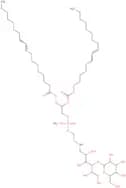
CAS:1,2-Dioctanoyl-sn-glycero-phosphoethanolamine is a synthetic amphiphilic compound that is used as an excipient in pharmaceutical formulation. It forms liposomes and microparticles and can be used to encapsulate drugs. 1,2-Dioctanoyl-sn-glycero-phosphoethanolamine has been shown to have anti-cancer properties in mice. It penetrates the blood brain barrier and accumulates in the endoplasmic reticulum (ER), which leads to cell death by apoptosis. The compound also inhibits the synthesis of fatty acids and surfactants, which are known to promote tumor growth.Formula:C21H42NO8PPurezza:Min. 95%Peso molecolare:467.5 g/mol1,2-Dioleoyl-sn-glycero-3-phosphoethanolamine-N-lactosyl ammonium
CAS:Please enquire for more information about 1,2-Dioleoyl-sn-glycero-3-phosphoethanolamine-N-lactosyl ammonium including the price, delivery time and more detailed product information at the technical inquiry form on this page
Formula:C53H103N2O18PPurezza:Min. 95%Peso molecolare:1,087.4 g/mol1,3-Dilauroyl-glycero-2-phosphocholine
CAS:1,3-Dilauroyl-glycero-2-phosphocholine (DLPC) is a fatty acid derived from the phospholipase A2 enzyme. It has been used to analyze the sequence of amino acids in proteins and for kinetic parameters in enzymes. DLPC is hydrophobic and interacts with other molecules through hydrophobic interactions. It has been used to study the sequence of genomic DNA in Indian populations, as well as to study the effects of fatty acids on protein structure. DLPC has a molecular mass of 323 Da and is an anion that can act as a substrate for many enzymes.Purezza:Min. 95%1-Palmitoyl-2-(pyrene-1-yl)decanoyl-sn-glycero-3-phosphocholine
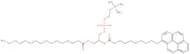
CAS:1-Palmitoyl-2-(pyrene-1-yl)decanoyl-sn-glycero-3-phosphocholine is a synthetic phospholipid analog that can be used as an acceptor in fluorescence resonance energy transfer (FRET). It has been shown to have a very broad range of excitation and emission spectra. This molecule is stable, but can be activated by the addition of silicon or germanium. 1-Palmitoyl-2-(pyrene-1-yl)decanoyl-sn-glycero-3-phosphocholine is also able to form micelles spontaneously in water.Formula:C50H76NO8PPurezza:Min. 95%Peso molecolare:850.11 g/molRef: 3D-VDA86417
5mgPrezzo su richiesta10mgPrezzo su richiesta25mgPrezzo su richiesta50mgPrezzo su richiesta1,2-distearoyl-sn-glycero-3-phosphoethanolamine-N-[folate(polyethylene glycol)-2000] (ammonium salt)
CAS:Prodotto controllato1,2-distearoyl-sn-glycero-3-phosphoethanolamine-N-[folate(polyethylene glycol)-2000] (ammonium salt) is a compound that combines the benefits of pioglitazone and lycobetaine. It has anti-fibrotic properties and can be used in conjunction with medications like canagliflozin to treat various conditions. This compound belongs to the class of phospholipids and has been found to have antifibrotic effects similar to nintedanib.Formula:C151H286N11O59PPurezza:Min. 95%Colore e forma:PowderPeso molecolare:3,230.9 g/molPhosphatidylcholines
CAS:Phosphatidylcholines are a class of compounds that consist of a glycerol backbone with two fatty acids esterified to the hydroxyl groups. They have a phase transition temperature between 18 and 34 degrees Celsius. Phosphatidylcholines are naturally occurring in biological systems and can be extracted from eggs, soybeans, and other sources. Monoclonal antibodies can be used to detect the presence of phosphatidylcholines in tumor cells. This technique is more sensitive than other methods such as immunohistochemistry or immunofluorescence. The phosphatidylcholine-binding site on the monoclonal antibody is composed of three amino acid residues: serine, lysine, and arginine. These amino acids form an alpha helix structure that interacts with the hydrophobic region of phosphatidylcholine molecules by hydrogen bonding. The monoclonal antibody binds to the surface of tumor cells,Purezza:Min. 95%1,2-Di-O-hexadecyl-rac-glycero-3-phosphoethanolamine
CAS:1,2-Di-O-hexadecyl-rac-glycero-3-phosphoethanolamine is a research chemical with various applications. It has been used in studies involving cadmium and dioxetane reactions, as well as in the synthesis of clomipramine. This compound has also been tested for its ability to act as a photocatalyst and promote the crystallization of certain substances. Additionally, 1,2-Di-O-hexadecyl-rac-glycero-3-phosphoethanolamine has shown potential in adsorption processes, particularly with zeolite and acidic environments. Its properties make it a versatile compound for use in scientific research and experimentation.Formula:C37H78NO6PPurezza:Min. 95%Peso molecolare:664 g/mol1,2-Di-o-dodecyl-sn-glycero-3-phosphocholine
CAS:1,2-Di-O-dodecyl-sn-glycero-3-phosphocholine (DODPC) is a lipid molecule that is used in the preparation of liposomes. Liposomes are spherical structures consisting of a phospholipid bilayer membrane enclosing an inner aqueous phase. The structure and properties of liposomes depend on the type of phospholipid used to form the bilayer membrane. DODPC forms large unilamellar vesicles with an average diameter of about 150 nm, which are stable for months at 4°C as well as at room temperature. DODPC can be used to diagnose bacterial infections by monitoring changes in the orientation and transmembrane protein distribution when bacteria attach to the surface of a liposome. This molecule is also used in environmental monitoring, filtration, and magnetic separation processes.Formula:C32H68NO6PPurezza:Min. 95%Peso molecolare:593.9 g/mol1,2-Dioleoyl-sn-glycero-3-phosphoethanolamine-N-methyl
CAS:1,2-Dioleoyl-sn-glycero-3-phosphoethanolamine-N-methyl is a phospholipid compound that has various applications in research and chemical analysis. It is commonly used as an emission product mixture in experiments involving anthranilate, herbicides, pyrazine, hydrogen fluoride, olaparib, hydrochloric acid, recrystallization, phenyl sulfonyl, crosslinking, headspace solid-phase microextraction (HS-SPME), crystallography, and other research chemicals. This compound is known for its versatility and reliability in laboratory settings. Researchers and scientists trust 1,2-Dioleoyl-sn-glycero-3-phosphoethanolamine-N-methyl for its consistent performance and accurate results. Whether you are conducting experiments or analyzing samples, this compound is an essential tool for your research needs.
Formula:C42H80NO8PPurezza:Min. 95%Peso molecolare:758.1 g/molN-Lauroyl-D-erythro-sphingosyl phosphoethanolamine
CAS:Please enquire for more information about N-Lauroyl-D-erythro-sphingosyl phosphoethanolamine including the price, delivery time and more detailed product information at the technical inquiry form on this pageFormula:C31H63N2O6PPurezza:Min. 95%Peso molecolare:590.8 g/mol1,2-Isopropylidene-sn-glycerol-3-phosphate calcium salt
CAS:Please enquire for more information about 1,2-Isopropylidene-sn-glycerol-3-phosphate calcium salt including the price, delivery time and more detailed product information at the technical inquiry form on this pageFormula:C6H11CaO6PPurezza:Min. 95%Peso molecolare:250.2 g/mol1,2-Dipalmitoyl phosphatidylinositol 4-phosphate ammonium salt
CAS:1,2-Dipalmitoyl phosphatidylinositol 4-phosphate ammonium salt (DPPI) is a protein that belongs to the group of phosphoinositides. The main function of this molecule is to regulate the intracellular levels of calcium by transporting it from the cytosol to the cell membrane. DPPI has been shown to inhibit viral replication and may be useful in treating autoimmune diseases, liver lesions, bowel disease, and diabetic neuropathy. It also inhibits the production of inflammatory cytokines such as tumor necrosis factor-α (TNF-α) and interleukin-1β (IL-1β). DPPI is an important component for cellular signaling pathways that are activated by external stimuli or by internal conditions such as stress or diabetes. This molecule can also activate protein kinase C (PKC), which leads to changes in gene expression and cell proliferation.
Formula:C41H80O16P2Purezza:Min. 95%Peso molecolare:891.01 g/mol2-O-Hexadecyl-rac-glycero-3-phosphoethanolamine
CAS:Please enquire for more information about 2-O-Hexadecyl-rac-glycero-3-phosphoethanolamine including the price, delivery time and more detailed product information at the technical inquiry form on this pageFormula:C21H46NO6PPurezza:Min. 95%Peso molecolare:439.57 g/mol1,2-Dierucoyl-sn-glycero-3-phosphocholine
CAS:1,2-Dierucoyl-sn-glycero-3-phosphocholine (DDPC) is a synthetic molecule that is used in the study of lipid bilayers. DDPC is composed of two subunits, a glycerol backbone and a choline head group. It can be activated by pH change, which changes the fluorescence properties of the molecule. DDPC has been shown to bind peptides and amphipathic molecules such as gramicidin. The carbonyl group and solute in DDPC make it an excellent probe for studying hydrophobic interactions in lipid bilayers and other hydrophobic interactions.Formula:C52H100NO8PPurezza:Min. 95%Peso molecolare:898.34 g/mol1,2-Dioleoyl-sn-glycero-3-phospho-L-serine sodium salt
CAS:DOPS; negatively charged cell membrane phospholipidFormula:C42H77NO10PNaPurezza:Min. 95%Peso molecolare:810.0 g/mol




![1,2-Distearoyl-sn-glycero-3-phosphoethanolamine-N-[carboxy(polyethylene glycol)-2000] (ammonium sa…](/_next/image/?url=https%3A%2Fstatic.cymitquimica.com%2Fproducts%2F3D%2Fthumb-webp%2FZTA92220.webp&w=3840&q=75)
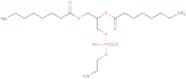

![1,2-distearoyl-sn-glycero-3-phosphoethanolamine-N-[folate(polyethylene glycol)-2000] (ammonium sal…](/_next/image/?url=https%3A%2Fstatic.cymitquimica.com%2Fproducts%2F3D%2Fthumb-webp%2FLZB28825.webp&w=3840&q=75)