Nucleosidi
I nucleosidi sono building blocks fondamentali degli acidi nucleici, composti da una base azotata legata a una molecola di zucchero. In questa sezione, puoi trovare una vasta gamma di nucleosidi essenziali per la ricerca in biologia molecolare, biochimica e farmacologia. Questi composti svolgono ruoli cruciali nella sintesi del DNA e dell'RNA e sono vitali in vari processi metabolici. I nucleosidi vengono utilizzati per studiare il materiale genetico, sviluppare terapie antivirali e antitumorali e comprendere i meccanismi cellulari. Da CymitQuimica, forniamo nucleosidi di alta qualità per supportare le tue esigenze di ricerca e sviluppo, garantendo purezza e affidabilità per le tue applicazioni sperimentali.
Trovati 3569 prodotti di "Nucleosidi"
Ordinare per
Purezza (%)
0
100
|
0
|
50
|
90
|
95
|
100
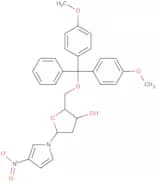
1-(5-o-(Dimethoxytrityl)-β-D-2-deoxyribofuranosyl)-3-nitropyrrole
CAS:1-(5-O-(dimethoxytrityl)-β-D-2-deoxyribofuranosyl)-3-nitropyrrole is a novel nucleoside phosphoramidite that has been modified to include an oxazole moiety. It is an antiviral and anticancer drug that inhibits the replication of DNA by binding to the enzyme DNA polymerase. 1-(5-O-(dimethoxytrityl)-β-D-2-deoxyribofuranosyl)-3-nitropyrrole is also a substrate for monophosphate, diphosphate, and triphosphate nucleotide kinases, which are enzymes that catalyze the phosphorylation of 5'-monophosphates. This nucleoside phosphoramidite can be used in the synthesis of oligonucleotides and modified oligonucleotides.Formula:C30H30N2O7Purezza:Min. 95%Peso molecolare:530.6 g/molFluorescein-5(6)-carboxamidocaproyl-(5-[3-aminoallyl]uridine 5'-triphosphate) - 1 mM aqueous solution
CAS:<p>Fluorescein-5(6)-carboxamidocaproyl-(5-[3-aminoallyl]uridine 5'-triphosphate) is a novel antiviral compound that is an activator of ribonucleoside and deoxyribonucleoside phosphorylation. It has been shown to selectively inhibit the proliferation of cancer cells, and to be cytotoxic to human leukemia cells in vitro. The compound is also able to inhibit HIV replication in vitro. Fluorescein-5(6)-carboxamidocaproyl-(5-[3-aminoallyl]uridine 5'-triphosphate) - 1 mM aqueous solution is a high purity product with CAS No. 134367-01-4 that can be used as a synthetically modified DNA or RNA building block for the production of phosphoramidites. This product has been shown to be cytotoxic against human leukemia cells in</p>Formula:C39H41N4O22P3Purezza:Min. 95%Peso molecolare:1,010.68 g/mol2’-Deoxy-2-methyladenosine
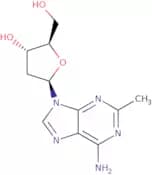
CAS:<p>2’-Deoxy-2-methyladenosine is a nucleoside that is chemically synthesized by the phosphorylation of 2,6-diaminopurine. It has been shown to be an effective activator of RNA polymerase and it also has anticancer properties. 2’-Deoxy-2-methyladenosine can be used as a substitute for thymidine in DNA synthesis. This nucleoside has also been shown to inhibit bacterial growth in culture by inhibiting DNA synthesis and protein synthesis. It is a modified nucleoside that can be used for the synthesis of DNA, RNA, or ribonucleic acids. The CAS number for this compound is 110952-90-4.</p>Purezza:Min. 95%N6-Benzoyl-3'-O-tert-butyldimethylsilyl-2'-deoxyadenosine
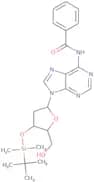
CAS:N6-Benzoyl-3'-O-tert-butyldimethylsilyl-2'-deoxyadenosine is an antiviral, monophosphate nucleoside that has been shown to inhibit the proliferation of human leukemia cells. The compound is a novel synthetic nucleoside that inhibits the viral reverse transcriptase enzyme and prevents RNA synthesis. N6-Benzoyl-3'-O-tert-butyldimethylsilyl-2'-deoxyadenosine also inhibits DNA synthesis by inhibiting the activity of DNA polymerases and can be used for the treatment of cancer.Purezza:Min. 95%2'-O-Methylguanosine 5'-triphosphate lithium salt - 100mM aqueous solution
CAS:2'-O-Methylguanosine 5'-triphosphate lithium salt is a synthetic nucleotideFormula:C11H18N5O14P3·xLiPurezza:Min. 95%Colore e forma:Clear LiquidPeso molecolare:537.21 g/mol4-Amino-1-[(2R,3R,4R,5R)-3-ethoxy-4-hydroxy-5-(hydroxymethyl)oxolan-2-yl]pyrimidin-2-one
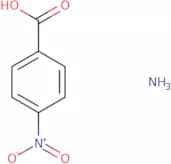
CAS:4-Amino-1-[(2R,3R,4R,5R)-3-ethoxy-4-hydroxy-5-(hydroxymethyl)oxolan-2-yl]pyrimidin-2-one is a novel compound that is an anticancer agent and antiviral. It inhibits the proliferation of cells by modifying the nucleotide structure of DNA. The 4'-amino group makes it a nucleoside analogue that can be modified to inhibit bacterial replication and virus production. 4'-Amino-1-[(2R,3R,4R,5R)-3-ethoxy-4-hydroxy-5-(hydroxymethyl)oxolan-2-yl]pyrimidin-- 2 one may also cause cell death by inhibiting DNA synthesis and RNA synthesis.Formula:C11H17N3O5Purezza:Min. 95%Peso molecolare:271.27 g/molAmmonium 4-nitrobenzoate dihydrate
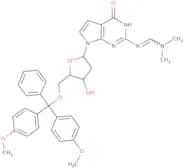
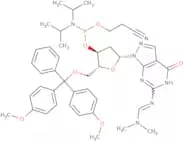
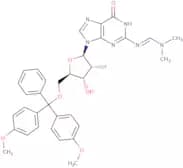
CAS:<p>Ammonium 4-nitrobenzoate dihydrate is a corrosion inhibitor that prevents the corrosion of metal parts and other materials. It is used in the production of plastics, coatings, adhesives, and lubricants. The corrosion inhibition activity of aminobenzoates can be attributed to their ability to form hydrogen phosphate (HPO) anions as well as their ability to complex with metal ions. The hydration process is also important for the corrosion inhibition activity of ammonium 4-nitrobenzoate dihydrate. This process involves the release of water molecules from the ammonium salt, which provide a protective coating around the metal surface. Ammonium 4-nitrobenzoate dihydrate also has additive properties that are beneficial for other industrial applications such as antistatic agents, surfactants, and stabilizers.</p>Purezza:Min. 95%5'-o-(Dimethoxytrityl)-N2-(dimethylaminomethylidene)-7-deaza-2'-deoxyguanosine
CAS:Please enquire for more information about 5'-o-(Dimethoxytrityl)-N2-(dimethylaminomethylidene)-7-deaza-2'-deoxyguanosine including the price, delivery time and more detailed product information at the technical inquiry form on this pageFormula:C35H37N5O6Purezza:Min. 95%Peso molecolare:623.7 g/molCerebrosides (brain)
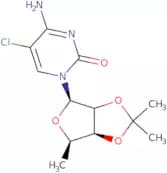
CAS:Cerebrosides are a group of natural and synthetic phospholipids that are found in the brain. They are made from glycerophosphoric acid and sphingosine. Cerebrosides have been shown to be anticancer agents, and may also inhibit the growth of bacteria. They can also promote DNA synthesis and prevent the destruction of DNA by inhibiting some enzymes, such as phosphodiesterase. Cerebrosides are also used to synthesize nucleosides and deoxyribonucleosides, which is important for cell division.Formula:C48H93NO8Purezza:Min. 95%Peso molecolare:812.25 g/mol5-Chloro-5'-deoxy-2',3'-O-isopropylidenecytidine
5-Chloro-5'-deoxy-2',3'-O-isopropylidenecytidine is a synthetic nucleoside that has antiviral and anticancer properties. It binds to the DNA of viruses and inhibits their replication, as well as the synthesis of DNA in cancer cells. This nucleoside also activates ribonucleotide reductase, which is an enzyme that converts ribonucleotides into deoxyribonucleotides. 5-Chloro-5'-deoxy-2',3'-O-isopropylidenecytidine is a novel nucleoside analog that can be phosphoramidite or monophosphate.Formula:C12H16ClN3O4Purezza:Min. 95%Peso molecolare:301.73 g/molE-5-(2-Carboxyvinyl)-2'-deoxyuridine hydroxysuccinimide ester
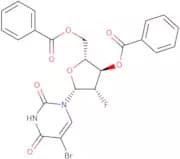
CAS:E-5-(2-Carboxyvinyl)-2'-deoxyuridine hydroxysuccinimide ester is a nucleoside analog that inhibits the growth of cells by inhibiting DNA synthesis. It is an antiviral and anticancer agent, as well as a potential therapeutic for human immunodeficiency virus (HIV) and herpes simplex virus (HSV). This compound also has high purity and high quality, which makes it suitable for research purposes. E-5-(2-Carboxyvinyl)-2'-deoxyuridine hydroxysuccinimide ester is novel and has been modified from the natural nucleoside uridine. It can be used in the synthesis of phosphoramidites for DNA synthesis, which are used to synthesize DNA probes for use in diagnostic medicine.Formula:C16H17N3O9Purezza:Min. 95%Peso molecolare:395.32 g/mol1-(3',5'-Di-O-benzoyl-2'-deoxy-2'-fluoro-b-D-arabinofuranosyl)-5-bromo-uracil
CAS:1-(3',5'-Di-O-benzoyl-2'-deoxy-2'-fluoro-b-D-arabinofuranosyl)-5-bromo-uracil is a novel antiviral and antitumor agent, synthesized by using a new synthetic approach. It has been shown to be effective in vitro against influenza A virus and herpes simplex virus types 1 and 2. This compound is also active against HIV type 1 (HIV) and Kaposi's sarcoma cells. The antiviral activity of this compound may be due to its ability to inhibit viral DNA polymerase activity. The antitumor activity of this compound may be due to its ability to inhibit the proliferation of tumor cells, leading to their death by apoptosis or necrosis.Formula:C23H18BrN2O7Purezza:Min. 95%Peso molecolare:514.3 g/mol2',3',5'-Tri-O-(p-chlorobenzoyl)-5-azacytidine
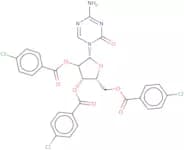
CAS:<p>2',3',5'-Tri-O-(p-chlorobenzoyl)-5-azacytidine is a novel nucleoside phosphoramidite for the synthesis of DNA and RNA. It has been modified to be resistant to antiviral and anticancer agents, as well as to be an activator of monophosphate. 2',3',5'-Tri-O-(p-chlorobenzoyl)-5-azacytidine has high purity and quality, as well as being novel and modified.</p>Formula:C29H21Cl3N4O8Purezza:Min. 95%Peso molecolare:659.86 g/mol2-Pyridin-2-ylpyrimidine-5-carbaldehyde
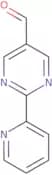
CAS:<p>Ribonucleosides and deoxyribonucleosides are synthetic analogues of the natural nucleotides. Ribonucleosides are analogues of ribose and deoxyribonucleosides are analogues of deoxyribose. Ribonuclesides, Deoxyribonucleosides, Activator, Antiviral, Synthetic, Modified, DNA, Nucleosides is a novel nucleotide analogue with high quality and purity. It can be used in the synthesis of oligodeoxynucleotides for use as antiviral agents. It is also a component of phosphoramidites.</p>Formula:C10H7N3OPurezza:Min. 95%Peso molecolare:185.18 g/mol6-Thioguanosine-5'-O-monophosphate sodium salt
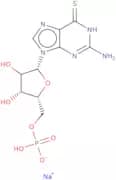
CAS:6-Thioguanosine-5'-O-monophosphate sodium salt is a nucleotide that is an endogenous purine nucleotide. It has been shown to inhibit the phosphorylation of adenosine monophosphate (AMP) by camp levels, which leads to increased cellular levels of cAMP and cyclic adenosine 3',5'-monophosphate (cAMP). 6TGMP has been shown to inhibit the growth of cancer cells in vitro, including hepatoma cells and ovcar-3 cells. This nucleotide also inhibits the activity of several growth factors, such as insulin-like growth factor 1 (IGF1), transforming growth factor beta (TGFβ), and fibroblast growth factor 2 (FGF2).Formula:C10H13N5O7PS·xNaPurezza:Min. 95%Colore e forma:PowderPeso molecolare:378.28 g/mol2-Chloro-6-(2'-deoxy-b-D-ribofuranosyl)-3,5-diaminopyrazine
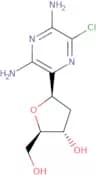
CAS:2-Chloro-6-(2'-deoxy-b-D-ribofuranosyl)-3,5-diaminopyrazine is a modified nucleoside that can be used to synthesize DNA and RNA. It is an activator that activates the phosphoramidite coupling reaction of the synthesis of DNA. 2-Chloro-6-(2'-deoxy-b-D-ribofuranosyl)-3,5-diaminopyrazine has been shown to have anticancer and antiviral activities in vitro, but no in vivo data are currently available. It also has high purity and high quality.Formula:C9H13ClN4O3Purezza:Min. 95%Colore e forma:White to off-white solid.Peso molecolare:260.68 g/moldCTP - 100mmol solution
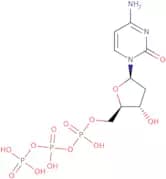
CAS:<p>dCTP is a nucleotide that is an important component of the DNA molecule. It is used in biochemical research and as a drug for treatment of certain cancers. The biochemical properties of dCTP are similar to those of other nucleotides, including ATP and GTP. The main difference is that dCTP has a low solubility in water, while ATP and GTP are soluble in water. This property makes it difficult to study the use of dCTP in biosensors. Another difference is that dCTP does not have a signal peptide sequence, which may be due to its chemical structure or biological function. In addition, dCTP does not interfere with the polymerase chain reaction (PCR) process because it does not possess reactive groups on its phosphate groups.</p>Formula:C9H16N3O13P3Purezza:Min. 95%Peso molecolare:467.16 g/molN4-Benzoyl-5'-O-DMT-(2'-O, 4'-C-methylene)-5-methyl-a-cytidine 3'-CE phosphoramidite
<p>N4-Benzoyl-5'-O-DMT-(2'-O, 4'-C-methylene)-5-methyl-a-cytidine 3'-CE phosphoramidite is a novel modified nucleoside that has antiviral and anticancer properties. It is synthesized by reacting the 3'-hydroxyl group of cytidine with 2,4,6-trimethoxybenzoyl chloride to form N4-(2',6'-dimethoxyphenyl)benzoylcytidine. This compound is then reacted with methylene bis(diethylamino)thiophene (2') and the 5' phosphoramidite of 5'-O-DMT-(2'-O, 4'-C-methylene)-5-methylcytidine. The product is an active synthetic nucleoside that can be used as a building block for other nucleosides or oligonucleotides.</p>Purezza:Min. 95%2'-Deoxy-N2-DMF-5'-DMT-2'-fluoroguanosine 3'-CE phosphoramidite
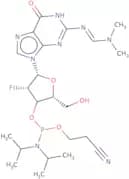
<p>2'-Deoxy-N2-DMF-5'-DMT-2'-fluoroguanosine 3'-CE phosphoramidite is a nucleoside analog that is structurally similar to the natural substrate of DNA polymerase. It can be used in the synthesis of oligonucleotides and as a reagent for the synthesis of modified DNA. The phosphoramidite has antiviral activity and has been shown to have anticancer effects in animal models. It is also used as an activator for deoxyribonucleotide activation, which increases the efficiency of DNA synthesis.</p>Formula:C43H52FN8O7PPurezza:Min. 95 Area-%Colore e forma:PowderPeso molecolare:842.89 g/mol5'-Adenylic acid monoanhydride with (dichlorophosphonomethyl)phosphonic acid
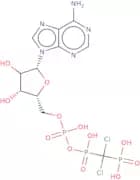
CAS:5'-Adenylic acid monoanhydride with (dichlorophosphonomethyl)phosphonic acid is a neuronal blocker that inhibits the enzyme acetylcholinesterase. It is an efficient inhibitor of AChE and has been shown to be effective in animal models of Alzheimer's disease. The inhibition of AChE by 5'-Adenylic acid monoanhydride with (dichlorophosphonomethyl)phosphonic acid leads to increased levels of acetylcholine, which can stimulate nerve impulses and slow or stop the progression of Alzheimer's disease.Formula:C11H16Cl2N5O12P3Purezza:Min. 95%Peso molecolare:574.1 g/mol3-Deazauridine-5'-triphosphate sodium salt
3-Deazauridine-5'-triphosphate sodium salt is a modified monophosphate nucleotide analogue. It is an antiviral agent that inhibits the production of viral RNA and DNA, thereby inhibiting the synthesis of viral proteins and the formation of new viruses. 3-Deazauridine-5'-triphosphate sodium salt also has anticancer properties and has been shown to activate transcription from plasmid vectors in vitro. It binds to ribonucleoside triphosphates in the active site, causing it to release pyrophosphate and produce diphosphate as an intermediate product. This means that 3-Deazauridine-5'-triphosphate sodium salt can inhibit both DNA polymerase and RNA polymerase, which are enzymes needed for replication of both DNA and RNA.Formula:C10H16NO15P3·xNaPurezza:Min. 95%Colore e forma:PowderPeso molecolare:483.15 g/mol5'-Deoxy-5-fluoro-N-[(2-methylbutoxy)carbonyl]cytidine
CAS:<p>5'-Deoxy-5-fluoro-N-[(2-methylbutoxy)carbonyl]cytidine is an antiviral drug that has been shown to be a potent inhibitor of HIV-1 replication in cell culture. It is an analog of cytidine, and it binds to the viral reverse transcriptase enzyme via phosphoramidite chemistry. 5'-Deoxy-5-fluoro-N-[(2-methylbutoxy)carbonyl]cytidine is a monophosphate, which inhibits the synthesis of DNA by preventing the incorporation of deoxyribonucleotides in the process. This agent does not have any anticancer activity.</p>Formula:C15H22FN3O6Purezza:Min. 95%Peso molecolare:359.35 g/mol(1S,2S,3S,5S)-5-(2-Amino-6-(benzyloxy)-9H-purin-9-yl)-3-(benzyloxy)-2-(benzyloxymethyl)cyclopentanol
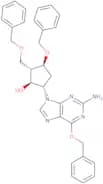
CAS:<p>(1S,2S,3S,5S)-5-(2-Amino-6-(benzyloxy)-9H-purin-9-yl)-3-(benzyloxy)-2-(benzyloxymethyl)cyclopentanol is a synthetic compound that is used to treat patients with chronic myeloid leukemia. It has been shown to inhibit tyrosine kinase and interacts with the guanine binding site of the purine nucleoside phosphorylase. This drug also inhibits the enzyme (deoxy)ribonucleotide reductase and competes with adenosine for binding to adenosine receptors. The stereoisomers of this drug are active against chronic myeloid leukemia cells. The S enantiomer is more potent than the R enantiomer and exhibits greater selectivity for leukemic cells than healthy cells. It has also been shown to inhibit nitric oxide synthase and may have anti-</p>Formula:C32H33N5O4Purezza:Min. 95%Colore e forma:White PowderPeso molecolare:551.64 g/mol5-[4-(4,4,5,5-tetramethyl-[1,3,2]dioxaborolan-2-yl)-benzylidene]-pyrimidine-2,4,6-trione
<p>Ribonuclease is an enzyme that cleaves the phosphodiester backbone of ribonucleotide to produce a 5'-phosphate and a 2'-deoxyribonucleoside. Ribonuclease is an activator that activates the synthesis of ribonucleotides, deoxyribonesucleotides and nucleosides. Ribonuclease has antiviral properties which may be due to its ability to inhibit DNA polymerase by catalyzing the hydrolysis of the 2'-deoxyribose-5'-phosphate bond in DNA. Ribonuclease has also been shown to have anticancer activity, which may be due to its ability to inhibit protein synthesis.</p>Purezza:Min. 95%8-Aza-7-deaza-2'-deoxy-N2-DMF-5'-O-DMT-guanosine 3'-CE phosphoramidite
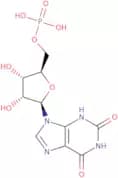
CAS:8-Aza-7-deaza-2'-deoxy-N2-DMF-5'-O-DMT-guanosine 3'-CE phosphoramidite is a novel monophosphate derivative of 2' deoxyN2,8-diaminofluorene 5'-O-(4,4′-dimethoxytrityl) guanosine. It can be used as an activator in DNA synthesis or as a precursor for the synthesis of other modified purines and pyrimidines. This compound has been shown to have anticancer activity in mice. It also has antiviral effects against HIV and HSV1. 8-Aza-7-deaza-2'-deoxyN2,8-diaminofluorene 5'-O-(4,4′dimethoxytrityl) guanosine 3′ CE phosphoramidite is soluble in methanol and ethanol andFormula:C43H53N8O7PPurezza:Min. 95%Colore e forma:PowderPeso molecolare:824.9 g/molXanthosine-5'-monophosphate ammonium salt
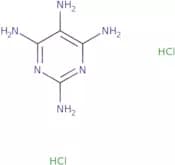
CAS:Xanthosine-5'-monophosphate ammonium salt is a monophosphate compound that is formed by the reaction of xanthosine and ammonium hydroxide. It has been shown to have an optimum concentration of 1 mM in dextran sulfate solutions and to be active against a range of bacteria at this concentration. The antimicrobial activity of xanthosine-5'-monophosphate ammonium salt is due to its inhibition of energy metabolism and synthesis, which leads to cell death. Xanthosine-5'-monophosphate ammonium salt also inhibits the production of tetracycline resistance in leukemic mice and k562 cells, which may be due to its ability to form a complex enzyme with tetracycline synthetase.Purezza:Min. 95%2,4,5,6-Tetraaminopyrimidine 2HCl
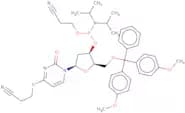
CAS:<p>2,4,5,6-Tetraaminopyrimidine 2HCl is a chemical compound that belongs to the group of pyrimidines. It is a colorless solid with a melting point of 178.2°C and a boiling point of 339.8°C. This compound can be obtained by reacting 2,4,5-trichloropyrimidine with potassium cyanide in acetic acid solution or by heating 2,4-diaminopyrimidine with ammonium chloride and sodium nitrate in water.<br>In the liquid chromatography process this compound is used as an analytical reagent for determining the purity and identity of organic compounds by measuring their retention time on the column.</p>Purezza:Min. 95%4-(2-Cyanoethylthio)-2'-deoxy-5'-DMT-uridine 3'-CE phosphoramidite
CAS:4-(2-Cyanoethylthio)-2'-deoxy-5'-DMT-uridine 3'-CE phosphoramidite is a novel DNA synthesis inhibitor that is synthesized by the reaction of 4-(2-cyanoethylthio)-2'-deoxy-5'-DMT-uridine and phosphorous oxychloride. This product has antiviral and anticancer activities, as well as high purity and high quality. It can be used in cellular biology research, including the study of ribonucleosides, nucleosides, and deoxyribonucleosides. This product also inhibits HIV replication in vitro.Formula:C42H50N5O7PSPurezza:Min. 95%Peso molecolare:799.93 g/mol5-Fluorouridine
CAS:<p>5-Fluorouridine is an anticancer drug that belongs to the group of modified nucleosides. It is a synthetic nucleoside analogue that inhibits viral and DNA synthesis and can be used as antiviral agents. 5-Fluorouridine has also been shown to inhibit RNA synthesis in vitro. This compound is converted to uracil by deoxyribonucleotide reductase, which results in the formation of 5-fluoro-2'-deoxyuridine monophosphate (5FdUMP) and 5-fluoro-2'-deoxyuridine diphosphate (5FdUDP). The latter has been shown to inhibit DNA synthesis in vitro.</p>Formula:C9H11FN2O6Purezza:Min. 95%Peso molecolare:262.19 g/mol4,5-Dimethoxy-2-nitrobenzyl adenosine 3',5'-cyclic monophosphate
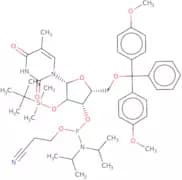
4,5-Dimethoxy-2-nitrobenzyl adenosine 3',5'-cyclic monophosphate is a synthetic nucleotide that can be activated to form an antiviral and anticancer agent. This compound has been shown to inhibit the proliferation of leukemia cells in culture. It also inhibits the synthesis of DNA and RNA, leading to cell death by inhibiting the production of proteins vital for cell division. 4,5-Dimethoxy-2-nitrobenzyl adenosine 3',5'-cyclic monophosphate is a novel nucleoside with high purity and CAS number: 57314-27-1.Formula:C19H21N6O10PPurezza:Min. 95%Peso molecolare:524.38 g/mol2'-O-tert-Butyldimethylsilyl-5'-O-DMT-5-methyluridine 3'-CE phosphoramidite
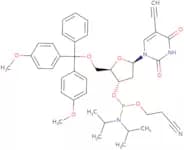
CAS:<p>2'-O-tert-Butyldimethylsilyl-5'-O-DMT-5-methyluridine 3'-CE phosphoramidite is a novel DNA synthesis building block that contains a 5'-dimethoxytrityl group. This compound is an activator, which means it helps in the initiation of DNA synthesis. It is used to synthesize oligonucleotides with 5'-terminal deoxyribonucleoside monophosphates and 5'-terminal diphosphates. The 2'-O-tert-butyldimethylsilyl-5'-O-DMT-5-methyluridine 3'-ce phosphoramidite is an anticancer agent, antiviral agent, and an antifungal agent.</p>Formula:C46H63N4O9PSiPurezza:Min. 95%Peso molecolare:875.07 g/mol2'-Deoxy-5'-DMT-5-ethynyluridine 3'-CE phosphoramidite
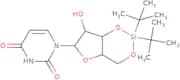
CAS:2'-Deoxy-5'-DMT-5-ethynyluridine 3'-CE phosphoramidite is a nucleoside that is used as an activator for DNA synthesis. It has been shown to be effective against viruses such as HIV and herpes simplex virus. This compound also has anticancer properties. 2'-Deoxy-5'-DMT-5-ethynyluridine 3'-CE phosphoramidite binds to the viral RNA or DNA, displacing the natural phosphate group on the 5' end of the viral chain and preventing viral replication.Formula:C41H47H40O8Purezza:Min. 95%Peso molecolare:708.12 g/mol3',5'-O-(Di-tert-butylsilanediyl)uridine
CAS:<p>3',5'-O-(Di-tert-butylsilanediyl)uridine is a novel antiviral agent that is synthesized from uridine and has been shown to be effective against herpes simplex virus. This compound was also shown in vitro to inhibit the replication of human immunodeficiency virus type 1 (HIV-1). 3',5'-O-(Di-tert-butylsilanediyl)uridine binds to single stranded DNA, preventing the synthesis of DNA by the viral enzyme reverse transcriptase. It also inhibits the production of viral proteins by binding to viral RNA polymerase. This drug may also have anticancer activity due to its ability to inhibit ribonucleotide reductase, an enzyme required for DNA synthesis.</p>Purezza:Min. 95%2',5'-Dideoxy-8,5'-cycloadenosine
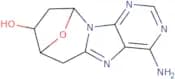
CAS:<p>2',5'-Dideoxy-8,5'-cycloadenosine is an anticancer nucleoside. It is a modified deoxyribonucleoside that contains a 2'-deoxyribose sugar with a ribose sugar at the 5' position. This product has been shown to be active against DNA and RNA viruses in the lab. It also has antiviral properties and can inhibit the synthesis of DNA, RNA, or both. The chemical structure of this product is novel and has not been found in nature.</p>Formula:C10H11N5O2Purezza:Min. 95%Peso molecolare:233.23 g/mol2-Methylaminoadenosine
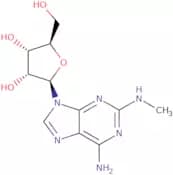
CAS:<p>2-Methylaminoadenosine is a nucleoside that is the product of the action of adenosine deaminase on 2-aminoadenosine. It is used in diagnostic assays to differentiate between n6-methyladenosine and deoxyadenosine in DNA, RNA, or serum samples. It has been shown to have an interaction with fatty acids and their derivatives and sequences in tissues. In addition, it has been shown to have specificities for cardiac tissue and a flow rate that is constant.</p>Formula:C11H16N6O4Purezza:Min. 95%Peso molecolare:296.28 g/mol5-Fluoro-1-(2'-deoxy-2'-fluoro-3',5'-di-O-benzoyl-b-L-arabinofuranosyl)-uracil
CAS:<p>5-Fluoro-1-(2'-deoxy-2'-fluoro-3',5'-di-O-benzoyl-b-L-arabinofuranosyl)-uracil (5FUA) is a monophosphate nucleoside that inhibits viral replication. It is phosphorylated by the viral enzyme 3' to 5' exonuclease and then acts as a competitive inhibitor of the natural substrate, diphosphate, at the active site of DNA polymerase. The result is inhibition of viral DNA synthesis and replication. 5FUA has been shown to be active against a variety of viruses including herpes simplex virus types 1 and 2, varicella zoster virus, influenza A virus, and human immunodeficiency virus type 1. This drug has also been shown to inhibit cancer cell proliferation in vitro.</p>Purezza:Min. 95%2'-Deoxy-N2-isobutyryl-5'-O-levulinoylguanosine
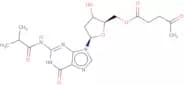
<p>2'-Deoxy-N2-isobutyryl-5'-O-levulinoylguanosine is a novel antiviral drug that has been shown to be active against influenza, herpes, and HIV. It belongs to the class of deoxyribonucleosides and is ribonucleotide analogs. 2'-Deoxy-N2-isobutyryl-5'-O-levulinoylguanosine inhibits viral replication by interacting with viral DNA polymerase, preventing the extension of viral DNA chains by blocking the incorporation of nucleotides into the growing strand. The enzyme activity of 2'-deoxy-N2-isobutyrylguanosine is activated by phosphoramidites in vitro.</p>Formula:C19H25N5O7Purezza:Min. 95%Peso molecolare:435.43 g/mol6-Benzylamino-9-(a-D-glucopyranosyl)purine
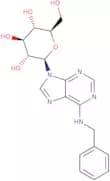
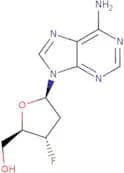
CAS:<p>6-Benzylamino-9-(a-D-glucopyranosyl)purine is a novel nucleoside phosphoramidite that has been synthesized as an intermediate for anticancer therapy. It is a monophosphate, which has antiviral and antifungal activity. 6-Benzylamino-9-(a-D-glucopyranosyl)purine is a synthetic nucleoside with a novel structure, which inhibits the synthesis of DNA and RNA. This drug also has ribonucleotide reductase inhibitory activities.</p>Formula:C18H21N5O5Purezza:Min. 95%Peso molecolare:387.4 g/mol2',3'-Dideoxy-3'-fluoroadenosine
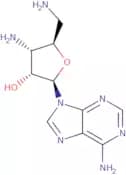
CAS:2',3'-Dideoxy-3'-fluoroadenosine (ddFdA) is an antiviral drug that has been shown to be effective against HIV and other viruses. It is a synthetic nucleoside analogue of the natural purine adenosine. ddFdA inhibits the synthesis of viral RNA and DNA by competitively inhibiting the enzyme ribonucleotide reductase, thereby blocking DNA synthesis. The drug has shown significant activity in humans with immunodeficiency, but also has toxic effects on lymphocytes. ddFdA is synthesised from 2',3'-dideoxyadenosine (ddAdo), which is produced by the action of adenosinase on adenosine. In humans, ddFdA is converted to dideoxyadenosine triphosphate (ddATP), which inhibits cellular proliferation.Formula:C10H12FN5O2Purezza:Min. 95%Peso molecolare:253.23 g/mol3',5'-Diamino-3',5'-dideoxyadenosine
CAS:<p>3',5'-Diamino-3',5'-dideoxyadenosine (3,5-ddA) is a nucleoside that has been shown to be an efficient inhibitor of HIV replication in vitro. It has been used for the treatment of AIDS, but it is not yet approved for this use. 3,5-ddA inhibits the conversion of dATP to dTTP and prevents DNA synthesis by blocking the enzyme ribonucleotide reductase. The drug can be synthesized with high efficiency by using a modified nucleoside amidite approach.</p>Formula:C10H15N7O2Purezza:Min. 95%Peso molecolare:265.28 g/mol3,5-Di-o-acetyl-5-fluoro-O4-(2,4,6-trimethylphenyl)-2-deoxyuridine
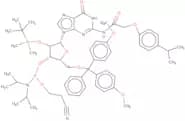
CAS:3,5-Di-o-acetyl-5-fluoro-O4-(2,4,6-trimethylphenyl)-2-deoxyuridine is a novel modified monophosphate nucleoside. It is an antiviral agent and has been shown to have anticancer activity. 3,5-Di-o-acetyl-5-fluoro-O4-(2,4,6-trimethylphenyl)-2-deoxyuridine is synthesized by the reaction of 5'-triphosphates with 2'-deoxyribonucleosides in the presence of a phosphoramidite. This nucleoside has been found to be cytotoxic in vitro and in vivo against cancer cell lines and can be used as a therapeutic agent for the treatment of leukemia.Formula:C22H25FN2O7Purezza:Min. 95%Peso molecolare:448.40 g/mol5'-O-DMT-N2-(4-isopropylphenoxyacetyl)-2'-O-methylguanosine
5'-O-DMT-N2-(4-isopropylphenoxyacetyl)-2'-O-methylguanosine is a synthetic nucleoside with antiviral and anticancer activity. It is a modified nucleotide that has been synthesized by the activation of 2'-deoxyadenosine monophosphate with 4-isopropylphenoxyacetic acid, followed by the addition of methylguanine methyl ester to give 5'-O-DMT-N2-(4-isopropylphenoxyacetyl)-2'-O-methylguanosine. This novel nucleoside is an activator of DNA polymerases and is used for the synthesis of DNA, RNA, and proteins. It has been shown to have anti-inflammatory properties in animal models. 5'-O-DMT-N2-(4-isopropylphenoxyacetyl)-2'-O-methylguanosine was first synthesizedPurezza:Min. 95%2'-Deoxy-5'-O-DMT-inosine 3'-succinyl CPG 1000Å
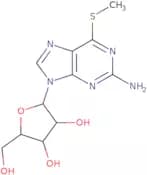
<p>2'-Deoxy-5'-O-DMT-inosine 3'-succinyl CPG 1000Å is an antiviral and anticancer nucleoside. It is synthesized by the reaction of 2'-deoxy-5'-O-dimethoxytrityl-N4-benzoyladenosine with succinic anhydride. This product is a modified nucleoside that can be used in the synthesis of DNA or RNA, as well as to produce antiviral and anticancer compounds. The purity of this compound is typically greater than 99% and it has been shown to be stable for up to six months at room temperature.<br>2'-Deoxy-5'-O-DMT-inosine 3'-succinyl CPG 1000Å is also known by CAS number 57568-24-8.</p>Purezza:Min. 95%6-Methyl-thio-guanosine
CAS:<p>6-Methyl-thio-guanosine is a guanine analog that has been used for the treatment of asthma. It was found to be effective in reducing the number of neutrophils and responsiveness of these cells to stimuli. 6-Methyl-thio-guanosine is able to reduce the number of neutrophils in the airway and decrease the amount of sputum produced by patients with chronic obstructive pulmonary disease. 6-Methyl-thio-guanosine also prevents the release of mediators from these cells, which are important in inflammation. This drug has been shown to have an effect on bronchial epithelial cells, slowing their growth and increasing their ability to resist damage.<br>6-Methyl-thio-guanosine can be administered by inhalation or orally, through microlenses or expansion devices, or by suctioning bronchial secretions. Treatment may also involve injection directly into lung tissue using a bron</p>Formula:C11H15N5O4SPurezza:Min. 95%Peso molecolare:313.33 g/mol3',5'-Di-O-acetyl-2'-deoxy-D-uridine
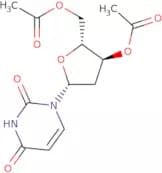
CAS:<p>3',5'-Di-O-acetyl-2'-deoxy-D-uridine is a protonated nucleotide that is synthesized from uridine and acetyl coenzyme A. It has been used as a marker for nucleic acids research, because it is stable at temperatures up to 60 degrees Celsius. 3',5'-Di-O-acetyl-2'-deoxy-D-uridine has been shown to have resonances in the proton region at high field strengths and population shifts in the hydrogen bond region.</p>Formula:C13H16N2O7Purezza:Min. 95%Peso molecolare:312.28 g/molNicotinamide 1,N6-ethenoadenine dinucleotide
CAS:<p>Nicotinamide 1,N6-ethenoadenine dinucleotide (NADH) is an enzyme form that binds to the active site of glutamate dehydrogenase (GDH). This binding prevents GDH from catalyzing the oxidation of NADH to NAD+, which is necessary for GDH activity. Nicotinamide 1,N6-ethenoadenine dinucleotide is a noncompetitive inhibitor that binds with a higher affinity than the substrate. It has been shown to be effective in inhibiting GDH in a model system and in enzyme preparations. The binding constant for nicotinamide 1,N6-ethenoadenine dinucleotide is 2 mM. The optimum pH for nicotinamide 1,N6-ethenoadenine dinucleotide activity is 6.8.</p>Formula:C23H27N7O14P2Purezza:Min. 97 Area-%Colore e forma:White Off-White PowderPeso molecolare:687.45 g/molL-Thymidine-5'-triphosphate sodium salt
<p>L-Thymidine-5'-triphosphate sodium salt (L-TTP) is a modified nucleoside that is used as an anticancer agent. L-TTP is phosphorylated by ATP to form L-thymidine 5'-monophosphate (L-TMP). It also inhibits viral replication by inhibiting the synthesis of DNA and RNA, leading to cell death. L-TTP has been shown to be active against herpes simplex virus type 1, herpes simplex virus type 2, and cytomegalovirus.</p>Purezza:Min. 95%p-Topolin riboside-5'-monophosphate sodium salt
<p>p-Topolin riboside-5'-monophosphate sodium salt is a novel modified nucleotide, which is an activator of the RNA polymerase I and III. It has been shown to be an effective antiviral agent, by inhibiting the synthesis of viral DNA and RNA. p-Topolin riboside-5'-monophosphate sodium salt also inhibits the growth of cancer cells in vitro and in vivo. This drug has been shown to inhibit tumor growth by targeting regulatory proteins that control cell proliferation, such as cyclin D1, CDK4, and CDK6.</p>Formula:C17H18N5Na2O8P·H2OPurezza:Min. 95%Peso molecolare:515.32 g/mol5'-Tosyl-2'-deoxyadenosine
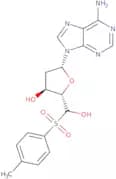
CAS:<p>5'-Tosyl-2'-deoxyadenosine is a synthetic, novel nucleoside that has antiviral and anticancer activity. It is an activator of DNA synthesis and inhibits protein synthesis by blocking the enzyme ribonucleotide reductase. 5'-Tosyl-2'-deoxyadenosine is not active against Mycobacterium tuberculosis or Mycobacterium avium complex due to the lack of phosphoramidite incorporation into DNA. 5'-Tosyl-2'-deoxyadenosine is a high purity, high quality product that can be used as an antiviral agent or anticancer drug.</p>Purezza:Min. 95%Fluorous propanol cep
CAS:Prodotto controllato<p>Fluorous propanol cep is a novel activator of ribonucleosides and deoxyribonucleosides. It is a nucleoside phosphoramidite that can be used to synthesize modified nucleosides, and has anticancer, antiviral and antibacterial properties. Fluorous propanol cep is an excellent activator for the synthesis of ribonuclesides and deoxyribonucleosides from their corresponding monophosphate derivatives. The product has been shown to inhibit replication of the human immunodeficiency virus (HIV-1) in vitro, with IC50 values less than 1 mM.</p>Formula:C20H24F17N2O2PPurezza:Min. 95%Peso molecolare:678.4 g/mol6-(Benzylamino)-3-methyl-1,2,3,4-tetrahydropyrimidine-2,4-dione
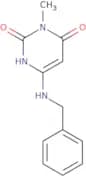
CAS:<p>6-(Benzylamino)-3-methyl-1,2,3,4-tetrahydropyrimidine-2,4-dione (BMPT) is a synthetic cytokinin that belongs to the group of 6-benzylaminopurines. BMPT is an inhibitor of cytokinin receptor kinases, as it is a benzyl uracil derivative. BMPT can be used as a building block for the synthesis of other compounds and has been used as an inhibitor of cell growth in various organisms.</p>Formula:C12H13N3O2Purezza:Min. 95%Peso molecolare:231.25 g/mol2',3'-Dithiouridine
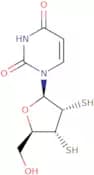
CAS:2',3'-Dithiouridine is a triamide that is synthesized from uridine and chloroacetic acid. The dimeric form of this compound has been shown to be the most stable and yields are high. 2',3'-Dithiouridine can be prepared by the reaction of uridine with chloroacetyl chloride in DMSO at room temperature. The disulfide linkage between the two thiouridines is stereospecifically oriented in a cis conformation. The synthesis of 2',3'-dithiouridine from uridine and chloroacetic acid is achieved by an efficient procedure that gives high yields. This synthetic pathway also produces a crystalline, cyclic, sodium salt form of 2',3',4'-trihydroxypentane-1,5-dione that has not been previously reported.Formula:C9H12N2O4S2Purezza:Min. 95%Peso molecolare:276.33 g/mol5'-O-Acetyllamivudine
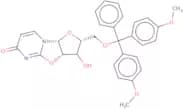
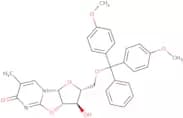
CAS:5'-O-Acetyllamivudine is an antiviral agent that has been shown to have antiretroviral activity against HIV-1 and influenza A virus. It is a nucleoside analog that inhibits the synthesis of viral DNA by competitively inhibiting the enzyme DNA polymerase. 5'-O-Acetyllamivudine is also used as an anticancer drug, which may be due to its ability to inhibit DNA replication in tumor cells.Formula:C10H13N3O4SPurezza:Min. 95%Peso molecolare:271.29 g/mol5'-O-DMT-2,2'-anhydrouridine
CAS:<p>5'-O-DMT-2,2'-anhydrouridine is a nucleoside that is an activator of RNA polymerase. This compound is novel and can be used for the synthesis of modified oligonucleotides and DNA. 5'-O-DMT-2,2'-anhydrouridine has anticancer properties and can be used in the treatment of cancer. 5'-O-DMT-2,2'-anhydrouridine has been shown to inhibit the growth of cancer cells by binding to DNA and inhibiting the production of RNA.</p>Formula:C30H28N2O7Purezza:Min. 95%Peso molecolare:528.55 g/molN4-Benzoyl-2'-deoxy-5'-O-levulinoylcytidine-3'-CE phosphoramidite
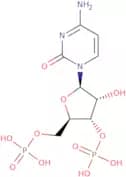
<p>N4-Benzoyl-2'-deoxy-5'-O-levulinoylcytidine-3'-CE phosphoramidite is a novel nucleoside analogue that is synthesized by coupling the 5'-O-levulinoyl group to the 3'-OH of cytidine. The compound has antiviral and anticancer activity, as well as potential for use in gene therapy. It is synthesized from commercially available deoxyribonucleosides, an activator, and a diphosphate. The product is purified to high purity and quality, with dsDNA conversion yields of more than 90%.</p>Formula:C30H40N5O8PPurezza:Min. 95%Peso molecolare:629.64 g/molCytidine 3',5'-bisphosphate sodium
CAS:<p>Cytidine 3',5'-bisphosphate sodium is a phospholipid that is found in the cell membrane of gram-positive bacteria. Cytidine 3',5'-bisphosphate sodium has been shown to be produced by the enzyme phosphatidylcholine synthase, which converts phosphatidylethanolamine and cytidine 5'-monophosphate into phosphatidylcholine and cytidine 3',5'-bisphosphate. The presence of this compound in the cell membrane may be an indication of long-term survival and growth under laboratory conditions. It is also present in the ribosomal RNA of type strain organisms.</p>Formula:C9H15N3O11P2•NaxPurezza:Min. 95%Peso molecolare:403.18 g/mol3'-Deoxy-3'-fluoroxylocytidine
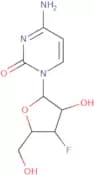
CAS:<p>3'-Deoxy-3'-fluoroxylocytidine is a synthetic phosphate derivative of cytidine. It is an activator for phosphoramidites, deoxyribonucleosides and ribonucleosides. 3'-Deoxy-3'-fluoroxylocytidine is an anticancer agent that has been shown to have activity against various cancer cell lines, including prostate cancer cells. This compound has also been shown to have antiviral activity against herpes simplex virus type 1 (HSV-1) and influenza A virus in the laboratory.</p>Purezza:Min. 95%3',5'-Di-O-acetyl-2'-deoxyguanosine
CAS:<p>3',5'-Di-O-acetyl-2'-deoxyguanosine is a nucleoside that is activated by hypochlorous acid to form a reactive intermediate, which can then react with other molecules. 3',5'-Di-O-acetyl-2'-deoxyguanosine has been shown to be selectively cytotoxic to human tumor cells and may be used as a radiosensitizer for cancer treatment. The reaction products of this compound include hypochlorite and hydrogen peroxide, which are strong oxidizing agents that cause tissue injury. This compound is also an effective reagent for the detection of myeloperoxidase in plasma samples.</p>Formula:C14H17N5O6Purezza:Min. 95%Colore e forma:PowderPeso molecolare:351.32 g/mol8-Bromo-2'-O-methyladenosine
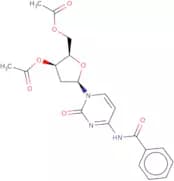
8-Bromo-2'-O-methyladenosine is a modified nucleoside that is used as an antiviral and anticancer drug. It is also a high quality, novel, phosphoramidite building block. 8-Bromo-2'-O-methyladenosine has been shown to inhibit the growth of human cancer cells in culture and has anti-inflammatory effects in mice.Purezza:Min. 95%3',5'-Di-O-acetyl-N4-benzoyl-2'-deoxycytidine
<p>3',5'-Di-O-acetyl-N4-benzoyl-2'-deoxycytidine is a novel, phosphoramidite monophosphate nucleoside. It is synthesized by reacting deoxydinucleosides with 3',5'-di-O-acetyl-N4-benzoyl-2'-deoxycytidine in the presence of a coupling agent. The product has been shown to be an excellent activator for DNA polymerases and may have antiviral effects. The chemical name of this compound is 2',3'-dideoxyadenosine 5' -triphosphate N4 -(beta, beta, beta, beta,-triethoxypropionyl) benzoyl ester.</p>Formula:C20H21N3O7Purezza:Min. 95%Peso molecolare:415.41 g/mol2'-O-tert-Butyldimethylsilyl-5'-O-DMT-N2-(4-isopropylphenoxyacetyl)guanosine 3'-CE phosphoramidite
2'-O-tert-Butyldimethylsilyl-5'-O-DMT-N2-(4-isopropylphenoxyacetyl)guanosine 3'-CE phosphoramidite is a nucleoside that was synthesized by the reaction of 2'-O-tert-butyldimethylsilyl-5'-O-dimethoxytritylguanosine 3'-CE with 4-isopropylphenoxyacetic acid. This nucleoside has antiviral and anticancer activities. It has been shown to inhibit the growth of human leukemia cells in culture, and also inhibits the replication of human immunodeficiency virus (HIV).Formula:C57H74N7O10PSiPurezza:Min. 95%Peso molecolare:1,076.33 g/molCytarabine-5-monophosphate-15N2,13C1
<p>Cytarabine-5-monophosphate-15N2, 13C1 is a monophosphate nucleoside that inhibits viral replication. It is an antiviral agent used in the treatment of herpes simplex virus infections and other viruses such as HIV. Cytarabine-5-monophosphate-15N2, 13C1 also has anticancer properties and can be used to prevent cancer by inhibiting DNA synthesis. The compound is a modified nucleoside that lacks the 2' hydroxyl group and has an activated phosphate at the 3' position. This novel nucleoside is synthesized from deoxyribonucleosides using phosphoramidites as starting materials. CAS No.: 127468-52-8</p>Purezza:Min. 95%2,2’-Anhydro-5’-O-DMT-5-methyluridine
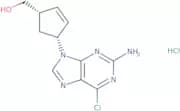
CAS:<p>2,2’-Anhydro-5’-O-DMT-5-methyluridine is an anhydro nucleoside</p>Formula:C31H30N2O7Purezza:Min. 95%Peso molecolare:542.58 g/mol(1S,4R)-4-(2-Amino-6-chloro-9H-purin-9-yl)-2-cyclopentene-1-methanol hydrochloride
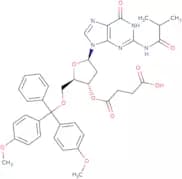
CAS:(1S,4R)-4-(2-Amino-6-chloro-9H-purin-9-yl)-2-cyclopentene-1-methanol HCl is an activator of DNA polymerase. It is a novel modified deoxyribonucleosides and nucleosides that has antiviral, anticancer and antifungal activities. It can be used in the treatment of various diseases such as HIV, cancer and chronic hepatitis B virus infection.Formula:C11H12ClN5O•HClPurezza:Min. 95%Peso molecolare:302.16 g/mol2'-Deoxy-5'-O-DMT-N2-isobutyrylguanosine 3'-O-succinate
CAS:2'-Deoxy-5'-O-DMT-N2-isobutyrylguanosine 3'-O-succinate is a nucleoside that is modified by the incorporation of an isobutyryl group at the 2' position. It has shown to be an activator of phosphoramidites and can be used as a precursor for the synthesis of nucleic acids, including DNA and RNA. 2'-Deoxy-5'-O-DMT-N2-isobutyrylguanosine 3'-O-succinate has been shown to have anticancer properties, antiviral properties, and antiinflammatory properties.Formula:C39H41N5O10Purezza:Min. 95%Peso molecolare:739.77 g/molRef: 3D-ND09157
1gPrezzo su richiesta2gPrezzo su richiesta5gPrezzo su richiesta250mgPrezzo su richiesta500mgPrezzo su richiesta5-(4-Amino-5-fluoro-2-oxo-1(2H)-pyrimidinyl)-1,3-oxathiolane-2-carboxylic acid 5-methyl-2-(1-methylethyl)cyclohexyl ester
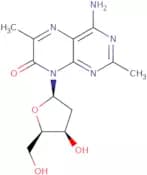
CAS:5-(4-Amino-5-fluoro-2-oxo-1(2H)-pyrimidinyl)-1,3-oxathiolane-2-carboxylic acid 5-methylcyclohexyl ester is a novel nucleoside analog with antiviral and anticancer properties. It is an inhibitor of influenza virus replication. The compound is also active against human DNA polymerase beta, herpes simplex virus type 1 and 2, and Epstein Barr virus. This compound is synthesized as a phosphate derivative for use in phosphoramidite chemistry for the synthesis of DNA or RNA.Formula:C18H26FN3O4SPurezza:Min. 95%Peso molecolare:399.48 g/mol4-Amino-2,6-dimethyl-8-(2'-deoxy-b-D-ribofuranosyl)-7-pteridone
CAS:4-Amino-2,6-dimethyl-8-(2'-deoxy-b-D-ribofuranosyl)-7-pteridone is a fluorescent probe that can be used to monitor nucleic acid synthesis. It is an analog of adenosine and interacts with the enzyme RNA polymerase in a process that is mediated by the adenosine receptor, which leads to termination of transcription. This compound has been shown to yield high fluorescence yields at room temperature and has minimal interaction with other monomers or dimers. 4-Amino-2,6-dimethyl-8-(2'-deoxy-b-D-ribofuranosyl)-7-pteridone can be used as a probe for monitoring DNA synthesis in vitro and in vivo.Formula:C13H17N5O4Purezza:Min. 95%Peso molecolare:307.31 g/mol5,6-Dichloro-(1-b-D-ribofuranosyl) benzimidazole 3',5'-cyclic monophosphothioate, Sp-isomer sodium salt
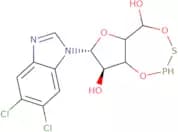
CAS:5,6-Dichloro-(1-b-D-ribofuranosyl) benzimidazole 3',5'-cyclic monophosphothioate, Sp-isomer sodium salt (SPP) is a cytostatic agent that binds to the α subunit of the voltage-dependent Ca2+ channel. It has been shown to inhibit tumor growth in mouse models of hyperproliferative diseases such as bladder cancer and pulmonary fibrosis. SPP also inhibits the proliferation of human bladder cells in culture by inhibiting cyclic nucleotide phosphodiesterase activity. This leads to an increase in intracellular calcium concentrations and activation of cation channels. SPP is an analog of rolipram, which has been shown to have anti-inflammatory effects on detrusor muscle cells.Formula:C12H10Cl2N2O5P·NaPurezza:Min. 95%Peso molecolare:419.16 g/molN6-Benzoyl-9-(a-D-mannopyranosyl)adenine
<p>N6-Benzoyl-9-(a-D-mannopyranosyl)adenine is a novel, synthetic nucleoside analog. It is an antiviral drug that inhibits viral replication by replacing the natural substrate in DNA synthesis. N6-Benzoyl-9-(a-D-mannopyranosyl)adenine has been shown to be effective against human leukemia cells and to have anticancer properties. This drug also stimulates the immune system by triggering the production of antibodies and other immunoglobulins.</p>Formula:C18H19N5O6Purezza:Min. 95%Colore e forma:PowderPeso molecolare:401.37 g/molN-Benzoyl-5'-O-(bis(4-methoxyphenyl)phenylmethyl)-2'-O-(2-methoxyethyl)adenosine
CAS:N-Benzoyl-5'-O-(bis(4-methoxyphenyl)phenylmethyl)-2'-O-(2-methoxyethyl)adenosine is a synthetic nucleoside that is an activator of DNA polymerase and has antiviral activities. It is also used in the synthesis of deoxyribonucleosides, phosphoramidites, and ribonucleosides.Formula:C41H41N5O8Purezza:Min. 95%Colore e forma:White PowderPeso molecolare:731.79 g/mol5-Methylcytidine
CAS:5-Methylcytidine is a methyltransferase enzyme that catalyzes the transfer of a methyl group from S-adenosylmethionine to 5-methylcytosine. This reaction is essential for DNA replication and repair. 5-Methylcytidine has been shown to be an important factor in the regulation of mitochondrial functions, as well as other cellular processes such as protein synthesis, nuclear DNA replication, and tumor suppression. It also has been shown to inhibit the replication of murine sarcoma virus and Toll-like receptor. 5-Methylcytidine can be used in chemotherapy treatment against mouse tumors and murine sarcoma virus by preventing viral RNA synthesis with monoclonal antibodies.Formula:C10H15N3O5Peso molecolare:257.24 g/molRef: 3D-W-201877
25gPrezzo su richiesta50gPrezzo su richiesta100gPrezzo su richiesta250gPrezzo su richiesta500gPrezzo su richiesta-Unit-ggPrezzo su richiesta2',3',5-Tri-O-acetyl-N1-tritylinosine
2',3',5-Tri-O-acetyl-N1-tritylinosine is a novel nucleoside with antiviral and anticancer activities. It is a modified deoxyribonucleoside, which is synthesized by the acetylation of N1-tritylinosine. It has high purity and high quality.Purezza:Min. 95%Uracil Sodium salt
CAS:<p>Pyrimidine nucleobase; allosteric regulator and coenzyme for reactions</p>Purezza:Min. 95%8-(2-Amino-1-methyl-6-phenylimidazo[4,5-b]pyridyl)-2'-deoxyguanosine
CAS:8-(2-Amino-1-methyl-6-phenylimidazo[4,5-b]pyridyl)-2'-deoxyguanosine (8-APdG) is a mutagen that induces genotoxic effects and mutations in mammalian cells. It has been shown to react with DNA to form covalent complexes and induce point mutations or transversions. 8-APdG has been found in the environment as a result of environmental pollution by polycyclic aromatic hydrocarbons and tobacco smoke. 8-APdG also induces genetic damage in human lymphoblastoid cells in vitro, including mutations at the HPRT locus.Formula:C23H23N9O4Purezza:Min. 95%Peso molecolare:489.49 g/molDecanoyl coenzyme A, free acid
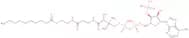
CAS:<p>Decanoyl CoA, free acid, is a substrate of the enzyme fatty acid synthetase. This enzyme catalyzes the formation of long-chain fatty acids from acetyl-CoA and malonyl-CoA. The product decanoyl-CoA is then used in other metabolic pathways to synthesize acyl chains for phospholipids, triglycerides, and cholesterol. Decanoyl CoA has been shown to inhibit carnitine acyltransferase activity in rat liver microsomes. It also inhibits mitochondrial beta-oxidation by competing with carnitine at the level of the carnitine acyltransferase reaction. The expression plasmid pET21a was used to express the decanoyl CoA synthetase protein in Escherichia coli cells grown in LB medium with aminotransferase activity as a measure of decanoyl CoA synthetase activity. Decanoyl CoA</p>Formula:C31H54N7O17P3SPurezza:Min. 95%Peso molecolare:921.78 g/molT-705RTP sodium
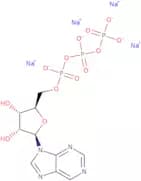
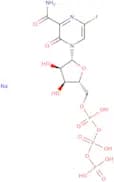
CAS:T-705RTP sodium is a novel, modified diphosphate nucleotide that activates the formation of DNA and RNA. It is used as an antiviral and anticancer agent. T-705RTP sodium has been shown to be more potent than adenosine in inhibiting viral replication and has cytotoxic effects on cancer cells. The chemical formula for T-705RTP sodium is C6H14N5O7P.Formula:C10H15FN3O15P3·xNaPurezza:Min. 95%2'-Azido-2'-deoxyuridine-5'-triphosphate
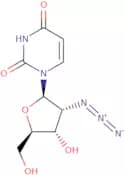
CAS:2'-Azido-2'-deoxyuridine-5'-triphosphate is a nucleotide analog that is inactive in the presence of an intact receptor. It is an allosteric inhibitor of many DNA polymerases and causes cell growth inhibition. 2'-Azido-2'-deoxyuridine-5'-triphosphate binds to the phosphate group of ATP and inhibits protein synthesis. In particular, it inhibits the polymerase activity of herpes simplex virus type 1 by binding to the active site of the enzyme, thereby preventing viral replication. 2'-Azido-2'-deoxyuridine-5'-triphosphate also binds to cytosolic Ca2+ and activates Ca2+ signaling pathways, leading to cell death.Formula:C9H14N5O14P3Purezza:Min. 95%Peso molecolare:509.15 g/mol9-(b-D-Arabinofuranosyl)adenine 5'-triphosphate triethyammonium salt
9-(B-D-arabinofuranosyl)adenine 5'-triphosphate triethyammonium salt is a nucleoside analog that inhibits viral replication by inhibiting the DNA polymerase enzyme. It has been shown to be safe and well tolerated in healthy volunteers and patients with cancer, including those with advanced solid tumors. 9-(B-D-arabinofuranosyl)adenine 5'-triphosphate triethyammonium salt is an antiviral agent that has been shown to be active against HIV, herpes simplex virus type 1, herpes simplex virus type 2, cytomegalovirus, and varicella zoster virus. This compound also has anticancer properties and has been shown to inhibit tumor cell proliferation in vitro.Purezza:Min. 95%Cholest-5-en-3-ol, 3-(6-(((2-cyanoethoxy)(diisopropylamino)phosphino)oxy)hexyl)carbemate
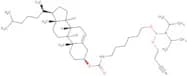
CAS:<p>Cholest-5-en-3-ol, 3-(6-(((2-cyanoethoxy)(diisopropylamino)phosphino)oxy)hexyl)carbemate, is a novel nucleotide analog that has antiviral and anticancer properties. It is synthesized by the reaction of 2,4,6-trihydroxyacetophenone with 6-(chlorohexyl)-1,3-bis(2-(cyanoethoxy)phosphinooxy)hexane in the presence of tetrakis(triphenylphosphine), palladium chloride, and potassium carbonate. Cholest-5-en-3-ol, 3-(6((2-(cyanoethoxy)(diisopropylamino))(phosphino)oxy)(hexyl))carbamate may be used as a monophosphate or phosphoramidite to make DNA or RNA. This compound has been shown to</p>Purezza:Min. 95%2-Cyanoadenosine
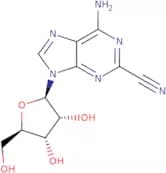
CAS:2-Cyanoadenosine is a derivative of adenosine. It is an inhibitor of the enzyme adenosine deaminase, which converts adenosine to inosine. 2-Cyanoadenosine prevents the conversion of ATP to AMP and may be useful for treating neurological disorders. 2-Cyanoadenosine has been shown to have cardiovascular effects, such as increasing the force of contraction and relaxation in isolated rat hearts.Purezza:Min. 95%2,6-Diamino-9-(2'-amino-2'-deoxy-b-D-ribofuranosyl)purine
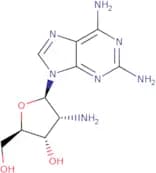
CAS:2,6-Diamino-9-(2'-amino-2'-deoxy-b-D-ribofuranosyl)purine (dAraMP) is a novel nucleoside analogue that was synthesized and characterized. It has been shown to inhibit the growth of cancer cells in vitro. dAraMP is a monophosphate analogue of 2,6-diamino-9-(2'-deoxy-b-D-ribofuranosyl)purine (dAraP). The modified phosphoramidite approach used in its synthesis yielded high purity and yields. This product is also available as a diphosphate analogue of 2,6 diamino 9-(2'-amino 2'-deoxy b D ribofuranosyl) purine (dAMP). The diphosphate form of this product has been shown to be an activator for DNA polymerase.Formula:C10H15N7O3Purezza:Min. 95%Colore e forma:White To Off-White SolidPeso molecolare:281.28 g/mol2-Amino-2'-deoxy-N2,N6-bis(diisobutylaminomethylidene)-5'-O-DMT-adenosine 3'-CE phosphoramidite
CAS:2-Amino-2'-deoxy-N2,N6-bis(diisobutylaminomethylidene)-5'-O-DMT-adenosine 3'-CE phosphoramidite is a phosphoramidite that is used for the synthesis of nucleosides and nucleotides. The 2-Amino-2'-deoxy-N2,N6-bis(diisobutylaminomethylidene)-5'-O-DMT-adenosine 3'-CE phosphoramidite can be used in the synthesis of DNA, RNA, and other nucleic acids. It also has antiviral and anticancer properties.Formula:C58H83N10O6PPurezza:Min. 95%Peso molecolare:1,047.32 g/mol2',3'-Dideoxycytidine-5'-triphosphate N,N-diethylethanamine
CAS:Please enquire for more information about 2',3'-Dideoxycytidine-5'-triphosphate N,N-diethylethanamine including the price, delivery time and more detailed product information at the technical inquiry form on this pageFormula:C9H16N3O12P3•(C6H15N)xPurezza:Min. 95%8,5'-(S)-Cycloadenosine
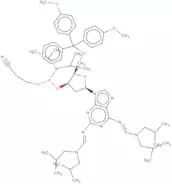
CAS:<p>8,5'-(S)-Cycloadenosine is a radiosensitizer that is used in the treatment of cancer. It is an adenosine derivative that has been shown to increase the sensitivity of cells to radiation. 8,5'-(S)-Cycloadenosine has been used in clinical trials as a radiosensitizer for the treatment of non-small cell lung cancer and myeloma. It can be used with other chemotherapeutic agents or irradiation to reduce tumor size and improve survival rates. The compound binds to DNA and increases the formation of hydrogen peroxide by inhibiting DNA repair enzymes such as topoisomerase II, which are responsible for breaking down hydrogen peroxide. 8,5'-(S)-Cycloadenosine also prevents the production of reactive oxygen species (ROS) from azobisisobutyronitrile (AIBN), which is often used as a radical initiator during polymerization reactions.</p>Formula:C10H11N5O4Purezza:Min. 95%Colore e forma:White to off-white solid.Peso molecolare:265.23 g/molN-Benzoyl- 5'- O- DMT- 2'- O-[( triisopropylsilyl oxy)methyl]-adenosine 3'- CE phosphoramidite
CAS:<p>N-Benzoyl- 5'-O-DMT-2'-O-[(triisopropylsilyloxy)methyl]-adenosine 3'-Ce phosphoramidite (Bz-5'-O-DMT-2'-O-[(triisopropylsilyloxy)methyl]-Ado-3'-Ce Phosphoramidite) is a novel nucleoside phosphoramidite. It is an analogue of the natural nucleoside adenosine. This compound has been shown to be an antiviral and anticancer agent in vitro. Bz-5'-O-DMT-2'-O-[(triisopropylsilyloxy)methyl]-Ado-3'-Ce Phosphoramidite can also act as a DNA or RNA activator, which leads to increased levels of transcription, translation, and replication by increasing the number of ribonucleotide tri</p>Purezza:Min. 95%5-Aminoallylcytidine 5'-triphosphate lithium salt - 100mM aqueous solution
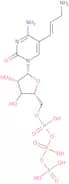
5-Aminoallylcytidine 5'-triphosphate lithium salt - 100mM aqueous solution is a DNA nucleoside analog that is used as an antiviral, anticancer and activator. It has the chemical formula C10H14N2O6P3Li. The CAS number is 182700-18-0. 5-Aminoallylcytidine 5'-triphosphate lithium salt - 100mM aqueous solution is also known by the following synonyms: (5-Amino)allylcytidinium chloride trihydrate; (5-Amino)allylcytidinium chloride, lithium salt; 5-(Amino)allyl cytidylic acid triphosphate lithium salt; 5-[(3-aminopropoxy)propyl]uracil triphosphate lithium salt; 5-[(3-aminopropoxyFormula:C12H21N4O14P3·xLiPurezza:Min. 95%Peso molecolare:538.23 g/mol2-Bromo-2-deoxy-5-methyluridine-3,5-diacetate
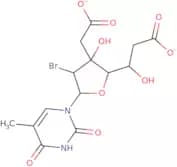
CAS:2-Bromo-2-deoxy-5-methyluridine-3,5-diacetate is a novel synthetic nucleoside analogue. It has been shown to inhibit the proliferation of cancer cells and have antiviral activity. It is phosphorylated by kinase enzymes to form 2'-bromo-2'-deoxyuridine monophosphate (BrDUMP). This compound also inhibits DNA replication, RNA transcription, and protein synthesis.Purezza:Min. 95%Lamivudine 5'-monophosphate sodium salt
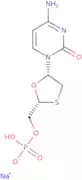
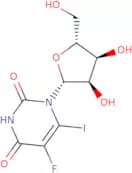
<p>Lamivudine 5'-monophosphate sodium salt is a diphosphate nucleoside analog. It is active against HIV and is also used as an antiviral agent for the treatment of hepatitis B virus infection. Lamivudine 5'-monophosphate sodium salt binds to viral DNA, preventing the progression of viral replication. The drug is phosphorylated by cellular enzymes to its active form, lamivudine triphosphate (3TC).</p>Formula:C8H11N3O6PSNaPurezza:Min. 95%Peso molecolare:331.22 g/mol5-Fluoro-6-iodouridine
CAS:5-Fluoro-6-iodouridine is a nucleoside that is used as the starting material for synthesizing fluorinated pyrimidine derivatives, which are used in cancer treatment. 5-Fluoro-6-iodouridine is an activator of ribonucleotide reductase and can be used to inhibit the growth of tumor cells. 5-Fluoro-6-iodouridine has been shown to inhibit the proliferation of human leukemia cells in culture, with cytotoxicity that was comparable to that of 5-fluorouracil.Formula:C9H10FIN2O6Purezza:Min. 95%Peso molecolare:388.09 g/mol8-Benzyloxy-N2-isobutyryl-2-deoxyguanosine
CAS:<p>8-Benzyloxy-N2-isobutyryl-2-deoxyguanosine is a novel, potent and selective anticancer drug that has been shown to inhibit the growth of a variety of human tumor cells in vitro and in vivo. It also has antiviral activity against herpes simplex virus type 1. The drug is an analog of 8-benzyloxyguanosine, a nucleoside which is structurally related to guanine. This compound is synthesized from the corresponding diphosphate and monophosphate derivatives by the action of DNA polymerase and DNA ligase. 8-Benzyloxy-N2-isobutyryl-2-deoxyguanosine inhibits viral replication by binding to the viral DNA polymerase and preventing further synthesis, as well as inhibiting cellular RNA synthesis.</p>Formula:C21H25N5O6Purezza:Min. 95%Peso molecolare:443.50 g/mol2'-O-tert-Butyldimethylsilyl-5'-O-DMT-5-methyluridine
<p>2'-O-tert-Butyldimethylsilyl-5'-O-DMT-5-methyluridine is a novel nucleoside that is activated with anhydrous ammonia and then converted to the corresponding 5'-O-DMT derivative. The 2'-O-tert-butyldimethylsilyl group protects the 5'-position of the sugar moiety from attack by phosphodiesterases, allowing for its use as a substrate in DNA synthesis. The ribose moiety is also modified at the 2' position, which prevents the formation of 3',5'-cyclic monophosphate (cMP) during dephosphorylation and thereby inhibits viral replication. This nucleotide analog has been shown to be active against HIV, hepatitis B virus, and influenza A virus.</p>Purezza:Min. 95%5-Methylcytidine-5'-triphosphate lithium salt - 100mM aqueous solution
<p>5-Methylcytidine-5'-triphosphate lithium salt is a nucleotide analog that inhibits thrombin by binding to the active site and blocking the catalytic activity. This compound is useful for the study of cellular function and viral life. 5-Methylcytidine-5'-triphosphate lithium salt has been shown to inhibit intracellular levels of thrombin, which can be used for anticoagulation in vitro. In addition, this compound has been shown to have regenerative properties in vivo and may be used for tissue engineering purposes. 5-Methylcytidine-5'-triphosphate lithium salt has also been shown to inhibit viral replication in mammalian cells.</p>Formula:C10H18N3O14P3·xLiPurezza:Min. 95%Peso molecolare:497.18 g/mol2'-Deoxy-5'-O-DMT-N2-iBu-guanosine-3'-succinyl CPG 500 Å
2'-Deoxy-5'-O-DMT-N2-iBu-guanosine-3'-succinyl CPG 500 Å is an anticancer agent that is used in the synthesis of DNA and RNA. It can be used as a monophosphate or diphosphate, and has been shown to inhibit cancer cells. 2'-Deoxy-5'-O-DMT-N2-iBu-guanosine-3'-succinyl CPG 500 Å is modified to have a long half life in the body. This chemical has been synthesized with high purity and quality, making it suitable for research purposes.Purezza:Min. 95%N-Benzoyl-2'-O-[(methylthio)methyl]-3',5'-O-[1,1,3,3-tetrakis(1-methylethyl)-1,3-disiloxanediyl]-cytidine
CAS:N-Benzoyl-2'-O-[(methylthio)methyl]-3',5'-O-[1,1,3,3-tetrakis(1-methylethyl)-1,3-disiloxanediyl]-cytidine is a synthetic nucleoside that is used as an antiviral. It has been shown to be effective against HIV and HSV. N-Benzoyl-2'-O-[(methylthio)methyl]-3',5'-O-[1,1,3,3-tetrakis(1-methylethyl)-1,3-disiloxanediyl]-cytidine prevents the synthesis of DNA by inhibiting the enzyme ribonucleotide reductase. It also inhibits the production of deoxyribonucleotides and DNA by binding to the active site of the enzyme DNA polymerase.Formula:C30H47N3O7SSi2Purezza:Min. 95%Peso molecolare:649.95 g/mol2'-Deoxy-N2-DMF-5'-DMT-2'-fluoroguanosine
CAS:2'-Deoxy-N2-DMF-5'-DMT-2'-fluoroguanosine is an anticancer agent that has been modified to contain a 2'-deoxyribonucleoside and a 5'-dimethoxytrityl (DMT) group at the 2' position. The compound inhibits DNA synthesis by binding to the enzyme DNA polymerase, thereby preventing replication. This compound is novel because it contains a deoxyribonucleoside, which is not found in any other anticancer nucleotide analogs. It also has antiviral properties against HIV, herpes simplex virus type 1, and poliovirus.Formula:C34H35FN6O6Purezza:Min. 95%Peso molecolare:642.68 g/mol1,3-Dimethyl-5-[3-(4,4,5,5-tetramethyl-[1,3,2]dioxaborolan-2-yl)-benzylidene]-pyrimidine-2,4,6-trione
CAS:1,3-Dimethyl-5-[3-(4,4,5,5-tetramethyl-[1,3,2]dioxaborolan-2-yl)-benzylidene]-pyrimidine-2,4,6-trione is an activator that is a synthetic analogue of 5-(3-(4,4,5,5-tetramethyl-[1,3,2]dioxaborolan-2-yl)benzylidene)-pyrimidine-2. This compound has antiviral and anticancer properties. It is being investigated for its ability to modify DNA in order to inhibit the synthesis of deoxyribonucleosides and ribonucleosides.Purezza:Min. 95%Purine riboside-5'-triphosphate
CAS:Purine riboside-5'-triphosphate is a nucleotide that belongs to the group of purines. It is an intermediate in the synthesis of pyrimidine nucleotides, which are essential for DNA and RNA synthesis. Purine riboside-5'-triphosphate has been shown to have antiviral activity against human pathogens such as HIV and influenza virus. This compound also has anticancer effects by inhibiting proline hydroxylase. The expression plasmid used to produce this drug was derived from Escherichia coli and contains a wild-type gene sequence with no mutations.Formula:C10H15N4O13P3Purezza:Min. 95%Peso molecolare:492.17 g/mol5'-O-DMT-2'-O-(2-methoxyethyl)-5-methyluridine 3'-CE succinate TEA salt
<p>5'-O-DMT-2'-O-(2-methoxyethyl)-5-methyluridine 3'-CE succinate TEA salt is a novel, modified nucleoside with antiviral activity. It is synthesized from 5'-O-DMT-2'-O-(2-methoxyethyl)-5-methyluridine and the corresponding 2',3',4,4',5,5'-hexachloroacetone adduct. This compound has been shown to be an activator of diphosphate synthesis and ribonucleotide reductase. It is also a potent inhibitor of deoxyribonucleic acid synthesis and tumor cell growth in vitro. The product has been shown to have anticancer properties in vitro and in vivo. The product is not activated by the enzyme phosphodiesterase, which means it does not cause any negative side effects such as hypertension or gastrointestinal disturbance.</p>Purezza:Min. 95%2'-Deoxy-5'-O-DMT-guanosine-(DMF)-succinyl-CPG 500 Å
2'-Deoxy-5'-O-DMT-guanosine-(DMF)-succinyl-CPG 500 Å is a nucleoside monophosphate that is chemically modified. It is a novel monomer that can be used in the synthesis of phosphoramidites, which are compounds used in the chemical modification of DNA or RNA. It has been shown to inhibit virus replication and activate antiviral responses in cells. 2'-Deoxy-5'-O-DMT-guanosine-(DMF)-succinyl-CPG 500 Å is also a high quality compound with a purity level of 99%.Purezza:Min. 95%Colore e forma:Powder6-Chloro-N4-methyl-4,5-pyrimidinediamine
CAS:6-Chloro-N4-methyl-4,5-pyrimidinediamine is a monophosphate nucleotide. It is a synthetic compound that is used as an antiviral agent and as an anticancer drug. The compound has been shown to inhibit the replication of DNA by inhibiting the activity of DNA polymerase. 6-Chloro-N4-methyl-4,5-pyrimidinediamine also inhibits the synthesis of RNA by inhibiting the enzyme RNA polymerase. As a result, this compound is toxic to cells because it prevents protein production and replication. This product has high purity and high quality. It can be used in phosphoramidites, which are necessary for the production of DNA and RNA in cells.Purezza:Min. 95%

![Fluorescein-5(6)-carboxamidocaproyl-(5-[3-aminoallyl]uridine 5'-triphosphate) - 1 mM aqueous solut…](/_next/image/?url=https%3A%2Fstatic.cymitquimica.com%2Fproducts%2F3D%2Fthumb-webp%2FNF139015.webp&w=3840&q=75)

![4-Amino-1-[(2R,3R,4R,5R)-3-ethoxy-4-hydroxy-5-(hydroxymethyl)oxolan-2-yl]pyrimidin-2-one](/_next/image/?url=https%3A%2Fstatic.cymitquimica.com%2Fproducts%2F3D%2Fthumb-webp%2FECA42942.webp&w=3840&q=75)




![5'-Deoxy-5-fluoro-N-[(2-methylbutoxy)carbonyl]cytidine](/_next/image/?url=https%3A%2Fstatic.cymitquimica.com%2Fproducts%2F3D%2Fthumb-webp%2FND16526.webp&w=3840&q=75)
![5-[4-(4,4,5,5-tetramethyl-[1,3,2]dioxaborolan-2-yl)-benzylidene]-pyrimidine-2,4,6-trione](/_next/image/?url=https%3A%2Fstatic.cymitquimica.com%2Fproducts%2F3D%2Fthumb-webp%2FNT44284.webp&w=3840&q=75)
















![8-(2-Amino-1-methyl-6-phenylimidazo[4,5-b]pyridyl)-2'-deoxyguanosine](/_next/image/?url=https%3A%2Fstatic.cymitquimica.com%2Fproducts%2F3D%2Fthumb-webp%2FNA04649.webp&w=3840&q=75)



![N-Benzoyl- 5'- O- DMT- 2'- O-[( triisopropylsilyl oxy)methyl]-adenosine 3'- CE phosphoramidite](/_next/image/?url=https%3A%2Fstatic.cymitquimica.com%2Fproducts%2F3D%2Fthumb-webp%2FPB157357.webp&w=3840&q=75)



![N-Benzoyl-2'-O-[(methylthio)methyl]-3',5'-O-[1,1,3,3-tetrakis(1-methylethyl)-1,3-disiloxanediyl]-c…](/_next/image/?url=https%3A%2Fstatic.cymitquimica.com%2Fproducts%2F3D%2Fthumb-webp%2FNB148470.webp&w=3840&q=75)
![1,3-Dimethyl-5-[3-(4,4,5,5-tetramethyl-[1,3,2]dioxaborolan-2-yl)-benzylidene]-pyrimidine-2,4,6-tri…](/_next/image/?url=https%3A%2Fstatic.cymitquimica.com%2Fproducts%2F3D%2Fthumb-webp%2FND44285.webp&w=3840&q=75)