Nucleosidi
I nucleosidi sono building blocks fondamentali degli acidi nucleici, composti da una base azotata legata a una molecola di zucchero. In questa sezione, puoi trovare una vasta gamma di nucleosidi essenziali per la ricerca in biologia molecolare, biochimica e farmacologia. Questi composti svolgono ruoli cruciali nella sintesi del DNA e dell'RNA e sono vitali in vari processi metabolici. I nucleosidi vengono utilizzati per studiare il materiale genetico, sviluppare terapie antivirali e antitumorali e comprendere i meccanismi cellulari. Da CymitQuimica, forniamo nucleosidi di alta qualità per supportare le tue esigenze di ricerca e sviluppo, garantendo purezza e affidabilità per le tue applicazioni sperimentali.
Trovati 3569 prodotti di "Nucleosidi"
Ordinare per
Purezza (%)
0
100
|
0
|
50
|
90
|
95
|
100
2'-Deoxyguanosine-5'-O-(1-thiotriphosphate) lithium salt - 100mM aqueous solution
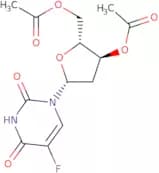
CAS:<p>2'-Deoxyguanosine-5'-O-(1-thiotriphosphate) lithium salt is a nucleotide analog that has been shown to inhibit the synthesis of fatty acids and proteins, as well as cause depression in mice. It also has antiviral activity against the type strain of HIV-1 (HXB2). The drug inhibits protein synthesis by preventing the incorporation of amino acids into a growing polypeptide chain. This inhibition can be reversed by adding vitamin D3 or fatty acids. 2'-Deoxyguanosine-5'-O-(1-thiotriphosphate) lithium salt has been shown to have anti-cancer properties due to its ability to induce apoptosis, which is programmed cell death. This drug also has immune functions, such as an increase in natural killer cells and cytokines, as well as improving energy efficiency in the optical system.</p>Formula:C10H16N5O12P3S·xLiPurezza:Min. 95%Peso molecolare:523.25 g/mol3',5'-Di-O-acetyl-2'-deoxy-5-fluorouridine
CAS:3',5'-Di-O-acetyl-2'-deoxy-5-fluorouridine is an antitumor agent that belongs to the class of heterocyclic ring. It is a pyridinium salt with a benzoic acid residue at position 3 and 5'. The heterocyclic ring is derived from alkylene, which has two double bonds in the chain. This compound has low toxicity and can be synthesized from chloroform, fluorouridine, and pyridine. 3',5'-Di-O-acetyl-2'-deoxy-5-fluorouridine inhibits growth of cancer cells by binding to ribosomes and preventing RNA synthesis. It also acts as an alkylating agent that binds to DNA, leading to crosslinking between strands of DNA. This leads to cell death by apoptosis or necrosis due to interference with DNA replication.Formula:C13H15FN2O7Purezza:Min. 95%Peso molecolare:330.27 g/molGuanylyl-3'-5'-adenosine triethylammonium salt
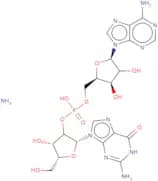
CAS:<p>Guanylyl-3'-5'-adenosine triethylammonium salt (GAT) is a prodrug that is hydrolyzed in vivo to adenosine 3',5'-cyclic monophosphate (cAMP). GAT has been shown to have anti-inflammatory properties, which may be due to its ability to inhibit prostaglandin synthesis. GAT has also been used as a diagnostic tool for inflammatory bowel disease and infectious diseases of the bowel. It can be used as an adjuvant therapy for treating bowel disease, although it does not affect the course of the disease.</p>Formula:C20H25N10O11P·xC6H15NPurezza:Min. 95%Colore e forma:PowderPeso molecolare:612.45 g/mol5'-O-DMT-2'-O-propylphthalimidouridine
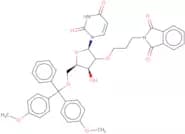
<p>5'-O-DMT-2'-O-propylphthalimidouridine is a synthetic nucleoside that has antiviral and anticancer properties. It is used as a precursor for the synthesis of other nucleosides, including uridine and cytidine. 5'-O-DMT-2'-O-propylphthalimidouridine can be modified with phosphoramidites to create novel modified nucleosides. The chemical name is 1-(5'-O-dimethoxytrityl)-2-[(2' -propyl)thio]uracil. This drug has CAS number 61381-14-4 and molecular weight of 271.11 g/mol.</p>Formula:C41H39N3O10Purezza:Min. 95%Peso molecolare:733.78 g/mol9-(2'-O-Acetyl-b-D-arabinofuranosyl)-N2-isobutyrylguanine
9-(2'-O-Acetyl-b-D-arabinofuranosyl)-N2-isobutyrylguanine is a synthetic nucleoside that is activated by phosphorylation. It has been shown to be effective against cancer and viruses, and it has been proven to have a novel mechanism of action. 9-(2'-O-Acetyl-b-D-arabinofuranosyl)-N2-isobutyrylguanine is an analog of the natural product guanosine, which is found in RNA and DNA. 9-(2'-O-Acetyl-b-D-arabinofuranosyl)-N2-isobutyrylguanine can inhibit viral replication by inhibiting the synthesis of viral ribonucleic acid (RNA) and therefore inhibiting protein synthesis.Purezza:Min. 95%3'-O-Aminoacetoxy-2'-deoxyadenosine 5'-O-triphosphate triethylammonium salt
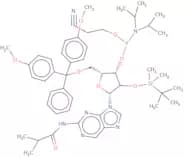
<p>Please enquire for more information about 3'-O-Aminoacetoxy-2'-deoxyadenosine 5'-O-triphosphate triethylammonium salt including the price, delivery time and more detailed product information at the technical inquiry form on this page</p>Formula:C13H21N6P3O12•NaxPurezza:Min. 98 Area-%Colore e forma:PowderPeso molecolare:546.26 g/mol2-Isobutyrylamino-9-(2'-O-tert-butyldimethylsilyl-5'-O-DMT-b-D-ribofuranosyl)purine 3'-CE phosphoramidite
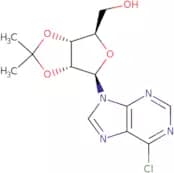
CAS:2-Isobutyrylamino-9-(2'-O-tert-butyldimethylsilyl-5'-O-DMT-b-D-ribofuranosyl)purine 3'-CE phosphoramidite is a modified nucleoside that is used to synthesize DNA. It has antiviral and anticancer properties, which are due to its ability to inhibit viral DNA polymerases and tumor cell proliferation. 2-Isobutyrylamino-9-(2'-O-tert-butyldimethylsilyl-5'-O-DMT-b-D -ribofuranosyl)purine 3'-CE phosphoramidite is also able to interfere with the synthesis of cellular DNA because it can be incorporated into the growing strand at any position. This novel nucleoside can be used in both monophosphate and diphosphate forms. 2 IsobutyFormula:C50H68N7O8PSiPurezza:Min. 95%Peso molecolare:954.2 g/mol6-Chloro-9-(2',3'-O-isopropylidene-b-D-ribofuranosyl)purine
CAS:<p>6-Chloro-9-(2',3'-O-isopropylidene-b-D-ribofuranosyl)purine is a nucleoside that is modified by adding an isopropylidene group (i.e., a C=C bond). It is used in the synthesis of oligonucleotides and phosphoramidites. 6-Chloro-9-(2',3'-O-isopropylidene-b-D-ribofuranosyl)purine has been shown to be an activator of the DNA polymerase, which increases its rate of incorporation of deoxyribonucleotide triphosphates into DNA chains. This nucleoside also has antiviral properties and can be used as an anticancer drug, specifically for hematological malignancies such as leukemia. 6-Chloro-9-(2',3'-O-isopropylidene</p>Formula:C13H15ClN4O4Purezza:Min. 95%Colore e forma:PowderPeso molecolare:326.74 g/mol2'-Deoxy-5'-O-DMT-guanosine-(DMF)-succinyl CPG 1000 Å
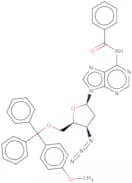
2'-Deoxy-5'-O-DMT-guanosine-(DMF)-succinyl CPG 1000 Å is a phosphoramidite monophosphate with antiviral and anticancer properties. It is synthesized by the reaction of deoxyribonucleosides and activated 2'-deoxy-5'-O-dimethoxytrityl guanosine. This product can be used as an activator for RNA synthesis, in DNA sequencing, and in the synthesis of oligonucleotides. It has also been shown to have antitumor activity against human hepatocellular carcinoma cells.Purezza:Min. 95%3'-Azido-N6-benzoyl-5'-O-MMT-2',3'-dideoxyadenosine
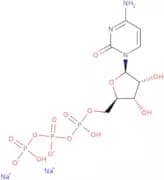
3'-Azido-N6-benzoyl-5'-O-MMT-2',3'-dideoxyadenosine is a novel nucleoside analog that is an activator of ribonucleosides and deoxyribonucleosides. It has been shown to inhibit the growth of cancer cells and to be active against herpes simplex virus. 3'-Azido-N6-benzoyl-5'-O-MMT-2',3'-dideoxyadenosine is synthesized with high purity and quality by our skilled chemists.Formula:C37H32N8O4Purezza:Min. 95%Peso molecolare:652.72 g/molCytidine-5'-triphosphoric acid disodium salt
CAS:Cytidine-5'-triphosphoric acid disodium salt is an unassigned compound that is a potent inhibitor of protein synthesis. It has been shown to have a specific growth rate of 0.0003, which is significantly lower than the growth rate for other tested compounds. Cytidine-5'-triphosphoric acid disodium salt also inhibits the growth of Klebsiella aerogenes, Escherichia coli, and Enterococcus faecalis at concentrations as low as 1 ppm. The compound has been found to be hydraulically resistant and can be used in polyolefin formulations with high resistance to organic solvents. Cytidine-5'-triphosphoric acid disodium salt is also used as a supplement in the production of proteins such as enzymes, antibodies, hormones, and cytokines because it blocks the formation of proteins by interfering with ribosomes and preventing them from binding to mRNA transcripts.Formula:C9H14N3Na2O14P3Purezza:Min. 95%Peso molecolare:527.12 g/mol5'-Dimethoxytrityl-1-methyl-pseudoUridine, 2'-O-TBDMS-3'-[(2-cyanoethyl)-(N,N-diisopropyl)]-phosphoramidite
CAS:5'-Dimethoxytrityl-1-methyl-pseudoUridine, 2'-O-TBDMS-3'-[(2-cyanoethyl)-(N,N-diisopropyl)]-phosphoramidite is a nucleoside phosphoramidite that is used in the synthesis of oligonucleotides. It is a novel and high quality chemical compound that has been used in the synthesis of DNA and RNA with anticancer activity. 5'-Dimethoxytrityl-1-methyl-pseudoUridine, 2'-O-[TBDMS]3'[(2-cyanoethyl)-(N,N-diisopropyl)]phosphoramidite (DMTPMP) is an oligonucleotide analog that has shown to help prevent viral replication.Formula:C46H63N4O9PSiPurezza:Min. 94 Area-%Colore e forma:PowderPeso molecolare:875.07 g/mol4-Amino-6-methyl-8-(2'-deoxy-b-D-ribofuranosyl)-7-pteridone
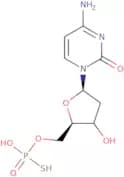
CAS:4-Amino-6-methyl-8-(2'-deoxy-b-D-ribofuranosyl)-7-pteridone (4AMD) is an adenosine analog that is fluorescent. 4AMD is not hydrolyzed by adenosine deaminase and has a higher affinity for the A1 receptor than for the A2a receptor. This makes it a useful probe for the study of adenosine mediated, yields, and analogs. The fluorescence properties of 4AMD were studied in different solvents at various temperatures to monitor the interaction of 4AMD with catalysis. The monomeric form of 4AMD was used to measure its fluorescence properties.Formula:C12H15N5O4Purezza:Min. 95%Peso molecolare:293.28 g/mol2'-Deoxycytidine-5'-O-monophosphorothioate sodium salt
CAS:<p>2'-Deoxycytidine-5'-O-monophosphorothioate sodium salt is a nucleoside that is used in the synthesis of DNA. It is also an activator for the phosphoramidite group. This product has novel chemical properties and is CAS No. 63225-09-2. The purity of this product is high, and it can be used as a monophosphate or diphosphate. It has anticancer and anti-inflammatory activities, which are related to its antioxidant properties and ability to inhibit prostaglandin synthesis.</p>Formula:C9H14N3O6PSPurezza:Min. 95%Peso molecolare:323.26 g/mol5-[N(2-Trifluoroacetamido)ethyl)-3-(E)-acrylamido]-2-deoxyuridine
CAS:5-[N(2-Trifluoroacetamido)ethyl)-3-(E)-acrylamido]-2-deoxyuridine is an anticancer, antiviral, and phosphoramidite DNA synthesis reagent that is modified by the addition of a trifluoroacetamide group. It has been shown to activate monophosphate nucleotides and nucleosides to their corresponding diphosphates and deoxyribonucleosides. 5-[N(2-Trifluoroacetamido)ethyl]-3-(E)-acrylamido]-2-deoxyuridine is synthesized from 2-deoxyuridine which is derived from uracil and phenol. This novel chemical substance has shown promising results in preclinical testing against human cancers and viral infections.Formula:C16H19F3N4O7Purezza:Min. 95%Peso molecolare:436.34 g/mol2-Methylthio-6-chloropurine riboside
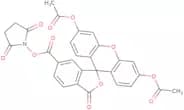
CAS:2-Methylthio-6-chloropurine riboside is an adenosine derivative that acts as a competitive inhibitor of the enzyme RNA polymerase. It is used in the process of translation to inhibit protein synthesis. 2-Methylthio-6-chloropurine riboside is synthesized by reacting 2-methylthioadenosine with 6-chloropurine riboside and then phosphoramidite chemistry.Formula:C12H15CIN4O5SPurezza:Min. 95%Peso molecolare:466.25 g/mol6-Carboxyfluorescein diacetate N-Hydroxysuccinimide ester
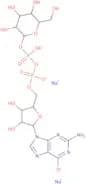
CAS:<p>6-Carboxyfluorescein diacetate N-Hydroxysuccinimide ester is a fluorescence probe that can be used as a marker for biological samples. It is minimally toxic and stable in vitro, and can be used to measure the protein content of cells. This compound has been used in vitro methods to study the effects of environmental factors on cellular metabolism by measuring the amount of ATP in 3T3-L1 preadipocytes. 6-Carboxyfluorescein diacetate N-Hydroxysuccinimide ester has also been used to measure the effectiveness of wastewater treatment processes by analyzing the fluorescence intensity of cells using confocal microscopy. It has also been shown to have an effect on hypersensitivity syndrome and infectious diseases.</p>Formula:C29H19NO11Purezza:Min. 95 Area-%Colore e forma:PowderPeso molecolare:557.46 g/molGDP-D-mannose disodium salt from saccharomyces cerevisiae
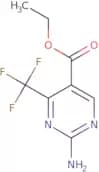
CAS:GDP-D-mannose disodium salt from Saccharomyces Cerevisiae is a nucleoside that is synthetically modified. It has antiviral and anticancer activities, as well as the ability to activate DNA synthesis. This product is suitable for use as a novel activator of DNA and RNA synthesis, in the treatment of viral infections, or cancer.Formula:C16H23N5Na2O16P2Purezza:Min. 95%Peso molecolare:649.3 g/molEthyl 2-amino-4-(trifluoromethyl)pyrimidine-5-carboxylate
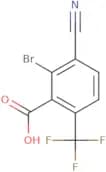
CAS:<p>Ethyl 2-amino-4-(trifluoromethyl)pyrimidine-5-carboxylate is a small molecule that is a potent inhibitor of diacylglycerol acyltransferase. The compound has been shown to be an efficient inhibitor of this enzyme, which is involved in the synthesis of diacylglycerol. Diacylglycerol acyltransferase catalyzes the transfer of an acyl group from an acyl-carrier protein (ACP) to glycerol 3-phosphate, forming lysophosphatidic acid and releasing CoA. The inhibition of this enzyme leads to drastically reduced levels of diacylglycerol, which may have implications for the treatment of metabolic syndrome and diabetes.</p>Formula:C8H8F3N3O2Purezza:Min. 95%Peso molecolare:235.16 g/mol1,3-Dimethyl-5-[3-(4,4,5,5-tetramethyl-[1,3,2]dioxaborolan-2-yl)-benzyl]-pyrimidine-2,4,6-trione
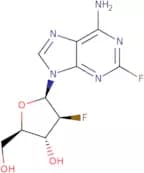
CAS:<p>1,3-Dimethyl-5-[3-(4,4,5,5-tetramethyl-[1,3,2]dioxaborolan-2-yl)-benzyl]-pyrimidine-2,4,6-trione is a novel nucleoside that is synthesized from 5-(3-(4,4,5,5-tetramethyl-[1,3,2]dioxaborolan-2-yl)benzyl)pyrimidine and dimethoxytrityl chloride. This compound has antiviral and anticancer properties. It can inhibit the replication of DNA by binding to the 3' hydroxyl group of the deoxyribonucleotide triphosphate. It also inhibits cancer cell growth by inhibiting RNA synthesis and protein synthesis. 1,3-Dimethyl-5-[3-(4,4,5,5-tetramethyl-[1,3 , 2]d</p>Purezza:Min. 95%2-Fluoro-9-(2'-deoxy-2'-fluoro-b-D-arabinofuranosyl)adenine
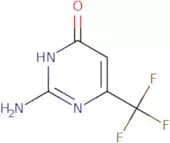
CAS:2-Fluoro-9-(2'-deoxy-2'-fluoro-b-D-arabinofuranosyl)adenine is an antiviral drug that inhibits the synthesis of viral DNA and RNA. It is a synthetic nucleoside analogue with antiviral activity against herpes simplex virus type 1, herpes simplex virus type 2, varicella zoster virus, cytomegalovirus, Epstein Barr virus, and human immunodeficiency virus type 1. This compound is also used as a building block in the preparation of phosphoramidites for chemical synthesis of deoxyribonucleosides. 2-Fluoro-9-(2'-deoxy-2'-fluoro-b-D-arabinofuranosyl)adenine has shown anticancer activity in vitro and can be used to treat various types of cancer.Formula:C10H11F2N5O3Purezza:Min. 95%Peso molecolare:287.22 g/mol2-Amino-4-hydroxy-6-(trifluoromethyl)pyrimidine
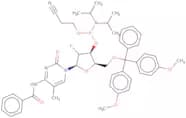
CAS:2-Amino-4-hydroxy-6-(trifluoromethyl)pyrimidine is an activator, which is a substance that activates the enzymes that catalyze chemical reactions. It is a novel material with high purity and high quality. The activator can be used in the synthesis of ribonucleosides, deoxyribonucleosides, nucleosides, and phosphoramidites. 2-Amino-4-hydroxy-6-(trifluoromethyl)pyrimidine has been found to have anticancer and antiviral activities.Purezza:Min. 95%N4-Benzoyl-1-(2'-deoxy-5'-O-DMT-2'-fluoro-b-D-arabinofuranosyl)-5-methylcytosine 3'-CE phosphoramidite
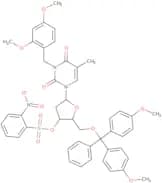
N4-Benzoyl-1-(2'-deoxy-5'-O-DMT-2'-fluoro-b-D-arabinofuranosyl)-5-methylcytosine 3'-CE phosphoramidite is a modified nucleotide that inhibits the synthesis of DNA and RNA in cells. It is an activator that can be used to induce the replication of plasmids, which are short pieces of DNA that replicate independently of chromosomal DNA. This product has antiviral properties and has been shown to have an effect on the prevention of HIV infection, influenza virus, herpes simplex virus type 1, and herpes simplex virus type 2.Formula:C47H53FN5O8PPurezza:Min. 95%Peso molecolare:865.95 g/mol3-N-(2,4-Dimethylbenzyl)-1-(5-O-DMT-3-O-nitrophenylsulphonyl-2-deoxy-b-D-lyxofuranosyl)thymidine
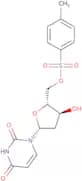
CAS:3-N-(2,4-Dimethylbenzyl)-1-(5-O-DMT-3-O-nitrophenylsulphonyl-2-deoxy-b-D-lyxofuranosyl)thymidine is a modified nucleoside that has antiviral and anticancer properties. It is a synthetic nucleotide with a novel structure that can be phosphorylated to form the corresponding diphosphate, monophosphate, or phosphoramidites. 3N-(2,4-Dimethylbenzyl)-1-(5-O-DMT (3'-O-[(dimethylamino)methyl]oxime)-2'-deoxyribofuranosyl)thymidine is used as an antiviral agent against HIV and other retroviruses.Formula:C46H45N3O13SPurezza:Min. 95%Peso molecolare:879.93 g/mol2'-Deoxy-5'-O-p-toluenesulfonyluridine
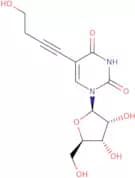
CAS:<p>2'-Deoxy-5'-O-p-toluenesulfonyluridine is a nucleoside that is modified with a p-toluenesulfonyl group on the 2' position. This compound has been shown to be an activator of phosphoramidites. It is also used as an anticancer drug, antiviral agent, and in the synthesis of ribonucleosides and deoxyribonucleosides. 2'-Deoxy-5'-O-p-toluenesulfonyluridine is typically used as a building block for RNA or DNA synthesis. This compound can also be used in the preparation of aminoglycoside antibiotics, as well as for the treatment of cancerous tumors.</p>Formula:C16H18N2O7SPurezza:Min. 95%Peso molecolare:382.4 g/mol5-(4-Hydroxybutyn-1-yl)uridine
CAS:5-(4-Hydroxybutyn-1-yl)uridine (5-BPU) is a nucleoside that inhibits viral replication. It is synthesized by the phosphoramidite method and modified to produce a 5-(4-hydroxybutyn-1-yl)uridine diphosphate (5-BPUDP). 5-BPUDP can be phosphorylated to form 5-(4-hydoxybutyn-1-yl)uridine monophosphate (5-BPUMP), which is more active than 5-(4-hydoxybutyn-1 -yl)uridine diphosphate. The antiviral activity of this drug has been demonstrated in vitro using human T lymphocytes, Epstein Barr virus, and herpes simplex virus type 1. It has also shown anticancer activity against leukemia cells in mice and rats.Formula:C13H16N2O7Purezza:Min. 95%Peso molecolare:312.28 g/mol(4-N,N-(Dipropyl-1,1-dichloro-2-)aminophenyl)(5'-deoxy-5'-glycylamino-2'-O-tetrahydropyranylcytidyl-3')hydrogen phosphate
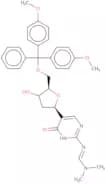
The phosphoramidite monophosphate compound is a synthetic nucleotide analogue that has antiviral and anticancer properties. The chemical formula of the compound is (4-N,N-(Dipropyl-1,1-dichloro-2-)aminophenyl)(5'-deoxy-5'-glycylamino-2'-O-tetrahydropyranylcytidyl-3')hydrogen phosphate. This chemical can be used as a building block in DNA synthesis to produce deoxyribonucleosides and activate ribonucleoside phosphates to produce ribonucleosides. It has a CAS number of 90533-20-0.Formula:C26H37Cl2N6O9PPurezza:Min. 95%Colore e forma:Pale yellow oilPeso molecolare:679.49 g/mol5'-O-DMT-N-(dimethylamino)methylidene-2'-deoxypseudoisocytidine
CAS:5'-O-DMT-N-(dimethylamino)methylidene-2'-deoxypseudoisocytidine is a novel antiviral monophosphate nucleoside. It inhibits viral DNA synthesis by competing with natural deoxyribonucleosides in the cell. 5'-O-DMT-N-(dimethylamino)methylidene-2'-deoxypseudoisocytidine is a high purity, modified nucleoside that has been synthesized by chemical phosphoramidite chemistry and modified to allow for efficient polymerase chain reactions. This product has been tested as an anticancer agent in vitro.Formula:C33H36N4O6Purezza:Min. 95%Peso molecolare:584.66 g/molPseudoisocytidine hydrochloride
CAS:<p>Pseudoisocytidine is a nucleoside analogue that inhibits bacterial growth by binding to the ribosomal RNA of bacteria. Pseudoisocytidine is synthesized from the reaction of isopropyl alcohol and furan, which produces a reactive intermediate (methyl ester) that can be labeled with an electron-deficient carbonyl group. The pseudoisocytidine molecule binds to the ribosome and prevents it from translating mRNA into protein. This leads to inhibition of bacterial growth. Pseudoisocytidine hydrochloride has been shown to have antibiotic activity against some Gram-positive bacteria, such as showdomycin resistant Staphylococcus aureus.</p>Formula:C9H13N3O5·HClPurezza:Min. 95%Peso molecolare:279.68 g/molRiboflavin 5'-(trihydrogen diphosphate) P'5'-ester with N-(2-Aminoethyl)adenosine
CAS:Riboflavin 5'-(trihydrogen diphosphate) P'5'-ester with N-(2-Aminoethyl)adenosine is a nucleoside that is an active form of riboflavin. It is a monophosphate that is synthesized from riboflavin and adenosine. Riboflavin 5'-(trihydrogen diphosphate) P'5'-ester with N-(2-Aminoethyl)adenosine has been shown to have anticancer, antiviral, and antitumor properties in vitro and in vivo. In addition, this compound has been shown to inhibit the growth of various tumor cells by inhibiting DNA synthesis.Formula:C29H38N10O15P2Purezza:Min. 95%Peso molecolare:828.62 g/mol5-Bromo-2,4-di(benzyloxy)pyrimidine
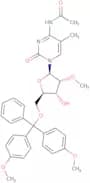
CAS:<p>5-Bromo-2,4-di(benzyloxy)pyrimidine is an activator of DNA and RNA synthesis. It is a phosphoramidite that is used in the synthesis of oligonucleotides. 5-Bromo-2,4-di(benzyloxy)pyrimidine has antiviral activity and can inhibit the replication of HIV in vitro. This compound also has anticancer activity when it is given as a monophosphate, while its diphosphate form inhibits DNA and RNA synthesis. 5-Bromo-2,4-di(benzyloxy)pyrimidine can be synthesized from 2,4-dibenzyloxy pyrimidine and bromine in high purity with a CAS number 41244-53-5.</p>Formula:C18H15BrN2O2Purezza:Min. 95%Peso molecolare:371.23 g/molN4-Acetyl-5'-O-DMT-2'-O-methyl-5-methylcytidine
CAS:N4-Acetyl-5'-O-DMT-2'-O-methyl-5-methylcytidine is a nucleoside analog that is used as an antiviral and anticancer drug. It is also known to be an activator of the immune system. N4-Acetyl-5'-O-DMT-2'-O-methyl-5-methylcytidine has been shown to inhibit viral DNA replication, induce apoptosis, and inhibit tumor growth. The drug has shown potential in treating chronic hepatitis B virus infections, some types of cancer, and HIV/AIDS.Formula:C34H37N3O8Purezza:Min. 95%Peso molecolare:615.67 g/molAdenosine 5'-monophosphate sodium salt [1',2',3',4',5'-13C5]
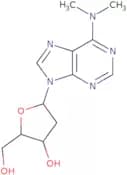
Adenosine 5'-monophosphate sodium salt is a modified nucleoside that is used as an antiviral and an activator of the immune system. It also has been shown to have anti-inflammatory properties. Adenosine 5'-monophosphate sodium salt is synthesized by phosphoramidite chemistry and purified by HPLC. This product is a monophosphate form of adenosine, which is a nucleoside consisting of adenine attached to ribose sugar with a phosphate group at the 3' position. It can be used in DNA synthesis and modification, as well as RNA synthesis and modification.Purezza:Min. 95%2'-Deoxy- N, N- dimethyl-adenosine
CAS:<p>2'-Deoxy-N, N-Dimethyl-Adenosine is a nucleoside that is phosphorylated to 2'-deoxy-N, N-dimethyl-adenosyl monophosphate. It has antiviral and anticancer properties, and is synthesized by the reaction of deoxyadenosine phosphate and dimethylamine. This product is a novel nucleoside with modified phosphate groups. The synthesis of this nucleoside has been patented.</p>Formula:C12H17N5O3Purezza:Min. 95%Peso molecolare:279.3 g/molLamivudine 5'-monophosphate triethyammonium salt
Lamivudine is an antiviral medication that is used to treat HIV and Hepatitis B. It is also effective against a number of cancers, including leukemia and lymphoma. Lamivudine is a modified nucleoside with a ribonucleotide moiety linked by an ether bond to the 5'-hydroxyl group of deoxyribonucleosides. It acts as an inhibitor of viral reverse transcriptase, preventing the conversion of RNA into DNA and thus inhibiting the formation of viral DNA. Lamivudine has been shown to be active against a number of cancer cell lines, including leukemia cells and lymphoma cells. Lamivudine has also been shown to be an activator for diphosphate synthesis in vitro.Purezza:Min. 95%N6-Benzoyl-3'-O-benzoyl-2'-deoxyadenosine
<p>6-Benzoyl-3'-O-benzoyl-2'-deoxyadenosine (BBD) is a synthetic nucleoside that has antiviral activity. It is an activator of DNA polymerase and also a novel monophosphate nucleotide. BBD has been shown to inhibit the replication of RNA in cells infected with HIV and HSV.</p>Purezza:Min. 95%2'-Deoxy-5'-DMT-5-ethenyluridine 3'-CE phosphoramidite
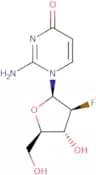
CAS:2'-Deoxy-5'-DMT-5-ethenyluridine 3'-CE phosphoramidite is a synthetic nucleoside. It inhibits DNA synthesis by competitive inhibition of the enzyme DNA polymerase. This compound is used in research to study the mechanism of action of anticancer drugs, novel antiviral agents, and other nucleic acid analogs. 2'-Deoxy-5'-DMT-5-ethenyluridine 3'-CE phosphoramidite has been shown to be an activator that can stimulate ribonucleotide reductase and RNA polymerase in vitro.Purezza:Min. 95%2'-Deoxy-2'-fluoro-arabinoisocytidine
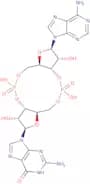
CAS:2'-Deoxy-2'-fluoro-arabinoisocytidine is a nucleoside that is used in the synthesis of DNA and RNA. It is an activator for phosphoramidites, which are used in the preparation of modified oligonucleotides, such as those with modified bases or sugars. 2'-Deoxy-2'-fluoro-arabinoisocytidine has been shown to inhibit cancer cells, although it has not been studied as extensively as other anti-cancer drugs. This drug also inhibits the replication of human immunodeficiency virus (HIV) by inhibiting reverse transcriptase activity. 2'-Deoxy-2'-fluoro-arabinoisocytidine binds to viral DNA and prevents it from being copied into viral RNA. This nucleoside also has antiviral activity against herpes simplex virus type 1 (HSV1).Formula:C9H12FN3O4Purezza:Min. 95%Peso molecolare:245.21 g/mol3',3'-Cyclic guanosine monophosphate-adenosine monophosphate
CAS:<p>3',3'-Cyclic guanosine monophosphate-adenosine monophosphate is a molecule that is a stimulator of lymphocytic leukemia. It has been shown to induce chronic lymphocytic leukemia in mice and humans, which is an indication of its clinical relevance. 3',3'-Cyclic guanosine monophosphate-adenosine monophosphate induces cancer by inhibiting the production of cyclic nucleotide phosphodiesterases, which are enzymes that break down cyclic nucleotides. This leads to elevated levels of cyclic nucleotides and an increase in intracellular cAMP levels. The anticancer effect of 3',3'-cyclic guanosine monophosphate-adenosine monophosphate may also be due to its ability to inhibit the growth factor activity of staphylococcus aureus.</p>Formula:C20H22N10O13P2·2NaPurezza:Min. 95%Peso molecolare:718.38 g/molN4-Acetyl-2'-deoxy-5'-O-DMT-2'-fluorocytidine 3'-O-succinate
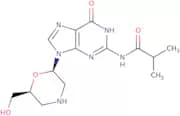
N4-Acetyl-2'-deoxy-5'-O-DMT-2'-fluorocytidine 3'-O-succinate is a nucleoside analog that inhibits DNA and RNA synthesis, as well as DNA replication. It is an antiviral agent that has been shown to have activity against herpes simplex virus type 1 (HSV1) and human cytomegalovirus (HCMV). N4-Acetyl-2'-deoxy-5'-O-DMT-2'-fluorocytidine 3'-O-succinate has also been found to be active against cancer cells in mice. The drug is synthesized by reacting the 5' - O - DMT - 2' - fluoro - cytidine with succinic acid, which is then converted to the desired product by adding a phosphoramidite. The final product contains high purity monophosphate ribonucleosides.Purezza:Min. 95%N2-Isobutyryl-7'-OH-morpholino guanosine
CAS:N2-Isobutyryl-7'-OH-morpholino guanosine is a novel antiviral agent that has been shown to inhibit the production of viral nucleic acids. It is an analogue of deoxyguanosine, which is a natural nucleoside. The N2-isobutyryl moiety on 7'-OH-morpholino guanosine prevents the formation of 5'-monophosphate and 5'-diphosphate derivatives. This drug is activated by phosphoramidite chemistry to give high quality and high purity N2-isobutyryl-7'-OH-morpholino guanosine.Formula:C14H20N6O4Purezza:Min. 95%Peso molecolare:336.35 g/molN4-Benzoyl-5-bromo-2'-deoxy-5'-O-DMT-cytidine 3'-CE phosphoramidite
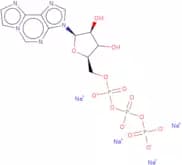
CAS:N4-Benzoyl-5-bromo-2'-deoxy-5'-O-DMT-cytidine 3'-CE phosphoramidite is a novel modified cytosine derivative. It has anticancer activity and can be used in the treatment of cancer cells that are resistant to other anticancer drugs. This product has a high purity and quality, which allows it to be widely used in the synthesis of DNA, RNA, and ribonucleosides. In addition, N4-Benzoyl-5-bromo-2'-deoxy-5'-O-DMT-cytidine 3'-CE phosphoramidite is an activator for diphosphate formation as well as a nucleotide analogue with antiviral effects. This product is also an inhibitor of DNA polymerase α and β, which are enzymes involved in DNA replication.Formula:C46H51BrN5O8PPurezza:Min. 95%Peso molecolare:912.8 g/mol1,N6-Ethenoadenosine-5'-triphosphate sodium salt-10mM aqueous solution
CAS:1,N6-Ethenoadenosine-5'-triphosphate sodium salt-10mM aqueous solution is a modified ATP molecule for use in researchFormula:C12H16N5O13P3Purezza:Min. 98 Area-%Colore e forma:Clear LiquidPeso molecolare:531.2 g/molα, β-Methyleneadenosine 5'-triphosphate trisodium
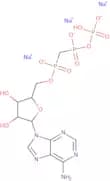
CAS:α, β-Methyleneadenosine 5'-triphosphate trisodium (MBATP) is an ester hydrochloride that is used as a pharmacological treatment for experimental models of cardiac, granule neurons and detrusor muscle. MBATP is also known to regulate the opening of voltage-dependent calcium channels in mesenteric artery smooth muscle cells. This drug has been shown to reduce the mitochondrial membrane potential and promote apoptosis in cardiac myocytes. Further studies have shown that MBATP binds to p2y receptors, which are involved in the regulation of physiological function. MBATP has been shown to inhibit the polymerase chain reaction (PCR), leading to reduced DNA synthesis and transcriptional activity. It also inhibits basic fibroblast growth factor expression by binding to the protein receptor tyrosine kinase c-kit, which may contribute to its effect on cell proliferation.Formula:C11H15N5Na3O12P3Purezza:Min. 95%Peso molecolare:571.15 g/mol2'-Deoxycytidine-5'-O-(1-thiotriphosphate) sodium salt - 10 mM aqueous solution
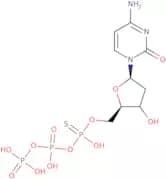
CAS:2'-Deoxycytidine-5'-O-(1-thiotriphosphate) sodium salt is a nucleotide analog that inhibits the synthesis of DNA. It inhibits transcription and replication of HIV. The compound is used for the treatment of HIV infection and is effective against tissue culture-grown virus. 2'-Deoxycytidine-5'-O-(1-thiotriphosphate) sodium salt inhibits the activity of mammalian DNA polymerase and has been shown to inhibit the replication of HIV in tissue culture. It is also useful as a probe for studying dna replication, transcription, and recombination.Formula:C9H16N3O12P3S·xNaPurezza:Min. 95%Peso molecolare:483.22 g/mol2'-Deoxy-5'-O-DMT-N2-isopropylguanosine 3'-CE phosphoramidite
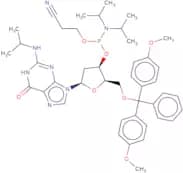
2'-Deoxy-5'-O-DMT-N2-isopropylguanosine 3'-CE phosphoramidite is a modified nucleotide that has been used in the synthesis of DNA. It is a monophosphate, diphosphate, and nucleoside. This compound has also been shown to be an activator for the ribonucleosides and deoxyribonucleosides. 2'-Deoxy-5'-O-DMT-N2-isopropylguanosine 3'-CE phosphoramidite has CAS number 55913-85-5.Formula:C43H54N7O7PPurezza:Min. 95%Peso molecolare:811.93 g/mol4-[2-[[6-Amino-9-(N-ethyl-b-D-ribofuranuronamidosyl)-9H-purin-2-yl]amino]ethyl]benzenepropanoic acid monosodium salt
CAS:4-[2-[[6-Amino-9-(N-ethyl-b-D-ribofuranuronamidosyl)-9H-purin-2-yl]amino]ethyl]benzenepropanoic acid monosodium salt is a nucleotide with phosphoramidite groups on the purine and pyrimidine rings. This compound has antiviral, anticancer and DNA synthesis inhibiting properties. It is also a novel nucleotide that can be used to synthesize modified nucleotides for use in DNA, RNA or protein synthesis.Formula:C23H28N7O6·NaPurezza:Min. 95%Peso molecolare:521.5 g/mol2',3',5'-Triacetyl -azacytidine
CAS:2',3',5'-Triacetyl-azacytidine is a transcription factor that has dose-dependent effects on the production of melanin. It inhibits the synthesis of melanin by binding to two specific transcription factors, the microphthalmia-associated transcription factor and the histone methyltransferases. This drug also inhibits tyrosinase, which is an enzyme involved in the production of melanin. 2',3',5'-Triacetyl-azacytidine has been shown to inhibit the growth of murine melanoma cells and may be useful for treating skin cancer.Formula:C14H18N4O8Purezza:Min. 95%Peso molecolare:370.31 g/mol2'-O-tert-Butyldimethylsilyl-N2-isobutyryl-2'-(2-methoxyethyl)guanosine
<p>2'-O-tert-Butyldimethylsilyl-N2-isobutyryl-2'-(2-methoxyethyl)guanosine is a nucleoside that is synthesized from deoxyribonucleosides. It has the following chemical structure:</p>Purezza:Min. 95%6-Methylthioguanosine-5’-triphosphate sodium salt - 10 mM aqueous solution
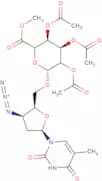
CAS:<p>6-Methylthioguanosine-5’-triphosphate sodium salt - 10 mM aqueous solution is a modified nucleoside that is used as an activator in the synthesis of DNA and RNA. 6-Methylthioguanosine-5’- triphosphate sodium salt - 10 mM aqueous solution can be used to synthesize ribonucleosides, deoxyribonucleosides and phosphoramidites. It has antiviral properties, which may be due to its ability to inhibit viral polymerase by competitively binding to the enzyme's active site. 6-Methylthioguanosine-5’-triphosphate sodium salt - 10 mM aqueous solution also has anticancer effects and is able to induce apoptosis in cancer cells.</p>Formula:C11H18N5O13P3S·xNaPurezza:Min. 95%Peso molecolare:553.27 g/mol3'-Azido-3'-deoxythymidine 2,3,4-tri-O-acetyl-b-D-glucuronide methyl ester
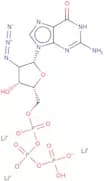
3'-Azido-3'-deoxythymidine 2,3,4-tri-O-acetyl-b-D-glucuronide methyl ester is a novel nucleoside analogue with anticancer and antiviral properties. It is an activator of ribonucleosides and deoxyribonucleosides, which are used for the synthesis of DNA and RNA respectively. 3'-Azido-3'-deoxythymidine 2,3,4-tri-O-acetyl-b-D-glucuronide methyl ester can be used to synthesize phosphoramidites and modified nucleosides. The compound has been shown to have antitumor activity in vitro against human leukemia cells.Formula:C23H29N5O13Purezza:Min. 95%Peso molecolare:583.5 g/mol2'-Azido-2'-deoxyguanosine-5'-triphosphate lithium salt - 100mM aqueous solution
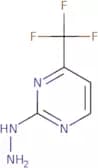
2'-Azido-2'-deoxyguanosine-5'-triphosphate lithium salt is a chemically modified nucleotide analog in which the 2'-hydroxyl group of guanosine is replaced by an azido group, and the molecule is phosphorylated at the 5' position with a triphosphate moiety, forming a lithium salt for stability and solubility. This molecule has potential in research applicationsFormula:C10H15N8O13P3Purezza:Min. 95%Colore e forma:Clear LiquidPeso molecolare:548.19 g/mol2-Hydrazino-4-(trifluoromethyl)pyrimidine
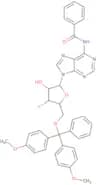
CAS:2-Hydrazino-4-(trifluoromethyl)pyrimidine is a cancer drug that is used in the treatment of various types of cancers. It is a chelate ring with a coordination geometry group P2, which has been shown to have low detection in urine and blood samples. 2-Hydrazino-4-(trifluoromethyl)pyrimidine binds copper ions, forming a copper complex, which causes the release of chloride ions. This process leads to an increased level of hydrogen peroxide and hydroxyl radicals that induce cancer cell death by inhibiting DNA synthesis and protein synthesis. 2-Hydrazino-4-(trifluoromethyl)pyrimidine also inhibits the production of certain enzymes (such as cyclooxygenase), which are involved in the production of prostaglandins that promote tumor growth.Purezza:Min. 95%N6-Benzoyl-3'-deoxy-5'-O-DMT-3'-fluoroadenosine
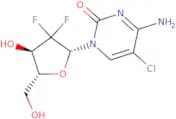
CAS:N6-Benzoyl-3'-deoxy-5'-O-DMT-3'-fluoroadenosine is an activator nucleoside that is used as a phosphoramidite in DNA synthesis. It is also used in antiviral and anticancer therapies. N6-Benzoyl-3'-deoxy-5'-O-DMT-3'-fluoroadenosine has been shown to have high purity and high quality, making it suitable for use in the pharmaceutical industry. This product is not active against bacterial or viral infections, but has proved to be effective in the treatment of leukemia, lymphoma and other cancers.Formula:C38H34FN5O6Purezza:Min. 95%Peso molecolare:675.71 g/mol2'-Deoxy-5- chloro -2', 2'- difluorocytidine
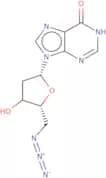
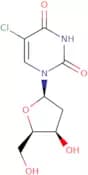
CAS:2'-Deoxy-5-chloro-2',2'-difluorocytidine is a monophosphate nucleoside with antiviral and anticancer activity. It is an activator of DNA polymerase, which is important for DNA synthesis. 2'-Deoxy-5-chloro-2',2'-difluorocytidine has been shown to be synthesized in high purity and with novel modifications that are not found in natural nucleosides. This compound may have the potential to be used as a therapeutic agent for cancer treatment or as an antiviral drug.Purezza:Min. 95%5'-Azido-2',5'-dideoxyinosine
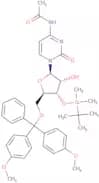
CAS:5'-Azido-2',5'-dideoxyinosine is a novel nucleoside which has been synthesized to investigate its anticancer and antiviral properties. 5'-Azido-2',5'-dideoxyinosine is an activator of ribonucleosides and deoxyribonucleosides, converting them into the corresponding monophosphate or diphosphate form. This product can be used as a building block for the synthesis of phosphoramidites and modified nucleosides. 5'-Azido-2',5'-dideoxyinosine has shown activity against cancer cells in vitro, in particular leukemia cell lines. It also has antiviral activity against HIV, herpes simplex virus type 1, and human cytomegalovirus (HCMV).Formula:C10H11N7O3Purezza:Min. 95%Peso molecolare:277.24 g/molN4-Acetyl-3'-O-tert-butyldimethylsilyl-5'-O-DMT-cytidine
CAS:<p>N4-Acetyl-3'-O-tert-butyldimethylsilyl-5'-O-DMT-cytidine is a novel nucleoside analogue that was synthesized from a cytidine analogue. This compound has antiproliferative activity against cancer cells in vitro and in vivo. The mechanism of action is not yet known, but it is thought to be due to the inhibition of DNA synthesis and/or the induction of apoptosis. N4-Acetyl-3'-O-tert-butyldimethylsilyl-5'-O-DMT-cytidine is not active against HIV, herpes simplex virus type 1, or herpes simplex virus type 2. It also has no effect on the replication of the influenza A virus and cannot inhibit the replication of poliovirus type 1.</p>Formula:C38H47N3O8SiPurezza:Min. 95%Peso molecolare:701.88 g/molCytarabine-5-b,Y-(1-hydroxyethylidene) triphosphate-d3
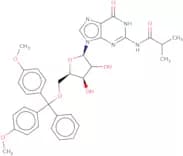
Cytarabine-5-b,Y-(1-hydroxyethylidene) triphosphate-d3 is a novel nucleotide analogue that is synthesized from the corresponding phosphoramidite. It has antiviral activity and can be used as an analog of cytosine arabinoside for the treatment of herpes zoster. Cytarabine-5-b,Y-(1-hydroxyethylidene) triphosphate-d3 has been shown to inhibit viral replication by interacting with DNA and RNA synthesis. This drug also inhibits DNA polymerase activity in vitro and blocks viral transcription. Cytarabine can be used in combination with other antiviral drugs such as acyclovir or ganciclovir.Purezza:Min. 95%5'-O-DMT-N2-isobutyryl-9-(b-D-arabinofuranosyl)guanine
5'-O-DMT-N2-isobutyryl-9-(b-D-arabinofuranosyl)guanine is a nucleoside analog drug that has antiviral and anticancer properties. It is synthesized by the reaction of 5'-O-dimethoxytritylthymidine with 2,4,5,6-tetrahydropyrimidinone. This compound has been shown to be active in vitro against several viruses including herpes simplex virus type 1 (HSV1) and human immunodeficiency virus type 1 (HIV1). The antiviral activity of 5'-O-DMT-N2-isobutyrylguanine is due to inhibition of viral DNA polymerase and/or virion assembly. It also inhibits tumor cell growth in vitro.Formula:C35H37N5O8Purezza:Min. 95%Peso molecolare:655.71 g/mol2',3'-Didehydro-3'-deoxy-thymidine-5'-triphosphate, lithium salt
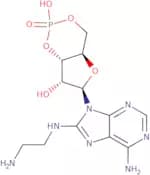
<p>2',3'-Didehydro-3'-deoxy-thymidine-5'-triphosphate, lithium salt is a nucleoside analog that inhibits DNA synthesis by inhibiting the enzyme DNA polymerase. It has been shown to be effective against cancer cells in vitro and in vivo. Although it is not active against mycobacterium and other acid-fast bacteria, 2',3'-didehydro-3'-deoxy-thymidine-5'-triphosphate, lithium salt has shown promising anticancer properties and may be useful for the treatment of leukemia, lymphoma, and breast cancer.</p>Purezza:Min. 95%8-(2-Aminoethyl)aminoadenosine 3',5'-cyclic monophosphate
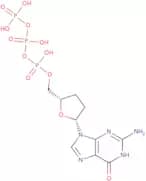
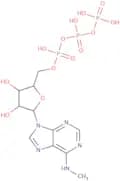
CAS:8-(2-Aminoethyl)aminoadenosine 3',5'-cyclic monophosphate (8-AEACMP) is a structural analog of the purine nucleotide adenosine. It has been shown to be an effective inhibitor of HIV replication in vitro and in vivo. 8-AEACMP blocks HIV transcription by binding to the cellular target, the enzyme ribonucleotide reductase. This binding prevents the formation of an enzyme-substrate complex that is required for DNA synthesis. 8-AEACMP binds to two sites on this enzyme: one site is at a catalytic site that is not involved in substrate binding, and the other site is at a regulatory site. The inhibitory effect of 8-AEACMP on HIV transcription results from its ability to bind at both sites simultaneously.Formula:C12H18N7O6PPurezza:Min. 95%Peso molecolare:387.29 g/mol2',3'-Dideoxyguanosine-5'-triphosphate lithium salt - 100mM aqueous solution
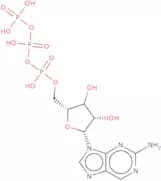
CAS:2',3'-Dideoxyguanosine-5'-triphosphate lithium salt (ddGTP) is a nucleotide analogue that inhibits the activity of DNA polymerase, RNA polymerase, and other enzymes. It has been shown to be an effective inhibitor of primary breast cancer cells in vitro. ddGTP is also a fluorescent compound with a light emission maximum at about 520 nm. The fluorescence intensity increases with increasing concentrations of ddGTP. This product is supplied as a 100mM aqueous solution containing ddGTP.Formula:C10H16N5O12P3Purezza:Min. 95%Peso molecolare:491.18 g/mol2-Amino-9-(b-D-ribofuranosyl)purine 5'-O-triphosphate - 10mM aq. solution
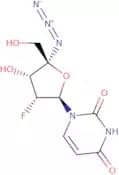
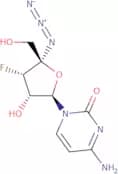
CAS:2-Amino-9-(b-D-ribofuranosyl)purine 5'-O-triphosphate is a synthetic nucleoside that is modified by phosphoramidite chemistry. This compound is an antiviral agent that inhibits viral DNA synthesis and replication. It has also been shown to have anticancer properties. 2-Amino-9-(b-D-ribofuranosyl)purine 5'-O-triphosphate inhibits the enzymatic activity of the enzyme ribonucleotide reductase, which converts ribonucleotides into deoxyribonucleotides. The resulting monophosphate form of this compound accumulates in cells, which leads to cell death.Formula:C10H16N5O13P3Purezza:Min. 95%Colore e forma:PowderPeso molecolare:507.18 g/mol4'-C-Azido-2'-deoxy-2'-fluoro-uridine
CAS:<p>4'-C-Azido-2'-deoxy-2'-fluoro-uridine is a novel nucleoside with antiviral and anticancer properties. 4'-C-Azido-2'-deoxy-2'-fluoro-uridine is activated by ribonucleoside kinase, which phosphorylates the 4'-C position on the sugar moiety to form the monophosphate. This drug has been shown to inhibit proliferation of human lymphoid leukemia cells in culture and to inhibit replication of HIV in cell culture. 4'-C-Azido-2'-deoxy-2'-fluoro-uridine also inhibits herpes simplex virus type 1 (HSV1) replication in vitro.</p>Formula:C9H10FN5O5Purezza:Min. 95%Peso molecolare:287.2 g/mol8-Allyloxy-N2-(dimethylaminomethylidene)-2-deoxyguanosine
CAS:8-Allyloxy-N2-(dimethylaminomethylidene)-2-deoxyguanosine is an anti-cancer, antiviral, and anticancer agent. It has shown anticancer activity in a number of animal models. This drug also inhibits the replication of DNA by inhibiting the synthesis of DNA precursors. 8-Allyloxy-N2-(dimethylaminomethylidene)-2-deoxyguanosine is synthesized from 2,6-diaminohexane and 1,3,5-triazine by reaction with formaldehyde and allyl bromide in the presence of potassium hydroxide. The product is purified by chromatography on silica gel using a mixture of chloroform/methanol (1:1) as eluent to yield a colorless liquid. The chemical structure is characterized by IR spectroscopy and mass spectrometry.Formula:C16H22N6O5Purezza:Min. 95%Peso molecolare:378.38 g/mol1-(2'-Deoxy-5'-O-DMT-b-D-lyxofuranosyl)thymine
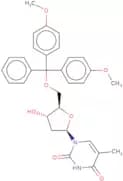
CAS:<p>1-(2'-Deoxy-5'-O-DMT-b-D-lyxofuranosyl)thymine is a nucleoside that can be used as a reagent in the synthesis of oligodeoxynucleotides. It has been shown to bind to DNA, and it is phosphoramidite monomer for solid phase synthesis of oligodeoxynucleotides. It is also a nonamer, octamer, and dinucleoside. 1-(2'-Deoxy-5'-O-DMT-b-D-lyxofuranosyl)thymine binds to the receptor protein and has been shown to have efficiencies as high as 45%.</p>Formula:C31H32N2O7Purezza:Min. 95%Peso molecolare:544.6 g/molAdenosine 5'-triphosphate potassium salt
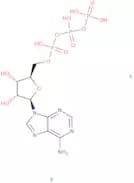
CAS:<p>Adenosine 5'-triphosphate potassium salt is a membrane potential-sensitive fluorescent probe. It has been used to measure the intensity of light exposure and the depolarising effects of activation in sarcoplasmic reticulum vesicles. Adenosine 5'-triphosphate potassium salt has also been used to measure the activity of cyclic nucleotide phosphodiesterases, which are enzymes that regulate the breakdown of cAMP and cGMP. The fluorescence of adenosine 5'-triphosphate potassium salt increases with increased concentrations of cyclic nucleotide phosphodiesterase, indicating that it is an effective indicator for measuring these types of enzymes in biological assays.</p>Formula:C10H14K2N5O13P3Purezza:Min. 95%Peso molecolare:583.36 g/molRef: 3D-NA149312
1gPrezzo su richiesta2gPrezzo su richiesta5gPrezzo su richiesta500mgPrezzo su richiestaUridine 5'-O-(1-thiotriphosphate) lithium salt - 100mM aqueous solution
CAS:<p>Mixture of Rp and Sp isomers.</p>Formula:C9H15N2O14P3SPurezza:Min. 95%Peso molecolare:500.21 g/mol2'-Deoxyguanosine-5'-diphosphate disodium salt
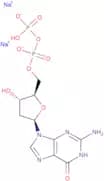
CAS:2'-Deoxyguanosine-5'-diphosphate disodium salt is a marine metabolite that is used as a chemotactic agent for bacteria. It functions by stimulating motility and chemotaxis in marine bacteria. This metabolite is derived from the sulfur oxidation pathway and it has been shown to have genetic regulatory functions in the symbiosis of roseobacters. 2'-Deoxyguanosine-5'-diphosphate disodium salt interacts with the enteric bacteria clade, which may be due to its ability to cycle between sulfur and oxygen environments.Formula:C10H13N5O10P2·2NaPurezza:Min. 95%Colore e forma:White PowderPeso molecolare:471.16 g/mol5-Aza-2'-deoxycytidine 5'-triphosphate sodium salt
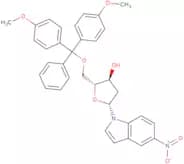
<p>5-Aza-2'-deoxycytidine 5'-triphosphate sodium salt is an antiviral drug, which is a synthetic nucleoside analogue of cytidine. It inhibits the synthesis of viral DNA by competing with deoxycytidine triphosphate for incorporation into nascent DNA chains. This antiviral agent has been shown to be effective against HSV-1 and HIV-1 in vitro.</p>Purezza:Min. 95%2-Deoxy-1-(5'-O-DMT-b-D-ribofuranosyl)-5-nitroindole
CAS:<p>2-Deoxy-1-(5'-O-DMT-b-D-ribofuranosyl)-5-nitroindole is a nucleoside with anticancer activity. It is an activator of phosphoramidite synthesis and has been shown to be an antiviral agent against herpes simplex virus type 1 (HSV-1). 2-Deoxy-1-(5'-O-DMT-b-D-ribofuranosyl)-5-nitroindole is a nucleoside that can be used for the synthesis of DNA or RNA. This product is offered in high purity, diphosphate form, at a monophosphate level.</p>Formula:C34H32N2O7Purezza:Min. 95%Peso molecolare:580.63 g/molN2-Carbamoylthreonyl-2'-deoxyguanosine
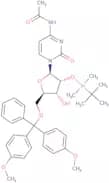
N2-Carbamoylthreonyl-2'-deoxyguanosine is a phosphoramidite monophosphate that is used in the synthesis of DNA. It has antiviral and anticancer properties. N2-Carbamoylthreonyl-2'-deoxyguanosine is synthesized by modifying the nucleoside thymidine, which contains a 2'-deoxyribose sugar and an amino sugar, with carbamate linkages at the 2' position. This modification stabilizes the sugar moiety, preventing it from undergoing hydrolysis to form ribose and deoxyribose. The stability of the modified nucleoside allows for increased solubility in aqueous solution and increased resistance to degradation by nucleases. N2-Carbamoylthreonyl-2'-deoxyguanosine also has high purity and quality as well as novel modifications not found in other DNA building blocksPurezza:Min. 95%N4-Acetyl-2'-O-tert-butyldimethylsilyl-5'-O-DMT-cytidine
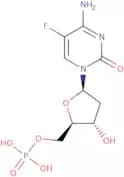
CAS:<p>N4-Acetyl-2'-O-tert-butyldimethylsilyl-5'-O-DMT-cytidine is a novel modified nucleoside that is an activator of ribonucleosides. It has antiviral and anticancer activities, in addition to its potential as a DNA polymerase inhibitor. N4-Acetyl-2'-O-tert-butyldimethylsilyl-5'-O-DMT-cytidine is chemically synthesized with high purity and can be used for the synthesis of phosphoramidites for DNA synthesis. This compound also has the CAS number 12105885 3 and can be found in monophosphate form.</p>Formula:C38H47N3O8SiPurezza:Min. 95%Colore e forma:PowderPeso molecolare:701.88 g/mol2'-Deoxy-5-fluorocytidine 5'-monophosphate
CAS:<p>2'-Deoxy-5-fluorocytidine 5'-monophosphate is a nucleotide that is synthesized by the enzyme cytidine deaminase. It is used as a diagnostic agent in the detection of infectious diseases such as HIV, Mycobacterium tuberculosis, and cytomegalovirus (CMV). 2'-Deoxy-5-fluorocytidine 5'-monophosphate inhibits DNA synthesis by blocking the incorporation of deoxycytidylate into DNA. The compound is also an inhibitor of collagen synthesis in tissues and cells. Hydrogen bonds between this compound and its target enzymes are thought to be important for its inhibitory effects.</p>Formula:C9H13FN3O7PPurezza:Min. 95%Peso molecolare:325.19 g/mol4'-C-Azido-3'-deoxy-3'-fluorocytidine
CAS:<p>4'-C-Azido-3'-deoxy-3'-fluorocytidine is an antiviral, anticancer, and nucleoside phosphoramidite. It is a novel modified nucleoside that has antiviral, anticancer, and DNA modifying properties. 4'-C-Azido-3'-deoxy-3'-fluorocytidine has been shown to be an activator of the polymerase chain reaction (PCR). This product has high purity with no detectable impurities. The CAS number for this compound is 1145869-46-0. This product is available in bulk quantities.</p>Formula:C9H11FN6O4Purezza:Min. 95%Peso molecolare:286.22 g/mol2'-Deoxy-2'-fluoroguanosine-5'-triphosphate sodium salt - 100mM aqueous solution
2'-Deoxy-2'-fluoroguanosine-5'-triphosphate sodium salt is a novel, synthetic nucleoside. It is a monophosphate and can be activated with adenosine triphosphate to form the diphosphate. 2'-Deoxy-2'-fluoroguanosine-5'-triphosphate sodium salt is also an antiviral agent that inhibits viral RNA synthesis. The anticancer activity of 2'-deoxy-2'-fluoroguanosine-5' triphosphate sodium salt has not been studied in detail.Formula:C10H15FN5O13P3·NaPurezza:Min. 95%Peso molecolare:548.16 g/mol2',3'-Didehydro-2',3'-dideoxy-5'-acetate inosine
CAS:2',3'-Didehydro-2',3'-dideoxy-5'-acetate inosine (ddA) is a prodrug that is activated by hydrolysis to didanosine. The sodium salt of ddA has been shown to be effective in the treatment of HIV infection. Sodium ddA is a crystalline, neutralized salt with an alkaline pH and a pKa of 9.4. It has been crystallized from an alkaline solution using Raney nickel as a catalyst. This product can be used to synthesize intermediates for pharmaceuticals or other chemical products.Formula:C12H12N4O4Purezza:Min. 95%Peso molecolare:276.25 g/molN-(2-Amino-3,8-dimethylimidazo[4,5-f]quinoxalin-5-yl) 2'-deoxyguanosine
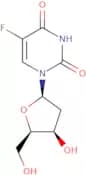
CAS:N-(2-Amino-3,8-dimethylimidazo[4,5-f]quinoxalin-5-yl) 2'-deoxyguanosine (NADG) is a monophosphate nucleoside analog that inhibits the human immunodeficiency virus (HIV). NADG inhibits HIV by binding to the viral enzyme reverse transcriptase and inhibiting its activity. NADG also has anticancer activity through inhibition of DNA synthesis and protein synthesis. This compound is a novel nucleoside analog that has not been previously described in the literature.Formula:C21H22N10O4Purezza:Min. 95%Peso molecolare:478.46 g/mol1-(2-Deoxy-b-D-threo-pentofuranosyl)-5-fluorouracil
CAS:1-(2-Deoxy-b-D-threo-pentofuranosyl)-5-fluorouracil (1dTfu) is an anticancer drug that belongs to the group of anti-metabolites. It is used in the treatment of colon cancer, head and neck cancer, urinary bladder cancer, and prostate cancer. 1dTfu inhibits the production of tyrosinase and other growth factors, which may be due to its ability to bind to a receptor called factor receptor on the surface of cells. This binding inhibits DNA synthesis by inhibiting the enzyme DNA polymerase. 1dTfu also has been shown to inhibit collagen synthesis via an extracellular mechanism.Formula:C9H11FN2O5Purezza:Min. 95%Peso molecolare:246.19 g/mol2'-Azido-N6-benzoyl-2'-deoxy-5'-O-DMT-adenosine
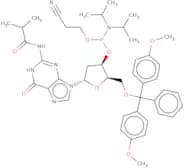
2'-Azido-N6-benzoyl-2'-deoxy-5'-O-DMT-adenosine is a novel nucleoside that can be activated with phosphoramidite and used to synthesize a variety of modified nucleosides. It has been shown to have anticancer and antiviral activities, as well as the ability to inhibit the replication of RNA viruses. 2'-Azido-N6-benzoyl-2'-deoxy-5'-O-DMT-adenosine is also useful in the synthesis of monophosphate nucleotides, which are important for DNA synthesis. This product is available in high purity and quality and is CAS No.Purezza:Min. 95%2'-Deoxy-5'-O-DMT-N2-isobutyryl-a-guanosine 3'-CE phosphoramidite
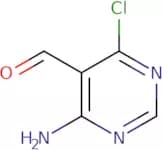
2'-Deoxy-5'-O-DMT-N2-isobutyryl-a-guanosine 3'-CE phosphoramidite is a novel, high quality nucleoside that is synthesized by the reaction of 5'-O-DMT-2'-deoxyguanosine with isobutyryl chloride. It has antiviral and anticancer properties and has been shown to be an activator of RNA polymerase. CAS number: 89879-16-1Formula:C44H54N7O8PPurezza:Min. 95%Peso molecolare:839.94 g/mol4-Amino-6-chloropyrimidine-5-carbaldehyde
CAS:4-Amino-6-chloropyrimidine-5-carbaldehyde is a reactive molecule that is used in the synthesis of macrocyclic aldehydes. It is prepared by the oxidation of anilines with oxalyl chloride in the presence of hydrochloric acid and amines. 4-Amino-6-chloropyrimidine-5-carbaldehyde reacts with hydrazine to form diamines, which are used as building blocks for pharmaceuticals. This molecule has been shown to have anticancer properties, by inhibiting DNA replication and cell growth through its ability to inhibit protein synthesis.Formula:C5H4ClN3OPurezza:Min. 95%Peso molecolare:157.56 g/mol5-Ethynyl-1-(b-D-ribofuranosyl)-imidazo-4-carbonitrile
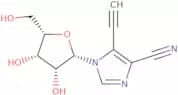
CAS:5-Ethynyl-1-(b-D-ribofuranosyl)-imidazo-4-carbonitrile is a novel, modified ribonucleoside monophosphate that has antiviral, anticancer, and antiretroviral properties. It was originally synthesized as an activator of the DNA polymerase and is capable of stimulating the synthesis of RNA from DNA templates. It has been shown to inhibit the growth of cancer cells in vitro and in vivo. 5-Ethynyl-1-(b-D-ribofuranosyl)-imidazo-4-carbonitrile is also a phosphoramidite nucleotide analog that can be incorporated into DNA during DNA synthesis.Formula:C11H11N3O4Purezza:Min. 95%Peso molecolare:249.22 g/molS-(2-Hydroxy-5-nitrobenzoyl)-6-thioinosine
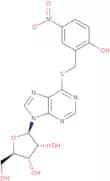
CAS:<p>S-(2-Hydroxy-5-nitrobenzoyl)-6-thioinosine is a population of endogenous inotropic agents that are transported by the uptake system. It interacts with benzodiazepine receptor and has been shown to act as an agonist. The uptake system is responsible for the uptake of S-(2-hydroxy-5-nitrobenzoyl)-6-thioinosine, which then binds to the benzodiazepine receptor. This binding causes an increase in cAMP levels and subsequent relaxation of smooth muscle cells. S-(2-hydroxynitrobenzoyl)-6-thioinosine has been shown to be a transport inhibitor, which affects the uptake of other drugs such as benzodiazepines and antiepileptics. It also modulates responsiveness through interaction with the transport system.</p>Formula:C17H17N5O7SPurezza:Min. 95%Peso molecolare:435.41 g/mol2-Amino-6-chloro-9-(3'-deoxy-3'-fluoro-b-D-ribofuranosyl)-9H-purine
CAS:<p>2-Amino-6-chloro-9-(3'-deoxy-3'-fluoro-b-D-ribofuranosyl)-9H-purine is a novel, activator ribonucleoside phosphoramidite and monophosphate nucleoside. It is synthesized from 2,4,5,6,-tetraiodo-1H-[1]pyrrole and 6-chloropurine ribofuranose. The chemical name is 1-[2'-(deoxyribofuranosyl) (3', 3'', 5', 5'', 5'')-2'-(2,4,5,6 tetraiodophenyl)] -2-(3'-fluorobenzoyl) -4-(3'-triazolecarboxamide) -1H-[1]pyrrole 4,5 dione. CAS No. 1612192-05-8.</p>Purezza:Min. 95%2'-O-tert-Butyldimethylsilyl-5'-O-DMT-N6-(2-Isopentenyl)adenosine 3'-CE phosphoramidite
<p>2'-O-tert-Butyldimethylsilyl-5'-O-DMT-N6-(2-Isopentenyl)adenosine 3'-CE phosphoramidite is an antiviral nucleoside, which is synthesized by the reaction of 2'-deoxyribonucleosides with the activator. This product is a novel chemical compound that has antiviral and anticancer activity. It can be used as a precursor for other nucleosides.</p>Purezza:Min. 95%N6-Methyladenosine-5'-triphosphate sodium salt - 10 mM aqueous solution
CAS:<p>Modulator of P2Y receptors</p>Formula:C11H18N5O13P3Purezza:Min. 95%Peso molecolare:521.21 g/mol1-[(5E)-5,6-Dideoxy-6-(diethoxy phosphinyl)-2-O-methyl-beta-D-ribo-hex-5-enofuranosyl]uracil
CAS:1-[(5E)-5,6-Dideoxy-6-(diethoxy phosphinyl)-2-O-methyl-beta-D-ribo-hex-5-enofuranosyl]uracil is a novel monophosphate that was synthesized by modifying a known anticancer nucleoside. It is an activator of the antiviral ribonucleotide reductase and deoxyribonucleotide reductase. 1-[(5E)-5,6-Dideoxy-6-(diethoxy phosphinyl)-2-O-methyl-beta-D-ribohexanofuranosyl]uracil has been shown to inhibit the proliferation of cancer cells in vitro and in vivo. It also inhibits tumor growth without affecting normal tissue.Purezza:Min. 95%2',3'-Didehydro-3'-dideoxy-thymidine-5'-monophosphate, lithium salt
<p>2',3'-Didehydro-3'-dideoxy-thymidine-5'-monophosphate, lithium salt is a novel antiviral nucleoside analog that inhibits the synthesis of DNA. The drug is currently being studied to treat herpes simplex virus infections. It has been shown to inhibit viral replication in vitro and in vivo, and to induce reactivation of latent virus. 2',3'-Didehydro-3'-dideoxy-thymidine-5'-monophosphate, lithium salt also has anticancer activity by inhibiting DNA synthesis and inducing apoptosis via activation of the caspase cascade.<br>2',3'-Didehydro-3'-dideoxy-thymidine-5'-monophosphate, lithium salt is a modified nucleoside analog that is synthesized from 3’,5’-O-(1H-tetrazole)-2’,4’,6</p>Purezza:Min. 95%3'-epi-5-chloro-2'-deoxyuridine
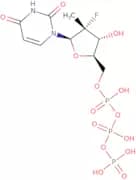
CAS:<p>3'-epi-5-chloro-2'-deoxyuridine is a nucleotide analog that has been shown to inhibit the growth of cells in tissue culture. It is not active against bacteria, but can be used as an antineoplastic agent for the treatment of cancer. 3'-epi-5-chloro-2'-deoxyuridine is metabolized by a number of enzymes, including mononucleotide reductase, thymidylate synthase, and cytosine deaminase. The reaction mechanism for this drug has been studied using nuclear dna polymerases and proteases. The metabolism of 3'-epi-5-chloro-2'-deoxyuridine results in its incorporation into DNA by means of an enzymatic reaction with DNA polymerase. The incorporation of the analog into DNA leads to cell death due to lysis or inhibition of protein synthesis.</p>Formula:C9H11ClN2O5Purezza:Min. 95%Peso molecolare:262.65 g/mol2'-Deoxy-2'-fluoro-2'-C-methyluridine 5'-triphosphate sodium salt
CAS:2'-Deoxy-2'-fluoro-2'-C-methyluridine 5'-triphosphate sodium salt is a novel nucleoside phosphoramidite that is used in the synthesis of DNA. It has antiviral and anticancer properties, and it inhibits viral replication and also induces apoptosis in cancer cells. 2'-Deoxy-2'-fluoro-2'-C-methyluridine 5'-triphosphate sodium salt has been shown to inhibit HIV replication with an IC50 value of 0.5 mM. It specifically targets HIV reverse transcriptase, which is responsible for the conversion of RNA into DNA during the early stages of infection. The compound also inhibits cellular proliferation and induces apoptosis in cancer cells, including prostate cancer cells.Formula:C10H16FN2O14P3Purezza:Min. 95%Peso molecolare:500.16 g/mol2-Amino-6-mercapto-9-(2',3',5'-tri-O-acetyl-b-ribofuranosyl)purine
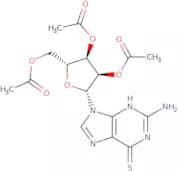
CAS:2-Amino-6-mercapto-9-(2',3',5'-tri-O-acetyl-b-ribofuranosyl)purine (2AMAP) is an Activator that belongs to the group of nucleosides. It is a novel, modified nucleoside consisting of 2'-deoxyribonucleosides and phosphoramidites. 2AMAP has been shown to inhibit the proliferation of cancer cells and HIV viruses. This drug also has antiviral properties and can be used as a chemotherapeutic agent for the treatment of diseases such as chronic hepatitis B or C, cytomegalovirus or herpes virus infection. 2AMAP is highly purified, with a purity level of >99%.Formula:C16H19N5O7SPurezza:Min. 95%Peso molecolare:425.42 g/mol2'-Deoxycytidine-5'-O-(1-thiotriphosphate) lithium salt
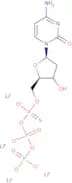
CAS:<p>2'-Deoxycytidine-5'-O-(1-thiotriphosphate) lithium salt (dCTPTP) is a nucleotide analogue that inhibits DNA replication. It is a substrate for DNA polymerase and can be incorporated into the growing strand of DNA. This drug has been shown to inhibit the replication of retroviruses, such as murine leukemia virus and human immunodeficiency virus type 1, in tissue cultures with relatively low concentrations. It also inhibits dengue virus when present at high concentrations. 2'-Deoxycytidine-5'-O-(1-thiotriphosphate) lithium salt has been used to study the mechanism of transcription-polymerase chain reactions by inhibiting RNA synthesis in vitro and in vivo.</p>Formula:C9H16N3O12P3S·Li4Purezza:Min. 95%Peso molecolare:506.95 g/molN6-Benzyl-5'-ethylcarboxamidoadenosine
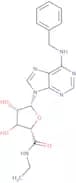
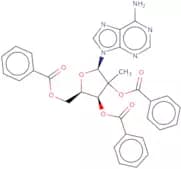
CAS:<p>N6-Benzyl-5'-ethylcarboxamidoadenosine is a novel nucleoside that has shown anticancer and antiviral activity. It is one of the first phosphoramidites to be synthesized in high purity, and it can be used as an activator for ribonucleoside synthesis. This compound also has been shown to have anti-inflammatory properties, which may be due to its ability to inhibit prostaglandin synthesis.</p>Formula:C19H22N6O4Purezza:Min. 95%Peso molecolare:398.42 g/mol6-Amino-9-(2',3',5'-tri-O-benzoyl-2'-C-methyl-b-D-ribofuranosyl)purine
<p>6-Amino-9-(2',3',5'-tri-O-benzoyl-2'-C-methyl-b-D-ribofuranosyl)purine is a novel nucleoside analog that has been modified to include a 2'-C methyl group at the 5' position. This modification prevents the formation of an undesired phosphodiester linkage between the nucleotide and ribonucleotide moieties, which can lead to degradation of the drug. The purine base is attached at the 3' position, which is important for its antiviral activity. 6-Amino-9-(2',3',5'-tri-O-benzoyl-2'-C-methylbDribofuranosyl)purine is active against DNA viruses and has anticancer properties.</p>Formula:C32H27N5O7Purezza:Min. 95%Peso molecolare:593.6 g/mol5-[N-(6-Aminohexyl)-3-E-acrylamido]-2'-deoxy-5'-O-DMT-uridine
CAS:<p>5-[N-(6-Aminohexyl)-3-E-acrylamido]-2'-deoxy-5'-O-DMT-uridine is a novel, activator ribonucleoside derived from the modified nucleosides 5-[N-(6-aminohexyl)-3-E-acrylamido]-2'-deoxyadenosine and 2'-deoxyuridine. It has been shown to be an effective anticancer, antiviral and antiparasitic agent. 5-[N-(6-Aminohexyl)-3-E-acrylamido]-2'-deoxy-5'-O-DMT-uridine has exhibited anticancer activity against human leukemia cells in culture, inhibiting DNA synthesis by blocking the enzyme DNA polymerase. This novel compound also blocks viral replication by inhibiting the synthesis of RNA by an enzyme called RNA polymerase II.</p>Formula:C39H46N4O8Purezza:Min. 95%Peso molecolare:698.82 g/mol3'-Azido-2',3'-dideoxy-5'-O-DMT-5-methylcytidine N4-succinate
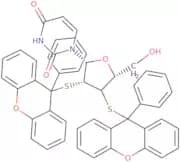
3'-Azido-2',3'-dideoxy-5'-O-DMT-5-methylcytidine N4-succinate is a novel modified nucleoside that is activated by diphosphate. It is an antiviral agent that inhibits the synthesis of viral DNA and RNA. 3'-Azido-2',3'-dideoxy-5'-O-DMT-5-methylcytidine N4-succinate may be used as a chemotherapeutic agent for cancer treatment. The chemical name for this compound is 5,6,7,8,-tetrahydro-[1,2,4]triazolo[4,3a][1,4]benzodiazepin-[1,2a]-one 3'N4-(N',N',N'')-trisuccinoyl ester (3'azido) 2',3'-dideoxyadenosine 5'Purezza:Min. 95%2',3'-Di(9-phenylxanthen-9-yl)dithiouridine
CAS:<p>2',3'-Di(9-phenylxanthen-9-yl)dithiouridine is a synthetic nucleoside that has antiviral, anticancer and antitumor properties. It is an activator of the enzyme ribonucleotide reductase, which converts ribonucleotides to deoxyribonucleotides. 2',3'-Di(9-phenylxanthen-9-yl)dithiouridine is used as a monophosphate or diphosphate for the treatment of cancer and HIV/AIDS. This drug has shown high purity and quality and can be synthesized in high yield.</p>Formula:C47H36N2O6S2Purezza:Min. 95%Peso molecolare:788.93 g/molN6-Benzoyl-2'-deoxy-5'-O-DMT-adenosine 3'-succinyl CPG 2000 Å
<p>N6-Benzoyl-2'-deoxy-5'-O-DMT-adenosine 3'-succinyl CPG 2000 Å, a novel nucleoside analog, is an antiviral agent that inhibits the synthesis of viral DNA. It also induces apoptosis and cell cycle arrest in cancer cells. N6-Benzoyl-2'-deoxy-5'-O-DMT-adenosine 3'-succinyl CPG 2000 Å is synthesized by the coupling of deoxyribonucleotide phosphoramidite monomers onto a carrier support with a molecular weight of 2000Å. This product is available as white solid, and it has purity greater than 99%.</p>Purezza:Min. 95%Adenosine 3',5'-cyclic monophosphothioate Rp-isomer triethylammonium salt
CAS:Adenosine 3',5'-cyclic monophosphothioate Rp-isomer triethylammonium salt is a neurotrophic factor that can be used in the treatment of neurological disorders. It has been shown to activate various biological processes, such as neurotransmitter release and neurite outgrowth. Adenosine 3',5'-cyclic monophosphothioate Rp-isomer triethylammonium salt also has been shown to have an effect on body mass index (BMI) and colony stimulating factor (CSF). It stimulates the production of IGF-I, which is involved in the regulation of metabolic processes and has a positive effect on cell proliferation. Adenosine 3',5'-cyclic monophosphothioate Rp-isomer triethylammonium salt also has been shown to stimulate signal pathways that are involved in apoptosis and neuronal differentiation.Formula:C10H11N5O5PS·C6H16NPurezza:Min. 95%Peso molecolare:446.46 g/mol





![5'-Dimethoxytrityl-1-methyl-pseudoUridine, 2'-O-TBDMS-3'-[(2-cyanoethyl)-(N,N-diisopropyl)]-phosph…](/_next/image/?url=https%3A%2Fstatic.cymitquimica.com%2Fproducts%2F3D%2Fthumb-webp%2FPD180455.webp&w=3840&q=75)

![5-[N(2-Trifluoroacetamido)ethyl)-3-(E)-acrylamido]-2-deoxyuridine](/_next/image/?url=https%3A%2Fstatic.cymitquimica.com%2Fproducts%2F3D%2Fthumb-webp%2FUJB22269.webp&w=3840&q=75)

![1,3-Dimethyl-5-[3-(4,4,5,5-tetramethyl-[1,3,2]dioxaborolan-2-yl)-benzyl]-pyrimidine-2,4,6-trione](/_next/image/?url=https%3A%2Fstatic.cymitquimica.com%2Fproducts%2F3D%2Fthumb-webp%2FND44286.webp&w=3840&q=75)




![Adenosine 5'-monophosphate sodium salt [1',2',3',4',5'-13C5]](/_next/image/?url=https%3A%2Fstatic.cymitquimica.com%2Fproducts%2F3D%2Fthumb-webp%2FNA57597.webp&w=3840&q=75)





![4-[2-[[6-Amino-9-(N-ethyl-b-D-ribofuranuronamidosyl)-9H-purin-2-yl]amino]ethyl]benzenepropanoic ac…](/_next/image/?url=https%3A%2Fstatic.cymitquimica.com%2Fproducts%2F3D%2Fthumb-webp%2FNA10419.webp&w=3840&q=75)









![N-(2-Amino-3,8-dimethylimidazo[4,5-f]quinoxalin-5-yl) 2'-deoxyguanosine](/_next/image/?url=https%3A%2Fstatic.cymitquimica.com%2Fproducts%2F3D%2Fthumb-webp%2FNA16594.webp&w=3840&q=75)



![1-[(5E)-5,6-Dideoxy-6-(diethoxy phosphinyl)-2-O-methyl-beta-D-ribo-hex-5-enofuranosyl]uracil](/_next/image/?url=https%3A%2Fstatic.cymitquimica.com%2Fproducts%2F3D%2Fthumb-webp%2FPD162928.webp&w=3840&q=75)

![5-[N-(6-Aminohexyl)-3-E-acrylamido]-2'-deoxy-5'-O-DMT-uridine](/_next/image/?url=https%3A%2Fstatic.cymitquimica.com%2Fproducts%2F3D%2Fthumb-webp%2FNA08232.webp&w=3840&q=75)