


Nucleosidi
Trovati 3569 prodotti di "Nucleosidi"
6,6'-Azopurine
CAS:6,6'-Azopurine is a hydrophobic organic compound that is used as an operational oxidant in the conversion of alcohols to aldehydes. It reacts with hydroxyl groups on the surface of the catalyst and undergoes nucleophilic attack to form a pyridinium salt. The reaction rate increases with increasing pH and temperature. 6,6'-Azopurine is also an immobilized oxidant that can be used for the oxidation of alcohols or hydrocarbons. Immobilization can be achieved by covalent coupling or adsorption on silica gel or alumina. 6,6'-Azopurine has been shown to have high activity against chlorides and is used for the oxidation of chlorides to produce chloride radicals.Formula:C10H6N10Purezza:Min. 95%Peso molecolare:266.22 g/mol2'-C-Methylinosine
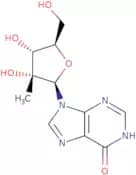
CAS:2'-C-Methylinosine is an analog of 2'-deoxyinosine that is used as a prodrug for the treatment of hepatitis B virus infection. It has been shown to inhibit RNA synthesis in cell cultures by competitively inhibiting the activity of rna-dependent RNA polymerase. This inhibition leads to the accumulation of unprocessed, inactive ribonucleotides, which are eventually degraded by cellular enzymes. 2'-C-Methylinosine is an analog of 2'-deoxyinosine that has been modified at the C2 position with methyl groups (hence its name). The modification increases the stability and solubility of this molecule. Clinical trials have shown that 2'-C-Methylinosine can be used to treat hepatitis B virus infection when combined with other drugs such as lamivudine or entecavir.
Formula:C11H14N4O5Purezza:Min. 95%Peso molecolare:282.25 g/molAdenosine 3',5'-cyclic monophosphothioate Rp-isomer sodium salt
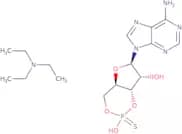
CAS:Adenosine 3',5'-cyclic monophosphothioate Rp-isomer sodium salt is a neurotrophic factor that has been shown to have neuroprotective properties in different animal models of Parkinson's disease. It has been shown to promote the synthesis of dopamine, glutamate, and other neurotransmitters in dopaminergic neurons. Adenosine 3',5'-cyclic monophosphothioate Rp-isomer sodium salt also promotes protein production by stimulating the synthesis of intracellular proteins such as cytosolic Ca2+ and IGF-I. This drug may be effective in pharmacological treatment for Parkinson's disease. Adenosine 3',5'-cyclic monophosphothioate Rp-isomer sodium salt is a potent inhibitor of phosphodiesterase type 4 (PDE4) with a Ki value of 0.07 μM. This inhibition leads to the accumulation of cAMP, which activates protein kinase A (PKAFormula:C10H11N5O5PS·NaPurezza:Min. 95%Peso molecolare:367.25 g/mol4-Chloro-5-fluoropyrimidine
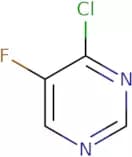
CAS:4-Chloro-5-fluoropyrimidine is a fluoropyrimidine that is used in the synthesis of pharmaceuticals, such as 4-amino-2-chloro-5-fluoropyrimidine. This compound is synthesized by chlorinating 4-chloro-5-fluoropyrimidine with chlorine gas. The resulting product is hydrolyzed to yield 4-amino-2,4,5,6 tetrafluoro pyrimidines. 4CFP can also be obtained by hydrogenolysis of toluene with chlorine gas and sodium hydroxide or hydrolyzing an ammonium salt with hydrochloric acid.
Formula:C4H2ClFN2Purezza:Min. 95%Peso molecolare:132.52 g/mol6-O-(2-Cyanoethyl)-2'-deoxy-5'-O-DMT-N2-Isobutyrylguanosine
CAS:6-O-(2-Cyanoethyl)-2'-deoxy-5'-O-DMT-N2-Isobutyrylguanosine is an antiviral, anticancer and antibacterial agent. It is a nucleoside analog with antiviral activity against herpes simplex virus type 1 (HSV-1) and cytomegalovirus (CMV), and it can also inhibit the growth of leukemia cells. The nucleoside analog inhibits viral DNA synthesis by competitively inhibiting DNA polymerase and causes viral RNA to be degraded by RNase H. This compound is synthesized from 2',3'-dideoxyisobutyrylguanosine and 2'-deoxycytidine 5'-monophosphate, which are commercially available compounds. 6-O-(2-Cyanoethyl)-2'-deoxy-5'-O-DMT-N2-Isobutyrylguanosine has beenFormula:C38H40N6O7Purezza:Min. 95%Peso molecolare:692.76 g/mol4-Amino-3-benzyl-1H-pyrazolo[3,4-d]pyrimidine 1-b-D-ribofuranose
CAS:4-Amino-3-benzyl-1H-pyrazolo[3,4-d]pyrimidine 1b-D-ribofuranose is a novel diphosphate activator that can modify the properties of deoxyribonucleosides and nucleosides. It has antiviral activity against human immunodeficiency virus type 1 (HIV) and herpes simplex virus type 2 (HSV). 4-Amino-3-benzyl-1H-pyrazolo[3,4-d]pyrimidine 1b -D--ribofuranose is also an anticancer agent that has been shown to have DNA binding ability, in addition to its ability to inhibit the proliferation of cancer cells.Formula:C17H19N5O4Purezza:Min. 95%Peso molecolare:357.36 g/mol6-Benzyloxypurine
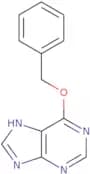
CAS:6-Benzyloxypurine is a fluorescent compound that can be used to measure the concentration of aqueous solutions. It is used in molecular modeling and as a tracer in bioassays. The binding constants for 6-benzyloxypurine have been determined by fluorescence spectrometry, and it has been shown to inhibit the growth of aerobacter aerogenes at concentrations greater than 0.5 mM. This inhibitor also has an inhibitory effect on the growth of tissue culture cells and wastewater treatment bacteria, such as enterococcus faecalis and pseudomonas aeruginosa. The optimum concentration of 6-benzyloxypurine to inhibit bacterial growth is 1 mM, which corresponds to a pH of ~8.2.
Formula:C12H10N4OPurezza:Min. 95%Peso molecolare:226.23 g/molGuanosine 5'-O-(1-thiotriphosphate) lithium salt - 100mM aqueous solution
CAS:Guanosine 5'-O-(1-thiotriphosphate) lithium salt is a nucleotide analogue that binds to the guanine nucleotide-binding site on the enzyme. This agent has been shown to inhibit the growth of viruses, such as influenza virus and human immunodeficiency virus, by inhibiting viral transcription. The drug also has antiviral activity against herpesviruses and cytomegalovirus in cell culture. Guanosine 5'-O-(1-thiotriphosphate) lithium salt inhibits the binding of RNA polymerase to DNA templates and prevents the initiation of transcription. It also reduces the expression of a number of genes in cells by inhibiting protein synthesis in the cytoplasm. Guanosine 5'-O-(1-thiotriphosphate) lithium salt may be used for treating congestive heart failure due to its ability to reduce levels of cytosolic Ca2+ ions, which have been shown to promote cardiac myFormula:C10H16N5O13P3S·4LiPurezza:Min. 95%Colore e forma:Colourless liquid.Peso molecolare:567.01 g/molN6-Benzoyl-5'-O-DMT-2'-O-(2-methylacetamido)-adenosine 3'-CE phosphoramidite
N6-Benzoyl-5'-O-DMT-2'-O-(2-methylacetamido)-adenosine 3'-CE phosphoramidite is a modified nucleoside that is used in the synthesis of DNA. It is an activator for antiviral and anticancer drugs, as well as a ribonucleoside monophosphate, diphosphate, or deoxyribonucleoside. N6-Benzoyl-5'-O-DMT-2'-O-(2-methylacetamido)-adenosine 3'-CE phosphoramidite has been shown to have a novel anticancer activity.Purezza:Min. 95%N4-Benzoyl-2'-deoxy-5'-O-DMT-2'-fluoro-5-methylcytidine
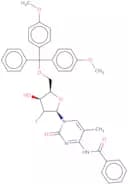
CAS:N4-Benzoyl-2'-deoxy-5'-O-DMT-2'-fluoro-5-methylcytidine is a nucleoside, which is a compound that consists of a sugar group, one or more phosphate groups, and one or more nucleobases. It is an analogue of cytidine with modifications in the sugar portion and the substitution of 2'-fluoro-5-methyluracil for uracil. This compound has been shown to be effective against cancer cells when used in combination with other anticancer agents. It also inhibits viral replication by acting as a competitive inhibitor of reverse transcriptase, preventing RNA synthesis. This compound also exhibits antiviral activity by inhibiting the synthesis of viral DNA and RNA.Formula:C38H36FN3O7Purezza:Min. 95%Peso molecolare:665.72 g/molInosine-3',5'-cyclic-monophosphate free acid
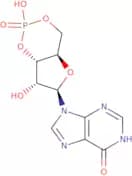
CAS:Inosine-3',5'-cyclic-monophosphate free acid is an ester of inosine 3',5'-cyclic-monophosphate that is structurally related to adenosine. It has been shown to have a physiological function as a cyclic nucleotide phosphodiesterase inhibitor, and also inhibits voltage-dependent calcium channels. Inosine-3',5'-cyclic-monophosphate free acid has been shown to be effective against infectious diseases, such as Mycobacterium tuberculosis and Galleria mellonella. It has also been shown to reduce the production of peptide hormones, nucleotides, and cyclic AMP (cAMP). Inosine-3',5'-cyclic-monophosphate free acid does not exhibit any pharmacological activity on its own but can modulate the activities of other pharmacological agents.Formula:C10H11N4O7PPurezza:Min. 95%Peso molecolare:330.19 g/mol2'-O-Allylguanosine
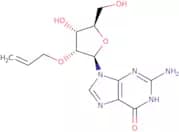
CAS:2'-O-Allylguanosine is an intermediate in the synthesis of 2,6-diaminopurine riboside. It is synthesized from allyl chloride and guanosine by an allylation reaction. The yield for this reaction is high, which makes it a useful synthon. Deamination of the product yields 2'-O-allylguanosine 5'-monophosphate, which can be converted to 2',6-diaminopurine riboside by hydrolysis with phosphoric acid. This intermediate is used in research on nucleic acids sequences and hydrogen bonding.Formula:C13H17N5O5Purezza:Min. 95%Colore e forma:White PowderPeso molecolare:323.3 g/molγ-(BBT)-ATP
gamma-(BBT)-ATP is a novel ATP analog that has been shown to activate the purine nucleotide receptor and cause tumor cell death. It is a deoxyribonucleoside, phosphoramidite, and monophosphate that can be used as an activator for DNA synthesis. gamma-(BBT)-ATP inhibits the growth of tumor cells in culture and has antiviral activity against herpes simplex virus type-1.Formula:C24H22N7O13P3S2·xNaPurezza:Min. 95%Colore e forma:PowderPeso molecolare:773.52 g/mol2'-Deoxy-5'-O-DMT-N6-isobutyryladenosine 3'-CE phosphoramidite
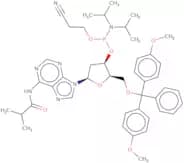
2'-Deoxy-5'-O-DMT-N6-isobutyryladenosine 3'-CE phosphoramidite is a novel and high quality anticancer agent that is used in the synthesis of DNA. This compound has shown potent cytotoxic activity against various cancer cell lines, including human leukemia cells, human breast carcinoma cells, and human colon carcinoma cells. 2'-Deoxy-5'-O-DMT-N6-isobutyryladenosine 3'-CE phosphoramidite inhibits DNA synthesis by inhibiting the enzyme DNA polymerase. It also inhibits protein synthesis and has been shown to be toxic to the mitochondria, which may be responsible for its anti-cancer effects.Formula:C44H54N7O7PPurezza:Min. 95%Peso molecolare:823.94 g/molClofarabine 5'-monophosphate triethylammonium salt
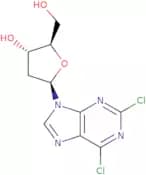
CAS:Clofarabine is an anti-cancer drug that belongs to the class of diphosphate, Synthetic, Activator, Phosphoramidites, Deoxyribonucleosides. It is a modified nucleoside with antiviral and anticancer activity. Clofarabine 5'-monophosphate triethylammonium salt (CPF) has been shown to inhibit DNA synthesis by blocking the incorporation of deoxyribonucleotides into DNA. CPF binds to DNA at the 3' position of the deoxyribonucleotide chain, which prevents its extension and leads to inhibition of DNA replication. CPF also inhibits viral DNA synthesis through inhibition of viral DNA polymerase or viral RNA polymerase in vitro. Clofarabine is not active against bacteriophage T4 or bacterial RNA polymerase.Purezza:Min. 95%2,6-Dichloro-9-(2'-deoxy-b-D-ribofuranosyl)purine
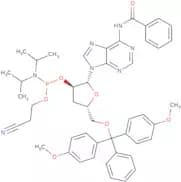
CAS:2,6-Dichloro-9-(2'-deoxy-β-D-ribofuranosyl)purine is a synthetic compound that is used in the treatment of certain types of cancer. It has been shown to be an activator of DNA synthesis and an inhibitor of RNA synthesis. It has also been shown to inhibit tumor growth and prolong the survival time for patients with leukemia. The antiviral activity of 2,6-dichloro-9-(2'-deoxy-β-D-ribofuranosyl)purine may be due to its ability to inhibit viral DNA polymerase. This drug is also known as dideoxyinosine (ddI).Formula:C10H10Cl2N4O3Purezza:Min. 95%Peso molecolare:305.12 g/molN6-Benzoyl-3'-deoxy-5'-O-DMT-adenosine 2'-CE phosphoramidite
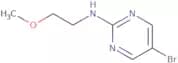
CAS:N6-Benzoyl-3'-deoxy-5'-O-DMT-adenosine 2'-CE phosphoramidite is a novel modified nucleoside that has antiviral, anticancer and antibacterial properties. The chemical name is N6-benzoyl-3'-deoxy-5'-O-DMT-adenosine 2'-CE phosphoramidite. It is a ribonucleotide. It is an activator of the enzyme kinase A which phosphorylates proteins and activates them. This product has not been tested in humans.Formula:C47H52N7O7PPurezza:Min. 95%Peso molecolare:857.93 g/mol5-Bromo-2-(2-methoxyethylamino)pyrimidine
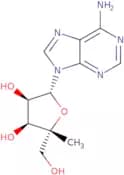
CAS:5-Bromo-2-(2-methoxyethylamino)pyrimidine is a novel, ribonucleoside that exhibits anticancer activity. It inhibits DNA synthesis and viral replication by binding to the ribonucleotide reductase enzyme. 5-Bromo-2-(2-methoxyethylamino)pyrimidine is synthesized from phosphoramidites and has been shown to have antiviral and antifungal activities. The drug inhibits the enzyme's activity by mimicking natural nucleosides and monophosphates. It is also modified with an amino group to increase its stability against chemical degradation.Purezza:Min. 95%4'-a-C-Methyladenosine
CAS:4'-a-C-Methyladenosine is a nucleoside that has antiviral, anticancer and novel properties. It is a modified nucleoside with a methyl group in the 4' position. This modification prevents the phosphodiester bond from being hydrolyzed by nucleotide kinase enzymes. The methyl group also inhibits the formation of adenosine monophosphate (AMP) during DNA synthesis, which prevents the deactivation of adenosine triphosphate (ATP). 4'-a-C-Methyladenosine is used to synthesize oligonucleotides for use in DNA sequencing and gene mapping.
Purezza:Min. 95%5-[N(6-(Trifluoroacetamido)hexyl)-3-(E)-acrylamido] -2'-deoxyuridine
CAS:5-[N(6-(Trifluoroacetamido)hexyl)-3-(E)-acrylamido] -2'-deoxyuridine is a synthetic, modified nucleoside that functions as an activator of ribonucleotide reductase. It has been shown to be effective in the treatment of viral infections, including herpes simplex virus type 1 (HSV-1), herpes simplex virus type 2 (HSV-2), and human immunodeficiency virus type 1 (HIV-1). 5-[N(6-(Trifluoroacetamido)hexyl)-3-(E)-acrylamido] -2'-deoxyuridine is also synthesized into DNA or RNA molecules, which are used to study the structure of these compounds. It can also be used for phosphoramidite synthesis.Formula:C20H27F3N4OPurezza:Min. 95%Peso molecolare:396.45 g/mol



![4-Amino-3-benzyl-1H-pyrazolo[3,4-d]pyrimidine 1-b-D-ribofuranose](/_next/image/?url=https%3A%2Fstatic.cymitquimica.com%2Fproducts%2F3D%2Fthumb-webp%2FNA16507.webp&w=3840&q=75)




![5-[N(6-(Trifluoroacetamido)hexyl)-3-(E)-acrylamido] -2'-deoxyuridine](/_next/image/?url=https%3A%2Fstatic.cymitquimica.com%2Fproducts%2F3D%2Fthumb-webp%2FNT57552.webp&w=3840&q=75)