Nucleosidi
Trovati 3569 prodotti di "Nucleosidi"
2',3'-Di-O-isopropylidene-isocytidine
CAS:2',3'-Di-O-isopropylidene-isocytidine is a nucleoside that belongs to the group of antiviral and anticancer compounds. It is an analog of cytidine, and has been shown to be an activator of phosphoramidites, DNA, and RNA. 2',3'-Di-O-isopropylidene-isocytidine has been shown to have antineoplastic effects on tumor cells by inhibiting rna synthesis and protein synthesis. This compound also inhibits the growth of bacteria, including Mycobacterium tuberculosis and Mycobacterium avium complex. 2',3'-Di-O-isopropylidene-isocytidine has been shown to be a novel modified nucleoside with high purity and high quality.Purezza:Min. 95%2’,3’,5’-Tri-O-benzoyl-5-methoxyuridine
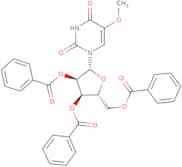
CAS:2’,3’,5’-Tri-O-benzoyl-5-methoxyuridine is a modified nucleoside that is structurally similar to the natural nucleoside uridine. It has antiviral properties and can be used as a monophosphate, diphosphate, or nucleotide. 2’,3’,5’-Tri-O-benzoyl-5-methoxyuridine is synthesized by reacting 5′-(triacetyl)aminoimidazole with 5′-(triisopropyl)phosphoroamidite in acetonitrile. The product has been shown to have anticancer activity in vitro and in vivo.Purezza:Min. 95%5’-O-DMT-N4-Phenoxyacetyl-2’-O-methylcytidine
5’-O-DMT-N4-Phenoxyacetyl-2’-O-methylcytidine is an Activator and Anticancer agent. The synthesis of this product is based on the modification of cytidine to 2’,4,6,-trimethoxybenzoylcytidine. This product has been shown to be more potent than other cytidine analogs in inhibiting the growth of cancer cells. 5'-O-DMT-N4-Phenoxyacetyl-2'-O-methylcytidine is a novel nucleoside that has been shown to have antiviral activity against human immunodeficiency virus (HIV).Purezza:Min. 95%2’,3’-Dideoxy-3’-chloro-5-methyl-5’-O-trityluridine
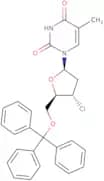
CAS:2’,3’-Dideoxy-3’-chloro-5-methyl-5’-O-trityluridine (ddCTP) is a novel nucleoside analog that is synthesized by the protection of the 5'-hydroxyl group with an acetyl group followed by a 2',3'-dideoxy substitution. This compound has been shown to have antiviral and anticancer activities. ddCTP is an activator of DNA polymerase and inhibits viral DNA synthesis in vitro. It also inhibits protein synthesis and cell division by binding to the RNA template strand, which prevents it from being used as a template for protein synthesis.Purezza:Min. 95%6-(4-Fluorophenyl)pyrimidine-2,4-diamine
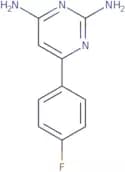
CAS:6-(4-Fluorophenyl)pyrimidine-2,4-diamine is an organic compound that has been shown to inhibit the proliferation of cells in vitro and to induce apoptosis. It also inhibits the growth of cancer cells. 6-(4-Fluorophenyl)pyrimidine-2,4-diamine mediates the activation of arylation, which is a chemical reaction that produces a new carbon-carbon bond between two or more molecules. This reaction is involved in the process of angiogenesis. In addition, this compound has been shown to be reactive with other compounds that are known to cause mutations and cellular damage.Formula:C10H9FN4Purezza:Min. 95%Peso molecolare:204.2 g/molTroxacitabine
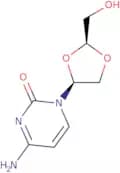
CAS:Troxacitabine is a nucleoside analog that inhibits DNA synthesis by selectively blocking the function of DNA polymerase. It has been shown to have potent antitumor activity in mouse tumor models and in a human breast cancer xenograft model. Troxacitabine has also been shown to inhibit the proliferation of renal cell cancer cells and induce apoptosis in these cells, as well as reduce the viability of cancer cells from other tumor types. Troxacitabine has also been shown to have an effect on body mass index and hematologic response, although it is not currently approved for use in humans.Formula:C8H11N3O4Purezza:Min. 95%Colore e forma:White To Off-White SolidPeso molecolare:213.19 g/molRef: 3D-NT29825
5gPrezzo su richiesta10mg3.784,00€25mg6.351,00€50mgPrezzo su richiesta100mgPrezzo su richiesta9-(2'-Deoxy-b-D-xylofuranosyl)adenine
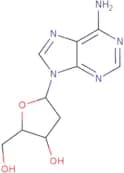
CAS:9-(2'-Deoxy-b-D-xylofuranosyl)adenine is a nucleoside that is used in the treatment of bowel disease, cancer, and other diseases. It is also a potential drug target for antimicrobial agents and pharmacological agents. 9-(2'-Deoxy-b-D-xylofuranosyl)adenine has been shown to inhibit DNA synthesis and cause cell death in mouse tumor cells. It also inhibits adenosine uptake by binding to the A3 receptor, which may be due to its similarity to adenosine. This drug has been shown to have anticancer properties in various carcinoma cell lines. 9-(2'-Deoxy-b-D-xylofuranosyl)adenine is metabolized into deoxyadenosine, which can be converted back into adenosinergic acid or deoxyadenosinergic acid, which are potent inhibitors of DNA polymerase alpha activity.Purezza:Min. 95%5'-O-DMT-2'-O-pentylaminoadenosine
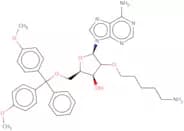
5'-O-DMT-2'-O-pentylaminoadenosine is a phosphoramidite nucleoside monophosphate. It is a novel anticancer and antiviral agent that has been shown to kill cancer cells, inhibit viral replication, and inhibit the synthesis of DNA in the cell. 5'-O-DMT-2'-O-pentylaminoadenosine has been shown to be an effective inhibitor of herpes simplex virus type 1 (HSV1) replication in vitro. This drug also inhibits the synthesis of DNA and RNA by inhibiting nucleoside diphosphate kinase, which is a key enzyme in the metabolism of nucleosides.Formula:C36H42N6O6Purezza:Min. 95%Peso molecolare:654.77 g/mol1-(b-D-Arabinofuranosyl)-5-iodouracil
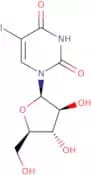
CAS:1-(b-D-Arabinofuranosyl)-5-iodouracil is a synthetic nucleoside that has antiviral and anticancer properties. It is a monophosphate nucleotide that inhibits viral RNA synthesis by inhibiting the enzyme ribonucleotide reductase, which converts ribonucleotides to deoxyribonucleotides. This inhibitor also blocks DNA synthesis by preventing the incorporation of b-D-arabinofuranosyl monophosphate into DNA. 1-(b-D-Arabinofuranosyl)-5-iodouracil has been shown to be effective in treating various types of cancer, including breast, lung, and prostate cancers. It also exhibits antitumor activity against certain human leukemia cells.Formula:C9H11IN2O6Purezza:Min. 95%Peso molecolare:370.1 g/mol2'-Deoxy-5'-O-DMT-N4-isobutyrylcytidine 3'-CE phosphoramidite
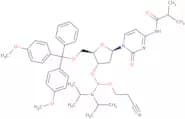
CAS:This is a nucleotide analog that is used as a building block in DNA synthesis. It can be obtained from various sources, such as Sigma-Aldrich, Inc.Purezza:Min. 95%3',5'-Bis-o-(t-butyldimethylsilyl)-O4-(2,4,6-triisopropylphenylsulfonyl)thymidine
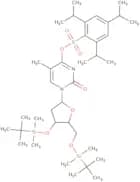
CAS:3',5'-Bis-o-(t-butyldimethylsilyl)-O4-(2,4,6-triisopropylphenylsulfonyl)thymidine (SQ22536) is a modified nucleoside with anticancer activity. It is a deoxyribonucleoside and phosphoramidate analog of thymidine. SQ22536 can be used in the synthesis of DNA or RNA and as an antiviral agent. It has been shown to inhibit the replication of HIV-1 in vitro by inhibiting HIV reverse transcriptase and DNA polymerase.Formula:C37H64N2O7SSi2Purezza:Min. 95%Peso molecolare:737.1 g/mol2-Amino-4-(4-fluorophenyl)pyrimidine
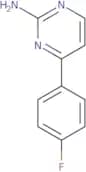
CAS:2-Amino-4-(4-fluorophenyl)pyrimidine is a fluorinated derivative of imatinib, which is a chemical that inhibits the activity of tyrosine kinases. It has been shown to be a more potent inhibitor than imatinib, and it also offers high yields and regioselectivity. This compound can be used in organic chemistry to produce fluorinated derivatives.Formula:C10H8FN3Purezza:Min. 95%Peso molecolare:189.19 g/mol2'-Amino-2'-deoxyguanosine-5'-triphospate tetralithium salt
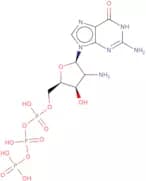
CAS:2'-Amino-2'-deoxyguanosine-5'-triphosphate tetralithium salt is a novel nucleoside analog that has antiviral and anticancer activities. It is a high quality, modified nucleoside that can be used for the synthesis of deoxyribonucleosides or ribonucleosides. It is synthesized from 2'-amino-2'-deoxyguanosine triphosphate and a lithium salt of tetrabutylammonium. This product has a CAS number of 108269-13-2 and a purity level of ≥99%.Formula:C10H17N6O13P3Li4Purezza:Min. 95%Peso molecolare:549.96 g/mol2'-C-Ethynylcytidine
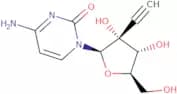
CAS:2'-C-Ethynylcytidine is a synthetic surfactant that can be used in coatings and other surface treatments. It has been shown to inhibit the growth of bacteria and viruses, as well as being effective against a variety of bacterial species. 2'-C-Ethynylcytidine binds to sulfide, which is produced by bacteria, leading to cell death. The antimicrobial activity of 2'-C-Ethynylcytidine is due to its ability to form ester linkages with polyesters, which are able to penetrate the bacterial cell membrane and disrupt the integrity of the cytoplasmic membrane. This leads to leakage of intracellular contents, followed by cell death. 2'-C-Ethynylcytidine also has been shown to bind to metal ions such as silver, copper, zinc and cadmium and prevent their uptake into cells.Purezza:Min. 95%2-(2-Methylphenyl)pyrimidine-5-carbaldehyde
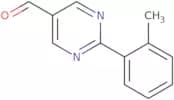
CAS:2-(2-Methylphenyl)pyrimidine-5-carbaldehyde is a crystalline solid that has been shown to have synergistic effects with polypropylene. It is synthesized from 2-methylphenylacetonitrile and 2,4-dichloro-6-(trifluoromethyl)pyrimidine in the presence of sodium metal. The product is soluble in alcohols and ethers, but insoluble in water.Formula:C12H10N2OPurezza:Min. 95%Peso molecolare:198.22 g/mol5'-O-DMT-thymidine 3'-Me phosphoramidite
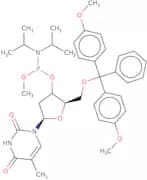
5’-O-DMT-thymidine 3’-Me phosphoramidite is a novel and modified nucleotide analog that is used as an antiviral agent. It has been shown to be active against herpes simplex virus type 1 (HSV-1) and Epstein-Barr virus (EBV). 5'-O-DMT-thymidine 3’-Me phosphoramidite is not active against HIV, although it has been shown to inhibit the replication of Hepatitis B virus. This compound can also be used in cancer therapy.
5'-O-DMT-thymidine 3' -Me phosphoramidite inhibits cellular DNA synthesis by competing with natural thymidine monophosphate (TMP) for incorporation into DNA. The incorporation of 5'-O-DMT-thymidine 3' -Me into DNA leads to a high frequency of mutations, which causes the death of the cell.Formula:C38H48N3O8PPurezza:Min. 96 Area-%Colore e forma:White Off-White PowderPeso molecolare:705.78 g/mol2'-Deoxy-5'-O-DMT-5-fluoro-4-O-(2,4,6-trimethylphenyl)uridine 3'-CE-phosphoramidite
2'-Deoxy-5'-O-DMT-5-fluoro-4-O-(2,4,6-trimethylphenyl)uridine 3'-CE-phosphoramidite is a novel phosphoramidite monophosphate. It is modified to include fluorine at the 5 position of the uridine moiety and has antiviral activity. This product is a nucleoside with antiviral properties that can be used in cancer treatments. 2'-Deoxy-5'-O-DMT-5-fluoro-4-O-(2,4,6-trimethylphenyl)uridine 3'-CE phosphoramidite is synthesized from deoxyribonucleosides and ribonucleosides by using a high purity process.Purezza:Min. 95%b-Nicotinamide adenine dinucleotide phosphate potassium salt hydrate
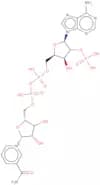
CAS:b-Nicotinamide adenine dinucleotide phosphate potassium salt hydrate is a novel anticancer compound that has been shown to inhibit the growth of cancer cells in vitro. The mechanism of action of b-NADP+ is still unknown, but it may involve the inhibition of ribonucleoside reductase and deoxyribonucleoside reductase. It also inhibits viral DNA synthesis, which can be an effective antiviral drug. b-NADP+ is a nucleotide analogue that is synthesized from diphosphate and monophosphate forms, which are activated by phosphoramidites.Formula:C21H28N7O17P3•K•(H2O)2Purezza:Min. 95%Peso molecolare:818.5 g/mol5'-O-Acetyl-2',3'-O-isopropylideneadenosine
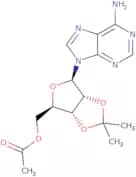
CAS:5'-O-Acetyl-2',3'-O-isopropylideneadenosine is an anti-leishmanial agent that is synthesized from 2,3-O-isopropylideneadenosine by acetylating the 5' hydroxyl group. It was found to be more potent than the parent compound and other related compounds in inhibiting Leishmania amazonensis promastigotes. The proposed mechanism of action of 5'-O-acetyl-2',3'-O-isopropylideneadenosine involves hydrogen bonding with the guanosine moiety of DNA and inhibition of RNA synthesis. This drug also has an effect on carbonyl oxygens and resonances, which are observed in the nmr spectra. The synthetic scheme for this drug starts with uridine, which is converted to cytidine by reacting it with sodium cyanide in aqueous solution at 0°C. Cytidine
Formula:C15H19N5O5Purezza:Min. 95%Colore e forma:PowderPeso molecolare:349.34 g/molAdenosine 5'-diphosphate potassium salt
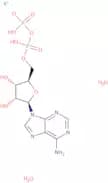
CAS:Adenosine 5'-diphosphate potassium salt can be used as a substrate for a variety of protein kinases known as AMP-activated protein kinases (AMPK)Formula:C10H14N5O10P2·KPurezza:Min. 95%Colore e forma:PowderPeso molecolare:465.29 g/mol