Nucleosidi
I nucleosidi sono building blocks fondamentali degli acidi nucleici, composti da una base azotata legata a una molecola di zucchero. In questa sezione, puoi trovare una vasta gamma di nucleosidi essenziali per la ricerca in biologia molecolare, biochimica e farmacologia. Questi composti svolgono ruoli cruciali nella sintesi del DNA e dell'RNA e sono vitali in vari processi metabolici. I nucleosidi vengono utilizzati per studiare il materiale genetico, sviluppare terapie antivirali e antitumorali e comprendere i meccanismi cellulari. Da CymitQuimica, forniamo nucleosidi di alta qualità per supportare le tue esigenze di ricerca e sviluppo, garantendo purezza e affidabilità per le tue applicazioni sperimentali.
Trovati 3569 prodotti di "Nucleosidi"
Ordinare per
Purezza (%)
0
100
|
0
|
50
|
90
|
95
|
100
5-Methoxy-4’-thiouridine
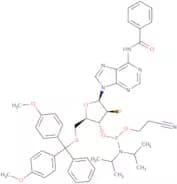
<p>5-Methoxy-4’-thiouridine is a monophosphate nucleoside that is synthesized by the phosphorylation of 5-methoxy-4’-thioguanosine. It has antiviral activity, which is due to its ability to inhibit viral DNA polymerase and prevent the production of viral DNA. 5-Methoxy-4’-thiouridine also inhibits the synthesis of deoxyribonucleosides and ribonucleosides, thereby preventing the formation of RNA and DNA. This agent has been shown to be an anticancer agent that can cause cell death by inhibiting protein synthesis.</p>Purezza:Min. 95%N6-Benzoyl-9-(2'-deoxy-5’-O-DMT-2’-fluoro-b-D-arabinofuranosyl)adenine 3’-CE-phosphoramidite
CAS:N6-Benzoyl-9-(2'-deoxy-5’-O-DMT-2’-fluoro-b-D-arabinofuranosyl)adenine 3’-CE-phosphoramidite is an antiviral agent that inhibits the replication of DNA. This compound was synthesized in the laboratory, and has not been found in nature. N6-Benzoyl-9-(2'-deoxy-5’-O--DMT--2’--fluoro--b--D--arabinofuranosyl)adenine 3’--CE--phosphoramidite is a novel compound that is effective against HIV and other viruses. It also has anticancer properties, which may be due to its ability to inhibit the transcription of genes involved in cell proliferation.Purezza:Min. 95%6-Amino-1-(2'-deoxy-b-D-ribofuranosyl)-4-hydroxyamino-1H-pyrazolo[3,4-d]pyrimidine
<p>6-Amino-1-(2'-deoxy-b-D-ribofuranosyl)-4-hydroxyamino-1H-pyrazolo[3,4-d]pyrimidine is a modified nucleoside with antiviral and anticancer properties. It is an activator of ribonucleotide reductase, which converts ribonucleotides to deoxyribonucleotides. 6-Amino-1-(2'-deoxy-b-D-ribofuranosyl)-4-hydroxyamino-1H pyrazolo[3,4 d]pyrimidine can be used in the synthesis of phosphoramidites for DNA synthesis and for the production of monophosphate nucleotides. The compound has been shown to inhibit the growth of cells in culture that are resistant to other antiinfectives such as erythromycin and chloramphenicol.</p>Purezza:Min. 95%N2-DMF-5'-O-DMT-2'-O-methylguanosine 3'-CE phosphoramidite
N2-DMF-5'-O-DMT-2'-O-methylguanosine 3'-CE phosphoramidite is a novel ribonucleotide with high purity and high quality. It is an activator of DNA synthesis and can be used in the synthesis of DNA, monophosphate, and diphosphate. N2-DMF-5'-O-DMT-2'-O-methylguanosine 3'-CE phosphoramidite is used for the preparation of anticancer drugs, antiviral agents, and other nucleosides.Formula:C44H55N8O8PPurezza:Min. 95%Colore e forma:White PowderPeso molecolare:854.95 g/mol3’-Deoxy-3’-fluoro-N6-hydroxyadenosine
CAS:3’-Deoxy-3’-fluoro-N6-hydroxyadenosine (3'-DF) is an antiviral nucleoside that inhibits viral DNA synthesis and has shown cytotoxic effects in human cancer cells. 3'-DF is a novel chemical compound that was first synthesized in 1994. It is a nucleotide analog that is structurally related to adenosine, with the exception of the fluoro atom at position 6 on the ribose sugar. 3'-DF inhibits DNA polymerase and RNA polymerase by competitively binding to the ribonucleotide reductase enzyme, inhibiting the production of new RNA and DNA molecules. This compound also has been shown to inhibit protein synthesis in cancer cells without affecting normal cells.Purezza:Min. 95%1,2,3-Triazole-4-carboxamide, 5-b-D-ribofuranosyl-5'-triphosphate-nucleoside triethyl ammonium salt
<p>1,2,3-Triazole-4-carboxamide, 5-b-D-ribofuranosyl-5'-triphosphate-nucleoside triethyl ammonium salt is a phosphoramidite that belongs to the class of ribonucleosides. It has been shown to be effective against viral diseases and cancer. The novel modifications in this nucleoside include the incorporation of a triethyl ammonium salt. This nucleoside has been shown to be active against HIV and cytomegalovirus (CMV). 1,2,3-Triazole-4-carboxamide, 5-b-D ribofuranosyl -5'-triphosphate nucleoside triethyl ammonium salt also has anticancer properties.</p>Formula:C8H12N4O14P3Purezza:Min. 95%Peso molecolare:481.12 g/mol5'-O-Tosyl-2',3'-O-isopropylideneadenosine
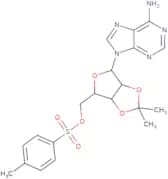
CAS:<p>5'-O-Tosyl-2',3'-O-isopropylideneadenosine is a novel modified nucleoside with antiviral and anticancer activities. It is an activator of the enzyme ribonucleotide reductase, which converts ribonucleotides to deoxyribonucleotides. This drug has been shown to have anticancer activity in a variety of tumor cell lines, including leukemias, lymphomas, and sarcomas. In addition, it has been shown to be active against HIV and herpes simplex virus type 1 (HSV-1). 5'-O-Tosyl-2',3'-O-isopropylideneadenosine is also known by CAS No. 5605-63-0.</p>Formula:C20H23N5O6SPurezza:Min. 95%Colore e forma:PowderPeso molecolare:461.49 g/mol4’,5’-Didehydro-5’-deoxy-5-methyluridine
CAS:4’,5’-Didehydro-5’-deoxy-5-methyluridine is a monophosphate nucleoside that is used as an antiviral agent. It has been shown to be active in the treatment of HIV and hepatitis B. 4’,5’-Didehydro-5’-deoxy-5-methyluridine also has anticancer properties and has been shown to inhibit cell proliferation in vitro by interfering with DNA synthesis. This product is an intermediate for the synthesis of other nucleosides and phosphoramidites.Purezza:Min. 95%N4-Benzoyl-2'-deoxy-5'-O-pixylcytidine
CAS:N4-Benzoyl-2'-deoxy-5'-O-pixylcytidine is a novel nucleoside that is structurally related to cytidine. It is synthesized from 2'-deoxycytidine monophosphate and 4-benzoylpixyl chloride. N4-Benzoyl-2'-deoxy-5'-O-pixylcytidine has antiviral, antiangiogenic and anticancer properties, as well as the ability to inhibit the replication of DNA in cells. This compound can be used for synthesis of phosphoramidites, which are used in the production of oligonucleotides.Formula:C35H29N3O6Purezza:Min. 95%Peso molecolare:587.64 g/mol2'-O-(N-Methylanthraniloyl)-3'-deoxy-adenosine-5'-triphosphate triethylammonium salt
CAS:2'-O-(N-Methylanthraniloyl)-3'-deoxy-adenosine-5'-triphosphate triethylammonium salt is a novel antiviral and anticancer compound. It is an analogue of adenosine, which inhibits the synthesis of viral RNA and DNA. This compound can also be used to treat certain types of cancer. 2'-O-(N-Methylanthraniloyl)-3'-deoxy-adenosine-5'-triphosphate triethylammonium salt is chemically synthesized by reacting anthranilic acid with 3',5'-dideoxyadenosine 5' triphosphoric acid.Formula:C18H23N6O13P3Purezza:Min. 95%Peso molecolare:624.33 g/molN2-Isobutyryl-2'-deoxy-5'-O-pixylguanosine
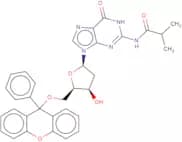
N2-Isobutyryl-2'-deoxy-5'-O-pixylguanosine is a modified nucleotide that has been shown to be an activator of the protein kinase C and may have anticancer and antiviral properties. N2-Isobutyryl-2'-deoxy-5'-O-pixylguanosine is a synthetic nucleoside that is structurally similar to ribonucleosides and deoxyribonucleosides, but contains a modified base. The nucleotide is activated by phosphorylation and then undergoes hydrolysis in the cell to form diphosphate. This product has CAS No. 125965-04-3, purity at 99%, and high quality.Formula:C33H31N5O6Purezza:Min. 95%Peso molecolare:593.64 g/molTricyclic nucleoside phosphate
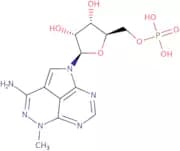
CAS:<p>Akt activation inhibitor</p>Formula:C13H17N6O7PPurezza:Min. 95%Peso molecolare:400.28 g/mol2-Methylthio-N6-isopentenyladenosine
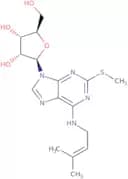
CAS:A nucleoside analogue of adenosine that arises from post-transcriptional modification. In humans, this is mediated by the enzyme CDK5RAP1 in mitochondrial transfer RNA (tRNA) at amino acid 37. Deficiency for this modification, for example due to CDK5RAP1 deficiency, leads to impaired mitochondrial protein synthesis. This has implications for mitochondrial diseases, as well as cancer, type II diabetes and vitiligo. Synthetic ms2i6A can be used to raise monoclonal antibodies against this nucleotide in vivo.Formula:C16H23N5O4SPurezza:Min. 95%Colore e forma:White PowderPeso molecolare:381.45 g/mol2,4-bis(Benzyloxy)-6-chloropyrimidine
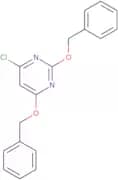
CAS:<p>This study investigates the association between the use of 2,4-bis(benzyloxy)-6-chloropyrimidine (BCP) and lowering in the risk of developing breast cancer in women. The study is based on a national dataset that includes all Danish women who were enrolled in the Danish Breast Cancer Screening Program from 1995 to 2009. The covariates collected include age, weight, height, family history of breast cancer, parity, and hormone replacement therapy. This research was conducted by researchers at various universities in Denmark.</p>Purezza:Min. 95%5'-O-MMT-thymidine 3'-CE phosphoramidite
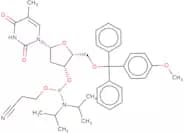
CAS:<p>5'-O-MMT-thymidine 3'-CE phosphoramidite is a novel anticancer drug that is modified from the natural nucleoside thymidine. It has been shown to inhibit the activity of DNA polymerase, preventing DNA synthesis and replication. It also inhibits viral DNA replication, including HIV and herpes simplex virus type-1 (HSV-1). 5'-O-MMT-thymidine 3'-CE phosphoramidite has antiviral properties against HIV and HSV-1. This nucleoside is synthesized by reacting 5'-O-methyl cytidylic acid with an activated phosphite in the presence of triethylamine in dichloromethane. The product is purified by column chromatography on silica gel and recrystallization from acetonitrile.</p>Formula:C39H47N4O7PPurezza:Min. 95%Peso molecolare:714.81 g/mol2'/3'-(N-Methylanthraniloyl)-adenosine-5'-monophosphate triethylammonium salt
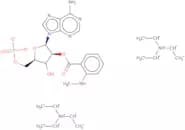
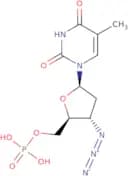
CAS:2'/3'-(N-Methylanthraniloyl)-adenosine-5'-monophosphate triethylammonium salt is an antiviral agent that is based on ribonucleosides. This drug has been shown to be effective against cancer and herpes simplex virus type 1 (HSV-1) and may have potential as a treatment for HIV. It also inhibits the growth of tumors in animal models. 2'/3'-(N-Methylanthraniloyl)-adenosine-5'-monophosphate triethylammonium salt is synthesized by reacting ribonucleosides with N-(2,2,2,-trimethylpropyl)anthranilic acid chloride in the presence of triethylamine. The resulting product can be purified by column chromatography or recrystallization.Formula:C18H21N6O8PPurezza:Min. 95%Peso molecolare:480.37 g/mol3'-Azido-3'-deoxythymidine 5'-monophosphate sodium salt
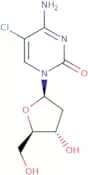
CAS:3'-Azido-3'-deoxythymidine 5'-monophosphate sodium salt is a synthetic nucleoside that is structurally related to thymidine. It has antiviral and anticancer properties, as well as the potential for use in gene therapy. 3'-Azido-3'-deoxythymidine 5'-monophosphate sodium salt is active against herpes simplex virus type 1 (HSV-1) and HSV-2, human immunodeficiency virus type 1 (HIV-1), human papillomavirus types 16 and 18 (HPV), Epstein Barr Virus (EBV), and cytomegalovirus (CMV). 3'-Azido-3'-deoxythymidine 5'-monophosphate sodium salt inhibits the production of HIV by preventing the viral reverse transcriptase from synthesizing DNA from RNA.Formula:C10H13N5NaO7PPurezza:Min. 95%Peso molecolare:369.23 g/mol5-Chloro-2'-deoxycytidine
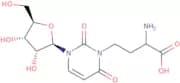
CAS:<p>5-Chloro-2'-deoxycytidine (5-Cl-dC) is a nucleoside analog that inhibits DNA synthesis by blocking the action of thymidylate synthase. It can be used in animal models to study bowel diseases, such as ulcerative colitis and Crohn's disease. 5-Cl-dC has been shown to be effective in treating the effects of radiation and chemical toxicity in HL60 cells, a type of human leukemia cell line. 5-Cl-dC has also been shown to enhance the cytotoxicity of eosinophil peroxidase, which is an enzyme that may be involved in the pathogenesis of asthma. This drug is currently being evaluated for its safety and efficacy in clinical trials involving patients with myelodysplastic syndrome or acute myeloid leukemia who are at risk for developing leukemia.</p>Formula:C9H12CIN3O4Purezza:Min. 95%Colore e forma:PowderPeso molecolare:261.67 g/mol3-(3-Amino-3-carboxypropyl)uridine
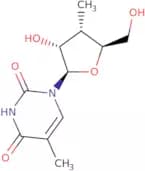
CAS:<p>3-(3-Amino-3-carboxypropyl)uridine is an uridine analog that is used in the study of protein synthesis. It can be used to determine the amino acid sequence of a protein, or to identify proteins with similar sequences. 3-(3-Amino-3-carboxypropyl)uridine can also be used to study enzymatic reactions, such as those involved in the synthesis of polypeptides. This molecule has been shown to produce disulfide bonds and form covalent bonds with other molecules. The three-dimensional structure of this molecule has been determined by NMR spectroscopy and X-ray crystallography.</p>Formula:C13H19N3O8Purezza:Min. 95%Colore e forma:PowderPeso molecolare:345.31 g/mol3’-Deoxy-3’C-methyl-5-methyluridine
CAS:<p>3’-Deoxy-3’C-methyl-5-methyluridine is a novel and efficient phosphoramidite monophosphate, which can be used in the synthesis of DNA. This product has antiviral activity against HIV and some other viruses. The phosphoramidite is modified with a diphosphate group, which increases the efficiency of DNA synthesis. 3’-Deoxy-3’C-methyl-5-methyluridine is synthesized by modifying 5′ position with a C6 methylaminomethyl group and coupling with the 3′ deoxynucleoside.</p>Purezza:Min. 95%


![6-Amino-1-(2'-deoxy-b-D-ribofuranosyl)-4-hydroxyamino-1H-pyrazolo[3,4-d]pyrimidine](/_next/image/?url=https%3A%2Fstatic.cymitquimica.com%2Fproducts%2F3D%2Fthumb-webp%2FNA162941.webp&w=3840&q=75)