


Nucleosidi
I nucleosidi sono building blocks fondamentali degli acidi nucleici, composti da una base azotata legata a una molecola di zucchero. In questa sezione, puoi trovare una vasta gamma di nucleosidi essenziali per la ricerca in biologia molecolare, biochimica e farmacologia. Questi composti svolgono ruoli cruciali nella sintesi del DNA e dell'RNA e sono vitali in vari processi metabolici. I nucleosidi vengono utilizzati per studiare il materiale genetico, sviluppare terapie antivirali e antitumorali e comprendere i meccanismi cellulari. Da CymitQuimica, forniamo nucleosidi di alta qualità per supportare le tue esigenze di ricerca e sviluppo, garantendo purezza e affidabilità per le tue applicazioni sperimentali.
Trovati 3569 prodotti di "Nucleosidi"
Ordinare per
Purezza (%)
0
100
|
0
|
50
|
90
|
95
|
100
Cytidine-5'-phosphate-3'-(6-aminohexyl)phosphate-biotin triethylammonium salt - 1 mM aqueous solution (10 mM Tris-HCl)
Cytidine-5'-phosphate-3'-(6-aminohexyl)phosphate-biotin triethylammonium salt - 1 mM aqueous solution (10 mM Tris-HCl) is a nucleoside phosphate activator with antiviral effects. It has been successfully synthesized and shown to be an effective anticancer agent. Cytidine-5'-phosphate-3'-(6-aminohexyl)phosphate-biotin triethylammonium salt - 1 mM aqueous solution (10 mM Tris-HCl) is modified from cytidine, which contains the amino acid L-alanine in place of D-alanine. This modification increases the stability and bioavailability of this molecule. Cytidine, or cytidylate, is a nucleoside phosphate that is widely used in biochemistry as an activator for other nucleosides or as a substrate for enzymesFormula:C25H42N6O13P2S1Purezza:Min. 95%Colore e forma:Colorless PowderPeso molecolare:728.65 g/mol4-Amino-2,6-dimethyl-8-(2'-deoxy-3',5'-di-O-toluoyl-a-D-ribofuranosyl)-7-pteridone
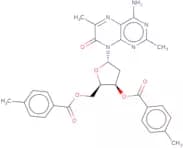
<p>4-Amino-2,6-dimethyl-8-(2'-deoxy-3',5'-di-O-toluoyl-a-D-ribofuranosyl)-7-pteridone is a novel nucleoside that has been modified by the addition of a 2'-deoxy, 3',5'-di-O-toluoyl group on the sugar moiety. This modification increases the stability of 4AMDT in serum and enhances its antiviral activity against DNA and RNA viruses. It also inhibits the proliferation of cancer cells and induces cell death by inhibiting protein synthesis.</p>Formula:C29H29N5O6Purezza:Min. 95%Peso molecolare:543.57 g/mol2'-Deoxy-5-hydroxyuridine 5'-triphosphate
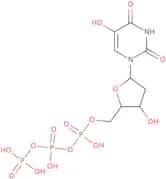
CAS:<p>2'-Deoxy-5-hydroxyuridine 5'-triphosphate (doxorubicin) is a cytotoxic and chemotherapeutic agent that interferes with DNA replication. It is an oxidized form of the natural pyrimidine base thymine. The drug blocks DNA synthesis by preventing the incorporation of uracil into the newly synthesized strand, which causes strand breaks. Doxorubicin has been shown to be effective in treating a variety of cancers, including those of the breast, ovaries, bladder, and stomach. This drug can also cause severe side effects such as heart damage and hearing loss due to its interaction with cellular oxygen metabolism.</p>Purezza:Min. 95%6-Chloro-9-(3',5'-di-O-benzoyl-2'-Deoxy-2'-fluoro-b-D-arabinofuranosyl)purine
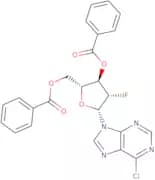
CAS:<p>6-Chloro-9-(3',5'-di-O-benzoyl-2'-Deoxy-2'-fluoro-b-D-arabinofuranosyl)purine is a nucleoside that is used as an anticancer and antiviral agent. It is synthesized from 9-(3',5'-di-O-benzoyl)-2'-deoxyribofuranosyl chloride, which is then chlorinated to form 6-chloro purine. This product has been shown to be active against human DNA tumor cells and other viruses in vitro. 6CPA, like other nucleosides, can be phosphorylated on the 3' or 5' position of the sugar moiety, yielding monophosphate or diphosphate derivatives respectively. The monophosphate derivative of 6CPA has a higher cytotoxicity than the diphosphate derivative. The deoxyribose sugar moiety can</p>Formula:C24H18CIFN4O5Purezza:Min. 95%Peso molecolare:496.89 g/mol5'-o-Methyl-dt cep
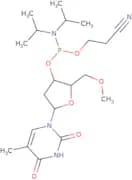
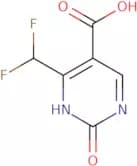
CAS:5'-o-Methyl-dt cep is a modified phosphoramidite that has been synthesized to provide a novel, highly active anticancer and antiviral agent. It is used as an activator for the synthesis of DNA or RNA in the nucleoside or deoxyribonucleoside pathway. 5'-o-Methyl-dt cep could be used in the treatment of HIV, Hepatitis C, and other viral infections.Formula:C20H33N4O6PPurezza:Min. 95%Peso molecolare:456.5 g/mol4-(difluoromethyl)-2-hydroxy-pyrimidine-5-carboxylic acid
CAS:4-(difluoromethyl)-2-hydroxy-pyrimidine-5-carboxylic acid is a novel monophosphate and nucleotide analogue, which can activate the HIV reverse transcriptase. It has been shown to be cytotoxic to cancer cells in vitro. 4-(difluoromethyl)-2-hydroxy-pyrimidine-5-carboxylic acid has been used for the synthesis of phosphoramidites and DNA and RNA analogues.Formula:C6H4F2N2O3Purezza:Min. 95%Peso molecolare:190.1 g/mol3'-Azido-3'-deoxy-5-methylcytidine
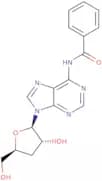
CAS:<p>3'-Azido-3'-deoxy-5-methylcytidine (AZDMC) is a novel nucleoside analog that inhibits viral replication. AZDMC is an activator of cellular DNA synthesis, which is essential for the replication of DNA and the production of RNA. It also has antiviral activity against influenza A and B viruses. The chemical name for AZDMC is 3'-azido-3'-deoxy-5-methylcytidine monophosphate (AMP). The CAS number for AZDMC is 1282040-14-5. It can be synthesized with high purity and quality by Ribonucleosides, Modified, Deoxyribonucleosides, Nucleosides, Phosphoramidites.</p>Purezza:Min. 95%N6-Benzoyl-3'-deoxyadenosine
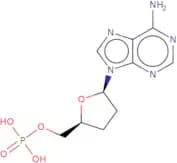
CAS:N6-Benzoyl-3'-deoxyadenosine is a nucleoside analogue that is used as a substrate for DNA polymerase. The efficiency of this compound has been shown to be higher than other nucleotides. In addition, N6-Benzoyl-3'-deoxyadenosine has been shown to be an efficient donor in the ligation reaction and can also act as a competitive inhibitor of topoisomerase II. N6-Benzoyl-3'-deoxyadenosine is a scissile substrate for DNA topoisomerase II and cleaves at the same site as dATP. This compound has been shown to be active against both Gram-positive bacteria and Mycobacterium tuberculosis with high selectivity.Formula:C17H17N5O4Purezza:Min. 95%Peso molecolare:355.35 g/mol2',3'-Dideoxyadenosine-5'-monophosphate
CAS:2',3'-Dideoxyadenosine-5'-monophosphate (ddAMP) is an adenosine analog that is a substrate for the enzyme dideoxyribonucleoside kinase. It is activated by phosphorylation to the 5' ends of DNA molecules and inhibits viral replication. ddAMP has been shown to be effective in treating human immunodeficiency virus (HIV) infection, at least in part, by inhibiting the production of p24 antigen levels and reducing the number of CD4+ lymphocytes. The mechanism of action may involve binding to HIV-1 RNA, which prevents it from interacting with cellular dsDNA and inhibits its transcription into DNA.Formula:C10H14N5O5PPurezza:Min. 95%Peso molecolare:315.22 g/molN4-Benzoyl-5'-O-DMT-2'-O-(2-methoxyethyl)-5-methylcytidine 3'-O succinate TEA salt
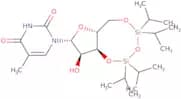
N4-Benzoyl-5'-O-DMT-2'-O-(2-methoxyethyl)-5-methylcytidine 3'-O succinate TEA salt is a novel, modified nucleoside analogue that is used as an antiviral agent. It inhibits the synthesis of viral DNA and RNA by competing with natural nucleosides during the process of nucleic acid synthesis. The drug binds to the enzyme ribonucleotide reductase, which is essential for DNA synthesis. N4-Benzoyl-5'-O-DMT-2'-O-(2-methoxyethyl)-5-methylcytidine 3'-O succinate TEA salt has been shown to be effective in treating patients with cancer.Purezza:Min. 95%3',5'-O-(1,1,3,3-Tetraisopropyl-1,3-disiloxanediyl)-5-methyluridine
CAS:3',5'-O-(1,1,3,3-Tetraisopropyl-1,3-disiloxanediyl)-5-methyluridine is a novel nucleoside that is used for the synthesis of DNA and RNA. It is a modified nucleoside with antiviral and anticancer properties. 3',5'-O-(1,1,3,3-Tetraisopropyl-1,3-disiloxanediyl)-5-methyluridine has been shown to inhibit human immunodeficiency virus type 1 (HIV) replication in cultured cells. In addition to its antiviral activity against HIV type 1 (HIV-1), 3',5'-O-(1,1,3,3-Tetraisopropyl-1,3-disiloxanediyl)-5-methyluridine also inhibits the growth of cancerous cells by acting as an inhibitor of DNAFormula:C22H40N2O7Si2Purezza:Min. 95%Peso molecolare:500.73 g/molLinoleoyl coenzyme A
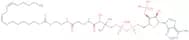
CAS:<p>Linoleoyl coenzyme A (LCA) is a fatty acid that is a component of the cell membrane. LCA is synthesized from linoleic acid and coenzyme A in the mitochondria. In humans, LCA is an important component of the mitochondrial protein. The production of this enzyme can be enhanced by dietary supplementation with linoleic acid. Linoleoyl coenzyme A has been used as a model system to study energy metabolism in mitochondria. It has been shown to be involved in carthamus tinctorius, human mitochondrial, rat liver microsomes, and dietary models. LCAs have also been used as analytical methods for measuring the amount of fatty acids within cells or tissues.</p>Formula:C39H66N7O17P3SPurezza:Min. 95%Peso molecolare:1,029.97 g/mol2'-Deoxy-8-(9H-fluoren-2-ylamino)-guanosine
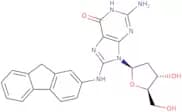
CAS:<p>2'-Deoxy-8-(9H-fluoren-2-ylamino)-guanosine (FdA) is a synthetic nucleoside that was designed for use as a dietary supplement to inhibit carcinogenesis. It is an analog of guanosine and is phosphorylated by cellular kinases to form 2'-deoxy-8-(9H-fluoren-2-ylamino)-inosine monophosphate. FdA inhibits the process of DNA replication in mammalian cells, which may be due to its ability to bind single stranded DNA. This drug has been shown to reduce the mutation frequency and increase the life span of mice with bladder cancer.</p>Formula:C23H22N6O4Purezza:Min. 95%Peso molecolare:446.46 g/mol6-(4-Iodobenzyl)-1-Methyl Pyrimidine-2,4-(1H,3H)-Dione
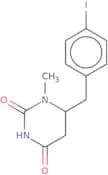
CAS:6-(4-Iodobenzyl)-1-Methyl Pyrimidine-2,4-(1H,3H)-Dione is a nucleoside analog that has shown to be an activator of the ribonucleotide reductase enzyme. It has also been shown to have anticancer activity. 6-(4-Iodobenzyl)-1-Methyl Pyrimidine-2,4-(1H,3H)-Dione inhibits DNA synthesis by binding to the DNA molecule at the site of incorporation and preventing its duplication. This compound also inhibits RNA synthesis by binding to the RNA molecule at the site of incorporation and preventing its duplication. It has been shown to inhibit cancer cell growth in culture and can be used as a chemotherapeutic agent.Formula:C12H11IN2O2Purezza:Min. 95%Peso molecolare:342.13 g/mol2’,3’-Dideoxy-5-fluorocytidine
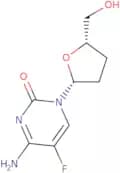
CAS:<p>2’,3’-Dideoxy-5-fluorocytidine is a nucleoside analog that inhibits the growth of tumor cells in animals. It has been shown to inhibit the replication of hepatitis B virus and HIV without affecting normal cell division. 2′,3′-Dideoxy-5-fluorocytidine also has potent antitumor activity against human hematopoietic cells and induces apoptosis.</p>Formula:C9H12FN3O3Purezza:Min. 95%Peso molecolare:229.21 g/molDihydrozeatin riboside-5'-monophosphate sodium salt
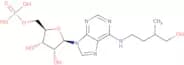
CAS:<p>Dihydrozeatin riboside-5'-monophosphate sodium salt is a cytokinin that belongs to the group of indole compounds. It has been shown to inhibit the biosynthesis of ethylene, which prevents fruit from ripening. Dihydrozeatin riboside-5'-monophosphate sodium salt is also able to inhibit the synthesis of adenosine, another plant hormone that inhibits growth and promotes dormancy in plants. The bioassay for this product has been done with amanita muscaria, an edible mushroom found in North America and Europe. This mushroom contains dihydrozeatin as well as other related compounds such as zeatin, which can be converted into dihydrozeatin by enzymes present in the intestines. The symptoms of poisoning by this mushroom include vomiting and diarrhea, owing to its effects on intestinal motility.</p>Formula:C15H22N5Na2O8P·H2OPurezza:Min. 95%Colore e forma:White To Off-White SolidPeso molecolare:495.33 g/mol2'-Deoxyxanthosine 5'-monophosphate
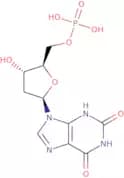
CAS:2'-Deoxyxanthosine 5'-monophosphate is a nucleoside which is an activator of the DNA polymerase. It has antiviral activity and is used in the synthesis of oligonucleotides. 2'-Deoxyxanthosine 5'-monophosphate is also used as a phosphoramidite in the chemical synthesis of DNA, and can be modified with fluorine or other atoms to form synthetic analogues.Purezza:Min. 95%2',3',5'-Tri-O-acetyl-N2-dimethylguanosine
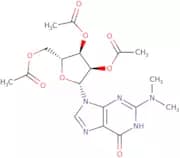
CAS:2',3',5'-Tri-O-acetyl-N2-dimethylguanosine is a novel modified nucleoside. It is a monophosphate that has been shown to be an activator of DNA and RNA synthesis, which can lead to the production of cancer cells. 2',3',5'-Tri-O-acetyl-N2-dimethylguanosine also has antiviral and antibacterial properties, as well as anticancer activity. This compound is used as a phosphoramidite in the synthesis of oligonucleotides for use in research and therapeutic applications.Formula:C18H23N5O8Purezza:Min. 95%Peso molecolare:437.4 g/mol8-Oxo-7-thioguanosine
CAS:8-Oxoguanosine monophosphate (8-oxoGMP) is a synthetic nucleoside that is activated by the enzyme thioredoxin reductase and phosphorylated to form 8-oxoGTP. The anticancer activity of 8-oxoGMP is due to its ability to inhibit ribonucleotide reductase, which reduces the production of DNA and RNA in cells. This product has been shown to inhibit HIV replication in vitro and in vivo. It also inhibits viral replication by inhibiting the synthesis of viral nucleic acids such as DNA, RNA, and deoxyribonucleic acid (DNA).Formula:C10H12N4O6SPurezza:Min. 95%Colore e forma:PowderPeso molecolare:316.29 g/molGuanosine 5'-[beta,gamma-imido]triphosphate tetralithium hydrate
CAS:<p>Guanosine 5'-[beta,gamma-imido]triphosphate tetralithium hydrate (GTP) is a nucleotide that is synthesized from guanosine 5'-diphosphate. GTP is an effector molecule that regulates the cytosolic protein synthesis and transport pathways. It binds to a number of proteins, including the guanine nucleotide-binding protein, which regulates the metabolic processes in cells. GTP has been shown to be beneficial in treating cancer by inducing apoptosis and inhibiting tumor growth. In addition, Guanosine 5'-[beta,gamma-imido]triphosphate tetralithium hydrate has been shown to inhibit congestive heart failure by reducing free radical production and increasing intracellular adenosine levels.</p>Formula:C10H13Li4N6O13P3Purezza:Min. 95%Peso molecolare:546 g/mol





![Guanosine 5'-[beta,gamma-imido]triphosphate tetralithium hydrate](/_next/image/?url=https%3A%2Fstatic.cymitquimica.com%2Fproducts%2F3D%2Fthumb-webp%2FPCA56403.webp&w=3840&q=75)