Nucleosidi
I nucleosidi sono building blocks fondamentali degli acidi nucleici, composti da una base azotata legata a una molecola di zucchero. In questa sezione, puoi trovare una vasta gamma di nucleosidi essenziali per la ricerca in biologia molecolare, biochimica e farmacologia. Questi composti svolgono ruoli cruciali nella sintesi del DNA e dell'RNA e sono vitali in vari processi metabolici. I nucleosidi vengono utilizzati per studiare il materiale genetico, sviluppare terapie antivirali e antitumorali e comprendere i meccanismi cellulari. Da CymitQuimica, forniamo nucleosidi di alta qualità per supportare le tue esigenze di ricerca e sviluppo, garantendo purezza e affidabilità per le tue applicazioni sperimentali.
Trovati 3569 prodotti di "Nucleosidi"
Ordinare per
Purezza (%)
0
100
|
0
|
50
|
90
|
95
|
100
2'-Deoxy-5'-S-DMT-5'-thioinosine 3'-CE phosphoramidite
2'-Deoxy-5'-S-DMT-5'-thioinosine 3'-CE phosphoramidite is a novel nucleoside analogue that has antiviral activity. It can be synthesized from 2'-deoxyribonucleosides and 5'-thioinosine monophosphate. This compound inhibits viral replication by inhibiting the synthesis of viral diphosphate, which is required for DNA synthesis. The compound also has anticancer properties and can inhibit the growth of tumor cells by blocking the process of DNA synthesis.Purezza:Min. 95%2'-Deoxyadenosine-5'-O-(1-thiotriphosphate) lithium salt - 100 mM aqueous solution
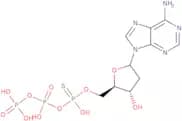
CAS:2'-Deoxyadenosine-5'-O-(1-thiotriphosphate) lithium salt is a circularization agent that can be used in the efficient method for the synthesis of DNA. It inhibits the growth of bacteria by binding to their DNA and preventing transcription. 2'-Deoxyadenosine-5'-O-(1-thiotriphosphate) lithium salt has shown inhibitory effects against tuberculosis and other infectious diseases, including diphtheria, tetanus, typhoid fever, and malaria. This drug also prevents the replication of viral RNA. The inhibition occurs through an analog mechanism at the level of nucleic acid synthesis or polymerase chain reaction (PCR). The thiophosphate group is cleaved from the triphosphate moiety in the presence of metal ions such as Zn2+, Mg2+, Mn2+, or Ca2+. The active form is enzymatically hydrolyzed by covalent enzyme activity toFormula:C10H16N5O11P3S·xLiPurezza:Min. 95%Peso molecolare:507.25 g/molAdenosine 5'-(tetrahydrogen triphosphate)
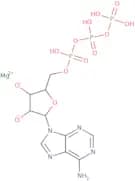
CAS:<p>Adenosine is a nucleoside consisting of adenine and ribose. It is used in biochemical analysis to quantify the cytosolic Ca2+ concentration, which is an important cellular signal that regulates many cellular processes. Adenosine stimulates the uptake of Ca2+ by binding to the monophosphate-activated protein (AMPAR), which results in the opening of voltage-gated calcium channels. These channels allow Ca2+ to enter the cell, increasing its intracellular concentration. Adenosine also has been shown to stimulate muscle contraction through increased release of Ca2+. This drug also possesses inhibitory effects on synaptic transmission and may have anti-inflammatory properties due to its ability to inhibit proteolytic enzymes in muscle cells.</p>Formula:C10H14MgN5O13P3Purezza:Min. 95%Peso molecolare:529.47 g/molAristeromycin
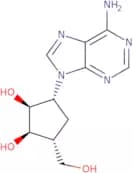
CAS:Carbocyclic nucleoside antibioticFormula:C11H15N5O3Purezza:Min. 95%Peso molecolare:265.27 g/mol2',3',5'-Tri-O-acetyl-5-methyluridine
<p>2',3',5'-Tri-O-acetyl-5-methyluridine is a nucleoside that is used as a substrate for the enzyme, methylmagnesium (MeMg) nucleotides. It has been shown to have a high basicity and is a good substrate for the enzyme, MeMg nucleotides. 2',3',5'-Tri-O-acetyl-5-methyluridine also has stereoselectivity and can be synthesized with high purity.</p>Purezza:Min. 95%Uridine-15N2
CAS:Uridine-15N2 is a novel nucleoside that has antiviral, anticancer and antifungal effects. It has been shown to inhibit the growth of tumor cells by blocking the synthesis of DNA and RNA. Uridine-15N2 is synthesized from uridine-5N2 and 15N2 gas. This product is used in molecular biology research as a substrate for DNA polymerase, to study the enzymatic process of DNA replication. It can also be used as an activator for ribonuclesides or deoxyribonucleosides in organic synthesis. Uridine-15N2 is soluble in water and has a high purity.Formula:C9H12N2O6Purezza:Min. 95%Peso molecolare:244.20 g/mol6-Amino-1-methyluracil
CAS:<p>6-Amino-1-methyluracil is a synthetic drug that is used in the treatment of inflammatory diseases, including rheumatoid arthritis and psoriasis. It is also used to treat cancer, such as leukemia and in the treatment of bacterial infections. 6-Amino-1-methyluracil inhibits the synthesis of DNA by inhibiting the enzyme thymidylate synthetase. This inhibition prevents DNA replication and transcription, which leads to cell death. 6-Amino-1-methyluracil binds to cellular proteins through its amino group and hydroxyl group, which are not involved in its chemical reactions. 6-Amino-1-methyluracil has shown great promise as a template molecule for the synthesis of new drugs.</p>Purezza:Min. 95%2,2-Crylo-5-methyluridine
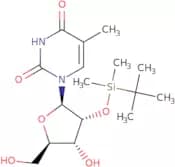
2,2-Crylo-5-methyluridine is a synthetic diphosphate nucleotide that has been shown to be an activator of DNA synthesis. It is used in the synthesis of oligonucleotides and as a monophosphate for the synthesis of 2'-O-methyl ribonucleosides. 2,2-Crylo-5-methyluridine has been shown to have anticancer activity, which may be due to its ability to inhibit tumor proliferation or induce apoptosis.Purezza:Min. 95%2'-O-tert-Butyldimethylsilyl-5-methyluridine
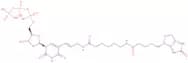
CAS:2'-O-tert-Butyldimethylsilyl-5-methyluridine is a monophosphate of 5-methyluridine. It is an analog of uracil and has been used as an antiviral agent, as well as for the prevention of colorectal cancer. 2'-O-tert-Butyldimethylsilyl-5-methyluridine is also known to be a potent activator of the ribonucleotide reductase enzyme, which may contribute to its anticancer effects. This compound has a high purity and quality, making it easy to use in various applications.Formula:C16H28N2O6SiPurezza:Min. 95%Peso molecolare:372.49 g/molBiotin-11-deoxyuridine-5'-triphosphate, triethylammonium salt - 1 mM aqueous solution
CAS:Biotin-11-deoxyuridine-5'-triphosphate, triethylammonium salt (Biotin-11-dUTP) is a nucleotide analog that is used as a fluorescent substrate for detection of DNA. It is nonradioactive and can be detected in aqueous solution. Biotin-11-dUTP binds to the 3' end of a DNA strand and becomes incorporated into the newly synthesized DNA strand during DNA replication. The incorporation of Biotin-11-dUTP into the newly synthesized strand causes an increase in fluorescence intensity, which can be detected by chemiluminescence. This nucleotide analog has been shown to have high sensitivity for detecting low levels of dsDNA in diploid cells and can be used for detection of bacterial strain, such as Salmonella enterica serovar Typhimurium.Formula:C34H56N7O18P3SPurezza:Min. 95%Peso molecolare:975.83 g/mol2'-Deoxy-5'-O-DMT-2-thio-N4-toluoylthymidine 3'-CE phosphoramidite
CAS:2'-Deoxy-5'-O-DMT-2-thio-N4-toluoylthymidine 3'-CE phosphoramidite is a novel nucleoside analogue with anticancer activity. It has been shown to inhibit the proliferation of human colon cancer cells in vitro, and inhibits the growth of HIV in cultured T-cells. In addition, this compound was found to be active against herpes virus. 2'-Deoxy-5'-O-DMT-2-thio-N4-toluoylthymidine 3'-CE phosphoramidite is a nucleoside analogue with ribonucleosides at the 2' and 5' positions, while the 4' position is modified by an acetyl group. This modification prevents incorporation into DNA or RNA, and so prevents viral replication.Formula:C48H56N5O7PSPurezza:Min. 95%Peso molecolare:878.05 g/mol3'-O-DMT-thymidine 3'-succinyl CPG 1000 Å
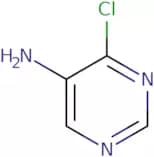
<p>3'-O-DMT-thymidine 3'-succinyl CPG 1000 Å is a monophosphate nucleoside that is used in the synthesis of DNA. It is an antiviral and anticancer drug that inhibits viral replication by competing with natural diphosphate nucleosides. 3'-O-DMT-thymidine 3'-succinyl CPG 1000 Å also has shown to be effective against leukemia cells in vitro and has been shown to inhibit angiogenesis, which may be due to its ability to inhibit the proliferation of endothelial cells.</p>Purezza:Min. 95%4-Chloro-5-aminopyrimidine
CAS:<p>4-Chloro-5-aminopyrimidine (4CAP) is an inhibitor of the enzyme purine nucleoside phosphorylase, which is involved in the synthesis of purines and pyrimidines. 4CAP has potent inhibitory activity with a Ki value of 0.06 μM, which is comparable to that of zebularine. 4CAP has also been shown to have antiinflammatory properties in lung tissue. The molecular modeling studies show that 4CAP binds to the hydroxyl group on the enzyme and prevents it from forming a covalent bond with its substrate. This causes a decrease in the rate of reaction time for the enzyme, resulting in decreased production of purines and pyrimidines.</p>Formula:C4H4ClN3Purezza:Min. 95%Peso molecolare:129.55 g/mol3'-Azido-3'-deoxy-5'-O-tritylthymidine
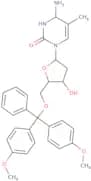
CAS:<p>An intermediate in the production of Zidovudine, the FDA approved medication for treatment of AIDS.</p>Formula:C29H27N5O4Purezza:Min. 98 Area-%Colore e forma:White PowderPeso molecolare:509.56 g/mol5'-O-DMT-thymidine-3'-lcaa-CPG
5'-O-DMT-thymidine-3'-lcaa-CPG is a nucleoside, ribonucleoside, and diphosphate that inhibits viral DNA synthesis. It is a novel compound with antiviral properties that has been shown to inhibit the replication of human cytomegalovirus (HCMV) and herpes simplex type 1 virus. 5'-O-DMT-thymidine-3'-lcaa-CPG also functions as an anticancer agent by inhibiting DNA synthesis in tumor cells. This nucleoside analog is phosphoramidite, which can be used for the preparation of modified oligonucleotides. 5'-O-DMT-thymidine-3'-lcaa-CPG has high purity and high quality.Purezza:Min. 95%Colore e forma:Powder2',3'-Stannyluridine
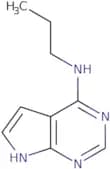
<p>2',3'-Stannyluridine is a novel modified ribonucleoside. It is synthesized by the condensation of 2'-deoxyuridine and 3'-hydroxy-2-methylpropiophenone. This product has been shown to have anticancer and antiviral activities. 2',3'-Stannyluridine inhibits the synthesis of DNA, RNA, and protein in cells by binding to the ribonucleotide reductase enzyme. It also has an effect on phosphoramidite synthesis, which is an important step in DNA replication. The CAS number for this product is 57824-03-1.</p>Purezza:Min. 95%6-Propylamino-7-deazapurine
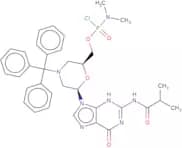
CAS:<p>6-Propylamino-7-deazapurine is a synthetic nucleoside with antiviral and anticancer properties. It is an activator of DNA synthesis and is modified to have a high quality. 6-Propylamino-7-deazapurine has been shown to be effective against HIV and other viruses in vitro, as well as in animal models, but it is not yet approved for use in humans.6-Propylamino-7-deazapurine has also been shown to inhibit the growth of cancer cells in vitro and in vivo.</p>Formula:C9H12N4Purezza:Min. 95%Peso molecolare:176.22 g/molN2-Isobutyryl-N-trityl-morpholinoguanine methyl dimethylphosphoramide chloridate
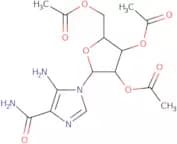
CAS:N2-Isobutyryl-N-trityl-morpholinoguanine methyl dimethylphosphoramide chloridate is a novel modified nucleoside analog with antiviral and anticancer activity. It is a phosphoramidite that is used in the synthesis of oligonucleotides and polynucleotides. N2-Isobutyryl-N-trityl-morpholinoguanine methyl dimethylphosphoramide chloridate has been shown to inhibit viral replication in vitro by inhibiting viral DNA polymerase, as well as tumor growth in vivo by inducing apoptosis. This compound has also been shown to be an activator for RNA polymerases I, II, and III.Purezza:Min. 95%5-Amino-1-(2',3',5'-tri-O-acetyl-b-D-ribofuranosyl)-imidazole-4-carboxamide
CAS:<p>5-Amino-1-(2',3',5'-tri-O-acetyl-b-D-ribofuranosyl)-imidazole-4-carboxamide (AICAR) is a high purity novel nucleotide analog that has been shown to be an activator of AMPK. AICAR can act as a substitute for ATP, the molecule that drives cellular energy production. AICAR has been shown to inhibit tumor growth and induce apoptosis in cancer cells. This compound also inhibits viral RNA replication by competitively binding to the enzyme polymerase, which is essential for viral replication.</p>Formula:C15H20N4O8Purezza:Min. 95%Peso molecolare:384.34 g/mol5-Fluoro-1-(2'-deoxy-2'-fluoro-5'-O-trityl-b-L-lyxofuranosyl)-uracil
5-Fluoro-1-(2'-deoxy-2'-fluoro-5'-O-trityl-b-L-lyxofuranosyl)-uracil is a phosphoramidite, activator, and synthetic nucleoside that has been modified to contain fluorine atoms. 5-Fluoro-1-(2'-deoxy-2'-fluoro-5'-O-trityl-b-L-lyxofuranosyl)-uracil is an antiviral agent that was developed for the treatment of HIV/AIDS and cancer. It inhibits the synthesis of DNA by inhibiting the enzyme ribonucleotide reductase. This drug also has anticancer properties because it inhibits the synthesis of DNA in tumor cells and activates apoptosis, causing cell death.Purezza:Min. 95%