Nucleosidi
I nucleosidi sono building blocks fondamentali degli acidi nucleici, composti da una base azotata legata a una molecola di zucchero. In questa sezione, puoi trovare una vasta gamma di nucleosidi essenziali per la ricerca in biologia molecolare, biochimica e farmacologia. Questi composti svolgono ruoli cruciali nella sintesi del DNA e dell'RNA e sono vitali in vari processi metabolici. I nucleosidi vengono utilizzati per studiare il materiale genetico, sviluppare terapie antivirali e antitumorali e comprendere i meccanismi cellulari. Da CymitQuimica, forniamo nucleosidi di alta qualità per supportare le tue esigenze di ricerca e sviluppo, garantendo purezza e affidabilità per le tue applicazioni sperimentali.
Trovati 3569 prodotti di "Nucleosidi"
Ordinare per
Purezza (%)
0
100
|
0
|
50
|
90
|
95
|
100
2-Chloro-N,N-dimethyl-2’C-methyladenosine
CAS:2-Chloro-N,N-dimethyl-2’C-methyladenosine is a synthetic nucleoside that inhibits viral DNA synthesis. It is a modified deoxyribonucleoside that contains a chloro group at the 2’ position of the sugar ring and a methyl group at the 3’ position. This drug has antiviral activity against herpes simplex virus type 1 (HSV-1) and herpes simplex virus type 2 (HSV-2), respiratory syncytial virus (RSV), and influenza A virus. It also displays anticancer activity in vitro. This drug inhibits cancer cell growth by interfering with DNA replication and triggering apoptosis through inhibition of protein kinase C and activation of caspases.Purezza:Min. 95%3’C-Methylguanosine
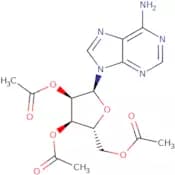
CAS:<p>3’C-Methylguanosine is a nucleoside that inhibits viral replication by acting as an antiviral agent. It is also used in anticancer treatments, and has been shown to be a novel phosphoramidite activator of DNA synthesis. 3’C-Methylguanosine has a CAS number of 115303-89-4, and the molecular weight is 277.3 g/mol. This chemical compound has not been modified or reacted with any other substances, and is suitable for use in research and development.</p>Purezza:Min. 95%2,3,5-Tri-O-acetyl α-adenosine
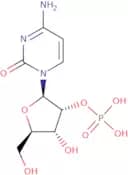
CAS:<p>2,3,5-Tri-O-acetyl α-adenosine is a nucleoside analog of adenosine that has been tri-acetylated. This molecule can be used in research.</p>Formula:C16H19N5O7Purezza:Min. 95%Colore e forma:PowderPeso molecolare:393.35 g/molCytidine-2'-monophosphate sodium
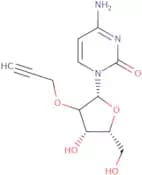
CAS:<p>Cytidine-2'-monophosphate sodium (CMP) is a nucleotide that is used as a monophosphate or diphosphate. It can be used to synthesize DNA and RNA. CMP also has antiviral, anticancer, and high purity properties. CMP is an activator of DNA polymerases and helps in the synthesis of DNA. It has novel properties that make it different from other nucleotides, such as its modified sugar moiety.</p>Formula:C9H12Na2N3O8PPurezza:Min. 90%Colore e forma:PowderPeso molecolare:367.18 g/mol2'-O-Propargylcytidine
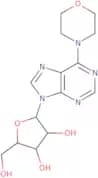
CAS:<p>2'-O-Propargylcytidine is a novel nucleoside that has been modified from cytidine. It is designed to inhibit the activity of RNA polymerase and to be used in anticancer therapy. The synthesis of 2'-O-propargylcytidine has been achieved by modifying the nucleotide with propargylic chloride, which is then reacted with sodium cyanide. The resulting product is purified by column chromatography and recrystallization.<br>2'-O-Propargylcytidine is a phosphoramidite that can be used for DNA synthesis or as a monophosphate in RNA synthesis. This high purity product has a CAS number of 206552-85-4 and it can be used as an activator for ribonucleosides, such as adenosine, guanosine, uridine, cytidine, and thymidine.</p>Formula:C12H15N3O5Purezza:Min. 95%Colore e forma:PowderPeso molecolare:281.26 g/mol6-(4-Morpholino)-9-(β-D-ribofuranosyl)-9H-purine
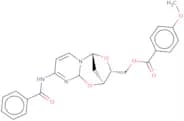
CAS:<p>6-(4-Morpholino)-9-(β-D-ribofuranosyl)-9H-purine is a modified monophosphate analog of adenosine. It is an antiviral agent that inhibits the synthesis of nucleic acids in virus-infected cells, preventing viral replication and spread. 6-(4-Morpholino)-9-(β-D-ribofuranosyl)-9H-purine is also used as a radiosensitizer to treat cancer. This drug is synthesized by high purity, high quality and reliable suppliers.</p>Formula:C14H19N5O5Purezza:Min. 95%Colore e forma:PowderPeso molecolare:337.33 g/mol2,3'-Anhydro-5'-O-p-anisoyl-N4-benzoyl-2'-deoxycytidine
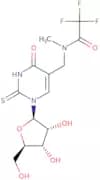
2,3'-Anhydro-5'-O-p-anisoyl-N4-benzoyl-2'-deoxycytidine is a novel nucleoside analogue with antiviral and anticancer properties. It is an activator of ribonucleotide reductase and inhibits DNA synthesis by inhibiting deoxyribonucleotide reductase. 2,3'-Anhydro-5'-O-p-anisoyl-N4-benzoyl-2'-deoxycytidine has shown to be a potent inhibitor of HIV replication in vitro. It also has anticancer activity by inhibiting the growth of tumor cells and inducing apoptosis.Formula:C24H23N3O6Purezza:Min. 95%Peso molecolare:449.46 g/mol5-(N-Methyl-N-trifluoroacetyl-aminomethyl)-2-thiouridine
CAS:<p>5-(N-Methyl-N-trifluoroacetyl-aminomethyl)-2-thiouridine is a novel antiviral drug that inhibits the synthesis of viral DNA. It has been shown to be effective against HIV, herpes simplex virus and cytomegalovirus (CMV). 5-(N-Methyl-N-trifluoroacetyl-aminomethyl)-2-thiouridine is a nucleoside analogue that can be used as an activating agent in the synthesis of oligonucleotides and phosphoramidites. It has anticancer properties and may also have applications in gene therapy.</p>Purezza:Min. 95%6-Amino-3-iodo-4-methoxy-1-(b-D-ribofuranosyl)-1H-pyrazolo[3,4-d]pyrimidine
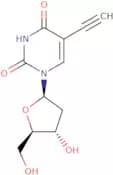
CAS:6-Amino-3-iodo-4-methoxy-1-(beta-D-ribofuranosyl)-1H-pyrazolo[3,4-d]pyrimidine is a synthetic nucleoside that has antiviral activity. It is an activator of DNA polymerase and can be used to synthesize DNA and RNA. 6AIOMP binds to the ribonucleotide reductases in cells and inhibits their activity. This prevents the conversion of ribonucleotides into deoxyribonucleotides, which are essential for DNA synthesis.Purezza:Min. 95%EdU
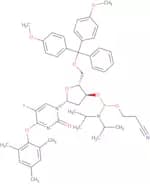
CAS:2'-Deoxy-5-ethynyluridine (5-EdU) is a modified thymidine analogue containing a terminal alkyne group, which is used for nucleotide labelling. 5-Edu is easily taken up by cells and incorporated by metabolic activation during DNA synthesis. By adding an azide conjugated to a fluorophore or a biotin moiety, a click reaction occurs from the labelled nucleotide linked by a triazole group. 5-Edu are employed in cell proliferation assays, to study DNA and RNA localisation, structure and dynamics, in the synthesis of aptamers with the click-SELEX method, and in other applications such as the preparation of oligonucleotide microarrays and nanoelectronic devices.Formula:C11H12N2O5Purezza:Min. 98 Area-%Colore e forma:PowderPeso molecolare:252.23 g/mol2'-Deoxy-5'-O-DMT-5-fluoro-O4-(2,4,6-trimethylphenyl)uridine 3'-CE phosphoramidite
CAS:2'-Deoxy-5'-O-DMT-5-fluoro-O4-(2,4,6-trimethylphenyl)uridine 3'-CE phosphoramidite is a nucleoside that has high purity and high quality. It is an anti cancer agent that inhibits the growth of cells by preventing DNA synthesis and RNA synthesis. This product is also used as an antiviral agent for influenza A virus and herpes simplex virus type 1 (HSV1). 2'-Deoxy-5'-O-DMT-5-fluoro-O4-(2,4,6-trimethylphenyl)uridine 3'-CE phosphoramidite is synthesized from ribonucleosides and deoxyribonucleosides. It can be modified to produce monophosphate, diphosphate or triphosphate forms of the nucleotide.Formula:C48H56FN4O8PPurezza:Min. 95%Peso molecolare:866.95 g/mol5’-O-DMT-2’-b-C-methyladenosine
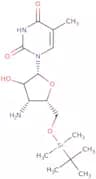
<p>5’-O-DMT-2’-b-C-methyladenosine is a modified nucleoside with antiviral and anticancer activity. It is an activator of DNA synthesis, and can be used as a precursor for phosphoramidites for the synthesis of oligonucleotides. The 5’-O-DMT group in this compound may be replaced with other activating groups to synthesize different modified nucleosides.</p>Purezza:Min. 95%3'-Amino-5'-O-tert-butyldimethylsilyl-3'-deoxythymidine
CAS:3'-Amino-5'-O-tert-butyldimethylsilyl-3'-deoxythymidine is a novel synthetic nucleoside that has been shown to have anticancer and antiviral activities. The compound is an activator of the immune system, which may be due to its ability to stimulate the production of interferon and other cytokines. 3'-Amino-5'-O-tert-butyldimethylsilyl-3'-deoxythymidine can also inhibit viral DNA polymerases. This nucleoside has been shown to inhibit the growth of leukemia cells in culture by inhibiting ribonucleotide reductase activity.Formula:C16H29N3O5SiPurezza:Min. 95%Peso molecolare:371.51 g/mol1-Amino-8-benzyloxy-9-(b-D-xylofuranosyl)guanine
<p>1-Amino-8-benzyloxy-9-(b-D-xylofuranosyl)guanine is a novel nucleoside that is chemically synthesized. It is an activator of ribonucleotide reductase and has been shown to have anti-cancer, antiviral, and antiproliferative activities.</p>Purezza:Min. 95%3’-deoxy-3’-fluorosangivamycin
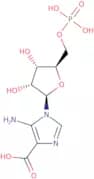
CAS:<p>3’-deoxy-3’-fluorosangivamycin is a modified deoxyribonucleoside with antiviral and anticancer properties. It is an activator of DNA polymerase. 3’-deoxy-3’-fluorosangivamycin has been shown to inhibit the replication of human immunodeficiency virus type 1 (HIV-1) in the calf thymus DNA system. This drug is also effective against other viruses, such as herpes simplex virus type 2 (HSV-2), cytomegalovirus (CMV), and influenza A virus. 3′-deoxy-3′-fluorosangivamycin binds to viral DNA and inhibits nucleotide incorporation, leading to inhibition of viral RNA synthesis and protein synthesis.</p>Purezza:Min. 95%5-Aminoimidazole-4-carboxylic acid-1-b-D-ribofuranose 5'-monophosphate
CAS:5-Aminoimidazole-4-carboxylic acid-1-b-D-ribofuranose 5'-monophosphate (AIRC) is a synthetase that catalyzes the reaction between ribulose 5-phosphate and ammonia to form 1,3,5-triaminoimidazole ribotide. AIRC is found in plants such as solanum tuberosum, where it functions in the synthesis of starch. It has been shown to be involved in physiological processes, including enzymatic reactions and growth factors. The enzyme is activated by hydrochloric acid and pyridine phosphate, which are its substrates. The enzyme is also inhibited by dry weight and synthetic pathway inhibitors. This enzyme has been used as a model for studying the effects of linear models on metabolic pathways.Formula:C9H14N3O9PPurezza:Min. 95%Peso molecolare:339.2 g/mol6-Amino-4-hydroxyamino-2-(b-D-ribofuranosyl)-2H-pyrazolo[3,4-d]pyrimidine
<p>6-Amino-4-hydroxyamino-2-(b-D-ribofuranosyl)-2H-pyrazolo[3,4-d]pyrimidine is a novel synthetic ribonucleotide that inhibits the growth of tumor cells by interfering with DNA synthesis. This compound has been shown to inhibit the replication of HIV and herpes simplex virus type 1. The phosphoramidite monomer is readily available and can be synthesized in high purity and high quality. 6-Amino-4-hydroxyamino-2-(b-D-ribofuranosyl)-2H-pyrazolo[3,4-d]pyrimidine is a modified nucleoside that is activated by phosphorylation at the 5' position. CAS No.: 10266890</p>Purezza:Min. 95%2’-O-Acetyl-8-bromo-7-cyano-7-deaza-3’-deoxy-3’-fluoro-5’-O-toluoyladenosine
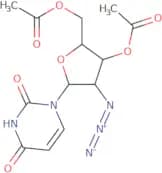
<p>2'-O-Acetyl-8-bromo-7-cyano-7-deaza-3'-deoxy-3'-fluoro-5'-O-[toluoyl]adenosine (ABT) is a modified nucleoside that has anticancer and antiviral properties. ABT is a monophosphate nucleotide with an acetyl group at the 2' position of the ribose and a toluoyl group on the 7 position of the adenine moiety. In vitro, ABT inhibits tumor proliferation in breast cancer cells and suppresses viral replication in herpes simplex virus type 1 (HSV1) infected cells. ABT also has potential as a novel therapeutic agent for treating cancers and other diseases caused by HSV1 infection.</p>Purezza:Min. 95%3’,5’-Di-O-acetyl-2’-azido-2’-deoxyuridine
CAS:Please enquire for more information about 3’,5’-Di-O-acetyl-2’-azido-2’-deoxyuridine including the price, delivery time and more detailed product information at the technical inquiry form on this pagePurezza:Min. 95%Inosine-3',5'-cyclic-monophosphate triethylammonium - 10 mM aqueous solution
Inosine-3',5'-cyclic-monophosphate triethylammonium is a synthetic nucleoside that functions as an activator of the deoxyribonucleotide synthesis. It has antiviral and anticancer properties, and has been shown to have anti-inflammatory activities. Inosine-3',5'-cyclic-monophosphate triethylammonium has been shown to inhibit the growth of cells in culture and induce apoptosis. This is due to its ability to inhibit DNA synthesis by inhibiting the enzyme ribonucleotide reductase.Formula:C10H11N4O7P·NC6H15Purezza:Min. 95%Peso molecolare:431.38 g/mol



![6-Amino-3-iodo-4-methoxy-1-(b-D-ribofuranosyl)-1H-pyrazolo[3,4-d]pyrimidine](/_next/image/?url=https%3A%2Fstatic.cymitquimica.com%2Fproducts%2F3D%2Fthumb-webp%2FNA162944.webp&w=3840&q=75)



![6-Amino-4-hydroxyamino-2-(b-D-ribofuranosyl)-2H-pyrazolo[3,4-d]pyrimidine](/_next/image/?url=https%3A%2Fstatic.cymitquimica.com%2Fproducts%2F3D%2Fthumb-webp%2FNA162982.webp&w=3840&q=75)