Nucleosidi
I nucleosidi sono building blocks fondamentali degli acidi nucleici, composti da una base azotata legata a una molecola di zucchero. In questa sezione, puoi trovare una vasta gamma di nucleosidi essenziali per la ricerca in biologia molecolare, biochimica e farmacologia. Questi composti svolgono ruoli cruciali nella sintesi del DNA e dell'RNA e sono vitali in vari processi metabolici. I nucleosidi vengono utilizzati per studiare il materiale genetico, sviluppare terapie antivirali e antitumorali e comprendere i meccanismi cellulari. Da CymitQuimica, forniamo nucleosidi di alta qualità per supportare le tue esigenze di ricerca e sviluppo, garantendo purezza e affidabilità per le tue applicazioni sperimentali.
Trovati 3569 prodotti di "Nucleosidi"
Ordinare per
Purezza (%)
0
100
|
0
|
50
|
90
|
95
|
100
7-(2-C-Methyl-b-D-ribofuranosyl)-7H-pyrrolo[2,3-d]pyrimidin-2-amine
CAS:<p>7-(2-C-Methyl-b-D-ribofuranosyl)-7H-pyrrolo[2,3-d]pyrimidin-2-amine (Ampyra) is a synthetic nucleoside activator of the deoxyribonucleoside monophosphate (dNMP) and dNMP diphosphate (dNDP) pathways. It has antiviral and anticancer activities, as well as an inhibitory effect on DNA synthesis by blocking the polymerization of deoxyribonucleotides.<br>It is also an inhibitor of histone acetyltransferase and may be useful in the treatment of Alzheimer's disease. Ampryra is a novel compound with high purity and high quality. It is phosphoramidite that can be used for the preparation of oligodeoxynucleotides for use in DNA sequencing or gene therapy.</p>Purezza:Min. 95%2-Chloro-6-O-methylinosine
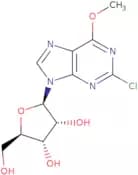
CAS:<p>2-Chloro-6-O-methylinosine is a modified nucleoside analog. Its structure is based on inosine and at position 2 a chlorine atom replaces the hydrogen. At position 6, the keto oxygen (normally part of the purine ring) is O-methylated, forming a methoxy group (-OCH₃)</p>Formula:C11H13ClN4O5Purezza:Min. 95%Colore e forma:PowderPeso molecolare:316.7 g/mol8-Bromoinosine
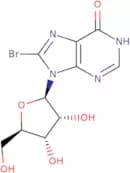
CAS:<p>8-Bromoinosine is a potent chemical probe that can be used to study the molecular mechanism of cGMP-dependent protein kinase (PKG). 8-Bromoinosine reacts with the acceptor site in PKG, which is located at the base of the active site cleft. Electrons from hydrogen bond donor sites on 8-bromoadenosine are transferred to chloride ion and the resulting 8-bromoinosine chloride complex is an effective inhibitor of PKG. It has been shown that stereoselectivity plays a role in this reaction mechanism.</p>Formula:C10H11BrN4O5Purezza:Min. 95%Colore e forma:PowderPeso molecolare:347.13 g/mol2,3'-Anhydro-5'-O-tert-butyldiphenylsilylthymidine
<p>2,3'-Anhydro-5'-O-tert-butyldiphenylsilylthymidine is a synthetically modified thymidine analog for use in research</p>Purezza:Min. 95%Colore e forma:White to off-white solid.2'-Deoxy-2'-fluoroadenosine
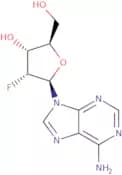
CAS:2’-Deoxy-2’-fluoro nucleosides and nucleotides have been shown to demonstrate anti-viral activity against influenza, SARS and HIV. More specifically the phosphonate of 2'-Deoxy-2'-fluoroadenosine has been evaluated as an inhibitor of Hepacivirus C (HCV).Formula:C10H12FN5O3Purezza:Min. 95%Colore e forma:White PowderPeso molecolare:269.24 g/molN6-Benzoyl-5'-O-DMT-2'-O-propynyladenosine 3'-CE phosphoramidite
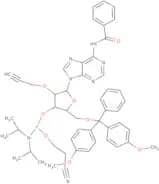
CAS:<p>N6-Benzoyl-5'-O-DMT-2'-O-propynyladenosine 3'-CE phosphoramidite is a modified nucleoside, which is an important building block for DNA and RNA synthesis. It is synthesized by the condensation of 6-benzoyladenosine with 2'-O-propynyladenosin. The stability of this compound has been demonstrated by its resistance to hydrolysis and oxidation, while it can also be activated with a variety of activators, including NaBH4 or NaCNBH3. This novel nucleotide has shown anticancer activity in vivo and antiviral activity against HIV.</p>Formula:C50H54N7O8PPurezza:Min. 95%Peso molecolare:911.98 g/mol6-Chloro-7-deaza-9-(b-D-ribofuranosyl)purine
CAS:6-Chloro-7-deaza-9-(b-D-ribofuranosyl)purine is a novel nucleoside that has been shown to be an efficient activator of the transcription factor NFκB in vitro. 6-Chloro-7-deaza-9-(b-D-ribofuranosyl)purine is synthesized by phosphoramidite chemistry and purified by HPLC. It has been demonstrated to inhibit the replication of human immunodeficiency virus (HIV) in a dose dependent manner, which may be due to its ability to inhibit the synthesis of viral DNA and RNA. This product is highly pure and can be used for many purposes, including as a synthetic building block for DNA or as an antiviral drug.Formula:C11H12ClN3O4Purezza:Min. 95%Colore e forma:White PowderPeso molecolare:285.69 g/mol1,5-Anhydro-3-O-benzoyl-4,6-O-benzylidene-2-deoxy-2-(N4-benzoylcytidin-1-yl)-D-altro-hexitol
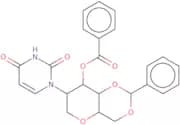
CAS:1,5-Anhydro-3-O-benzoyl-4,6-O-benzylidene-2-deoxy-2-(N4-benzoylcytidin-1-yl)-D-altro-hexitol is a synthetic nucleoside analog for use in researchFormula:C24H22N2O7Purezza:Min. 95%Colore e forma:White To Off-White SolidPeso molecolare:450.45 g/mol1-(2’-Deoxy-2’-fluoro-b-D-arabinofuranosyl)-N3-[3-(tert-butoxycarbonyl)amino]propyluracil
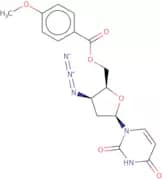
CAS:<p>1-(2’-Deoxy-2’-fluoro-b-D-arabinofuranosyl)-N3-[3-(tert-butoxycarbonyl)amino]propyluracil is a nucleoside with antiviral and anticancer properties. It is an activator of DNA synthesis and has been shown to inhibit the proliferation of cancer cells. 1-(2’-Deoxy-2’-fluoro-b-D-arabinofuranosyl)-N3-[3-(tert-butoxycarbonyl)amino]propyluracil is a modified nucleoside that has been synthesized by modifying the sugar moiety of ribonucleosides or deoxyribonucleosides. It contains a 2'-deoxypyrimidine base, which can be substituted with different atoms or groups to produce different drugs. The drug inhibits viral replication by inhibiting the growth of</p>Purezza:Min. 95%5'-O-p-Anisoyl-3'-azido-2',3'-dideoxyuridine
5'-O-p-Anisoyl-3'-azido-2',3'-dideoxyuridine is a compound that inhibits DNA synthesis and viral replication. It is an antiviral agent that inhibits the activation of virus by blocking the incorporation of deoxyribonucleotide triphosphates into viral DNA chains. This compound also has anticancer activity, which may be due to its ability to inhibit RNA synthesis in tumor cells.Formula:C17H17N5O6Purezza:Min. 95%Peso molecolare:387.35 g/molCytidine 3',5'-cyclic monophosphate monosodium
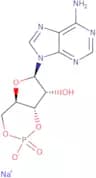
CAS:Cytidine 3',5'-cyclic monophosphate monosodium is a phosphotriester that is used as a building block to synthesize ribonucleosides, uridine, guanosine, and cytidine. The phosphate group in the molecule can be removed by nucleophilic substitution with ammonia or sodium hydroxide to form the corresponding nucleosides. Cytidine 3',5'-cyclic monophosphate monosodium has been shown to inhibit bacterial growth.Formula:C9H11N3O7PNaPurezza:Min. 95%Colore e forma:White PowderPeso molecolare:327.16 g/molN-Acetyl-2'-O-[(tert-butyl)dimethylsilyl]-5'-O-DMT-6'-O-methylguanosine-3'-CE phosphoramidite
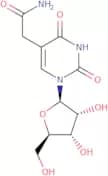
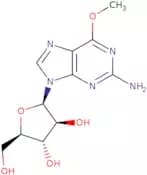
CAS:N-Acetyl-2'-O-[(tert-butyl)dimethylsilyl]-5'-O-DMT-6'-O-methylguanosine-3'-CE phosphoramidite is a nucleoside and nucleotide analog. It is synthesized by reacting 2'-deoxyguanosine with acetyl chloride, 5'-dimethoxytrityl chloride, and 3'-Ce phosphoramidite in an organic solvent. N-Acetyl-2'-O-[(tert-butyl)dimethylsilyl]-5'-O-DMT-6'-O-methylguanosine has been shown to inhibit the growth of cancer cells and viruses in cell culture studies. It is also a potent inhibitor of HIV replication in vitro.Formula:C49H66N7O9PSiPurezza:Min. 95%Colore e forma:PowderPeso molecolare:956.15 g/mol5-Carbamoylmethyluridine
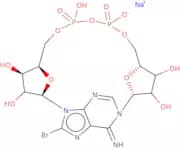
CAS:<p>5-Carbamoylmethyluridine is a nucleoside that is structurally related to uridine. It is synthesized from uridine by methyl esterification with carbamic acid and methoxycarbonyl chloride. 5-Carbamoylmethyluridine interacts with actin filaments and has been shown to alter the expression of messenger RNA in eukaryotes. 5-Carbamoylmethyluridine also acts as a competitive inhibitor of the formation of a ternary complex, which includes ATP, GTP, and UTP, at the level of ribonucleotide reductase. This inhibition leads to decreased synthesis of messenger RNA in cells.</p>Formula:C11H15N3O7Purezza:Min. 95 Area-%Colore e forma:White PowderPeso molecolare:301.25 g/mol8-Bromocyclic adenosine diphosphate ribose sodium
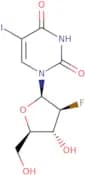
CAS:<p>8-Bromocyclic adenosine diphosphate ribose sodium salt (8BCAR) is a cytosolic cyclase inhibitor that inhibits the synthesis of cyclic adenosine monophosphate (cAMP). 8BCAR blocks the activation of protein kinase A, which is an enzyme involved in the phosphorylation of cAMP. 8BCAR has been shown to inhibit cardiac hypertrophy induced by growth factor-β1 and to increase mitochondrial membrane potential, as well as to suppress cardiomyocyte apoptosis. In addition, this drug can be used for the treatment of cancers such as leukemia and lymphoma.</p>Formula:C15H19BrN5NaO13P2Purezza:Min. 95%Colore e forma:PowderPeso molecolare:642.19 g/molFialuridine - Bio-X ™
CAS:This product is part of our Bio-X ™ Range. These products are aimed at life science researchers who need high quality ready-to-use products for assay development, screening or other R&D work. With a solubility datasheet and convenient vials, all of our Bio-X ™ products are in stock across our global warehouses for rapid delivery and ease of use.Formula:C9H10FIN2O5Purezza:Min. 95%Colore e forma:PowderPeso molecolare:372.09 g/molN7-Methylguanosine
CAS:<p>N-7-Methylguanosine is a nucleotide that has potent anti-viral activity. It inhibits viral replication by binding to the effector proteins of a virus and preventing translation, transcriptional regulation, and other biochemical processes. N7-Methylguanosine also binds to the x-ray crystal structures of the viral genome and blocks the binding of RNA polymerase to DNA. This drug can be used as an antiviral agent for the treatment of HIV infection and hepatitis B infection. N7-Methylguanosine is not active against some viruses such as herpes simplex virus type 1 or 2, influenza virus type A/B, or rhinovirus type 2.<br>N7-Methylguanosine has been shown to have an effect on body mass index in humans by reducing weight gain in patients with metabolic syndrome. It also has an enzyme form that can be used for therapeutic use in human serum.</p>Formula:C11H15N5O5Purezza:Min. 95%Colore e forma:White PowderPeso molecolare:297.27 g/molAdenosine 3',5'-cyclic monophosphate sodium salt
CAS:<p>Second messenger in intracellular signal transduction</p>Formula:C10H11N5NaO6PPurezza:Min. 97 Area-%Colore e forma:White PowderPeso molecolare:351.19 g/molN6-Benzoyl-3'-deoxy-5'-O-DMT-cytidine 2'-CE phosphoramidite
CAS:<p>N6-Benzoyl-3'-deoxy-5'-O-DMT-cytidine 2'-CE phosphoramidite is a Ribonucleoside, Novel, High quality, Activator, Deoxyribonucleosides, Modified, CAS No. 157327-96-3. It is one of the main ingredients in the synthesis of DNA monophosphate and diphosphate. It is also used as an anticancer and antiviral agent.</p>Formula:C46H52N5O8PPurezza:Min. 95%Peso molecolare:833.91 g/mol3'-Deoxy-3'-fluoro-5'-O-toluoylcytidine
CAS:<p>3'-Deoxy-3'-fluoro-5'-O-toluoylcytidine is a monophosphate nucleoside of cytidine. It is a phosphoramidite building block for the synthesis of DNA, an antiviral and anticancer agent. 3'-Deoxy-3'-fluoro-5'-O-toluoylcytidine has been shown to inhibit the replication of HIV and herpes simplex virus (HSV) in cell cultures and to induce apoptosis in cancer cells by inhibiting protein synthesis and inducing oxidative stress. This nucleoside is synthesized from deoxythymidine 5' phosphate using phosphorus pentoxide as oxidizing agent, followed by a reaction with toluene. The novel 3'-deoxy-3'-fluoro-5'-O-toluoylcytidine can be used as an activator for other modified nucleotides in DNA synthesis or as scaffold for the</p>Purezza:Min. 95%Nelarabine
CAS:<p>Nelarabine is a drug that prevents the growth of cells by inhibiting the bcr-abl kinase, which is an intracellular target. This drug has been shown to be effective against pediatric patients with t-cell acute lymphoblastic leukemia and adults with chronic myeloid leukemia. Nelarabine has minimal toxicity in humans and is not toxic to healthy cells. It has been shown to have anti-inflammatory properties and may be used as a biomarker for autoimmune diseases. Nelarabine also inhibits angiogenesis, which may be due to its effects on nuclear DNA.</p>Formula:C11H15N5O5Purezza:Min. 95%Colore e forma:White PowderPeso molecolare:297.27 g/mol6-Amino-2,5-dihydro-2-(b-D-ribofuranosyl)-4H-pyrazolo[3,4-d]pyrimidin-4-one
CAS:6-Amino-2,5-dihydro-2-(b-D-ribofuranosyl)-4H-pyrazolo[3,4-d]pyrimidin-4-one is a novel chemical. It is a nucleoside analog that has been shown to inhibit the growth of cancer cells in vitro and in vivo. 6-Amino-2,5-dihydro-2-(b-D ribofuranosyl)-4H pyrazolo[3,4 d]pyrimidin 4 one has also been shown to inhibit viral replication. It is phosphoramidites that are modified with bifunctional linkers for coupling to DNA or RNA molecules. 6 amino 2 5 dihydro 2 (b D ribofuranosyl) 4 H pyrazolo 3 4 d pyrimidine 4 one has high purity and high quality.Purezza:Min. 95%N-Phenylpyridin-4-amine
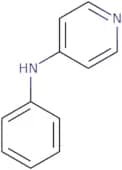
CAS:N-Phenylpyridin-4-amine is a tautomeric compound that has been shown to inhibit the growth of cancer cells. It is able to bind to tyrosine kinase and inhibit its activity, which affects the proliferation of cancer cells. N-Phenylpyridin-4-amine also inhibits mitochondrial functions by inhibiting cytochrome c oxidase. This drug also has an anti-inflammatory effect, inhibiting the production of cytokines such as IL1β, IL6, and TNFα. The biological function of N-Phenylpyridin-4-amine is not yet fully understood. It may be due to the inhibition of protein tyrosine phosphatases (such as PTP1B), which are involved in insulin signalling pathways.Formula:C11H10N2Purezza:Min. 95%Colore e forma:White Off-White PowderPeso molecolare:170.21 g/molCytarabine hydrochloride
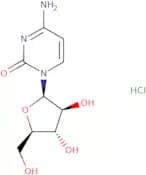
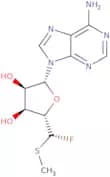
CAS:<p>Anti-viral; anti-neoplastic</p>Formula:C9H13N3O5·HClPurezza:Min. 98 Area-%Colore e forma:White PowderPeso molecolare:279.68 g/mol5'-Deoxy-5'-fluoro-5'-(methylthio)adenosine
CAS:<p>5'-Deoxy-5'-fluoro-5'-(methylthio)adenosine is an analogue of adenosine that has inhibitory activities on the biosynthetic pathway of polyamines. It has been shown to have a cytostatic effect on murine leukemia cells in vitro. 5'-Deoxy-5'-fluoro-5'-(methylthio)adenosine inhibits the production of polyamines by interfering with the enzyme responsible for their biosynthesis, ornithine decarboxylase. 5'-Deoxy-5'-fluoro-5'-(methylthio)adenosine also inhibits the growth of murine leukemia cells and other leukemia cell lines, including L1210 and MM1.</p>Formula:C11H14FN5O3SPurezza:Min. 95%Peso molecolare:315.33 g/mol5'-O-Acetyl-2',3'-dideoxy-2',3'-didehydro-5-fluorouridine
CAS:5'-O-Acetyl-2',3'-dideoxy-2',3'-didehydro-5-fluorouridine is a nucleoside analog. It is synthesized by substituting the hydroxyl group of uridine with a fluorine atom and the 2' position of ribose with a 5'-O-acetyl group. This modification prevents the incorporation of this nucleoside into DNA or RNA, making it an effective antiviral and anticancer agent. 5'-O-Acetyl-2',3'-dideoxy-2',3'-didehydro-5-fluorouridine has been shown to be highly active against tumor cells but not normal cells in vitro.Formula:C11H11N2O5Purezza:Min. 95%Peso molecolare:251.22 g/mol1-(2'-O-4-C-Methylene-b-D-ribofuranosyl)thymine
CAS:<p>1-(2'-O-4-C-Methylene-b-D-ribofuranosyl)thymine is a nucleoside analog with a modified ribofuranosyl sugar, which includes a 2'-O-4'-C-methylene bridge that constrains the sugar conformation.</p>Formula:C11H14N2O6Purezza:Min. 95%Colore e forma:PowderPeso molecolare:270.24 g/molN4-Acetyl-5'-O-DMT-2'-O-methylcytidine
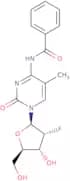
CAS:N4-Acetyl-5'-O-DMT-2'-O-methylcytidine is a cytidine analogue that has been synthesized to be used as an enzyme-linked probe. It is labelled with biotin and can be detected by binding to an antibody which has been labelled with a fluorescent tag. Cytidine analogues are synthesized on a solid phase and then cleaved from the support material. The spacer arm is added to the 5' end of the nucleotide and the 3'-OH group is modified with 2'-O-methyl groups. N4-Acetyl-5'-O-DMT-2'-O-methylcytidine has been shown to be sensitive in techniques such as solid phase synthesis, nucleic acid research, and immunoassays.Formula:C33H35N3O8Purezza:Min. 95%Colore e forma:Off-White PowderPeso molecolare:601.65 g/mol2'-Deoxy-2'-fluoro-N4-benzoyl-5-methylcytidine
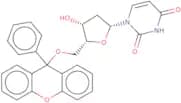
CAS:<p>2'-Deoxy-2'-fluoro-N4-benzoyl-5-methylcytidine is a monophosphate nucleoside that is used as an antiviral and anticancer drug. It inhibits the synthesis of DNA, RNA, and proteins by acting as a chain terminator. 2'-Deoxy-2'-fluoro-N4-benzoyl-5-methylcytidine inhibits viral replication by blocking the formation of viral DNA. This compound is also used for the treatment of cancerous cells. 2'-Deoxy-2'-fluoro-N4-benzoyl-5-methylcytidine has shown to be effective against leukemia cells in culture.<br>2'-Deoxy -2' -fluoro N4 benzoyl 5 methyl cytidine has been synthesized with high purity and is available in a variety of modifications including phosphoramidites and deoxyribonucleosides.</p>Purezza:Min. 95%2'-Deoxy-5'-O-pixyluridine
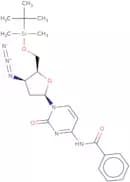
2'-Deoxy-5'-O-pixyluridine (2DPU) is a novel, synthetic nucleoside that is an active ingredient in antiviral and anticancer drugs. 2DPU has been shown to inhibit the replication of human immunodeficiency virus type 1 (HIV-1) by inhibiting the viral enzyme HIV reverse transcriptase. The phosphoramidite form of 2DPU is used as a building block for DNA synthesis and for the synthesis of other nucleosides. The monophosphate form of 2DPU is used in the synthesis of antiviral drugs, including acyclovir, zidovudine, and ribavirin.Formula:C28H24N2O6Purezza:Min. 95%Peso molecolare:484.51 g/mol3'-Azido-N4-benzoyl-5'-O-tert-butyldimethylsilyl-2',3'-dideoxycytidine
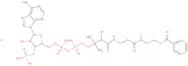
CAS:3'-Azido-N4-benzoyl-5'-O-tert-butyldimethylsilyl-2',3'-dideoxycytidine is a novel nucleoside phosphoramidite that has been modified to have an azido group at the 3' position and a benzoate group at the 5' position. This product can be used for the synthesis of oligonucleotides and DNA. The purity of this product is high, and it has been shown to be active against cancer cells. In addition, this product is resistant to antiviral agents such as HIV.Formula:C22H30N6O4SiPurezza:Min. 95%Peso molecolare:470.61 g/molBenzoyl coenzyme A lithium salt
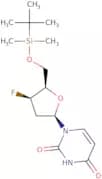
CAS:<p>Benzoyl-CoA lithium salt is a ligand that binds to the cytosolic phenylacetyltransferase and benzoyltransferase enzymes. It has been shown to inhibit the metabolic pathway of benzoic acid and its derivatives. This drug is envisaged for the treatment of certain cancers, which are derived from cells with high levels of phenylacetyltransferase activity. Benzoyl-CoA lithium salt inhibits the biosynthesis of benzoic acid, thereby blocking the synthesis of polyamines and polyamides, which are important for cell survival. The enzyme inhibition can cause a decrease in mitochondrial ATP production, resulting in cell death by apoptosis or necrosis.</p>Formula:C28H40N7O17P3S·3LiPurezza:Min. 95%Peso molecolare:892.46 g/mol5'-O-tert-Butyldimethylsilyl-2',3'-dideoxy-3'-fluorouridine
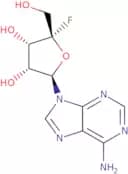
<p>5'-O-tert-Butyldimethylsilyl-2',3'-dideoxy-3'-fluorouridine is a monophosphate nucleoside that can be used as an activator, a ribonucleotide, or a phosphoramidite. It has anticancer activity and can inhibit viral replication by inhibiting the synthesis of viral RNA. 5'-O-tert-Butyldimethylsilyl-2',3'-dideoxy-3'-fluorouridine is novel and not found in nature.</p>Formula:C15H25FN2O4SiPurezza:Min. 95%Peso molecolare:344.45 g/mol4'-C-Fluoroadenosine
CAS:4'-C-Fluoroadenosine is a fluorine-substituted analog of adenosine, which has been shown to have minimal toxicity in animals. 4'-C-Fluoroadenosine inhibits the uptake of trypanosomes by macrophages and has been shown to be effective in treating Leishmania donovani infections in mice. Its mechanism of action is not yet clear, but it may involve inhibiting the enzymatic activity of enzymes involved in the metabolism of adenosine and/or enhancing the activity of those that are involved in catalysing adenoside triphosphate synthesis.Purezza:Min. 95%3’-Deoxy-5-fluoro-3’-methyluridine
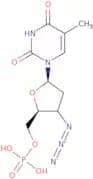
CAS:<p>3’-Deoxy-5-fluoro-3’-methyluridine is a nucleoside that has antiviral and anticancer properties. It is synthesized from 5-fluorouracil, which is a prodrug that is activated by 3’-deoxy-5-fluoro-3’-methyl uridine to produce 5′,6′ difluorodeoxyadenosine. This compound can be used in the treatment of hepatitis B virus and hepatitis C virus infections. 3’-Deoxy-5-fluoro-3’ methyluridine has also been shown to inhibit the growth of cancer cells in vitro.</p>Purezza:Min. 95%3'-Azido-3'-deoxythymidine-5'-monophosphate lithium salt - 100 mM aqueous solution
CAS:<p>3'-Azido-3'-deoxythymidine-5'-monophosphate lithium salt - 100 mM aqueous solution is an azidothymidine (AZT) analog that inhibits HIV replication. AZT is a nucleoside reverse transcriptase inhibitor that blocks the progression of HIV by preventing the virus from duplicating its DNA. This product has been shown to be effective in treating AIDS and related diseases, as well as other infectious diseases such as hepatitis B and C. 3'-Azido-3'-deoxythymidine-5'-monophosphate lithium salt - 100 mM aqueous solution is often used in combination with other drugs to increase their efficacy. It has also been shown to be an effective chemotherapeutic agent against cancer cells.</p>Formula:C10H14N5O7P·xLiPurezza:Min. 95%Peso molecolare:347.22 g/mol2'-Deoxynucleoside-5'-triphosphate mixture
<p>2'-Deoxynucleoside-5'-triphosphate mixture are a group of phosphorylated compounds that are used in the synthesis of DNA. They are used as antiviral and anticancer agents, as well as activators for certain enzymes. They are also used to synthesize deoxyribonucleotides. The 2'-deoxynucleoside-5'-triphosphate mixture is purified and modified to produce high purity products for research purposes. These compounds have novel properties, making them suitable for creating new drugs with improved efficacy and reduced side effects.</p>Purezza:Min. 95%6-Methylmercapto-9-(b-D-ribofuranosyl)purine
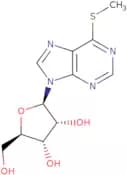
CAS:6-Methylmercapto-9-(b-D-ribofuranosyl)purine (6MMPR) is a nucleotide analog that is synthesized through the process of ribosylation. It has been shown to be reactive and inflammatory in the colon, which may be due to its role as an enzyme inhibitor. 6MMPR inhibits target enzymes such as 2-methylthio-6-chloropurine riboside, which are involved in DNA synthesis and repair. This drug also has anti-inflammatory properties, which may be due to its ability to inhibit the production of inflammatory cytokines by activated immune cells. 6MMPR is used for the treatment of bowel diseases such as Crohn's disease and ulcerative colitis.Formula:C11H14N4O4SPurezza:Min. 95%Colore e forma:White PowderPeso molecolare:298.32 g/mol3-Iodo-1-(2-C-methyl-b-D-ribofuranosyl)-1H-pyrazolo[3,4-d]pyrimidin-4-amine,
CAS:3-Iodo-1-(2-C-methyl-b-D-ribofuranosyl)-1H-pyrazolo[3,4-d]pyrimidin-4-amine is a novel antiviral monophosphate nucleotide analog. It has been shown to be an effective activator of the enzyme ribonucleotide reductase, which is involved in DNA synthesis and repair. 3Iodo possesses anticancer activity, inhibiting the proliferation of cancer cells by interfering with DNA synthesis. The compound also inhibits tumor cell growth in vivo by inducing apoptosis. 3Iodo has been shown to inhibit HIV replication and may have potential as a treatment for HIV/AIDS.Purezza:Min. 95%2'-Deoxy-5-formylcytidine
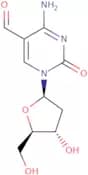
CAS:<p>2'-Deoxy-5-formylcytidine is a nucleoside analog that is used as a chemotherapeutic agent. It is cytotoxic to cells by binding to DNA and preventing the synthesis of DNA, RNA, and protein. The drug has been shown to induce cellular senescence in human fibroblasts, which can be reversed by the addition of deuterium. 2'-Deoxy-5-formylcytidine also inhibits the production of reactive oxygen species (ROS) by inducing the expression of antioxidant enzymes such as superoxide dismutase 2 and glutathione peroxidase 1. The oxidation products are misincorporated into DNA strands, leading to intramolecular hydrogen bonds with cytosine bases. These modifications lead to denaturation of DNA and inhibition of transcription and replication.<br>2'-Deoxy-5-formylcytidine also interacts with oligodeoxynucleotides, which leads to misinc</p>Formula:C10H13N3O5Purezza:Min. 97 Area-%Colore e forma:White PowderPeso molecolare:255.23 g/mol2’-Deoxy-5’-O-DMT-N2-isobutyrylguanosine-3’-(4-nitrophenoxyl)butanedioate
<p>2’-Deoxy-5’-O-DMT-N2-isobutyrylguanosine-3’-(4-nitrophenoxyl)butanedioate is a novel antiviral drug that has been synthesized by coupling diphosphate and monophosphate nucleosides to an antiviral agent. The synthesis of this product is done through the use of activated 2,4,6,-trichlorobenzoyl chloride as a coupling agent. This product can be used in the treatment of cancer cells.</p>Purezza:Min. 95%1-(2'-Deoxy-2'-fluoro-b-D-arabinofuranosyl)6-methylpurine
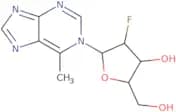
CAS:1-(2'-Deoxy-2'-fluoro-b-D-arabinofuranosyl)6-methylpurine is a synthetic nucleoside analog that has been shown to be an activator of DNA synthesis in mammalian cells. It has antiviral, anticancer, and antibiotic properties due to its ability to inhibit the growth of a variety of cancer cells. 1-(2'-Deoxy-2'-fluoro-b-D-arabinofuranosyl)6-methylpurine also inhibits viral replication by interfering with the replication machinery. This nucleoside analog is a modified form of 6MP and has high purity and quality.Purezza:Min. 95%2-Deoxy-2-Fluoro-a-D-arabinofuranosylamine
CAS:2-Deoxy-2-Fluoro-a-D-arabinofuranosylamine is a novel antiviral agent that is synthesized from 2,4,6-trichlorobenzoyl chloride and 2,4,6-trifluorophenylglycine. It has been shown to be effective in inhibiting the replication of HIV and HSV types 1 and 2. This compound also has anticancer activity against colorectal cancer cells. The synthesis of this compound results in high purity with a high yield.Formula:C5H10FNO3Purezza:Min. 95%Peso molecolare:151.14 g/mol3’-b-Azido-2’,3’-dideoxy-5’-O-(4-methoxytrityl)uridine
CAS:3’-b-Azido-2’,3’-dideoxy-5’-O-(4-methoxytrityl)uridine (AZDU) is a modified nucleoside that is used as an antiviral agent. AZDU inhibits viral DNA synthesis by acting as a competitive inhibitor of the enzyme ribonucleotide reductase. AZDU has also been shown to inhibit tumor cell growth in vitro and in vivo. In addition, AZDU has been found to have anticancer activity against human leukemia cells, which may be due to its ability to inhibit DNA synthesis.Purezza:Min. 95%2-Methylthioadenosine
CAS:<p>2-Methylthioadenosine is a purine nucleoside which induces necrotic cell death. It is the first of its kind to be shown to have activity against squamous carcinoma cells, and is activated by nucleoside phosphorylase in order to produce its cytotoxic form. 2-Methylthioadenosine also inhibits the transcription-polymerase chain reaction and increases oxidative injury. This drug has been shown to have receptor activity in brain cells, as well as chemotactic activity for gland cells. 2-Methylthioadenosine has been used as a model organism for polymerase chain reactions, and has been shown to inhibit p2y receptors in the human colon cancer cell line HT29.</p>Formula:C11H15N5O4SPurezza:Min. 95%Colore e forma:White Off-White PowderPeso molecolare:313.34 g/molN4-Benzoyl-1-(3-O-methyl-b-D-xylofuranosyl)cytosine
<p>N4-Benzoyl-1-(3-O-methyl-β-D-xylofuranosyl)cytosine is a modified nucleoside analog used in the treatment of cancer. It has been shown to be effective in the treatment of leukemia and lymphoma. N4-Benzoyl-1-(3-O-methyl-β-D-xylofuranosyl)cytosine inhibits viral DNA synthesis and is also an effective antiviral agent against HIV. This compound has been shown to have anticancer properties, which may be due to its ability to inhibit DNA replication and protein synthesis.</p>Purezza:Min. 95%2,3'-Anhydro-5'-O-tert-butyldimethylsilyl-N4-benzoyl-2'-deoxycytidine
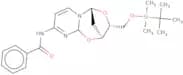
CAS:2,3'-Anhydro-5'-O-tert-butyldimethylsilyl-N4-benzoyl-2'-deoxycytidine is an antiviral agent that is a synthetic nucleoside analogue. It acts as an activator of monophosphate and as a DNA phosphoramidite. 2,3'-Anhydro-5'-O-tert-butyldimethylsilyl-N4-benzoyl-2'-deoxycytidine has been shown to inhibit the growth of cancer cells and is being studied for its anticancer activity. This drug also inhibits ribonucleotide reductase, which prevents the conversion of ribonucleotides to deoxyribonucleotides, thereby inhibiting DNA synthesis.Formula:C22H31N3O4SiPurezza:Min. 95%Peso molecolare:429.6 g/molN4-Acetyl-2'-deoxy-5'-O-DMT-5-methylcytidine 3'-CE phosphoramidite
CAS:<p>N4-Acetyl-2'-deoxy-5'-O-DMT-5-methylcytidine 3'-CE phosphoramidite is a novel nucleoside and deoxyribonucleoside that has been synthesized by the chemical modification of cytidine. It is an anticancer drug and antiviral agent, which has been shown to activate DNA polymerase, inhibit RNA synthesis and have antiviral activities against HIV, HSV, CMV, and VZV. N4-Acetyl-2'-deoxy-5'-O-DMT-5-methylcytidine 3'-CE phosphoramidite has high purity with low impurities (0.1% DMSO), making it a valuable nucleoside for use in synthesis of ribonucleotide analogues.</p>Formula:C42H52N5O8PPurezza:Min. 97 Area-%Colore e forma:White Off-White PowderPeso molecolare:785.86 g/mol1-(2'-Deoxy-2'-fluoro-b-D-arabinofuranosyl)-5-ethyluracil
CAS:<p>1-(2'-Deoxy-2'-fluoro-b-D-arabinofuranosyl)-5-ethyluracil is a nucleoside analog with modifications to alter its biological activity. It contains a β-D-arabinofuranose sugar instead of the standard β-D-deoxyribose in natural nucleosides and<br>the fluorine (F) at the 2'-position increases resistance to enzymatic degradation and alters its biological activity. The 5-ethyl modification on the uracil ring enhances its interaction with viral polymerases.</p>Formula:C11H15FN2O5Purezza:Min. 95%Colore e forma:White PowderPeso molecolare:274.25 g/molInosine-3',5'-cyclic-monophosphate triethylammonium - 10 mM aqueous solution
Inosine-3',5'-cyclic-monophosphate triethylammonium is a synthetic nucleoside that functions as an activator of the deoxyribonucleotide synthesis. It has antiviral and anticancer properties, and has been shown to have anti-inflammatory activities. Inosine-3',5'-cyclic-monophosphate triethylammonium has been shown to inhibit the growth of cells in culture and induce apoptosis. This is due to its ability to inhibit DNA synthesis by inhibiting the enzyme ribonucleotide reductase.Formula:C10H11N4O7P·NC6H15Purezza:Min. 95%Peso molecolare:431.38 g/mol
![7-(2-C-Methyl-b-D-ribofuranosyl)-7H-pyrrolo[2,3-d]pyrimidin-2-amine](/_next/image/?url=https%3A%2Fstatic.cymitquimica.com%2Fproducts%2F3D%2Fthumb-webp%2FNM14094.webp&w=3840&q=75)



![1-(2’-Deoxy-2’-fluoro-b-D-arabinofuranosyl)-N3-[3-(tert-butoxycarbonyl)amino]propyluracil](/_next/image/?url=https%3A%2Fstatic.cymitquimica.com%2Fproducts%2F3D%2Fthumb-webp%2FND162853.webp&w=3840&q=75)

![N-Acetyl-2'-O-[(tert-butyl)dimethylsilyl]-5'-O-DMT-6'-O-methylguanosine-3'-CE phosphoramidite](/_next/image/?url=https%3A%2Fstatic.cymitquimica.com%2Fproducts%2F3D%2Fthumb-webp%2FPA152483.webp&w=3840&q=75)



![6-Amino-2,5-dihydro-2-(b-D-ribofuranosyl)-4H-pyrazolo[3,4-d]pyrimidin-4-one](/_next/image/?url=https%3A%2Fstatic.cymitquimica.com%2Fproducts%2F3D%2Fthumb-webp%2FNA162979.webp&w=3840&q=75)





![3-Iodo-1-(2-C-methyl-b-D-ribofuranosyl)-1H-pyrazolo[3,4-d]pyrimidin-4-amine,](/_next/image/?url=https%3A%2Fstatic.cymitquimica.com%2Fproducts%2F3D%2Fthumb-webp%2FNI14087.webp&w=3840&q=75)