Nucleosidi
I nucleosidi sono building blocks fondamentali degli acidi nucleici, composti da una base azotata legata a una molecola di zucchero. In questa sezione, puoi trovare una vasta gamma di nucleosidi essenziali per la ricerca in biologia molecolare, biochimica e farmacologia. Questi composti svolgono ruoli cruciali nella sintesi del DNA e dell'RNA e sono vitali in vari processi metabolici. I nucleosidi vengono utilizzati per studiare il materiale genetico, sviluppare terapie antivirali e antitumorali e comprendere i meccanismi cellulari. Da CymitQuimica, forniamo nucleosidi di alta qualità per supportare le tue esigenze di ricerca e sviluppo, garantendo purezza e affidabilità per le tue applicazioni sperimentali.
Trovati 3569 prodotti di "Nucleosidi"
Ordinare per
Purezza (%)
0
100
|
0
|
50
|
90
|
95
|
100
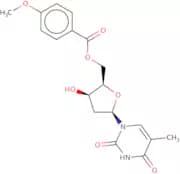
5'-O-p-Anisoylthymidine
5'-O-p-Anisoylthymidine is a novel activator and ribonucleoside that has been synthesized by modifying the structure of thymidine. This compound is active against cancer and antiviral, such as herpes simplex virus type 1, herpes simplex virus type 2, varicella zoster virus, influenza A/PR/8/34 (H1N1), and influenza B/Yamagata/16/88. 5'-O-p-Anisoylthymidine activates viral transcription in cells infected with these viruses by inhibiting the synthesis of deoxyribonucleosides. It also inhibits DNA synthesis by inhibiting the incorporation of deoxyribonucleotides into DNA during replication. This product is CAS No. 138581-03-2 and comes in high purity and high quality.Formula:C18H20N2O7Purezza:Min. 95%Peso molecolare:376.36 g/mol2'-Deoxy-5-methyl-isocytidine triphosphate
2'-Deoxy-5-methyl-isocytidine triphosphate (2'-DMI-dTP) is a novel nucleoside that is synthesized by phosphoramidite chemistry. 2'-DMI-dTP has antiviral and anticancer activities, and can be used for the treatment of hepatitis B virus (HBV) and human papillomavirus (HPV). It has shown protective effects in animal models of HBV infection. 2'-DMI-dTP inhibits HBV replication by inhibiting DNA synthesis. In addition, it decreases levels of reactive oxygen species in cells treated with HBV. 2'-DMI-dTP also inhibits HPV replication through inhibition of DNA synthesis, which may lead to cancer prevention or treatment. 2'-DMI-dTP may be a useful drug candidate for the treatment of other viral infections such as influenza A virus and HIV type 1.Purezza:Min. 95%S-(5'-Adenosyl)-L-homocysteine dihydrate
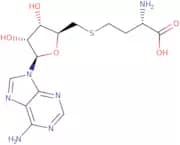
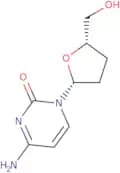
CAS:<p>S-(5'-Adenosyl)-L-homocysteine dihydrate is the active form of homocysteine. It has been shown to inhibit the growth of HL-60 cells and induce apoptosis in these cells. S-(5'-Adenosyl)-L-homocysteine dihydrate binds to dsDNA as a methyltransferase inhibitor, which leads to DNA methylation and inhibits DNA binding. The inhibition of DNA binding prevents transcription, leading to cell death. This drug has also been shown to have an anti-atherosclerotic effect in a model system by inhibiting the adenosine receptor.</p>Formula:C14H20N6O5S•(H2O)2Purezza:Min. 98 Area-%Colore e forma:PowderPeso molecolare:420.44 g/mol2',3'-Dideoxycytidine
CAS:<p>Anti-viral; reverse transcriptase inhibitor</p>Formula:C9H13N3O3Purezza:Min. 98 Area-%Colore e forma:White PowderPeso molecolare:211.22 g/molQueuine hydrochloride
CAS:<p>Queuine is a modified nucleoside found in tRNA. It is synthesized from guanosine by the enzyme queuine tRNA-ribosyltransferase, which converts guanosine to queuosine. Queuine hydrochloride is a synthetic form of queuine that can be used for research purposes to examine the anticodon loop and other structural features of the molecule. The prokaryotic and eukaryotic organisms studied showed different levels of synthesis of queuine, with bacteria synthesizing more than mammals. Bacteria were found to have a greater affinity for queuine than eukaryotes, which may be due to modification of the trna anticodon loop or to differences in ribosomal proteins.</p>Formula:C12H15N5O3·HClPurezza:(%) Min. 90%Colore e forma:Light (Or Pale) Beige To Light (Or Pale) Purple SolidPeso molecolare:313.74 g/mol3'-b-Azido-2',3'-dideoxy-5'-O-DMT-uridine
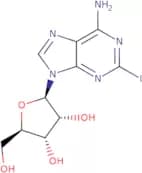
<p>3'-b-Azido-2',3'-dideoxy-5'-O-DMT-uridine is a modified nucleoside that is synthesized by the phosphoramidite method. It is a novel antiviral drug with anticancer properties. This active compound has been shown to be an activator of ribonucleotide reductases, which are enzymes that catalyze the conversion of ribonucleotides to deoxyribonucleotides. 3'-b-Azido-2',3'-dideoxy-5'-O-DMT-uridine is not cytotoxic at concentrations up to 40 mM, and it has been shown to inhibit replication of human immunodeficiency virus type 1 (HIV) in tissue culture.</p>Purezza:Min. 95%2-Iodoadenosine
CAS:<p>2-Iodoadenosine is a chemical compound that is produced from the oxidation of uridine. It is used in the synthesis of peptides, which are important for biological processes like signal transduction and cell growth. 2-Iodoadenosine can be made by coupling other molecules to an adenosine molecule. This process involves a cross-coupling reaction with palladium catalysts or hydroxylation reactions with sodium borohydride. The resulting product has been shown to have anticancer and anti-microbial activities against protozoan parasites and cyclic peptide structures.</p>Formula:C10H12IN5O4Purezza:Min. 97 Area-%Colore e forma:PowderPeso molecolare:393.14 g/mol5’(R)-C-Methyladenosine
CAS:<p>5’(R)-C-Methyladenosine is a nucleoside that is used as an antiviral and anticancer agent. It has been shown to inhibit the replication of the human immunodeficiency virus type 1 (HIV-1) in a dose-dependent manner, with an IC50 value of about 0.4 μM for HIV-1 reverse transcriptase activity. In addition, 5’(R)-C-Methyladenosine has been shown to inhibit DNA synthesis and promote apoptosis in cancer cells by inhibiting transcription and translation. The compound also inhibits the growth of tumor cells in mice without affecting normal tissue growth.</p>Purezza:Min. 95%2'-Deoxy-6-thioguanosine-5'-monophosphate
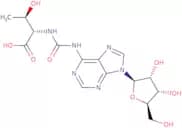
CAS:Azathioprine is a drug that suppresses the immune system and is used to treat autoimmune disorders such as rheumatoid arthritis, lupus erythematosus, and inflammatory bowel disease. It is an immunosuppressant that prevents the formation of antibodies by blocking the enzyme thiopurine S-methyltransferase. Azathioprine is metabolized in the liver to 6-mercaptopurine, which has been shown to cause leukopenia. The genetic polymorphism of this enzyme can lead to differences in the metabolism and toxicity of azathioprine therapy.Formula:C10H14N5O6PSPurezza:Min. 95%Peso molecolare:363.29 g/molN6-Carbamoylthreonyladenosine sodium salt
CAS:<p>N6-Carbamoylthreonyladenosine sodium salt is a fatty acid that is found in the bacterial cell wall. It has been shown to be an essential component of the cell wall for Gram-positive and Gram-negative bacteria. N6-Carbamoylthreonyladenosine sodium salt has been used to study the mechanism of protein synthesis in bacteria, especially how enzymes are involved in this process. Chemical biology studies have shown that this molecule can bind to DNA and inhibit bacterial growth. The crystal structure of N6-Carbamoylthreonyladenosine sodium salt has also been determined using x-ray diffraction data. This molecule inhibits the binding of proteins to DNA, which prevents transcription and replication. The reaction mechanism involves hydrogen bonding between the oxygen atoms on N6-Carbamoylthreonyladenosine sodium salt and divalent metal ions such as magnesium or zinc, which are required for protein synthesis.</p>Formula:C15H19N6O8·NaPurezza:Min. 98 Area-%Colore e forma:White PowderPeso molecolare:434.34 g/mol1-(2R,3R,4R,5R)-3-Hydroxy-5-(hydroxymethyl)-4-methoxytetra hydrofuran-2-yl)-5-methylpyrimidine-2,4(1H,3H)-dione
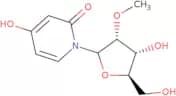
1-(2R,3R,4R,5R)-3-Hydroxy-5-(hydroxymethyl)-4-methoxytetra hydrofuran-2-yl)-5-methylpyrimidine-2,4(1H,3H)-dione is a nucleoside that is a novel anticancer drug. It has been shown to have potent antineoplastic activity in vitro and in vivo. This compound is an activator of the p53 tumor suppressor gene and may also act as a transcriptional inhibitor of NF-κB.Purezza:Min. 95%3-Deaza-2'-O-methyluridine
CAS:<p>3-Deaza-2'-O-methyluridine is a nucleoside that is used as an antiviral agent and in the treatment of leukemia. It has been shown to inhibit the growth of L1210 cells in a dose-dependent manner. 3-Deaza-2'-O-methyluridine also inhibits the synthesis of DNA, RNA, and proteins. The compound is eliminated by renal excretion with a plasma elimination half life of 9 hours. This drug can be administered intramuscularly or intravenously at a dosage of 10 mg/kg every 8 hours, but should not be given more than 5 days without interruption due to accumulation in tissues.</p>Formula:C11H15NO6Purezza:Min. 95%Peso molecolare:257.24 g/molAdenosine 3',5'-bisphosphate triethylammonium salt - 10mM aqueous solution
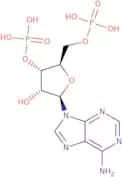
CAS:Adenosine 3',5'-bisphosphate triethylammonium salt is a metabolite of adenosine and an ester of triethylamine. The conjugate acid has been isolated from mouse urine. It is a metabolite of adenosine in the liver and is hydrolyzed to adenosine monophosphate and bisphosphate. Adenosine 3',5'-bisphosphate triethylammonium salt is used to study the metabolism of adenosine in mice. It has also been shown that this metabolite can inhibit the growth of E. coli (a bacterium) and mouse erythrocyte mitochondria by blocking ATP synthesis at the level of substrate-level phosphorylation.Formula:C10H15N5O10P2•(C6H15N)xPurezza:Min. 95%Peso molecolare:427.2 g/molN4-Acetyl-3'-deoxy-3'-C-methylcytidine
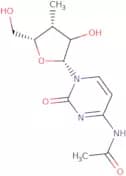
<p>N4-Acetyl-3'-deoxy-3'-C-methylcytidine is a novel antiviral drug that is modified from cytidine. It is an activator of the monophosphate pathway of DNA synthesis, which causes the incorporation of N4-acetyl-3'-deoxy-3'-C-methylcytidine into ribonucleosides and deoxyribonucleosides. This compound has been shown to be active against a variety of cancers, including leukemia, colon cancer, breast cancer, and prostate cancer.</p>Formula:C12H17N3O5Purezza:Min. 95%Peso molecolare:283.28 g/mol3-Acetylpyridine adenine dinucleotide
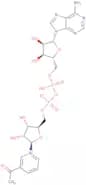
CAS:<p>A non-physiological analog of nicotinamide adenine dinucleotide (NAD+) in biochemical research, particularly as a tool to study the mechanisms of NAD+-dependent enzymes.</p>Formula:C22H28N6O14P2Purezza:Min. 92 Area-%Colore e forma:White Off-White PowderPeso molecolare:662.44 g/mol2'-O-Methyladenosine 5'-triphosphate lithium salt - 100 mM aqueous solution
CAS:2'-O-Methyladenosine 5'-triphosphate lithium salt - 100 mM aqueous solution is a modified nucleoside that has antiviral, anticancer, and antimalarial properties. It also has been shown to activate DNA synthesis and inhibit the growth of cancer cells.Formula:C11H18N5O13P3·xLiPurezza:Min. 95%Colore e forma:PowderPeso molecolare:521.21 g/molFluorescein-5(6)-carboxamidocaproyl-[5(3-aminoallyl)2-deoxyuridine-5-tr
<p>Fluorescein-5(6)-carboxamidocaproyl-[5(3-aminoallyl)2-deoxyuridine-5-triphosphate] is a modified nucleoside analog that is used as an antiviral agent against herpesviruses. This compound is phosphorylated by the virus encoded thymidine kinase, which converts it to the monophosphate form. Fluorescein-5(6)-carboxamidocaproyl-[5(3-aminoallyl)2-deoxyuridine-5-triphosphate] inhibits DNA synthesis by inhibiting viral DNA polymerase and has been shown to be active against human papillomavirus type 16 (HPV16) in vitro. It has also been shown to inhibit tumor cell proliferation and induce apoptosis in some types of cancer cells.</p>Purezza:Min. 95%3'-O-Propargylcytidine
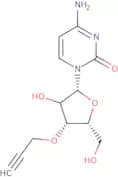
<p>3'-O-Propargylcytidine is a monophosphate nucleoside that belongs to the group of synthetic, novel nucleosides and deoxyribonucleosides. It is a modified form of cytidine with an extra methyl group attached to the 3' position of the ribose sugar. 3'-O-Propargylcytidine has been shown to inhibit cancer cells by binding to DNA and preventing transcription and replication. This compound also inhibits virus replication and has antiviral properties. 3'-O-Propargylcytidine is highly pure and high quality, which makes it a good candidate for use in pharmaceuticals or other applications requiring high purity.</p>Formula:C12H15N3O5Purezza:(%) Min. 97%Colore e forma:PowderPeso molecolare:281.26 g/molb-Nicotinamide adenine dinucleotide phosphate sodium salt
CAS:<p>Coenzyme and regenerating electron donor in catabolic processes</p>Formula:C21H27N7NaO17P3Purezza:Min. 95 Area-%Colore e forma:PowderPeso molecolare:765.39 g/molO6-Methylguanosine
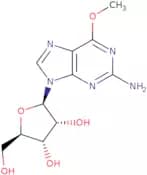
CAS:<p>Intermediate in the synthesis of nelarabine</p>Formula:C11H15N5O5Purezza:Min. 95%Colore e forma:PowderPeso molecolare:297.27 g/mol2'-Deoxy-5'-O-DMT-2'-fluorouridine
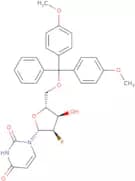
CAS:<p>2'-Deoxy-5'-O-DMT-2'-fluorouridine is a medicament that belongs to the group of antineoplastic agents and is used in cancer treatment. It inhibits the synthesis of DNA by inhibiting the enzyme thymidylate synthetase, which is required for the formation of thymine nucleotides. This drug has been shown to be effective against some cancer cells in vitro and in vivo, but not all. 2'-Deoxy-5'-O-DMT-2'-fluorouridine can also inhibit terminal growth phases and induce programmed cell death. Solid phase synthesis has been used to synthesize this molecule as a phosphoramidite.</p>Formula:C30H29FN2O7Purezza:Min. 98 Area-%Colore e forma:White PowderPeso molecolare:548.57 g/mol5-(N-Isopentenyl-N-trifluoroacetyl)aminomethyluridine
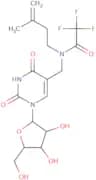
CAS:5-(N-Isopentenyl-N-trifluoroacetyl)aminomethyluridine is a nucleoside analog that is structurally related to cytidine. It was first synthesized in the 1970s, and has been shown to possess antiviral activity against herpes simplex virus type 1. In addition, it has been shown to inhibit DNA synthesis and the formation of DNA double strands. 5-(N-Isopentenyl-N-trifluoroacetyl)aminomethyluridine is an activator of protein kinase C and cyclic AMP phosphodiesterase, as well as a DNA polymerase inhibitor with anticancer properties.Purezza:Min. 95%5'-O-Acetyl-2',3'-dideoxy-2',3'-didehydro-5-fluorouridine
CAS:5'-O-Acetyl-2',3'-dideoxy-2',3'-didehydro-5-fluorouridine is a nucleoside analog. It is synthesized by substituting the hydroxyl group of uridine with a fluorine atom and the 2' position of ribose with a 5'-O-acetyl group. This modification prevents the incorporation of this nucleoside into DNA or RNA, making it an effective antiviral and anticancer agent. 5'-O-Acetyl-2',3'-dideoxy-2',3'-didehydro-5-fluorouridine has been shown to be highly active against tumor cells but not normal cells in vitro.Formula:C11H11N2O5Purezza:Min. 95%Peso molecolare:251.22 g/mol2'-Azido-2'-deoxyadenosine
CAS:<p>2'-Azido-2'-deoxyadenosine is a synthetic nucleoside analog of adenosine in which the 2'-hydroxyl group of the ribose sugar is replaced by an azido group (–N₃), and the 3'- and 5'-hydroxyl groups remain intact. This modification confers unique chemical properties, including the ability to participate in bioorthogonal "click" chemistry reactions, particularly azide-alkyne cycloadditions, making it useful for labeling and tracking nucleic acids in biochemical studies. Additionally, the azido substitution can influence enzymatic recognition and incorporation by polymerases, allowing its use in studying nucleic acid metabolism, drug design, and therapeutic nucleoside analog development.</p>Formula:C10H12N8O3Purezza:Min. 95%Colore e forma:PowderPeso molecolare:292.25 g/mol2’-Deoxy-2’-fluoroadenosine 5’-monophosphate triethyl ammonium salt
<p>2’-Deoxy-2’-fluoroadenosine 5’-monophosphate triethyl ammonium salt is a nucleoside phosphoramidite that acts as an antiviral agent. It is used to treat influenza and herpes simplex virus infections. 2’-Deoxy-2’-fluoroadenosine 5’-monophosphate triethyl ammonium salt also inhibits the growth of cancer cells, but has not been shown to be effective against bacterial or fungal infections.</p>Purezza:Min. 95%2'-Deoxyadenosine-5'-monophosphate disodium salt
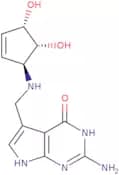
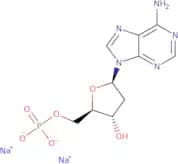
CAS:2'-Deoxyadenosine-5'-monophosphate disodium salt (DAP) is a white crystalline powder. It is soluble in water and insoluble in ethanol. DAP can be neutralised by aqueous solutions of hydroxide, such as sodium hydroxide or ammonium hydroxide. DAP is also reactive with aluminium oxide, which can be used for drying the compound to form anhydrous particles. DAP reacts with chloride ions to form 2',3'-diacetylpyridine-5'-diphosphate dibasic chloride, which has been shown to inhibit bacterial growth and act as an antibacterial agent. Autoclaving may be required for preparation of this drug due to its sensitivity to heat energy.Formula:C10H12N5Na2O6PPurezza:Min. 99 Area-%Colore e forma:White PowderPeso molecolare:375.19 g/molCyclopentenyl cytosine
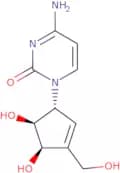
CAS:<p>Cyclopentenyl cytosine is a cytotoxic drug that inhibits the synthesis of DNA, RNA, and proteins. It is a nucleoside analogue that inhibits the enzyme activity of ribonucleotide reductase. Cyclopentenyl cytosine has significant cytotoxicity against hl-60 cells, as well as squamous carcinoma and MDA-MB-231 breast cancer cells. It also has significant activity against cyclopentenyl, dextran sulfate, and mitochondrial functions in vivo in human cells. Cyclopentenyl cytosine binds to the response element on the DNA strand, preventing transcription of genes for protein synthesis and cell division.</p>Formula:C10H13N3O4Purezza:Min. 95%Colore e forma:PowderPeso molecolare:239.23 g/mol2-Amino-9-(2'-deoxy-β-D-ribofuranosyl)purine
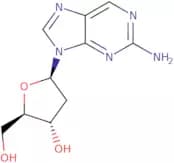
CAS:<p>2-Amino-9-(2'-deoxy-b-D-ribofuranosyl)purine is a nucleoside analog that has been found to be effective in the treatment of leukemia.</p>Formula:C10H13N5O3Purezza:(Hplc) Min. 98.00%Colore e forma:PowderPeso molecolare:251.24 g/molAdenosine 5'-phosphosulfate sodium salt, 10 mM in water
CAS:Adenosine 5′-phosphosulfate sodium salt has been used quantify pyrophosphate and in enzyme-linked bioluminescence assay for adenosine triphosphate (ATP).Product provided as 10 mM solution in water.Formula:C10H14N5O10PSPurezza:Min. 90.0 Area-%Peso molecolare:427.28 g/moltrans-Zeatin riboside-5'-monophosphate sodium salt
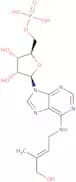
CAS:<p>Trans-zeatin riboside-5'-monophosphate sodium salt is a growth rate inhibitor that inhibits protein synthesis by binding to the 30S subunit of the ribosome. This compound has been shown to inhibit cell growth and proliferation in vitro when applied to tissue cultures of tabacum l. and other plants. Trans-zeatin riboside-5'-monophosphate sodium salt is not active against plant tissues grown in vivo, which may be due to its inability to cross the plasma membrane or cell wall.</p>Formula:C15H20N5O8PNa2Purezza:Min. 95 Area-%Colore e forma:PowderPeso molecolare:475.3 g/molInosine-3',5'-cyclic-monophosphate triethylammonium - 10 mM aqueous solution
Inosine-3',5'-cyclic-monophosphate triethylammonium is a synthetic nucleoside that functions as an activator of the deoxyribonucleotide synthesis. It has antiviral and anticancer properties, and has been shown to have anti-inflammatory activities. Inosine-3',5'-cyclic-monophosphate triethylammonium has been shown to inhibit the growth of cells in culture and induce apoptosis. This is due to its ability to inhibit DNA synthesis by inhibiting the enzyme ribonucleotide reductase.Formula:C10H11N4O7P·NC6H15Purezza:Min. 95%Peso molecolare:431.38 g/mol5-o-(Dimethoxytrityl)-N4-dimethylaminomethylidene-5-iodo-2'-deoxycytidine
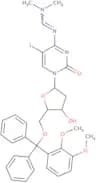
CAS:<p>Dimethoxytrityl-5-iodo-2'-deoxycytidine is a novel, modified nucleoside that has anticancer and antiviral properties. It is synthesized by reacting 5-iodo-2'-deoxycytidine with dimethoxytrityl chloride in the presence of triethylamine. This compound can be used to synthesize oligonucleotide phosphoramidites, ribonucleosides, and diphosphates.</p>Formula:C33H35IN4O6Purezza:Min. 95%Peso molecolare:710.6 g/mol5'-O-p-Anisoyl-3'-fluoro-2',3'-dideoxyuridine
<p>5'-O-p-Anisoyl-3'-fluoro-2',3'-dideoxyuridine (5-FAU) is a deoxynucleoside that is synthesized by the phosphoramidite method, and it has been used as an antiviral agent. 5-FAU is a novel nucleoside analog with anticancer activity. It inhibits replication of herpes simplex virus type 1 and 2, varicella zoster virus, and Epstein Barr virus in cell culture. 5-FAU also inhibits HIV replication in vitro and in animal models. The antiviral activity of 5-FAU is due to its inhibition of viral DNA polymerase, which prevents the synthesis of viral DNA from viral RNA templates.</p>Formula:C17H17FN2O6Purezza:Min. 95%Peso molecolare:364.33 g/mol4’,5’-Didehydro-2’-O-(2-methoxyethyl)uridine
CAS:4’,5’-Didehydro-2’-O-(2-methoxyethyl)uridine (4,5DDMU) is a novel nucleoside analog that is phosphorylated to 4,5-didehydro-2'-O-(2-methoxyethyl)uridine 5'-triphosphate. This nucleoside has been shown to inhibit the proliferation of human cancer cells in vitro and in vivo. 4,5DDMU inhibits viral replication by generating diphosphate derivatives of the viral DNA polymerase enzyme that are unable to synthesize DNA. 4,5DDMU also inhibits HIV replication by inhibiting reverse transcriptase activity in the virus.End>Purezza:Min. 95%N4-Benzoyl-3'-O-tert-butydimethylsilylcytidine 2'-CE-phosphoramidite
N4-Benzoyl-3'-O-tert-butydimethylsilylcytidine 2'-CE-phosphoramidite is a novel nucleoside analog that has shown anticancer and antiviral activity. It is a monophosphate, modified nucleoside that inhibits the deoxyribonucleotide biosynthetic pathway in cells. N4-Benzoyl-3'-O-tert-butydimethylsilylcytidine 2'-CE-phosphoramidite can be used as an activator of ribonuclease S1 and ribonuclease T1, which are enzymes involved in the process of DNA replication. In addition to its use as a therapeutic agent, this compound is also used for research purposes.Formula:C52H66N5O9PSiPurezza:Min. 95%Peso molecolare:964.17 g/mol4-7H-Chloro-5-iodo-7-(2-C-methyl-b-D-ribofuranosyl)-7H-pyrrolo[2,3-d]pyrimidin-2-amine
CAS:4-7H-Chloro-5-iodo-7-(2-C-methyl-b-D-ribofuranosyl)-7H-pyrrolo[2,3-d]pyrimidin-2-amine is a modified nucleoside that has been shown to have antiviral, anticancer and activator properties. This compound is synthesized by the reaction of 4,7H chloro 5 Iodo 7 (2 C methyl b D ribofuranosyl) 7 H pyrrolo[2,3 d]pyrimidine with 2 C methyl b D ribofuranosyl in aqueous solution at neutral pH. 4 - 7 H Chloro 5 Iodo 7 (2 C methyl b D ribofuranosyl) 7 H pyrrolo [2,3 d] pyrimidine reacts with 2 C methyl b D ribofuranosyl to form 4 - 7 H ChlorPurezza:Min. 95%Adenylyl-3'-5'-adenosine ammonium salt
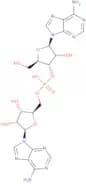
CAS:<p>Adenylyl-3'-5'-adenosine ammonium salt is a novel and activator. CAS No. 21027-46-3. Ribonuclesides, Deoxyribonucleosides, diphosphate, Phosphoramidites, Modified, Anticancer, Antiviral, monophosphate, Nucleosides, Synthetic. High quality and high purity.</p>Formula:C20H25N10O10PPurezza:Min. 95%Peso molecolare:596.45 g/mol9-(5’-Methyl-b-D-ribofuranosyl)-6-chloropurine
<p>9-(5’-Methyl-b-D-ribofuranosyl)-6-chloropurine is a novel antiviral that belongs to the class of deoxyribonucleosides. It is synthesized by reacting 5’-methyl-2,4(1H,3H) pyrimidinedione with 6-chloropurine in the presence of sodium bicarbonate and sulfuric acid. 9-(5’-Methyl-b-D-ribofuranosyl)-6-chloropurine inhibits DNA synthesis by binding to the enzyme ribonuclease H (RNase H). RNase H hydrolyzes RNA sequences that are complementary to the 3’ end of DNA sequences and this drug prevents RNase H from functioning. 9-(5’-Methyl-b-Dribofuranosyl)-6 chloropurine also inhibits tumour cells and has shown anticancer activity in</p>Purezza:Min. 95%2,4-Dithiothymidine
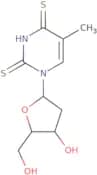
CAS:<p>2,4-Dithiothymidine (DT) is a chemotherapeutic that has been shown to be clinically effective in the treatment of hematopoietic malignancies. It is an oligothymidylate analogue that contains a pyrimidine heterocycle and an ethylthio group. DT is not a nucleoside analog, but it inhibits DNA synthesis by binding to the enzyme thymidylate synthase and preventing the formation of thymine from uracil. DT also binds to single-stranded DNA with high affinity and alters its conformation, which may inhibit transcription and replication. The photophysical properties of this molecule are studied theoretically using quantum mechanics and population analysis theory. The reagent DT can be used to focus attention on other molecules or conformation states of proteins that might have improved biological activity.</p>Formula:C10H14N2O3S2Purezza:Min. 95%Peso molecolare:274.36 g/mol5-Aza-N6-benzoyl-5'-O-DMT-2'-deoxycytidine 3'-CE phosphoramidite
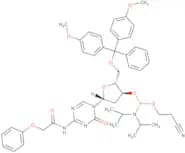
CAS:<p>5-Aza-N6-benzoyl-5'-O-DMT-2'-deoxycytidine 3'-CE phosphoramidite is a monophosphate, Synthetic, DNA Activator, Anticancer, Modified, Novel, Nucleosides. It has the CAS No. 929904-98-3 and is High purity.</p>Formula:C46H53N6O9PPurezza:Min. 95%Peso molecolare:864.92 g/molN6-Succinyl adenosine
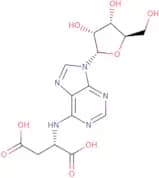
CAS:N6-Succinyl adenosine is a biochemical that is involved in the transfer of fatty acids across membranes. It has been shown to be effective in transfection experiments, where it can be used to increase the expression of genes. N6-Succinyl adenosine has also been shown to be an important substrate for various dehydrogenases. Deficiency of these enzymes leads to orotic aciduria, which is characterized by elevated levels of orotic acid in blood and urine and may lead to mental retardation. A linear calibration curve was generated for diagnosis purposes, with the enzyme activities being determined using a logistic regression model.Formula:C14H17N5O8Purezza:Min. 95%Colore e forma:White PowderPeso molecolare:383.31 g/mol8-Thioguanosine
CAS:<p>8-Thioguanosine is a purine derivative with reactive chlorine atoms. It has been shown to be a potent inhibitor of cellular targets, including monoclonal antibodies, growth factors, and transcription-polymerase chain reactions (PCR). 8-Thioguanosine binds to the antibody response by modulating the function of the B cells. This drug also has immunomodulatory effects that have been shown in animal models. 8-Thioguanosine is used as an immunosuppressant in patients undergoing bone marrow transplants and solid organ transplants.</p>Formula:C10H13N5O5SPurezza:Min. 95%Colore e forma:White PowderPeso molecolare:315.3 g/mol7-Deaza-2'-deoxyguanosine
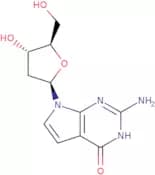
CAS:7-Deaza-2'-deoxyguanosine is an analog of guanosine that has been shown to inhibit the activity of telomerase. This enzyme synthesizes a sequence of DNA called a telomere, which protects the ends of chromosomes from deterioration and prevents chromosomal end-to-end fusion. 7-Deaza-2'-deoxyguanosine has an inhibitory effect on the polymerase chain reaction (PCR) in mammalian cells and inhibits the transcription-polymerase chain reaction (PCR) in vitro. It has also been shown to be potent against cancer cells. 7-Deaza-2'-deoxyguanosine is synthesized by solid phase synthesis, which is a chemical process that involves attaching one molecule to another molecule with similar structure, using organic solvents as intermediates.Formula:C11H14N4O4Purezza:Min. 95%Colore e forma:White PowderPeso molecolare:266.26 g/mol4-Thiothymidine
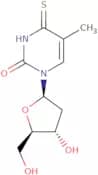
CAS:<p>4-Thiothymidine is a nucleoside analog that is converted to thymidine by the enzyme thymidine kinase. It has been shown to inhibit the growth of human skin cancer cells by binding to DNA duplexes and inhibiting the synthesis of new DNA strands. 4-Thiothymidine has also been shown to be effective against radiation-induced damage in cultured human cells and inhibits tumor growth in mice bearing a transplantable mouse skin cancer. 4-Thiothymidine can be used as an inhibitor for chemotherapy or radiation therapy for cancer patients. It is active on both site-specific and cell-specific gene targets, with a reactive hydrogen bond that helps stabilize its formation.</p>Formula:C10H14N2O4SPurezza:Min. 98 Area-%Colore e forma:Yellow PowderPeso molecolare:258.3 g/molN6-Benzoyl-2'-deoxy-5'-O-DMT-adenosine 3'-O-succinate triethylammonium salt
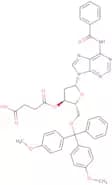
CAS:<p>N6-Benzoyl-2'-deoxy-5'-O-DMT-adenosine 3'-O-succinate triethylammonium salt is a novel nucleoside analog that has antiviral and anticancer properties. It is a ribonucleotide with an N6-(benzoyl)-2'-deoxyadenosine base linked to the 3' position of the sugar through an acetyl group, with a succinic acid moiety at the 5' position. This drug inhibits DNA synthesis and has been shown to block HIV replication in vitro. It also has activity against human papillomavirus type 16 (HPV16) infections in vivo.</p>Formula:C42H39N5O9·C6H15NPurezza:Min. 95%Colore e forma:PowderPeso molecolare:858.98 g/mol5-Methoxy-2-thiouridine
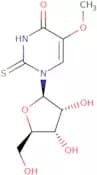
CAS:5-Methoxy-2-thiouridine is the peracylated form of thiouracil. It is a reactive oxygen species, which can cause primary site lesions in cells. 5-Methoxy-2-thiouridine is a posttranscriptional modification that leads to conformational changes in the anticodon loop of tRNA molecules. This modification prevents the anticodon from pairing with its corresponding codon during translation, thereby inhibiting protein synthesis. The modifications also affect RNA processing and stability and lead to changes in gene expression.Purezza:Min. 95%5'-Deoxy-5'-(methylthio)adenosine
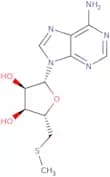
CAS:<p>5'-Deoxy-5'-(methylthio)adenosine is a nucleoside that has been shown to inhibit the growth of bowel cancer cells. 5'-Deoxy-5'-(methylthio)adenosine blocks the synthesis of DNA and RNA by inhibiting the action of enzymes involved in DNA metabolism. It also inhibits methionine synthase and phosphorylase, which are involved in protein synthesis. This compound has been shown to be effective in treating cancer tissues due to its ability to inhibit polymerase chain reactions and prevent the formation of cancerous cells.</p>Formula:C11H15N5O3SPurezza:(Hplc-Ms) Min. 98 Area-%Colore e forma:White PowderPeso molecolare:297.34 g/molFlavin adenine dinucleotide
CAS:<p>Flavin adenine dinucleotide, also known as FAD, plays a crucial role in several enzymatic reactions involved in metabolism. It is essential for the function of flavoproteins, which are involved in processes such as the electron transport chain and the citric acid cycle.</p>Formula:C27H33N9O15P2Purezza:Min. 95%Colore e forma:PowderPeso molecolare:785.5 g/molAMP PNP tetralithium salt
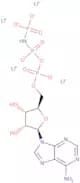
CAS:<p>Non-hydrolyzable AMP analog</p>Formula:C10H13Li4N6O12P3Purezza:Min. 95%Peso molecolare:529.93 g/mol8-Chloroadenosine-5'-monophosphate triethylammonium, about 28 mg/ml aqueous solution
CAS:<p>8-Chloroadenosine-5'-monophosphate triethylammonium is a novel phosphoramidite that is used in the synthesis of DNA. 8-Chloroadenosine-5'-monophosphate triethylammonium has been shown to activate antiviral and anticancer drugs with high specificity. It is also used as a reagent for the synthesis of deoxyribonucleosides and nucleosides. 8-Chloroadenosine-5'-monophosphate triethylammonium has high purity and can be used in the synthesis of DNA, RNA, and other nucleosides.</p>Formula:C10H13ClN5O7P•(C6H15N)2Purezza:Min. 95%Colore e forma:Clear LiquidPeso molecolare:584.05 g/mol















![4-7H-Chloro-5-iodo-7-(2-C-methyl-b-D-ribofuranosyl)-7H-pyrrolo[2,3-d]pyrimidin-2-amine](/_next/image/?url=https%3A%2Fstatic.cymitquimica.com%2Fproducts%2F3D%2Fthumb-webp%2FNC14083.webp&w=3840&q=75)