Nucleosidi
I nucleosidi sono building blocks fondamentali degli acidi nucleici, composti da una base azotata legata a una molecola di zucchero. In questa sezione, puoi trovare una vasta gamma di nucleosidi essenziali per la ricerca in biologia molecolare, biochimica e farmacologia. Questi composti svolgono ruoli cruciali nella sintesi del DNA e dell'RNA e sono vitali in vari processi metabolici. I nucleosidi vengono utilizzati per studiare il materiale genetico, sviluppare terapie antivirali e antitumorali e comprendere i meccanismi cellulari. Da CymitQuimica, forniamo nucleosidi di alta qualità per supportare le tue esigenze di ricerca e sviluppo, garantendo purezza e affidabilità per le tue applicazioni sperimentali.
Trovati 3569 prodotti di "Nucleosidi"
Ordinare per
Purezza (%)
0
100
|
0
|
50
|
90
|
95
|
100
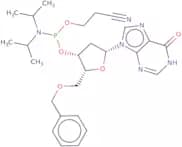
5'-O-Benzyl-2'-deoxyinosine 3'-CE phosphoramidite
<p>5'-O-Benzyl-2'-deoxyinosine 3'-CE phosphoramidite is an activator of DNA synthesis. It has antiviral and anticancer properties, which have been shown in animal models. This compound is a novel nucleoside phosphoramidite that can be used to synthesize oligonucleotides. The CAS number for this product is 98469-45-7.</p>Formula:C26H35N6O5PPurezza:Min. 95%Peso molecolare:542.58 g/mol5'-O-Methoxytrityluridine 3'-CE phosphoramidite
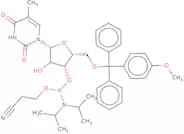
<p>5'-O-Methoxytrityluridine 3'-CE phosphoramidite is a modified nucleoside that can be used in the synthesis of DNA and RNA. It is an activator that activates ribonucleotides to diphosphates. 5'-O-Methoxytrityluridine 3'-CE phosphoramidite has been shown to have antiviral, anticancer, and novel activities. This product is CAS No. 57747-00-2, High purity, deoxyribonucleosides, and high quality.</p>Formula:C39H47N4O8PPurezza:Min. 95%Peso molecolare:730.81 g/mol5'-O-tert-Butyldimethylsilyl-2'-deoxy-5-iodocytidine
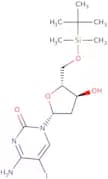
CAS:5'-O-tert-Butyldimethylsilyl-2'-deoxy-5-iodocytidine is a nucleoside that can be used as an activator for ribonucleosides. It has been shown to have anticancer, antiviral and antiviral activities. 5'-O-tert-Butyldimethylsilyl-2'-deoxy-5-iodocytidine is synthesized by the reaction of 2'-deoxycytidine with tertbutyldimethylchlorosilane in the presence of triethylamine. The product may be purified by crystallization or chromatography.Formula:C15H26IN3O4SiPurezza:Min. 95%Colore e forma:White Off-White PowderPeso molecolare:467.38 g/molN4-Benzoyl-2’-O-(2-ethoxyethyl)-5-methylcytidine
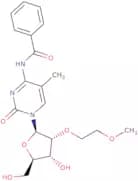
CAS:<p>N4-Benzoyl-2’-O-(2-ethoxyethyl)-5-methylcytidine is an antiviral, monophosphate nucleoside. It is a novel anticancer agent that inhibits the synthesis of DNA and RNA in cells, and is a potent activator of human immunodeficiency virus type 1 (HIV-1) reverse transcriptase. N4-Benzoyl-2’-O-(2-ethoxyethyl)-5-methylcytidine has been shown to have high purity and high quality. It is synthesized by the reaction of 5′ phosphoramidite with 2’, 4′, 5′ benzoyl cytidine.</p>Purezza:Min. 95%5'-(Furan-2-yl)-2’-O-methyluridine
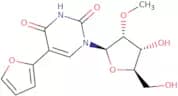
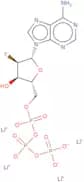
CAS:<p>5'-(Furan-2-yl)-2’-O-methyluridine is a modified nucleoside that is used as an antiviral agent. It is a monophosphate nucleotide analog and has been shown to be active against HIV, herpes simplex virus, cytomegalovirus, and Epstein Barr virus. 5'-(Furan-2-yl)-2’-O-methyluridine is synthesized by the phosphoramidite method and has high purity and quality. The CAS number for this compound is 2095417-32-4.</p>Purezza:Min. 95%2'-Deoxy-2'-fluoroadenosine-5'-triphosphate tetralithium salt
CAS:2'-Deoxy-2'-fluoroadenosine-5'-triphosphate tetralithium salt (FdATP) is a competitive inhibitor of ATP. It inhibits the synthesis of RNA, DNA, and protein in cell culture at high concentrations. FdATP is also an analog of adenosine triphosphate (ATP), which is needed for cellular energy production. The competitive inhibition of ATP by FdATP prevents the formation of a phosphorylated enzyme that is required for the initiation of DNA synthesis. This can lead to cell death, as the cells cannot produce proteins required for growth and replication.Formula:C10H11FN5O12P3•Li4Purezza:Min. 95%Colore e forma:PowderPeso molecolare:532.9 g/mol5-(Azidomethyl)-2’-O-(2-methoxyethyl)uridine
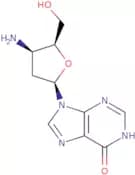
CAS:5-(Azidomethyl)-2’-O-(2-methoxyethyl)uridine is a novel, modified nucleoside with anticancer and antiviral properties. It is synthesized from 2’-deoxyadenosine 5’-monophosphate (dAMP) and 5-bromo-2’-chloroacetamidofluoromethane (BAF). This product has been shown to inhibit the proliferation of cancer cells in vitro. It also inhibits the synthesis of viral DNA and RNA, which may contribute to its antiviral effects.Formula:C13H19N5O7Purezza:Min. 95%Peso molecolare:357.32 g/mol3'-Amino-2',3'-dideoxyinosine
CAS:<p>3'-Amino-2',3'-dideoxyinosine acts as a chain terminator in DNA synthesis due to the absence of a 3'-hydroxyl group. The 3'-amino group allows for the attachment of various molecules to the 3' end of oligonucleotides, and the inosine base introduces the potential for wobble base pairing, making it a specialized tool for research and potential diagnostic applications.</p>Formula:C10H13N5O3Purezza:Min. 95%Peso molecolare:251.24 g/mol5'-(Furan-2-yl)-5'-O-DMT-2’-O-methylcytidine
CAS:5'-(Furan-2-yl)-5'-O-DMT-2’-O-methylcytidine is a high purity phosphoramidite, deoxyribonucleoside, and ribonucleoside that can be used in the synthesis of antiviral drugs, anti-cancer agents, and nucleotides. 5'-(Furan-2-yl)-5'-O-DMT-2’-O-methylcytidine has been shown to inhibit the growth of various cancer cells. This product also belongs to a novel class of synthetic nucleosides that can be modified with fluorine or other substituents at any position on the sugar ring.Purezza:Min. 95%4’-C-Methyl-4-deoxyuridine
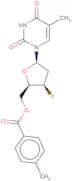
CAS:<p>4’-C-Methyl-4-deoxyuridine is an antiviral and anticancer drug that belongs to the group of nucleosides. It has shown novel anti-tumor activities in vitro and in vivo, as well as antiviral effects against herpes simplex virus type 1 (HSV-1) and type 2 (HSV-2). 4’-C-Methyl-4-deoxyuridine is a modified nucleoside that is synthesized from uridine. It has been shown to inhibit viral replication by inhibiting viral DNA synthesis. This drug also inhibits the multiplication of tumor cells by inhibiting DNA synthesis. The product is high purity, high quality, and CAS No. 1064364-21-1.</p>Purezza:Min. 95%3'-Deoxy-3'-fluoro-5'-O-toluoylthymidine
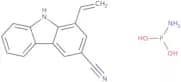
<p>3'-Deoxy-3'-fluoro-5'-O-toluoylthymidine is a nucleoside that can be used as an antiviral and anticancer agent. It is structurally similar to thymidine, but differs by the replacement of a hydrogen atom at position 3 with a fluorine atom. The replacement of this hydrogen atom with a fluorine atom results in the removal of hydroxyl group from the 5' carbon position on the sugar ring, which is then converted into an ester moiety. 3'-Deoxy-3'-fluoro-5'-O-toluoylthymidine has been shown to inhibit DNA replication, RNA transcription and protein synthesis. This nucleoside also has been found to stimulate apoptosis in cancer cells by inhibiting DNA replication.</p>Formula:C18H19FN2O5Purezza:Min. 95%Peso molecolare:348.43 g/mol3-Cyanovinyl-9-(5’-O-DMT-2’-deoxyribofuranosyl)carbazole
CAS:<p>3-Cyanovinyl-9-(5’-O-DMT-2’-deoxyribofuranosyl)carbazole is a nucleoside analog that is an antiviral and anticancer agent. It is a monophosphate, which has been shown to inhibit the replication of DNA by binding to the enzyme DNA polymerase. 3-Cyanovinyl-9-(5’-O-DMT-2’-deoxyribofuranosyl)carbazole also inhibits protein synthesis and cell division by preventing the production of proteins vital for cell division. This drug has shown high purity and quality, as well as novel properties.</p>Formula:C41H36N2O5Purezza:Min. 95%Peso molecolare:636.74 g/mol6-Amino-1-(2'-deoxy-a-D-ribofuranosyl)-4-methoxy-1H- pyrazolo[3,4-d]pyrimidine
<p>6-Amino-1-(2'-deoxy-a-D-ribofuranosyl)-4-methoxy-1H- pyrazolo[3,4-d]pyrimidine is a modified nucleoside that is an antiviral agent and anticancer drug. It inhibits viral replication by inhibiting the activity of DNA polymerase. 6-[Amino(2'-deoxyribofuranosyl)]-1-(2'-deoxyribofuranosyl)-4-methoxypyrazolo[3,4-d]pyrimidine has been shown to inhibit the growth of cancer cells without affecting healthy cells.</p>Purezza:Min. 95%6-O-Methylinosine
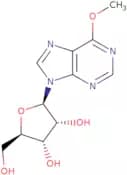
CAS:6-O-Methylinosine is a modified nucleoside that is used in the synthesis of recombinant proteins. It is synthesized from the reaction of methylphosphate and 6-O-methylguanosine. The phosphate group of the 6-O-methylguanosine molecule reacts with methylphosphate in an acid or neutral environment, while it reacts with phosphoric acid in a basic environment. This reaction can be monitored by measuring the amount of free phosphate groups present after the reaction. The rate of this reaction can be increased by increasing temperature and pH. 6-O-Methylinosine has been shown to have anticancer activity, which may be due to its ability to inhibit enzyme catalysis and modify DNA structure.Formula:C11H14N4O5Purezza:Min. 95%Colore e forma:White PowderPeso molecolare:282.25 g/molCarbocyclic 2'-deoxyguanosine
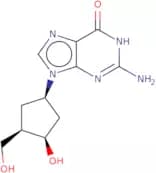
CAS:<p>Carbocyclic 2'-deoxyguanosine is an analog of the nucleoside guanosine, and it is a prodrug that is converted to the active form, carbocyclic 2'-deoxyguanosin-8-yl-1-beta-D-arabinofuranoside, in vivo. This drug inhibits viral thymidine kinase and has been shown to be effective against HIV infection in clinical studies. Carbocyclic 2'-deoxyguanosine has been shown to inhibit virus proliferation by interfering with viral DNA synthesis and replication. It also blocks transcription of the HLA class I molecule by binding to its promoter region. Carbocyclic 2'-deoxyguanosine may have therapeutic potential for treating herpes simplex virus infections. The drug is being developed as an oral prodrug to treat patients with mild to moderate symptoms of herpes simplex virus infection.</p>Formula:C11H15N5O3Purezza:Min. 95%Peso molecolare:265.27 g/mol5'-O-DMT-N4-isobutyryl-2'-O-methylcytidine
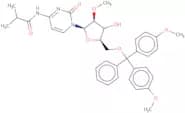
5'-O-DMT-N4-isobutyryl-2'-O-methylcytidine is a novel, synthetic nucleoside. It is a phosphoramidate prodrug of 5'-deoxy-5'-O-dimethoxytrityl-N4-isobutyrylcytidine, which is an antiviral and anticancer agent. 5'-O-DMT-N4-isobutyrylcytidine inhibits DNA synthesis by competitively inhibiting the activity of the enzyme ribonucleotide reductase (RNR).Formula:C35H39N3O8Purezza:Min. 95%Peso molecolare:629.7 g/mol5'-O-Benzoyl-2'-deoxyuridine 3'-CE phosphoramidite
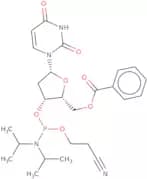
<p>5'-O-Benzoyl-2'-deoxyuridine 3'-CE phosphoramidite is an anticancer drug that inhibits viral and tumor DNA synthesis. It is a nucleoside monophosphate with antiviral and antitumor activities. The compound is synthesized by coupling a benzoyl group to 5'-O-DMT-2'-deoxyuridine 3'-phosphate, followed by the addition of a triethylammonium salt group. The phosphoramidite is then reacted with 2,4,6-trichlorophenylisocyanate to produce the final product. This product has a CAS number of 86825-34-1.</p>Formula:C25H33N4O7PPurezza:Min. 95%Peso molecolare:532.54 g/mol7-Methyl-2'-deoxywyosine
<p>7-Methyl-2'-deoxywyosine is a nucleoside analogue that inhibits the growth of cells by interfering with DNA replication. It is a modified form of deoxywyosine, which is the natural precursor of DNA and RNA. 7-Methyl-2'-deoxywyosine has antiviral activity against herpes simplex virus type 1 (HSV-1) and human cytomegalovirus (CMV). This compound has shown anticancer activity in vivo and in vitro, as well as high purity and quality.</p>Purezza:Min. 95%N6-Methyl-2'-O-methyladenosine
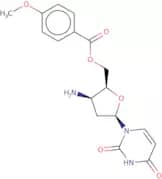
CAS:<p>N6-Methyl-2'-O-methyladenosine is a nucleoside that is found in DNA. In some cases, the methyl group in this molecule can be modified, which can change its biological activity. N6-Methyl-2'-O-methyladenosine has been shown to reduce the severity of bowel disease and myocardial infarcts in experimental models. The structural analysis of vessels from patients with atherosclerosis revealed that this molecule inhibits vascular calcification. It also decreases expression of MMP-9, a protein involved in nephropathy and diabetic kidney disease. N6-Methyl-2'-O-methyladenosine is able to inhibit the development of vascular injury by blocking the activation of cells and reducing inflammation through pharmacological agents that are used in experimental models for blood vessel injury.</p>Formula:C12H17N5O4Purezza:Min. 97 Area-%Colore e forma:White PowderPeso molecolare:295.29 g/mol3'-Amino-5'-O-p-anisoyl-2',3'-dideoxyuridine
<p>3'-Amino-5'-O-p-anisoyl-2',3'-dideoxyuridine is a novel compound that has been synthesized. This compound is a diphosphate, which can be used as an activator for the synthesis of modified nucleosides and antiviral agents. It is also a DNA phosphoramidite, which can be used in the synthesis of oligonucleotides with high purity and high quality.</p>Formula:C17H19N3O6Purezza:Min. 95%Peso molecolare:361.35 g/molN4-Benzoyl-3'-O-tert-butyldimethylsilyl-5'-O-DMT-N4-methylcytidine
N4-Benzoyl-3'-O-tert-butyldimethylsilyl-5'-O-DMT-N4-methylcytidine is a nucleoside that is chemically modified by the addition of a benzoyl group. It has antiviral, anticancer and antiretroviral activities. N4-Benzoyl-3'-O-tert-butyldimethylsilyl-5'-O-DMT-N4-methylcytidine inhibits viral DNA synthesis by inhibiting both viral DNA polymerase and reverse transcriptase, which are enzymes required for the production of viral DNA. It also inhibits cancer cell growth by forming covalent bonds with deoxyribonucleic acid (DNA) in the cancer cells and initiating apoptosis. This nucleoside has been shown to be active against HIV, Herpes Simplex Virus Type 1 (HSV1), and Human CytomegalovPurezza:Min. 95%3-Cyanovinylcarbazole phosphoramidite
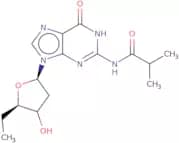
CAS:<p>3-Cyanovinylcarbazole phosphoramidite is a novel compound that has not been previously described. It is a deoxyribonucleoside monophosphate and can be used as an anticancer agent. 3-Cyanovinylcarbazole phosphoramidite is also an antiviral, which can inhibit the synthesis of viral DNA. The modified nucleosides in this compound are synthesized by modifying the ribonucleotide with a cyanovinyl group at the C-3 position, which can be used as phosphoramidites for DNA synthesis.</p>Formula:C50H53N4O6PPurezza:Min. 95%Colore e forma:PowderPeso molecolare:836.95 g/mol2'-Deoxy-N2-isobutyryl-5'-O-MMT-guanosine
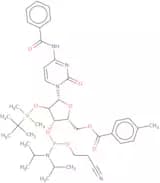
CAS:<p>2'-Deoxy-N2-isobutyryl-5'-O-MMT-guanosine is a synthetic, modified nucleoside. It is an activator of DNA synthesis, and it has been found to inhibit the growth of cancer cells in vitro. This compound has shown success in the treatment of HIV infection in vitro and has also been shown to be effective against hepatitis B virus (HBV) and herpes simplex virus type 1 (HSV). The compound may be useful as an antiviral agent.</p>Formula:C34H35N5O6Purezza:Min. 95%Peso molecolare:609.69 g/molN4-Benzoyl-2'-O-tert-butyldimethylsilyl-5'-O-toluoylcytidine 3'-CE phosphoramidite
<p>N4-Benzoyl-2'-O-tert-butyldimethylsilyl-5'-O-toluoylcytidine 3'-CE phosphoramidite is an anticancer agent that acts by inhibiting the formation of DNA and RNA. It is a nucleoside analogue that has been modified to contain a benzoyl group at the 2' carbon atom, which leads to increased cytotoxicity. N4-Benzoyl-2'-O-tert-butyldimethylsilyl-5'-O-toluoylcytidine 3'-CE phosphoramidite is a synthetic nucleoside analogue with novel properties. It inhibits the synthesis of DNA and RNA in cells, which may be due to its ability to inhibit DNA polymerases and ribonucleases.</p>Formula:C39H54N5O8PSiPurezza:Min. 95%Peso molecolare:779.95 g/mol2'-Deoxy-N2-DMF-5'-O-MMT-guanosine
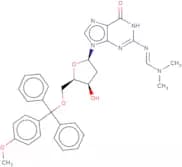
<p>2'-Deoxy-N2-DMF-5'-O-MMT-guanosine, also known as 2'-deoxy-N2,5'-O-(dimethoxytrityl)-guanosine, is a high quality, novel nucleoside analog that has been shown to be an effective antiviral. It was synthesized in 1972 by the group of E.J. Corey and is structurally similar to other nucleosides such as ribonucleosides or deoxyribonucleosides. It is a monophosphate that can be converted into a diphosphate by adding phosphorus ions and ATP. 2'-Deoxy-N2,5'-O-(dimethoxytrityl)-guanosine is not found in nature but can be used as an antiviral agent because it inhibits the replication of RNA viruses such as HIV and influenza A virus.</p>Formula:C33H34N6O5Purezza:Min. 95%Peso molecolare:594.66 g/mol3'-Azido-N6-benzoyl-5'-O-DMT-2',3'-dideoxyadenosine
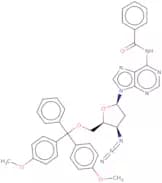
<p>3'-Azido-N6-benzoyl-5'-O-DMT-2',3'-dideoxyadenosine is a nucleoside analog and activator that inhibits the replication of DNA. It is a novel antiviral drug that has antiproliferative properties and may be useful in the treatment of cancer. 3'-Azido-N6-benzoyl-5'-O-DMT-2',3'-dideoxyadenosine is synthesized by reacting an activated phosphoramidite with 2',3'-dideoxyadenosine monophosphate to produce 3',5' dideoxythymidine 5'-monophosphate, which is then converted to 3',5' dideoxyuridine 5'-monophosphate. The last step involves the conversion of 3',5' dideoxyuridine 5'-monophosphate to 3' azidouridine 5'-monoph</p>Formula:C38H34N8O5Purezza:Min. 95%Peso molecolare:682.73 g/molN1-Benzylpseudouridine
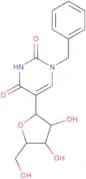
CAS:<p>N1-Benzylpseudouridine is a nucleoside that is used as a building block in the synthesis of DNA. It is also an activator, which is a molecule that can bind to and activate other enzymes, such as ribonucleases or deoxyribonucleases. N1-Benzylpseudouridine has been shown to have antiviral and anticancer properties.</p>Purezza:Min. 95%5'-Amino-2',5'-dideoxy-2'-fluorouridine
<p>5'-Amino-2',5'-dideoxy-2'-fluorouridine is an antiviral drug that is synthesized from the natural compound 5'-deoxy-5'-amino-2',5'-dideoxyuridine. The modified deoxyribonucleosides are activated by phosphorylation and can be incorporated into DNA by DNA polymerase, which prevents viral replication. The monophosphate form of this compound is used in cancer chemotherapy to inhibit the synthesis of RNA and proteins necessary for cell division. 5'-Amino-2',5'-dideoxy-2'-fluorouridine has been shown to be a potent anticancer agent, with activity against a variety of human tumor cell lines.</p>Purezza:Min. 95%5'-Amino-5'-deoxyadenosine hydrochloride
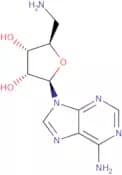
CAS:<p>5'-Amino-5'-deoxyadenosine hydrochloride (5'-ADeA) is a nucleotide that is synthesized from ribose 5-phosphate and adenosine monophosphate. It has been shown to have potential as a biomarker for skin cancer. The synthesis of 5'-ADeA is catalyzed by the enzyme caffeic acid 4-monooxygenase, which converts caffeic acid into 5'-ADeA. This reaction requires molecular oxygen, NADPH, and iron ions. The activity of this enzyme can be inhibited by sodium carbonate or basic fibroblast growth factor (bFGF). This drug has been shown to have anti-inflammatory effects in vivo.</p>Formula:C10H14N6O3Purezza:Min. 95 Area-%Colore e forma:PowderPeso molecolare:266.26 g/mol2’-Deoxy-4-hydazone uridine
<p>2’-Deoxy-4-hydazone uridine is a modified nucleoside that has antiviral activity. It is used to synthesize DNA and RNA, which are important for the synthesis of proteins. 2’-Deoxy-4-hydazone uridine can also be used as an activator for phosphoramidites in the synthesis of oligonucleotides. This drug is CAS No. 92287-17-7 and has a molecular weight of 263.29 g/mol.</p>Purezza:Min. 95%2',3'-Dideoxy-5'-O-DMT-cytidine
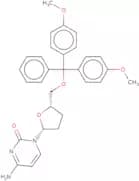
CAS:<p>2',3'-Dideoxy-5'-O-DMT-cytidine is a chemically modified cytidine nucleoside which can be used in synthetic chemistry, especially in nucleic acid synthesis. A dimethoxytrityl (DMT) protecting group is attached to the 5'-oxygen of the sugar. This is not biologically active, but it’s commonly used in solid-phase oligonucleotide synthesis to protect the 5' end during step-by-step DNA or RNA construction.</p>Formula:C30H31N3O5Purezza:Min. 95%Colore e forma:PowderPeso molecolare:513.6 g/molDMT-2'-OMe-pseudouridine phosphoramidite
<p>DMT-2'-OMe-pseudouridine phosphoramidite is an antiviral, anticancer, and DNA synthesis inhibitor. It has been used in the synthesis of oligonucleotide probes for sequencing and hybridization studies. DMT-2'-OMe-pseudouridine phosphoramidite is a modified nucleoside that is used as a building block for the synthesis of DNA. This compound is synthesized from 2'-deoxy-5-methyluridine and dimethoxytrityl chloride. DMT-2'-OMe-pseudouridine phosphoramidite inhibits the synthesis of RNA and DNA by binding to ribonucleotides and deoxyribonucleotides during the polymerization reaction, thereby blocking the progression of the reaction.</p>Purezza:Min. 95%9-(2',3',5'-Tri-O-benzoyl-2'-C-methyl-b-D-ribofuranosyl)6-methylpurine
CAS:Ribonucleosides are a class of nucleosides that includes ribose and deoxyribose. Ribonucleosides are found in DNA and RNA, the genetic material of all living cells. Ribonucleosides are also used in many syntheses of other compounds, including antibiotics, antiviral agents, and antimalarial drugs. This product is a monophosphate of 9-(2',3',5'-tri-O-benzoyl-2'-C-methyl-b-D-ribofuranosyl)6-methylpurine. It is an artificial nucleotide analog with modified sugar moieties and phosphate substituents. This product is CAS No. 2095417-61-9 and has been modified for use as phosphoramidites in the synthesis of DNA or RNA. This product has high purity and high quality.Purezza:Min. 95%2'-Deoxy-2'-fluoro-5-methylcytidine
CAS:<p>2'-Deoxy-2'-fluoro-5-methylcytidine is a nucleoside analog that is a modified version of cytidine, where the sugar (deoxyribose) has a fluoro modification at the 2' carbon and a methyl group is attached at the 5' position of the cytosine base. This modification confers unique properties that can be useful in research and drug development.</p>Formula:C10H14FN3O4Purezza:Min. 95%Colore e forma:Off-White PowderPeso molecolare:259.23 g/molCytidine 5'-monophosphate free acid
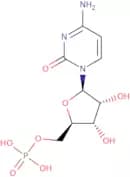
CAS:<p>Cytidine 5'-monophosphate is a nucleotide that is important in the synthesis of DNA and RNA. It is a precursor to uridine monophosphate (UMP) and uridylic acid (UDP). Cytidine 5'-monophosphate has been found to inhibit the growth of antibiotic-resistant strains of bacteria, such as those resistant to ampicillin, chloramphenicol, tetracycline, kanamycin, and streptomycin. Cytidine 5'-monophosphate also has inhibitory properties against energy metabolism and protein oxidation in bowel disease. This nucleotide has been shown to increase the rate constant for polymerase chain reaction (PCR) by up to 10-fold.</p>Formula:C9H14N3O8PPurezza:Min. 98 Area-%Colore e forma:White Off-White PowderPeso molecolare:323.2 g/molN6-Acetyladenosine
CAS:N6-Acetyladenosine is a nucleoside that belongs to the group of N-acetylated adenosines. It is found in thermophilic organisms and has been shown to be involved in optimal growth. N6-Acetyladenosine has also been found to be an important part of the coding and population modifications of crenarchaeota, archaeal organisms that are phylogenetically related to methanogens. Unfractionated populations of methanogen contain both N6-acetyladenosine residues and other modified adenosines, with each organism differing in the types of modifications they contain. Transfer of these modified adenosines from one organism to another can lead to changes in their coding and population modifications.Formula:C12H15N5O5Purezza:Area-% Min. 90 Area-%Colore e forma:White PowderPeso molecolare:309.28 g/mol2',3'-Dideoxy-2',3'-didehydroadenosine
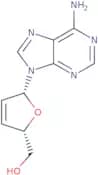
CAS:<p>2′,3′-Dideoxy-2′,3′-didehydroadenosine, abbreviated to d4A, is a synthetic purine nucleoside analog. Possible applications are its use to study antiviral activity.</p>Formula:C10H11N5O2Purezza:Min. 95%Colore e forma:Off-White PowderPeso molecolare:233.23 g/mol3'-Azido-3'-deoxy-b-L-cytidine
CAS:<p>3'-Azido-3'-deoxy-b-L-cytidine is a novel nucleoside that has been shown to be an activator of the ribonuclease activity of purified RNase A in vitro. This product is suitable for use in synthesis of oligodeoxynucleotides and phosphoramidites. 3'-Azido-3'-deoxy-b-L-cytidine can be used as a potential anticancer drug or antiviral agent.</p>Purezza:Min. 95%5'-Amino-5'-deoxy-2'-O-methyluridine
<p>5'-Amino-5'-deoxy-2'-O-methyluridine is a novel nucleoside analog with antiviral and anticancer properties. 5'-Amino-5'-deoxy-2'-O-methyluridine is an activator of the immune system, which may be due to its ability to inhibit DNA synthesis by inhibiting ribonucleotide reductase and DNA polymerase. This drug has shown activity against a variety of human tumor cell lines in vitro and in vivo. 5'-Amino-5'-deoxy-2'-O-methyluridine also inhibits the growth of several bacterial strains, including methicillin resistant Staphylococcus aureus (MRSA) and Mycobacterium avium complex.</p>Purezza:Min. 95%N2,2'-O-Dimethylguanosine
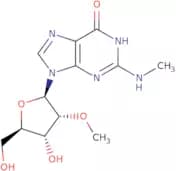
CAS:N2,2'-O-Dimethylguanosine is a nucleoside that belongs to the category of modified bases. It is synthesized from adenosine and a methyl group by a mutant strain of Escherichia coli. N2,2'-O-Dimethylguanosine can be identified by its characteristic UV-visible spectrum and high retention time on chromatographic columns. It has been shown to inhibit translation in E. coli at concentrations as low as 1 mM and also inhibits growth rate at concentrations as low as 2 mM. The chemical structure of this compound is similar to that of guanosine, but it contains an extra methyl group on its 2' carbon atom. This chemical modification may result in changes in the way the molecule interacts with other molecules or how it functions in the cell. N2,2'-O-Dimethylguanosine was first identified from a mutant strain of Escherichia coli that had been subjected to mutagenesisFormula:C12H17N5O5Purezza:Min. 95%Peso molecolare:311.29 g/mol2'-Deoxy-5'-O-DMT-2'-fluorouridine 3'-CE phosphoramidite
CAS:<p>2'-Deoxy-5'-O-DMT-2'-fluorouridine 3'-CE phosphoramidite is a nucleotide that is used in the synthesis of DNA. It is an organic compound consisting of a molecule with a phosphate group at one end and a ribose sugar at the other. 2'-Deoxy-5'-O-DMT-2'-fluorouridine 3'-CE phosphoramidite is synthesized on a solid support by reacting nucleophilic reagents with the ribonucleoside. This drug has antineoplastic effects, inhibiting cancer cell growth by interfering with the production of ribonucleic acid (RNA) and protein synthesis. Hydrolysis of this drug releases fluorouracil, which inhibits thymidylate synthase, preventing the conversion of dUMP to dTMP, and thus blocking DNA synthesis.</p>Formula:C39H46FN4O8PPurezza:Min. 98 Area-%Colore e forma:PowderPeso molecolare:748.78 g/molN6,N6,2'-O-Trimethyladenosine
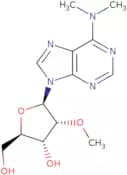
CAS:N6,N6,2'-O-Trimethyladenosine is a nucleoside that is found in small quantities in human tissues. It is synthesized by the enzyme polymerase from adenosine and S-adenosyl-L-methionine. N6,N6,2'-O-Trimethyladenosine is structurally similar to guanosine and cytidine and can be modified by nature or synthetic strategies. N6,N6,2'-O-Trimethyladenosine has been shown to have effects on fertility and may be involved in epigenetics as well as tuberculosis. Its role as an epigenetic marker for gene regulation has not been fully determined.Formula:C13H19N5O4Purezza:Min. 88 Area-%Colore e forma:White PowderPeso molecolare:309.32 g/mol4’,5’-Didehydro-2’-O-(2-methoxyethyl)-5-methyluridine
CAS:<p>4’,5’-Didehydro-2’-O-(2-methoxyethyl)-5-methyluridine (DdeO) is a novel phosphoramidite that is synthesized from 2’,3’-dideoxycytidine. It is used in DNA synthesis and as an antiviral and anticancer agent. DdeO has shown to be a potent activator of the p53 tumor suppressor gene and inhibits the proliferation of human cancer cells by inhibiting the activity of DNA polymerase alpha. DdeO also inhibits viral replication by interfering with viral DNA synthesis.</p>Purezza:Min. 95%2'-C-Methyladenosine
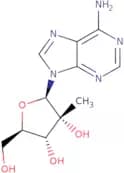
CAS:<p>Antiviral compound; inhibitor of viral RNA replication</p>Formula:C11H15N5O4Purezza:Min. 95%Colore e forma:PowderPeso molecolare:281.27 g/mol5-(2-Fluorovinyl)-2'-Deoxyuridine
CAS:5-(2-Fluorovinyl)-2'-Deoxyuridine is a hydrophobic analogue of acyclovir that has potent activity against herpes simplex virus type 1. It inhibits the synthesis of viral DNA, and thus prevents the formation of plaques in tissue culture. This drug also inhibits cell proliferation and viral production by l1210 cells as well as lung fibroblasts. 5-(2-Fluorovinyl)-2'-Deoxyuridine has shown inhibitory effects against uninfected cells, but not against cells infected with herpes simplex virus type 2.Formula:C11H13FN2O5Purezza:Min. 95%Peso molecolare:272.23 g/mol4’-Cyanouridine
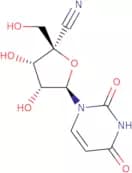
CAS:<p>4’-Cyanouridine is a nucleoside that is used in the synthesis of DNA and RNA. It is often used as a precursor in the production of phosphoramidites and nucleosides, which are important for DNA synthesis. 4’-Cyanouridine can be used to inhibit viral replication by blocking the activity of reverse transcriptase, an enzyme required for the synthesis of viral DNA. 4’-Cyanouridine can also be used to treat cancer cells by preventing the growth of cells. This compound has been shown to activate RNA polymerase II, which is required for protein synthesis and cell division. The high purity and novel nature of this product make it ideal for use in research laboratories or other specialized settings where high quality products are required.</p>Purezza:Min. 95%2',5'-Dideoxyuridine
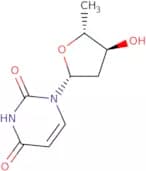
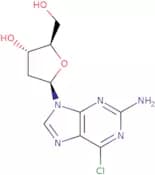
CAS:<p>2',5'-Dideoxyuridine is a synthetic nucleoside analog derived from uridine, one of the four standard nucleosides found in RNA. It is chemically modified by the removal of hydroxyl (–OH) groups at the 2' and 5' positions of the sugar, altering its ability to participate in RNA or DNA chain formation.</p>Formula:C9H12N2O4Purezza:Min. 95%Colore e forma:White To Off-White SolidPeso molecolare:212.21 g/mol2-Amino-6-chloro-9-(2'-deoxy-b-D-ribofuranosyl)purine
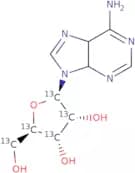
CAS:2-Amino-6-chloro-9-(2'-deoxy-b-D-ribofuranosyl)purine is a purine nucleoside where the purine base has a 2-amino group at position 2 and a chlorine at position 6. The sugar is 2'-deoxy, meaning it is like the sugar found in DNA, lacking the 2'-hydroxyl group that is present in RNA. The amino and chloro groups on the purine base modify how this molecule behaves in biological systems making it useful in research applications.Formula:C10H12ClN5O3Purezza:Min. 97 Area-%Colore e forma:White PowderPeso molecolare:285.69 g/mol1', 2', 3', 4', 5'- ¹³C5-Adenosine
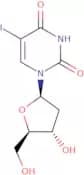
CAS:<p>1', 2', 3', 4', 5'- ¹³C5-Adenosine is adenosine which has all five carbon atoms of the ribose sugar replaced with the stable isotope carbon-13 (^13C). Possible applications are in proteomics studies.</p>Formula:C5C5H13N5O4Purezza:Min. 97 Area-%Colore e forma:White PowderPeso molecolare:272.2 g/mol2'-Deoxy-5-iodouridine - EP
CAS:2'-Deoxy-5-iodouridine is a nucleoside analog that inhibits the replication of viruses and other DNA-containing organisms. 2'-Deoxy-5-iodouridine also has inhibitory properties on cell nuclei, which may be due to its ability to bind with DNA and prevent the synthesis of RNA or protein. 2'-Deoxy-5-iodouridine has been shown to inhibit the growth of human HL60 cells in vitro at an optimum concentration of 20 μM. It also inhibits the replication of murine sarcoma virus at an optimum concentration of 16 μM. 2'-Deoxy-5-iodouridine has significant cytotoxicity against solid tumours in mice, which may be due to its ability to inhibit hydrogen fluoride (HF) induced lipid peroxidation and reduce glutathione levels.Formula:C9H11IN2O5Purezza:Min. 95%Colore e forma:PowderPeso molecolare:354.1 g/mol





![6-Amino-1-(2'-deoxy-a-D-ribofuranosyl)-4-methoxy-1H- pyrazolo[3,4-d]pyrimidine](/_next/image/?url=https%3A%2Fstatic.cymitquimica.com%2Fproducts%2F3D%2Fthumb-webp%2FNA162964.webp&w=3840&q=75)