Nucleosidi
I nucleosidi sono building blocks fondamentali degli acidi nucleici, composti da una base azotata legata a una molecola di zucchero. In questa sezione, puoi trovare una vasta gamma di nucleosidi essenziali per la ricerca in biologia molecolare, biochimica e farmacologia. Questi composti svolgono ruoli cruciali nella sintesi del DNA e dell'RNA e sono vitali in vari processi metabolici. I nucleosidi vengono utilizzati per studiare il materiale genetico, sviluppare terapie antivirali e antitumorali e comprendere i meccanismi cellulari. Da CymitQuimica, forniamo nucleosidi di alta qualità per supportare le tue esigenze di ricerca e sviluppo, garantendo purezza e affidabilità per le tue applicazioni sperimentali.
Trovati 3569 prodotti di "Nucleosidi"
Ordinare per
Purezza (%)
0
100
|
0
|
50
|
90
|
95
|
100
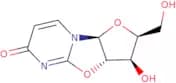
2,2'-Anhydro-L-uridine
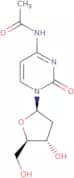
CAS:<p>2,2'-Anhydro-L-uridine is a nucleoside used in for research purposes. It is of particular interest due to it being an L-isomer which is different from the D-form sugars used by the human body. It is useful to study these kinds of molecules for their use in medicine, especially as antivirals</p>Formula:C9H10N2O5Purezza:Min. 95%Colore e forma:PowderPeso molecolare:226.19 g/molN4-Acetyl-2'-deoxycytidine
CAS:<p>N4-Acetyl-2'-deoxycytidine is a nucleoside analogue that acts as an inhibitor of DNA synthesis. It binds to the active site of the enzyme ribonucleotide reductase, blocking the conversion of ribonucleotides to deoxyribonucleotides. This prevents DNA synthesis and replication, which leads to cell death. N4-Acetyl-2'-deoxycytidine has been shown to be more efficient than other analogues in terms of energy efficiency, control levels, and constant linear model. This compound is reactive and can cause low yields when isolated from solutions with high concentrations. A diode can be used for analytical purposes, while calcium binding may be used as a mathematical model in order to analyze this drug.</p>Formula:C11H15N3O5Purezza:Min. 98 Area-%Colore e forma:PowderPeso molecolare:269.25 g/mol5-(3-Hydroxypropyn-1-yl)uridine
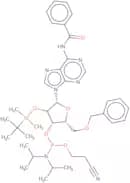
<p>5-(3-Hydroxypropyn-1-yl)uridine is a modified nucleoside that can be used as an antiviral or anticancer drug. It is an activator of the enzyme ribonucleotide reductase, which converts ribonucleotides to deoxyribonucleotides. 5-(3-Hydroxypropyn-1-yl)uridine has been shown to inhibit the growth of various cancer cells in vitro and in vivo. This drug has also been shown to have antiviral activity against herpes simplex virus type 1 (HSV-1).</p>Purezza:Min. 95%N6-Benzoyl-5'-O-benzyl-2'-O-tert-butyldimethylsilyladenosine 3'-CE phosphoramidite
N6-Benzoyl-5'-O-benzyl-2'-O-tert-butyldimethylsilyladenosine 3'-CE phosphoramidite is an activator of ribonucleosides and deoxyribonucleosides. It is a novel synthetic nucleoside, which has high quality and purity. The chemical modification of the base allows for the synthesis of DNA with modified bases. This product has been shown to have anticancer effects in vitro and in vivo, as well as antiviral activities against HIV.Formula:C39H54N7O6PSiPurezza:Min. 95%Peso molecolare:775.97 g/molO2-3'-anhydro-β-D-fructofuranosyluracil
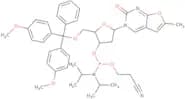
<p>O2-3'-anhydro-beta-D-fructofuranosyluracil is a novel nucleoside analogue that has antiviral and anticancer properties. It is synthesized by the reaction of beta-D-fructofuranosyluracil with phosphoramidites. The product is purified by HPLC and characterized by IR spectroscopy, UV spectroscopy, and mass spectrometry.</p>Purezza:Min. 95%Furano-dt cep
CAS:<p>Furano-dt cep is a novel antiviral drug that has been shown to inhibit the production of viral nucleic acid and to activate the immune system. Furano-dt cep is a phosphoramidite compound that is synthesized from ribonucleosides and deoxyribonucleosides, which are modified with 2,2-dithiobis(propionitrile). Furano-dt cep binds to the 5'-terminal phosphate group on the DNA strand, preventing RNA synthesis. Furano-dt cep also inhibits tumor growth by causing cell death through apoptosis.</p>Formula:C42H49N4O8PPurezza:Min. 95%Peso molecolare:768.8 g/mol9-(b-D-Arabinofuranosyl)adenine
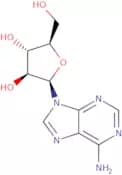
CAS:<p>9-(b-D-Arabinofuranosyl)adenine is a nucleoside that is used as an antiviral agent. It binds to viral RNA and inhibits viral replication. 9-(b-D-Arabinofuranosyl)adenine has been shown to have potent side-effect profiles, including myocardial infarct, neuronal death, and immunological reactions. These effects are due to its ability to inhibit the synthesis of guanine nucleotides in the heart and brain cells, which are essential for energy production and neurotransmitter release respectively. 9-(b-D-Arabinofuranosyl)adenine also binds to toll-like receptors (TLRs), which are proteins found on the surface of cells that recognize invading microbes or foreign substances. This binding leads to activation of immune response pathways.</p>Formula:C10H13N5O4Purezza:Min. 95%Colore e forma:White PowderPeso molecolare:267.24 g/molStavudine 5'-triphosphate sodium salt - 100 mM aqueous solution
Stavudine 5'-triphosphate sodium salt is a modified nucleoside analog with antiviral and anticancer properties. It is a phosphoramidate of stavudine, which has been modified by the replacement of the L-cysteine moiety with a 2-thiophenecarboxamide group. The novel chemical structure of stavudine 5'-triphosphate sodium salt leads to higher solubility in water than other analogues and improved pharmacokinetics. Stavudine 5'-triphosphate sodium salt is an activator for the synthesis of DNA, RNA, and protein. It also inhibits viral replication by interfering with viral DNA polymerase and ribonucleotide reductase, which are essential enzymes for viral replication.Formula:C10H17N2O13P3·xNaPurezza:Min. 95 Area-%Colore e forma:Clear LiquidPeso molecolare:466.17 g/molN4-Benzoyl-2'-deoxy-5'-O-DMT-cytidine 3'-thiophosphoramidite
<p>N4-Benzoyl-2'-deoxy-5'-O-DMT-cytidine 3'-thiophosphoramidite is a novel nucleoside that has been shown to inhibit the growth of cancer cells in vitro. It is an analogue of cytidine and inhibits DNA synthesis by inhibiting the enzyme ribonucleotide reductase, which converts ribonucleotides to deoxyribonucleotides. This drug also inhibits the synthesis of viral RNA in cells infected with human immunodeficiency virus (HIV) and herpes simplex virus type 1 (HSV-1). N4-Benzoyl-2'-deoxy-5'-O-DMT-cytidine 3'-thiophosphoramidite is a phosphoramidite that is synthesized from 2,4,6-trichlorobenzoyl chloride, 5'-O-[(N,N-diisoprop</p>Formula:C50H51N4O8PS2Purezza:Min. 95%Peso molecolare:931.07 g/mol5-O-Benzoyl-1,2-O-isopropylidene-3-O-methyl-a-D-xylofuranose
<p>5-O-Benzoyl-1,2-O-isopropylidene-3-O-methyl-a-D-xylofuranose is a modified nucleoside that belongs to the category of deoxyribonucleosides. It is an antiviral agent that has been shown to be active against Herpes simplex virus type 1. 5-O-Benzoyl-1,2,3,4,5,6 -hexahydrobenzo[e]pyrazine (BENZOPYR) is a potent activator of DNA synthesis and phosphorylation in mammalian cells. The modification of this nucleoside allows for its use as a monophosphate in the synthesis of DNA or RNA.<br>5ODAP is also used as a substrate for phosphoramidite chemistry in the preparation of oligodeoxynucleotides for use in DNA sequencing and other biotechnological applications.</p>Purezza:Min. 95%3'-O-tert-Butyldimethylsilyl-5'-O-DMT-uridine 2'-CE phosphoramidite
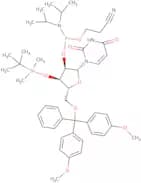
CAS:3'-O-tert-Butyldimethylsilyl-5'-O-DMT-uridine 2'-CE phosphoramidite is a modified nucleoside that is commonly used in the synthesis of DNA. It is a monophosphate, diphosphate, and triphosphate analog of uridine. 3'-O-tert-Butyldimethylsilyl-5'-O-DMT-uridine 2'-CE phosphoramidite has antiviral and anticancer activity, as well as antitumor properties. This product is available in high purity and high quality.Formula:C45H61N4O9PSiPurezza:Min. 95%Peso molecolare:861.05 g/molMorpholino T monomer
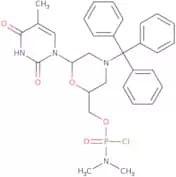
CAS:<p>Morpholino T is a modified nucleoside amidite used to prepare morpholino oligomers</p>Formula:C31H34ClN4O5PPurezza:Min. 98 Area-%Colore e forma:White PowderPeso molecolare:609.05 g/molN4-Benzoyl-5'-O-DMT-2'-O-methylcytidine 3'-CE phosphoramidite
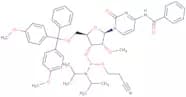
CAS:<p>N4-Benzoyl-5'-O-DMT-2'-O-methylcytidine 3'-CE phosphoramidite is a diploid DNA molecule that is synthesized by the enzyme diploid. The clone was obtained from a yeast strain, and it has been shown to catalyze the conversion of isoprene to isopentenyl diphosphate. The optical spectra of this compound have been characterized in detail, and it has been found to have an absorption maximum at 243 nm. This compound has also been used in the disruption of yeast chromosomes, and its spectrum has been used as a reference for other compounds with similar chemical structures.</p>Formula:C47H54N5O9PPurezza:Min. 98 Area-%Colore e forma:PowderPeso molecolare:863.96 g/mol2'-Deoxy-5'-O-DMT-N2-isobutyrylguanosine 3'-Rp-oxazaphospholidine
<p>2'-Deoxy-5'-O-DMT-N2-isobutyrylguanosine 3'-Rp-oxazaphospholidine is a novel nucleoside analog that is modified from 2'-deoxy-5'-O-dimethoxytritylguanosine 6'-Rp-oxazaphospholidine. It has antiviral and anticancer activities, as well as inhibiting DNA synthesis by competing with natural substrates for the enzyme DNA polymerase. It is synthesized from the corresponding phosphoramidites and can be used in high purity for chemical synthesis of oligonucleotides.</p>Purezza:Min. 95%2'-Deoxyadenosine-5'-diphosphate sodium salt
CAS:<p>2'-Deoxyadenosine-5'-diphosphate sodium salt is a nucleotide that is involved in the synthesis of DNA. It is a structural analog of adenosine-5'-diphosphate and can be used as an experimental tool to study metabolic disorders. 2'-Deoxyadenosine-5'-diphosphate sodium salt binds to p2y receptors and blocks their activation, which inhibits cellular energy metabolism. This compound is structurally similar to adenosine-5'-triphosphate, but has been shown to inhibit the expansion of cells when heated, unlike adenosine-5'-triphosphate. 2'-Deoxyadenosine-5'-diphosphate sodium salt also inhibits cell proliferation in cancer cells and may have potential as a therapeutic agent for bowel disease.</p>Formula:C10H12N5O9P2·xNaPurezza:Min. 95 Area-%Colore e forma:PowderPeso molecolare:408.18 g/mol2'-Deoxy-2',2'-difluorocytidine 5'-triphosphate triethylammonium salt - Aqueous solution
CAS:<p>2'-Deoxy-2',2'-difluorocytidine 5'-triphosphate triethylammonium salt - Aqueous solution is a nucleoside analog for research purposes</p>Formula:C9H14F2N3O13P3·C24H60N4Colore e forma:Colorless PowderPeso molecolare:907.9 g/mol3'-Amino-3'-deoxycytidine
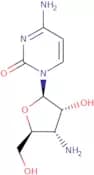
CAS:<p>It is an antiviral agent that inhibits the replication of RNA viruses by acting as a chain terminator during RNA synthesis. It is also a valuable research tool for studying viral replication mechanisms and is being explored for potential anticancer properties.</p>Formula:C9H14N4O4Purezza:Min. 95%Colore e forma:PowderPeso molecolare:242.23 g/mol7-Deaza-2'-deoxy-7-iodoadenosine
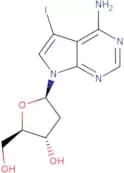
CAS:<p>7-Deaza-2'-deoxy-7-iodoadenosine (7DADI) is a modified nucleoside that has antiviral and anticancer properties. It is synthesized by the reaction of 2'-deoxyadenosine with iodine in the presence of an activator such as sodium hypochlorite. 7DADI binds to ribonucleosides, forming a phosphoramidate bond at the 3' position, which leads to inhibition of viral RNA synthesis and DNA replication. This drug also inhibits the growth of cancer cells by inhibiting DNA synthesis and protein synthesis. 7DADI is novel because it is not found in nature or produced by any other organism.</p>Formula:C11H13IN4O3Purezza:Min. 98 Area-%Peso molecolare:376.16 g/molCytidine 5'-monophosphate disodium salt
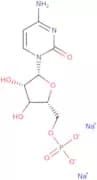
CAS:Cytidine 5'-monophosphate disodium salt (CMPDS) is a prodrug that is converted to cytidine 5'-monophosphate, an active form, in the acidic environment of cancer cells. CMPDS has been shown to inhibit the growth of squamous carcinoma and other solid tumours by binding to survivin, which regulates cell growth and apoptosis. CMPDS also inhibits the activity of matrix metalloproteinases-9 (MMP-9), an enzyme that promotes tumor growth by breaking down connective tissue. This drug can be used as a therapeutic agent for treatment of congestive heart failure due to its ability to increase mitochondrial membrane potential and decrease myocardial infarct size.Formula:C9H12N3Na2O8PPurezza:Min. 95 Area-%Colore e forma:White PowderPeso molecolare:367.16 g/mol3’-b-C-Methyl-5-methyluridine
CAS:3’-b-C-Methyl-5-methyluridine is a phosphoramidite that is used as an antiviral agent. It is also known as (2’,3’)-O-(2-methoxyethyl) 5'-O-(4,4'-dimethoxytrityl)thymidine or 3’-b-C-Methyluridine. It has been shown to have anticancer properties in vitro and in vivo, and it can be used for the treatment of prostate cancer. 3’-b-C-Methyluridine is synthesized by the reaction of uracil with bis(trimethylsilyl)acetamide followed by reaction with methylamine. The synthesis of this drug was first reported in 1975.Purezza:Min. 95%7-Deaza-2'-deoxyinosine
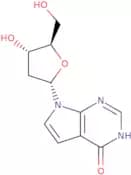
CAS:<p>7-Deaza-2'-deoxyinosine is a purine nucleoside analog that has been shown to be a hydrogen bond donor and formamide acceptor. This drug destabilizes duplex DNA by interfering with the formation of the hydrogen bonds between the bases, which may result in strand breakage. 7-Deaza-2'-deoxyinosine has also been shown to inhibit RNA polymerase activity, thereby inhibiting protein synthesis. It has been used as a tool for studying enzyme mechanisms and in solid phase synthesis.</p>Formula:C11H13N3O4Purezza:Min. 95%Colore e forma:PowderPeso molecolare:251.24 g/mol5'-O-DMT-thymidine 3'-CE phosphoramidite
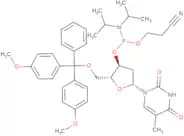
CAS:<p>5'-O-DMT-thymidine 3'-CE phosphoramidite is a building block for the introduction of thymidine units into oligonucleotides. 5'-O-DMT-thymidine 3'-CE phosphoramidite is utilised in a broad range of applications, including the synthesis of natural and unnatural DNA and RNA strands. Phosphoramidites are the reagent class of choice for oligonucleotide synthesis as they contain readily removable orthogonal protecting groups and can be produced at reasonable scales. The diisopropylamino leaving group is readily cleaved upon exposure to an azole catalyst allowing for a highly efficient coupling reaction with a free hydroxyl group on the growing oligonucleotide and oxidation of the subsequent phosphite triester, followed by beta-elimination of the cyanoethyl group affords the stable phosphodiester linkage.</p>Formula:C40H49N4O8PPurezza:Min. 98 Area-%Colore e forma:PowderPeso molecolare:744.83 g/mol2'-Deoxy-2'-fluoroadenosine 5'-a-thiotriphosphate sodium salt
<p>2'-Deoxy-2'-fluoroadenosine 5'-a-thiotriphosphate sodium salt (2'F-ATP) is a nucleoside analog that inhibits viral DNA polymerase and induces apoptosis in cancer cells. It is a novel, modified nucleotide that can be phosphorylated to 2'F-dATP, 2'F-AMP, or 2'F-GMP. The phosphate group in 2'F-ATP is replaced by a thiophosphate group, which increases the stability of the molecule and prevents it from being hydrolyzed by phosphatases. This makes it an effective activator for DNA synthesis reactions.</p>Purezza:Min. 95%7-Deaza-2'-deoxy-2'-fluoroguanosine
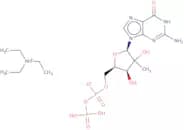
<p>7-Deaza-2'-deoxy-2'-fluoroguanosine is a nucleoside that can be phosphorylated to form 7-deaza-2'-deoxy-2'-fluoroguanosine 5'-triphosphate. This compound has antiviral properties and may be used as an antiviral agent in the treatment of HIV/AIDS. 7DGTP inhibits HIV replication by inhibiting the reverse transcriptase enzyme. The mechanism by which this drug exerts its effects is not yet well understood, but it is believed that it binds to the active site of the enzyme and prevents it from hydrolyzing dNTPs.</p>Formula:C11H14FN4O4Purezza:Min. 95%Peso molecolare:284.25 g/mol2'-C-Methylguanosine 5'-diphosphate triethylammonium salt
<p>2'-C-Methylguanosine 5'-diphosphate triethylammonium salt is a synthetic nucleotide analog for use in research</p>Formula:C11H16N5O11P2·C18H45N3Purezza:Min. 95%Colore e forma:PowderPeso molecolare:759.79 g/molN4-Benzoyl-2'-O-propargyladenosine
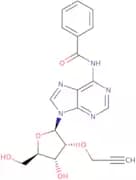
CAS:N4-Benzoyl-2'-O-propargyladenosine (BAP) is an antiviral monophosphate nucleoside that inhibits the synthesis of DNA. It is a novel, synthetic, and high quality nucleoside with antiviral activity. BAP has been shown to inhibit the replication of human immunodeficiency virus type 1 (HIV-1), human cytomegalovirus (HCMV), and herpes simplex virus type 2 (HSV2). This drug also has anticancer activity as it inhibits the production of cancer cells in vitro. As a phosphoramidite, BAP can be used for the synthesis of DNA.Purezza:Min. 95%5-Azidouridine
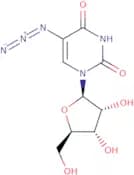
CAS:<p>5-Azidouridine is used for nucleotide labelling and promptly reacts via a click reaction with a terminal alkyne or cyclooctyne conjugated to a reporter (fluorophore or biotine). The formed labelled nucleotide has a stable triazole linker. 5-Azidouridine has been used in living cell fluorescent imaging of cancer cells.</p>Formula:C9H11N5O6Purezza:Min. 95%Colore e forma:PowderPeso molecolare:285.21 g/mol2'-O-Allylcytidine
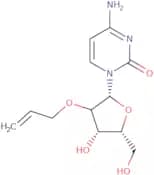
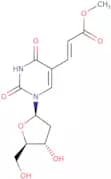
CAS:2'-O-Allylcytidine is a synthetic nucleotide that contains an allylated amino function. It is synthesized by the regiospecific allylation of uridine and guanosine. 2'-O-Allylcytidine has been used in research studies for the synthesis of oligonucleotides with specific sequences and for high-yield production of synthons.Formula:C12H17N3O5Purezza:Min. 95%Colore e forma:PowderPeso molecolare:283.28 g/molE-5-(2-Carbomethoxyvinyl)-2'-deoxyuridine
CAS:<p>E-5-(2-Carbomethoxyvinyl)-2'-deoxyuridine is a nucleoside that is a modified form of uridine. It is a nucleotide analog that inhibits the synthesis of DNA and RNA and can be used to treat cancer. E-5-(2-Carbomethoxyvinyl)-2'-deoxyuridine is an activator that activates the phosphoramidites in the synthesis of DNA and RNA. This drug can also be used as antiviral therapy for herpes simplex virus type 1, influenza virus, and HIV. E-5-(2-Carbomethoxyvinyl)-2'-deoxyuridine has been shown to have anti-inflammatory properties by inhibiting prostaglandin synthesis.</p>Formula:C13H16N2O7Purezza:Min. 95%Colore e forma:White to off-white solid.Peso molecolare:312.28 g/molGuanosine 5'-O-(2-thiodiphosphate) trilithium salt
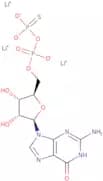
CAS:Guanosine 5'-O-(2-thiodiphosphate) trilithium salt (GTPTS) is a membrane-permeable molecule that hyperpolarizes cells by inhibiting the movement of ions through the cell membrane. GTPTS is activated by extracellular calcium and potassium ions, which are involved in signal transduction pathways. It has been shown to inhibit the release of neurotransmitters, such as acetylcholine, dopamine, serotonin, and norepinephrine. GTPTS also blocks voltage-gated sodium channels, which leads to a reduction in neuronal excitability. The drug has been shown to have analgesic effects in animal models of pain and can be used to treat chronic pain due to nerve damage.Formula:C10H12Li3N5O10P2SPurezza:Min. 85 Area-%Colore e forma:PowderPeso molecolare:477.06 g/mol5-Fluoro-4’-C-methylcytidine
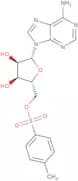
CAS:<p>5-Fluoro-4’-C-methylcytidine is a novel antiviral agent that is an analog of cytidine and has been shown to inhibit the synthesis of DNA. 5-Fluoro-4’-C-methylcytidine is a phosphoramidite that is synthesized by modifying cytosine nucleoside with fluoro group. It has been shown to be active against cancer cells in vitro. This compound is not active against the herpes virus, but has been shown to have anticancer activity at concentrations less than 10 μM.</p>Purezza:Min. 95%5'-Tosyladenosine
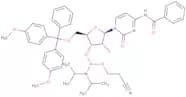
CAS:<p>Adenosine is a naturally occuring nucleoside and an essential building block in DNA synthesis. The tosyl protected adenosine at the 5' position, 5-tosyladenosine, allows for selective functionalistion at the the 3' and 4' positions, resulting in derivatised nucleotides that can incorporated into modified RNA which is an area of therapeutics that is currently expanding.</p>Formula:C17H19N5O6SPurezza:Min. 95%Colore e forma:White PowderPeso molecolare:421.43 g/molN4-Benzoyl-2'-deoxy-5'-O-DMT-2'-fluoro-cytidine 3-CE phosphoramidite
CAS:<p>N4-Benzoyl-2'-deoxy-5'-O-DMT-2'-fluoro-cytidine 3-CE phosphoramidite is a novel nucleoside phosphoramidite that is used for the synthesis of DNA and RNA. It has anticancer properties and has been shown to inhibit the replication of HIV and herpes virus. N4-Benzoyl-2'-deoxy-5'-O-DMT-2'-fluoro-cytidine 3-CE phosphoramidite is also a potent antiviral that inhibits the production of diphosphate by inhibiting ribonucleotide reductase, an enzyme involved in DNA synthesis.</p>Formula:C46H51FN5O8PPurezza:Min. 95%Colore e forma:White PowderPeso molecolare:851.9 g/mol2’,3’-Bis-O-tert-butyldimethylsilyl-5’-deoxy-4’,5’-Didehydrouridine
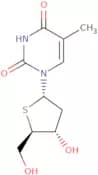
CAS:2’,3’-Bis-O-tert-butyldimethylsilyl-5’-deoxy-4’,5’-Didehydrouridine is a phosphoramidite that is used in the synthesis of DNA, RNA and nucleotide analogues. It has antiviral and antitumor properties and can be used for the treatment of leukemia. 2’,3’-Bis-O-tert-butyldimethylsilyl-5’-deoxyuridine is an activator for ribonucleotides and deoxyribonucleotides. It also has anticancer properties due to its ability to inhibit DNA replication, which may lead to apoptosis or cell death.Purezza:Min. 95%4'-Thiothymidine
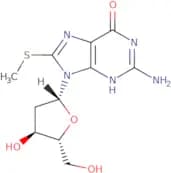
CAS:<p>4'-Thiothymidine is a nucleoside analog that is used in antiviral therapy against herpes simplex virus. It inhibits the viral DNA polymerase, which prevents the virus from duplicating its genetic material. 4'-Thiothymidine has been shown to inhibit the uptake of 4-thiouracil by cells and to have anti-inflammatory properties. The drug has been found to be effective in inhibiting human adenocarcinoma cell lines in vitro and in vivo.</p>Formula:C10H14N2O4SPurezza:Min. 95%Peso molecolare:258.30 g/mol2’-Deoxy-8-methylthioguanosine
CAS:<p>2’-Deoxy-8-methylthioguanosine is a synthetic nucleoside, which is an activator of DNA polymerase. It has shown anticancer and antiviral properties in vitro. 2’-Deoxy-8-methylthioguanosine is a modified nucleotide with high quality and novel structures for use as a potential anticancer and antiviral drug. This compound has not been tested in vivo, but its mechanism of action suggests that it may be safe for human use.</p>Purezza:Min. 95%3'-Azido-3'-deoxy-5-fluoro-b-L-cytidine
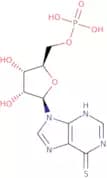
CAS:3'-Azido-3'-deoxy-5-fluoro-b-L-cytidine is an antiviral drug. It is a modified nucleoside with phosphoramidite and azido groups. This product can be used as an activator for DNA synthesis, in anticancer drug development, as well as in the treatment of HIV. 3'-Azido-3'-deoxy-5-fluoro-b-L-cytidine has been shown to inhibit the growth of human tumor cells by inhibiting protein synthesis and enhancing the production of reactive oxygen species (ROS). It also inhibits the activity of ribonucleotide reductase, which is a critical enzyme for DNA synthesis.Purezza:Min. 95%6-Thioinosine 5'-monophosphate
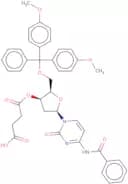
CAS:<p>6-Thioinosine 5'-monophosphate (6TIMP) is a hydrogen bond donor that possesses inhibitory properties against protein synthesis. It has been shown to have an anti-inflammatory effect and can be used for the treatment of inflammatory bowel disease. 6TIMP is also able to inhibit the bcr-abl kinase, which is implicated in the development of renal cell cancer. 6TIMP can be administered intravenously or orally and penetrates tissues well. The rate at which it enters cells is dependent on the transport rate, which is determined by its acidity. 6TIMP has been shown to cause DNA damage, leading to apoptosis and cell death in carcinoma cell lines. The mechanism of action appears to involve inhibition of cellular protein synthesis, acid formation, and DNA damage.</p>Formula:C10H13N4O7PSPurezza:Min. 95%Colore e forma:PowderPeso molecolare:364.27 g/molN4-Benzoyl-2'-deoxy-5'-O-DMT-cytidine 3'-O-succinate triethylamine salt
CAS:<p>N4-Benzoyl-2'-deoxy-5'-O-DMT-cytidine 3'-O-succinate triethylamine salt is a synthetic antiviral agent that can be used in the treatment of HIV. This drug inhibits the viral DNA polymerase and prevents virus replication. N4-Benzoyl-2'-deoxy-5'-O-DMT cytidine 3'-O succinate triethylamine salt is a novel nucleoside analogue with a monophosphate group at the 5' position and an N4 benzoyl group at the 2' position. It is an activator of DNA synthesis, which can be used for cancer chemotherapy. The chemical name for this drug is CAS No. 74405-44-0 (free base).</p>Formula:C41H39N3O10·C6H15NPurezza:Min. 95%Colore e forma:White Off-White PowderPeso molecolare:834.95 g/mol7-Deaza-2'-deoxy-7-iodoadenosine
CAS:<p>7-Deaza-2'-deoxy-7-iodoadenosine is an oligomer with a stabilized backbone that has been shown to inhibit the growth of bacteria in vitro. It binds to DNA and prevents RNA synthesis. 7-Deaza-2'-deoxy-7-iodoadenosine is a synthetic nucleotide analogue that is used as a probe for mapping RNA sequences and as an inhibitor of bacterial growth. This compound is also used in the synthesis of oligodeoxynucleotides because it has a high affinity for guanine residues, which can be incorporated into the oligonucleotide chain by chemical ligation. The octameric form of 7-deaza-2'-deoxyadenosine is most active against bacterial cells.</p>Formula:C11H13IN4O3Purezza:Min. 98 Area-%Colore e forma:White Off-White PowderPeso molecolare:376.16 g/molO6-Methylguanosine
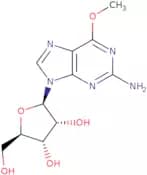
CAS:<p>Intermediate in the synthesis of nelarabine</p>Formula:C11H15N5O5Purezza:Min. 95%Colore e forma:PowderPeso molecolare:297.27 g/molN4-Benzoyl-5'-O-Trityl-cytidine
CAS:<p>N4-Benzoyl-5'-O-Trityl-cytidine (NBT) is a nucleoside that occurs in two forms: diphosphate and monophosphate. It is used as an activator of DNA and RNA synthesis, and as an antiviral agent. NBT has been shown to inhibit the replication of herpes simplex virus type 1, vaccinia virus and influenza virus in cell culture. It also inhibits the reverse transcriptase activity of HIV in vitro.<br>NBT is a novel deoxyribonucleoside phosphoramidite, which can be used in the synthesis of oligodeoxyribonucleotides for use in DNA sequencing or gene cloning applications.</p>Formula:C35H31N3O6Purezza:Min. 95%Peso molecolare:589.64 g/mol5'-O-DMT-N2-isobutyryl-2'-O-(2-methoxyethyl)guanosine
CAS:5'-O-DMT-N2-isobutyryl-2'-O-(2-methoxyethyl)guanosine is an antiviral monophosphate nucleoside. It has been shown to be a novel, high purity, and CAS No. 251647-50-4. It is a modified nucleic acid analogue that acts as an activator of ribonucleotide reductase and DNA polymerase. The anticancer activity of this product may be due to its ability to inhibit the synthesis of diphosphate nucleotides.Formula:C38H43N5O9Purezza:Min. 98 Area-%Colore e forma:White PowderPeso molecolare:713.78 g/mol8-Chloroadenosine-5'-monophosphate triethylammonium, about 28 mg/ml aqueous solution
CAS:<p>8-Chloroadenosine-5'-monophosphate triethylammonium is a novel phosphoramidite that is used in the synthesis of DNA. 8-Chloroadenosine-5'-monophosphate triethylammonium has been shown to activate antiviral and anticancer drugs with high specificity. It is also used as a reagent for the synthesis of deoxyribonucleosides and nucleosides. 8-Chloroadenosine-5'-monophosphate triethylammonium has high purity and can be used in the synthesis of DNA, RNA, and other nucleosides.</p>Formula:C10H13ClN5O7P•(C6H15N)2Purezza:Min. 95%Colore e forma:Clear LiquidPeso molecolare:584.05 g/mol3',5'-O-(1,1,3,3-Tetraisopropyl-1,3-disiloxanediyl)guanosine
CAS:Used as a protected guanosine nucleoside in RNA synthesis. The 1,1,3,3-tetraisopropyl-1,3-disiloxanediyl (TIPDS or TBDPSi2) group acts as a bulky and selectively acid-labile protecting group for the 3' and 5' hydroxyl groups of the guanosine ribonucleoside during RNA oligonucleotide synthesis.Formula:C22H39N5O6Si2Purezza:Min. 97 Area-%Colore e forma:PowderPeso molecolare:525.76 g/mol1-Methyl-2'-O-methylinosine
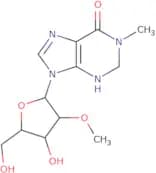
CAS:<p>1-Methyl-2'-O-methylinosine is a nucleoside that is naturally found in RNA. It is the methylated form of inosine, which is a nonessential amino acid and purine nucleotide. 1-Methyl-2'-O-methylinosine's chemical name is β--D--ribofuranosyl-(1'→2')--N--(6-fluoro-3-indoxyl)glycinamide monohydrochloride. This nucleoside has been researched for its potential use as an indexing tool for phylogenetic research of DNA and RNA. 1-Methyl-2'-O-methylinosine has also been shown to be structurally similar to other nucleic acids and has been classified as a nucleoside.</p>Formula:C12H16N4O5Purezza:Min. 95%Peso molecolare:296.28 g/molCytidine 3'-monophosphate lithium salt
CAS:<p>Cytidine 3'-monophosphate lithium salt is a synthetic nucleoside that is used to inhibit the synthesis of DNA in cells. It is an analog of cytidine, with a phosphate group at the 3' position and a lithium cation at the 5' position. Cytidine 3'-monophosphate lithium salt has been shown to be effective in treating cancer and viral infections, although it does not have antiviral activity against influenza A virus.</p>Formula:C9H14N3O8P·xLiPurezza:Min. 95%Peso molecolare:323.2 g/molAdenosine 5′-phosphosulfate triethylammonium salt
<p>Adenosine 5′-phosphosulfate triethylammonium salt serves as a donor of sulfate groups in biochemical processes, such as in the synthesis of sulfate esters. The triethylammonium salt form improves the solubility and stability of the compound, making it useful in laboratory applications involving enzymatic assays and the synthesis of sulfated biomolecules.</p>Formula:C10H14N5O10PS·xC6H15NPurezza:Min. 98.0 Area-%Colore e forma:PowderPeso molecolare:427.29 g/mol2-Amino-8-aza-7-deaza-7-iodoguanosine
<p>2-Amino-8-aza-7-deaza-7-iodoguanosine is a deoxyribonucleoside that is structurally related to guanosine and inosine. It is an antiviral agent with high purity and modified properties, which can be synthesized using phosphoramidite chemistry. 2-Amino-8-aza-7-deaza-7-iodoguanosine has shown antiviral activity against herpes simplex virus type 1 (HSV1) in a cell culture assay. The compound also inhibits the growth of HSV1 by suppressing viral DNA synthesis, RNA synthesis, and protein synthesis. This drug may have potential for use as a topical antiviral treatment for HSV1 infections of the skin or mucous membranes such as those in the mouth or genitals.</p>Purezza:Min. 95%