Nucleosidi
I nucleosidi sono building blocks fondamentali degli acidi nucleici, composti da una base azotata legata a una molecola di zucchero. In questa sezione, puoi trovare una vasta gamma di nucleosidi essenziali per la ricerca in biologia molecolare, biochimica e farmacologia. Questi composti svolgono ruoli cruciali nella sintesi del DNA e dell'RNA e sono vitali in vari processi metabolici. I nucleosidi vengono utilizzati per studiare il materiale genetico, sviluppare terapie antivirali e antitumorali e comprendere i meccanismi cellulari. Da CymitQuimica, forniamo nucleosidi di alta qualità per supportare le tue esigenze di ricerca e sviluppo, garantendo purezza e affidabilità per le tue applicazioni sperimentali.
Trovati 3569 prodotti di "Nucleosidi"
Ordinare per
Purezza (%)
0
100
|
0
|
50
|
90
|
95
|
100
5-Methyl-2',3'-stannyluridine
<p>5-Methyl-2',3'-stannyluridine is a nucleoside analog that is a potent inhibitor of viral replication and can be used for the treatment of HIV. It has been shown to inhibit the activity of RNA polymerase, thereby preventing transcription and replication. 5-Methyl-2',3'-stannyluridine also inhibits DNA synthesis by inhibiting the activity of DNA polymerase. This drug also acts as an antitumor agent and has been shown to inhibit tumor growth in animal models. The high purity of this drug makes it suitable for use in pharmaceutical applications.<br>5-Methyl-2',3'-stannyluridine is a modified nucleoside that has been modified with a stannyl group at the 2' position on the sugar moiety and an allyl group at the 3' position on the sugar moiety. The phosphoramidites are synthesized from 5-methyl-2',3'-stannyl</p>Purezza:Min. 95%2',3'-Dideoxy-2',2'-difluorocytidine
CAS:<p>2',3'-Dideoxy-2',2'-difluorocytidine is a monophosphate derivative of the antiviral and anticancer drug 2',3'-dideoxycytidine. It is an activator of DNA synthesis, nucleosides, and nucleotides. It is also a phosphoramidite for the synthesis of oligonucleotides and modified ribonucleosides. 2',3'-Dideoxy-2',2'-difluorocytidine has CAS number 124708-94-7. It is available in high purity and quality, which makes this product suitable for research purposes.</p>Purezza:Min. 95%Uridine 5'-triphosphate
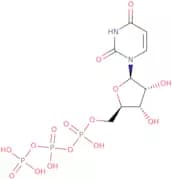
CAS:<p>P2Y receptor agonist; precursor in RNA biosynthesis</p>Formula:C9H15N2O15P3Purezza:Min. 95%Peso molecolare:484.14 g/mol6-Chloropurine riboside 5'-monophosphate disodium salt
CAS:6-Chloropurine riboside 5'-monophosphate disodium salt is a synthetic nucleoside that is used as an antiviral and anticancer agent. It is a DNA precursor that can be incorporated into DNA by the enzyme thymidylate synthase to form thymine and diphosphate. 6-Chloropurine riboside 5'-monophosphate disodium salt has been shown to inhibit the replication of some viruses, such as HIV, and also inhibits tumor growth in experimental models.Formula:C10H10ClN4Na2O7PH2OPurezza:Min. 95%Peso molecolare:428.63 g/mol3'-Azido-N4-benzoyl-5'-O-trityl-2',3'-dideoxyadenosine
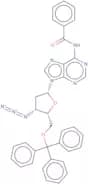
3'-Azido-N4-benzoyl-5'-O-trityl-2',3'-dideoxyadenosine is a novel nucleoside that has been described as an activator of diphosphate. It is a modified deoxyribonucleoside, with the amino group in the ribose moiety replaced by an azido group. This nucleotide inhibits viral and cellular DNA synthesis by blocking DNA polymerase. 3'-Azido-N4-benzoyl-5'-O-trityl-2',3'-dideoxyadenosine can also be used for anticancer purposes, where it has been shown to inhibit cancer cell growth.Formula:C36H30N8O3Purezza:Min. 95%Peso molecolare:622.68 g/mol2',3'-Dideoxy-2',3'-didehydrocytidine
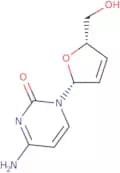
CAS:<p>2',3'-Dideoxy-2',3'-didehydrocytidine (ddC) is a nucleoside analog that is used in the treatment of hepatitis B and C. This drug inhibits the reverse transcriptase enzyme and has cytostatic effects on viruses, for example, by preventing cell division. 2',3'-Dideoxy-2',3'-didehydrocytidine also inhibits viral replication by acting as an antigen and inducing antibody production. This drug binds to a variety of enzymes, including preparations of cellular enzymes, human immunodeficiency virus type 1 (HIV-1), and reverse transcriptase. The effective dose of ddC is 300 mg/day given orally.</p>Formula:C9H11N3O3Purezza:Min. 95%Peso molecolare:209.2 g/mol3'-Deoxy-N2-DMF-5'-O-DMT-guanosine
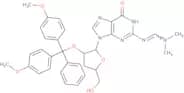
CAS:3'-Deoxy-N2-DMF-5'-O-DMT-guanosine is a modified nucleoside that is phosphorylated to the 3'-deoxyribonucleotide form. It has antiviral and anticancer activities, as well as being an activator of DNA and RNA synthesis. This compound has been shown to inhibit the growth of several cancer cell lines in vitro and in vivo. 3'-Deoxy-N2-DMF-5'-O-DMT-guanosine is also effective against herpes simplex virus type 1 (HSV1) and HSV type 2 in cell culture, although it does not have any effect on HSV type 1 replication in animal models.Formula:C34H36N6O6Purezza:Min. 95%Peso molecolare:624.69 g/mol6-Pyrrolidino-7-deazapurine
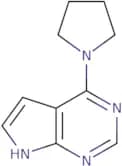
CAS:<p>6-Pyrrolidino-7-deazapurine is a monophosphate nucleoside, which is a synthetic nucleotide. It has been shown to activate DNA synthesis and inhibit the growth of tumor cells. 6-Pyrrolidino-7-deazapurine has also been shown to be active against viruses, such as herpes, by inhibiting their replication. This product is stable at room temperature for up to one year and can be stored at -20°C for up to three years. The purity of this product is >98% with no detectable impurities.</p>Formula:C10H12N4Purezza:Min. 95%Peso molecolare:188.23 g/mol2',3',5'-Tri-O-acetylnebularine
CAS:2',3',5'-Tri-O-acetylnebularine is a modified nucleoside that is synthesized from nebulareine. It has been shown to inhibit the growth of cancer cells, as well as HIV and influenza virus. This drug also has antiviral effects against herpes simplex virus type 1 (HSV-1) and herpes simplex virus type 2 (HSV-2). 2',3',5'-Tri-O-acetylnebularine inhibits viral replication by inhibiting DNA synthesis and RNA transcription, which prevents the production of proteins needed for cell multiplication.Formula:C16H18N4O7Purezza:Min. 95%Peso molecolare:378.34 g/mol5'-O-DMT-4-thiouridine
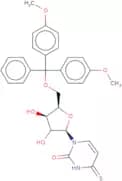
<p>5'-O-DMT-4-thiouridine is a nucleoside analog that is used as a research tool in anticancer and antiviral studies. It is an activator of the phosphatase PP1 and has been shown to inhibit the growth of cultured human leukemia cells by inhibiting DNA synthesis. This compound has also been shown to be an inhibitor of HIV replication in vitro and in vivo, but it is not active against other viruses. 5'-O-DMT-4-thiouridine can be synthesized from uracil, 4-thiouracil, and DMT (dimethoxytrityl) using standard phosphoramidite chemistry. The purity of this compound is greater than 99%, and it can be obtained for use at a reasonable price.</p>Formula:C30H30N2O7SPurezza:Min. 95%Peso molecolare:562.64 g/mol2',3'-Dideoxy-3'-fluorocytidine
CAS:2',3'-Dideoxy-3'-fluorocytidine is a synthetic nucleoside analog that inhibits DNA synthesis by blocking the incorporation of deoxycytidine into DNA. It is used to treat lymphocytic leukemia, hepatitis, and virus infections. 2',3'-Dideoxy-3'-fluorocytidine has been shown to inhibit cell growth in solid tumours. The drug has also been shown to inhibit the production of immunodeficiency viruses such as human immunodeficiency virus type 1 (HIV-1) and human T-lymphotropic virus type I (HTLV-I), which causes acquired immune deficiency syndrome (AIDS). 2',3'-Dideoxy-3'-fluorocytidine inhibits viral replication by inhibiting the activity of the enzyme deaminase, which converts dATP to dTTP. This prevents DNA replication and transcription.Formula:C9H12FN3O3Purezza:Min. 95%Peso molecolare:229.21 g/mol[U-13C10, U-15N2]-Labelled thymidine
Thymidine is a nucleoside that is a component of DNA and RNA. It is also the precursor for thymine, the DNA base in which the thymine ring is derived from. Thymidine has been shown to be an activator of DNA synthesis, as well as being anticancer and antiviral.Purezza:Min. 95%Uridine-2-13C
CAS:<p>Uridine-2-13C is a modified nucleoside that is used as an anticancer agent. It is phosphorylated to uridine-2-13C diphosphate and can be used in DNA synthesis and as a radiolabel.</p>Formula:C9H12N2O6Purezza:Min. 95%Peso molecolare:245.19 g/molN6-Benzoyl-2'-deoxy-a-adenosine
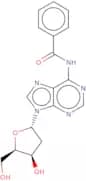
<p>N6-Benzoyl-2'-deoxy-a-adenosine is a synthetic nucleoside analog. N6-Benzoyl-2'-deoxy-a-adenosine has antiviral and anticancer properties. It is a potent inhibitor of DNA polymerase and also inhibits ribonucleotide reductase, which are enzymes crucial for DNA synthesis. N6-Benzoyl-2'-deoxy-a-adenosine inhibits the synthesis of viral RNA, leading to inhibition of viral replication. It has been shown to inhibit proliferation of tumor cells in vitro and in vivo by inhibiting DNA synthesis and inducing apoptosis.</p>Formula:C17H17N5O4Purezza:Min. 95%Peso molecolare:355.36 g/mol2'-Deoxy-N2-isobutyrylcytidine
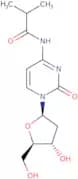
CAS:<p>2'-Deoxy-N2-isobutyrylcytidine is a nucleoside analogue of cytidine that has been modified with a 2-amino-2-deoxyribose moiety. The transaminated product is more stable than the parent compound and has improved anticoagulant activity. It has also been shown to be active in inhibiting DNA synthesis and cell proliferation in vitro. 2'-Deoxy-N2-isobutyrylcytidine inhibits the growth of bacteria by binding to their ribosomes, preventing protein synthesis. This compound has also been shown to inhibit the formation of blood clots in mice.</p>Formula:C13H19N3O5Purezza:Min. 95%Peso molecolare:297.31 g/molN4-Benzoyl-5'-O-DMT-2'-ethylfluoro-5-methylcytidine
N4-Benzoyl-5'-O-DMT-2'-ethylfluoro-5-methylcytidine is a synthetic nucleoside that inhibits the enzyme ribonucleotide reductase. It has antiviral and anticancer activities.Purezza:Min. 95%5-Ethynylcytidine
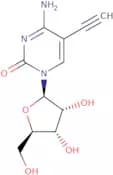
CAS:<p>5-Ethynylcytidine is a fluorescent analog of cytosine that has been synthesized for use in biochemical research. It is used to identify cellular sites of RNA synthesis and replication, as well as to study the role of the 5-ethynyl group in the mechanism of DNA methylation. The synthetic route starts with an azide intermediate which is then treated with sodium hydroxide, followed by hydrolysis and demethylation. 5-Ethynylcytidine has been shown to be selective for mammalian cells and tissues, and was incubated with calf thymus DNA for crystallographic data.</p>Formula:C11H13N3O5Purezza:Min. 95%Peso molecolare:267.24 g/mol2-Fluoro-I ce-phosphoramidite (convertible G ce-phosphoramidite)
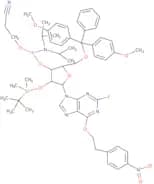
CAS:Please enquire for more information about 2-Fluoro-I ce-phosphoramidite (convertible G ce-phosphoramidite) including the price, delivery time and more detailed product information at the technical inquiry form on this pageFormula:C54H67FN7O10PSiPurezza:Min. 95%Peso molecolare:1,052.2 g/molN4-Anisoyl-2'-deoxycytidine
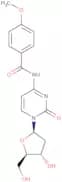
CAS:<p>N4-Anisoyl-2'-deoxycytidine is a nucleoside that contains a long chain of four carbon atoms. It is the cyclic form of N4-anisoyl-2'-deoxyadenosine. This compound has been shown to be synthesized in yields of up to 71% using acid anhydrides and diamino compounds. N4-Anisoyl-2'-deoxycytidine is a bifunctional reagent that can be used as a starting material for the synthesis of oligodeoxyribonucleotides. The compound has also been shown to function as an effective inhibitor of DNA synthesis, which may lead to anti-cancer effects.</p>Formula:C17H19N3O6Purezza:Min. 95%Colore e forma:PowderPeso molecolare:361.35 g/mol5-Ethynylpyrimidine
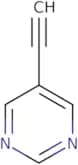
CAS:5-Ethynylpyrimidine is a supramolecular alkynyl group that has been shown to inhibit tyrosine kinase activity, cross-coupling, and the synthesis of proteins. It also exhibits luminescent properties and can be used in supramolecular chemistry. 5-Ethynylpyrimidine is a pyrimidine nucleoside, which is an organic compound that is a component of RNA. Pyrimidine nucleosides are important for protein synthesis and are used as luminophores or fluorescent resonance quenchers in biochemical assays for enzyme activity; they have also been shown to inhibit herpes simplex virus (HSV) replication. 5-Ethynylpyrimidine has been found to be able to bind terminal alkynes with high affinity.Formula:C6H4N2Purezza:Min. 95%Peso molecolare:104.11 g/molAICAR 3',5'-cyclic phosphate
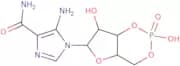
CAS:<p>AICAR 3',5'-cyclic phosphate is an antiviral and anticancer agent that inhibits the production of DNA and RNA, which may be due to its ability to activate AMP-activated protein kinase. AICAR 3',5'-cyclic phosphate has been shown to inhibit the proliferation of human breast cancer cells in vitro. This drug also has anticancer activity against various types of cancers, including prostate cancer and melanoma. AICAR 3',5'-cyclic phosphate is a novel compound that can be used as a phosphoramidite reagent for the synthesis of oligonucleotides.</p>Formula:C9H13N4O7PPurezza:Min. 95%Peso molecolare:320.2 g/mol2-(1-Piperidinyl)-5-pyrimidinecarbaldehyde
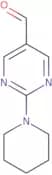
CAS:<p>2-(1-Piperidinyl)-5-pyrimidinecarbaldehyde is an antiviral and anticancer phosphoramidite. It is a novel monophosphate nucleoside analogue that inhibits DNA synthesis by inhibiting the activity of ribonucleotide reductase. 2-(1-Piperidinyl)-5-pyrimidinecarbaldehyde has been shown to be effective against influenza virus, HIV, Herpes Simplex Virus, and human leukemia cells. This compound is not active against bacteria or fungi.</p>Formula:C10H13N3OPurezza:Min. 95%Peso molecolare:191.23 g/molN4-Benzoyl-2'-deoxy-5'-O-levulinoylcytidine
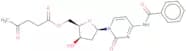
N4-Benzoyl-2'-deoxy-5'-O-levulinoylcytidine is a modified nucleoside that is synthesized from 2,4-dichloroacetophenone and cytidine. It has been shown to be an activator of the ribonucleotide reductase enzyme, which converts deoxyribonucleosides into their corresponding ribonucleotides. This drug is used in cancer therapy as well as antiviral and antiretroviral therapy. N4-Benzoyl-2'-deoxy-5'-O-levulinoylcytidine is also being investigated for use in treating other diseases such as malaria and AIDS.Formula:C21H23N3O7Purezza:Min. 95%Peso molecolare:429.43 g/mol3’-Azido-3’-deoxy-b-L-uridine
CAS:3’-Azido-3’-deoxy-b-L-uridine is a novel nucleoside analog that inhibits DNA polymerase. It is a modified, phosphoramidite precursor of the antiviral drug AZT and has been shown to inhibit human immunodeficiency virus (HIV) in vitro. 3’-Azido-3’-deoxy-b-L-uridine has also been found to be cytotoxic against cancer cells and may have antitumor activity. The phosphoramidite form of 3’ azido 3’ deoxy b L uridine can be used for the synthesis of oligonucleotides with high purity and quality.Formula:C9H11N5O5Purezza:Min. 95%Peso molecolare:269.21 g/mol5-Chlorouridine
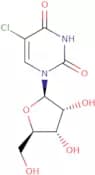
CAS:5-Chlorouridine is a nucleoside with hypochlorous acid. It has been shown to inhibit the growth of tumor cells in tissue culture and to have an inhibitory effect on cervical cancer, which may be due to its ability to inhibit cellular metabolism and DNA synthesis. 5-Chlorouridine inhibits the uptake of uridine by blocking the conversion of uridine into cytosine, thereby preventing DNA synthesis. This prodrug also prevents radiation from inducing mutations in DNA. The molecular modeling study shows that 5-chlorouridine forms hydrogen bonds with hydroxyl groups in RNA, which may be important for its anti-cancer activity.Formula:C9H11ClN2O6Purezza:Min. 95%Colore e forma:White PowderPeso molecolare:278.65 g/mol2'-Deoxyadenosine phosphoramidite dimer
<p>2'-Deoxyadenosine phosphoramidite dimer is a novel nucleoside analog that has been shown to be an effective anticancer agent in vitro. It has also been shown to inhibit viral replication and induce apoptosis in infected cells. This product is used as a DNA monophosphate, diphosphate, and triphosphate activator to increase the efficiency of DNA synthesis. It is also used as a precursor for the synthesis of other nucleosides such as 2'-deoxycytidine phosphoramidite dimer.</p>Purezza:Min. 95%N4-Acetyl-2'-deoxy-5'-O-DMT-cytidine 3'-Q linker CPG 1000Å
<p>N4-Acetyl-2'-deoxy-5'-O-DMT-cytidine 3'-Q linker CPG 1000Å is a nucleoside analog that is used in the synthesis of DNA. It is a phosphoramidite that has been modified with an acetyl group at the 2' position and a Q linker at the 3' position. This product can be used as an antiviral or anticancer agent, as well as for other research purposes. The CAS number for this product is 62660-67-7, and it has been shown to be active against HIV and HCV.</p>Purezza:Min. 95%4-Phenylpyrimidine-2-thiol
CAS:4-Phenylpyrimidine-2-thiol is a chemical compound that belongs to the group of elemental compounds. It has a density of 1.5 g/mL, a melting point of > 200 °C, and a boiling point of > 300 °C. 4-Phenylpyrimidine-2-thiol has been shown to exist as chains with assembled chains in the crystalline state. The crystals are composed of two molecules stacked on top of each other in an antiparallel orientation. The crystal structure was solved through x-ray crystallography and single-crystal x-ray diffraction. 4-Phenylpyrimidine-2-thiol is dimeric in solution and polymerizes in the solid state to form polymers with chains consisting of four phenylpyrimidine units. This compound has an elemental analysis consisting mainly of carbon and hydrogen, with small amounts of sulfur and nitrogen present.Formula:C10H8N2SPurezza:Min. 95%Peso molecolare:188.25 g/mol2',3'-Di-O-isopropylidene-isocytidine
CAS:2',3'-Di-O-isopropylidene-isocytidine is a nucleoside that belongs to the group of antiviral and anticancer compounds. It is an analog of cytidine, and has been shown to be an activator of phosphoramidites, DNA, and RNA. 2',3'-Di-O-isopropylidene-isocytidine has been shown to have antineoplastic effects on tumor cells by inhibiting rna synthesis and protein synthesis. This compound also inhibits the growth of bacteria, including Mycobacterium tuberculosis and Mycobacterium avium complex. 2',3'-Di-O-isopropylidene-isocytidine has been shown to be a novel modified nucleoside with high purity and high quality.Purezza:Min. 95%2’,3’,5’-Tri-O-benzoyl-5-methoxyuridine
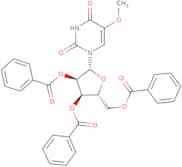
CAS:2’,3’,5’-Tri-O-benzoyl-5-methoxyuridine is a modified nucleoside that is structurally similar to the natural nucleoside uridine. It has antiviral properties and can be used as a monophosphate, diphosphate, or nucleotide. 2’,3’,5’-Tri-O-benzoyl-5-methoxyuridine is synthesized by reacting 5′-(triacetyl)aminoimidazole with 5′-(triisopropyl)phosphoroamidite in acetonitrile. The product has been shown to have anticancer activity in vitro and in vivo.Purezza:Min. 95%N6-Benzoyl-7-deaza-2'-deoxy-5'-O-DMT-adenosine
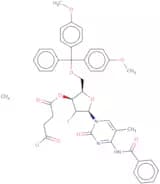
CAS:<p>N6-Benzoyl-7-deaza-2'-deoxy-5'-O-DMT-adenosine (BENZA) is a modified nucleoside that is synthesized by the modification of 7-deaza adenosine. BENZA has antiviral activity and has been shown to be a potent activator of the interferon system in vitro. This compound has been shown to be effective against viruses such as HIV, herpes simplex virus, and hepatitis B virus. In addition, BENZA was found to have a high purity level and is available at competitive prices.</p>Formula:C39H36N4O6Purezza:Min. 95%Peso molecolare:656.73 g/molN4-Benzoyl-1-(2'-deoxy-5'-O-DMT-2'-fluoro-b-D-arabinofuranosyl)-5-methylcytosine-3'-O-succinate triethylammonium salt
<p>N4-Benzoyl-1-(2'-deoxy-5'-O-DMT-2'-fluoro-b-D-arabinofuranosyl)-5-methylcytosine-3'-O-succinate triethylammonium salt is a synthetic nucleoside. It is used for the treatment of HIV infection. N4-Benzoyl-1-(2'-deoxy-5'-O-DMT)-2'-fluoro -b -D -arabinofuranosyl) -5 methylcytosine (ADT) inhibits viral replication by inhibiting the activity of reverse transcriptase, which is an enzyme that synthesizes DNA from RNA. ADT is activated to its active form by phosphorylation with a kinase and then converted to diphosphate ADP by the enzyme pyrophosphatase. ADP then acts as a substrate for DNA polymerases, incorporating into newly synthesized DNA</p>Formula:C42H40FN3O10·C6H16NPurezza:Min. 95%Peso molecolare:868 g/mol5’-O-DMT-N4-Phenoxyacetyl-2’-O-methylcytidine
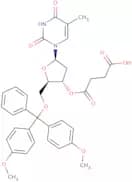
5’-O-DMT-N4-Phenoxyacetyl-2’-O-methylcytidine is an Activator and Anticancer agent. The synthesis of this product is based on the modification of cytidine to 2’,4,6,-trimethoxybenzoylcytidine. This product has been shown to be more potent than other cytidine analogs in inhibiting the growth of cancer cells. 5'-O-DMT-N4-Phenoxyacetyl-2'-O-methylcytidine is a novel nucleoside that has been shown to have antiviral activity against human immunodeficiency virus (HIV).Purezza:Min. 95%5'-O-DMT-thymidine-3'-O-succinic acid
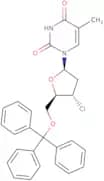
CAS:<p>5'-O-DMT-thymidine-3'-O-succinic acid (5'-DMT-TSA) is a novel modified nucleoside that is synthesized by the activation of 5'-DMT-thymidine with succinic anhydride. 5'-DMT-TSA has been shown to be a potent inhibitor of viral replication and has anti-tumor properties. This compound has high purity, high quality, and good solubility in water. It also has a CAS number of 74405-40-6.</p>Formula:C35H36N2O10Purezza:Min. 95%Peso molecolare:644.67 g/mol2’,3’-Dideoxy-3’-chloro-5-methyl-5’-O-trityluridine
CAS:2’,3’-Dideoxy-3’-chloro-5-methyl-5’-O-trityluridine (ddCTP) is a novel nucleoside analog that is synthesized by the protection of the 5'-hydroxyl group with an acetyl group followed by a 2',3'-dideoxy substitution. This compound has been shown to have antiviral and anticancer activities. ddCTP is an activator of DNA polymerase and inhibits viral DNA synthesis in vitro. It also inhibits protein synthesis and cell division by binding to the RNA template strand, which prevents it from being used as a template for protein synthesis.Purezza:Min. 95%2'-Deoxy-2'-iodo-adenosine-5'-[(beta,gamma)-imido]triphosphate sodium salt - 10mM aqueous solution
CAS:<p>2'-Deoxy-2'-iodo-adenosine-5'-[(beta,gamma)-imido]triphosphate sodium salt - 10mM aqueous solution is a nucleoside that has antiviral activity. It is also used as an anticancer agent and can be used as a monophosphate, diphosphate or activator of deoxyribonucleosides. 2'-Deoxy-2'-iodo-adenosine-5'-[(beta,gamma)-imido]triphosphate sodium salt - 10mM aqueous solution has been modified for use in DNA synthesis. This nucleoside is used to produce phosphoramidites for the synthesis of oligonucleotides and other modified nucleic acid derivatives.</p>Formula:C10H16N6O11P3IPurezza:Min. 95%Peso molecolare:616.09 g/mol3',5'-Di-o-acetyl-5-fluoro-2'-o-methyluridine
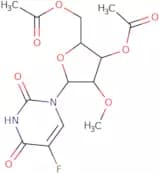
CAS:<p>3',5'-Di-O-acetyl-5-fluoro-2'-O-methyluridine is a modified nucleoside with antiviral properties. 3',5'-Di-O-acetyl-5-fluoro-2'-O-methyluridine inhibits viral replication by inhibiting the enzyme ribonucleotide reductase, which catalyzes the conversion of ribonucleoside diphosphates to deoxyribonucleoside diphosphates. 3',5'-Di-O-acetyl-5-fluoro-2'-O-methyluridine has been shown to be effective against herpes simplex virus type 1 and 2, as well as human cytomegalovirus, and can be used in the treatment of cancer.</p>Formula:C14H17FN2O8Purezza:Min. 95%Peso molecolare:360.29 g/mol6-(4-Fluorophenyl)pyrimidine-2,4-diamine
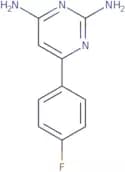
CAS:6-(4-Fluorophenyl)pyrimidine-2,4-diamine is an organic compound that has been shown to inhibit the proliferation of cells in vitro and to induce apoptosis. It also inhibits the growth of cancer cells. 6-(4-Fluorophenyl)pyrimidine-2,4-diamine mediates the activation of arylation, which is a chemical reaction that produces a new carbon-carbon bond between two or more molecules. This reaction is involved in the process of angiogenesis. In addition, this compound has been shown to be reactive with other compounds that are known to cause mutations and cellular damage.Formula:C10H9FN4Purezza:Min. 95%Peso molecolare:204.2 g/mol2,6-Dichloro-9-(3',5'-di-O-benzoyl-2'-deoxy-2'-fluoro-b-D-arabinofuranosyl)purine
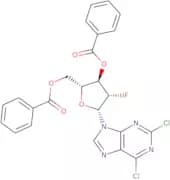
CAS:2,6-Dichloro-9-(3',5'-di-O-benzoyl-2'-deoxy-2'-fluoro-b-D-arabinofuranosyl)purine is a nucleoside analog that is a potent activator of the immune system. It is a novel synthetic compound with high purity and high quality. This compound has antiviral effects against HIV and other viruses. It also has anticancer properties, which are thought to be due to its ability to inhibit DNA synthesis in tumor cells.Formula:C24H17CI2FN4O5Purezza:Min. 95%Peso molecolare:531.33 g/molN-(2'-Deoxyguanosin-8-yl)-4-amino(biphenyl)
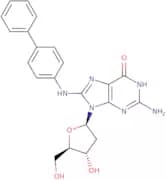
CAS:<p>N-(2'-Deoxyguanosin-8-yl)-4-amino(biphenyl) (NGB) is a genotoxic compound that causes mutations in mammalian cells. It has been shown to cause cancer in rats, and it is carcinogenic in the bladder of both rats and humans. NGB is also mutagenic to the wild-type strain of bacteria, which may be due to its ability to affect DNA replication. This drug has been detected in human urine at levels as high as 2 micrograms per milliliter and has been found in tissues of mammals, including humans. NGB binds tightly to eicosatetraynoic acid (ETYA), a fatty acid that is an intermediate product of lipid metabolism, which may account for its genotoxic effects.</p>Formula:C22H22N6O4Purezza:Min. 95%Peso molecolare:434.45 g/mol5'-O-DMT-2'-O-pentylaminoadenosine
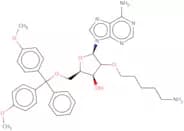
5'-O-DMT-2'-O-pentylaminoadenosine is a phosphoramidite nucleoside monophosphate. It is a novel anticancer and antiviral agent that has been shown to kill cancer cells, inhibit viral replication, and inhibit the synthesis of DNA in the cell. 5'-O-DMT-2'-O-pentylaminoadenosine has been shown to be an effective inhibitor of herpes simplex virus type 1 (HSV1) replication in vitro. This drug also inhibits the synthesis of DNA and RNA by inhibiting nucleoside diphosphate kinase, which is a key enzyme in the metabolism of nucleosides.Formula:C36H42N6O6Purezza:Min. 95%Peso molecolare:654.77 g/mol2'-Deoxy-5'-O-DMT-N4-isobutyrylcytidine 3'-CE phosphoramidite
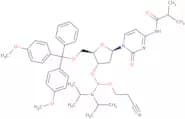
CAS:This is a nucleotide analog that is used as a building block in DNA synthesis. It can be obtained from various sources, such as Sigma-Aldrich, Inc.Purezza:Min. 95%2'-Deoxy-a-uridine
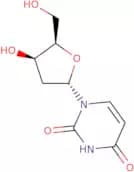
CAS:<p>2'-Deoxy-a-uridine is a nucleoside that is used in the synthesis of DNA. It is one of the building blocks for the synthesis of RNA. 2'-Deoxy-a-uridine is an activator, which can phosphoramidate DNA and activate it to form new strands. This product can also be used as an antiviral agent and antineoplastic agent due to its inhibition of viral replication and cancer cell proliferation. It has been shown to bind to double-stranded DNA by intercalation, thereby preventing the strand from uncoiling and exposing a single strand for further binding by other agents. This product can also inhibit cell growth by inhibiting protein synthesis. 2'-Deoxy-a-uridine has been shown to have anticancer properties, including cytotoxic effects on leukemia cells in culture, as well as inducing apoptosis in tumor cells with low levels of p53 expression.<br>2'-Deoxy-a-uridine</p>Formula:C9H12N2O5Purezza:Min. 95%Colore e forma:Off-white solid.Peso molecolare:228.21 g/mol3'-Azido-3'-deoxythymidine-methyl-D3-b-D-glucuronide sodium salt
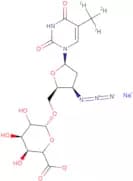
Prodotto controllato3'-Azido-3'-deoxythymidine-methyl-D3-b-D-glucuronide sodium salt is a novel antiviral nucleoside phosphoramidite that has been shown to be an effective activator in the synthesis of diphosphate and triphosphate analogs. The novel antiviral nucleoside phosphoramidite was synthesized from 3'-azido-3'-deoxythymidine, methyl bromoacetate and sodium hydroxide in methanol at room temperature. It is structurally similar to the natural nucleosides, deoxyribonucleosides and ribonucleosides with modifications on the sugar moiety and phosphate group. This compound is a high quality synthetic material for use in pharmaceutical research, as an anticancer agent and as a potential antiviral drug.Formula:C16H17D3N5NaO10Purezza:Min. 95%Colore e forma:PowderPeso molecolare:468.36 g/mol5-Bromo-2-methylsulfanyl-pyrimidine-4-carboxylic acid
CAS:5-Bromo-2-methylsulfanyl-pyrimidine-4-carboxylic acid is a pyrimidine derivative that inhibits protein kinases. The compound has been shown to inhibit the activity of protein kinase C, which is involved in mediating inflammatory responses, and phosphorylation of the insulin receptor substrate 1. 5-Bromo-2-methylsulfanyl-pyrimidine-4-carboxylic acid is an efficient inhibitor of kinases and can be used as a lead compound for the development of new compounds with therapeutic potential.Formula:C6H5BrN2O2SPurezza:Min. 95%Peso molecolare:249.09 g/mol3’-O-tert-Butyldimethylsilyl-2’-deoxyadenosine
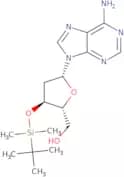
CAS:3’-O-tert-Butyldimethylsilyl-2’-deoxyadenosine is a nucleoside that is used as an antiviral and anticancer drug. It inhibits viral RNA synthesis by acting as a competitive inhibitor of the enzyme ribonucleotide reductase, which converts ribonucleotides to deoxyribonucleotides. 3′-O-tert-Butyldimethylsilyl-2’-deoxyadenosine has been shown to inhibit cancer cells in vitro and in vivo. This compound also has antiangiogenic effects and may inhibit tumor cell proliferation by targeting the Ras/Raf/MEK/ERK pathway.Purezza:Min. 95%1-(2-Deoxy-b-D-ribofuranosyl)-4-methylindole
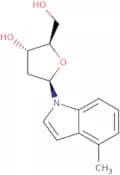
CAS:1-(2-Deoxy-b-D-ribofuranosyl)-4-methylindole is a nucleoside that can be used as an activator for phosphoramidite synthesis. It is also known to have antiviral, anticancer, and antimalarial properties. 1-(2-Deoxy-b-D-ribofuranosyl)-4-methylindole has been shown to inhibit the proliferation of human leukemia cells in culture. It has also been shown to suppress HIV replication in vitro by inhibiting viral RNA synthesis.Formula:C14H17NO3Purezza:Min. 95%Peso molecolare:247.3 g/mol2-Amino-4-(4-fluorophenyl)pyrimidine
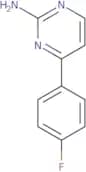
CAS:<p>2-Amino-4-(4-fluorophenyl)pyrimidine is a fluorinated derivative of imatinib, which is a chemical that inhibits the activity of tyrosine kinases. It has been shown to be a more potent inhibitor than imatinib, and it also offers high yields and regioselectivity. This compound can be used in organic chemistry to produce fluorinated derivatives.</p>Formula:C10H8FN3Purezza:Min. 95%Peso molecolare:189.19 g/mol2'-Amino-2'-deoxyguanosine-5'-triphospate tetralithium salt
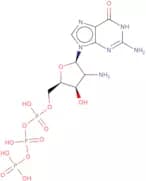
CAS:2'-Amino-2'-deoxyguanosine-5'-triphosphate tetralithium salt is a novel nucleoside analog that has antiviral and anticancer activities. It is a high quality, modified nucleoside that can be used for the synthesis of deoxyribonucleosides or ribonucleosides. It is synthesized from 2'-amino-2'-deoxyguanosine triphosphate and a lithium salt of tetrabutylammonium. This product has a CAS number of 108269-13-2 and a purity level of ≥99%.Formula:C10H17N6O13P3Li4Purezza:Min. 95%Peso molecolare:549.96 g/mol2'-Methyl-adenosine-(Bz)-succinyl-CPG; 500 Å (RNA)
<p>2'-Methyl-adenosine-(Bz)-succinyl-CPG; 500 Å (RNA) is a synthetic nucleotide that has antiviral and anticancer properties. It is a novel nucleotide with the phosphate group at the 2' position of the ribose sugar, which can be phosphorylated to form monophosphate or diphosphate. This product is highly purified and has been shown to have antiviral activity against HIV and anticancer activities in vitro.</p>Purezza:Min. 95%





![[U-13C10, U-15N2]-Labelled thymidine](/_next/image/?url=https%3A%2Fstatic.cymitquimica.com%2Fproducts%2F3D%2Fthumb-webp%2FNL32196.webp&w=3840&q=75)






![2'-Deoxy-2'-iodo-adenosine-5'-[(beta,gamma)-imido]triphosphate sodium salt - 10mM aqueous solution](/_next/image/?url=https%3A%2Fstatic.cymitquimica.com%2Fproducts%2F3D%2Fthumb-webp%2FND166258.webp&w=3840&q=75)