Nucleosidi
Trovati 3569 prodotti di "Nucleosidi"
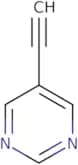
5-Ethynylpyrimidine
CAS:5-Ethynylpyrimidine is a supramolecular alkynyl group that has been shown to inhibit tyrosine kinase activity, cross-coupling, and the synthesis of proteins. It also exhibits luminescent properties and can be used in supramolecular chemistry. 5-Ethynylpyrimidine is a pyrimidine nucleoside, which is an organic compound that is a component of RNA. Pyrimidine nucleosides are important for protein synthesis and are used as luminophores or fluorescent resonance quenchers in biochemical assays for enzyme activity; they have also been shown to inhibit herpes simplex virus (HSV) replication. 5-Ethynylpyrimidine has been found to be able to bind terminal alkynes with high affinity.Formula:C6H4N2Purezza:Min. 95%Peso molecolare:104.11 g/molAICAR 3',5'-cyclic phosphate
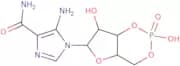
CAS:AICAR 3',5'-cyclic phosphate is an antiviral and anticancer agent that inhibits the production of DNA and RNA, which may be due to its ability to activate AMP-activated protein kinase. AICAR 3',5'-cyclic phosphate has been shown to inhibit the proliferation of human breast cancer cells in vitro. This drug also has anticancer activity against various types of cancers, including prostate cancer and melanoma. AICAR 3',5'-cyclic phosphate is a novel compound that can be used as a phosphoramidite reagent for the synthesis of oligonucleotides.
Formula:C9H13N4O7PPurezza:Min. 95%Peso molecolare:320.2 g/mol3'-Deoxy-3'-fluoroxylocytidine
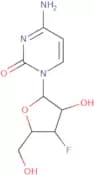
CAS:3'-Deoxy-3'-fluoroxylocytidine is a synthetic phosphate derivative of cytidine. It is an activator for phosphoramidites, deoxyribonucleosides and ribonucleosides. 3'-Deoxy-3'-fluoroxylocytidine is an anticancer agent that has been shown to have activity against various cancer cell lines, including prostate cancer cells. This compound has also been shown to have antiviral activity against herpes simplex virus type 1 (HSV-1) and influenza A virus in the laboratory.
Purezza:Min. 95%2'-O-Me-5'-O-DMT-1,3-di-N-POM-pseudouridine-3'-CE phosphoramidite
2'-O-Me-5'-O-DMT-1,3-di-N-POM-pseudouridine-3'-CE phosphoramidite is an antiviral agent that inhibits the synthesis of RNA. It has been shown to inhibit the production of new viruses in cultured cells and to be active against some strains of influenza virus. The modification was developed by chemists at Boehringer Ingelheim, who have also synthesised other novel nucleosides that are being tested as anticancer agents. This product is a monophosphate derivative with a high purity level and a CAS number.Purezza:Min. 95%3',5'-Di-O-acetyl-2'-deoxyguanosine
CAS:3',5'-Di-O-acetyl-2'-deoxyguanosine is a nucleoside that is activated by hypochlorous acid to form a reactive intermediate, which can then react with other molecules. 3',5'-Di-O-acetyl-2'-deoxyguanosine has been shown to be selectively cytotoxic to human tumor cells and may be used as a radiosensitizer for cancer treatment. The reaction products of this compound include hypochlorite and hydrogen peroxide, which are strong oxidizing agents that cause tissue injury. This compound is also an effective reagent for the detection of myeloperoxidase in plasma samples.
Formula:C14H17N5O6Purezza:Min. 95%Colore e forma:PowderPeso molecolare:351.32 g/mol8-Bromo-2'-O-methyladenosine
8-Bromo-2'-O-methyladenosine is a modified nucleoside that is used as an antiviral and anticancer drug. It is also a high quality, novel, phosphoramidite building block. 8-Bromo-2'-O-methyladenosine has been shown to inhibit the growth of human cancer cells in culture and has anti-inflammatory effects in mice.Purezza:Min. 95%N4-Acetyl-2'-deoxy-5'-O-DMT-cytidine 3'-Q linker CPG 1000Å
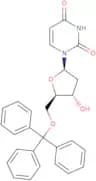
N4-Acetyl-2'-deoxy-5'-O-DMT-cytidine 3'-Q linker CPG 1000Å is a nucleoside analog that is used in the synthesis of DNA. It is a phosphoramidite that has been modified with an acetyl group at the 2' position and a Q linker at the 3' position. This product can be used as an antiviral or anticancer agent, as well as for other research purposes. The CAS number for this product is 62660-67-7, and it has been shown to be active against HIV and HCV.Purezza:Min. 95%2'-Deoxy-5'-O-trityluridine
CAS:2'-Deoxy-5'-O-trityluridine is a nucleoside that has been synthesized for visualization purposes. It is an analog of uridine, with the structure shown in Figure 1. The trityl group is oriented on the 2' oxygen atom, which is attached to the ribose sugar. This configuration allows for a variety of interactions with other molecules and can be seen in Figure 2. The methyl group on the 5' carbon atom interacts with the benzene ring on xylene, while the moiety on the 3' carbon atom interacts with furanose. This nucleoside also has a symmetric conformation, as shown in Figure 3.
Formula:C28H26N2O5Purezza:Min. 95%Peso molecolare:470.52 g/mol2'-Deoxycytidyl-(3'-5')-2'-deoxyguanosine
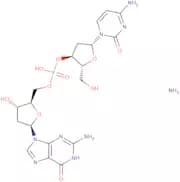
CAS:2'-Deoxycytidyl-(3'-5')-2'-deoxyguanosine is a monophosphate nucleoside. It is an antiviral agent that inhibits the synthesis of DNA and RNA. 2'-Deoxycytidyl-(3'-5')-2'-deoxyguanosine has also been shown to be cytotoxic against cancer cells, with activities against leukemia and lymphoma cells. This drug can be used in the treatment of various cancers, such as chronic myelogenous leukemia, acute myelogenous leukemia, multiple myeloma, Hodgkin's lymphoma, and breast cancer.
Formula:C19H25N8O10P·NH3Purezza:Min. 95%Peso molecolare:573.45 g/mol2',3'-Di-O-isopropylidene-isocytidine
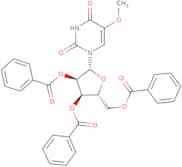
CAS:2',3'-Di-O-isopropylidene-isocytidine is a nucleoside that belongs to the group of antiviral and anticancer compounds. It is an analog of cytidine, and has been shown to be an activator of phosphoramidites, DNA, and RNA. 2',3'-Di-O-isopropylidene-isocytidine has been shown to have antineoplastic effects on tumor cells by inhibiting rna synthesis and protein synthesis. This compound also inhibits the growth of bacteria, including Mycobacterium tuberculosis and Mycobacterium avium complex. 2',3'-Di-O-isopropylidene-isocytidine has been shown to be a novel modified nucleoside with high purity and high quality.Purezza:Min. 95%2’,3’,5’-Tri-O-benzoyl-5-methoxyuridine
CAS:2’,3’,5’-Tri-O-benzoyl-5-methoxyuridine is a modified nucleoside that is structurally similar to the natural nucleoside uridine. It has antiviral properties and can be used as a monophosphate, diphosphate, or nucleotide. 2’,3’,5’-Tri-O-benzoyl-5-methoxyuridine is synthesized by reacting 5′-(triacetyl)aminoimidazole with 5′-(triisopropyl)phosphoroamidite in acetonitrile. The product has been shown to have anticancer activity in vitro and in vivo.Purezza:Min. 95%2'-Deoxy-5-fluorouridine 5'-diphosphate sodium salt
CAS:2'-Deoxy-5-fluorouridine 5'-diphosphate sodium salt is an antiviral agent that inhibits the synthesis of viral RNA. It is a modified monophosphate nucleotide that is used to treat hepatitis B and C virus infections, as well as AIDS. This drug has been shown to be effective in treating cancer cells, such as leukemia and lymphoma. 2'-Deoxy-5-fluorouridine 5'-diphosphate sodium salt has also been shown to have anticancer properties against colon cancer cells.Formula:C9H13FN2O11P2·xNaPurezza:Min. 95%N1-Methyl-2'-O-methyladenosine
N1-Methyl-2'-O-methyladenosine is a phosphoramidite, deoxyribonucleoside and ribonucleoside analog that has antiviral activity. It inhibits the synthesis of viral DNA and RNA by competitive inhibition of viral DNA polymerases. N1-Methyl-2'-O-methyladenosine also inhibits the proliferation of tumor cells in vitro, which is mediated by its ability to inhibit the synthesis of cellular DNA. This drug has novel chemical structures with anticancer activity.Purezza:Min. 95%5’-O-DMT-N4-Phenoxyacetyl-2’-O-methylcytidine
5’-O-DMT-N4-Phenoxyacetyl-2’-O-methylcytidine is an Activator and Anticancer agent. The synthesis of this product is based on the modification of cytidine to 2’,4,6,-trimethoxybenzoylcytidine. This product has been shown to be more potent than other cytidine analogs in inhibiting the growth of cancer cells. 5'-O-DMT-N4-Phenoxyacetyl-2'-O-methylcytidine is a novel nucleoside that has been shown to have antiviral activity against human immunodeficiency virus (HIV).Purezza:Min. 95%Cytarabine-5-monophosphate-15N2,13C1
Cytarabine-5-monophosphate-15N2, 13C1 is a monophosphate nucleoside that inhibits viral replication. It is an antiviral agent used in the treatment of herpes simplex virus infections and other viruses such as HIV. Cytarabine-5-monophosphate-15N2, 13C1 also has anticancer properties and can be used to prevent cancer by inhibiting DNA synthesis. The compound is a modified nucleoside that lacks the 2' hydroxyl group and has an activated phosphate at the 3' position. This novel nucleoside is synthesized from deoxyribonucleosides using phosphoramidites as starting materials. CAS No.: 127468-52-8
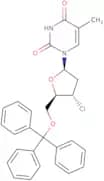
Purezza:Min. 95%2’,3’-Dideoxy-3’-chloro-5-methyl-5’-O-trityluridine
CAS:2’,3’-Dideoxy-3’-chloro-5-methyl-5’-O-trityluridine (ddCTP) is a novel nucleoside analog that is synthesized by the protection of the 5'-hydroxyl group with an acetyl group followed by a 2',3'-dideoxy substitution. This compound has been shown to have antiviral and anticancer activities. ddCTP is an activator of DNA polymerase and inhibits viral DNA synthesis in vitro. It also inhibits protein synthesis and cell division by binding to the RNA template strand, which prevents it from being used as a template for protein synthesis.Purezza:Min. 95%2'-TFA-NH-dA
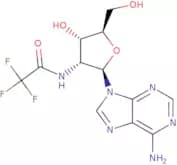
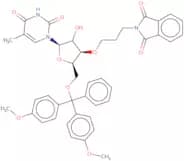
CAS:2'-TFA-NH-dA is a monophosphate nucleotide. It is a novel and modified ribonucleoside that can be used as an activator to promote the synthesis of diphosphate, deoxyribonucleosides, and phosphoramidites. 2'-TFA-NH-dA has been shown to have anticancer properties in vitro and antiviral properties in vivo. This compound is synthesized from 2'-deoxyadenosine 5'-phosphate (2'-DAP), which is obtained from the amino acid ATP.Formula:C12H13F3N6O4Purezza:Min. 95%Peso molecolare:362.26 g/mol5'-O-DMT-5-methyl-3'-O-propylphthalimidouridine
5'-O-DMT-5-methyl-3'-O-propylphthalimidouridine is a novel phosphoramidite monophosphate. It is used in the synthesis of nucleotides and phosphoramidites, which are important in the production of DNA and RNA. 5'-O-DMT-5-methyl-3'-O-propylphthalimidouridine has antiviral activity against herpes simplex virus type 1 and cytomegalovirus. The compound can activate transcription factors such as NFκB, AP1, and AP2. 5'-O-DMT-5-methyl-3'-O-propylphthalimidouridine has been shown to inhibit the growth of prostate cancer cells by inhibiting cell proliferation and inducing apoptosis.
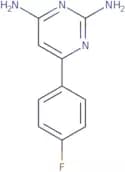
Formula:C42H41N3O10Purezza:Min. 95%Peso molecolare:747.81 g/mol6-(4-Fluorophenyl)pyrimidine-2,4-diamine
CAS:6-(4-Fluorophenyl)pyrimidine-2,4-diamine is an organic compound that has been shown to inhibit the proliferation of cells in vitro and to induce apoptosis. It also inhibits the growth of cancer cells. 6-(4-Fluorophenyl)pyrimidine-2,4-diamine mediates the activation of arylation, which is a chemical reaction that produces a new carbon-carbon bond between two or more molecules. This reaction is involved in the process of angiogenesis. In addition, this compound has been shown to be reactive with other compounds that are known to cause mutations and cellular damage.Formula:C10H9FN4Purezza:Min. 95%Peso molecolare:204.2 g/mol2'-Deoxy-5'-O-DMT-5-D-uridine 3'-CE phosphoramidite
Prodotto controllato2'-deoxy-5'-O-DMT-5-D-uridine 3'-CE phosphoramidite (2'DMTU) is a synthetic nucleoside with anticancer, antiviral and antiretroviral activity. 2'DMTU is a ribonucleotide monophosphate that can be used to modify RNA in the laboratory. It is a modified nucleoside that prevents RNA polymerase from adding onto the DNA strand and has been shown to activate apoptosis in cells that are resistant to anticancer drugs.Formula:C39H46N4O8PDPurezza:Min. 95%Peso molecolare:731.81 g/molLDA
CAS:LDA is a technique for extracting spectral features from a set of spectra. It uses the probabilistic model of discriminant analysis to discriminate between groups of spectra. LDA has been shown to outperform other techniques, such as PCA and MDA, in analyzing datasets with a small number of variables. The algorithm is incrementally updated with new data points and parameters, which makes it an attractive choice for real-time applications.
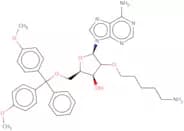
Purezza:Min. 95%5'-O-DMT-2'-O-pentylaminoadenosine
5'-O-DMT-2'-O-pentylaminoadenosine is a phosphoramidite nucleoside monophosphate. It is a novel anticancer and antiviral agent that has been shown to kill cancer cells, inhibit viral replication, and inhibit the synthesis of DNA in the cell. 5'-O-DMT-2'-O-pentylaminoadenosine has been shown to be an effective inhibitor of herpes simplex virus type 1 (HSV1) replication in vitro. This drug also inhibits the synthesis of DNA and RNA by inhibiting nucleoside diphosphate kinase, which is a key enzyme in the metabolism of nucleosides.Formula:C36H42N6O6Purezza:Min. 95%Peso molecolare:654.77 g/mol2'-C-Methyluridine 5'-triphosphate lithium salt - 10mM aqueous solution
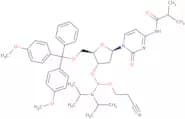
2'-C-Methyluridine 5'-triphosphate lithium salt is a nucleoside that is a high quality, activator and novel. It is used to synthesize ribonucleosides and deoxyribonucleosides. This drug has anticancer properties and can be used as an immunomodulator. 2'-C-Methyluridine 5'-triphosphate is not active against acid-fast bacteria such as Mycobacterium tuberculosis or Mycobacterium avium complex.Formula:C10H13N2O15P3Li4Purezza:Min. 95%Peso molecolare:521.9 g/mol2'-Deoxy-5'-O-DMT-N4-isobutyrylcytidine 3'-CE phosphoramidite
CAS:This is a nucleotide analog that is used as a building block in DNA synthesis. It can be obtained from various sources, such as Sigma-Aldrich, Inc.Purezza:Min. 95%b-Methylcrotonyl coenzyme A lithium salt
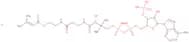
CAS:b-Methylcrotonyl coenzyme A lithium salt is a phosphoramidite that has antiviral and anticancer properties. It is used as an activator in the synthesis of DNA, as well as a novel deoxyribonucleoside monophosphate. b-Methylcrotonyl coenzyme A lithium salt also has high purity and high quality.Purezza:Min. 95%Ref: 3D-NM157477
1gPrezzo su richiesta50mg1.838,00€100mg2.838,00€250mg5.621,00€500mgPrezzo su richiesta3'-Azido-3'-deoxythymidine-methyl-D3-b-D-glucuronide sodium salt
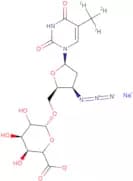
Prodotto controllato3'-Azido-3'-deoxythymidine-methyl-D3-b-D-glucuronide sodium salt is a novel antiviral nucleoside phosphoramidite that has been shown to be an effective activator in the synthesis of diphosphate and triphosphate analogs. The novel antiviral nucleoside phosphoramidite was synthesized from 3'-azido-3'-deoxythymidine, methyl bromoacetate and sodium hydroxide in methanol at room temperature. It is structurally similar to the natural nucleosides, deoxyribonucleosides and ribonucleosides with modifications on the sugar moiety and phosphate group. This compound is a high quality synthetic material for use in pharmaceutical research, as an anticancer agent and as a potential antiviral drug.Formula:C16H17D3N5NaO10Purezza:Min. 95%Colore e forma:PowderPeso molecolare:468.36 g/mol3'-Deoxy-3'-fluorothymidine-5'-triphosphate sodium salt
3'-Deoxy-3'-fluorothymidine-5'-triphosphate sodium salt (3'-DFP) is a modified nucleoside that acts as an antiviral and anticancer drug. It is a monophosphate derivative of thymidine, which is converted to diphosphate by the enzyme thymidylate kinase. 3'-DFP inhibits DNA synthesis by preventing the incorporation of deoxyribonucleotides into DNA. 3'-DFP can also be used as a building block in the synthesis of other nucleosides such as cytidine 5′-triphosphate, uridine 5′-triphosphate, and adenosine 5′-triphosphate. 3'-DFP is active against herpesviruses including Epstein-Barr virus, cytomegalovirus, and varicella zoster virus. It has also been shown to inhibit cancer cell proliferation when used at high doses.Purezza:Min. 95%2-Amino-4-(4-fluorophenyl)pyrimidine
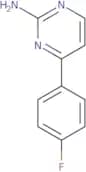
CAS:2-Amino-4-(4-fluorophenyl)pyrimidine is a fluorinated derivative of imatinib, which is a chemical that inhibits the activity of tyrosine kinases. It has been shown to be a more potent inhibitor than imatinib, and it also offers high yields and regioselectivity. This compound can be used in organic chemistry to produce fluorinated derivatives.Formula:C10H8FN3Purezza:Min. 95%Peso molecolare:189.19 g/mol2'-Amino-2'-deoxyguanosine-5'-triphospate tetralithium salt
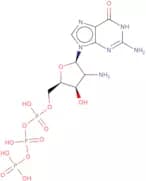
CAS:2'-Amino-2'-deoxyguanosine-5'-triphosphate tetralithium salt is a novel nucleoside analog that has antiviral and anticancer activities. It is a high quality, modified nucleoside that can be used for the synthesis of deoxyribonucleosides or ribonucleosides. It is synthesized from 2'-amino-2'-deoxyguanosine triphosphate and a lithium salt of tetrabutylammonium. This product has a CAS number of 108269-13-2 and a purity level of ≥99%.Formula:C10H17N6O13P3Li4Purezza:Min. 95%Peso molecolare:549.96 g/mol5-Fluoro-1-(2',3'-dideoxy-2',3'-didehydro-5'-O-acetyl-b-L-ribofuranosyl)-uracil
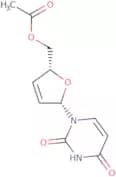
CAS:5-Fluoro-1-(2',3'-dideoxy-2',3'-didehydro-5'-O-acetyl-b-L-ribofuranosyl)-uracil is a modified nucleoside that is phosphorylated and activated to 5'-triphosphate. It has antiviral, anticancer, and antimalarial activities.Formula:C11H12N2O5Purezza:Min. 95%Peso molecolare:252.22 g/mol2'-C-Ethynylcytidine
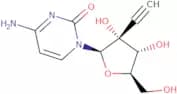
CAS:2'-C-Ethynylcytidine is a synthetic surfactant that can be used in coatings and other surface treatments. It has been shown to inhibit the growth of bacteria and viruses, as well as being effective against a variety of bacterial species. 2'-C-Ethynylcytidine binds to sulfide, which is produced by bacteria, leading to cell death. The antimicrobial activity of 2'-C-Ethynylcytidine is due to its ability to form ester linkages with polyesters, which are able to penetrate the bacterial cell membrane and disrupt the integrity of the cytoplasmic membrane. This leads to leakage of intracellular contents, followed by cell death. 2'-C-Ethynylcytidine also has been shown to bind to metal ions such as silver, copper, zinc and cadmium and prevent their uptake into cells.Purezza:Min. 95%2-(2-Methylphenyl)pyrimidine-5-carbaldehyde
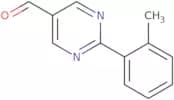
CAS:2-(2-Methylphenyl)pyrimidine-5-carbaldehyde is a crystalline solid that has been shown to have synergistic effects with polypropylene. It is synthesized from 2-methylphenylacetonitrile and 2,4-dichloro-6-(trifluoromethyl)pyrimidine in the presence of sodium metal. The product is soluble in alcohols and ethers, but insoluble in water.Formula:C12H10N2OPurezza:Min. 95%Peso molecolare:198.22 g/mol5'-O-DMT-thymidine 3'-Me phosphoramidite
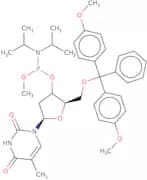
5’-O-DMT-thymidine 3’-Me phosphoramidite is a novel and modified nucleotide analog that is used as an antiviral agent. It has been shown to be active against herpes simplex virus type 1 (HSV-1) and Epstein-Barr virus (EBV). 5'-O-DMT-thymidine 3’-Me phosphoramidite is not active against HIV, although it has been shown to inhibit the replication of Hepatitis B virus. This compound can also be used in cancer therapy.
5'-O-DMT-thymidine 3' -Me phosphoramidite inhibits cellular DNA synthesis by competing with natural thymidine monophosphate (TMP) for incorporation into DNA. The incorporation of 5'-O-DMT-thymidine 3' -Me into DNA leads to a high frequency of mutations, which causes the death of the cell.Formula:C38H48N3O8PPurezza:Min. 96 Area-%Colore e forma:White Off-White PowderPeso molecolare:705.78 g/mol2'-Deoxy-5'-O-DMT-5-fluoro-4-O-(2,4,6-trimethylphenyl)uridine 3'-CE-phosphoramidite
2'-Deoxy-5'-O-DMT-5-fluoro-4-O-(2,4,6-trimethylphenyl)uridine 3'-CE-phosphoramidite is a novel phosphoramidite monophosphate. It is modified to include fluorine at the 5 position of the uridine moiety and has antiviral activity. This product is a nucleoside with antiviral properties that can be used in cancer treatments. 2'-Deoxy-5'-O-DMT-5-fluoro-4-O-(2,4,6-trimethylphenyl)uridine 3'-CE phosphoramidite is synthesized from deoxyribonucleosides and ribonucleosides by using a high purity process.Purezza:Min. 95%3',5'-Diamino-3',5'-dideoxyadenosine
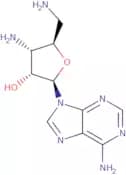
CAS:3',5'-Diamino-3',5'-dideoxyadenosine (3,5-ddA) is a nucleoside that has been shown to be an efficient inhibitor of HIV replication in vitro. It has been used for the treatment of AIDS, but it is not yet approved for this use. 3,5-ddA inhibits the conversion of dATP to dTTP and prevents DNA synthesis by blocking the enzyme ribonucleotide reductase. The drug can be synthesized with high efficiency by using a modified nucleoside amidite approach.
Formula:C10H15N7O2Purezza:Min. 95%Peso molecolare:265.28 g/mol2-Amino-9-(b-D-ribofuranosyl)purine 5'-O-triphosphate - 10mM aq. solution
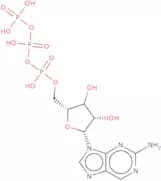
CAS:2-Amino-9-(b-D-ribofuranosyl)purine 5'-O-triphosphate is a synthetic nucleoside that is modified by phosphoramidite chemistry. This compound is an antiviral agent that inhibits viral DNA synthesis and replication. It has also been shown to have anticancer properties. 2-Amino-9-(b-D-ribofuranosyl)purine 5'-O-triphosphate inhibits the enzymatic activity of the enzyme ribonucleotide reductase, which converts ribonucleotides into deoxyribonucleotides. The resulting monophosphate form of this compound accumulates in cells, which leads to cell death.Formula:C10H16N5O13P3Purezza:Min. 95%Colore e forma:PowderPeso molecolare:507.18 g/mol2'-O-tert-Butyldimethylsilyl-3'-deoxy-5-methyluridine
CAS:2'-O-tert-Butyldimethylsilyl-3'-deoxy-5-methyluridine (2'-O-TBDMS-5'-dMU) is a synthetic nucleoside that is an antiviral agent. It has been shown to be an activator of DNA polymerase, which may be due to its ability to bind to the enzyme's catalytic site and inhibit the enzyme's activity. 2'-O-TBDMS-5'-dMU also has high purity and can be used in the synthesis of modified nucleosides, phosphoramidites, diphosphates, and ribonucleosides. 2'-O-TBDMS-5'-dMU is a white powder with a melting point of about 221°C. It is soluble in water and alcohols and insoluble in acetone or ether.Formula:C16H28N2O5SiPurezza:Min. 95%Peso molecolare:356.49 g/mol5'-ODMT-thymidine 3'-Sp-oxazaphospholidine
5'-ODMT-thymidine 3'-Sp-oxazaphospholidine is a modified nucleoside that can be used as an anticancer drug. It is a high purity, diphosphate, Anticancer, Modified, Phosphoramidites. 5'-ODMT-thymidine 3'-Sp-oxazaphospholidine is synthesized by the phosphorylation of thymidine with oxazaphospholidine. It has been shown to inhibit DNA and RNA synthesis in cancer cells.
Purezza:Min. 95%2'-O-tert-Butyldimethylsilyluridine
CAS:2'-O-tert-Butyldimethylsilyluridine is a nucleoside that is used in DNA synthesis, antiviral research, and anticancer therapy. It is synthesized from 2'-deoxyuridine monophosphate (2'-dUMP) with the aid of a phosphoramidite coupling agent. It has shown to be an effective activator in the synthesis of oligonucleotides, which are short chains of nucleotide units that can be used for various purposes including the treatment of cancer cells. These chains are synthesized by linking together individual nucleosides with phosphate molecules at each end. The bonds between these phosphate groups and the sugar-phosphate backbone of the nucleotide units are called phosphodiester bonds. This synthetic process can be used to produce DNA or RNA strands as well as modified versions of these strands such as those that have been synthesized with other chemical groups on their sugar-phosphate backbones.
Formula:C15H26N2O6SiPurezza:Min. 95%Colore e forma:PowderPeso molecolare:358.46 g/mol5'-O-DMT-2'-O-propynyluridine 3'-CE phosphoramidite
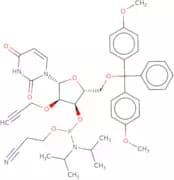
CAS:5'-O-DMT-2'-O-propynyluridine 3'-CE phosphoramidite is a novel nucleoside analogue that can be used to synthesize DNA and RNA. This compound has antiviral and anticancer properties, which may be due to its ability to inhibit the synthesis of RNA. This product is also high quality, high purity, and low cost. 5'-O-DMT-2'-O-propynyluridine 3'-CE phosphoramidite is an excellent chemical intermediate for the synthesis of nucleosides with modified sugar moieties. It can be used in pharmaceuticals and other chemical industries.Formula:C42H49N4O9PPurezza:Min. 95%Peso molecolare:784.83 g/mol2'-Deoxy-2'-fluoro-2-hydroxy-b-D-arabinoadenosine
CAS:2'-Deoxy-2'-fluoro-2-hydroxy-b-D-arabinoadenosine is a novel nucleoside that was synthesized as a potential antiviral agent. It is an analog of adenosine and has been shown to inhibit the replication of HIV in vitro. This nucleoside is synthesized using a modified phosphoramidite approach and can be used in the synthesis of DNA or RNA. 2'-Deoxy-2'-fluoro-2-hydroxy-b-D-arabinoadenosine has also been shown to have anticancer activity.Formula:C10H12FN5O4Purezza:Min. 95%Peso molecolare:285.23 g/mol2',3'-Didehydro-2',3'-dideoxy-5'-acetate inosine
CAS:2',3'-Didehydro-2',3'-dideoxy-5'-acetate inosine (ddA) is a prodrug that is activated by hydrolysis to didanosine. The sodium salt of ddA has been shown to be effective in the treatment of HIV infection. Sodium ddA is a crystalline, neutralized salt with an alkaline pH and a pKa of 9.4. It has been crystallized from an alkaline solution using Raney nickel as a catalyst. This product can be used to synthesize intermediates for pharmaceuticals or other chemical products.Formula:C12H12N4O4Purezza:Min. 95%Peso molecolare:276.25 g/mol5'-O-DMT-N2-(4-isopropylphenoxyacetyl)-2'-O-methylguanosine
5'-O-DMT-N2-(4-isopropylphenoxyacetyl)-2'-O-methylguanosine is a synthetic nucleoside with antiviral and anticancer activity. It is a modified nucleotide that has been synthesized by the activation of 2'-deoxyadenosine monophosphate with 4-isopropylphenoxyacetic acid, followed by the addition of methylguanine methyl ester to give 5'-O-DMT-N2-(4-isopropylphenoxyacetyl)-2'-O-methylguanosine. This novel nucleoside is an activator of DNA polymerases and is used for the synthesis of DNA, RNA, and proteins. It has been shown to have anti-inflammatory properties in animal models. 5'-O-DMT-N2-(4-isopropylphenoxyacetyl)-2'-O-methylguanosine was first synthesizedPurezza:Min. 95%3',5'-Di-O-acetyl-2'-deoxy-5-fluorouridine
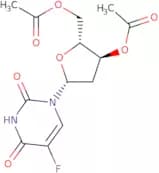
CAS:3',5'-Di-O-acetyl-2'-deoxy-5-fluorouridine is an antitumor agent that belongs to the class of heterocyclic ring. It is a pyridinium salt with a benzoic acid residue at position 3 and 5'. The heterocyclic ring is derived from alkylene, which has two double bonds in the chain. This compound has low toxicity and can be synthesized from chloroform, fluorouridine, and pyridine. 3',5'-Di-O-acetyl-2'-deoxy-5-fluorouridine inhibits growth of cancer cells by binding to ribosomes and preventing RNA synthesis. It also acts as an alkylating agent that binds to DNA, leading to crosslinking between strands of DNA. This leads to cell death by apoptosis or necrosis due to interference with DNA replication.Formula:C13H15FN2O7Purezza:Min. 95%Peso molecolare:330.27 g/mol3'-Deoxyguanosine-5'-triphosphate lithium salt - 100mM aqueous solution
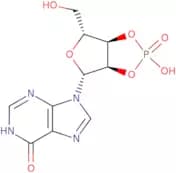
3'-Deoxyguanosine-5'-triphosphate lithium salt - 100mM aqueous solution is Novel and Antiviral. 3'-Deoxyguanosine-5'-triphosphate lithium salt - 100mM aqueous solution is Synthetic and Deoxyribonucleosides. 3'-Deoxyguanosine-5'-triphosphate lithium salt - 100mM aqueous solution is High quality and Ribonuclesides. 3'-Deoxyguanosine-5'-triphosphate lithium salt - 100mM aqueous solution has CAS No. 51445-81-9, Activator, Phosphoramidites, Modified and Anticancer.Formula:C10H12N5O13P3Li4Purezza:Min. 95%Colore e forma:PowderPeso molecolare:530.91 g/molInosine 2',3'-cyclic monophosphate sodium salt
CAS:Inosine 2',3'-cyclic monophosphate sodium salt (ICMP) is a phosphodiesterase inhibitor that inhibits the activity of protein kinases and phosphatases. ICMP is used in biochemical studies to inhibit tryptophan metabolism and protein synthesis. It also has been shown to be useful in the study of sequences, such as those found in DNA and RNA. ICMP has been shown to increase the mRNA levels of a number of proteins at lower concentrations than other inhibitors, making it a valuable tool for studying protein synthesis. The enzyme-inhibiting properties of ICMP have been observed in calf thymus DNA and bacterial DNA gyrase, dna topoisomerase, and rna synthesis. ICMP also inhibits caenorhabditis elegans phosphatases and can be used in genetic engineering experiments involving Xenopus oocytes.Purezza:Min. 95%5-Aminoallyl-2'-deoxycytidine
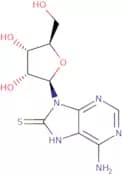
5-Aminoallyl-2'-deoxycytidine is an activator that has been shown to be a novel anticancer drug. It is an analogue of cytidine and is synthesized by the phosphoramidite method. 5-Aminoallyl-2'-deoxycytidine inhibits viral replication in human cells, but also has antiviral activity against HIV and influenza A virus. The compound has been shown to be active against small cell lung cancer in animal models.Purezza:Min. 95%7,8-Dihydro-8-thioxo-adenosine
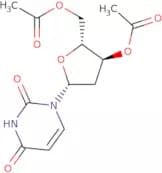
CAS:7,8-Dihydro-8-thioxo-adenosine is a synthetic nucleoside that activates the synthesis of DNA and RNA by acting as a ribonucleotide. It also has antiviral and anticancer activities. 7,8-Dihydro-8-thioxo-adenosine is an antiviral agent against herpesviruses and retroviruses. The antitumor activity of this compound is due to its ability to inhibit the proliferation of tumor cells by inhibiting DNA synthesis. 7,8-Dihydro-8-thioxo-adenosine can be used in the treatment of leukemia and other cancers that are sensitive to cytotoxic drugs. This drug has been shown to have low toxicity in rats.Formula:C10H13SN5O4Purezza:Min. 95%Peso molecolare:299.31 g/mol3',5'-Di-O-acetyl-2'-deoxy-D-uridine
CAS:3',5'-Di-O-acetyl-2'-deoxy-D-uridine is a protonated nucleotide that is synthesized from uridine and acetyl coenzyme A. It has been used as a marker for nucleic acids research, because it is stable at temperatures up to 60 degrees Celsius. 3',5'-Di-O-acetyl-2'-deoxy-D-uridine has been shown to have resonances in the proton region at high field strengths and population shifts in the hydrogen bond region.Formula:C13H16N2O7Purezza:Min. 95%Peso molecolare:312.28 g/mol2'-Methyl-cytidine-(Bz)-succinyl-CPG; 500 Å (RNA)
2-Methyl-cytidine-(Bz)-succinyl-CPG; 500 Å (RNA) is a nucleoside analog that is modified with a 2'-methyl group. It is synthesized by the phosphoramidite method, which is performed in a high purity and high quality environment. This product can be used as an activator for DNA synthesis and has been shown to have anti-cancer and antiviral properties.
Purezza:Min. 95%