Nucleosidi
Trovati 3569 prodotti di "Nucleosidi"
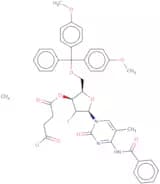
N4-Benzoyl-1-(2'-deoxy-5'-O-DMT-2'-fluoro-b-D-arabinofuranosyl)-5-methylcytosine-3'-O-succinate triethylammonium salt
N4-Benzoyl-1-(2'-deoxy-5'-O-DMT-2'-fluoro-b-D-arabinofuranosyl)-5-methylcytosine-3'-O-succinate triethylammonium salt is a synthetic nucleoside. It is used for the treatment of HIV infection. N4-Benzoyl-1-(2'-deoxy-5'-O-DMT)-2'-fluoro -b -D -arabinofuranosyl) -5 methylcytosine (ADT) inhibits viral replication by inhibiting the activity of reverse transcriptase, which is an enzyme that synthesizes DNA from RNA. ADT is activated to its active form by phosphorylation with a kinase and then converted to diphosphate ADP by the enzyme pyrophosphatase. ADP then acts as a substrate for DNA polymerases, incorporating into newly synthesized DNA
Formula:C42H40FN3O10·C6H16NPurezza:Min. 95%Peso molecolare:868 g/mol2',3'-Dideoxyguanosine-5'-triphosphate
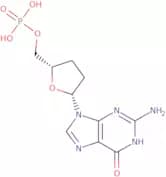
CAS:2',3'-Dideoxyguanosine-5'-triphosphate (ddGTP) is a nucleotide analog that inhibits the formation of DNA and RNA, which are important for protein synthesis. It is used in clinical studies to assess prognosis and to evaluate drug elimination. ddGTP has been shown to inhibit mitochondrial membrane potential, decrease mitochondrial superoxide, and inhibit cancer growth. It also prevents allergic reactions by preventing the release of histamine. The use of probiotic bacteria containing ddGTP may help in the treatment of inflammatory bowel disease.Formula:C10H14N5O6PPurezza:Min. 95%Peso molecolare:331.22 g/moldCTP - 100mmol solution
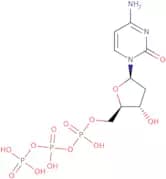
CAS:dCTP is a nucleotide that is an important component of the DNA molecule. It is used in biochemical research and as a drug for treatment of certain cancers. The biochemical properties of dCTP are similar to those of other nucleotides, including ATP and GTP. The main difference is that dCTP has a low solubility in water, while ATP and GTP are soluble in water. This property makes it difficult to study the use of dCTP in biosensors. Another difference is that dCTP does not have a signal peptide sequence, which may be due to its chemical structure or biological function. In addition, dCTP does not interfere with the polymerase chain reaction (PCR) process because it does not possess reactive groups on its phosphate groups.Formula:C9H16N3O13P3Purezza:Min. 95%Peso molecolare:467.16 g/mol8-Azidocyclic adenosine diphosphate ribose
CAS:8-Azidocyclic adenosine diphosphate ribose (8AADPR) is a molecule that is synthesized from ATP and ribose. It has been shown to inhibit the endoplasmic reticulum Ca2+-ATPase, which transports calcium ions out of the cell, leading to increased concentrations of calcium ions in the cytosol. 8AADPR also inhibits mitochondrial ATPase, which leads to an accumulation of ADP-ribose within mitochondria. This accumulation leads to the inhibition of protein synthesis within mitochondria and an activation of ryanodine receptors. There are no known adverse effects associated with 8AADPR at this time, but it should be used with caution due to its potential effects on cardiac function.Formula:C15H20N8O13P2Purezza:Min. 95%Peso molecolare:582.31 g/molBiotin-18-cytidine-5'-triphosphate triethylammonium salt - 5mM aqeous solution
Biotin-18-cytidine-5'-triphosphate triethylammonium salt - 5mM aqeous solution is an activator of DNA synthesis. It is a cytidine nucleoside with a biotin label at the 5' position that is used as a substrate in DNA synthesis reactions. Biotin-18-cytidine-5'-triphosphate triethylammonium salt - 5mM aqeous solution is also used to make phosphoramidites, which are building blocks for oligonucleotide synthesis. This product can be used in anticancer and antiviral research.
Formula:C34H55N8O18P3SPurezza:Min. 95%Peso molecolare:988.83 g/mol5'-O-DMT-N2-isobutyryl-2'-O-propynylguanosine 3'-CE phosphoramidite
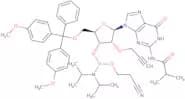
CAS:5'-O-DMT-N2-isobutyryl-2'-O-propynylguanosine 3'-CE phosphoramidite is a novel modified monophosphate. It has antiviral and anticancer activities. The CAS number of 5'-O-DMT-N2-isobutyryl-2'-O-propynylguanosine 3'-CE phosphoramidite is 171486-61-6.Formula:C47H56N7O9PPurezza:Min. 95%Peso molecolare:893.96 g/mol3-Deazauridine-5'-triphosphate sodium salt
3-Deazauridine-5'-triphosphate sodium salt is a modified monophosphate nucleotide analogue. It is an antiviral agent that inhibits the production of viral RNA and DNA, thereby inhibiting the synthesis of viral proteins and the formation of new viruses. 3-Deazauridine-5'-triphosphate sodium salt also has anticancer properties and has been shown to activate transcription from plasmid vectors in vitro. It binds to ribonucleoside triphosphates in the active site, causing it to release pyrophosphate and produce diphosphate as an intermediate product. This means that 3-Deazauridine-5'-triphosphate sodium salt can inhibit both DNA polymerase and RNA polymerase, which are enzymes needed for replication of both DNA and RNA.Formula:C10H16NO15P3·xNaPurezza:Min. 95%Colore e forma:PowderPeso molecolare:483.15 g/mol5'-Deoxy-5-fluoro-N-[(2-methylbutoxy)carbonyl]cytidine
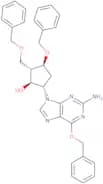
CAS:5'-Deoxy-5-fluoro-N-[(2-methylbutoxy)carbonyl]cytidine is an antiviral drug that has been shown to be a potent inhibitor of HIV-1 replication in cell culture. It is an analog of cytidine, and it binds to the viral reverse transcriptase enzyme via phosphoramidite chemistry. 5'-Deoxy-5-fluoro-N-[(2-methylbutoxy)carbonyl]cytidine is a monophosphate, which inhibits the synthesis of DNA by preventing the incorporation of deoxyribonucleotides in the process. This agent does not have any anticancer activity.Formula:C15H22FN3O6Purezza:Min. 95%Peso molecolare:359.35 g/mol(1S,2S,3S,5S)-5-(2-Amino-6-(benzyloxy)-9H-purin-9-yl)-3-(benzyloxy)-2-(benzyloxymethyl)cyclopentanol
CAS:(1S,2S,3S,5S)-5-(2-Amino-6-(benzyloxy)-9H-purin-9-yl)-3-(benzyloxy)-2-(benzyloxymethyl)cyclopentanol is a synthetic compound that is used to treat patients with chronic myeloid leukemia. It has been shown to inhibit tyrosine kinase and interacts with the guanine binding site of the purine nucleoside phosphorylase. This drug also inhibits the enzyme (deoxy)ribonucleotide reductase and competes with adenosine for binding to adenosine receptors. The stereoisomers of this drug are active against chronic myeloid leukemia cells. The S enantiomer is more potent than the R enantiomer and exhibits greater selectivity for leukemic cells than healthy cells. It has also been shown to inhibit nitric oxide synthase and may have anti-
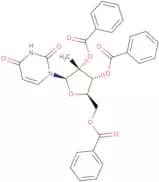
Formula:C32H33N5O4Purezza:Min. 95%Colore e forma:White PowderPeso molecolare:551.64 g/mol2',3',5'-Tri-O-benzoyl-2'-C-methyluridine
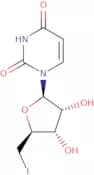
CAS:2',3',5'-Tri-O-benzoyl-2'-C-methyluridine is a modified nucleoside that can be used as an antiviral and anticancer agent. It is synthesized by reacting 2-amino-5-(3,4,5,6-tetrahydropyrimidin-2(1H)-yl)benzoic acid with methyl 2',3',5'-tri-O-benzoylcytidine 5'-monophosphate in the presence of triethylamine. This compound has been shown to inhibit DNA synthesis by inhibiting the activity of DNA polymerase. The modification of the uracil ring with 3,4,5,6 tetrahydropyrimidine (THP) moieties provides additional stability to the molecule and confers antiviral activity.Formula:C31H26N2O9Purezza:Min. 95%Peso molecolare:570.55 g/mol5’-Deoxy-5’-iodouridine
CAS:5’-Deoxy-5’-iodouridine (5DIU) is an antiviral agent that inhibits the synthesis of DNA by interfering with the enzyme thymidine kinase, which converts thymine to uracil. It is used in the treatment of cutaneous herpes simplex virus infections. 5DIU has been shown to inhibit viral replication and yield in vitro. The drug showed no significant toxicity in mice, rats, or hamsters. In addition, it has been observed that 5DIU does not interfere with human cell growth, which may be due to its lack of activity against a wide range of human enzymes.Purezza:Min. 95%2'-Fluoro-cyclic-di-guanylate monophoisphate sodium salt
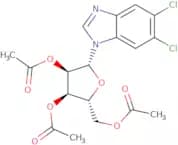
CAS:2'-Fluoro-cyclic-di-guanylate monophosphate sodium salt is a modified nucleotide that has antiviral and anticancer activities. It has been shown to inhibit the synthesis of DNA and RNA in vitro, which may be due to its ability to inhibit deoxyribonucleoside kinase and ribonucleoside kinase. 2'-Fluoro-cyclic-di-guanylate monophosphate sodium salt has also been shown to have anti-inflammatory properties, which may be due to its inhibition of prostaglandin synthesis.Formula:C20H20F2N10O12P2·2NaPurezza:Min. 95%Peso molecolare:738.36 g/mol5,6-Dichloropurine-1-(2,3,5-tri-O-acetyl-b-D-ribofuanosyl)-1H-benzimidazole
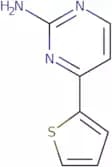
CAS:5,6-Dichloropurine-1-(2,3,5-tri-O-acetyl-b-D-ribofuranosyl)-1H-benzimidazole is an antiviral agent that has shown activity against RNA viruses. It is a modified nucleoside monophosphate that inhibits the synthesis of viral ribonucleic acid (RNA) by binding to the enzyme RNA polymerase. 5,6-Dichloropurine is also a novel anticancer drug with antiangiogenic and antitumor properties. The compound was found to be effective in inhibiting the growth of human cancer cells in vitro. 5,6-Dichloropurine has been shown to inhibit protein synthesis through inhibition of diphosphate activation of ribonucleotide reductase and DNA polymerase. This product is synthesized using high purity and high quality reagents with excellent yield. It can be used as anFormula:C18H18Cl2N2O7Purezza:Min. 95%Peso molecolare:445.25 g/mol2-Amino-4-(thien-2-yl)pyrimidine
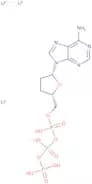
CAS:2-Amino-4-(thien-2-yl)pyrimidine is a bioavailable, water soluble antiallergy drug. 2-Amino-4-(thien-2-yl)pyrimidine has been shown to be effective against allergic asthma and other allergic diseases. It is thought to work by blocking the release of histamine from mast cells, thereby preventing the production of inflammatory prostaglandins and leukotrienes. This drug also blocks the response to allergies by inhibiting the release of IgE antibodies that bind to allergens. The therapeutic effect of 2-amino-4-(thien-2-yl)pyrimidine is repeatable and it does not cause any adverse effects on potassium or carbonate metabolism.Formula:C8H7N3SPurezza:Min. 95%Peso molecolare:177.23 g/mol2',3'-Dideoxyadenosine-5'-triphosphate lithium
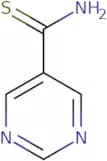
CAS:2',3'-Dideoxyadenosine-5'-triphosphate lithium salt is a nucleoside for use in research applicationsFormula:C10H16N5O11P3•Li3Purezza:Min. 95%Colore e forma:Clear liquid.Peso molecolare:496 g/molPyrimidine-5-carbothioic acid amide
CAS:Pyrimidine-5-carbothioic acid amide (PCA) is an organic compound that contains a pyrimidine ring and a carboxylic acid amide group. PCA forms crystalline solids with the molecular formula C4H10N2O4. The x-ray crystal structure of PCA has been determined, revealing the molecule to have a chair conformation with two hydrogen bonds. The molecule can be considered as stabilized by the base formation between the nitrogen atom in the pyrimidine ring and the oxygen atom in the carboxylic acid amide group. PCA has been used as a building block for other molecules, such as enamines, which are useful for computation studies. PCA is also an intermediate in chemical reactions involving nucleophilic substitution reactions and hydrogen abstraction reactions.Formula:C5H5N3SPurezza:Min. 95%Peso molecolare:139.18 g/mol8-Chloroguanosine
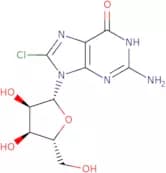
CAS:8-Chloroguanosine is a purine nucleoside that is activated by the addition of adenosine triphosphate (ATP). It reacts with DNA to form a covalent glycosidic bond. 8-Chloroguanosine has been found in urine samples and cell nuclei, as well as in activated and reactive sites in DNA. 8-Chloroguanosine is genotoxic and can cause oxidative damage to DNA. It also has potential as a biomarker for atherosclerosis, because it can be used to detect the group P2 phosphorylation status of proteins in lesions on arteries.Formula:C10H12ClN5O5Purezza:Min. 95%Colore e forma:SolidPeso molecolare:317.69 g/mol[U-13C10, U-15N2]-Labelled thymidine
Thymidine is a nucleoside that is a component of DNA and RNA. It is also the precursor for thymine, the DNA base in which the thymine ring is derived from. Thymidine has been shown to be an activator of DNA synthesis, as well as being anticancer and antiviral.Purezza:Min. 95%5-Bromo-deoxyuridine CPG
5-Bromo-deoxyuridine CPG is a novel nucleoside. The chemical name of this compound is 5-bromo-2'-deoxyuridine (CAS No. 2305-39-4). 5-Bromo-deoxyuridine CPG has been synthesized from diphosphate and phosphoramidite. It is used to produce the monophosphate form, which acts as an antiviral and anticancer agent.Purezza:Min. 95%2-Bromoadenosine
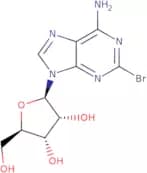
CAS:2-Bromoadenosine is a nucleoside that is structurally similar to adenosine. It has shown to have high resistance against blood pressure and l1210 cells. 2-Bromoadenosine also inhibits kinase activities in microns and spontaneous cell cultures, as well as chemical diversity. This drug has been shown to have high values in neurotransmission, carbonic anhydrase, cardiac muscle, and RNA synthesis. 2-Bromoadenosine blocks the receptor of adenine nucleotides, which causes cell death by inhibiting the production of adenosine. This product may be used for the treatment of cardiac disease or cancer.
Formula:C10H12BrN5O4Purezza:Min. 95%Colore e forma:PowderPeso molecolare:346.14 g/mol2'-Deoxyadenosine-5'-[(a,b)-methyleno]triphosphate sodium salt - 10 mM aqueous solution
CAS:2'-Deoxyadenosine-5'-[(a,b)-methyleno]triphosphate sodium salt - 10 mM aqueous solution is a molecule that binds to the epidermal growth factor receptor (EGFR). It is a nucleotide that is used in pharmaceutical preparations to treat certain types of cancer. This drug can be used in tissue culture to increase follicular growth and pge2 levels. 2'-Deoxyadenosine-5'-[(a,b)-methyleno]triphosphate sodium salt - 10 mM aqueous solution has been shown to inhibit the proliferation of monoclonal antibody-producing cells by inhibiting DNA synthesis through the inhibition of RNA polymerase II and polymerase chain reaction.Formula:C11H18N5O11P3·xNaPurezza:Min. 95%Colore e forma:PowderPeso molecolare:489.21 g/mol3'-Deoxy-3'-N-MMT-thymidine 5'-CE phosphoramidite
3'-Deoxy-3'-N-MMT-thymidine 5'-CE phosphoramidite is a modified nucleoside. It is used as an activator in the synthesis of DNA and RNA.Purezza:Min. 95%Uridine-2-13C
CAS:Uridine-2-13C is a modified nucleoside that is used as an anticancer agent. It is phosphorylated to uridine-2-13C diphosphate and can be used in DNA synthesis and as a radiolabel.
Formula:C9H12N2O6Purezza:Min. 95%Peso molecolare:245.19 g/molγ-(2-Azidoethyl)-ATP sodium, 10 mM aqueous solution
Please enquire for more information about γ-(2-Azidoethyl)-ATP sodium, 10 mM aqueous solution including the price, delivery time and more detailed product information at the technical inquiry form on this page
Formula:C12H19N8O13P3•NaxPurezza:Min. 95%5-Fluoro-1-(2'-deoxy-2'-fluoro-5'-O-trityl-b-L-lyxofuranosyl)-uracil
5-Fluoro-1-(2'-deoxy-2'-fluoro-5'-O-trityl-b-L-lyxofuranosyl)-uracil is a phosphoramidite, activator, and synthetic nucleoside that has been modified to contain fluorine atoms. 5-Fluoro-1-(2'-deoxy-2'-fluoro-5'-O-trityl-b-L-lyxofuranosyl)-uracil is an antiviral agent that was developed for the treatment of HIV/AIDS and cancer. It inhibits the synthesis of DNA by inhibiting the enzyme ribonucleotide reductase. This drug also has anticancer properties because it inhibits the synthesis of DNA in tumor cells and activates apoptosis, causing cell death.Purezza:Min. 95%1-(3',5'-Di-O-benzoyl-2'-deoxy-2'-fluoro-D-arabinofuranosyl)uracil
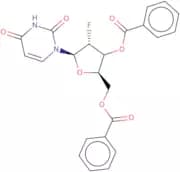
1-(3',5'-Di-O-benzoyl-2'-deoxy-2'-fluoro-D-arabinofuranosyl)uracil is a modified nucleoside that is an activator of DNA synthesis. It inhibits the activity of an enzyme called thymidine kinase and prevents the formation of the prodrug 5-fluorouracil. 1-(3',5'-Di-O-benzoyl-2'-deoxy-2'-fluoro-D-arabinofuranosyl)uracil has been shown to be active against a variety of cancer cells, including leukemia, skin cancer, and breast cancer. This drug also has antiviral and antimetabolite properties.Formula:C23H19N2O7FPurezza:Min. 95%Peso molecolare:454.4 g/mol1-(2'-Deoxy-5'-O-DMT-2'-fluoro-b-D-arabinofuranosyl)uracil 3'-CE phosphoramidite
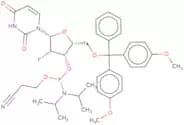
CAS:1-(2'-Deoxy-5'-O-DMT-2'-fluoro-b-D-arabinofuranosyl)uracil 3'-CE phosphoramidite is a novel nucleoside monophosphate that has been modified with fluorine at the 2' position and a deoxyribose sugar. 1-(2'-Deoxy-5'-O-DMT-2'-fluoro-b-D-arabinofuranosyl)uracil 3'-CE phosphoramidite may be useful for antiviral treatment, as it can inhibit human immunodeficiency virus type 1 (HIV1) replication in vitro by inhibiting HIV1 reverse transcriptase. This drug also has anticancer properties, which may be due to its ability to inhibit DNA synthesis or promote apoptosis.Formula:C39H46FN4O8PPurezza:Min. 95%Colore e forma:White To Off-White SolidPeso molecolare:748.8 g/mol1-(2',3'-Dideoxy-2',3'-didehydro-2'-fluoro-5'-O-trityl-b-L-ribofuranosyl)-uracil
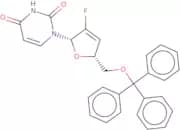
1-(2',3'-Dideoxy-2',3'-didehydro-2'-fluoro-5'-O-trityl-b-L-ribofuranosyl)-uracil is a synthetic nucleoside that is activated by phosphorylation. This nucleoside is an antiviral and anticancer agent, and has been shown to be active against HIV, cytomegalovirus, herpes simplex virus type 1, and lymphocytic leukemia cells. It has also been shown to have anti-inflammatory properties. The compound is a monophosphate and diphosphate, which are more potent than the corresponding ribonucleosides. 1-(2',3'-Dideoxy-2',3'-didehydro-2'-fluoro-5'-O-trityl-b-L-ribofuranosyl)-uracil has CAS number 26582, high purity, high quality.Formula:C28H23FN2O4Purezza:Min. 95%Peso molecolare:470.49 g/mol2'-Deoxy-5'-O-DMT-guanosine-(iBu)-succinyl CPG 1400 Å
2'-Deoxy-5'-O-DMT-guanosine-(iBu)-succinyl CPG 1400 Å is an antiviral, anticancer, and high purity monophosphate of 2'-deoxy-5'-O-DMT-guanosine. It is a novel nucleoside with a modified phosphate group. This product can be used to synthesize DNA and RNA, as well as in the treatment of cancer.Purezza:Min. 95%2,6-Diamino-9-(2'-deoxy-2'-fluoro-b-D-arabinofuranosyl)purine
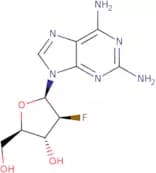
CAS:2,6-Diamino-9-(2'-deoxy-2'-fluoro-b-D-arabinofuranosyl)purine is a synthetic purine nucleoside analog. The fluorine substitution and sugar modification allow it to mimic natural nucleosides but disrupt DNA or RNA synthesis when incorporated. The fluorine makes the molecule more chemically stable and can influence how enzymes interact with it. Like other nucleoside analogs, it has the potential to act as a chain terminator or inhibit key enzymes like polymerases or reverse transcriptases.Formula:C10H13FN6O3Purezza:Min. 95%Colore e forma:White PowderPeso molecolare:284.25 g/molAcetoacetyl coenzyme A trisodium salt tetrahydrate
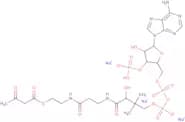
CAS:Acetoacetyl coenzyme A trisodium salt tetrahydrate is a novel antiviral agent that inhibits the synthesis of viral DNA and RNA. Acetoacetyl CoA has been shown to inhibit the replication of HIV, HSV-1 and HSV-2, influenza virus, and cytomegalovirus (CMV). The mechanism of action is not yet known but may be related to its ability to activate cellular DNA polymerase β. Acetoacetyl CoA also has a high purity and quality, as well as being modified for use in phosphoramidites.Formula:C25H37N7Na3O18P3S·4H2OPurezza:Min. 96 Area-%Colore e forma:PowderPeso molecolare:989.62 g/mol9-(2'-Deoxy-5'-O-DMT-2'-fluoro-b-D-arabinofuranosyl)-N2-isobutyrylguanine 3'-O-succinate triethylammonium salt
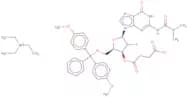
9-(2'-Deoxy-5'-O-DMT-2'-fluoro-b-D-arabinofuranosyl)-N2-isobutyrylguanine 3'-O-succinate triethylammonium salt is a modified nucleoside phosphoramidite. It is used as an antiviral and anticancer agent, as well as an activator in DNA synthesis. 9-(2'-Deoxy-5'-O-DMT-2'-fluoro-b-D-arabinofuranosyl)-N2-isobutyrylguanine 3'-O-succinate triethylammonium salt has been shown to be active against HIV, herpes simplex virus type 1, herpes simplex virus type 2, cytomegalovirus, influenza A virus, and human papillomavirus types 16 and 18.Formula:C39H39FN5O10·C6H16NPurezza:Min. 95%Peso molecolare:858.97 g/mol2'-13CCytidine
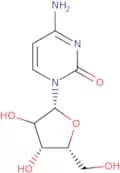
CAS:2'-13CCytidine is a cytidine nucleoside that inhibits the synthesis of RNA and DNA in cells. It is an analog of cytarabine, which is a pyrimidine nucleoside and an antineoplastic agent. 2'-13CCytidine has been shown to be effective as an antiviral agent against HIV-1 and HSV-2, as well as an immunosuppressant for the treatment of autoimmune diseases such as rheumatoid arthritis. This drug is used in chemotherapy to inhibit cell division in leukemia.Formula:CC8H13N3O5Purezza:Min. 95%Peso molecolare:244.21 g/molN6-Benzoyl-9-(2'-deoxy-5'-O-DMT-2'-fluoro-b-D-arabinofuranosyl)adenine 3'-CE phosphoramidite
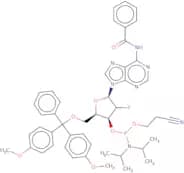
CAS:N6-Benzoyl-9-(2'-deoxy-5'-O-DMT-2'-fluoro-b-D-arabinofuranosyl)adenine 3'-CE phosphoramidite is an antiviral agent that inhibits the activity of viral DNA polymerase. This chemical has been shown to be effective against herpes virus, pox virus and HIV. N6-Benzoyl-9-(2'-deoxy-5'-O-DMT-2'-fluoro-b-D-arabinofuranosyl)adenine 3'-CE phosphoramidite is a novel nucleotide analogue that contains a modified deoxyribose sugar backbone. It has been shown to be active against cancer cells in vitro, but not in vivo.Formula:C47H51FN7O7PPurezza:Min. 95%Colore e forma:PowderPeso molecolare:875.95 g/mol5'-O-Acetyl-2',3'-dideoxyinosine
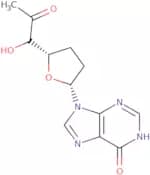
CAS:5'-O-Acetyl-2',3'-dideoxyinosine is a nucleoside analogue that inhibits viral replication. It is a potent activator of the immune system and has been shown to be effective against cancer cells. 5'-O-Acetyl-2',3'-dideoxyinosine was originally synthesized as an antiviral agent, but it was found to be ineffective in this function. The drug binds to the ribonucleotide reductase enzyme, which converts ribonucleotides into deoxyribonucleotides and is essential for the production of DNA. The drug blocks the conversion of ribonucleotides into deoxyribonucleotides, preventing DNA synthesis and replication. This drug has also been shown to have anticancer activity by inhibiting DNA synthesis and cell division.Formula:C12H14N4O4Purezza:Min. 95%Peso molecolare:278.26 g/mol2',3'-Di-O-acetyl-5'-O-DMT-5-methyluridine
2',3'-Di-O-acetyl-5'-O-DMT-5-methyluridine is a monophosphate nucleotide, which is an antiviral agent. It is a novel, high quality and high purity compound. The CAS number for 2',3'-Di-O-acetyl-5'-O-DMT-5-methyluridine is 69681-06-8. It has antiviral activity against the herpes simplex virus type 1 (HSV1) and Epstein Barr virus (EBV). This drug also inhibits DNA synthesis by inhibiting the enzyme DNA polymerase. This product can be used in research to synthesize phosphoramidites, activator molecules, and nucleosides.Purezza:Min. 95%2'-Deoxy-5-hydroxymethylcytidine 5'-monophosphate sodium salt
CAS:2'-Deoxy-5-hydroxymethylcytidine 5'-monophosphate sodium salt (2'-dO-5HmcMP) is a nucleoside analogue that inhibits the activity of reverse transcriptase, an enzyme required for replication of HIV. This compound is phosphorylated in vivo to 2'-dO-5HmcMP monophosphate, which then competitively inhibits the binding of dNTPs to the enzyme and prevents DNA synthesis. 2'-dO-5HmcMP also has anticancer activity and has been shown to inhibit the proliferation of cells in vitro. 2'-dO-5HmcMP has no significant toxicity to humans or other mammals.Purezza:Min. 95%1-(2-Deoxy- 2, 2- difluoro- b- D- xylofuranosyl)cytosine
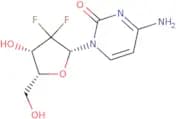
CAS:1-(2-Deoxy-2,2-difluoro-beta-D-xylofuranosyl)cytosine is a nucleoside (a compound consisting of a nucleotide base linked to a sugar). It is a modified form of cytosine that has been phosphorylated at the 2’ position. 1-(2-Deoxy-2,2-difluoro-beta-D-xylofuranosyl)cytosine has antiviral and anticancer activity through its ability to inhibit viral DNA synthesis and activate the immune system. This drug also has antitumor activity due to its ability to inhibit the tumor growth factor beta (TGFB). 1-(2-Deoxy-2,2-difluoro-beta-D -xylofuranosyl)cytosine can be used in cancer treatment as an anticancer agent.Formula:C9H11F2N3O4Purezza:Min. 95%Peso molecolare:263.2 g/molGuanosine 2',3'-cyclic phosphate triethylamine salt
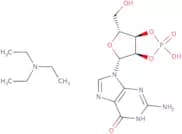
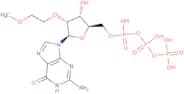
CAS:Guanosine 2',3'-cyclic phosphate triethylamine salt is a synthetic nucleoside that has antiviral and anticancer activity. It is a modified nucleoside with a cyclic phosphate group attached to the 2' position of the sugar ring. This modification prevents hydrolysis of the nucleotide by phosphodiesterases, which are enzymes that break down RNA and DNA. Guanosine 2',3'-cyclic phosphate triethylamine salt has been shown to be active against HIV-1, herpes simplex virus type 1 (HSV-1), HSV-2, and cytomegalovirus (CMV). It also inhibits the proliferation of various cancer cell lines including those from breast, prostate, lung, colon, and leukemia.Formula:C16H27N6O7PPurezza:Min. 95%Peso molecolare:446.4 g/mol2’-O-(2-Methoxyethyl)guanosine 5’-triphosphate ammonium salt
CAS:2’-O-(2-Methoxyethyl)guanosine 5’-triphosphate ammonium salt (2'OMeEtGTP) is an antiviral agent that is used as a component of an antiviral drug. It inhibits the viral enzyme DNA polymerase, which prevents viral replication and transcription. This compound has been shown to have anticancer properties in vitro and in vivo in rat models. 2'OMeEtGTP is synthesized by reacting the nucleoside phosphoramidite 2'OMeEtGTP with triethylammonium phosphate (TEAP).
Purezza:Min. 95%[(2R,3S,4R,5R)-5-(4-Benzamido-2-oxo-1,2-dihydropyrimidin-1-yl)-3-(benzoyloxy)-4-fluoro-4-methyloxolan-2-yl]methyl benzoate
CAS:[(2R,3S,4R,5R)-5-(4-Benzamido-2-oxo-1,2-dihydropyrimidin-1-yl)-3-(benzoyloxy)-4-fluoro-4-methyloxolan-2-yl]methyl benzoate is a novel anticancer drug that selectively inhibits the proliferation of cancer cells. It binds to the DNA and RNA in tumor cells to inhibit nucleotide synthesis and leads to cell death. This product has high purity and is modified for use.Formula:C31H26FN3O7Purezza:Min. 95%Peso molecolare:571.6 g/mol9-(b-L-Arabinofuranosyl)guanine
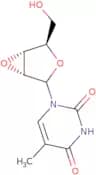
CAS:9-(b-L-Arabinofuranosyl)guanine (9-Araf) is a nucleoside analogue that is used as an antiviral and anticancer agent. It is synthesized by the reaction of 2,4-diaminopyrimidine with b-L-arabinofuranosyl chloride. This product is soluble in water and ethanol. 9-(b-L-Arabinofuranosyl)guanine has antiviral activity against Herpes simplex virus type 1, herpes simplex virus type 2, cytomegalovirus, and Epstein Barr Virus. In addition to its antiviral activity, 9-(b-L-Arabinofuranosyl)guanine also has anticancer activity against human cancer cells and has been shown to inhibit the growth of leukemic cells in mice.Formula:C10H13N5O5Purezza:Min. 95%Peso molecolare:283.24 g/mol2',3'-Anhydrothymidine
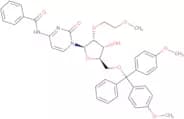
CAS:2',3'-Anhydrothymidine is a nucleoside analogue that has been shown to inhibit HIV-1 transcriptase and polymerase by binding to the enzyme's active site. It also inhibits DNA synthesis in human cells and inhibits the growth of E. coli. 2',3'-Anhydrothymidine is a prodrug that can be taken up by cells, where it is converted into an epoxide, which then binds to the enzyme's active site. This prevents the enzyme from catalyzing reactions and terminating DNA synthesis at the correct point during transcription. 2',3'-Anhydrothymidine may also have immunodeficiency-related benefits due to its ability to bind more tightly to dsDNA than natural nucleotides, causing termination of RNA synthesis at the wrong point.Formula:C10H12N2O5Purezza:Min. 95%Peso molecolare:240.21 g/molN4-Benzoyl-5'-O-DMT-2'-O-(2-methoxyethyl)cytidine
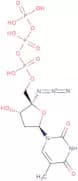
CAS:N4-Benzoyl-5'-O-DMT-2'-O-(2-methoxyethyl)cytidine is a novel ribonucleotide that has been shown to inhibit the growth of cancer cells. It has been synthesized in high purity and quality, with a high phosphoramidite content, and is available in various quantities. This product is an activator of DNA polymerase and can be used as a monophosphate or diphosphate precursor for nucleic acid synthesis. It has antiviral properties, and may be useful in the treatment of HIV infection.Formula:C40H41N3O9Purezza:Min. 95%Colore e forma:White Off-White PowderPeso molecolare:707.77 g/mol4'-Azidothymidine 5-triphosphate
CAS:4'-Azidothymidine 5-triphosphate (4AZTTP) is a deoxyribonucleoside that has been synthesized as an analog to thymidine. It has potent inhibitory activity against human immunodeficiency virus (HIV), and has been shown to be more effective than 2',3'-dideoxyinosine in inhibiting HIV replication. 4AZTTP inhibits the viral enzyme reverse transcriptase, which is crucial for the replication of HIV. This drug is activated by cellular enzymes and phosphorylated to 4'-azidothymidine 5'-triphosphate monophosphate, which can then bind to the viral DNA template and inhibit synthesis of RNA strands. The kinetic properties of 4AZTTP have been studied in detail using human lymphocytes as a model system for HIV infection.Formula:C10H16N5O14P3Purezza:Min. 95%Peso molecolare:523.18 g/mol4'-C-Azido-3'-deoxy-3'-fluorouridine
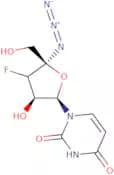
CAS:4'-C-Azido-3'-deoxy-3'-fluorouridine (4-CADU) is a novel nucleoside that has been shown to have antiviral and anticancer activities. 4-CADU is synthesized as a monophosphate, which undergoes dephosphorylation by phosphatases to form the corresponding ribonucleotide. The phosphate group is then removed through hydrolysis by esterases or glucuronidases and the product of this reaction is an erythromycin intermediate that can be converted to 4-CADU in vitro. This drug has also been shown to inhibit the growth of bacteria such as Mycobacterium tuberculosis and Mycobacterium avium complex.
Formula:C9H10FN5O5Purezza:Min. 95%Peso molecolare:287.2 g/mol5'-O-DMT-2'-O-hexylamino-5-methyluridine
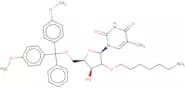
CAS:5'-O-DMT-2'-O-hexylamino-5-methyluridine is a nucleoside analog that is used in cancer treatment. It is synthesized by the chemical modification of uridine, which is converted to 5'-O-DMT-2'-O-hexylamino-5-methyluridine by reacting with 2',3'-dideoxyadenosine and 5,6,7,8,-tetrahydroisoquinoline. The monophosphate form of 5'-O-DMT-2'-O-hexylamino-5-methyluridine may be converted to the diphosphate form by phosphorylation with ATP. In addition to its anticancer effects, 5'-O-DMT-2'-O-hexylamino-5-methyluridine has antiviral and antiretroviral effects due to its inhibition of viral DNA synthesis.Formula:C37H45N3O8Purezza:Min. 95%Peso molecolare:659.79 g/mol9-(2-C-Methyl-b-D-ribofuranosyl)purine
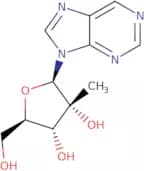
CAS:9-(2-C-Methyl-b-D-ribofuranosyl)purine is a nucleoside that is used as an activator in the synthesis of phosphoramidites. 9-(2-C-Methyl-b-D-ribofuranosyl)purine has antiviral and anticancer properties, and it also inhibits the growth of bacteria. This nucleoside is synthesized from 2,4,6-trichlorophenylisocyanate and 5'-O-(4,4'-dimethoxytrityl)-beta-D-ribofuranose. The chemical name for 9-(2-C methyl b D ribofuranosyl)purine is 690269 - 86 - 4.Formula:C11H14N4O4Purezza:Min. 95%Peso molecolare:266.25 g/mol2',5'-Bis-O-(triphenylmethyl)uridine
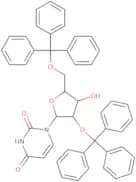
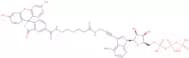
CAS:2',5'-Bis-O-(triphenylmethyl)uridine is a synthetic nucleoside that is used in the treatment of leukemia. It is used as an analogue of uridine and guanosine, and is converted to these compounds by decarboxylase enzymes. 2',5'-Bis-O-(triphenylmethyl)uridine has been shown to inhibit the proliferation of L1210 cells in vitro and in vivo, but not normal cells. 2',5'-Bis-O-(triphenylmethyl)uridine also inhibits DNA synthesis by inhibiting the enzyme hydroxylase and carboxylate, which are involved in purine metabolism. This drug binds to the ribonucleotide reductase enzyme and blocks its activity, thereby inhibiting RNA synthesis.Purezza:Min. 95%Fluorescein alkynylamino-ATP - 1.0 mM solution
CAS:Fluorescein alkynylamino-ATP is a fluorescent nucleotide analog that is used in molecular biology for the detection of DNA. It is labeled with tetramethylrhodamine, which can be detected using a fluorescence microscope. Fluorescein alkynylamino-ATP is a postsynthetic modification to DNA, which means it is added after the DNA has been synthesized. This molecule can be incorporated into the growing strand by either monoaddition or polymerase extension. Fluorescein alkynylamino-ATP binds to the 3' end of a primer during polymerase chain reaction (PCR) and can be detected using electrophoresis and sequence analysis.Formula:C41H41N6O20P3Purezza:Min. 95%Peso molecolare:1,030.71 g/mol




![5'-Deoxy-5-fluoro-N-[(2-methylbutoxy)carbonyl]cytidine](/_next/image/?url=https%3A%2Fstatic.cymitquimica.com%2Fproducts%2F3D%2Fthumb-webp%2FND16526.webp&w=3840&q=75)

![[U-13C10, U-15N2]-Labelled thymidine](/_next/image/?url=https%3A%2Fstatic.cymitquimica.com%2Fproducts%2F3D%2Fthumb-webp%2FNL32196.webp&w=3840&q=75)

![2'-Deoxyadenosine-5'-[(a,b)-methyleno]triphosphate sodium salt - 10 mM aqueous solution](/_next/image/?url=https%3A%2Fstatic.cymitquimica.com%2Fproducts%2F3D%2Fthumb-webp%2FND46688.webp&w=3840&q=75)