


Nucleosidi
Trovati 3569 prodotti di "Nucleosidi"
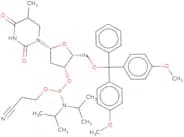
5,6-Dihydro-5'-O-DMT-thymidine 3'-CE phosphoramidite
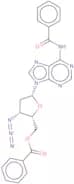
This is a synthetic DNA analogue that is used in the synthesis of oligonucleotides. It is a phosphoramidite in which the 5,6-dihydro-5'-O-DMT group has been modified to allow for incorporation into DNA and RNA. This compound has antiviral and anticancer activities.Formula:C40H51N4O8PPurezza:Min. 95%Peso molecolare:746.83 g/mol3'-Azido-N6-benzoyl-5'-O-benzoyl-2',3'-dideoxyadenosine
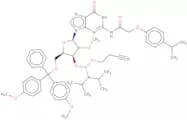
3'-Azido-N6-benzoyl-5'-O-benzoyl-2',3'-dideoxyadenosine is a novel nucleoside analogue with high purity and quality. It is a DNA activator that has been shown to be active against both RNA and DNA viruses. 3'-Azido-N6-benzoyl-5'-O-benzoyl-2',3'-dideoxyadenosine phosphorylates to the corresponding monophosphate, which inhibits viral DNA synthesis by competitive inhibition of diphosphate formation. This compound has also been shown to be an effective inhibitor of HIV replication in vitro.Formula:C24H20N8O4Purezza:Min. 95%Peso molecolare:484.47 g/mol5'-O-DMT-N2-(4-isopropylphenoxyacetyl)-2'-O-methylguanosine 3'-CE phosphoramidite
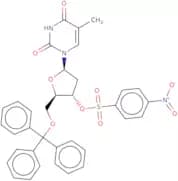
This is a phosphoramidite that is used in the synthesis of DNA. The chemical name for this compound is 5'-O-DMT-N2-(4-isopropylphenoxyacetyl)-2'-O-methylguanosine 3'-CE phosphoramidite. This compound has been shown to be an anticancer drug and has high purity, high quality, and novel properties.Formula:C52H62N7O10PPurezza:Min. 95%Colore e forma:White PowderPeso molecolare:976.09 g/mol1-(3'-O-Nosyl-5'-O-trityl-2'-deoxy-b-D-lyxofuranosyl)thymine
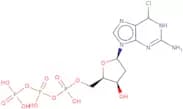
CAS:Ribonucleosides are nucleosides that contain ribose as their pentose sugar. Ribonuclesides are synthetic, modified ribonucleosides that have been modified to include a 2'-deoxy-b-D-lyxofuranosyl group at the 3' position. Ribonuclesides activate antiviral activity by inhibiting viral DNA synthesis and protein synthesis. They also inhibit cancer cell proliferation by inhibiting DNA synthesis and RNA synthesis.Formula:C35H31N3O9SPurezza:Min. 95%Peso molecolare:669.7 g/mol2-Amino-6-chloro-9-(2'-deoxy-b-D-ribofuranosyl)purine-5'-triphosphate
2-Amino-6-chloro-9-(2'-deoxy-b-D-ribofuranosyl)purine-5'-triphosphate is a novel synthetic nucleoside analog with antiviral and anticancer properties. It is an activator of ribonucleotide reductase, which converts ribonucleotides to deoxyribonucleotides. 2-Amino-6-chloro-9-(2'-deoxy-b-D-ribofuranosyl)purine has been shown to be effective against human leukemia cells in vitro and in vivo.
Formula:C10H17ClN5O12P3Purezza:Min. 95%Peso molecolare:527.64 g/molN4-Acetyl-2'-deoxy-2'-fluoro-5'-O-DMT-cytidine 3'-O-succinate
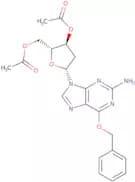
N4-Acetyl-2'-deoxy-2'-fluoro-5'-O-DMT-cytidine 3'-O-succinate is a synthetic nucleoside that has antiviral activity. It is a modification of the natural nucleoside cytidine, where the 4th position of the ribose ring is substituted with an acetyl group and the 2' position of the sugar moiety is substituted with a 2' deoxyribofuranosyl group. N4-Acetyl-2'-deoxy-2'-fluoro-5'-O-DMT-cytidine 3'-O-succinate inhibits viral replication by inhibiting viral RNA synthesis. Its antiviral properties may be due to its ability to inhibit DNA polymerase and reverse transcriptase, which are enzymes that synthesize DNA from RNA.Purezza:Min. 95%3',5'-Di-O-acetyl O6-benzyl-2'-deoxyguanosine
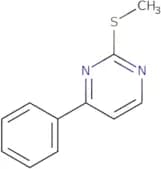
CAS:3',5'-Di-O-acetyl O6-benzyl-2'-deoxyguanosine is a novel antiviral agent that is synthesized as a deoxyribonucleoside monophosphate. It inhibits viral DNA polymerase and RNA synthesis by competitively inhibiting the incorporation of diphosphates into viral DNA. It has been shown to be active against herpes simplex virus type 1 and 2, vaccinia virus, influenza A virus, and Sindbis virus. 3',5'-Di-O-acetyl O6-benzyl-2'-deoxyguanosine has also been shown to have anticancer properties in vitro and in vivo.Formula:C21H23N5O6Purezza:Min. 95%Peso molecolare:441.44 g/mol2-Methylsulfanyl-4-phenylpyrimidine
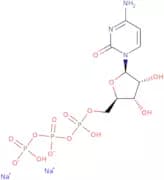
CAS:2-Methylsulfanyl-4-phenylpyrimidine is a heterocyclic compound that has been shown to be an effective anti-malarial agent. The drug inhibits the growth of malaria parasites by binding to the parasite's DNA and preventing its replication. 2-Methylsulfanyl-4-phenylpyrimidine also recycles the monocyclic pyrimidines, which are nucleophiles, and therefore can be used as a precursor for other drugs. 2-Methylsulfanyl-4-phenylpyrimidine is not very soluble in water but is soluble in organic solvents such as ethanol, propylene glycol, or acetone. It has also been found to form stable salts with perchlorate and guanidine.Purezza:Min. 95%Cytidine-5'-triphosphate
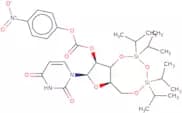
CAS:Cytidine-5'-triphosphate is a nucleotide that is involved in the biosynthesis of fatty acids. It is synthesized by the enzyme cytidine triphosphate synthetase and converted to cytidine diphosphate (CDP) by the enzyme CTP synthetase. The nitrogen atoms are derived from ammonia. Cytidine-5'-triphosphate is found in mitochondria, where it participates in lipid synthesis. Cytidine-5'-triphosphate may also be used to treat cancer. This drug has been shown to inhibit tumor growth and metastasis, as well as induce apoptosis in cancer cells.Purezza:Min. 95%3',5'-O-(1,1,3,3-Tetraisopropyl-1,3-disiloxanediyl)-2'-(p-nitrophenylcarbonyloxy)uridine
CAS:3',5'-O-(1,1,3,3-Tetraisopropyl-1,3-disiloxanediyl)-2'-(p-nitrophenylcarbonyloxy)uridine is a novel phosphoramidite. It is modified with p-nitrophenyl carbonyloxy group at the 3' position of the uracil moiety. This phosphoramidite has antiviral activity against Hepatitis C and HIV. It also has anticancer activity in vitro and in vivo. 3',5'-O-(1,1,3,3-Tetraisopropyl-1,3-disiloxanediyl)-2'-(p-nitrophenylcarbonyloxy)uridine is a nucleoside that can be used for DNA synthesis or as a monophosphate or diphosphate for RNA synthesis. It is synthesized from deoxyFormula:C28H41N3O11Si2Purezza:Min. 95%Peso molecolare:651.81 g/molKinetin riboside-5'-diphosphate sodium salt
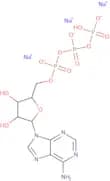
Kinetin riboside-5'-diphosphate sodium salt is a synthetically modified nucleoside that is used as an activator for DNA synthesis and in the treatment of cancer. Kinetin riboside-5'-diphosphate sodium salt has been shown to have antiviral and anticancer effects, as well as being able to modify the activity of natural substances such as kinetin. This compound has been shown to inhibit tumor growth and reduce the size of some types of tumors in mice. It also inhibits viral replication by blocking viral RNA polymerase activity and inhibiting viral protein synthesis.Purezza:Min. 95%Adenosine 5'-triphosphate trisodium salt
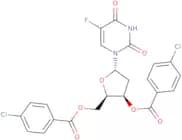
CAS:ATP is an important molecule in the body that is involved in a number of cellular processes, including energy production and transmission. It has been shown to be tumorigenic and is found at high levels in plasma membranes and muscle cells. ATP binds to the adenylate cyclase enzyme in the cell membrane and stimulates its activity, which increases intracellular levels of cyclic AMP (cAMP). Cyclic AMP activates protein kinase A, which phosphorylates proteins, leading to a cascade of reactions that result in cellular changes. ATP also has pharmacological effects on the plasma membrane by increasing its permeability to certain ions such as potassium ions. This leads to an increase in the rate of depolarization of the cell membrane, which causes an influx of calcium ions into the cell.Formula:C10H15N5O13P3Na3Purezza:Min. 95%Peso molecolare:575.14 g/mol3',5'-Di-O-p-chlorobenzoyl-2'-deoxy a-5-fluorouridine
CAS:3',5'-Di-O-p-chlorobenzoyl-2'-deoxy a-5-fluorouridine is a nucleoside that is used in the antiviral drug Aciclovir. It is an analog of 2'-deoxyadenosine and inhibits viral DNA synthesis by acting as a chain terminator. 3',5'-Di-O-p-chlorobenzoyl-2'-deoxy a-5-fluorouridine has shown some anticancer activity against human tumor cells in culture, but its mechanism of action is not well understood.
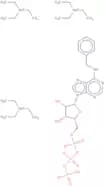
Formula:C23H17Cl2FN2O7Purezza:Min. 95%Peso molecolare:523.29 g/molN6-Benzyladenosine 5'-triphosphate triethylammonium salt
CAS:N6-Benzyladenosine 5'-triphosphate triethylammonium salt is a hydrogen bond donor that is not naturally occurring. It has been shown to be a potent and selective analog of ATP with high specificity for cGMP-dependent protein kinase. This drug has been used to study the function of serotonin receptors, tyrosine kinases, and epidermal growth factor receptors. N6-Benzyladenosine 5'-triphosphate triethylammonium salt has also been shown to increase the sensitivity of cells to epidermal growth factor and to inhibit the reuptake of serotonin.END>Formula:C19H26N5O11P3·C18H48N3Purezza:Min. 95%Peso molecolare:899.95 g/mol3'-Azido-3'-deoxythymidine-5'-triphosphate lithium salt - 100mM aqueous solution
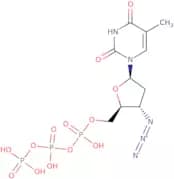
CAS:3'-Azido-3'-deoxythymidine-5'-triphosphate lithium salt - 100mM aqueous solution is an inhibitor of the enzyme kinase. The active form of 3'-Azido-3'-deoxythymidine-5'-triphosphate lithium salt - 100mM aqueous solution inhibits human immunodeficiency virus (HIV) reverse transcriptase, preventing the synthesis of viral DNA. 3'-Azido-3'-deoxythymidine-5'-triphosphate lithium salt - 100mM aqueous solution has been shown to inhibit cancer cell growth in culture and to inhibit cancer cell proliferation in mice. This compound is also active against cancer cells that are resistant to other anti-cancer drugs. 3'-Azido-3'-deoxythymidine-5'-triphosphate lithium salt - 100mM aqueous solution is phosphorylated by cellular kinases, which may beFormula:C10H16N5O13P3·xLiPurezza:Min. 95%Colore e forma:Colorless Clear LiquidPeso molecolare:507.18 g/mol3'-O-Acetyl-5'-O-tert-butyldiphenylsilyl-2'-deoxy-2'-fluorothymidine
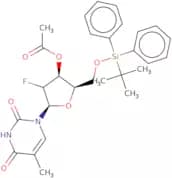
3'-O-Acetyl-5'-O-tert-butyldiphenylsilyl-2'-deoxy-2'-fluorothymidine is an antiviral agent that inhibits the production of virus particles by inhibiting DNA and RNA synthesis. It is a modified nucleoside analog that has been shown to inhibit the proliferation of tumor cells in vitro and in vivo. This drug has also been shown to be effective against leukemia and lymphoma cells, as well as other types of cancer cells. 3'-O-Acetyl-5'-O-tert-butyldiphenylsilyl-2'-deoxy-2'-fluorothymidine is used for the treatment of AIDS, hepatitis B, hepatitis C, herpes zoster (shingles), and other diseases caused by viruses. It can be administered orally or intravenously.Formula:C28H33FN2O6SiPurezza:Min. 95%Peso molecolare:540.66 g/mol2-Amino-N6-isopentenyladenosine
CAS:2-Amino-N6-isopentenyladenosine is a nucleoside that is an activator of ribonucleotide reductase. It has antiviral properties and can be used as a therapeutic agent for HIV infection. 2-Amino-N6-isopentenyladenosine is also known to have anticancer properties, although it is not well studied.Purezza:Min. 95%2-Methylthioadenosine-5'-triphosphate
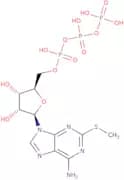
CAS:2-Methylthioadenosine-5'-triphosphate (2MeSATP) is a nucleotide analogue that inhibits the synthesis of ATP by binding to the adenylate cyclase enzyme. 2MeSATP has been shown to be a potent inhibitor of neuronal death and is used as a tool in cellular research. 2MeSATP binds to guanine nucleotide-binding protein (G protein), which inhibits its activity and prevents the activation of other downstream enzymes, such as phospholipase C, which are necessary for neurotransmitter release. 2MeSATP also has an inhibitory effect on several other enzymes, including phosphodiesterases and cyclases, in cellular models and whole cells.Formula:C11H18N5O13P3SPurezza:Min. 95%Peso molecolare:553.27 g/molN2-Phenoxyacetyl-3',5'-O-(1,1,3,3-tetraisopropyl-1,3-disiloxanediyl)guanosine
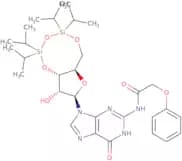
CAS:N2-Phenoxyacetyl-3',5'-O-(1,1,3,3-tetraisopropyl-1,3-disiloxanediyl)guanosine is an anticancer nucleoside with antiviral and antimalarial activities. This compound has been shown to inhibit the growth of human leukemia cells in vitro and has a pharmacokinetic profile suitable for use in humans. N2-Phenoxyacetyl-3',5'-O-(1,1,3,3-tetraisopropyl-1,3-disiloxanediyl)guanosine is a novel nucleotide analog with high purity and quality.Formula:C30H45N5O8Si2Purezza:Min. 95%Peso molecolare:659.88 g/mol5'-O-tert-Butyldimethylsilyl-7-deaza-2'-deoxy-7-iodoadenosine
5'-O-tert-Butyldimethylsilyl-7-deaza-2'-deoxy-7-iodoadenosine is an antiviral drug that has been shown to inhibit the synthesis of viral RNA by inhibiting the activity of DNA polymerase. It is a novel antiviral drug with high purity and can be used for cancer treatment as well. 5'-O-tert-Butyldimethylsilyl-7-deaza-2'-deoxy-7-iodoadenosine also has a novel mechanism of action, which is different from other antiviral drugs such as ribonucleosides or deoxyribonucleosides. This compound is used in the synthesis of phosphoramidites for oligonucleotide synthesis.Formula:C17H27IN4O3SiPurezza:Min. 95%Peso molecolare:490.41 g/mol5-Fluoro-2',3'-O-isopropylidenecytidine
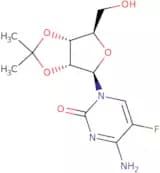
CAS:5-Fluoro-2',3'-O-isopropylidenecytidine is a modified nucleoside that has antiviral and anticancer properties. It is a diphosphate of cytidine, with a fluorine atom in the 2'-position and an isopropyl group in the 3'-position. 5-Fluoro-2',3'-O-isopropylidenecytidine is synthesized by reacting 5-fluorocytidine with isopropylamine. This novel compound has been shown to have high quality, high purity, and improved biological activity as compared to other nucleosides.Formula:C12H16FN3O5Purezza:Min. 95%Peso molecolare:301.27 g/mol2',3'-Dideoxyinosine-5'-triphosphate triethylammonium salt
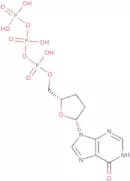
CAS:2',3'-Dideoxyinosine-5'-triphosphate triethylammonium salt (ddI-TP) is a nucleoside analog that inhibits HIV replication by competing with natural nucleosides for binding to HIV reverse transcriptase. ddI-TP acts as an inhibitor of human mitochondrial DNA polymerase γ, and blocks the synthesis of fatty acids in mouse cells. It is also able to inhibit signal pathways involving protein kinases and phosphatases. ddI-TP has been shown to be effective against hiv infection in mice. This drug can be used in the treatment of hiv infection, as well as in the prevention of its transmission from mother to child during pregnancy and breastfeeding.Formula:C10H15N4O12P3Purezza:Min. 95%Peso molecolare:476.17 g/mol5'-O-Acetyl-2',3'-O-isopropylideneadenosine
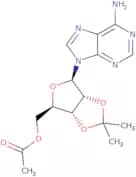
CAS:5'-O-Acetyl-2',3'-O-isopropylideneadenosine is an anti-leishmanial agent that is synthesized from 2,3-O-isopropylideneadenosine by acetylating the 5' hydroxyl group. It was found to be more potent than the parent compound and other related compounds in inhibiting Leishmania amazonensis promastigotes. The proposed mechanism of action of 5'-O-acetyl-2',3'-O-isopropylideneadenosine involves hydrogen bonding with the guanosine moiety of DNA and inhibition of RNA synthesis. This drug also has an effect on carbonyl oxygens and resonances, which are observed in the nmr spectra. The synthetic scheme for this drug starts with uridine, which is converted to cytidine by reacting it with sodium cyanide in aqueous solution at 0°C. Cytidine
Formula:C15H19N5O5Purezza:Min. 95%Colore e forma:PowderPeso molecolare:349.34 g/mol5'-Phosphoguanylyl-(3'->5')-guanosine sodium
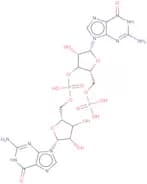
CAS:pGpG, linear diguanylate, is the first phosphodiesterase-catalyzed hydrolysis product of cylic di-GMP (c-diGMP). c-diGMP has been identified as a novel second messenger in bacteria that triggers various physiological changes such as virulence gene expression or cell differentiationFormula:C20H26N10O15P2·xNaPurezza:Min. 95 Area-%Colore e forma:PowderPeso molecolare:708.43 g/mol2'-Deoxy-2'-fluoroguanosine-5'-monophosphate
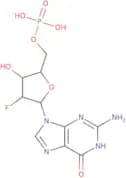
CAS:2'-Deoxy-2'-fluoroguanosine-5'-monophosphate is a phosphoramidite monoester with a diphosphate group that has been synthetically modified to provide antiviral and anticancer activity. It is an activator of DNA synthesis and inhibits the proliferation of tumor cells by interfering with DNA replication. The compound is also used as a precursor for the synthesis of 2'-deoxy-2'-fluoroguanosine, which has potent anti-HIV activity.Formula:C10H13FN5O7PPurezza:Min. 95%Peso molecolare:365.21 g/mol2'-Deoxy-5'-O-DMT-N4-isobutyrylcytidine
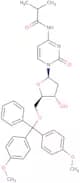
CAS:2'-Deoxy-5'-O-DMT-N4-isobutyrylcytidine is a monophosphate nucleoside analog that has antiviral activity against the Herpes virus. It is a cytosine analog that is incorporated into DNA and inhibits viral replication. 2'-Deoxy-5'-O-DMT-N4-isobutyrylcytidine has also been shown to have anticancer properties and high purity. This compound is synthesized by the reaction of 2'-deoxycytidine and 4-(2,2,2,-trimethylpropionyl)-1,3-butanediol with O-(7-azabenzotriazol-1-yl) N,N,N',N' tetramethyluronium hexafluorophosphate (HATU) in anhydrous pyridine. The CAS number for this compound is 10089862.Formula:C34H37N3O7Purezza:Min. 95%Peso molecolare:599.69 g/molXTT, sodium salt
CAS:XTT is a tetrazolium compound that can be used to measure the activity of enzymes. It has been shown to inhibit the growth of tumor cells in vitro and in vivo. XTT can also be used as an antibacterial agent against C. glabrata and as an anthelmintic drug against tapeworms. This compound is not active against other bacteria, such as E. coli or S. aureus, because they are resistant to oxidative injury and have high levels of ABCG2 (ATP-binding cassette G2), which prevents intracellular accumulation of XTT.Formula:C22H16N7NaO13S2Peso molecolare:673.53 g/molRef: 3D-X-5000
1gPrezzo su richiesta100mgPrezzo su richiesta250mgPrezzo su richiesta500mgPrezzo su richiesta2500mgPrezzo su richiesta-Unit-ggPrezzo su richiesta2-Amino-6-chloro-9-(2-deoxy-3,5-di-O-benzoyl-2-fluoro-b-D-arabinofuranosyl)purine
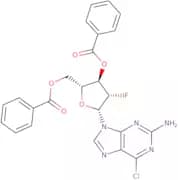
CAS:2-Amino-6-chloro-9-(2-deoxy-3,5-di-O-benzoyl-2-fluoro-b-D-arabinofuranosyl)purine is a novel modified nucleoside with antiviral activity. It has been shown to inhibit the replication of the influenza A virus in cell culture and animal models. 2′Amino-6′chloro 9-(2′deoxy 3′,5′di O′benzoyl 2′fluoro b D arabinofuranosyl)purine is an analog of adenosine that has shown anticancer activity in vitro and in vivo. It inhibits DNA synthesis by inhibiting deoxyribonucleotide synthesis and ribonucleotide synthesis. This drug also inhibits cell proliferation and induces apoptosis.Formula:C24H19ClFN5O5Purezza:Min. 95%Peso molecolare:511.89 g/mol3'-O-tert-Butyldimethylsilyl-5'-O-DMT-adenosine
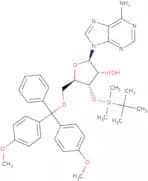
CAS:3'-O-tert-Butyldimethylsilyl-5'-O-DMT-adenosine is a nucleoside that is used in the synthesis of oligonucleotides. It is a modified nucleoside that can be used as an antiviral or anticancer agent. It has been shown to have high purity and quality. The synthesis of this compound involves the use of a novel activator, which is also available for purchase from this website. This nucleoside has been modified with tert-butyldimethylsilyl groups at the 3' and 5' positions of the ribose moiety, which prevents the hydrolysis of the phosphate ester bond by alkaline phosphatase enzymes, thus allowing for sequence determination.Purezza:Min. 95%5-Fluoro-O4-(2,4,6-trimethylphenyl)-2'-deoxyuridine
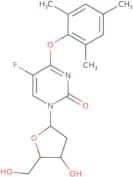
CAS:5-Fluoro-O4-(2,4,6-trimethylphenyl)-2'-deoxyuridine is a novel monophosphate nucleotide activated with 2,4,6-trimethylphenyl (TMP) and used as a building block in the synthesis of oligonucleotides. The synthesized nucleoside can be converted to a diphosphate or phosphoramidite. 5-Fluoro-O4-(2,4,6-trimethylphenyl)-2'-deoxyuridine is an anticancer agent that inhibits DNA synthesis by inhibiting ribonucleic acid (RNA) synthesis. It has been shown to inhibit the proliferation of human leukemia cells and may have potential for use in therapy for cancer treatment.Formula:C18H21FN2O5Purezza:Min. 95%Peso molecolare:364.4 g/mol1,3-Dimethyl-5-[4-(4,4,5,5-tetramethyl-[1,3,2]dioxaborolan-2-yl)-benzyl]-pyrimidine-2,4,6-trione
CAS:1,3-Dimethyl-5-[4-(4,4,5,5-tetramethyl-[1,3,2]dioxaborolan-2-yl)-benzyl]-pyrimidine-2,4,6-trione is an organic semiconductor material. It is a dielectric with a high transition temperature and good electrical conductivity. This compound is a metal silicide with a low resistivity and high electron mobility. It can be used as an active layer in thin film transistors or as a field effect transistor channel material. 1,3-Dimethyl-5-[4-(4,4,5,5-tetramethyl-[1,3,2]dioxaborolan-2-yl)-benzyl]-pyrimidine-2,4,6-trione has been shown to have good chemical stability and thermal stability in air at temperatures up to 400°C.Purezza:Min. 95%Adenylosuccinic acid
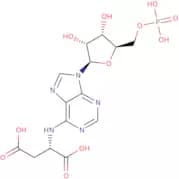
CAS:Adenylosuccinic acid is an organic acid that is synthesized through the deamination of adenosine monophosphate. It is used in transfection experiments to inhibit polymerase chain reaction (PCR) and reverse transcriptase. Adenylosuccinic acid inhibits DNA synthesis by targeting enzymes such as the ribonucleotide reductase and the DNA polymerase β-subunit. Adenylosuccinic acid also inhibits protein synthesis, which may be due to its ability to inhibit energy metabolism, leading to cellular death. This drug has been shown to have a wide range of pharmacological effects, including anti-inflammatory, analgesic, and antifungal activity.
Formula:C14H18N5O11PPurezza:Min. 95%Colore e forma:PowderPeso molecolare:463.29 g/mol5'-O-DMT-2'-O-(2-methoxyethyl)uridine 3'-CE phosphoramidite
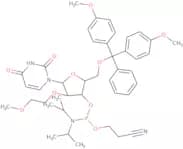
CAS:Building block for the introduction of uridine units into oligonucleotidesFormula:C42H53N4O10PPurezza:Min. 95%Peso molecolare:804.86 g/mol2,3'-Anhydro-1-b-D-fructofuranosyluracil
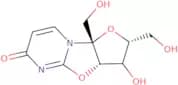
CAS:2,3'-Anhydro-1-b-D-fructofuranosyluracil is a novel nucleoside that is activated by phosphorylation. It is a potential antiviral and anticancer agent. This compound has shown to be an effective inhibitor of HIV replication in vitro. It has also been shown to inhibit the growth of human cancer cells in vitro and in vivo.Formula:C10H12N2O6Purezza:Min. 95%Peso molecolare:256.21 g/mol2'-TFA-NH-dC
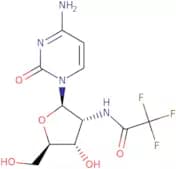
CAS:2'-TFA-NH-dC is a novel nucleoside analogue that has been modified to have antiviral and anticancer properties. The chemical structure of 2'-TFA-NH-dC closely resembles dC, which is a natural DNA nucleotide, but with the addition of an extra fluorine atom at the 2' position. This modification increases the potency of 2'-TFA-NH-dC by making it more difficult for enzymes in cells to break down the drug. The compound can be used as a monophosphate or diphosphate, and is synthesized from 2'-deoxyadenosine 5'-phosphoramidite and 1,2,4-triazole in water.Formula:C11H13F3N4O5Purezza:Min. 95%Peso molecolare:338.24 g/mol1,2,3-Triazole-4-carboxamide, 5-b-D-ribofuranosyl-5'-triphosphate-nucleoside triethyl ammonium salt
1,2,3-Triazole-4-carboxamide, 5-b-D-ribofuranosyl-5'-triphosphate-nucleoside triethyl ammonium salt is a phosphoramidite that belongs to the class of ribonucleosides. It has been shown to be effective against viral diseases and cancer. The novel modifications in this nucleoside include the incorporation of a triethyl ammonium salt. This nucleoside has been shown to be active against HIV and cytomegalovirus (CMV). 1,2,3-Triazole-4-carboxamide, 5-b-D ribofuranosyl -5'-triphosphate nucleoside triethyl ammonium salt also has anticancer properties.
Formula:C8H12N4O14P3Purezza:Min. 95%Peso molecolare:481.12 g/molo-Methoxytopolin riboside
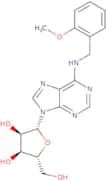
CAS:o-Methoxytopolin Riboside is a novel phosphoramidite that can be used for the synthesis of ribonucleotides and deoxyribonucleosides. This product has antiviral and anticancer properties, as well as the ability to inhibit tumor growth by inducing apoptosis in cancer cells. It is synthesized from the natural compound o-methoxytyrosine by the addition of a phosphate group to the 3-position. The phosphate group is then modified to produce monophosphate or diphosphate forms. OMTPR has been shown to have anti-inflammatory properties and has been found to reduce inflammation in mice with colitis.
Formula:C18H21N5O5Purezza:Min. 95%Colore e forma:PowderPeso molecolare:387.39 g/mol7’-Hydroxy-N-Trityl-morpholino guanine
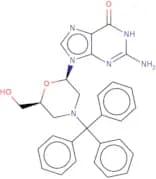
CAS:Please enquire for more information about 7’-Hydroxy-N-Trityl-morpholino guanine including the price, delivery time and more detailed product information at the technical inquiry form on this pageFormula:C29H28N6O3Peso molecolare:508.57 g/mol2'-Deoxyuridine
CAS:Please enquire for more information about 2'-Deoxyuridine including the price, delivery time and more detailed product information at the technical inquiry form on this pageFormula:C9H12N2O5Purezza:Min. 98 Area-%Peso molecolare:228.2 g/molRef: 3D-Q-200273
1kgPrezzo su richiesta100gPrezzo su richiesta250gPrezzo su richiesta500gPrezzo su richiesta2500gPrezzo su richiesta-Unit-ggPrezzo su richiesta5'-O-DMT-N4-ethylcytidine
5'-O-DMT-N4-ethylcytidine is a novel nucleoside analogue. It has been used as a building block for the synthesis of modified oligonucleotides. 5'-O-DMT-N4-ethylcytidine is an antiviral agent that inhibits HIV replication by inhibiting reverse transcriptase, which is an enzyme that is necessary for the production of viral DNA from host cell RNA. The drug also has anticancer activity, which may be due to its ability to inhibit DNA synthesis and cellular proliferation.Formula:C32H35N3O7Purezza:Min. 95%Peso molecolare:573.64 g/mol1,2'-O-Dimethylguanosine
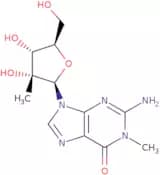
CAS:1,2'-O-Dimethylguanosine is an activator of anticancer activity. It has been shown to inhibit the proliferation of cancer cells in vitro and in vivo. 1,2'-O-Dimethylguanosine is a novel synthetic nucleoside analogue that can be modified to phosphoramidites and ribonucleosides for use as antiviral agents. This compound is also used as a building block for the synthesis of other nucleosides and nucleotides.Formula:C12H17N5O5Purezza:Min. 95%Peso molecolare:311.29 g/molStavudine 5'-triphosphate triethyammonium salt
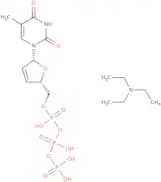
CAS:Stavudine 5'-triphosphate triethyammonium salt is a novel, modified nucleoside that has antiviral and anticancer properties. It is synthesized as a phosphoramidite and used in the synthesis of ribonucleotides, which are incorporated into RNA. Stavudine 5'-triphosphate triethyammonium salt inhibits viral DNA replication by inhibiting the activity of reverse transcriptase, an enzyme that copies the DNA sequence to create a complementary RNA sequence. In vitro studies have shown that stavudine 5'-triphosphate triethyammonium salt inhibits cell proliferation in human cancer cells.Purezza:Min. 95%5'-Amino-5'-deoxy-5'-N-MMT-thymidine 3'-CE phosphoramidite
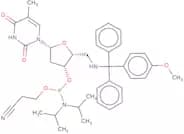
CAS:5'-Amino-5'-deoxy-5'-N-MMT-thymidine 3'-CE phosphoramidite is a high purity, novel, modified, antiviral and anticancer nucleotide. It is an analog of thymidine which has the methyl group at the 5' position replaced with a 5' amino group. This modification prevents conversion of the nucleoside to thymine and therefore inhibits DNA synthesis. The phosphoramidite is used as a building block for oligonucleotides in chemical synthesis. The phosphoramidite has shown antiviral activity against HIV by preventing reverse transcription of viral RNA into DNA. It also has been tested for its anticancer effects on human cells in vitro by inhibiting DNA synthesis and inducing apoptosis in cancer cells.Formula:C39H48N5O6PPurezza:Min. 95%Peso molecolare:713.8 g/mol2',3'-Dideoxy-2',3'-didehydroinosine
CAS:2',3'-Dideoxy-2',3'-didehydroinosine is a synthetic pyrimidine compound that has been shown to inhibit tumor growth in animal models. It is used to prepare 2',3'-dideoxy-2',3'-didehydroinosine-5'-triphosphate, which inhibits the synthesis of DNA and RNA by binding to the enzyme ribonucleotide reductase. This inhibition leads to cell death by inducing crosslinkers and inhibiting polymerase chain reaction. 2',3'-Dideoxy-2',3'-didehydroinosine can be synthesized from hydrochloric acid and carbonyl compounds such as glyoxal, acetaldehyde, or benzaldehyde. 2',3'-Dideoxy-2',3'-didehydroinosine is an important part of phylogenetic tree analysis because it provides information about evolutionary relationships between bacteria.Formula:C10H10N4O3Purezza:Min. 95 Area-%Colore e forma:White PowderPeso molecolare:234.21 g/molCyclic diguanosine monophosphate
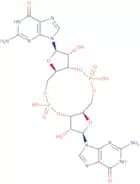
CAS:Cyclic diguanosine monophosphate (c-di-GMP) is a nucleotide that is involved in bacterial cell signaling. It has been shown to be essential for the formation of bacterial biofilms and plays an important role in the development of infectious diseases. c-di-GMP is synthesized from guanosine triphosphate through a series of enzymatic reactions and then hydrolyzed by cyclic diguanosine monophosphatase, which leads to its termination as a second messenger. c-di-GMP interacts with proteins that regulate the expression of genes involved in biofilm formation, motility, and virulence. The synthesis and hydrolysis of c-di-GMP are regulated by multiple enzymes, including protein phosphatases, that control cellular physiology such as biofilm formation.Formula:C20H24N10O14P2Purezza:Min. 95%Peso molecolare:690.41 g/mol6-Thioguanosine-5'-O-diphosphate sodium salt - 10mM aqueous solution
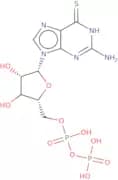
CAS:6-Thioguanosine-5'-O-diphosphate sodium salt is a nucleotide derivative of guanosine that binds to the regulatory site of ATP synthase in the chloroplast. It is an allosteric inhibitor that has been shown to inhibit the synthesis of proteins and chlorophyll, as well as ATP synthesis in plastids of plants. 6-Thioguanosine-5'-O-diphosphate sodium salt has been shown to be effective at inhibiting protein synthesis in mammalian cells, which may be due to its ability to bind to the metabotropic glutamate receptor. The molecule was also found to bind with high affinity to a ternary complex that includes glutamine, glutamate, and ammonia.Formula:C10H15N5O10P2SxNaPurezza:Min. 95%Colore e forma:PowderPeso molecolare:459.27 g/mol3'-O-tert-Butyldiphenylsilyl-2'-O-methyluridine
3'-O-tert-Butyldiphenylsilyl-2'-O-methyluridine is a novel nucleoside with antiviral and anticancer properties. It has been shown to inhibit the growth of human tumor cells in culture and induce apoptosis, as well as inhibit viral replication. 3'-O-tert-Butyldiphenylsilyl-2'-O-methyluridine is an analogue of uridine, which can be used for the synthesis of DNA or RNA. The phosphate group is attached to the 3' carbon on the sugar moiety. This nucleoside has been modified from a natural ribonucleoside by substitution of a tertiary butylphenylsilyl group at the 2' position with an o-methyl group. 3'-O-tert-Butyldiphenylsilyl-2'-O-methyluridine is supplied as a white powder with purity greater than 99Purezza:Min. 95%Biotin-5-deoxycytidine-5'-triphosphate, lithium salt - 1 mM aqueous solution
Biotin-5-deoxycytidine-5'-triphosphate, lithium salt - 1 mM aqueous solution is a modified nucleoside with antiviral activity. It is a phosphoramidite that can be used for the synthesis of DNA, RNA and other nucleic acids. Biotin-5-deoxycytidine-5'-triphosphate, lithium salt - 1 mM aqueous solution is an active ingredient in many research laboratories.Formula:C22H35N6O15P3SPurezza:Min. 95%Peso molecolare:748.53 g/mol2',3'-Di-O-methylguanosine
2',3'-Di-O-methylguanosine is a nucleoside, which is a chemical compound composed of a nitrogenous base, a five-carbon sugar, and one phosphate group. It is an analog of guanosine that has been modified by replacing the 2' hydroxyl group with a methyl group. This modification prevents the phosphorylation of the monophosphate form to the diphosphate form. This modification also makes 2',3'-Di-O-methylguanosine an activator of DNA polymerase and RNA polymerase. The novel features of this compound make it an excellent candidate for anticancer and antiviral treatments.
Purezza:Min. 95%2-[2-(2-Naphthalenyl)ethoxy]adenosine
CAS:2-[2-(2-Naphthalenyl)ethoxy]adenosine is a structural determinant that belongs to the class of adenosine derivatives. It is an antagonist of adenosine receptors, binding to the A1 receptor with high affinity and blocking the effects of adenosine. 2-[2-(2-Naphthalenyl)ethoxy]adenosine has been shown to have a high affinity for benzyl and thioether groups in its structure, which are important for binding to the A1 receptor. This compound has been used in assays to determine the binding of other compounds with adenosine receptors. 2-[2-(2-Naphthalenyl)ethoxy]adenosine has also been shown as a radioligand for competitive binding studies with human brain membranes.Formula:C22H23N5O5Purezza:Min. 95%Peso molecolare:437.45 g/mol






![1,3-Dimethyl-5-[4-(4,4,5,5-tetramethyl-[1,3,2]dioxaborolan-2-yl)-benzyl]-pyrimidine-2,4,6-trione](/_next/image/?url=https%3A%2Fstatic.cymitquimica.com%2Fproducts%2F3D%2Fthumb-webp%2FND44283.webp&w=3840&q=75)






![2-[2-(2-Naphthalenyl)ethoxy]adenosine](/_next/image/?url=https%3A%2Fstatic.cymitquimica.com%2Fproducts%2F3D%2Fthumb-webp%2FNN16559.webp&w=3840&q=75)