Nucleosidi
I nucleosidi sono building blocks fondamentali degli acidi nucleici, composti da una base azotata legata a una molecola di zucchero. In questa sezione, puoi trovare una vasta gamma di nucleosidi essenziali per la ricerca in biologia molecolare, biochimica e farmacologia. Questi composti svolgono ruoli cruciali nella sintesi del DNA e dell'RNA e sono vitali in vari processi metabolici. I nucleosidi vengono utilizzati per studiare il materiale genetico, sviluppare terapie antivirali e antitumorali e comprendere i meccanismi cellulari. Da CymitQuimica, forniamo nucleosidi di alta qualità per supportare le tue esigenze di ricerca e sviluppo, garantendo purezza e affidabilità per le tue applicazioni sperimentali.
Trovati 3569 prodotti di "Nucleosidi"
Ordinare per
Purezza (%)
0
100
|
0
|
50
|
90
|
95
|
100
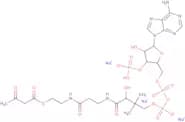
Acetoacetyl coenzyme A trisodium salt tetrahydrate
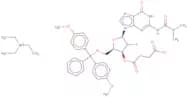
CAS:<p>Acetoacetyl coenzyme A trisodium salt tetrahydrate is a novel antiviral agent that inhibits the synthesis of viral DNA and RNA. Acetoacetyl CoA has been shown to inhibit the replication of HIV, HSV-1 and HSV-2, influenza virus, and cytomegalovirus (CMV). The mechanism of action is not yet known but may be related to its ability to activate cellular DNA polymerase β. Acetoacetyl CoA also has a high purity and quality, as well as being modified for use in phosphoramidites.</p>Formula:C25H37N7Na3O18P3S·4H2OPurezza:Min. 96 Area-%Colore e forma:PowderPeso molecolare:989.62 g/mol9-(2'-Deoxy-5'-O-DMT-2'-fluoro-b-D-arabinofuranosyl)-N2-isobutyrylguanine 3'-O-succinate triethylammonium salt
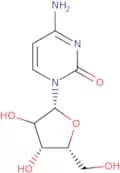
<p>9-(2'-Deoxy-5'-O-DMT-2'-fluoro-b-D-arabinofuranosyl)-N2-isobutyrylguanine 3'-O-succinate triethylammonium salt is a modified nucleoside phosphoramidite. It is used as an antiviral and anticancer agent, as well as an activator in DNA synthesis. 9-(2'-Deoxy-5'-O-DMT-2'-fluoro-b-D-arabinofuranosyl)-N2-isobutyrylguanine 3'-O-succinate triethylammonium salt has been shown to be active against HIV, herpes simplex virus type 1, herpes simplex virus type 2, cytomegalovirus, influenza A virus, and human papillomavirus types 16 and 18.</p>Formula:C39H39FN5O10·C6H16NPurezza:Min. 95%Peso molecolare:858.97 g/mol2'-13CCytidine
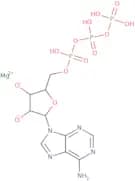
CAS:<p>2'-13CCytidine is a cytidine nucleoside that inhibits the synthesis of RNA and DNA in cells. It is an analog of cytarabine, which is a pyrimidine nucleoside and an antineoplastic agent. 2'-13CCytidine has been shown to be effective as an antiviral agent against HIV-1 and HSV-2, as well as an immunosuppressant for the treatment of autoimmune diseases such as rheumatoid arthritis. This drug is used in chemotherapy to inhibit cell division in leukemia.</p>Formula:CC8H13N3O5Purezza:Min. 95%Peso molecolare:244.21 g/molAdenosine 5'-(tetrahydrogen triphosphate)
CAS:<p>Adenosine is a nucleoside consisting of adenine and ribose. It is used in biochemical analysis to quantify the cytosolic Ca2+ concentration, which is an important cellular signal that regulates many cellular processes. Adenosine stimulates the uptake of Ca2+ by binding to the monophosphate-activated protein (AMPAR), which results in the opening of voltage-gated calcium channels. These channels allow Ca2+ to enter the cell, increasing its intracellular concentration. Adenosine also has been shown to stimulate muscle contraction through increased release of Ca2+. This drug also possesses inhibitory effects on synaptic transmission and may have anti-inflammatory properties due to its ability to inhibit proteolytic enzymes in muscle cells.</p>Formula:C10H14MgN5O13P3Purezza:Min. 95%Peso molecolare:529.47 g/mol2,2-Crylo-5-methyluridine
2,2-Crylo-5-methyluridine is a synthetic diphosphate nucleotide that has been shown to be an activator of DNA synthesis. It is used in the synthesis of oligonucleotides and as a monophosphate for the synthesis of 2'-O-methyl ribonucleosides. 2,2-Crylo-5-methyluridine has been shown to have anticancer activity, which may be due to its ability to inhibit tumor proliferation or induce apoptosis.Purezza:Min. 95%5'-O-Acetyl-2',3'-dideoxyinosine
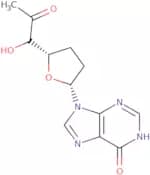
CAS:<p>5'-O-Acetyl-2',3'-dideoxyinosine is a nucleoside analogue that inhibits viral replication. It is a potent activator of the immune system and has been shown to be effective against cancer cells. 5'-O-Acetyl-2',3'-dideoxyinosine was originally synthesized as an antiviral agent, but it was found to be ineffective in this function. The drug binds to the ribonucleotide reductase enzyme, which converts ribonucleotides into deoxyribonucleotides and is essential for the production of DNA. The drug blocks the conversion of ribonucleotides into deoxyribonucleotides, preventing DNA synthesis and replication. This drug has also been shown to have anticancer activity by inhibiting DNA synthesis and cell division.</p>Formula:C12H14N4O4Purezza:Min. 95%Peso molecolare:278.26 g/mol2-Amino-4-phenyl-6-(trifluoromethyl)pyrimidine
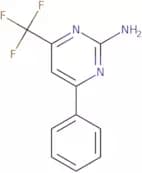
CAS:<p>2-Amino-4-phenyl-6-(trifluoromethyl)pyrimidine is a nucleoside analog that acts as a DNA and RNA activator. It is used as a component in antiviral drugs, anticancer drugs, and antiretroviral drugs. This compound is structurally similar to the natural nucleosides adenosine and cytidine. It has been shown to inhibit the growth of various cancer cell lines with IC50 values ranging from 6.5 to 25 nM.</p>Formula:C11H8F3N3Purezza:Min. 95%Peso molecolare:239.2 g/mol2'-Deoxy-5-hydroxymethylcytidine 5'-monophosphate sodium salt
CAS:2'-Deoxy-5-hydroxymethylcytidine 5'-monophosphate sodium salt (2'-dO-5HmcMP) is a nucleoside analogue that inhibits the activity of reverse transcriptase, an enzyme required for replication of HIV. This compound is phosphorylated in vivo to 2'-dO-5HmcMP monophosphate, which then competitively inhibits the binding of dNTPs to the enzyme and prevents DNA synthesis. 2'-dO-5HmcMP also has anticancer activity and has been shown to inhibit the proliferation of cells in vitro. 2'-dO-5HmcMP has no significant toxicity to humans or other mammals.Purezza:Min. 95%1-(2-Deoxy- 2, 2- difluoro- b- D- xylofuranosyl)cytosine
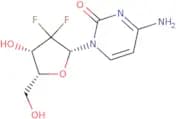
CAS:<p>1-(2-Deoxy-2,2-difluoro-beta-D-xylofuranosyl)cytosine is a nucleoside (a compound consisting of a nucleotide base linked to a sugar). It is a modified form of cytosine that has been phosphorylated at the 2’ position. 1-(2-Deoxy-2,2-difluoro-beta-D-xylofuranosyl)cytosine has antiviral and anticancer activity through its ability to inhibit viral DNA synthesis and activate the immune system. This drug also has antitumor activity due to its ability to inhibit the tumor growth factor beta (TGFB). 1-(2-Deoxy-2,2-difluoro-beta-D -xylofuranosyl)cytosine can be used in cancer treatment as an anticancer agent.</p>Formula:C9H11F2N3O4Purezza:Min. 95%Peso molecolare:263.2 g/mol2',3'-Stannyluridine
<p>2',3'-Stannyluridine is a novel modified ribonucleoside. It is synthesized by the condensation of 2'-deoxyuridine and 3'-hydroxy-2-methylpropiophenone. This product has been shown to have anticancer and antiviral activities. 2',3'-Stannyluridine inhibits the synthesis of DNA, RNA, and protein in cells by binding to the ribonucleotide reductase enzyme. It also has an effect on phosphoramidite synthesis, which is an important step in DNA replication. The CAS number for this product is 57824-03-1.</p>Purezza:Min. 95%2’-O-(2-Methoxyethyl)guanosine 5’-triphosphate ammonium salt
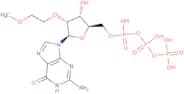
CAS:<p>2’-O-(2-Methoxyethyl)guanosine 5’-triphosphate ammonium salt (2'OMeEtGTP) is an antiviral agent that is used as a component of an antiviral drug. It inhibits the viral enzyme DNA polymerase, which prevents viral replication and transcription. This compound has been shown to have anticancer properties in vitro and in vivo in rat models. 2'OMeEtGTP is synthesized by reacting the nucleoside phosphoramidite 2'OMeEtGTP with triethylammonium phosphate (TEAP).</p>Purezza:Min. 95%Cytidine-5'-triphosphate, lithium salt
Cytidine-5'-triphosphate, lithium salt (CTP, Li) is a monophosphate that is used as a cofactor in the synthesis of DNA and RNA. It is also used for the treatment of viral infections. CTP, Li has antiviral activity against herpes simplex virus type 1 and 2 (HSV-1 and HSV-2), varicella zoster virus (VZV), human cytomegalovirus (CMV) and Epstein-Barr virus (EBV). CTP, Li can be used to inhibit the growth of cancer cells by modifying DNA.Purezza:Min. 95%6-Propylamino-7-deazapurine
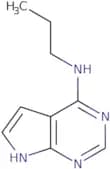
CAS:<p>6-Propylamino-7-deazapurine is a synthetic nucleoside with antiviral and anticancer properties. It is an activator of DNA synthesis and is modified to have a high quality. 6-Propylamino-7-deazapurine has been shown to be effective against HIV and other viruses in vitro, as well as in animal models, but it is not yet approved for use in humans.6-Propylamino-7-deazapurine has also been shown to inhibit the growth of cancer cells in vitro and in vivo.</p>Formula:C9H12N4Purezza:Min. 95%Peso molecolare:176.22 g/mol5'-O-DMT-2'-O-(2-methoxyethyl)uridine
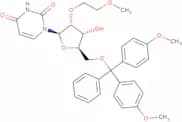
CAS:<p>5'-O-DMT-2'-O-(2-methoxyethyl)uridine is a modified nucleoside that is an antiviral and anticancer agent. It was first synthesized in the early 1980s, and has been shown to be active against a variety of viruses, such as herpes simplex virus (HSV), varicella zoster virus (VZV), cytomegalovirus (CMV), hepatitis B virus (HBV), and Epstein-Barr virus (EBV). 5'-O-DMT-2'-O-(2-methoxyethyl)uridine inhibits the growth of cancer cells by interfering with DNA synthesis. This drug also has been shown to be an activator for DNA polymerases and is used as a building block for antiretroviral drugs.</p>Formula:C33H36N2O9Purezza:Min. 95%Peso molecolare:604.65 g/mol4'-Azidothymidine 5-triphosphate
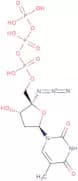
CAS:<p>4'-Azidothymidine 5-triphosphate (4AZTTP) is a deoxyribonucleoside that has been synthesized as an analog to thymidine. It has potent inhibitory activity against human immunodeficiency virus (HIV), and has been shown to be more effective than 2',3'-dideoxyinosine in inhibiting HIV replication. 4AZTTP inhibits the viral enzyme reverse transcriptase, which is crucial for the replication of HIV. This drug is activated by cellular enzymes and phosphorylated to 4'-azidothymidine 5'-triphosphate monophosphate, which can then bind to the viral DNA template and inhibit synthesis of RNA strands. The kinetic properties of 4AZTTP have been studied in detail using human lymphocytes as a model system for HIV infection.</p>Formula:C10H16N5O14P3Purezza:Min. 95%Peso molecolare:523.18 g/mol2’,3’,5’-Tri-O-(tert-butyldimethylsilyl)-adenosine
<p>2’,3’,5’-Tri-O-(tert-butyldimethylsilyl)-adenosine is a novel nucleoside that is synthetically modified by the replacement of the ribose sugar with an amino sugar. The modification of the sugar reduces the likelihood of hydrolysis to ribose and phosphate. This product has shown anticancer effects against human tumor cells in vitro and in vivo. It also has antiviral activities against herpes simplex virus type 1 (HSV-1). 2’,3’,5’-Tri-O-(tert-butyldimethylsilyl)-adenosine is a monophosphate nucleoside that inhibits DNA synthesis by inhibiting DNA polymerase. It acts as a competitive inhibitor for deoxyribonucleotides and phosphoramidites, which are used in DNA synthesis. 2’,3’,5’-</p>Purezza:Min. 95%5'-O-DMT-2'-O-hexylamino-5-methyluridine
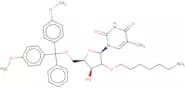
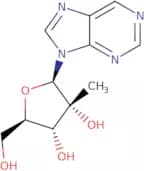
CAS:5'-O-DMT-2'-O-hexylamino-5-methyluridine is a nucleoside analog that is used in cancer treatment. It is synthesized by the chemical modification of uridine, which is converted to 5'-O-DMT-2'-O-hexylamino-5-methyluridine by reacting with 2',3'-dideoxyadenosine and 5,6,7,8,-tetrahydroisoquinoline. The monophosphate form of 5'-O-DMT-2'-O-hexylamino-5-methyluridine may be converted to the diphosphate form by phosphorylation with ATP. In addition to its anticancer effects, 5'-O-DMT-2'-O-hexylamino-5-methyluridine has antiviral and antiretroviral effects due to its inhibition of viral DNA synthesis.Formula:C37H45N3O8Purezza:Min. 95%Peso molecolare:659.79 g/mol9-(2-C-Methyl-b-D-ribofuranosyl)purine
CAS:<p>9-(2-C-Methyl-b-D-ribofuranosyl)purine is a nucleoside that is used as an activator in the synthesis of phosphoramidites. 9-(2-C-Methyl-b-D-ribofuranosyl)purine has antiviral and anticancer properties, and it also inhibits the growth of bacteria. This nucleoside is synthesized from 2,4,6-trichlorophenylisocyanate and 5'-O-(4,4'-dimethoxytrityl)-beta-D-ribofuranose. The chemical name for 9-(2-C methyl b D ribofuranosyl)purine is 690269 - 86 - 4.</p>Formula:C11H14N4O4Purezza:Min. 95%Peso molecolare:266.25 g/mol2′-O-Succinyladenosine 3′,5′-monophosphate
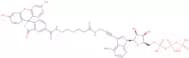
CAS:<p>Please enquire for more information about 2′-O-Succinyladenosine 3′,5′-monophosphate including the price, delivery time and more detailed product information at the technical inquiry form on this page</p>Formula:C14H16N5O9PPurezza:Min. 95%Peso molecolare:429.28 g/molFluorescein alkynylamino-ATP - 1.0 mM solution
CAS:<p>Fluorescein alkynylamino-ATP is a fluorescent nucleotide analog that is used in molecular biology for the detection of DNA. It is labeled with tetramethylrhodamine, which can be detected using a fluorescence microscope. Fluorescein alkynylamino-ATP is a postsynthetic modification to DNA, which means it is added after the DNA has been synthesized. This molecule can be incorporated into the growing strand by either monoaddition or polymerase extension. Fluorescein alkynylamino-ATP binds to the 3' end of a primer during polymerase chain reaction (PCR) and can be detected using electrophoresis and sequence analysis.</p>Formula:C41H41N6O20P3Purezza:Min. 95%Peso molecolare:1,030.71 g/mol