Nucleosidi
I nucleosidi sono building blocks fondamentali degli acidi nucleici, composti da una base azotata legata a una molecola di zucchero. In questa sezione, puoi trovare una vasta gamma di nucleosidi essenziali per la ricerca in biologia molecolare, biochimica e farmacologia. Questi composti svolgono ruoli cruciali nella sintesi del DNA e dell'RNA e sono vitali in vari processi metabolici. I nucleosidi vengono utilizzati per studiare il materiale genetico, sviluppare terapie antivirali e antitumorali e comprendere i meccanismi cellulari. Da CymitQuimica, forniamo nucleosidi di alta qualità per supportare le tue esigenze di ricerca e sviluppo, garantendo purezza e affidabilità per le tue applicazioni sperimentali.
Trovati 3569 prodotti di "Nucleosidi"
Ordinare per
Purezza (%)
0
100
|
0
|
50
|
90
|
95
|
100
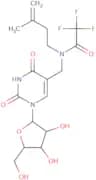
5-(N-Isopentenyl-N-trifluoroacetyl)aminomethyluridine
CAS:5-(N-Isopentenyl-N-trifluoroacetyl)aminomethyluridine is a nucleoside analog that is structurally related to cytidine. It was first synthesized in the 1970s, and has been shown to possess antiviral activity against herpes simplex virus type 1. In addition, it has been shown to inhibit DNA synthesis and the formation of DNA double strands. 5-(N-Isopentenyl-N-trifluoroacetyl)aminomethyluridine is an activator of protein kinase C and cyclic AMP phosphodiesterase, as well as a DNA polymerase inhibitor with anticancer properties.Purezza:Min. 95%9-(2',3',5'-Tri-O-benzoyl-b-D-ribofuranosyl)-2-chloropurine
CAS:9-(2',3',5'-Tri-O-benzoyl-b-D-ribofuranosyl)-2-chloropurine is a modified nucleoside with anticancer activity. It has been shown to be an effective activator of DNA, RNA, and protein synthesis in vitro. This drug has also been shown to have antiviral properties against herpes simplex virus type 1 (HSV1) and influenza A virus. 9-(2',3',5'-Tri-O-benzoyl-b-D-ribofuranosyl)-2-chloropurine is an analog of the natural purine metabolite hypoxanthine that can be synthesized in high purity.Purezza:Min. 95%3'-O-Allylguanosine
<p>3'-O-Allylguanosine is a antiviral agent that belongs to the group of synthetic nucleosides. It is a monophosphate analog of guanosine and an activator of ribonucleotide reductase. 3'-O-Allylguanosine has been shown to be effective against cancer cells in vitro. It has also been shown to inhibit DNA synthesis and promote DNA degradation in human leukemia cells, suggesting its potential use for the treatment of leukemia.</p>Formula:C13H17N5O5Purezza:Min. 95%Peso molecolare:323.3 g/mol6-Azacytidine
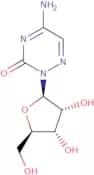
CAS:6-Azacytidine is a molecule that contains a hydroxyl group and a glycosidic bond. It has been shown to inhibit the growth of mollicutes, which are non-cellular bacteria. 6-Azacytidine has also been shown to be toxic in animal tissue culture studies. The drug can be eliminated through the urine or bile after being metabolized by the liver. 6-Azacytidine is not active against human cells in cell culture, but it does show some toxicity against human liver cells.Formula:C8H12N4O5Purezza:Min. 95%Colore e forma:PowderPeso molecolare:244.2 g/mol2-Chloro-N,N-dimethyl-2’C-methyladenosine
CAS:2-Chloro-N,N-dimethyl-2’C-methyladenosine is a synthetic nucleoside that inhibits viral DNA synthesis. It is a modified deoxyribonucleoside that contains a chloro group at the 2’ position of the sugar ring and a methyl group at the 3’ position. This drug has antiviral activity against herpes simplex virus type 1 (HSV-1) and herpes simplex virus type 2 (HSV-2), respiratory syncytial virus (RSV), and influenza A virus. It also displays anticancer activity in vitro. This drug inhibits cancer cell growth by interfering with DNA replication and triggering apoptosis through inhibition of protein kinase C and activation of caspases.Purezza:Min. 95%3',5'-O-(1,1,3,3-Tetraisopropyl-1,3-disiloxanediyl)uridine
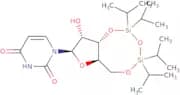
CAS:Used as aprotected uridine nucleoside in RNA synthesis. The 1,1,3,3-tetraisopropyl-1,3-disiloxanediyl (TIPDS or TBDPSi2) group serves as a bulky and selectively acid-labile protecting group for the 3' and 5' hydroxyl groups of the uridine ribonucleoside during RNA oligonucleotide synthesis.Formula:C21H38N2O7Si2Purezza:Min. 95%Colore e forma:White PowderPeso molecolare:486.71 g/mol2-Methylthioadenosine
CAS:<p>2-Methylthioadenosine is a purine nucleoside which induces necrotic cell death. It is the first of its kind to be shown to have activity against squamous carcinoma cells, and is activated by nucleoside phosphorylase in order to produce its cytotoxic form. 2-Methylthioadenosine also inhibits the transcription-polymerase chain reaction and increases oxidative injury. This drug has been shown to have receptor activity in brain cells, as well as chemotactic activity for gland cells. 2-Methylthioadenosine has been used as a model organism for polymerase chain reactions, and has been shown to inhibit p2y receptors in the human colon cancer cell line HT29.</p>Formula:C11H15N5O4SPurezza:Min. 95%Colore e forma:White Off-White PowderPeso molecolare:313.34 g/molOBEA-Fluorescein-2'-deoxy-5'-O-DMT-cytidine 3'CE-amidite
<p>OBEA-Fluorescein-2'-deoxy-5'-O-DMT-cytidine 3'CE-amidite is an anticancer drug that belongs to the class of deoxyribonucleosides. It is a novel nucleoside analogue that has been modified with fluorescein and a cytidine derivative. The synthesis of this compound is carried out by coupling a cytidine derivative with fluorescein and the phosphoramidite of the corresponding ribonucleotide. OBEA-Fluorescein-2'-deoxy-5'-O-DMT-cytidine 3'CE amidite has antiviral activity against DNA viruses, such as hepatitis B virus and human immunodeficiency virus, as well as RNA viruses, such as influenza A virus. This compound also has antiinflammatory activities.</p>Purezza:Min. 95%6-Thioinosine
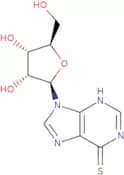
CAS:<p>6-Thioinosine is a nucleoside analog that is chemically related to 6-mercaptopurine. It inhibits the polymerase chain reaction and has been shown to inhibit aerobic metabolism in aerobacter aerogenes. It also inhibits the growth of hl-60 cells, which are derived from human leukemia cells. 6-Thioinosine has been shown to have anti-inflammatory properties, which may be due to its ability to inhibit prostaglandin synthesis. It also blocks the activity of certain receptors and has a disease activity against infectious diseases such as systemic candidiasis, bacterial endocarditis, and bowel disease.</p>Formula:C10H12N4O4SPurezza:Min. 98 Area-%Colore e forma:PowderPeso molecolare:284.29 g/mol5-b-D-Ribofuranosyl-2(1H)-pyridinone
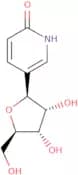
CAS:<p>5-b-D-Ribofuranosyl-2(1H)-pyridinone is a phosphoramidite that is used in the synthesis of DNA. It is also an antiviral and anticancer agent. 5-b-D-Ribofuranosyl-2(1H)-pyridinone may be modified to include deoxyribonucleosides or ribonucleosides, which are important for DNA synthesis. 5-b-D-Ribofuranosyl-2(1H)-pyridinone is a novel chemical compound with a high purity and quality.<br>5 b D Ribofuranosyl 2 1 H Pyridinone CAS No 188871 50 3 Activator monophosphate High purity High quality DNA Synthetic Deoxyribonucleosides Novel Modified Ribonuclesides Nucleosides</p>Purezza:Min. 95%2’,3’-Anhydro-7-deazaadenosine
CAS:2’,3’-Anhydro-7-deazaadenosine is a modified nucleoside that is used in the treatment of viral infections. It is an antiviral drug that has been shown to have anticancer properties. 2’,3’-Anhydro-7-deazaadenosine can be synthesized from deoxyribonucleosides and diphosphates. The compound has been shown to inhibit the synthesis of DNA by binding to the enzyme DNA polymerase and blocking the formation of a phosphodiester bond between the 5' phosphate group and 3'-OH group. This may lead to inhibition of DNA replication and transcription. 2’,3’-Anhydro-7-deazaadenosine also inhibits protein synthesis by inhibiting RNA polymerase activity.Purezza:Min. 95%5'-O-DMT-thymidine 3'-O-succinate triethylammonium salt
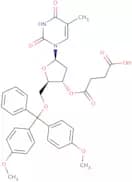
CAS:5'-O-DMT-thymidine 3'-O-succinate triethylammonium salt is a novel antiviral agent that inhibits viral replication by competing with natural nucleosides for incorporation into the viral DNA or RNA. The 5'-O-DMT group prevents the elimination of thymidine from the monophosphate form. This product has a high purity and quality, as well as potent antiviral activity against HIV and other viruses.Formula:C35H36N2O10·xC6H15NPurezza:Min. 95%Colore e forma:PowderPeso molecolare:745.86 g/mol3'-Azido-3'-deoxythymidine-5'-monophosphate lithium salt - 100 mM aqueous solution
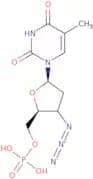
CAS:<p>3'-Azido-3'-deoxythymidine-5'-monophosphate lithium salt - 100 mM aqueous solution is an azidothymidine (AZT) analog that inhibits HIV replication. AZT is a nucleoside reverse transcriptase inhibitor that blocks the progression of HIV by preventing the virus from duplicating its DNA. This product has been shown to be effective in treating AIDS and related diseases, as well as other infectious diseases such as hepatitis B and C. 3'-Azido-3'-deoxythymidine-5'-monophosphate lithium salt - 100 mM aqueous solution is often used in combination with other drugs to increase their efficacy. It has also been shown to be an effective chemotherapeutic agent against cancer cells.</p>Formula:C10H14N5O7P·xLiPurezza:Min. 95%Peso molecolare:347.22 g/mol2'-Deoxy-5'-O-pixyluridine
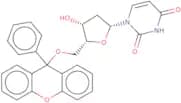
2'-Deoxy-5'-O-pixyluridine (2DPU) is a novel, synthetic nucleoside that is an active ingredient in antiviral and anticancer drugs. 2DPU has been shown to inhibit the replication of human immunodeficiency virus type 1 (HIV-1) by inhibiting the viral enzyme HIV reverse transcriptase. The phosphoramidite form of 2DPU is used as a building block for DNA synthesis and for the synthesis of other nucleosides. The monophosphate form of 2DPU is used in the synthesis of antiviral drugs, including acyclovir, zidovudine, and ribavirin.Formula:C28H24N2O6Purezza:Min. 95%Peso molecolare:484.51 g/molN4-Acetyl-5'-O-DMT-2'-O-methylcytidine
CAS:N4-Acetyl-5'-O-DMT-2'-O-methylcytidine is a cytidine analogue that has been synthesized to be used as an enzyme-linked probe. It is labelled with biotin and can be detected by binding to an antibody which has been labelled with a fluorescent tag. Cytidine analogues are synthesized on a solid phase and then cleaved from the support material. The spacer arm is added to the 5' end of the nucleotide and the 3'-OH group is modified with 2'-O-methyl groups. N4-Acetyl-5'-O-DMT-2'-O-methylcytidine has been shown to be sensitive in techniques such as solid phase synthesis, nucleic acid research, and immunoassays.Formula:C33H35N3O8Purezza:Min. 95%Colore e forma:Off-White PowderPeso molecolare:601.65 g/molN6-Benzoyl-5'-O-benzoyl-2'-O-tert-butyldimethylsilyladenosine 3'-CE phosphoramidite
N6-Benzoyl-5'-O-benzoyl-2'-O-tert-butyldimethylsilyladenosine 3'-CE phosphoramidite is an activator that is used to synthesize modified nucleosides. N6-Benzoyl-5'-O-benzoyl-2'-O-tert-butyldimethylsilyladenosine 3'-CE phosphoramidite has been shown to activate the synthesis of ribonucleosides, deoxyribonucleosides and other modified nucleosides. It reacts with a variety of DNA, RNA and protein substrates, including those containing phosphate groups. N6-Benzoyl-5'-O-benzoyl-2'-O-tert-butyldimethylsilyladenosine 3'-CE phosphoramidite has also been shown to have anticancer activity in vitro and in vivoFormula:C39H52N7O7PSiPurezza:Min. 95%Peso molecolare:789.95 g/molN2,N2,7-Trimethylguanosine
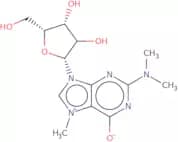
CAS:Trimethylguanosine is a hydrogen-bonded base that is found in the DNA of all living organisms. It has a diagnostic role in cancer and metabolic disorders, as well as in the study of cell culture. Trimethylguanosine can be used to identify cancer cells by measuring its fluorescence properties, which are different from those of healthy cells. This compound also has a role in the diagnosis of metabolic disorders, such as diabetes mellitus and renal disease. Trimethylguanosine is also involved in biological function, and is necessary for the synthesis of proteins and nucleic acids.Formula:C13H20N5O5Purezza:Min. 95 Area-%Colore e forma:PowderPeso molecolare:326.33 g/mol3'-O-Methyladenosine
CAS:<p>3'-O-Methyladenosine (3'OMeA) is a monomethylated adenosine that belongs to the group of nucleosides. It has been found to inhibit the activity of adenosine receptors, which are important for the regulation of blood pressure and central nervous system function. 3'OMeA also inhibits virus replication in human lymphocytes. 3'OMeA is synthesized by reaction with methylamine and purification by column chromatography. The molecule is a potential therapeutic target for HIV/AIDS, as it can be used as a specific agonist in order to block viral entry into cells.</p>Formula:C11H15N5O4Purezza:Min. 95%Colore e forma:White PowderPeso molecolare:281.27 g/mol2'-Deoxy-N2-isobutyryl-5'-O-tritylguanosine 3'-CE phosphoramidite
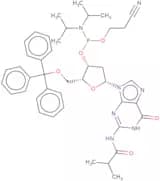
2'-Deoxy-N2-isobutyryl-5'-O-tritylguanosine 3'-CE phosphoramidite is a novel nucleoside analogue that has antiviral and anticancer properties. This compound is synthesized by the reaction of 5'-O-tritylguanosine with 2'-deoxyribonucleosides in high purity. The final product is purified by chromatography and characterized using mass spectrometry and nuclear magnetic resonance spectroscopy.Purezza:Min. 95%N6-Benzoyl-3'-deoxy-5'-O-DMT-cytidine 2'-CE phosphoramidite
CAS:<p>N6-Benzoyl-3'-deoxy-5'-O-DMT-cytidine 2'-CE phosphoramidite is a Ribonucleoside, Novel, High quality, Activator, Deoxyribonucleosides, Modified, CAS No. 157327-96-3. It is one of the main ingredients in the synthesis of DNA monophosphate and diphosphate. It is also used as an anticancer and antiviral agent.</p>Formula:C46H52N5O8PPurezza:Min. 95%Peso molecolare:833.91 g/mol