Enzimi nelle Proteine Ricombinanti
Gli enzimi accelerano le reazioni chimiche, agendo come catalizzatori biologici, agendo sui substrati e convertendoli in diverse molecole chiamate prodotti. Queste proteine sono indispensabili nei processi biochimici e nelle applicazioni industriali, facilitando le reazioni in condizioni miti con alta specificità ed efficienza. Da CymitQuimica, offriamo un'ampia selezione di enzimi di alta qualità per supportare le vostre applicazioni di ricerca, industriali e cliniche.
Trovati 3315 prodotti di " Enzimi nelle Proteine Ricombinanti"
Ordinare per
Purezza (%)
0
100
|
0
|
50
|
90
|
95
|
100
Transglutaminase from streptoverticillium mobaraense
CAS:<p>selectively deamidates gluten peptides, which results in strongly enhanced T cell-stimulatory activity. It has also been used in a study to improve quantifiable assays to fully characterize the role of transglutaminase in diseases such as Huntington′s disease and Alzheimer′s disease.</p>Colore e forma:PowderLysozyme - Enzyme activity min 40000 FIP/mg
CAS:<p>Lysozyme is a bacteriolytic enzyme, which is primarily derived from hen egg whites. It functions by hydrolyzing the β-1,4-glycosidic linkages in the peptidoglycan layer of bacterial cell walls, particularly in Gram-positive bacteria. This enzymatic activity results in the lysis and subsequent death of the bacterial cells, providing a potent antimicrobial effect.</p>Colore e forma:PowderCarboxypeptidase Y from baker's yeast
CAS:<p>Carboxypeptidase Y (EC 3.4.16.1) is an exopeptidase enzyme. It hydrolyzes peptide bonds of C-terminal residues and it remains active in the presence of urea at low to moderate concentrations. One unit of the Carboxypeptidase Y will hydrolyze 1.0 μmole of a chromogenic peptide substrate, releasing C-terminal alanine and generating a light-absorbing product.</p>Purezza:Min. 95%Nucleoside phosphorylase from microorganisms
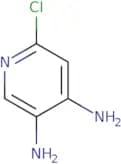
CAS:<p>Nucleoside phosphorylase (Purine nucleoside phosphorylase, PNP, PNPase, inosine phosphorylase, inosine-guanosine phosphorylase; EC 2.4.2.1) is an enzyme that catalyzes the following reaction: purine nucleoside + Pi ⇌ purine + alpha-D-ribose 1-phosphate One unit of nucleoside phosphorylase will phosphorylate 1.0 micromole of inosine to hypoxanthine and alpha-D-ribose 1-phosphate per min at pH 7.4 and 25°C.</p>Formula:C5H6ClN3Purezza:Min. 95%Peso molecolare:143.57 g/molCMP Sialic acid synthetase
<p>E. coli recombinant α-2,6 sialyltransferase from Neisseria meningitidis. One unit is defined as the amount of enzyme that catalyses the formation of 1 μmol CMP-Neu5Ac from CTP and Neu5Ac per minute at 37 ºC.Activity: 100U/mg</p>Invertase
CAS:<p>Invertase is an enzyme that catalyzes the hydrolysis of sucrose to glucose and fructose and can be found in plants and microorganisms</p>Colore e forma:Beige Powderendo-β-1,4-Mannanase
CAS:<p>Endo-β-1,4-Mannanase (other names Mannan endo-1,4-β-mannosidase, endo-β-1,4-mannase, β-mannanase B, β-1, 4-mannan 4-mannanohydrolase, endo-β-mannanase, β-D-mannanase, 1,4-β-D-mannan mannanohydrolase; EC 3.2.1.78) is an enzyme, catalyzing the hydrolysis of -1, 4-mannosidic linkages in mannans, glucomannans and galactomannans. One unit of Endo-β-1,4-Mannanase will release 1.0 µmole of mannose reducing-sugar per minute from a 3mg/ml mannan solution at pH 5.5 and 37degC. Expressed in U/g.</p>Myokinase (from Yeast)
CAS:<p>Myokinase (Adenylate kinase, EC 2.7.4.3) catalyzes interconversion between ATP, ADP and AMP by catalyzing the following reaction:ATP + AMP ⇌ 2 ADPOne unit of Myokinase will convert 1.0 µmol ATP and 1.0 µmol AMP to 2.0 µmol ADP per min at 25°C and pH 7.5.</p>Carnitine acetyltransferase
CAS:<p>From pigeon breast muscle - Carnitine acetyltransferase (EC 2.3.1.7, also Carnitine O-acetyltransferase) is an enzyme that catalyzes the following chemical reaction: acetyl-CoA + carnitine ⇌ CoA + acetylcarnitine</p>Lyticase
CAS:<p>Lyticase is a lysing enzyme that is designed to lyse cells in a biological sample. It contains an optimized wild-type guanine nucleotide-binding protein and has been shown to have high enzyme activities. Lyticase has also been shown to be active against opportunistic fungal strains, such as Candida glabrata, by disrupting their cell membranes. Lyticase is classified as a signal peptide with nuclear DNA, which allows it to be used in wastewater treatment applications. The enzyme can also be used for the analysis of the Toll-like receptor (TLR) response of microbes due to its electrochemical impedance spectroscopy properties.</p>Purezza:Min. 95%β-Galactosidase >100KU/g
CAS:<p>beta-Galactosidase (EC 3.2.1.23, shortly beta-Gal, also know as lactase) catalyses the hydrolysis of beta-d-galactoside in the presence of water to galactose and alcohol, or lactose into glucose and galactose. beta-Gal has a molecular weight of 540,000 and is composed of four identical subunits of MW 135,000, each with an independent active site. The enzyme has divalent metals as cofactors, with chelated Mg2+ ions required to maintain active site conformation. The molecule contains numerous sulfhydryl groups and is glycosylated.</p>Colore e forma:PowderProteinase K - from Tritirachium album
CAS:<p>Proteinase K is used for the general digestion of proteins and removal of protein contamination in nucleic acids. Addition of Protease K also stabilizes nucleic acids by degrading any nucleases present. Proteinase K is active in wide range of pH range, in the presence of SDS, urea and Guanidinium chloride at low to moderate concentrations. Proteinase K is also known under names of protease K and endopeptidase K.</p>Urokinase
CAS:<p>Urokinase (urokinase-type plasminogen activator, uPA; EC 3.4.21.73) is as serine protease. Its physiological substrate is plasminogen. Urokinase converts plasminogen into an active enzyme, plasmin, which is also a serine protease. In its active form plasmin plays an important role in dissolving blood clots. Despite its name, Urokinase is not a kinase.</p>Formula:C21H25BrN2O3Purezza:(%) Min. 85%Butyrylcholinesterase human
CAS:<p>Butyrylcholinesterase is an enzyme made in the liver and found mainly in blood plasma. Butyrylcholinesterase (EC 3.1.1.8), also known as BChE or BuChE, is a nonspecific cholinesterase enzyme that hydrolyses choline-based esters. One unit of Butyrylcholinesterase will hydrolyze 1.0 μmole of butyrylcholine to choline and butyrate per minute at pH 8.0 and 37 °C.</p>Colore e forma:PowderEndoproteinase Glu-C
CAS:<p>Endoproteinase Glu-C (Glutamyl endopeptidase, V8 protease, GluV8, EC 3.4.21.19) is a protease that hydrolyzes peptide bonds at the carboxylic side of either exclusively Glu, or Glu and Asp residues, depending on the buffer conditions. One unit of endoproteinase Glu-C will generate 1.0 μmole of p-nitroaniline from Z-Phe-Leu-Glu-pNA peptide mimic substrate per minute at pH 7.8 and 25 °C. Z-Phe-Leu-Glu-pNA substrate is available here.molecular weight ~ 27000.</p>Formula:C65H98N16O19Peso molecolare:1,407.56 g/molProtease - from bacillus licheniformis
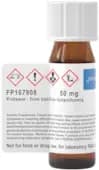
CAS:<p>Protease enzymes break down proteins and are essential for many biological processes, including digestion, cellular regulation and blood clotting. They are also used in many industrial and biotechnological applications for example in food processing and in detergents.</p>Colore e forma:Powderα-Glucosidase from bacillus stearothermophilus, lyophilized powder, 250 Units
CAS:<p>α-Glucosidase is a glycoside hydrolase enzyme that hydrolyzes α-1,4-linked D-glucose residues to produce α-D-glucose. This enzyme has been isolated from Bacillus stearothermophilus and is used as an industrial catalyst in the production of glucose syrups. One Unit of α-Glucosidase will release 1.0 µmole of p-nitrophenol from the chromogenic substrate mimic 4-nitrophenyl α-D-glucopyranoside per minute under optimum conditions.</p>Colore e forma:PowderSialic acid aldolase
<p>E. coli recombinant sialic acid aldolase (EC 4.1.3.3) from Pasteurella multocida. One unit is defined as the amount of enzyme that catalyses the formation of 1 umol Neu5Ac from ManNAc and Pyruvate per minute at 37 ℃.Activity: 9U/mg</p>Oxalate Oxidase, freeze-dried, from Wheat
CAS:<p>Oxalate Oxidase, freeze-dried, is an enzymatic preparation that serves as a catalyst in biochemical reactions. This enzyme is derived from wheat, a common plant source, ensuring a naturally occurring origin. Its primary mode of action is the oxidation of oxalate into carbon dioxide and hydrogen peroxide. This biochemical activity is significant in various scientific applications, specifically in the breakdown of oxalate, which plays a crucial role in metabolic and environmental processes.</p>Colore e forma:PowderPhosphodiesterase II from bovine spleen
CAS:<p>Phosphodiesterase II from bovine spleen is an enzyme derived from the spleen of cattle, which serves as a crucial biological catalyst for the hydrolysis of phosphodiester bonds in nucleotide sequences. This enzyme's mode of action involves cleaving the phosphodiester linkages within nucleic acids, facilitating the breakdown of these macromolecules into smaller nucleotide units.</p>Purezza:Min. 95%