Enzimi nelle Proteine Ricombinanti
Gli enzimi accelerano le reazioni chimiche, agendo come catalizzatori biologici, agendo sui substrati e convertendoli in diverse molecole chiamate prodotti. Queste proteine sono indispensabili nei processi biochimici e nelle applicazioni industriali, facilitando le reazioni in condizioni miti con alta specificità ed efficienza. Da CymitQuimica, offriamo un'ampia selezione di enzimi di alta qualità per supportare le vostre applicazioni di ricerca, industriali e cliniche.
Trovati 3315 prodotti di " Enzimi nelle Proteine Ricombinanti"
Ordinare per
Purezza (%)
0
100
|
0
|
50
|
90
|
95
|
100
UGT88A1 Protein, Arabidopsis thaliana, Recombinant (His & Myc)
<p>Possesses low quercetin 3-O-glucosyltransferase, 7-O-glucosyltransferase, 3'-O-glucosyltransferase and 4'-O-glucosyltransferase activities in vitro.</p>Colore e forma:Lyophilized PowderPeso molecolare:55.1 kDa (predicted)QPCTL Protein, Human, Recombinant (His & SUMO)
<p>Responsible for the biosynthesis of pyroglutamyl peptides.</p>Colore e forma:Lyophilized PowderPeso molecolare:35.5 kDa (predicted)Trypsin-4 Protein, Rat, Recombinant (E. coli, His)
<p>N/A.</p>Colore e forma:Lyophilized PowderPeso molecolare:29.6 kDa (predicted)SpoT Protein, E. coli, Recombinant (His & Myc)
<p>In eubacteria ppGpp (guanosine 3'-diphosphate 5'-diphosphate) is a mediator of the stringent response which coordinates a variety of cellular activities in</p>Colore e forma:Lyophilized PowderPeso molecolare:86.8 kDa (predicted)Metallo-β-lactamase type 2 Protein, Serratia marcescens, Recombinant (His & Myc)
<p>Confers resistance to the different beta-lactams antibiotics (penicillin, cephalosporin and carbapenem) via the hydrolysis of the beta-lactam ring.</p>Colore e forma:Lyophilized PowderPeso molecolare:32.6 kDa (predicted)GSPT1 Protein, Human, Recombinant (His & Myc)
<p>Involved in translation termination in response to the termination codons UAA, UAG and UGA.</p>Purezza:85% - 85%Colore e forma:Lyophilized PowderPeso molecolare:59.8 kDa (predicted)NAD-GDH Protein, Clostridium difficile, Recombinant (His)
<p>NAD-GDH Protein, Clostridium difficile, Recombinant (His) is expressed in E. coli.</p>Colore e forma:Lyophilized PowderPeso molecolare:50.0 kDa (predicted)MazF Protein, S. aureus, Recombinant (His)
<p>Toxic component of a type II toxin-antitoxin (TA) system.</p>Purezza:98%Colore e forma:Lyophilized PowderPeso molecolare:17.4 kDa (predicted)PKM2 Protein, Mouse, Recombinant (E. coli, His & Myc)
<p>PKM2 Protein, Mouse, Recombinant (E.</p>Colore e forma:Lyophilized PowderPeso molecolare:62.8 kDa (predicted)SVTLE Protein, Bothrops jararaca, Recombinant (His & Myc)
<p>Thrombin-like snake venom serine protease that clots fibrinogen by releasing fibrinopeptide A from the alpha chain of fibrinogen (FGA), induces platelet</p>Colore e forma:Lyophilized PowderPeso molecolare:33.0 kDa (predicted)SVMP Protein, Bothrops leucurus, Recombinant (His & Myc)
<p>Non-hemorrhagic metalloproteinase that hydrolyzes the alpha chains of fibrinogen, as well as fibrin, fibronectin and casein.</p>Colore e forma:Lyophilized PowderPeso molecolare:30.5 kDa (predicted)GFER Protein, Rat, Recombinant (His & SUMO)
<p>GFER Protein, Rat, Recombinant (His & SUMO) is expressed in E.</p>Colore e forma:Lyophilized PowderPeso molecolare:38.8 kDa (predicted)HDAC3 Protein, Human, Recombinant (His & SUMO)
<p>HDAC3 Protein, Human, Recombinant (His & SUMO) is expressed in E.</p>Purezza:90% - 90%Colore e forma:Lyophilized PowderPeso molecolare:64.8 kDa (predicted)HINT1 Protein, Rabbit, Recombinant (His & Myc)
<p>HINT1 Protein, Rabbit, Recombinant (His & Myc) is expressed in HEK293 mammalian cells with N-10xHis and C-Myc tag.</p>Colore e forma:Lyophilized PowderPeso molecolare:17.6 kDa (predicted)MDH Protein, Bacillus methanolicus, Recombinant (His & Myc & SUMO)
<p>Catalyzes the oxidation of methanol to yield formaldehyde.</p>Colore e forma:Lyophilized PowderPeso molecolare:59.9 kDa (predicted)Klk1b5 Protein, Mouse, Recombinant (His & SUMO)
<p>Glandular kallikreins cleave Met-Lys and Arg-Ser bonds in kininogen to release Lys-bradykinin.</p>Colore e forma:Lyophilized PowderPeso molecolare:39.1 kDa (predicted)ZRANB1 Protein, Human, Recombinant (His & Myc)
<p>Specifically hydrolyzes 'Lys-29'-linked and 'Lys-33'-linked diubiquitin.</p>Colore e forma:Lyophilized PowderPeso molecolare:88.4 kDa (predicted)mTOR Protein, Human, Recombinant (His & Myc)
<p>mTOR Protein, Human, Recombinant (His & Myc) is expressed in E.</p>Purezza:96% - 96%Colore e forma:Lyophilized PowderPeso molecolare:23.2 kDa (predicted)CAPN1 Protein, Mouse, Recombinant (His)
<p>Calcium-regulated non-lysosomal thiol-protease which catalyzes limited proteolysis of substrates involved in cytoskeletal remodeling and signal transduction.</p>Purezza:93%Colore e forma:Lyophilized PowderPeso molecolare:86.1 kDa (predicted)Protocatechuate 3,4-dioxygenase from pseudomonas sp.
CAS:<p>Protocatechuate 3,4-dioxygenase is a bacterial enzyme, which is sourced from Pseudomonas sp. This enzyme operates by catalyzing the cleavage of aromatic rings in protocatechuate, a derivative of catechol. Its mode of action involves the incorporation of oxygen into protocatechuate, resulting in the formation of beta-carboxy-cis,cis-muconate. This reaction is crucial for the microbial degradation of aromatic compounds, thereby playing a significant role in the biodegradation pathways of lignin-derived aromatic pollutants.</p>Purezza:Min. 95%Alteplase
CAS:<p>Alteplase is human plasminogen activator (EC 3.4.21.68, that cleaves plasminogen into enzymatically active form, plasmin), recombinantly expressed in CHO cells. Alteplase belongs to the group of thrombolytic agents, and it has shown to be effective in restoring blood flow by breaking down clots.</p>Formula:C300H465N95O89S7Peso molecolare:7,050.95 g/molPhi29 DNA polymerase, 10U/μL buffer solution
<p>Phi29 DNA polymerase is a polymerase enzyme which has strong strand displacement activity, making it suitable for use in a range of displacement DNA amplification procedures</p>Chondroitinase abc from proteus vulgaris
CAS:<p>Chondroitinase ABC is a bacterial enzyme, which is derived from Proteus vulgaris with the ability to degrade glycosaminoglycans, specifically targeting chondroitin sulfate, dermatan sulfate, and hyaluronic acid. This enzyme's mode of action involves the enzymatic cleavage of β-1,4 linkages between N-acetylgalactosamine and glucuronic acid residues in chondroitin sulfate, resulting in the breakdown of these polyanionic molecules into disaccharides.</p>Glucosyltransferase 204-freeze dried
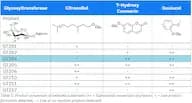
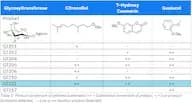
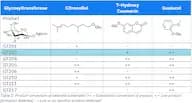
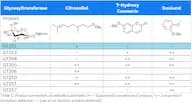
CAS:<p>Glucosyltransferase (GTase) is the enzyme that transfers glucose to another organic molecule (aglycon), establishing glycosidic linkage. UDP-glucose dependent GTases are part of the enzyme family of glucosyltransferases, they are versatile tools in glucosylation reactions. Different GTases have different substrate specificities. For the specificity of GT204 Glucosyltransferase, please see Table 1 that lists the available GTases with GT204 highlighted.Color: beigeForm: lyophilisateProtein content: 0.5 mg/mgThe glucosyltransferase was tested in a glucosylation reaction of a preferred substrate. High conversion after up to 24 h reaction time was observed.<br>Not sure which GTase to choose? Consider our Glucosyltransferase kit, which contains all 8 Glucosyltransferases.</p>Glucosyltransferase 206-freeze dried
CAS:<p>Glucosyltransferase (GTase) is the enzyme that transfers glucose to another organic molecule (aglycon), establishing glycosidic linkage. UDP-glucose dependent GTases are part of the enzyme family of glucosyltransferases, they are versatile tools in glucosylation reactions. Different GTases have different substrate specificities. For the specificity of GT206 Glucosyltransferase, please see Table 1 that lists the available GTases with GT206 highlighted.Color: beigeForm: lyophilisateProtein content: 0.5 mg/mgThe glucosyltransferase was tested in a glucosylation reaction of a preferred substrate. High conversion after up to 24 h reaction time was observed.<br>Not sure which GTase to choose? Consider our Glucosyltransferase kit, which contains all 8 Glucosyltransferases.</p>Glucosyltransferase 227-freeze dried
CAS:<p>Glucosyltransferase (GTase) is the enzyme that transfers glucose to another organic molecule (aglycon), establishing glycosidic linkage. UDP-glucose dependent GTases are part of the enzyme family of glucosyltransferases, they are versatile tools in glucosylation reactions. Different GTases have different substrate specificities. For the specificity of GT227 Glucosyltransferase, please see Table 1 that lists the available GTases with GT227 highlighted.Color: beigeForm: lyophilisateProtein content: 0.8 mg/mgThe glucosyltransferase was tested in a glucosylation reaction of a preferred substrate. High conversion after up to 24 h reaction time was observed.<br>Not sure which GTase to choose? Consider our Glucosyltransferase kit, which contains all 8 Glucosyltransferases.</p>Glucosyltransferase 210-freeze dried
CAS:<p>Glucosyltransferase (GTase) is the enzyme that transfers glucose to another organic molecule (aglycon), establishing glycosidic linkage. UDP-glucose dependent GTases are part of the enzyme family of glucosyltransferases, they are versatile tools in glucosylation reactions. Different GTases have different substrate specificities. For the specificity of GT210 Glucosyltransferase, please see Table 1 that lists the available GTases with GT210 highlighted.Color: beigeForm: lyophilisateProtein content: 0.8 mg/mg The glucosyltransferase was tested in a glucosylation reaction of a preferred substrate. High conversion after up to 24 h reaction time was observed.<br>Not sure which GTase to choose? Consider our Glucosyltransferase kit, which contains all 8 Glucosyltransferases.</p>NEK9 Protein, Human, Recombinant (His)
<p>Expression system: E. coli<br>Length: 52-308, Partial<br>Activity: Not Tested</p>Purezza:85%Colore e forma:SoildPeso molecolare:36.5 kDa (Predicted); 37 kDa (Reducing conditions)Glucosyltransferase 205-freeze dried
CAS:<p>Glucosyltransferase (GTase) is the enzyme that transfers glucose to another organic molecule (aglycon), establishing glycosidic linkage. UDP-glucose dependent GTases are part of the enzyme family of glucosyltransferases, they are versatile tools in glucosylation reactions. Different GTases have different substrate specificities. For the specificity of GT205 Glucosyltransferase, please see Table 1 that lists the available GTases with GT205 highlighted.Color: beigeForm: lyophilisateProtein content: 0.5 mg/mgThe glucosyltransferase was tested in a glucosylation reaction of a preferred substrate. High conversion after up to 24 hr reaction time was observed.<br>Not sure which GTase to choose? Consider our Glucosyltransferase kit, which contains all 8 Glucosyltransferases.</p>Glucosyltransferase 211-freeze dried
CAS:<p>Glucosyltransferase (GTase) is the enzyme that transfers glucose to another organic molecule (aglycon), establishing glycosidic linkage. UDP-glucose dependent GTases are part of the enzyme family of glucosyltransferases, they are versatile tools in glucosylation reactions. Different GTases have different substrate specificities. For the specificity of GT211 Glucosyltransferase, please see Table 1 that lists the available GTases with GT211 highlighted.Color: beigeForm: lyophilisateProtein content 0.7 mg/mgThe glucosyltransferase was tested in a glucosylation reaction of a preferred substrate. High conversion after up to 24 h reaction time was observed.<br>Not sure which GTase to choose? Consider our Glucosyltransferase kit, which contains all 8 Glucosyltransferases.</p>Glucosyltransferase 203-freeze dried
CAS:<p>Glucosyltransferase (GTase) is the enzyme that transfers glucose to another organic molecule (aglycon), establishing glycosidic linkage. UDP-glucose dependent GTases are part of the enzyme family of glucosyltransferases, they are versatile tools in glucosylation reactions. Different GTases have different substrate specificities. For the specificity of GT203 Glucosyltransferase, please see Table 1 that lists the available GTases with GT203 highlighted.Color: beigeForm: lyophilisateProtein content: 0.5 mg/mgThe glucosyltransferase was tested in a glucosylation reaction of a preferred substrate. High conversion after up to 24 h reaction time was observed.<br>Not sure which GTase to choose? Consider our Glucosyltransferase kit, which contains all 8 Glucosyltransferases.</p>Peroxidase Kit, 2 peroxidases with different substrate specificities
<p>Peroxidases can be utilized as enzymes catalyzing e.g. aromatic ring hydroxylation, epoxidation, halogenation, N- or S-oxidation, ether cleavage and alcohol/aldehyde oxidation reactions. The Peroxidase Kit contains 2 recombinant peroxidases of bacterial and fungal origin with a temperature optimum in the 20-40 °C range and pH optimum between pH 5 and 8.</p>Purezza:Min. 95%Glucosyltransferase 201-freeze dried
CAS:<p>Glucosyltransferase (GTase) is the enzyme that transfers glucose to another organic molecule (aglycon), establishing glycosidic linkage. UDP-glucose dependent GTases are part of the enzyme family of glucosyltransferases, they are versatile tools in glucosylation reactions. Different GTases have different substrate specificities. For the specificity of GT201 Glucosyltransferase, please see Table 1 that lists the available GTases with GT201 highlighted.Color: beigeForm: lyophilisateProtein content: 0.5 mg/mgThe glucosyltransferase was tested in a glucosylation reaction of a preferred substrate. High conversion after up to 24 h reaction time was observed.<br>Not sure which GTase to choose? Consider our Glucosyltransferase kit, which contains all 8 Glucosyltransferases.</p>EUCODIS® Nitrilhydratase 17, recombinant enzyme - ENH017
<p>Nitrile hydratase 17 recombinantly expressed in E. coli comes in a freeze-dried formulation. Nitrile hydratases can be utilized to convert nitriles into their corresponding amides, e.g. to produce acrylamide from acrylonitrile. Additional applications include the removal of nitriles from industrial wastewater. Our nitrile hydratases have been tested for hydrolysis of the following substrates:cyclohexanecarbonitrile, cinnamonitrile, benzonitrile, methacrylonitrile, pivalonitrile.</p>Aldolase from rabbit muscle
CAS:<p>One unit of aldolase (EC 4.1.2.13) will convert 1.0 µmol of Fructose-1,6-Diphosphate to Dihydroxyacetone phosphate and Glyceraldehyde-3-phosphate per min at 25 °C and pH 7.4. Lyophilized Powder.</p>Peso molecolare:161 g/molUrease from Canavalia ensiformis
CAS:<p>Urease from Canavalia ensiformis (Jack bean urease, EC 3.5.1.5) is an enzyme that catalyses the following reaction: (NH2)2CO + H2O → CO2 + 2 NH3 One unit of urease will yield 1.0 µmole of NH3 from urea per min at pH 7.0 and 25 °C.</p>Peso molecolare:480 g/molEUCODIS® Nitrilhydratase 10, recombinant enzyme - ENH010
<p>Nitrile hydratase 10 recombinantly expressed in E. coli comes in a freeze-dried formulation. Nitrile hydratases can be utilized to convert nitriles into their corresponding amides, e.g. to produce acrylamide from acrylonitrile. Additional applications include the removal of nitriles from industrial wastewater. Our nitrile hydratases have been tested for hydrolysis of the following substrates:cyclohexanecarbonitrile, cinnamonitrile, benzonitrile, methacrylonitrile, pivalonitrile.</p>Carboxypeptidase A from bovine pancreas
CAS:<p>Carboxypeptidase A (EC 3.4.17.1) is an exopeptidase enzyme. It hydrolyzes peptide bonds of C-terminal residues with aliphatic or aromatic side-chains. One unit of Carboxypeptidase A will hydrolyze 1.0 μmole of hippuryl-L-phenylalanine per min at pH 7.5 and 25 °C.</p>Glutaminase from escherichia coli
CAS:<p>Glutaminase (glutaminase I, L-glutaminase, glutamine aminohydrolase; EC 3.5.1.2) is an enzyme that catalyzes the following reaction: L-glutamine + H2O → L-glutamate + NH4+ One unit of glutaminase will convert 1.0 μmole of L-glutamine into L-glutamate per min at pH 4.9 and 37 °C.</p>Purezza:Min. 95%LacBuster® - S 2000 IU, β-lactamase I & II, lyophilized, γ irradiated - EBL023.2
<p>LacBuster®-S 2000 is a solid and Gamma-irradiated, freeze-dried, broad range beta-lactamase formulation with 2000 IU beta-lactamase II and 20000 IU beta-lactamase I activity per vial.</p>Neuraminidase from Vibrio Chloerae
CAS:<p>Neuraminidase (Exo-α-sialidase, sialidase, systematic name acetylneuraminyl hydrolase; EC 3.2.1.18) is an enzyme that catalyzes hydrolysis of glycosidic linkages of neuraminic acids. As it is exo-hydrolase, it hydrolyzes terminal N- or O- acylneuramic acid units, that are linked by α2,3-, α2,6-, and α2,8- glycosidic bonds. One unit of neuraminidase will hydrolyze 1 μmol N-acetyl-neuraminosyl-D-lactose under optimal conditions.</p>Formula:C21H25NO11Purezza:(Activity U/Ml) ≥ 0.00Peso molecolare:467.42 g/molEUCODIS® Nitrilhydratase 19, recombinant enzyme - ENH019
<p>Nitrile hydratase 19 recombinantly expressed in E. coli comes in a freeze-dried formulation. Nitrile hydratases can be utilized to convert nitriles into their corresponding amides, e.g. to produce acrylamide from acrylonitrile. Additional applications include the removal of nitriles from industrial wastewater. Our nitrile hydratases have been tested for hydrolysis of the following substrates:cyclohexanecarbonitrile, cinnamonitrile, benzonitrile, methacrylonitrile, pivalonitrile.</p>EUCODIS® Nitrilhydratase 14, recombinant enzyme - ENH014
<p>Nitrile hydratase 14 recombinantly expressed in E. coli comes in a freeze-dried formulation. Nitrile hydratases can be utilized to convert nitriles into their corresponding amidese, e.g. to produce acrylamide from acrylonitrile. Additional applications include the removal of nitriles from industrial wastewater. Our nitrile hydratases have been tested for hydrolysis of the following substrates:cyclohexanecarbonitrile, cinnamonitrile, benzonitrile, methacrylonitrile, pivalonitrile.</p>Heparinase I from flavobacterium heparinum
CAS:<p>Heparinase I (heparin lyase I, heparin eliminase; EC 4.2.2.7) in an enzyme that specifically cleaves oligosaccharides to remove heparan sulfate residues. One unit will form 1.0 μmole of unsaturated uronic acid per minute at pH 7.5 and 25 °C.</p>Purezza:Min. 95%EUCODIS® Nitrilhydratase 20, recombinant enzyme - ENH020
<p>Nitrile hydratase 20 recombinantly expressed in E. coli comes in a freeze-dried formulation. Nitrile hydratases can be utilized to convert nitriles into their corresponding amides, e.g. to produce acrylamide from acrylonitrile. Additional applications include the removal of nitriles from industrial wastewater. Our nitrile hydratases have been tested for hydrolysis of the following substrates:cyclohexanecarbonitrile, cinnamonitrile, benzonitrile, methacrylonitrile, pivalonitrile.</p>Purezza:Min. 95%EUCODIS® Nitrilhydratase 22, recombinant enzyme - ENH022
<p>Nitrile hydratase 22 recombinantly expressed in E. coli comes in a freeze-dried formulation. Nitrile hydratases can be utilized to convert nitriles into their corresponding amides, e.g. to produce acrylamide from acrylonitrile. Additional applications include the removal of nitriles from industrial wastewater. Our nitrile hydratases have been tested for hydrolysis of the following substrates:cyclohexanecarbonitrile, cinnamonitrile, benzonitrile, methacrylonitrile, pivalonitrile.</p>Purezza:Min. 95%Sucrose phosphorylase, recombinant, expressed in E. coli, ≥45 units/mg
CAS:<p>Sucrose phosphorylase (sucrose glucosyltransferase, disaccharide glucosyltransferase, systemic name Sucrose:orthophosphate α-D-glucosytransferase; EC 2.4.1.7) is an enzyme that catalyzes the following reaction: sucrose + Pi ⇌ D-fructose + α-D-glucose-1-phosphate One unit of Sucrose phosphorylase will produce 1.0 μmole of D-fructose per minute in the presence of sucrose and phosphate at pH 7.6 and 25 °C.</p>EUCODIS® Nitrilhydratase 01, recombinant enzyme - ENH001
<p>Nitrile hydratase 01 recombinantly expressed in E. coli comes in a freeze-dried formulation. Nitrile hydratases can be utilized to convert nitriles into their corresponding amidese, e.g. to produce acrylamide from acrylonitrile. Additional applications include the removal of nitriles from industrial wastewater. Our nitrile hydratases have been tested for hydrolysis of the following substrates:cyclohexanecarbonitrile, cinnamonitrile, benzonitrile, methacrylonitrile, pivalonitrile.</p>ODC1 Protein, Human, Recombinant (His)
<p>Ornithine decarboxylase (ODC1) is an enzyme which belongs to the Orn/Lys/Arg decarboxylase class-II family.</p>Colore e forma:Lyophilized PowderPeso molecolare:25 &58 KDa (reducing condition)Thioglucosidase from Sinapis alba (white mustard) seed
CAS:<p>Thioglucosidase (thioglucoside glucohydrolase, Myrosinase, sinigrinase, sinigrase; EC 3.2.1.147) is an enzyme that cleaves thio-linked glucosides:a thioglucoside + H2O ⇌ a sugar + a thiol (the thiol formed is usually unstable and undergoes spontaneous re-arrangement into a isothiocyanate through a loss of a sulfate group)One unit will produce 1.0 μmole glucose per min from sinigrin (a thio-linked glucoside) at pH 6.0 and 25 °C.</p>