Enzimi nelle Proteine Ricombinanti
Gli enzimi accelerano le reazioni chimiche, agendo come catalizzatori biologici, agendo sui substrati e convertendoli in diverse molecole chiamate prodotti. Queste proteine sono indispensabili nei processi biochimici e nelle applicazioni industriali, facilitando le reazioni in condizioni miti con alta specificità ed efficienza. Da CymitQuimica, offriamo un'ampia selezione di enzimi di alta qualità per supportare le vostre applicazioni di ricerca, industriali e cliniche.
Trovati 3317 prodotti di " Enzimi nelle Proteine Ricombinanti"
Ordinare per
Purezza (%)
0
100
|
0
|
50
|
90
|
95
|
100
VEGFR3/FLT4 Protein, Human, Recombinant (His & Avi), Biotinylated
<p>VEGFR3/FLT4 Protein, Human, Recombinant (His & Avi), Biotinylated is expressed in HEK293 mammalian cells with His and Avi tag.</p>Colore e forma:Lyophilized PowderPeso molecolare:87.80 kDa (predicted); 126.18, 81.32 and 69.37 kDa (reducing conditions)EUCODIS® Peroxidase 12, from bacterial, fungal and plant origin, recombinant - EP012
CAS:<p>Peroxidase 12 recombinantly expressed in P. pastoria comes in a freeze-dried formulation. It has its pH optimum at 5-8 and temp. optimum at 20-40°C. Peroxidases can be utilized as enzymes catalyzing e.g. aromatic ring hydroxylation, epoxidation, halogenation, N- or S-oxidation, ether cleavage and alcohol/aldehyde oxidation reactions. Peroxidase 12 was shown to act on styrene, veratryl alcohol, vanillyl alcohol, n-methyl anthranilate and thioanisole.</p>Colore e forma:PowderProteinase K, high-quality, freeze-dried, recombinant
CAS:<p>A proteolytic enzyme; degrades protein contaminants in nucleic acid preparations</p>Laccase from Trametes versicolor
CAS:<p>Multi-copper oxidase from the family of polyphenol oxidades. It can be also found in many plants and bacteria. Laccase catalyses the oxidation of phenolic compounds such as lignin. It can oxidase non phenolic groups too with the use of mediators, chemical agents involved in the transfer of the electrons during the reaction. In some cases, laccase can also oxidise halogenated compounds. This enzyme is used for enzymatic assays, lignol screening tests and for waste water treatment to remove biodegrdable pollutants.</p>Colore e forma:PowderPenase, 3300 IU, β-lactamase I, lyophilized - EBL051.2
<p>Freeze-dried powder with 3300 IU beta-lactamase I activity per vial against all relevant penicillins. Our penase (penicillinase) posesses a specific substrate range solely against all relevant penicillins.</p>Colore e forma:PowderCatalase 01
CAS:<p>A catalase product which neutralizes hydrogen peroxide at much higher concentrations (>10 %) compared to pyruvate, which is only capable of completely neutralizing hydrogen peroxide at the lowest concentration tested (2 %). Catalase (EC 1.11.1.6) catalyzes the following reaction:2H2O2 → 2H2O + O21 unit of catalase will decompose 1.0 μmole of H2O2 per min at pH 7.0 and 25 °C.</p>Phospholipase D 040, concentrated (100 U/mg), spray-dried, recombinant, of prokaryotic origin
CAS:<p>Phospholipase D 040, concentrated (100 U/mg), spray-dried, recombinant, of prokaryotic origin, is an enzyme preparation designed for advanced biochemical applications. This enzyme is derived from a prokaryotic source through recombinant DNA technology, allowing for high purity and activity. Phospholipase D functions by catalyzing the hydrolysis of phospholipids to produce phosphatidic acid and free head groups, which is a crucial reaction in both lipid signaling and membrane dynamics.</p>Purezza:Min. 95%Penicillin G acylase, 10mg/ml aqueous solution
CAS:<p>Penicillin G acylase, 10mg/ml aqueous solution, is a biocatalytic enzyme used in pharmaceutical research and production. This enzyme is typically sourced from various microbial species, predominantly bacteria, through fermentation processes. Its primary mode of action involves the hydrolysis of penicillin G, catalyzing the cleavage of the side chain amide bond to produce 6-aminopenicillanic acid (6-APA), a core building block for the synthesis of a variety of semi-synthetic penicillins.</p>Purezza:Min. 1000 U/MlColore e forma:Brown Clear LiquidCatalase ECAT01™, EUCODIS® Patent: US 9951306 and EP2861715
CAS:<p>A proprietary potent and stable alternative to chemical neutralizers such as pyruvate - for the utilization in environmental monitoring applications. Use of catalase as a supplement in media plates offers a more effective and reliable solution for safe and secure environmental monitoring of sterilization in clean rooms, isolators or production facilities by also removing remaining traces and spots of high concentration of H2O2. Currently, agar plates for monitoring disinfection or sterilization are supplemented with pyruvate, which is consumed during the neutralization of hydrogen peroxide. One of the main benefits of this catalase is its high stability in agar media at 50°C, which allows easy preparation of media and processing into plates. Due to the high stability no special storage conditions are needed and a shelf-life of > 6 months at 4-25°C can be guaranteed.<br>Key features are:</p>Phospholipase D
CAS:<p>Phospholipases D belong to the family of esterases and act on phosphatidylcholine in the plasma membrane to release phosphatidic acid (PA) and choline. Phospholipases D can be used as versatile tools in hydrolysis and transphosphatidylation reactions for industrial, chemical and food applications.</p>Glucosyltransferase201-freeze dried
CAS:<p>Glucosyltransferase201-freeze dried is an enzymatic preparation that is primarily sourced from bacterial or plant organisms. It functions by catalyzing the transfer of glucose moieties from donor molecules, such as UDP-glucose, to specific acceptor molecules, thus forming glycosidic bonds. This mode of action is crucial in the biosynthesis and modification of polysaccharides and glycoconjugates.</p>ALPK1 Protein, Human, Recombinant (His & Myc)
<p>ALPK1 Protein, Human, Recombinant (His & Myc) is expressed in Baculovirus.</p>Colore e forma:Lyophilized PowderPeso molecolare:29.9 kDa (predicted)Glucosyltransferase Kit
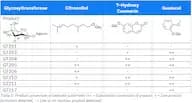
CAS:<p>The kit contains 8 different Glucosyltransferases (GTases), which are enzymes that transfer glucose to another organic molecule (aglycon), establishing glycosidic linkage. UDP-glucose dependent GTases are part of the enzyme family of glucosyltransferases, they are versatile tools in glucosylation reactions. Different GTases have different substrate specificities, as shown on Table 1. The kit is especially designed for screening and finding the most well-suited GTase for your specific process. All GTases in the kit are also available individually for bulk purchase.</p>EUCODIS® Nitrilhydratase 21, recombinant enzyme - ENH021
<p>Nitrile hydratase 21 recombinantly expressed in E. coli comes in a freeze-dried formulation. Nitrile hydratases can be utilized to convert nitriles into their corresponding amides, e.g. to produce acrylamide from acrylonitrile. Additional applications include the removal of nitriles from industrial wastewater. Our nitrile hydratases have been tested for hydrolysis of the following substrates:cyclohexanecarbonitrile, cinnamonitrile, benzonitrile, methacrylonitrile, pivalonitrile.</p>Immobilized Lipase Kit, 7 unique immobilized EUCODIS® Lipases, immobilized by adsorption and covalent binding - ELIM Kit
<p>Lipases belong to the family of esterases and naturally act on triglycerides at lipid-water interfaces. Lipases/esterases can be used as versatile tools in hydrolytic reactions, esterifications and transesterification reactions in industrial and food applications. The immobilized Lipase kit contains 7 different lipases, immobilised on a hydrophobic carrier either by adsorption or covalent linkage. Immobilized lipases can be utilized in various reaction types, and are optimal for all reactions in organic solvents or solvent-free systems.</p>L-Methionine γ-lyase
CAS:<p>A pyridoxal phosphate-containing enzyme that converts L-methionine to α-ketobutyrate, ammonia and methyl mercaptan. Recombinant from e.coli source. <br>EC 4.4.1.11</p>Purezza:Min. 95%Protease
CAS:<p>A protease enzyme from bacillus subtilis which catalyzed proteolysis, a process that breaks down proteins and peptides to small polypeptides or amino acids</p>