Enzimi nelle Proteine Ricombinanti
Trovati 3319 prodotti di " Enzimi nelle Proteine Ricombinanti"
Adenylate Kinase 1, human, recombinant
Adenylate kinase 1 (EC 2.7.4.3) catalyzes interconversion between ATP, ADP and AMP by catalyzing the following reaction: ATP + AMP ⇔ 2 ADP One unit of Adenylate kinase 1 will convert 1.0 µmol ATP and 1.0 µmol AMP to 2.0 µmol ADP per min at optimum conditions.Purezza:Min. 95%C. rugosa Lipase 01, CRL 1 from Candida rugosa - ELCR01
Lipases belong to the family of esterases and naturally act on triglycerides at lipid-water interfaces. Lipases/esterases can be used as versatile tools in hydrolytic reactions, esterifications and transesterification reactions in industrial and food applications. The Lipase 01 from the yeast Candida rugosa has a temperature optimum in the 30 - 50 °C range and pH optimum between pH 7 and 8.Protein disulfide isomerase from bovine liver
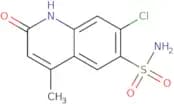
CAS:An enzyme that catalyzes the formation and breakage of disulfide bonds in the folding of proteinsFormula:C7H5Cl2NO5SPurezza:Min. 95%Peso molecolare:286.09 g/molOxalate Oxidase, freeze-dried, from Wheat
CAS:Oxalate Oxidase, freeze-dried, from Wheat is an enzyme preparation which is derived from wheat and functions through the oxidative degradation of oxalate. This enzyme catalyzes the conversion of oxalate into carbon dioxide and hydrogen peroxide, utilizing oxygen as a co-substrate in the process. The activity of Oxalate Oxidase is crucial in biological and biochemical applications where oxalate degradation is required.Ref: 3D-ETS012.6
10U711,00€1KU4.680,00€25U551,00€2KU8.189,00€50U914,00€100U1.044,00€0.1KU1.020,00€0.5KU2.925,00€1000U5.429,00€2000U9.481,00€0.25KU1.802,00€EUCODIS® CalB01 IA, engineered variant of Candida antarctica Lipase B, immobilized by adsorption on hydrophobic carrier - ELCB01IA
Lipases belong to the family of esterases and naturally act on triglycerides at lipid-water interfaces. Lipases/esterases can be used as versatile tools in hydrolytic reactions, esterifications and transesterification reactions in industrial and food applications. The CalB01 IA lipase has been immobilized on a hydrophobic carrier by adsorption. The immobilized CalB01 lipase has a temperature optimum in the 40 - 50 °C range and pH optimum between pH 5 and 8.Cathepsin B from human placenta
CAS:Cathepsin B is a lysosomal proteolytic enzyme of the cysteine protease family. It is present in all mammalian cells. It is essential for the intracellular protein turnover. Cathepsin B may be a useful tool in Alzheimer′s research, as it may have a role in the natural defense against the disease.Purezza:Min. 95%Immobilized Lipase Kit, 7 unique immobilized EUCODIS® Lipases, immobilized by adsorption and covalent binding - ELIM Kit
Lipases belong to the family of esterases and naturally act on triglycerides at lipid-water interfaces. Lipases/esterases can be used as versatile tools in hydrolytic reactions, esterifications and transesterification reactions in industrial and food applications. The immobilized Lipase kit contains 7 different lipases, immobilised on a hydrophobic carrier either by adsorption or covalent linkage. Immobilized lipases can be utilized in various reaction types, and are optimal for all reactions in organic solvents or solvent-free systems.Deoxycytidine Kinase, human, recombinant
Deoxycytidine kinase (dCK, EC 2.7.1.74) is an enzyme that catalyzes the following reaction: dC + ATP → dCMP + ADP It can also use UTP as a donor of the phosphate group, and it can phosphorylate other deoxyribonucleosides (e.g. dA, dG) as well as nucleoside analogues (like clofarabine). One unit of dCK will convert 1.0 µmole of dC and ATP to dCMP and ADP per minute at pH 7.5 and 37°C.Purezza:Min. 95%Chymase
CAS:Chymase (alternative names mast cell protease 1, mast cell serine proteinase, skeletal muscle protease, EC 3.4.21.39) is a serine protease, found in mast cells and basophil granulocytes.Purezza:Min. 95%Amidase, from Rhodococcus sp., recombinant, lyophilized - EAM02
CAS:Amidase (EC 3.5.1.4) is a hydrolase acting on carbon-nitrogen bonds in linear amides and can be used in the hydrolysis of amides to acids. Amidase 02 is of bacterial origin (R. erythropolis and has been produced in E.coli).Ribonuclease A
CAS:Ribonuclease A (RNase A) is widely used to break down RNA in DNA purification. RNase A catalyzes the endonucleolytic cleavage of phosphodiester bonds of RNA.Serratiopeptidase
CAS:Serratiopeptidase (serratio peptidase, serratia peptidase, serrapeptidase, serratia E-15 protease, serralysin, serrapeptase; EC 3.4.24.40) is a proteolitic enzyme (proteinase) that is produced by Serratia marcescens.Purezza:Min. 95%Colore e forma:PowderPNPase
Specific activity: >500 units/mg-protein.Unit definition: One unit will polymerize 1.0 micro mole of ADP, releasing 1.0 micro mole of inorganic phosphate in 15 minutes at pH 9.1 at 37 °C.
Creatinase from pseudomonas sp.
CAS:Creatinase (EC 3.5.3.3) is an enzyme that catalyzes the fellowing reaction: creatine + H2O ⇌ sarcosine + ureaOne unit of creatinase will hydrolyze 1.0 µmole of creatine into sarcosine and urea per min at pH 7.5 and 37 °C.Purezza:Min. 95%Carboxypeptidase Y, from S. cerevisiae, recombinant, lyophilized - ECPY001
CAS:Carboxypeptidase Y (EC 3.4.16.1) is an exopeptidase enzyme. It hydrolyzes peptide bonds of C-terminal residues and it remains active in the presence of urea at low to moderate concentrations. One unit of the Carboxypeptidase Y will hydrolyze 1.0 μmole of a chromogenic peptide substrate, releasing C-terminal alanine and generating a light-absorbing product. Carboxypeptidase Y has been obtained from yeast S. cerevisiae, has a broad substrate specificity and can therefore be used in sequence analysis of proteins. Carboxypeptidase Y has a temperature optimum in the 20 – 30 °C range and pH optimum between pH 6 and 7.Cellulose catalase
Cellulose catalase is an enzyme-based product, designed specifically to act as a catalyst in the oxidative processes associated with cellulose applications. It is derived from a microbial source, where bacilli or fungi are employed to produce robust catalase enzymes in a fermentation process. The mode of action involves the catalase enzyme’s ability to facilitate the decomposition of hydrogen peroxide into water and oxygen, thereby reducing oxidative damage during cellulose processing.
Formaldehyde Dehydrogenase
CAS:Formaldehyde dehydrogenase (EC 1.2.1.46) is an enzyme that catalyzes the following reaction: formaldehyde + NAD+ + H2O ⇌ formate + NADH + H+ One unit of formaldehyde dehydrogenase will convert 1.0 µmole of formaldehyde to formic acid per minute at pH 7.5 and 37°C in the presence of NAD+.NAD+ is available here.α-N-Acetylglucosaminidase
CAS:α-N-Acetylglucosaminidase (recombinant Human NAGLU Protein), degrades heparan sulfate by hydrolysis of terminal GlcNAc resides in N-acetyl-alpha-D-glucosaminides of heparan sulfate.Activity is measured by its ability to hydrolyse 4-Nitrophenyl 2-acetamido-2-deoxy-a-D-glucopyranoside EN03208 or EM31027. The specific activity is >900 pmol/min/μg, as measured under the decribed conditions.Purezza:(Sds-Page) Min. 95%Secreted Phospholipase A2-IIA, human, recombinant
The secreted phospholipase A2-IIA (sPLA2-IIA, PLA2, systematic name phosphatidylcholine 2-acylhydrolase; EC 3.1.1.4) is an enzyme that catalyses the hydrolysis of glycerophospholipids at the sn2 position, yielding 1-acylglycerophosphocholine and a fatty acid. One unit of secreted phospholipase A2-IIA will hydrolyze 1.0 μmole of substrate per min under optimal conditions.Purezza:Min. 95%Mannitol dehydrogenase from leuconostoc mesenteroides
CAS:Mannitol dehydrogenase (MDH, mannitol 2-dehydrogenase, EC 1.1.1.67) is an enzyme that catalyzes the following reaction: D-mannitol + NAD+ ⇌ D-fructose + NADH + H+ One unit of mannitol dehydrogenase will generate 1.0 μmole of D-fructose per min in the presence of NAD+ at pH 8.6 and 40°C. NAD+ is available here and NADH is available here, depending on whether you require the reaction to proceed from left to right or from righ to left, respectively.
Purezza:Min. 95%Ref: 3D-JAA00165
5UPrezzo su richiesta10UPrezzo su richiesta25UPrezzo su richiesta50UPrezzo su richiestaUbiquitin Conjugating enzyme E2C Human Recombinant
Ubiquitin Conjugating enzyme E2C (other names UBE2C, UBCH10, dJ447F3.2, ubiquitin conjugating enzyme E2 C; EC 2.3.2.24) is an essential mediator of mitotic destruction events and cell cycle progression. It catalyzes the destruction of cyclins A and B in conjunction with the anaphase-promoting complex, and therefore, plays an important role in the control of the cell exit from mitosis This activity is essential at then end of mitosis for the inactivation of their partner kinase Cdc2 and exit from mitosis into G1 of the next cell cycle. In addition, UBE2C bears homology to yeast PAS2, a gene that is essential for biogenesis of peroxisomes. UBE2C is useful for in vitro ubiquitinylation reactions.Diaphorase (from Clostridium kluyveri)
CAS:Diaphorase (lipoyl dehydrogenase, EC 1.8.1.4) is an NAD+/NADH-dependent oxidoreductase. One unit of diaphorase will convert 1.0 μmole NADH into NAD+ the presence of substrate at pH 7.5 and 25 °C.Purezza:Min. 95%α-Mannosidase
CAS:α-Mannosidase (α-D-mannopyranosidase, 1,2-α-mannosidase, 1,2-α-D-mannosidase, exo-α-mannosidase, α-D-mannosidase, systematic name α-D-mannoside mannohydrolase; EC 3.2.1.24) is an enzyme that cleaves α-mannose to produce glucose. One unit of α-Mannosidase will hydrolyze 1.0 µmole of chromogenic phosphate mimic p-nitrophenyl-α-p-mannoside to p-nitrophenol in 1 minute at pH 5.0 and 37°C.
Peso molecolare:65.4 g/molβ-Glucanase 2, thermostable
CAS:Thermostable β-Glucanase 2 is an enzyme that hydrolases β-Glucans into glucose. One unit of β-Glucanase 2 will produce 1.0 μmole of glucose from β-glucan per minute at pH 5.8 and 70 °C.Purezza:Min. 95%Transglutaminase from guinea pig liver
CAS:Transglutaminase (2.3.2.13) is an enzyme that catalyzes formation of isopeptide bonds between the γ-carboxamide groups ( -(C=O)NH2 ) of glutamine side chains and amino groups. The donor of the amino group is usually (but not always) an ε-amino group ( -NH2 ) of lysine residue. The reaction also releases ammonia: Gln-(C=O)NH2 + NH2-Lys → Gln-(C=O)NH-Lys + NH3One unit of transglutaminase will catalyze the formation of 1.0 μmole transglutamination product per min at pH 6.0 and 37 °C.Purezza:Min. 95%Lipoprotein lipase
CAS:Lipoprotein lipase is a critical enzyme used to modulate lipid processing, primarily sourced from mammalian tissues. It functions by hydrolyzing triglycerides present in circulating chylomicrons and very low-density lipoproteins. This enzymatic process liberates free fatty acids, which can subsequently be utilized as energy by peripheral tissues or stored in adipose tissue. Lipoprotein lipase is pivotal in lipid metabolism, participating in maintaining homeostasis of plasma lipid levels.Purezza:Min. 95%Casein Kinase 2
Casein kinase 2 (CK2, CSNK2; EC 2.7.11.1) is a constitutively active serine and threonine protein kinase. It plays a role in a range of cellular processes, including DNA repair, cell cycle control, metabolic regulation, circadian rhythms and more. Its known substrates include hundreds of proteins. One unit of CK2 will phosphorylate of 1 pmol of of peptide substrate in 1 minute at 30°C and presence of ATP.Formula:C45H73N19O24Purezza:Min. 95%Peso molecolare:1,264.17 g/molLipoxidase
CAS:Lipoxidase is an enzyme, which is typically sourced from various plant tissues, animals, and some microorganisms. It functions by catalyzing the oxidation of polyunsaturated fatty acids in the presence of oxygen. This enzymatic action results in the formation of lipid hydroperoxides, which are key intermediates in various biochemical pathways, including those involved in cell signaling and the modulation of gene expression.Purezza:Min. 95%Citrate lyase from klebsiella pneumonia ≥0.20 unit/mg solid
CAS:Citrate lyase (also known as ATP citrate synthase, EC 2.3.3.8) is an enzyme that catalyzes the following reaction:citrate + ATP + CoA → oxaloacetate + Acetyl-CoA + ADP + PiEnzymatic activity: One unit will convert 1.0 micromole of citrate to oxalacetate per minute at pH 7.6 and 25 °C in the presence of required cofactors. Citrate lyase is supplied lyophylized, with activity ≥0.20 unit/mg solid.Purezza:Min. 95%Ubiquitin thiolesterase UCHL1
CAS:Ubiquitin thiolesterase UCHL1 (Ubiquitin carboxy-terminal hydrolase L1; EC 3.1.2.15) is an enzyme that hydrolyses small C-terminal ubiquitin adducts to regenerate ubiquitin.Chloroperoxidase, aqueous suspension
CAS:Chloroperoxidase (also known as chloride peroxidase, systemic name chloride:hydrogen-peroxide oxidoreductase, EC 1.11.1.10) is an enzyme that catalyzes chlorination of organic compounds. Overall reaction is the following:R-H + Cl− + H2O2 + H+ → R-Cl + 2 H2O; reaction intermediate is hypochlorous acid (HOCl). One unit of chloroperoxidase will convert 1.0 μmole of substrate per minute.
Colore e forma:PowderProtease from Streptomyces griseus
CAS:Protease enzymes break down proteins and are essential for many biological processes, including digestion, cellular regulation and blood clotting. They are also used in many industrial and biotechnological applications for example in food processing and in detergents.
Purezza:Min. 95%Colore e forma:PowderGlutathione peroxidase
CAS:Glutathione peroxidase (EC 1.11.1.9) is an enzyme that reduces peroxides to limit oxidative damage, by catalyzing the following reaction: 2 GSH + H2O2 → GS–SG + 2 H2O One unit of glutathione peroxidase will catalyze the conversion of 1.0 µmole of H2O2 per minute at pH 7.0 and 25 °C in the presence of reduced glutathione. Reduced glutahione is available here.Purezza:Min. 95%Peso molecolare:84,500 g/molCytochrome C oxidase
CAS:Cytochrome C oxidase (originally assigned EC 1.9.3.1, now re-assigned EC 7.1.1.9) is an enzyme that catalyzes the following reaction: 4 Fe2+ – cytochrome c + 4 H+ + O2 → 4 Fe3+ – cytochrome c + 2 H2OPPIE Protein, Human, Recombinant (His)
Peptidyl-prolyl cis-trans isomerase E, also known as Cyclophilin E, Cyclophilin-33, Rotamase E, CYP33, PPIE, is an enzyme which belongs to the cyclophilin-typeColore e forma:Lyophilized PowderPeso molecolare:34 KDa (reducing condition)Ref: TM-TMPJ-01389
1mg2.535,00€5µg113,00€10µg178,00€20µg284,00€50µg523,00€100µg759,00€200µg1.103,00€500µg1.765,00€CK1 δ/CSNK1D Protein, Human, Recombinant (Baculovirus, His)
Expression system: Baculovirus
Length: 1-415, Full Length
Activity: Not TestedPurezza:85%Colore e forma:Odour Lyophilized PowderRef: TM-TMPH-03771
1mg8.803,00€5µg947,00€10µg1.598,00€20µg2.712,00€50µg3.520,00€100µg4.337,00€200µg5.358,00€500µg7.113,00€PGDS Protein, Human, Recombinant
Hematopoietic Prostaglandin D Synthase (HPGDS) belongs to the GST superfamily and Sigma family.Colore e forma:Lyophilized PowderPeso molecolare:26 KDa (reducing condition)Ref: TM-TMPJ-00690
1mg2.758,00€5µg113,00€10µg178,00€20µg284,00€50µg523,00€100µg779,00€200µg1.142,00€500µg1.923,00€QPRTase Protein, Human, Recombinant (His)
Nicotinate-Nucleotide Pyrophosphorylase (QPRT) belongs to the nadC/modD family.Colore e forma:Lyophilized PowderPeso molecolare:34 KDa (reducing condition)Ref: TM-TMPJ-00473
1mg2.535,00€5µg113,00€10µg178,00€20µg284,00€50µg523,00€100µg759,00€200µg1.103,00€500µg1.765,00€Lysozyme - Enzyme activity min 40000 FIP/mg
CAS:Lysozyme is a bacteriolytic enzyme, which is primarily derived from hen egg whites. It functions by hydrolyzing the β-1,4-glycosidic linkages in the peptidoglycan layer of bacterial cell walls, particularly in Gram-positive bacteria. This enzymatic activity results in the lysis and subsequent death of the bacterial cells, providing a potent antimicrobial effect.Colore e forma:PowderLyticase
CAS:Lyticase is a lysing enzyme that is designed to lyse cells in a biological sample. It contains an optimized wild-type guanine nucleotide-binding protein and has been shown to have high enzyme activities. Lyticase has also been shown to be active against opportunistic fungal strains, such as Candida glabrata, by disrupting their cell membranes. Lyticase is classified as a signal peptide with nuclear DNA, which allows it to be used in wastewater treatment applications. The enzyme can also be used for the analysis of the Toll-like receptor (TLR) response of microbes due to its electrochemical impedance spectroscopy properties.Purezza:Min. 95%Glucose dehydrogenase
CAS:Glucose Dehydrogenase is an enzyme, which is typically derived from microbial sources such as bacteria and fungi. It functions by catalyzing the oxidation of glucose to gluconolactone, concurrently reducing a cofactor such as NAD⁺ or PQQ. This biochemical reaction is critical in various analytical applications due to its specificity and efficiency in glucose detection.Glucose Dehydrogenase is widely employed in the development of biosensors and diagnostic assays. Its primary application is in blood glucose monitoring devices, where its ability to accurately quantify glucose levels is crucial for managing diabetes. Additionally, it is utilized in research and development settings for biochemical assays that require precise glucose measurements. The enzyme's rapid and specific action on glucose molecules makes it an indispensable tool in both clinical and laboratory environments, contributing to advancements in biosensing technologies and metabolic studies.Maltose phosphorylase (from bacteria), ammonium sulphate suspension
CAS:Maltose phosphorylase (systematic name maltose:phosphate 1-beta-D-glucosyltransferase; EC 2.4.1.8) is an enzyme that catalyzes the following reaction: maltose + Pi ⇌ D-glucose + beta-D-glucose 1-phosphate One unit of maltose phosphorylase will produce 1.0 μmole of D-Glucose from maltose per minute at pH 7.0 and 30°C.Purezza:Min. 95%Peso molecolare:0 g/molEndoproteinase Glu-C
CAS:Endoproteinase Glu-C (Glutamyl endopeptidase, V8 protease, GluV8, EC 3.4.21.19) is a protease that hydrolyzes peptide bonds at the carboxylic side of either exclusively Glu, or Glu and Asp residues, depending on the buffer conditions. One unit of endoproteinase Glu-C will generate 1.0 μmole of p-nitroaniline from Z-Phe-Leu-Glu-pNA peptide mimic substrate per minute at pH 7.8 and 25 °C. Z-Phe-Leu-Glu-pNA substrate is available here.molecular weight ~ 27000.
Formula:C65H98N16O19Peso molecolare:1,407.56 g/molCarboxypeptidase Y from baker's yeast
CAS:Carboxypeptidase Y (EC 3.4.16.1) is an exopeptidase enzyme. It hydrolyzes peptide bonds of C-terminal residues and it remains active in the presence of urea at low to moderate concentrations. One unit of the Carboxypeptidase Y will hydrolyze 1.0 μmole of a chromogenic peptide substrate, releasing C-terminal alanine and generating a light-absorbing product.Purezza:Min. 95%endo-β-1,4-Mannanase
CAS:Endo-β-1,4-Mannanase (other names Mannan endo-1,4-β-mannosidase, endo-β-1,4-mannase, β-mannanase B, β-1, 4-mannan 4-mannanohydrolase, endo-β-mannanase, β-D-mannanase, 1,4-β-D-mannan mannanohydrolase; EC 3.2.1.78) is an enzyme, catalyzing the hydrolysis of -1, 4-mannosidic linkages in mannans, glucomannans and galactomannans. One unit of Endo-β-1,4-Mannanase will release 1.0 µmole of mannose reducing-sugar per minute from a 3mg/ml mannan solution at pH 5.5 and 37degC. Expressed in U/g.Invertase
CAS:Invertase is an enzyme that catalyzes the hydrolysis of sucrose to glucose and fructose and can be found in plants and microorganisms
Colore e forma:Beige PowderTransglutaminase from streptoverticillium mobaraense
CAS:selectively deamidates gluten peptides, which results in strongly enhanced T cell-stimulatory activity. It has also been used in a study to improve quantifiable assays to fully characterize the role of transglutaminase in diseases such as Huntington′s disease and Alzheimer′s disease.Colore e forma:Powderβ-Galactosidase >100KU/g
CAS:beta-Galactosidase (EC 3.2.1.23, shortly beta-Gal, also know as lactase) catalyses the hydrolysis of beta-d-galactoside in the presence of water to galactose and alcohol, or lactose into glucose and galactose. beta-Gal has a molecular weight of 540,000 and is composed of four identical subunits of MW 135,000, each with an independent active site. The enzyme has divalent metals as cofactors, with chelated Mg2+ ions required to maintain active site conformation. The molecule contains numerous sulfhydryl groups and is glycosylated.Colore e forma:Powderα-Glucosidase from bacillus stearothermophilus, lyophilized powder, 250 Units
CAS:α-Glucosidase is a glycoside hydrolase enzyme that hydrolyzes α-1,4-linked D-glucose residues to produce α-D-glucose. This enzyme has been isolated from Bacillus stearothermophilus and is used as an industrial catalyst in the production of glucose syrups. One Unit of α-Glucosidase will release 1.0 µmole of p-nitrophenol from the chromogenic substrate mimic 4-nitrophenyl α-D-glucopyranoside per minute under optimum conditions.Colore e forma:PowderAcetylcholinesterase, type VI-S, 200-1,000 units/mg protein
CAS:Acetylcholinesterase is an enzyme that breaks down acetylcholinePurezza:Min. 95%Colore e forma:Powder