Enzimi nelle Proteine Ricombinanti
Trovati 3319 prodotti di " Enzimi nelle Proteine Ricombinanti"
Proteinase K - from Tritirachium album
CAS:Proteinase K is used for the general digestion of proteins and removal of protein contamination in nucleic acids. Addition of Protease K also stabilizes nucleic acids by degrading any nucleases present. Proteinase K is active in wide range of pH range, in the presence of SDS, urea and Guanidinium chloride at low to moderate concentrations. Proteinase K is also known under names of protease K and endopeptidase K.Protease - from bacillus licheniformis
CAS:Protease enzymes break down proteins and are essential for many biological processes, including digestion, cellular regulation and blood clotting. They are also used in many industrial and biotechnological applications for example in food processing and in detergents.
Colore e forma:PowderNucleoside phosphorylase from microorganisms
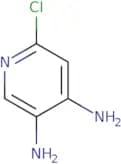
CAS:Nucleoside phosphorylase (Purine nucleoside phosphorylase, PNP, PNPase, inosine phosphorylase, inosine-guanosine phosphorylase; EC 2.4.2.1) is an enzyme that catalyzes the following reaction: purine nucleoside + Pi ⇌ purine + alpha-D-ribose 1-phosphate One unit of nucleoside phosphorylase will phosphorylate 1.0 micromole of inosine to hypoxanthine and alpha-D-ribose 1-phosphate per min at pH 7.4 and 25°C.Formula:C5H6ClN3Purezza:Min. 95%Peso molecolare:143.57 g/molGlyceraldehyde-3-phosphate dehydrogenase
CAS:75u/mg - Glyceraldehyde 3-phosphate dehydrogenase (GAPDH; EC 1.2.1.12) is an enzyme that catalyzes the following reaction: glyceraldehyde 3-phosphate + NAD+ + Pi ⇌ glycerate 1,3-bisphosphate + NADH + H+ One unit of GAPDH will convert 1.0 μmole of glyceraldehyde 3-phosphate into glycerate 1,3-bisphosphate per minute at pH 8.5 and 37 °C in the presence of NAD+ and phosphate. NAD+ is available here.Formula:C3H7O6PPurezza:Min. 95%Peso molecolare:170.06 g/molCholine oxidase
CAS:Choline oxidase (EC 1.1.3.17) is an enzyme that catalyzes the following reaction: choline + O2 + H20 ⇌ betaine aldehyde + H2O2One unit of choline oxidase will form 1 μmole of H2O2 by oxidizing choline to betaine aldehyde per min at pH 8.0 and 37 °C. You can remove the build-up of hydrogen peroxide using catalase.
Purezza:Min. 95%Laccase from Trametes versicolor
CAS:Multi-copper oxidase from the family of polyphenol oxidades. It can be also found in many plants and bacteria. Laccase catalyses the oxidation of phenolic compounds such as lignin. It can oxidase non phenolic groups too with the use of mediators, chemical agents involved in the transfer of the electrons during the reaction. In some cases, laccase can also oxidise halogenated compounds. This enzyme is used for enzymatic assays, lignol screening tests and for waste water treatment to remove biodegrdable pollutants.
Colore e forma:PowderCocarboxylase hydrochloride
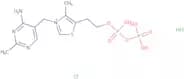
CAS:Cocarboxylase hydrochloride is a coenzyme derivative, which is primarily sourced from thiamine (vitamin B1). It plays a crucial role in biochemical processes by facilitating the enzymatic decarboxylation of alpha-keto acids within the cellular environment. This action is fundamental in energy production as it aids in the conversion of pyruvate to acetyl-CoA, subsequently entering the citric acid cycle. Cocarboxylase hydrochloride’s involvement in carbohydrate metabolism is especially vital for tissues with high metabolic rates, such as the heart and brain.
Formula:C12H19N4O7P2S·ClHClPurezza:Min. 95%Peso molecolare:497.23 g/molMyokinase (from Yeast)
CAS:Myokinase (Adenylate kinase, EC 2.7.4.3) catalyzes interconversion between ATP, ADP and AMP by catalyzing the following reaction:ATP + AMP ⇌ 2 ADPOne unit of Myokinase will convert 1.0 µmol ATP and 1.0 µmol AMP to 2.0 µmol ADP per min at 25°C and pH 7.5.Butyrylcholinesterase human
CAS:Butyrylcholinesterase is an enzyme made in the liver and found mainly in blood plasma. Butyrylcholinesterase (EC 3.1.1.8), also known as BChE or BuChE, is a nonspecific cholinesterase enzyme that hydrolyses choline-based esters. One unit of Butyrylcholinesterase will hydrolyze 1.0 μmole of butyrylcholine to choline and butyrate per minute at pH 8.0 and 37 °C.
Colore e forma:PowderD-Alanine Aminotransferase, Bacilus subtilis, Recombinant
D-Alanine aminotransferase (L-glutamic-pyruvic transaminase; EC 2.6.1.21) is an enzyme that catalyzes the following reaction: D-alanine + α-ketoglutarate ⇌ pyruvate + D-glutamate Please enquire for more information about D-Alanine Aminotransferase, Bacilus subtilis, Recombinant including the price, delivery time and more detailed product information at the technical inquiry form on this page
Purezza:>90% By Sds-Page.Sulfatase, from helix pomatia ≥10,000 units/g solid
CAS:Sulfatase from Helix pomatia is a highly potent enzyme that is capable of hydrolyzing sulfated compounds and sulfate esters. It has been widely used in various applications such as glucosinolate analysis, genistein extraction preparation, and regiospecificity studies. With a concentration of ≥10,000 units per gram of solid, this sulfatase offers exceptional enzymatic activity for sulfatase assays. It effectively catalyzes the hydrolysis of sulfated substrates, including p-nitrocatechol sulfate, naphthyl sulfate and phenyl sulfates.The enzyme can be incubated with the desired sample to facilitate the release of sulfate groups from sulfated compounds. Sulfatase from Helix pomatia is a valuable tool for researchers and scientists working in diverse fields requiring efficient and reliable enzymatic hydrolysis capabilities. Additionally the enzyme has been found to have industrial applications, such as in the bioconversion of industrial chemicals, where it can be used as a catalyst.
Colore e forma:PowderGlycerol 3-phosphate oxidase, from pediococcus sp., 40-84U/mg
CAS:Glycerol-3-phosphate oxidase (EC 1.1.3.21) is an enzyme that catalyzes the following reaction: glycerol-3-phosphate + O2 ⇌ dihydroxyacetone phosphate + H2O2 One unit of Glycerol-3-phosphate oxidase will generate 1.0 μmole H2O2 per min at 37°C, under the presence of O2 and the optimal pH. If required, you can remove the build-up of hydrogen peroxide using catalase.Purezza:Min. 95%Oxalate Oxidase, freeze-dried, from Wheat
CAS:Oxalate Oxidase, freeze-dried, is an enzymatic preparation that serves as a catalyst in biochemical reactions. This enzyme is derived from wheat, a common plant source, ensuring a naturally occurring origin. Its primary mode of action is the oxidation of oxalate into carbon dioxide and hydrogen peroxide. This biochemical activity is significant in various scientific applications, specifically in the breakdown of oxalate, which plays a crucial role in metabolic and environmental processes.Colore e forma:PowderTriose phosphate isomerase
CAS:Triose-phosphate isomerase (TPI, TIM; EC 5.3.1.1) is an enzyme that catalyzes the reversible isomerisation of dihydroxyacetone phosphate and D-glyceraldehyde 3-phosphate: DHAP ⇌ GADP The reaction mechanism involves the formation of an enediol intermediate. One unit of Triose-phosphate isomerase will convert 1.0 μmole glyceraldehyde 3-phosphate to dihydroxyacetone phosphate per min at pH 7.6 and 25 °C.Purezza:Min. 95%Thioredoxin reductase from escherichia coli
CAS:Thioredoxin reductase (TR, TrxR) (EC 1.8.1.9) is an enzyme that reduce thioredoxin using NADPH as a co-factor, and also contains FAD. One unit of thioredoxin reductase will raise increase light absorbance by 1.0 per minute at 412nm in the presence of thioredoxin and Ellman's reagent at pH 7.0 and 25 °C.Purezza:Min. 95%Glycerokinase, cellulomonas species
CAS:Glycerokinase (glycerol kinase, GP, ATP-glycerol 3-phosphotransferase; EC 2.7.1.30) is an enzyme that catalyzes the following reaction: ATP + glycerol ⇌ ADP + glycerol 3-phosphate One unit of Glycerokinase will convert 1.0 μmole of glycerol and ATP to glycerol 3-phosphate and ADP per min at pH 9.8 and 25 °C.Colore e forma:PowderSarcosine oxidase from bacillus sp., >15 units/mg solid, lyophilized powder
CAS:Sarcosine oxidase (Monomeric sarcosine oxidase, MSOX, EC 1.5.3.1) is an enzyme that catalyzes the oxidative demethylation of sarcosine to yield glycine, H2O2 and formaldehyde in the following reaction: CH3-NH2+-CH2-COO- + H2O + O2 → NH3+-CH2-COO- + H2O2 + CH2O or sarcosine + water + oxygen → glycine + hydrogen peroxyde + formaldehydeOne unit of Sarcosine oxidase will form 1.0 micromole of formaldehyde from sarcosine per minute at pH 8.3 and 37 °C. You can remove the build-up of hydrogen peroxide using catalase.Formula:C10H12N8O3Purezza:Min. 95%Colore e forma:PowderPeso molecolare:292.25 g/molβ-Glucuronidase from Helix pomatia - Type H-2, aqueous solution, ≥85,000 units/mL
CAS:β-Glucuronidase (EC 3.2.1.31) is an enzyme that hydrolyzes glucuronides. It can also be used to cleave benzodiazepine and steroid conjugates. One unit of β-Glucuronidase will hydrolyze a chromogenic substrate mimic 4-nitrophenyl-β-D-glucuronide to produce 1.0 μmole of 4-nitrophenol per minute at pH 5.0 and 37 °C.Purezza:Min. 95%Colore e forma:Clear LiquidAlkaline phosphatase
CAS:One unit of alkaline phosphatase (EC 3.1.3.1) will hydrolyze 1.0 µmol of 4-nitrophenyl phosphate per min at 25°C and pH 9.6.Purezza:Min. 95%Colore e forma:PowderCarboxypeptidase Q Protein, Human, Recombinant (His)
Expression system: HEK297 Cells<br>Length: 21-472, Full Length of Mature Protein<br>Activity: Not Tested
Colore e forma:Lyophilized PowderPeso molecolare:49.72 kDa (Predicted)KRAS Protein, Human, Recombinant (G12S, GST)
Expression system: E. coli<br>Length: 1-169, Partial<br>Activity: BLI
Colore e forma:Odour Lyophilized PowderPFKFB3 Protein, Human, Recombinant (His & GST)
Fructose-2,6-biphosphatase 3, also known as 6-phosphofructo-2-kinase or PFK2 or PFKFB3, is a potent activator of phosphofructokinase, which is a rate-limiting
Colore e forma:Lyophilized PowderPeso molecolare:87.4 kDa (predicted); 75 kDa (reducing conditions)Ref: TM-TMPY-04474
Prodotto fuori produzioneGUCY2C Protein, Cynomolgus, Recombinant (His)
GUCY2C Protein, Cynomolgus, Recombinant (His) is expressed in HEK293 mammalian cells with His tag.
Colore e forma:Lyophilized PowderPeso molecolare:47.59 kDa (predicted); 81.26 kDa (reducing conditions)Carbonic Anhydrase 9 Protein, Human, Recombinant (His & Avi), Biotinylated
Carbonic Anhydrase 9 Protein, Human, Recombinant (His & Avi), Biotinylated is expressed in HEK293 mammalian cells with His and Avi tag.
Colore e forma:Lyophilized PowderPeso molecolare:44.23 kDa (predicted); 52.2 kDa (reducing conditions)PPM1G Protein, Human, Recombinant (aa 317-546, His)
Protein phosphatase 1G, also known as Protein phosphatase 1C, Protein phosphatase 2C isoform gamma, Protein phosphatase magnesium-dependent 1 gamma, PP2C-gamma
Colore e forma:Lyophilized PowderPeso molecolare:26.6 kDa (predicted); 30 kDa (reducing conditions)GST Protein, Schistosoma japonicum, Recombinant
Genetic engineers have used glutathione S-transferase to create the GST gene fusion system.
Purezza:97.9%Colore e forma:Lyophilized PowderPeso molecolare:26.9 kDa (predicted); 28 kDa (reducing conditions)GUCY2C Protein, Canine, Recombinant (His)
GUCY2C Protein, Canine, Recombinant (His) is expressed in HEK293 mammalian cells with His tag.
Colore e forma:Lyophilized PowderPeso molecolare:47.9 kDa (predicted); 84.32 kDa (reducing conditions)VEGFR3/FLT4 Protein, Human, Recombinant (His & Avi), Biotinylated
VEGFR3/FLT4 Protein, Human, Recombinant (His & Avi), Biotinylated is expressed in HEK293 mammalian cells with His and Avi tag.
Colore e forma:Lyophilized PowderPeso molecolare:87.80 kDa (predicted); 126.18, 81.32 and 69.37 kDa (reducing conditions)ACE2/ACEH Protein, Human, Recombinant (hFc), Biotinylated
ACE2/ACEH Protein, Human, Recombinant (hFc), Biotinylated is expressed in HEK293 mammalian cells with hFc tag.
Colore e forma:Lyophilized PowderPeso molecolare:110.3 kDa (predicted); 127.74 kDa (reducing condition, due to glycosylation)Cyclophilin A Protein, Human, Recombinant (His)
Cyclophilin A Protein, Human, Recombinant (His) is expressed in E.
Colore e forma:Lyophilized PowderPeso molecolare:19.4 kDa (predicted); 19.4 kDa (reducing conditions)PKC iota Protein, Human, Recombinant (GST)
Protein kinase C iota type, also known as Atypical protein kinase C-lambda/iota, aPKC-lambda/iota and PRKCI, is a cytoplasm, membrane and nucleus protein which
Colore e forma:Lyophilized PowderPeso molecolare:93.5 kDa (predicted); 100 kDa (reducing conditions)Carboxypeptidase B2 Protein, Human, Recombinant (His)
Carboxypeptidase B2 Protein, Human, Recombinant (His) is expressed in HEK293 mammalian cells with His tag.
Colore e forma:Lyophilized PowderPeso molecolare:47.4 kDa (predicted); 45-50 kDa (reducing condition, due to glycosylation)alpha-L-Iduronidase, recombinant, aqueous solution with glycerol
CAS:Alpha-L-iduronidase is a glycoside hydrolase enzyme that cleaves the non-reducing, terminal alpha-L-iduronic acid residues from polysaccharides and oligosaccharides. Alpha-L-iduronidase is involved in the lysosomal degradation of glycosaminoglycans and its deficiency leads to the accumulation of dermatan sulphate and heparan sulphate in tissues, a condition known as mucopolysaccharidosis I (MPS I). Alpha-L-iduronidase activity can be detected and quantified in an assay using a fluorogenic substrate 4MU-alpha-L-idopyranosiduronic acid. Alpha-L-iduronidase is also used in a 2-step assay for Hunter syndrome (MPS II) testing in combination with 4-MU-alpha-L-idopyranosiduronic acid 2-sulphate.
This enzyme is supplied as a 2 mg/mL aqueous solution in 25 mM sodium acetate, 150 mM NaCl, 50% glycerol, pH 5.0 from a bacterial source, recombinantly expressed in Escherichia coli (see application notes for more details). Alpha-L-iduronidase is also available as lyophilisate (FA181881)Colore e forma:PowderEUCODIS® Peroxidase 12, from bacterial, fungal and plant origin, recombinant - EP012
CAS:Peroxidase 12 recombinantly expressed in P. pastoria comes in a freeze-dried formulation. It has its pH optimum at 5-8 and temp. optimum at 20-40°C. Peroxidases can be utilized as enzymes catalyzing e.g. aromatic ring hydroxylation, epoxidation, halogenation, N- or S-oxidation, ether cleavage and alcohol/aldehyde oxidation reactions. Peroxidase 12 was shown to act on styrene, veratryl alcohol, vanillyl alcohol, n-methyl anthranilate and thioanisole.
Colore e forma:PowderEUCODIS® Lipase 068, screening grade, recombinant, from microbial sources - EL068
Lipase 68 recombinantly expressed in E. coli comes in a spray-dried formulation. It has its pH optimum at 7-9 and temp. optimum at 30°C. Lipases belong to the family of esterases and naturally act on triglycerides at lipid-water interfaces catalyzing hydrolytic reactions, esterifications and transesterification reactions in industrial and food applications. Lipase 68 was shown to hydrolyze p-Nitrophenyl esters of butyrate (100 % activity), octanoate (75 %), laurate (8 %), palmitate (1 %) and stearate (0.1 %).
EUCODIS® Lipase 032, screening grade, recombinant, from microbial sources - EL032
Lipase 32 recombinantly expressed in E. coli comes in a spray-dried formulation. It has its pH optimum at 7 and temp. optimum at 50-70°C. Lipases belong to the family of esterases and naturally act on triglycerides at lipid-water interfaces catalyzing hydrolytic reactions, esterifications and transesterification reactions in industrial and food applications. Lipase 32 was shown to hydrolyze p-Nitrophenyl esters of butyrate (100 % activity), octanoate (88 %), laurate (11 %), palmitate (0.3 %) and stearate (0.1 %).
Lipase Y 01
CAS:Lipase Y 01 is an enzymatic catalyst, which is derived from microbial fermentation with a specific mode of action involving the hydrolysis of triglycerides into glycerol and free fatty acids. This enzyme operates by breaking ester bonds in fats, facilitating their breakdown and conversion into simpler molecules.
Catalase ECAT01™, EUCODIS® Patent: US 9951306 and EP2861715
CAS:A proprietary potent and stable alternative to chemical neutralizers such as pyruvate - for the utilization in environmental monitoring applications. Use of catalase as a supplement in media plates offers a more effective and reliable solution for safe and secure environmental monitoring of sterilization in clean rooms, isolators or production facilities by also removing remaining traces and spots of high concentration of H2O2. Currently, agar plates for monitoring disinfection or sterilization are supplemented with pyruvate, which is consumed during the neutralization of hydrogen peroxide. One of the main benefits of this catalase is its high stability in agar media at 50°C, which allows easy preparation of media and processing into plates. Due to the high stability no special storage conditions are needed and a shelf-life of > 6 months at 4-25°C can be guaranteed.
Key features are:LacBuster® - Settle Plates, available via other suppliers in cooperation with EUCODIS® - EB010.1
LacBuster® Settle Plates contain a general purpose growth medium (tryptone soya agar) supplemented with LacBuster®, a high-performing beta-lactamase to effectively neutralize beta-lactam antibiotics. The media plates are suitable for the cultivation of a wide variety of microorganisms in environmental monitoring within the pharmaceutical industry.
Dextranase
CAS:Dextranase (alternative names dextran hydrolase, endo-dextranase, endodextranase, dextranase DL 2, α-D-1,6-glucan-6-glucanohydrolase, 1,6-α-D-glucan 6-glucanohydrolase, EC 3.2.1.11) is dextran-degrading enzyme that hydrolyzes the α(1→6) glycosidic linkage of dextran, cutting it into progressively shorter fragments, ultimaly producing isomaltose (a disaccharide) and glucose. One unit of dextranase will cleave dextrane to yield 1.0 μmole of isomaltose per min at pH 6.0 and 37 °C.
Formula:C66H56N4Purezza:Min. 95%Ref: 3D-FD172644
Prodotto fuori produzioneLacBuster® - S 50 IU, beta-lactamase I & II, lyophilized, gamma irradiated - EBL021.2
LacBuster®-S 50 is a solid and Gamma-irradiated, freeze-dried, broad range beta-lactamase formulation with 50 IU beta-lactamase II and 500 IU beta-lactamase I activity per vial.
Cholesterol dehydrogenase from nocardia sp.
CAS:Cholesterol dehydrogenase (EC 1.1.1.840) is NADP+-dependant oxidoreductase, that catalyses the following reaction:cholesterol + NADP+ + H2O → cholest-4-en-3-one + NADPH + H+This is achieved by oxidizing alcohol hydroxy-group into ketone. One unit of cholesterol dehydrogenase will produce 1.0 μmole of cholest-4-en-3-one per minute at pH 8.5 and 25 °C.
Purezza:Min. 95%EUCODIS® Lipase 016, screening grade, recombinant, from microbial sources - EL016
Lipase 16 recombinantly expressed in E. coli comes in a spray-dried formulation. It has its pH optimum at 7-8 and temp. optimum at >40°C. Lipases belong to the family of esterases and naturally act on triglycerides at lipid-water interfaces catalyzing hydrolytic reactions, esterifications and transesterification reactions in industrial and food applications. Lipase 16 was shown to hydrolyze p-Nitrophenyl esters of butyrate (58 % activity compared to octanoate), octanoate (100 %), laurate (40 %), palmitate (27 %), stearate (13 %), arachidate (2 %) and behenate (0.2 %).
Endopeptidase, liquid, food grade, broad spectrum
CAS:Endopeptidase, liquid, food grade, broad spectrum is an enzymatic product used in the food industry. It is derived from microbial sources, specifically engineered strains capable of producing high yields of proteolytic enzymes. This endopeptidase functions by hydrolyzing peptide bonds within proteins, targeting internal sites to break down long protein chains into smaller peptides and amino acids.
Proteinase K, high-quality, freeze-dried, recombinant
CAS:A proteolytic enzyme; degrades protein contaminants in nucleic acid preparations
Phospholipase D 40, from Streptomyces antibioticus, recombinant - EPLD040
CAS:Phospholipases D belong to the family of esterases and act on phosphatidylcholine in the plasma membrane to release phosphatidic acid (PA) and choline. Phospholipases D can be used as versatile tools in hydrolysis and transphosphatidylation reactions for industrial, chemical and food applications.Spray dried version of EPLD840.6_R
Colore e forma:PowderImmobilized lipase
CAS:Immobilized lipase is an advanced enzymatic product, which is derived from lipases, enzymes primarily sourced from microbial, plant, or animal origins. This product operates through a catalytic mechanism where the lipase is attached to a solid support, enhancing its stability and reusability in various reactions. This immobilization allows the enzyme to maintain activity over a wide range of conditions, including different pH levels and temperatures.
EUCODIS® Lipase 030, screening grade, recombinant, from microbial sources - EL030
Lipase 30 recombinantly expressed in E. coli comes in a spray-dried formulation. It has its pH optimum at 5.5-8 and temp. optimum at >55°C. Lipases belong to the family of esterases and naturally act on triglycerides at lipid-water interfaces catalyzing hydrolytic reactions, esterifications and transesterification reactions in industrial and food applications. Lipase 30 was shown to hydrolyze p-Nitrophenyl esters of butyrate (100 % activity), octanoate (72 %), laurate (38 %), palmitate (7 %) and stearate (2 %).
Lipase, powder, food-grade, broad spectrum
CAS:Lipase, powder, food-grade, broad spectrum is an enzyme product, which is derived from microbial sources such as fungi and bacteria through a fermentation process. This enzyme operates by catalyzing the hydrolysis of fats into free fatty acids and glycerol, facilitating the breakdown of complex lipid molecules.
Phytate 1-phosphatase
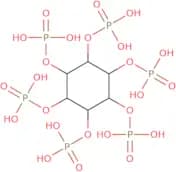
CAS:Phytate 1-phosphatase is a phosphatase enzyme that cleaves orthophosphate groups from phytic acid's inositol ring. This releases inorganic phosphate.
Purezza:Min. 95%Colore e forma:Clear Liquid