Altri
Trovati 6279 prodotti di "Altri"
Ordinare per
Purezza (%)
0
100
|
0
|
50
|
90
|
95
|
100
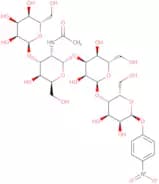
4-Nitrophenyl lacto-N-tetraoside
CAS:<p>4-Nitrophenyl lacto-N-tetraoside is a chromogenic substrate for enzymes that cleave lactose-specific linkages, such as beta-galactosidases. Upon enzyme cleavage, the pNP group is released, resulting in a yellow-colored solution that can be spectrophotometrically quantified at 405 nm. This substrate is commonly used in detecting lactose hydrolysis activity, such as in dairy industry for production optimization studies, or in microbiology for bacterial lactose fermentation assays. Its tetrasaccharide structure resembles that of lactose and makes it a specific substrate for lactose-utilizing enzymes. The properties of 4-nitrophenyl lacto-N-tetraoside make it a useful tool in enzyme kinetics studies and screening of new lactose-utilizing microorganisms.</p>Purezza:Min. 95%Peso molecolare:828.72 g/mol4-Nitrophenyl O-(N-acetyl-a-neuraminosyl)-(2-3)-b-D-galactopyranosyl-(1-4)-2-acetamido-2-deoxy-b-D-glucopyranoside
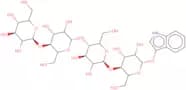
CAS:<p>4-Nitrophenyl O-(N-acetyl-a-neuraminosyl)-(2-3)-b-D-galactopyranosyl-(1-4)-2-acetamido-2-deoxybDglucopyranoside is a fluorescent compound that has been used as a substrate in enzyme assays. It has been shown to be an effective ligand for the enzyme beta galactosidase, which hydrolyzes the substrate to produce 4nitrophenol and o-(Nacetyl)a-neuraminic acid. This product is CAS No. 501427-92-5 and can be used as a high purity, high quality reagent for conjugation.</p>Purezza:Min. 95%Peso molecolare:795.7 g/mol3-Indolyl b-D-cellotetraoside
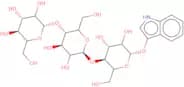
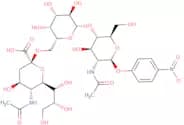
<p>3-Indolyl b-D-cellotetraoside is a chemiluminescent substrate that is used as an indicator in the detection of aminoglycosides. The ligand is a cell wall component that has been shown to bind specifically to the active site of bacterial β-lactamases, which are enzymes that catalyze the hydrolysis of β-lactam antibiotics. 3-Indolyl b-D-cellotetraoside can be used for bacterial identification and enumeration, food testing, and enzyme substrate for diagnostics. It fluoresces in response to electron excitation with a wavelength of about 590 nm.</p>Purezza:Min. 95%Peso molecolare:781.71 g/mol4-Nitrophenyl O-(N-acetyl-a-neuraminosyl)-(2-6)-b-D-galactopyranosyl-(1-4)-2-acetamido-2-deoxy-b-D-glucopyranoside
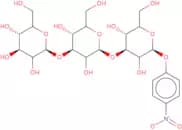
CAS:<p>4-Nitrophenyl O-(N-acetyl-a-neuraminosyl)-(2-6)-b-D-galactopyranosyl-(1-4)-2-acetamido-2-deoxy-b-D-glucopyranoside is a fluorogenic substrate used in the detection of sialidase activity. It is also used as a chromogenic substrate in the determination of β -galactosidase activity.</p>Purezza:Min. 95%Colore e forma:White PowderPeso molecolare:795.7 g/mol4-Nitrophenyl b-laminaritrioside
CAS:<p>4-Nitrophenyl b-laminaritrioside is a chemiluminescent substrate that reacts with hydrogen peroxide to produce light. It is used in the detection of bacteria and other microorganisms in culture media, food testing, and diagnostics. 4-Nitrophenyl b-laminaritrioside is also used as a chromogenic or fluorogenic substrate in enzyme assays.</p>Purezza:Min. 95%Peso molecolare:625.53 g/molNeu5Ac(a2-6)Gal(b1-3)GlcNAc-b-pNP
<p>Neu5Ac(a2-6)Gal(b1-3)GlcNAc-b-pNP is a fluorogenic substrate that can be used for testing the presence of glycoproteins in food samples. It also has been used to detect the presence of enzymes in culture media. Neu5Ac(a2-6)Gal(b1-3)GlcNAc-b-pNP is a high purity product that has a CAS number and is available as a conjugate. This product can be purchased in bulk quantities, with a purity of >90%.</p>Purezza:Min. 95%Peso molecolare:795.7 g/mol4-Nitrophenyl 3,4,6-tri-O-(a-D-mannopyranosyl)-b-D-mannopyranoside
CAS:<p>This compound inhibits the enzyme protein kinase. It has been shown to inhibit the activity of a number of protein kinases including those that are involved in cell proliferation, differentiation and apoptosis. This drug is also known to be a potent inhibitor of human c-Jun N-terminal kinase (JNK) and other types of kinases such as cyclin-dependent protein kinases. The inhibition of these enzymes results in the prevention of tumorigenesis, inflammation and immunological responses.</p>Purezza:Min. 95%Peso molecolare:787.67 g/mol5-Bromo-4-chloro-3-indolyl b-D-galactopyranoside-6-sulphate
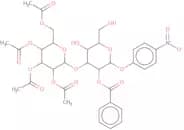
CAS:<p>5-Bromo-4-chloro-3-indolyl b-D-galactopyranoside 6-sulphate (BCIGS) is a chemiluminescent substrate that reacts with an enzyme to produce light. It has been used for the detection of various substances, including 5'-nucleotidase, 5'-adenosine monophosphate phosphohydrolases, and alkaline phosphatase. BCIGS can be used as a chromogenic substrate in the fluorometric assay of glucose oxidase and galactose oxidase. BCIGS is also used as a ligand in immunological reactions such as immunodiffusion, immunoelectrophoresis, and radioimmunoassay.</p>Formula:C14H15BrClNO9SPurezza:Min. 95%Peso molecolare:488.69 g/mol4-Nitrophenyl 3-O-(2,3,4,6-tetra-O-acetyl-a-D-mannopyranosyl)-2-O-benzoyl-a-D-mannopyranoside
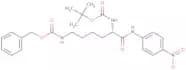
CAS:<p>4-Nitrophenyl 2,3,4,6-tetra-O-acetyl-b-D-glucopyranoside enzyme substrate is a versatile and reliable reagent for measuring glucosidase activity. It is an ideal substrate for use in assays to detect β-glucosidase activity in a variety of applications, including for in vitro and in vivo studies, and it has been widely used in the pharmaceutical and biotechnology industries. This chromogenic pNP enzyme substrate is designed for effective and precise analysis with good sensitivity and low background signals.</p>Purezza:Min. 95%Peso molecolare:735.64 g/molN-a-Boc-N-ε-cbz-L-lysine 4-nitroanilide
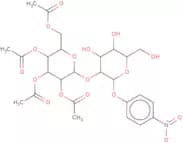
CAS:<p>N-a-Boc-N-epsilon-cbz-L-lysine 4-nitroanilide is a compound that has been shown to regulate the production of angiotensin. It also acts as an inhibitor for the production of fibronectin, which is key in the regulation of inflammation and wound healing. N-a-Boc-N-epsilon-cbz-L-lysine 4 nitroanilide has been shown to be a trifunctional molecule and can yield three different products: oxychlorides, hydrated and solvates. This molecule also regulates phosphorus levels. There are many functions that this molecule performs, including binding with amino acids and regulating their function, which is why it is so important to study this molecule more closely.</p>Purezza:Min. 95%Peso molecolare:500.54 g/mol4-Nitrophenyl 2-O-(2,3,4,6-tetra-O-acetyl-a-D-mannopyranosyl)-a-D-mannopyranoside
<p>4-Nitrophenyl 2-O-(2,3,4,6-tetra-O-acetyl-a-D-mannopyranosyl)-a-D-mannopyranoside is a fluorogenic substrate that is used as a diagnostic tool and can be used to detect the presence of β--glucosidase in the gut. It is also used as a conjugate with enzymes such as peroxidase or alkaline phosphatase for use in enzyme catalyzed reactions. The product has been shown to be active against a variety of bacteria, including Staphylococcus aureus and Escherichia coli. This product has been shown to produce chemiluminescence when incubated with horseradish peroxidase and hydrogen peroxide. This product is light sensitive and should be stored at room temperature away from direct sunlight.</p>Purezza:Min. 95%Peso molecolare:631.54 g/mol5-Bromo-4-chloro-3-indoxyl-α-D-xylopyranoside
CAS:<p>5-Bromo-4-chloro-3-indoxyl-alpha-D-xylopyranoside is an enzyme substrate that can be used in the detection of β-galactosidase activity. This product has been shown to be a good ligand for various xanthine oxidoreductases, including xanthine dehydrogenase and uricase. 5BBIX is also a chromogenic substrate for horseradish peroxidase and can be used to detect hydrogen peroxide in the presence of osmium tetroxide or potassium permanganate. 5BBIX has been extensively tested for use in diagnostics, food, and environmental testing.</p>Formula:C13H13BrClNO5Purezza:Min. 98.0 Area-%Peso molecolare:378.61 g/molRef: 3D-B-7748
5gPrezzo su richiesta10gPrezzo su richiesta25gPrezzo su richiesta2500mgPrezzo su richiesta-Unit-ggPrezzo su richiesta4-Nitrophenyl 4,6-O-benzylidene-b-D-glucopyranoside
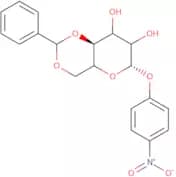
CAS:<p>4-Nitrophenyl 4,6-O-benzylidene-b-D-glucopyranoside is a fluorescent compound that is used in diagnostics and research. The compound is an enzyme substrate, a ligand for metal ions, and a chromogenic substrate. It can be used to test cultures of bacteria in culture media, as well as for food testing and environmental testing. 4-Nitrophenyl 4,6-O-benzylidene-b-D-glucopyranoside has high purity and quality due to its high fluorescence intensity. This product has been shown to be highly stable in various conditions and may be used in conjugates with other compounds.</p>Purezza:Min. 95%Peso molecolare:389.36 g/molOctyl 4-nitrophenyl hexyl phosphonate
CAS:<p>Octyl 4-nitrophenyl hexyl phosphonate is a lipase suicide inhibitor that is a chromogenic substrate for lipases which upon enzymatic action, binds irreversibly to the lipase and inactivates it. The substrate can be used for the determination of active sites in lipases, especially in lipases preferring hydrophobic leaving groups.</p>Purezza:Min. 95%Peso molecolare:399.464-Nitrophenyl 2-O-(2,3,4,6-tri-O-acetyl-a-D-mannopyranosyl)-4,6-O-benzylidene-a-D-mannopyranoside
<p>4-Nitrophenyl 2-O-(2,3,4,6-tri-O-acetyl-a-D-mannopyranosyl)-4,6-O-benzylidene-a-D-mannopyranoside is a fluorogenic substrate that is used for the detection of alpha amylase activity in food testing. It is also used as a chromogenic substrate for the detection of beta amylase activity. 4NP2ODM is a conjugate that can be used for the detection of alpha or beta amylases in environmental testing. This compound has high purity and quality and CAS No. 90105037.</p>Purezza:Min. 95%Peso molecolare:719.64 g/mol5-Bromo-6-chloro-1H-indol-3-yl-a-D-mannopyranoside
CAS:<p>5-Bromo-6-chloro-1H-indol-3-yl-a-D-mannopyranoside is a chromogenic substrate that yields a magenta-colored product after cleavage. The chromophore 5-bromo-6-chloro-indoxyl is released, generating the observable color. It is used in lysosomal storage disorder screening.</p>Formula:C14H15BrClNO6Purezza:Min. 95 Area-%Colore e forma:White Off-White PowderPeso molecolare:408.63 g/mol4-Nitrophenyl 2-acetamido-3,6-di-O-acetyl-4-O-(2,3,4,6-tetra-O-acetyl-b-D-galactopyranosyl)-2-deoxy-b-D-glucopyranoside
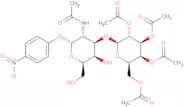
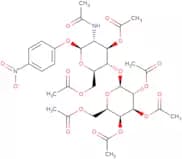
CAS:<p>4-Nitrophenyl 2-acetamido-3,6-di-O-acetyl-4-O-(2,3,4,6-tetra-O-acetyl-b-D-galactopyranosyl)-2-deoxy-b-D-glucopyranoside is modified acetylated chromogenic substrate designed for the detection and quantification of enzyme activity. This highly specific substrate is cleaved by enzymes, releasing a yellow 4-nitrophenol product that can be easily measured spectrophotometrically. This allows for accurate and sensitive analysis of enzyme kinetics, inhibition studies, and substrate specificity determination.</p>Purezza:Min. 95%Peso molecolare:756.66 g/mol4-Nitrophenyl b-D-galactopyranosiduronic acid
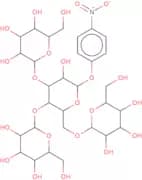
CAS:<p>4-Nitrophenyl b-D-galactopyranosiduronic acid is a chemiluminescent substrate for the detection of β-galactosidase. It is used for the determination of α-galactosidase activity in urine, feces, and blood. This product can be used as a chromogenic substrate for the detection of β-galactosidase in tissue culture medium. 4-Nitrophenyl b-D-galactopyranosiduronic acid is also a fluorogenic substrate which can be conjugated to an enzyme such as horseradish peroxidase or alkaline phosphatase.</p>Purezza:Min. 95%Peso molecolare:315.23 g/mol4-Nitrophenyl 3,6-di-O-(a-D-mannopyranosyl)-b-D-mannopyranoside
<p>4-Nitrophenyl 3,6-di-O-(a-D-mannopyranosyl)-b-D-mannopyranoside is a chemiluminescent substrate that is used in the detection of enzymes. It is also used to measure the activity of beta-glucosidase, alpha-galactosidase, and alkaline phosphatase. The product has been tested for environmental sensitivity and has not shown any effects on bacterial growth. 4-Nitrophenyl 3,6-di-O-(a-D-mannopyranosyl)-b-D-mannopyranoside can be used as a high quality stain for histological sections and immunohistochemical studies. This product has been tested for staining properties with different dyes and has shown no interference with the staining process.</p>Purezza:Min. 95%Peso molecolare:625.53 g/molAldol® 491 acetate, Biosynth Patent: EP 2427431 and US 8940909
CAS:<p>Aldol 491 acetate is a food and environmental testing chemical, which can be used for the detection of bacteria. Aldol 491 acetate provides a chromogenic substrate for the detection of enzymes and can be used as a substrate in enzyme-linked immunosorbent assay (ELISA) procedures. Aldol 491 acetate also has chemiluminescent properties and can be used as a fluorogenic substrate.</p>Formula:C22H17NO4Purezza:Min. 95 Area-%Peso molecolare:359.37 g/molRef: 3D-A-4739_P00
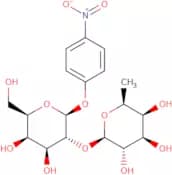
1gPrezzo su richiesta5gPrezzo su richiesta10gPrezzo su richiesta2500mgPrezzo su richiesta-Unit-ggPrezzo su richiesta4-Nitrophenyl 2-O-(b-L-fucopyranosyl)-b-D-galactopyranoside
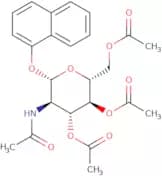
CAS:<p>4-Nitrophenyl 2-O-(b-L-fucopyranosyl)-b-D-galactopyranoside is a high-quality chromogenic substrate with excellent sensitivity specifically designed for enzymes' activity detection. This pNP substrate enables rapid, accurate, and measurable colorimetric visualization of enzymatic hydrolysis reactions. Researchers can easily and effectively monitor the release of 4-nitrophenol as a yellow product under laboratory conditions, allowing for convenient comparative analysis and identification of enzyme levels in various samples.</p>Purezza:Min. 95%Colore e forma:White SolidPeso molecolare:447.39 g/mol1-Naphthyl 2-acetamido-3,4,6-tri-O-acetyl-2-deoxy-b-D-glucopyranoside
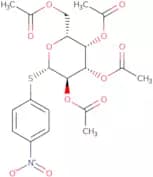
CAS:<p>1-Naphthyl 2-acetamido-3,4,6-tri-O-acetyl-2-deoxy-b-D-glucopyranoside is a fluorogenic substrate for bacterial beta D glucosidase. It is used for measuring the enzyme activity in different types of culture media and in the detection of bacterial contamination in food and environmental samples. This product can be used to detect the presence of beta D glucosidase by measuring luminescence with a luminometer. 1NAAG can also be used as a chromogenic substrate or to conjugate with antibodies for use in immunoassays.br></p>Purezza:Min. 95%Peso molecolare:473.47 g/mol4-Nitrophenyl 2,3,4,6-tetra-O-acetyl-b-D-thiogalactopyranoside
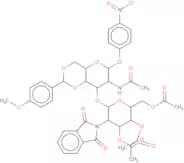
CAS:<p>4-Nitrophenyl 2,3,4,6-tetra-O-acetyl-b-D-thiogalactopyranoside (NPG) is a fluorogenic substrate that can be used in the detection of beta-galactosidase activity. It reacts with 4-nitrophenol to form an orange product at pH 6.0. The fluorescence intensity increases with increasing concentrations of the substrate and enzyme. The reaction is inhibited by borax, which competes for the enzyme active site. This product has been used as a chromogenic substrate for beta-galactosidase and as an enzyme substrate for beta-galactosidase in diagnostic tests for galactosemia and other carbohydrate metabolism disorders. NPG has also been used in chemiluminescent assays to detect beta-galactosidase activity in culture media and as a bioluminescence substrate in the detection of bacterial</p>Purezza:Min. 95%Peso molecolare:485.47 g/mol4-Nitrophenyl 2-acetamido-3-O-(3,4,6-tri-O-acetyl-2-deoxy-2-phthalimido-b-D-glucopyranosyl)-2-deoxy-4,6-O-4-methoxybenzylidene-a-D-g alactopyranoside
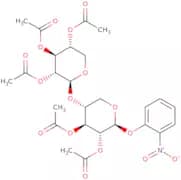
<p>4-Nitrophenyl 2-acetamido-3-O-(3,4,6-tri-O-acetyl-2-deoxy-2-phthalimido-b-D-glucopyranosyl)-2-deoxy--4,6--O--4--methoxybenzylidene--a--D--galactopyranoside is a chemiluminescent substrate for the enzyme beta galactosidase. It reacts with this enzyme to form 4 nitrophenol and acetamide. 4 Nitrophenyl 2 acetamido 3 O (3,4,6 tri O acetyl 2 deoxy 2 phthalimido b D glucopyranosyl) 2 deoxy 4 6 O 4 methoxybenzylidene a D galactopyranoside is used as a chromogenic substrate in diagnostics and as an environmental testing agent. It can be used as an imaging</p>Purezza:Min. 95%Peso molecolare:877.8 g/mol2-Nitrophenyl 2,2',3,3',4'-penta-O-acetyl-b-D-xylobioside
CAS:<p>2-Nitrophenyl 2,2',3,3',4'-penta-O-acetyl-b-D-xylobioside is an oligosaccharide that is used as a substrate for the transport of nucleic acid molecules. It can be used to study the function of membrane transport proteins and their homologues. This compound has been shown to inhibit the growth of corynebacterium glutamicum and trisaccharide emissions.</p>Purezza:Min. 95%Peso molecolare:613.52 g/mol[2-Methoxy-4-(2-nitrovinyl)phenyl] b-D-galactopyranoside
CAS:<p>[2-Methoxy-4-(2-nitrovinyl)phenyl] b-D-galactopyranoside (MNVP-gal) is a chromogenic enzyme substrate that is commonly used to detect the activity of beta-galactosidase in biological samples. MNVP-gal produces a distinctive magenta color when hydrolyzed by beta-galactosidase, making it particularly useful for applications where visual detection is necessary. This substrate is also resistant to endogenous proteases, making it well-suited for use in cellular and tissue preparations.</p>Purezza:Min. 95%Peso molecolare:357.31 g/mol5-Bromo-4-chloro-3-indoxyl nonanoate
CAS:<p>5-Bromo-4-chloro-3-indoxyl nonanoate (5BCNI) is a chromogenic substrate for the detection of alkaline phosphatase. It is soluble in most organic solvents and is stable at room temperature for up to 30 days. 5BCNI has been shown to be a high quality, sensitive and specific substrate for the detection of alkaline phosphatase in culture media, diagnostics, conjugates, environmental testing and chemiluminescence. It has also been used as an enzyme substrate in bioluminescence studies. The CAS number for 5BCNI is 133950-77-3.</p>Formula:C17H21BrClNO2Peso molecolare:386.72 g/molRef: 3D-B-7410
5gPrezzo su richiesta10gPrezzo su richiesta25gPrezzo su richiesta-Unit-ggPrezzo su richiesta4-Nitrophenyl 6-O-trityl-a-D-glucopyranoside
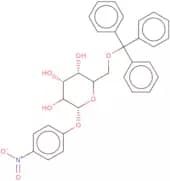
CAS:<p>4-Nitrophenyl 6-O-trityl-a-D-glucopyranoside is a high-quality trityl pNP substrate that performs excellently in various enzymatic assays. Containing a trityl-protected sugar moiety, this substrate is perfect for investigating alpha-D-glucopyranoside-specific enzymes and providing precise data for your experiments.</p>Purezza:Min. 95%Peso molecolare:543.56 g/mol4-Nitrophenyl 2,3,4-tri-O-acetyl-b-D-glucuronide methyl ester
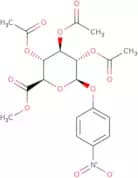
CAS:<p>4-Nitrophenyl 2,3,4-tri-O-acetyl-b-D-glucuronide methyl ester is a fluorescent substrate for the beta-glucuronidase enzyme. It can be used to detect the presence of this enzyme in bacteria and other microorganisms by means of fluorometric or colorimetric assays. It has been shown to have an excellent stability in a variety of culture media and food testing applications. This product is available in high purity and quality, with a CAS number of 18472-49-6.</p>Purezza:Min. 95%Peso molecolare:455.37 g/mol6-Chloro-4-(2-chlorophenyl)-2-quinazolinecarboxylic acid
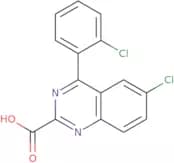
CAS:<p>6-Chloro-4-(2-chlorophenyl)-2-quinazolinecarboxylic acid (CA) is an impurity found in the drug lorazepam. It is a chemical intermediate that is not active as a pharmaceutical agent, but has been studied for use in treating epilepsy and other neurological disorders. CA is an excipient used to manufacture other drugs such as salicylic acid and the surfactant sodium lauryl sulfate. It has been shown to have acidic properties and can be used as a surfactant, which is helpful in chromatographic methods to separate molecules by size. CA also binds to chloride ions, which are necessary for the proper functioning of many cellular processes. CA's molecular weight is 322 daltons and it exhibits no pharmacological activity.</p>Formula:C15H8Cl2N2O2Purezza:Min. 95%Colore e forma:White PowderPeso molecolare:319.14 g/mol4-Nitrophenyl 2-acetamido-3-O-[2-O-(2,3,4-tri-O-benzoyl-a-L-fucopyranosyl)-3,4,6-tri-O-acetyl-D-galactopyranosyl]-2-deoxy-6-O-trityl -b-D-glucopyranoside
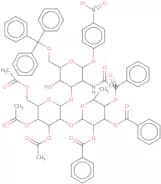
<p>4-nitrophenyl 2-acetamido-3-O-[2-O-(2,3,4-tri-O-benzoyl-a-L-fucopyranosyl)-3,4,6-tri-O-acetyl -D -galactopyranosyl]-2 deoxy 6 O trityl b D glucopyranoside is a chemiluminescent substrate that can be used in biochemical assays. It reacts with oxygen to produce light when it is excited by a UV or blue light source. This product has been tested for purity and quality by HPLC analysis and spectroscopy.</p>Purezza:Min. 95%Peso molecolare:1,331.33 g/molN-Methyl-3-indolyl a-D-arabinopyranoside
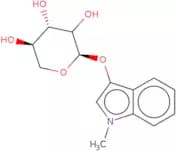
<p>3-indolyl-N-methyl a-D-arabinopyranoside is a fluorogenic substrate for the detection of beta-galactosidase. It also has been used as a chromogenic substrate for the detection of beta-glucuronidase. This product can be conjugated to an enzyme and used in enzyme substrates for the detection of beta-galactosidase, beta-glucuronidase, and other enzymes. 3-indolyl-N-methyl a-D-arabinopyranoside is also commonly used in culture media to detect bacteria and yeast.</p>Purezza:Min. 95%Peso molecolare:279.29 g/mol4-Nitrophenyl 2-acetamido-3-O-(2,3,4,6-tetra-O-acetyl-b-D-galactopyranosyl)-2-deoxy-a-D-galactopyranoside
CAS:<p>4-Nitrophenyl 2-acetamido-3-O-(2,3,4,6-tetra-O-acetyl-b-D-galactopyranosyl)-2-deoxy-a-D-galactopyranoside is a chromogenic substrate designed for the detection and quantification of enzyme activity. This tetra-acetylated compound is specifically designed to be cleaved by enzymes, releasing a yellow 4-nitrophenol product that can be easily measured spectrophotometrically, allowing for accurate and sensitive analysis of enzyme kinetics and inhibition studies.</p>Purezza:Min. 95%Peso molecolare:672.59 g/mol4-Nitrophenyl 2-acetamido-3,4,6-tri-O-acetyl-2-deoxy-a-D-glucopyranoside
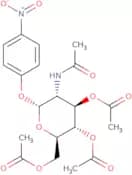
CAS:<p>4-Nitrophenyl 2-acetamido-3,4,6-tri-O-acetyl-2-deoxy-a-D-glucopyranoside is a synthetic compound with the ability to inhibit the enzyme glutamicum. It is a radionuclide that can be used as a focusing agent for gamma cameras and has been shown to be effective against corynebacterium glutamicum and other organisms. 4NP2AG was synthesized by reacting nitrophenol with acetamide in the presence of an acid catalyst and hydrogenating the product. The synthesis employs precession chemistry, which involves rotating a molecule around its axis at high speed to increase its concentration in one area. This treatment leads to a higher yield of desired product. 4NP2AG contains two acetamido groups on the glucopyranoside moiety, which are esterified with nitrophenol and acetic acid respectively. These moieties are</p>Purezza:Min. 95%Peso molecolare:468.41 g/mol2-Nitrophenyl 6-O-trityl-b-D-galactopyranoside
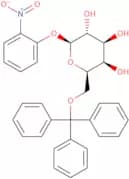
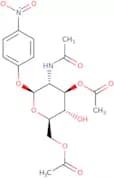
CAS:<p>2-Nitrophenyl 6-O-trityl-b-D-galactopyranoside is a chromogenic enzyme substrate used in assays to detect galactosidase activity. It is a derivative of galactose that can be hydrolyzed by galactosidase to release the yellow-colored 2-nitrophenyl group, which can be detected spectrophotometrically. The trityl group helps to stabilize the molecule and prevent undesired hydrolysis during storage. This substrate is commonly used in the study of carbohydrate metabolism and in the detection of galactosidase activity in microorganisms.</p>Purezza:Min. 95%Peso molecolare:543.56 g/mol4-Nitrophenyl 2-acetamido-3,6-di-O-acetyl-2-deoxy-b-D-glucopyranoside
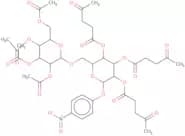
CAS:<p>4-Nitrophenyl 2-acetamido-3,6-di-O-acetyl-2-deoxy-b-D-glucopyranoside is a versatile chromogenic pNP enzyme substrate designed to offer superior results for detecting enzyme activity in research and diagnostic applications. This substrate enables faster, more accurate, and reliable detection of hydrolase enzymes, making it ideal for various research and testing needs, such as studying enzyme kinetics, screening inhibitors, and profiling enzyme specificity.</p>Purezza:Min. 95%Peso molecolare:426.37 g/mol4-Nitrophenyl 6-O-(2,3,4,6-tetra-O-acetyl-a-D-mannopyranosyl)-2,3,4-tri-O-levulinoyl-a-D-mannopyranoside
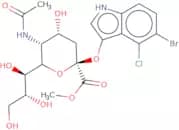
<p>4-Nitrophenyl 6-O-(2,3,4,6-tetra-O-acetyl-a-D-mannopyranosyl)-2,3,4-tri-O-levulinoyl-a-D-mannopyranoside is a fluorogenic substrate that is used in assays for detecting nitrates. This compound reacts with 4-(methylnitrosamino)pyridine (MNAP) to produce an intense light that can be detected by a luminometer. It has been shown to react with the enzyme nitrate reductase and is used in food testing and environmental testing as a means of measuring the amount of nitrates present.</p>Purezza:Min. 95%Peso molecolare:925.84 g/mol5-Bromo-4-chloro-3-indolyl N-acetyl-a-D-neuraminic acid methyl ester
CAS:<p>5-Bromo-4-chloro-3-indolyl N-acetyl-a-D-neuraminic acid methyl ester is a chromogenic substrate that reacts with enzymes to produce a colored product. It can be used in diagnostic tests for the detection of various bacteria, including Salmonella and Brucella, as well as for the determination of concentration in food testing or environmental testing. 5B4C3INA can also be conjugated to other substances, such as biotin or an antibody, which allows it to be used in immunoassays.</p>Formula:C20H24BrClN2O9Purezza:Min. 95%Peso molecolare:551.77 g/mol4-Nitrophenyl 2-O-(a-D-mannopyranosyl)-a-D-mannopyranoside
CAS:<p>4-Nitrophenyl 2-O-(a-D-mannopyranosyl)-a-D-mannopyranoside is a chromogenic substrate for the enzyme, beta-glucosidase. It is used as a food additive to test for the presence of alpha and beta glucosidases in foods. This product is also commonly used as an enzyme substrate and conjugate in biochemical research and diagnostic applications.</p>Purezza:Min. 95%Colore e forma:White To Off-White SolidPeso molecolare:463.39 g/mol6-Bromo-2-naphthyl-α-D-mannopyranoside
CAS:<p>6-Bromo-2-naphthyl-alpha-D-mannopyranoside is a strong inhibitor of alpha-mannosidase. It has been shown to inhibit the growth of Mycobacterium tuberculosis and Streptococcus pneumoniae, which are both known to cause bacterial infections in humans. 6BNA inhibits the enzyme alpha-mannosidase, which hydrolyzes terminal α-(1,4)-linked mannose residues from oligosaccharides and glycoproteins. This drug has a high affinity for the active site of alpha-mannosidase and an IC50 value of 0.2 mM, making it an effective inhibitor.</p>Formula:C16H17BrO6Purezza:Min. 98.0 Area-%Peso molecolare:385.22 g/molRef: 3D-B-8930
5gPrezzo su richiesta10gPrezzo su richiesta25gPrezzo su richiesta2500mgPrezzo su richiesta-Unit-ggPrezzo su richiesta6-Chloro-1H-indol-3-yl b-D-mannopyranoside
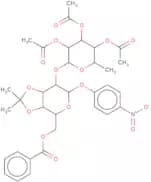
CAS:<p>6-Chloro-1H-indol-3-yl b-D-mannopyranoside is an enzyme substrate that is used in the fluorogenic and chromogenic assays for detecting indoleamines. This compound has a conjugate, which is a fluorescent molecule that can be attached to an antibody to target specific proteins or cells. 6-Chloro-1H-indol-3-yl b-D-mannopyranoside is used as a diagnostic agent in the detection of bacterial and fungal infections. It is also used as an indicator of cell growth in culture media.</p>Purezza:Min. 95%Peso molecolare:329.73 g/mol4-Nitrophenyl 2-O-(2,3,4-tri-O-acetyl-a-L-fucopyranosyl)-6-O-benzoyl-3,4-O-isopropylidene-a-D-galactopyranoside
CAS:<p>4-Nitrophenyl 2-O-(2,3,4-tri-O-acetyl-a-L-fucopyranosyl)-6-O-benzoyl-3,4-O-isopropylidene a D galactopyranoside is an analog of galactose that binds to the DNA and regulates gene expression. This compound has been shown to be able to regulate gene expression levels in cells. 4NP2B6OB was used as a probe for microarray analysis of gene expression profiles from environmental samples. It was found that 4NP2B6OB could be used as a probe for the identification of genes in high density arrays.</p>Purezza:Min. 95%Peso molecolare:717.67 g/mol4-Nitrophenyl b-D-galactopyranoside hydrate
CAS:<p>4-Nitrophenyl b-D-galactopyranoside hydrate is a water-soluble pNP-based enzyme substrate ideal for quantifying b-galactosidase activity in a variety of sample types. This chromogenic substrate features a unique hydrate composition, which allows for enhanced solubility and stability when compared to standard pNP-galactosides. With its high sensitivity and robust performance, this substrate is widely used in biotechnology, biochemistry, and molecular biology fields, including the investigation of enzyme kinetics, characterization of glycoside hydrolase specificity, and assessment of gene expression levels.</p>Purezza:Min. 95%Peso molecolare:319.27 g/molAldol® 479 acetate, Biosynth Patent: EP 2427431 and US 8940909
CAS:Prodotto controllato<p>Aldol acetate is a chromogenic substrate that is used in food testing and diagnostics. Aldol acetate can be used in the detection of aminopeptidase and dipeptidyl peptidase activities, as well as in the determination of urinary proteins. Aldol acetate can also be used to detect anaerobic bacteria. This compound is conjugated with various ligands for use in immunoassays, such as beta-galactosidase, beta-glucuronidase, alpha-naphthyl phosphate ester, and phenyl phosphate ester. This product has been shown to be useful for chemiluminescent assays of DNA polymerases and reverse transcriptases in environmental samples. It has also been shown to be useful for bioluminescent assays of DNA polymerases and reverse transcriptases in environmental samples.</p>Formula:C25H22N2O3Purezza:Min. 95.0 Area-%Peso molecolare:398.45 g/molRef: 3D-A-4729_P00
1gPrezzo su richiesta5gPrezzo su richiesta10gPrezzo su richiesta2500mgPrezzo su richiesta4-Nitrophenyl 2-O-(2,3,4,6-tetra-O-acetyl-b-D-glucopyranosyl)-4,6-O-benzylidene-b-D-glucopyranoside
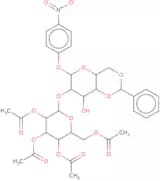
CAS:<p>4-Nitrophenyl 2-O-(2,3,4,6-tetra-O-acetyl-b-D-glucopyranosyl)-4,6-O-benzylidene-b-D-glucopyranoside is a compound that is used in gene expression profiling. It has been shown to be an effective inhibitor of glutamicum and corynebacterium glutamicum. 4NPBG can inhibit the production of acid molecules by blocking the activity of cytochrome P450 enzymes in the cells of these bacteria. The compound also inhibits cellular transport and membrane transport genes in these species. This inhibition prevents the synthesis of nucleic acid molecules such as RNA and DNA.</p>Purezza:Min. 95%Peso molecolare:719.64 g/molAldol® 518 myo-inositol-1-phosphate, Biosynth Patent: EP 2427431 and US 8940909
CAS:<p>Aldol® 518 myo-inositol-1-phosphate is a chromogenic and fluorogenic enzyme substrate used for detection of phosphatidyl-inositol specific phospholipase C activity (PI-PLC, EC 4.6.1.13). The colorless enzyme substrate is cleaved by PI-PLC or PI-PLC-positive microorganisms grown in liquid or solid media, yielding an intense red coloration. In combination with Aldol® 355 fluorescence enhancer, red fluorescence can also obtained. Aldol® 518 myo-inositol-1-phosphate is suitable for use in liquid and solid media, under aerobic as well as anaerobic conditions.</p>Formula:C29H30ClN2O10PPurezza:Min. 95.0 Area-%Peso molecolare:632.98 g/molRef: 3D-A-4775_P00
1gPrezzo su richiesta5gPrezzo su richiesta10gPrezzo su richiesta2500mgPrezzo su richiesta-Unit-ggPrezzo su richiesta3-Indolyl b-D-cellotrioside
<p>3-Indolyl b-D-cellotrioside is a chemiluminescent substrate that is used for the detection of bacterial activity. 3-Indolyl b-D-cellotrioside reacts with hydrogen peroxide to produce light, which can be detected by luminometers. This product can be used in diagnostic tests to detect the presence of bacteria in food, water, and other samples. It has been shown to have excellent performance characteristics and high purity and quality.</p>Purezza:Min. 95%Peso molecolare:619.57 g/mol4-Nitrophenyl 2-acetamido-3,6-di-O-acetyl-4-O-[2-O-(2,3,4-tri-O-benzoyl-a-L-fucopyranosyl)-3,4,6-tri-O-acetyl-b-D-galactopyranosyl]- 2-deoxy-b-D-glucopyranoside
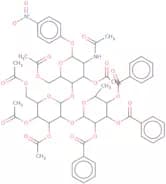
<p>This chemical is a ligand that can bind to the enzyme luciferase. In a bioluminescence reaction, this chemical reacts with oxygen and ATP to produce light. This product has been tested for purity and quality and is suitable for use in culture media, environmental testing, or diagnostics. It has also been shown to be an excellent fluorescent substrate for fluorogenic or chromogenic substrates in enzyme substrate assays.</p>Purezza:Min. 95%Peso molecolare:1,173.08 g/mol2-Naphthyl 2-acetamido-3,4,6-tri-O-acetyl-2-deoxy-b-D-glucopyranoside
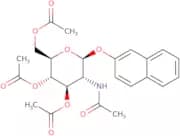
CAS:<p>2-Naphthyl 2-acetamido-3,4,6-tri-O-acetyl-2-deoxy-b-D-glucopyranoside is a fluorogenic substrate that is used in food testing as well as environmental testing. It has been shown to be a ligand for the enzyme beta-galactosidase. This product is also a chemiluminescent and bioluminescent substrate that can be used in diagnostics and culture media.</p>Purezza:Min. 95%Peso molecolare:473.47 g/mol4-Nitrophenyl 2-acetamido-3,4,6-tri-O-acetyl-2-deoxy-b-D-glucopyranoside
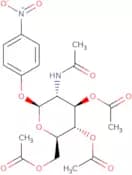
CAS:<p>4-Nitrophenyl 2-acetamido-3,4,6-tri-O-acetyl-2-deoxy-b-D-glucopyranoside is an extracellular nucleic acid molecule that is produced by the bacterium Corynebacterium glutamicum. This compound has been shown to inhibit cancer cells by blocking the transport of glucose through the cell membrane and may be a potential drug target for cancer treatment. 4NPTAPG has also been shown to have diagnostic properties and can identify corynebacterium glutamicum strains. It is a fluorescent molecule that can be used to detect the presence of this bacterium in culture media.</p>Purezza:Min. 95%Peso molecolare:468.41 g/mol









![[2-Methoxy-4-(2-nitrovinyl)phenyl] b-D-galactopyranoside](/_next/image/?url=https%3A%2Fstatic.cymitquimica.com%2Fproducts%2F3D%2Fthumb-webp%2FEM06779.webp&w=3840&q=75)