Altri
Trovati 6300 prodotti di "Altri"
Ethyl 2-((1r,4r)-4-((ethylamino)methyl)cyclohexyl)acetate
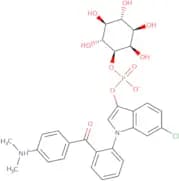
CAS:Purezza:98%Peso molecolare:227.34800720214844Aldol® 514 inositol-phosphate, ammonium salt, Biosynth Patent: EP 2427431 and US 8940909
CAS:Aldol® 514 inositol-phosphate is a chromogenic enzyme substrate used for detection of phosphatidylinositol specific phospholipase C (PI-PLC, EC 4.6.1.13). The colorless enzyme substrate is cleaved by PI-PLC positive microorganisms, yielding a red-orange color. The substrate thus enables the detection and identification of various bacteria, such as, pathogenic strains of Listeria, Clostridium, Bacillus, and Staphylococcus. Aldol® 514 inositol-phosphate is suitable for use under aerobic and anaerobic conditions.
Formula:C26H28BrClN3O10PPurezza:Min. 95.0 Area-%Peso molecolare:688.85 g/mol5-Bromo-4-chloro-3-indoxyl phosphate, dipotassium salt
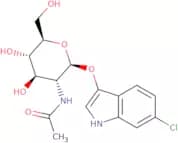
CAS:Also known as BCIP; can be used for visualization of phosphatase labelled antibodies on Western blots. This method quickly became extremely popular in diagnostics and biology research.Formula:C8H4BrClK2NO4PColore e forma:Brown Off-White PowderPeso molecolare:402.65 g/mol6-Chloro-3-indolyl 2-acetamido-2-deoxy-β-D-glucopyranoside
CAS:6-Chloro-3-indolyl 2-acetamido-2-deoxy-b-D-glucopyranoside is a pink enzyme substrate commonly used in biochemical research and diagnostic applications. This compound is a derivative of indolyl glucopyranoside, which is known for its ability to produce a colored product upon enzymatic hydrolysis. 6-Chloro-3-indolyl 2-acetamido-2-deoxy-b-D-glucopyranoside is particularly useful for studying glycosidases, enzymes that cleave glycosidic bonds in complex carbohydrates. Its pink coloration makes it an ideal choice for colorimetric assays, enabling researchers to monitor enzyme activity in real-time and facilitating the development of new diagnostic tools and therapeutic strategies.
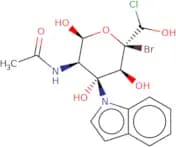
Formula:C16H19ClN2O6Purezza:Min. 95%Colore e forma:White to off-white solid.Peso molecolare:370.78 g/mol5-Bromo-6-chloro-3-indolyl-2-acetamido-2-deoxy-a-D-glucopyranoside
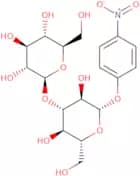
5-Bromo-6-chloro-3-indolyl-2-acetamido-2-deoxy-a-D-glucopyranoside is a chemiluminescent substrate that is used as an indicator in diagnostic tests. This compound reacts with an oxidizing agent, such as hydrogen peroxide, to generate light. It is also used as a chromogenic substrate for the detection of bioluminescence and it can be applied in culture media or food testing. 5Bromo-6Chloro-3Indolyl2Acetamido2DeoxyA1DGlucopyranoside has a CAS number, which means that it meets the standards set by the Chemical Abstracts Service. It also has a high purity and quality, making it suitable for use in laboratories.Purezza:Min. 95%4-Nitrophenyl 3-O-(β-D-glucopyranosyl)-β-D-glucopyranoside
CAS:Chromogenic substrate for beta-glucanaseFormula:C18H25NO13Purezza:Min. 95 Area-%Colore e forma:PowderPeso molecolare:463.39 g/mol4-Nitrophenyl-alpha-D-mannopyranoside
CAS:Chromogenic α-mannosidase substrate yielding a absorbent solution upon cleavage. Also used for studies of the crystal structure of the complexes of concanavalin A and binding studies with concanavalin A.Formula:C12H15NO8Purezza:Min. 99 Area-%Peso molecolare:301.26 g/mol2-Chloro-4-nitrophenyl b-D-maltoheptaoside
CAS:2-Chloro-4-nitrophenyl b-D-maltoheptaoside is a fluorescent compound that is used in medical research for the visualization of muscle glycogen. It is also used to study the binding of molecules to proteins, as well as to measure enzyme activity. The compound has been shown to be insensitive to changes in pH and temperature, so it can be used at different pH levels and temperatures without affecting its function. 2-Chloro-4-nitrophenyl b-D-maltoheptaoside can be detected by titration calorimetry due to its high molecular weight. The molecule's affinity for carbohydrates also allows it to be used in optimization studies of carbohydrate molecules.Purezza:Min. 95%Peso molecolare:1,308.54 g/mol5-Bromo-4-chloro-3-indoxyl-α-D-mannopyranoside
CAS:Chromogenic substrate specific for α-D-mannosidase. Yields a blue precipitate upon cleavage. Identification of Listeria species.Formula:C14H15BrClNO6Purezza:Min. 99 Area-%Peso molecolare:408.64 g/molRef: 3D-B-7409
1gPrezzo su richiesta5gPrezzo su richiesta10gPrezzo su richiesta25gPrezzo su richiesta2500mgPrezzo su richiesta-Unit-ggPrezzo su richiestaAldol® 515 nonanoate hydrochloride, Biosynth Patent: EP 2427431 and US 8940909
CAS:Aldol® 515 nonanoate hydrochloride is a chromogenic and fluorogenic enzyme substrate for detection of lipase activity. The colorless product is cleaved by C9 esterases produced by bacteria in liquid or solid media, yielding a red color and red fluorescence when Aldol® 355 fluorescence enhancer or a suitable matrix is present. Aldol® 515 nonanoate can be used under aerobic and anaerobic conditions. Well detectable color/fluorescence of bacterial colonies or liquid cultures is obtained within 24-48 h. In the presence of a purified lipase, color and fluorescence develops within minutes to few hours.Formula:C32H36ClN2O3Purezza:Min. 95 Area-%Peso molecolare:533.1 g/mol3-Nitrophenyl b-D-galactopyranoside
CAS:Chromogenic substrate targeting beta-galactosidaseFormula:C12H15NO8Colore e forma:PowderPeso molecolare:301.25 g/mol4-Nitrophenyl phosphate mono(2-amino-2-ethyl-1,3-propanediol) salt monohydrate
CAS:4-Nitrophenyl phosphate mono(2-amino-2-ethyl-1,3-propanediol) salt monohydrate is a chromogenic substrate that can be used to detect the presence of alkaline phosphatase. It is also used in food testing and diagnostics. 4NPPMD is a substrate for the enzyme alkaline phosphatase, which has been shown to play a role in the inflammatory response. The production of 4NPPMD by bacteria in the environment can be detected with chemiluminescence or bioluminescence. This product has been shown to react with both horseradish peroxidase and alkaline phosphatase, as well as other enzymes that are involved in metabolic pathways. This substrate also has high purity and fluorescence properties.Formula:C11H21N2O9PPurezza:Min. 95 Area-%Peso molecolare:356.26 g/mol3-Indoxyl sulfate, potassium salt
CAS:3-Indoxyl sulfate, potassium salt (3ISK) is a chemical compound that is soluble in water. It has been used as a marker for bowel disease, and it has been shown to react with analytical methods such as titration calorimetry and lc-ms/ms. 3ISK can be used to determine the optimum concentration for pharmacological treatment of bowel disease. The metabolic fate of 3ISK has been studied extensively and it is found that 3ISK is metabolized by microbial enzymes in the gut, which may lead to an increased incidence of bowel disease in patients with low levels of microbial metabolism. 3ISK also plays an important physiological function by maintaining mitochondrial membrane potential, which could have implications for pharmacological treatment of bowel disease.Formula:C8H6KNO4SPurezza:Min. 98.0 Area-%Peso molecolare:251.31 g/mol4-Nitrophenyl-N-acetyl-beta-D-galactosaminide
CAS:4-Nitrophenyl-N-acetyl-beta-D-galactosaminide is a synthetic substrate that is used in enzyme kinetics. It is a beta-galactosidase substrate that reacts with the enzyme to form a product. The rate of reaction can be measured by following the change in absorbance over time. This product will react with an acceptor, such as chondroitin sulfate, to produce an observable reaction product. 4NPBGA has been shown to be an effective carbon source for plant physiology studies and has been shown to have optimal activity at pH 6.5.Formula:C14H18N2O8Purezza:Min. 98 Area-%Peso molecolare:342.31 g/mol5-Bromo-4-chloro-3-indoxyl-beta-D-glucopyranoside
CAS:Chromogenic substrate for beta-D-glucosidase, yielding a blue precipitate and contained in a chromogenic culture media for the detection of Enterococci, Streptococci, Klebsiella species, Enterobacter species and Listeria species. It is an indolyl carbohydrate that is the beta-D-glucoside of 3-hydroxy-1H-indole, in which the indole moiety is substituted at positions 4 and 5 by chlorine and bromine, respectively. It is used to test for the presence of the enzyme, beta-glucosidase, which cleaves the glycosidic bond to give 5-bromo-4-chloro-3-hydroxy-1H-indole; this immediately dimerises to give an intensely blue product.
Formula:C14H15BrClNO6Purezza:Min. 98.0 Area-%Peso molecolare:408.64 g/molβ-Naphthyl stearate
CAS:Beta-naphthyl stearate is a chromogenic substrate for measuring enzymatic activity.Purezza:Min. 95%Colore e forma:PowderPeso molecolare:410.63 g/mol5-Bromo-4-chloro-3-indoxyl phosphate, p-toluidine salt, high grade
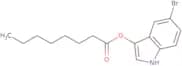
CAS:A substrate for visualising alkaline phosphatase activity. It produces a purple insoluble end product that is detected visually, when used together with nitroblue tetrazolium. The substrate system is versatile and has functions in a variety of applications, including Northern, Southern, and Western blotting, in situ hybridization, ELISAs, microarray and immunohistochemistry. DMF soluble.Formula:C15H15BrClN2O4PPurezza:Min. 98.0 Area-%Peso molecolare:433.63 g/mol5-Bromo-3-indoxyl caprylate
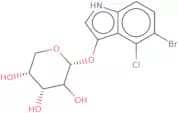
CAS:Also known as Lapis-caprylate; targeting esterase with C8 activity; Blue colorFormula:C16H20BrNO2Purezza:Min. 98 Area-%Colore e forma:PowderPeso molecolare:338.24 g/mol5-Bromo-4-chloro-3-indolyl a-D-xylopyranoside
CAS:5-Bromo-4-chloro-3-indolyl a-D-xylopyranoside is a chromogenic substrate used to detect the specific enzymatic activity of alpha-xylosidase. After cleavage, 5-bromo-4-chloro-indoxyl is released, resulting in a blue to blue-green color change in bacterial colonies or media. 5-Bromo-4-chloro-3-indolyl a-D-xylopyranoside is used in bacterial xylan metabolism studies and plant cell wall degradation assays.Formula:C13H13BrClNO5Purezza:Min. 95%Colore e forma:White to off-white solid.Peso molecolare:378.61 g/mol4-Nitrophenyl palmitate
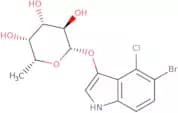
CAS:4-Nitrophenyl palmitate is a lipase-sensitive chromogenic substrate commonly used in the study of lipase and esterase activity. Its hydrolysis by lipases produces a yellow 4-nitrophenol, which can be easily detected spectrophotometrically, offering a quantitative measure of enzyme activity. This substrate is widely utilized in the screening of lipase-producing microorganisms and the optimization of enzyme-catalyzed reactions in various fields, including biotechnology and pharmaceutical research.Formula:C22H35NO4Purezza:Min. 95%Colore e forma:Off-White PowderPeso molecolare:377.52 g/mol5-Bromo-4-chloro-3-indolyl b-D-fucopyranoside
CAS:5-Bromo-4-chloro-3-indolyl b-D-fucopyranoside is a chromogenic substrate used is for the enzyme beta-fucosidase.
Formula:C14H15BrClNO5Purezza:Min. 98 Area-%Colore e forma:PowderPeso molecolare:392.63 g/mol5-Bromo-4-chloro-3-indoxyl oleate
CAS:5-Bromo-4-chloro-3-indoxyl oleate is a chromogenic substrate used to detect the specific enzymatic activity of lipase. After cleavage, 5-bromo-4-chloro-indoxyl is released, resulting in a blue to blue-green color change in bacterial colonies or media. 5-Bromo-4-chloro-3-indoxyl oleate is used in lipid metabolism disorder screening.Formula:C26H37BrClNO2Purezza:Min. 95%Colore e forma:PowderPeso molecolare:510.93 g/mol5-Bromo-4-chloro-3-indoxyl butyrate
CAS:Chromogenic substrate for carboxylesterase yielding a blue precipitate upon cleavage. It has been proposed for the rapid detection of Branhamella catarrhalis in a strip test because unlike most other members of the family Neisseriaceae, Branhamella catarrhalis produces a butyrateesterase.Formula:C12H11BrClNO2Purezza:Min. 98.0 Area-%Peso molecolare:316.59 g/mol2-Nitrophenyl a-D-galactopyranoside
CAS:2-Nitrophenyl alpha-D-galactopyranoside is a chromogenic substrate used to detect the enzymatic activity of alpha-galactosidase. After cleavage, the nitrophenyl moiety is released exhibiting a light yellowish color. 2-Nitrophenyl alpha-D-galactopyranoside is used in Fabry disease screening.Formula:C12H15NO8Purezza:Min. 95%Colore e forma:White Off-White PowderPeso molecolare:301.25 g/mol5-Bromo-4-chloro-3-indoxyl-beta-D-glucuronic acid, sodium salt trihydrate
CAS:Chromogenic substrate for beta-glucuronidase (GUS) yielding blue precipitate upon cleavage. Used for identification of beta-glucuronidase. X-beta-D-glucuronide has been reported as chromogenic substrate in a number of chromogenic E. coli/ coliform culture media. About 95% of common E. coli possess beta-D-glucuronidase activity. Such chromogenic culture media are used for detection and enumeration of E. coli in food samples such as meat, dairy products and shellfish and have clinical applications in the assessment of urinary infections. It has gained international acceptance as highly accurate test for the presence of E. coli in drinking water samples. It is also used for the detection of the expression of GUS (E. coli beta-glucuronidase) gene fusion marker constructs in plants. The sodium salt has advantages over the cyclohexylammonium salt as being non-electrostatic and possessing a naturally-occurring cation.Formula:C14H18BrClNNaO10Purezza:Min. 99.0 Area-%Peso molecolare:498.65 g/mol5-Bromo-4-chloro-3-indoxyl sulfate, potassium salt
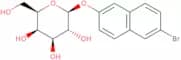
CAS:Chromogenic substrate for aryl-sulfatase. Yields a blue precipitate upon cleavage.Formula:C8H4BrClKNO4SPurezza:Min. 98.0 Area-%Peso molecolare:364.65 g/mol6-Bromo-2-naphthyl β-D-galactopyranoside
CAS:6-Bromo-2-naphthyl β-D-galactopyranoside is a chromogenic substrate commonly used for the detection of the enzymatic activity of β-galactosidase. It can produce a yellow precipitate upon hydrolysis by β-galactosidase, indicating the presence of the enzyme. It is often used in molecular biology applications to detect gene expression or to monitor cloning efficiency.Formula:C16H17BrO6Purezza:Min. 98 Area-%Colore e forma:PowderPeso molecolare:385.21 g/mol4-Chloro-1-naphthol
CAS:Substrate for horseradish peroxidase (HRP). HRP catalyzes oxidation of 4-chloro-1-naphthol in the presence of peroxide to the blue insoluble product 4-chloro-1-naphthon. It is used for both blotting and immunohistochemical staining but is less sensitive than other precipitating HRP substrates.Formula:C10H7ClOPurezza:Min. 97.0 Area-%Peso molecolare:178.62 g/molRef: 3D-C-5180
1kgPrezzo su richiesta100gPrezzo su richiesta250gPrezzo su richiesta500gPrezzo su richiesta2500gPrezzo su richiesta-Unit-ggPrezzo su richiestaAldol® 495 inositol-phosphate, ammonium salt, Biosynth Patent: EP 2427431 and US 8940909
CAS:Aldol® 495 inositol-phosphate is a chromogenic and fluorogenic enzyme substrate used for detection of phosphatidylinositol specific phospholipase C activity (PI-PLC, EC 4.6.1.13). The colorless enzyme substrate is cleaved by PI-PLC or PI-PLC-positive microorganisms in liquid or solid media, yielding orange color. In addition, green fluorescence is generated when a suitable matrix is present, e.g. PE-Pellets or cellulose acetate filter. Aldol® 495 inositol-phosphate is suitable for use in liquid and solid media, under aerobic as well as anaerobic conditions.Formula:C26H29ClN3O10PPurezza:Min. 95.0 Area-%Peso molecolare:609.95 g/mol5-Nitro-3-indoxyl-β-D-galactopyranoside
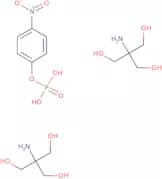
Please enquire for more information about 5-Nitro-3-indoxyl-β-D-galactopyranoside including the price, delivery time and more detailed product information at the technical inquiry form on this pageFormula:C14H16N2O8Purezza:Min. 95%Peso molecolare:340.29 g/mol4-Nitrophenyl phosphate bis(tris) salt
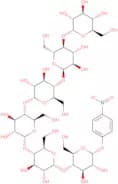
CAS:Substrate for alkaline phosphataseFormula:C6H6NO6P•(C4H11NO3)2Purezza:(%) Min. 99%Colore e forma:PowderPeso molecolare:461.36 g/mol4-Nitrophenyl-alpha-D-maltohexaoside
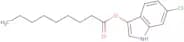
CAS:Chromogenic substrate for α-amylase yielding a yellow solution upon cleavage.Formula:C42H65NO33Purezza:Min. 97.0 Area-%Peso molecolare:1,111.97 g/mol6-Chloro-3-indoxyl nonanoate
CAS:6-Chloro-3-indoxyl nonanoate is a fluorescent substrate that is used in the detection of beta-galactosidase activity. It has been used to detect the enzyme levels in various culture media and as a high quality, food testing, and environmental testing. The product is also used as a ligand for enzyme inhibition studies. 6-Chloro-3-indoxyl nonanoate has shown to be an excellent fluoroquinolone substrate for chemiluminescence assays. This product is CAS No. 133950-72-8 and is of high purity and high quality.
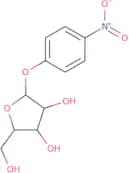
Purezza:Min. 95%Peso molecolare:307.81 g/mol4-Nitrophenyl b-L-arabinofuranoside
CAS:Chromogenic substrate targeting alpha-L-arabinofuranosidase
Purezza:Min. 95%Colore e forma:White/Off-White SolidPeso molecolare:271.22 g/molAldol® 515 propionate, Biosynth Patent: EP 2427431 and US 8940909
CAS:Aldol® 515 propionate is a chromogenic substrate for many enzymes, including beta-galactosidase, β-glucuronidase, α-galactosidase, β-galactosidase, and acid phosphatase. It can be used as a substrate in the detection of staining and enzyme activity in diagnostic testing. Aldol® 515 propionate has been shown to be an effective ligand for the protein Glu-C.Formula:C26H24N2O3Purezza:Min. 95%Colore e forma:PowderPeso molecolare:412.48 g/mol4-(Bromomethyl)phenyl-β-D-triacetylglucuronic acid methyl ester
4-(Bromomethyl)phenyl-beta-D-triacetylglucuronic acid methyl ester, also known as 4-bromo-4'-(N,N-dimethylamino)biphenyl, is a bioluminescent substrate. It is used for the detection of beta-glucuronidase activity in biological samples and for the detection of bacterial β-glucuronidase activity in culture media. Beta-glucuronidase catalyzes the hydrolysis of glucuronic acid by breaking down a conjugate molecule into two smaller molecules, which can be detected using bioluminescence. 4-(Bromomethyl)phenyl-beta-D-triacetylglucuronic acid methyl ester is a chromogenic substrate that has been shown to be an excellent ligand in biomolecular research because it reacts with many different enzymes. This product is highly pure and
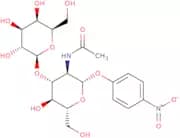
Formula:C20H23BrO10Purezza:Min. 95 Area-%Peso molecolare:503.29 g/mol4-Nitrophenyl 2-acetamido-2-deoxy-3-O-(b-D-galactopyranosyl)-b-D-glucopyranoside
CAS:Chromogenic substrate for fucosyltransferasesFormula:C20H28N2O13Purezza:Min. 98 Area-%Colore e forma:White PowderPeso molecolare:504.44 g/mol1-Naphthyl β-D-glucuronide
CAS:1-Naphthyl beta-D-glucuronide (NPG) is a chromogenic enzyme substrate used to detect the presence of β-glucuronidase activity. Upon hydrolysis by the enzyme, it produces a yellow product that can be detected by spectrophotometry or visually. It is commonly used in clinical assays to detect the presence of the enzyme in urine samples, as elevated levels can indicate liver or urinary tract diseases. It is also utilized in environmental testing, as some bacteria strains can produce the enzyme as a by-product, making NPG a useful tool for detecting these strains in contaminated water or food sources.Formula:C16H16O7Purezza:Min. 95%Colore e forma:White PowderPeso molecolare:320.29 g/molAldol® 495 beta-D-glucuronic acid, Biosynth Patent: EP 2427431 and US 8940909
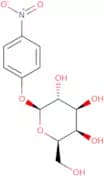
CAS:Aldol® 495 beta-D-glucuronic acid is a chromogenic and fluorogenic enzyme substrate used for detection of beta-glucuronidase activity. The living cells of Escherichia coli can be reliably detected in growth media containing Aldol® 495 beta-D-glucuronic acid, as beta-glucuronidase occurs almost exclusively in E. coli. Aldol® 495 beta-D-glucuronic acid can also be in GUS reporter assays. Aldol® 495 beta-D-glucuronic acid can be used in liquid culture and solid media, and is suitable for use under aerobic and anaerobic conditions. Upon exposure to active beta-glucuronidase, Aldol® 495 beta-D-glucuronic acid develops orange colour and green fluorescence.Formula:C26H23ClN2O8Purezza:Min. 95.0 Area-%Peso molecolare:526.93 g/mol4-Nitrophenyl-beta-D-galactopyranoside
CAS:Chromogenic β-galactosidase substrate yielding a yellow solution upon cleavage. Can be used for the detection of coliforms due to their β-galactosidase activity.Formula:C12H15NO8Purezza:Min. 98.0 Area-%Peso molecolare:301.26 g/mol5-Bromo-4-chloro-3-indoxyl-β-D-glucuronic acid, sodium salt anhydrous
CAS:5-Bromo-4-chloro-3-indoxyl-beta-D-glucuronic acid, sodium salt anhydrous is a potent inhibitor of histidine decarboxylase (HDC). It is used in the histochemical staining of dehydrogenase and effector proteins in urine samples. This compound has been shown to inhibit the growth of macroalgae and can be used as a selective agent for phylogenetic tree construction. 5BDG,Sr with its high specificity for HDC, also inhibits cell proliferation in plant cells and ovules.Formula:C14H12BrClNNaO7Purezza:Min. 98.0 Area-%Peso molecolare:444.60 g/molAldol® 458 phosphate, disodium salt, Biosynth Patent: EP 2427431 and US 8940909
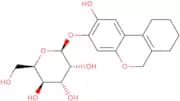
CAS:Aldol® 458 phosphate is a chromogenic and fluorogenic enzyme substrate used for detection of phosphatase activity. The colorless enzyme substrate is cleaved by phosphatases secreted by bacteria grown in liquid media, yielding yellow color and green fluorescence. Aldol® 458 phosphate can also be used in assays involving phosphatase-coupled antibodies in immunoassay applications (ELISA). Aldol® 458 phosphate can be used under aerobic and anaerobic conditions.Formula:C16H12NNa2O6PPurezza:Min. 95%Colore e forma:PowderPeso molecolare:391.22 g/mol3,4-Cyclohexenoesculetin beta-D-galactopyranoside
CAS:Chromogenic substrate for beta-galactosidaseFormula:C19H22O9Purezza:Min. 95 Area-%Colore e forma:PowderPeso molecolare:394.37 g/mol3-Indoxyl myo-inositol-1-phosphate, ammonium salt
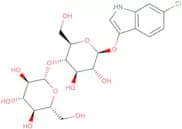
Please enquire for more information about 3-Indoxyl myo-inositol-1-phosphate, ammonium salt including the price, delivery time and more detailed product information at the technical inquiry form on this pageFormula:C14H21N2O9PPeso molecolare:392.30 g/mol6-Chloro-3-indolyl β-D-cellobioside
CAS:6-Chloro-3-indolyl b-D-cellobioside is a chromogenic substrate that produces a salmon-pink color after enzymatic cleavage. It is used for detecting the activity of beta-D-cellobiosidase in enzyme assays.
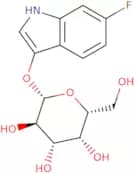
Purezza:Min. 95%Colore e forma:White To Off-White SolidPeso molecolare:491.87 g/mol6-Fluoro-3-indoxyl-beta-D-galactopyranoside
CAS:6-Fluoro-3-indoxyl-beta-D-galactopyranoside is a fluorescent chromogenic substrate that is commonly used for the detection and quantification of beta-galactosidase activity. When this substrate is hydrolyzed by beta-galactosidase, it produces a fluorescent blue product that can be easily detected and measured using a fluorometer or spectrophotometer. This substrate is often used in microbiology and molecular biology research to study gene expression and enzyme kinetics, and is also used in medical diagnostics as a marker for specific diseases and conditions.Formula:C14H16FNO6Purezza:Min. 98.0 Area-%Peso molecolare:313.29 g/molAldol® 518 myo-inositol-1-phosphate - Biosynth Patent: EP 2427431 and US 8940909
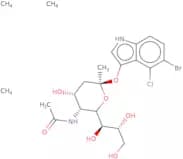
CAS:Aldol® 518 myo-inositol-1-phosphate is a chromogenic and fluorogenic enzyme substrate used for detection of phosphatidyl-inositol specific phospholipase C activity (PI-PLC, EC 4.6.1.13). The colorless enzyme substrate is cleaved by PI-PLC or PI-PLC-positive microorganisms grown in liquid or solid media, yielding an intense red coloration. In combination with Aldol® 355 fluorescence enhancer, red fluorescence can also obtained. Aldol® 518 myo-inositol-1-phosphate is suitable for use in liquid and solid media, under aerobic as well as anaerobic conditions.Formula:C29H33ClN3O10PPurezza:Min. 95 Area-%Colore e forma:PowderPeso molecolare:650.02 g/mol5-Bromo-4-chloro-3-indolyl N-acetyl-a-D-neuraminic acid ammonium salt
CAS:5-Bromo-4-chloro-3-indolyl N-acetyl-a-D-neuraminic acid ammonium salt is a substrate used to detect and quantify sialidase activity. Sialidases are enzymes that cleave sialic acid residues from glycoconjugates, and their activity is important in various cellular processes. The substrate is commonly used in research aimed at understanding the role of sialidases in diseases such as influenza and cancer.
Formula:C19H22BrClN2O9·NH3·2H2OPurezza:Min. 95%Colore e forma:PowderPeso molecolare:590.8 g/mol4-Nitrophenyl 2-acetamido-2-deoxy-a-D-glucopyranoside
CAS:4-Nitrophenyl 2-acetamido-2-deoxy-a-D-glucopyranoside is a chromogenic pNP substrate specifically designed for the analysis of N-acetylglucosaminidase activity. Upon enzyme action, the substrate releases 4-nitrophenol, a yellow compound that can be detected by spectrophotometric methods, providing a reliable and sensitive means of quantifying enzyme activity. This versatile substrate is widely used in biochemical studies, disease diagnostics, and the enzyme production industry.Formula:C14H18N2O8Colore e forma:White Off-White PowderPeso molecolare:342.3 g/mol