Altri
Trovati 6305 prodotti di "Altri"
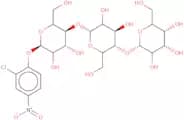
2-Chloro-4-nitrophenyl b-D-maltoheptaoside
CAS:2-Chloro-4-nitrophenyl b-D-maltoheptaoside is a fluorescent compound that is used in medical research for the visualization of muscle glycogen. It is also used to study the binding of molecules to proteins, as well as to measure enzyme activity. The compound has been shown to be insensitive to changes in pH and temperature, so it can be used at different pH levels and temperatures without affecting its function. 2-Chloro-4-nitrophenyl b-D-maltoheptaoside can be detected by titration calorimetry due to its high molecular weight. The molecule's affinity for carbohydrates also allows it to be used in optimization studies of carbohydrate molecules.Purezza:Min. 95%Peso molecolare:1,308.54 g/mol4-Nitrophenyl phosphate mono(2-amino-2-ethyl-1,3-propanediol) salt monohydrate
CAS:4-Nitrophenyl phosphate mono(2-amino-2-ethyl-1,3-propanediol) salt monohydrate is a chromogenic substrate that can be used to detect the presence of alkaline phosphatase. It is also used in food testing and diagnostics. 4NPPMD is a substrate for the enzyme alkaline phosphatase, which has been shown to play a role in the inflammatory response. The production of 4NPPMD by bacteria in the environment can be detected with chemiluminescence or bioluminescence. This product has been shown to react with both horseradish peroxidase and alkaline phosphatase, as well as other enzymes that are involved in metabolic pathways. This substrate also has high purity and fluorescence properties.Formula:C11H21N2O9PPurezza:Min. 95 Area-%Peso molecolare:356.26 g/mol6-Bromo-2-naphthyl-b-D-xylopyranoside
CAS:6-Bromo-2-naphthyl-b-D-xylopyranoside (BNX) is a chromogenic enzyme substrate used primarily to detect xylosidase activity. It is cleaved by the enzyme, resulting in the release of a colored product that can be measured spectrophotometrically. BNX is widely used as a substrate in research studies for the detection and quantification of various glycoside hydrolases, and it is particularly useful for studying cellulases and xylanases.Purezza:Min. 95%Colore e forma:PowderPeso molecolare:355.18 g/mol3-Indoxyl myo-inositol-1-phosphate, ammonium salt
Please enquire for more information about 3-Indoxyl myo-inositol-1-phosphate, ammonium salt including the price, delivery time and more detailed product information at the technical inquiry form on this pageFormula:C14H21N2O9PPeso molecolare:392.30 g/mol2-Chloro-4-nitrophenyl α-D-mannopyranoside
CAS:2-Chloro-4-nitrophenyl alpha-D-mannopyranoside is a substrate used to measure the alpha-mannosidase activity. This enzyme plays a crucial role in the lysosomal degradation of asparagine-linked carbohydrate cores of glycoproteinsis. The use of 2-Chloro-4-nitrophenyl alpha-D-mannopyranoside in diagnostic assays is important as a deficiency in alpha-mannosidase leads to the accumulation of mannose-rich oligosaccharides in lysosomes, causing a range of health problems collectively known as alpha-mannosidosis.
Formula:C12H14ClNO8Purezza:Min. 98 Area-%Colore e forma:White PowderPeso molecolare:335.69 g/mol5-Bromo-4-chloro-3-indoxyl thymidine-3'-phosphate, cyclohexylammonium salt
CAS:5-Bromo-4-chloro-3-indoxyl thymidine (BCIT) is a chromogenic substrate that reacts with the enzyme β-galactosidase, which cleaves the BCIT to form a bromochloroindoxyl (BCI) and an indoxyl phosphate. The BCI is then detected by chemiluminescence or fluorescence. This product is used in food testing, diagnostics, environmental testing, and staining. It has been shown to be a good substrate for β-galactosidase from different sources such as calf thymus, bacteria, fungi, and plants.Formula:C24H31BrClN4O8PPurezza:Min. 98 Area-%Peso molecolare:649.87 g/molRef: 3D-B-7680
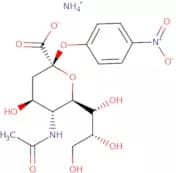
-Unit-mgmgPrezzo su richiesta1gPrezzo su richiesta50mgPrezzo su richiesta100mgPrezzo su richiesta250mgPrezzo su richiesta500mgPrezzo su richiesta2-O-(4-Nitrophenyl)-a-D-N-acetylneuraminic acid ammonium salt
CAS:2-O-(4-Nitrophenyl)-a-D-N-acetylneuraminic acid ammonium salt is a chromogenic substrate commonly used in the detection and quantification of sialidase activity. Sialidases are a family of enzymes that hydrolyze sialic acid residues from glycoconjugates. This substrate is used to detect bacterial and viral sialidases, which play an important role in pathogen infectivity. The ammonium salt form of the substrate is preferred for its solubility in water-based assay systems.Purezza:Min. 95%Peso molecolare:447.39 g/mol2-Nitrophenyl-beta-D-galactopyranoside - non-animal origin
CAS:2-Nitrophenyl-beta-D-galactopyranoside is a non-animal origin chromogenic substrate for the detection of beta-galactosidase activity. It is used in food testing, diagnostics, and environmental testing. 2-Nitrophenyl-beta-D-galactopyranoside is also used as a ligand in enzyme assays and a fluorogenic substrate for chemiluminescent reactions. This product is conjugated to HRP.Formula:C12H15NO8Purezza:Min. 98 Area-%Peso molecolare:301.25 g/mol5-Bromo-4-chloro-3-indolyl b-D-mannopyranoside
CAS:5-Bromo-4-Chloro-3-Indolyl b-D-Mannopyranoside, also known as X-Man, is an enzyme substrate commonly used for detecting mannosidase enzymes. Upon hydrolysis by the enzyme, it produces a blue-green colored compound that can be detected visually or measured spectrophotometrically. This substrate is useful in characterizing the activity of mannosidases involved in glycoprotein processing and quality control.Formula:C14H15BrClNO6Colore e forma:White Off-White PowderPeso molecolare:408.63 g/molAldol® 455 alpha-D-glucopyranoside, Biosynth Patent: EP 2427431 and US 8940909
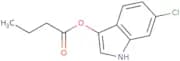
Aldol® 455 alpha-D-glucopyranoside is a synthetic fluorescent sugar that has been used in the diagnosis of bacterial infections. It has been used as a substrate for the enzyme beta-galactosidase and as a conjugate with anti-bacterial antibodies, which can be used to detect bacteria in urine and blood samples. Aldol® 455 alpha-D-glucopyranoside is also commonly used in the detection of bacteria in food and environmental samples. The product has a high purity level and quality.Formula:C27H24ClNO7Purezza:Min. 95.0 Area-%Peso molecolare:509.93 g/mol6-Chloro-3-indoxyl butyrate
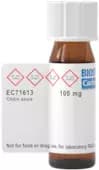
CAS:6-Chloro-3-indoxyl butyrate is a chemiluminescent substrate that is used in diagnostics and research. It has been shown to be an excellent ligand for the detection of DNA and protein. 6-Chloro-3-indoxyl butyrate can also be used as a chromogenic substrate for the detection of alkaline phosphatase, acid phosphatase, or beta-galactosidase. This product is also used in food testing, enzyme substrates, and fluorogenic substrates.Formula:C12H12ClNO2Purezza:Min. 99.0 Area-%Peso molecolare:237.69 g/molChitin azure
CAS:Chitin azure is a chromogenic substrate for chitinases. It is one of the few specific substrates for this enzyme that produces chito-oligosaccharides from chitin.
Colore e forma:Powder4-Nitrophenyl myristate
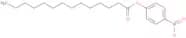
CAS:4-Nitrophenyl myristate (NphOMy) is a chromogenic enzyme substrate used as a diagnosis tool for detection of β-lactamase hydrolysis activities. In the presence of certain drugs, 4-nitrophenyl myristate HSA-Tyr411-catalyzed hydrolysis seems to be inhibited.Formula:C20H31NO4Purezza:Min. 95 Area-%Colore e forma:White PowderPeso molecolare:349.46 g/molAldol® 458 acetate, Biosynth Patent: EP 2427431 and US 8940909
CAS:Prodotto controllatoAldol 458 acetate is a synthetic chemical that is used in the food industry as an enzyme substrate and in diagnostic tests to measure the level of enzymes. Aldol 458 acetate is a ligand that binds to proteins, such as horseradish peroxidase and alkaline phosphatase, which are commonly used for detection of antibodies or other proteins. This product can be used as a culture medium additive for bacteria, fungi, and yeast. It can also be used for diagnostics and chemiluminescence reactions. Aldol 458 acetate has high purity and quality.Formula:C18H15NO4Purezza:Min. 95.0 Area-%Peso molecolare:309.32 g/molRef: 3D-A-4690_P00
-Unit-ggPrezzo su richiesta1gPrezzo su richiesta5gPrezzo su richiesta10gPrezzo su richiesta2500mgPrezzo su richiesta2-Chloro-4-nitrophenyl 4-O-b-D-galactopyranosylmaltoside
CAS:2-Chloro-4-nitrophenyl 4-O-b-D-galactopyranosylmaltoside, also known as Gal-G2-CNP, is a high quality, water soluble, chromogenic substrate that is used as an enzyme substrate and can be used in bioluminescence and chemiluminescence assays. This product is designed for use in diagnostics, culture media, food testing, environmental testing, and other research applications. 2-Chloro-4-nitrophenyl 4-O-b-D-galactopyranosylmaltoside has been tested in chromogenic assays with alpha-amylases.Formula:C24H34ClNO18Purezza:(Hplc) Min. 90%Colore e forma:PowderPeso molecolare:659.98 g/molAldol® 515 caprylate hydrochloride
CAS:Aldol 515 caprylate hydrochloride is a high-quality fluorogenic substrate that is used for the detection of enzymes in culture media and enzyme substrates. The product has a CAS number of 2484873-14-3 and can be used for food testing, diagnostics, and environmental testing. Aldol 515 caprylate hydrochloride can also be used as a ligand or chromogenic substrate to measure bioluminescence.Formula:C31H35ClN2O3Purezza:Min. 95 Area-%Peso molecolare:519.08 g/molCalcium 2-naphthylphosphate
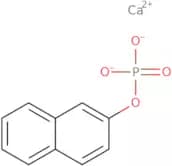
CAS:Calcium 2-naphthylphosphate, which is the calcim salt of 2-naphthylphosphate, is a chromogenic substrate to measure alkaline phosphatase activity. After enzymatic cleavage, the product yielded (2-naphthol) generates a red-colored complex upon reaction with a diazonium salt like Fast Blue RR or Fast Garnet GBC.
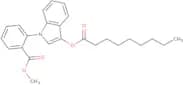
Purezza:(%) Min. 95%Colore e forma:PowderPeso molecolare:282.24 g/molAldol® 458 nonanoate solution, 0.75 M in DMSO, Biosynth Patent: EP 2427431 and US 8940909
CAS:Prodotto controllatoAldol 458 nonanoate solution (0.75 M) is a substrate for enzymes and ligands, which is used in various applications such as food testing, staining, fluorogenic substrate, environmental testing, chromogenic substrate and conjugate. Aldol 458 nonanoate solution (0.75 M) has high purity and is highly stable at pH 2-12. This product can be used as a chemiluminescence or bioluminescence substrate. The CAS number for this product is 2484873-15-4.Formula:C25H29NO4Purezza:Min. 95%Colore e forma:Clear LiquidPeso molecolare:407.51 g/mol5-Bromo-4-chloro-3-indoxyl-α-D-mannopyranoside
CAS:Chromogenic substrate specific for α-D-mannosidase. Yields a blue precipitate upon cleavage. Identification of Listeria species.Formula:C14H15BrClNO6Purezza:Min. 99 Area-%Peso molecolare:408.64 g/molRef: 3D-B-7409
-Unit-ggPrezzo su richiesta1gPrezzo su richiesta5gPrezzo su richiesta10gPrezzo su richiesta25gPrezzo su richiesta2500mgPrezzo su richiesta4-Nitrophenyl 2-acetamido-2-deoxy-4-O-(β-D-galactopyranosyl)-β-D-glucopyranoside
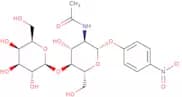
CAS:4-Nitrophenyl 2-acetamido-2-deoxy-4-O-(b-D-galactopyranosyl)-b-D-glucopyranoside is an efficient chromogenic pNP enzyme substrate ideal for monitoring enzyme activity and understanding carbohydrate metabolism. This galacto-glucoside compound is designed specifically for use with glycosidases such as hexosaminidases and delivers unparalleled performance in your enzymatic assays.Formula:C20H28N2O13Purezza:Min. 95%Colore e forma:White PowderPeso molecolare:504.44 g/mol2-Nitrophenyl b-D-xylopyranoside
CAS:Chromogenic substrates targeting beta-xylosidasePurezza:Min. 95%Colore e forma:PowderPeso molecolare:271.22 g/mol2-Chloro-4-nitrophenyl b-D-galactopyranoside
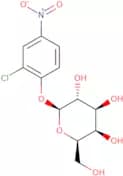
CAS:2-Chloro-4-nitrophenyl-beta-D-galactopyranoside is a chromogenic substrate used to test enzyme activities. It is commonly used in molecular biology research for the detection and measurement of beta-galactosidase activity.Formula:C12H14ClNO8Purezza:Min. 95%Colore e forma:White PowderPeso molecolare:335.69 g/mol5-Bromo-6-chloro-3-indoxyl phosphate, disodium salt monohydrate
CAS:5-Bromo-6-chloro-3-indoxyl phosphate, disodium salt monohydrate is a substrate used to visualize phosphatase activity via showing magenta colored end product when used with Nitroblue Tetrazolium.Formula:C8H6BrClNNa2O5PPurezza:Min. 99.0 Area-%Peso molecolare:388.45 g/mol5-Bromo-6-chloro-3-indolyl-2-acetamido-2-deoxy-a-D-glucopyranoside
5-Bromo-6-chloro-3-indolyl-2-acetamido-2-deoxy-a-D-glucopyranoside is a chemiluminescent substrate that is used as an indicator in diagnostic tests. This compound reacts with an oxidizing agent, such as hydrogen peroxide, to generate light. It is also used as a chromogenic substrate for the detection of bioluminescence and it can be applied in culture media or food testing. 5Bromo-6Chloro-3Indolyl2Acetamido2DeoxyA1DGlucopyranoside has a CAS number, which means that it meets the standards set by the Chemical Abstracts Service. It also has a high purity and quality, making it suitable for use in laboratories.Purezza:Min. 95%2,4-Dinitrophenyl 2-deoxy-2-fluoro-b-D-glucopyranoside
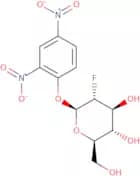
CAS:2,4-Dinitrophenyl 2-deoxy-2-fluoro-β-D-glucopyranoside, sometimes referred as 2F-DNPG, is an enzyme substrate for measuring beta-glucosidase activity. It is a mechanism-based inactivator of glycosidases, including beta-glucocerebrosidase (Gcase), a lysosomal enzyme encoded by the GBA1 gene responsible for breaking down glucosylceramide into ceramide and glucose. The use of 2,4-dinitrophenyl 2-deoxy-2-fluoro-β-D-glucopyranoside as an enzyme substrate permits the study of the catalytic mechanism and reaction intermediate of these enzymes.Formula:C12H13FN2O9Purezza:Min. 98 Area-%Colore e forma:PowderPeso molecolare:348.24 g/mol3-Indoxyl caprylate
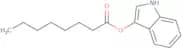
CAS:3-Indoxyl caprylate is a chemiluminescent substrate that is used in the detection of bacteria. It has been shown to be a very sensitive and selective fluorogenic substrate for the detection of bacterial activity, which can be used with an appropriate enzyme reaction. 3-Indoxyl caprylate has also been shown to be a potent quencher of bioluminescence, and can be used as a chromogenic substrate in diagnostic assays. 3-Indoxyl caprylate is often used as a culture media supplement or food additive to enhance its growth properties. It has been found to have high purity and quality levels, making it suitable for use in diagnostics and research.Purezza:Min. 95%Peso molecolare:259.34 g/molAldol® 495 beta-D-galactopyranoside, Biosynth Patent: EP 2427431 and US 8940909
CAS:Aldol® 495 beta-D-galactopyranoside is a chromogenic and fluorogenic enzyme substrate used for detection of beta-galactosidase activity. The colorless enzyme substrate is cleaved by lactose-utilizing bacteria in liquid or solid media, yielding orange color as well as green fluorescence if a fluorescence enhancer or a suitable matrix are present. Aldol® 495 beta-D-galactopyranoside can also be used in beta-gal reporter gene assays or for identification of beta-gal positive transformants on agar plates. Aldol® 495 beta-D-galactopyranoside can be used under aerobic and anaerobic conditions.Formula:C26H25ClN2O7Purezza:Min. 95.0 Area-%Peso molecolare:512.94 g/molAldol® 495 beta-D-glucuronic acid, Biosynth Patent: EP 2427431 and US 8940909
CAS:Aldol® 495 beta-D-glucuronic acid is a chromogenic and fluorogenic enzyme substrate used for detection of beta-glucuronidase activity. The living cells of Escherichia coli can be reliably detected in growth media containing Aldol® 495 beta-D-glucuronic acid, as beta-glucuronidase occurs almost exclusively in E. coli. Aldol® 495 beta-D-glucuronic acid can also be in GUS reporter assays. Aldol® 495 beta-D-glucuronic acid can be used in liquid culture and solid media, and is suitable for use under aerobic and anaerobic conditions. Upon exposure to active beta-glucuronidase, Aldol® 495 beta-D-glucuronic acid develops orange colour and green fluorescence.Formula:C26H23ClN2O8Purezza:Min. 95.0 Area-%Peso molecolare:526.93 g/mol5-Bromo-6-chloro-3-indoxyl phosphate, disodium salt trihydrate
CAS:Water soluble substrate for visualizing alkaline phosphatase activity. Produces a magenta colored insoluble end product that is detected visually, when used together with nitroblue tetrazolium. The substrate system is versatile and functions in a variety of applications, including Northern, Southern, and Western blotting, in situ hybridization, ELISAs and immunohistochemistry.Formula:C8H10BrClNNa2O7PPurezza:Min. 99.0 Area-%Peso molecolare:424.49 g/mol4-Nitrophenyl 2-acetamido-2-deoxy-b-D-glucopyranoside-6-sulfate sodium salt
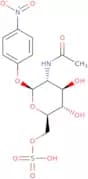
CAS:4-Nitrophenyl 2-acetamido-2-deoxy-beta-D-glucopyranoside-6-sulfate sodium salt is a chromogenic substrate for N-acetylglucosamine-6-sulfatase. Upon hydrolysis, para-nitrophenol is released yielding a yellowish colour. 4-Nitrophenyl 2-acetamido-2-deoxy-beta-D-glucopyranoside-6-sulfate sodium salt is used in different applications such as the Mucopolysaccharidosis IIID (Sanfilippo D) diagnosis
Formula:C14H17N2O11S·NaPurezza:Min. 95 Area-%Colore e forma:PowderPeso molecolare:444.35 g/mol4-Chloro-3-indoxyl-β-D-galactopyranoside
CAS:Chromogenic substrate for β-D-galactosidase yielding a precipitate. Mostly used in histochemistry.Formula:C14H16ClNO6Peso molecolare:329.74 g/molRef: 3D-C-4990
-Unit-ggPrezzo su richiesta1gPrezzo su richiesta5gPrezzo su richiesta10gPrezzo su richiesta25gPrezzo su richiesta2500mgPrezzo su richiesta6-Chloro-3-indoxyl caprylate
CAS:6-Chloro-3-indoxyl caprylate is a high quality, enzyme substrate, chromogenic substrate, bioluminescence, chemiluminescence ligand, staining and diagnostics reagent. It has CAS No. 159954-35-5 and is used in food testing, culture media and environmental testing. 6-Chloro-3-indoxyl caprylate is also a fluorogenic substrate that is used for high purity applications such as conjugation with other molecules.
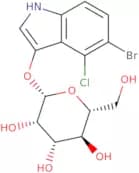
Formula:C16H20ClNO2Peso molecolare:293.80 g/mol5-Bromo-4-chloro-3-indoxyl-β-D-galactopyranoside
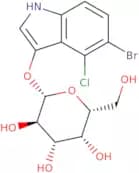
CAS:X-Gal is a chromogenic substrate for β-galactosidase, yielding a blue precipitate. X-Gal is an indicator for coliforms in culture media, as well as for the detection of coliforms (E. coli) in municipal water supplies and food products. X-Gal can be used in conjunction with the inducer IPTG, which binds and inhibits the lac repressor thus inducing β-galactosidase expression. X-Gal is the substrate of choice for blue-white selection of recombinant bacterial colonies with the lac+ genotype. Upon hydrolysis, X-Gal yields a localized, insoluble, blue precipitate, making it exceptionally useful in blotting, immunocytochemical, and ELISA assays. 5-Bromo-4-chloro-3-indoxyl-beta-D-galactopyranoside (X-beta-D-galactoside, X-Gal) is a chromogenic indicator for beta-galactosidase activity. The colorless product is cleaved by lactose-utilizing bacteria in liquid media or on agar plates and yields a blue-green colored precipitate. X-Gal can also be used as a detecting agent for beta-galactosidase activity in reporter gene assays or for identification of positive transformants on agar plates when using the α-complementation approach. Color formation is due to dimerization and oxidation of 5-bromo-4-chloro-3-hydroxyindole which results from enzymatic cleavage of X-Gal. The reaction proceeds only in the presence of oxygen, i.e. in aerobic cultures. Well detectable color bacterial colonies or liquid cultures is obtained within 16-48 h. In the presence of purified beta-galactosidase, color develops within minutes to a few hours.Formula:C14H15BrClNO6Purezza:Min. 99.0 Area-%Peso molecolare:408.64 g/mol4-Nitrophenyl b-D-ribofuranoside
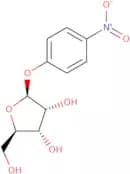
CAS:4-Nitrophenyl β-D-ribofuranoside is a synthetic chromogenic molecule designed to profile phosphorolytic enzyme activity, specifically ribonucleoside-hydrolyzing enzymes. Upon hydrolysis by these enzymes, it releases a 4-nitrophenolic compound, which can be monitored spectrophotometrically at 405-410 nm as a quantitative indicator of enzyme activity. This substrate is suitable for studying ribonucleoside-hydrolyzing enzymes, such as ribo- and deoxyribonucleases, in various biological systems and, in turn, could help advance our understanding of nucleic acid metabolism, gene function, and regulatory processes.Formula:C11H13NO7Purezza:Min. 97 Area-%Colore e forma:White PowderPeso molecolare:271.22 g/mol6-Bromo-2-naphthyl b-D-glucuronide
CAS:6-Bromo-2-naphthyl beta-D-glucuronide is a substrate for beta-glucuronidase, an enzyme involved in detoxification and bacterial metabolism. Upon enzymatic hydrolysis, it releases 6-bromo-2-naphthol, which forms a detectable dye when reacted with diazonium salts. This compound is widely used in microbiology to detecting E. coli in water testing and histochemical staining. 6-Bromo-2-naphthyl beta-D-glucuronide is also been used in cancer research studies. It has been found that some tumors are related to a high activity of beta-glucuronidase, responsible to reactivate the carcinogens and promote tumor progression, developing a drug resistance to chemotherapy.Formula:C16H15BrO7Purezza:Min 97%Colore e forma:White Off-White PowderPeso molecolare:399.2 g/mol4-Nitrophenyl 2-acetamido-2-deoxy-a-D-glucopyranoside
CAS:4-Nitrophenyl 2-acetamido-2-deoxy-a-D-glucopyranoside is a chromogenic pNP substrate specifically designed for the analysis of N-acetylglucosaminidase activity. Upon enzyme action, the substrate releases 4-nitrophenol, a yellow compound that can be detected by spectrophotometric methods, providing a reliable and sensitive means of quantifying enzyme activity. This versatile substrate is widely used in biochemical studies, disease diagnostics, and the enzyme production industry.Formula:C14H18N2O8Colore e forma:White Off-White PowderPeso molecolare:342.3 g/mol2-Nitrophenyl-beta-D-galactopyranoside
CAS:Chromogenic β-galactosidase substrate yielding a yellow solution upon cleavage. Can be used for the detection of coliforms due to their beta-galactosidase activity.Formula:C12H15NO8Purezza:Min. 99.0 Area-%Peso molecolare:301.26 g/mol5-Bromo-6-chloro-3-indoxylphosphat, disodium salt trihydrate
5-Bromo-6-chloro-3-indoxylphosphate, disodium salt trihydrate is a bioluminescent substrate that can be used in a variety of diagnostic applications. This compound reacts with luciferase to yield light and can serve as an indicator for various enzymes and chemical reactions. 5-Bromo-6-chloro-3-indoxylphosphate, disodium salt trihydrate has been shown to be compatible with both culture media and food testing.Purezza:Min. 95%5-Bromo-4-chloro-3-indoxyl-alpha-D-N-acetylneuraminic acid, cyclohexylammonium salt
5-Bromo-4-chloro-3-indoxyl-alpha-D-N-acetylneuraminic acid, cyclohexylammonium salt is a chemiluminescent substrate that provides a significant increase in light emission. It has a CAS number of 59820-92-0 and is supplied in high purity and high quality. This product is used for the detection of various biological reactions, including diagnostics, enzyme substrates, food testing, and more.Purezza:Min. 95%N-Acetylmemantine
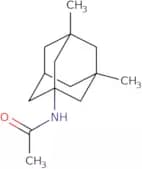
CAS:N-Acetylmemantine is a drug that inhibits the activity of acetylcholinesterase in the brain. It has been shown to inhibit cancer cell growth and induce apoptosis, as well as inhibit the reaction of hydrolysis of acetonitrile with hydrochloric acid in an organic solvent. N-Acetylmemantine is synthesized by heating ethylene in the presence of hydrochloric acid. The synthesis yields a white solid that consists mainly of N-acetylmethamphetamine. This drug interacts with cellular membranes, which may be due to its ability to react with cholesterol or phospholipids. The interaction leads to changes in membrane permeability, which can result in apoptosis.Formula:C14H23NOPurezza:Min. 95%Colore e forma:White PowderPeso molecolare:221.34 g/molAldol® 470 beta-D-galactopyranoside, Biosynth Patent: EP 2427431 and US 8940909
CAS:Aldol® 470 beta-D-galactopyranoside is a chromogenic and fluorogenic enzyme substrate used for detection of beta-galactosidase activity. The colorless enzyme substrate is cleaved by lactose-utilizing bacteria grown in liquid or solid media, yielding yellow coloration and green fluorescence. Aldol® 470 beta-D-galactopyranoside can also be used in beta-galactosidase gene reporter assays or immunoassay applications (ELISA). Aldol® 470 beta-D-galactopyranoside can be used under aerobic and anaerobic conditions.Formula:C29H29NO9Purezza:Min. 95 Area-%Colore e forma:PowderPeso molecolare:535.54 g/mol5-Bromo-4-chloro-3-indoxyl-1-acetate
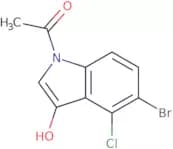
CAS:5-Bromo-4-chloro-3-indoxyl-1-acetate is a chromogenic substrate used to detect the specific enzymatic activity of esterase. After cleavage, 5-bromo-4-chloro-indoxyl is released, resulting in a blue to blue-green color change in bacterial colonies or media. 5-Bromo-4-chloro-3-indoxyl-1-acetate is used in bacterial esterase activity assays (e.g. Pseudomonas spp.).
Purezza:Min. 95%Colore e forma:PowderPeso molecolare:288.52 g/mol3-Indoxyl-beta-D-glucopyranoside anhydrous
CAS:The maunfacturing of blue jeans started 150 years ago as workwear, and are found nowadays in almost every wardrobe. Their renowned indigo color tone is truly unique; nevertheless, the high demand for the dye poses serious sustainability and environmental problems connected with its manufacturing process. Recently, a group of scientists presented an alternative indigo dyeing method inspired by the indoxyl glucoconjugate present in the plant P.tinctorium. The researchers proposed as an alternative approach a biocatalytic process using recombinant E.coli to access water soluble β-gluco-indoxyl (indican). At the point of coloring, indican gets hydrolyzed by β-glucosidase enzymes forming indoxyl, which suddenly undergoes oxidation to leucoindigo and further crystallizes to indigo giving the typical blue denim its signature character.Formula:C14H17NO6Purezza:Min. 99.0 Area-%Peso molecolare:295.29 g/mol5-Bromo-4-chloro-3-indoxyl-beta-D-cellobioside
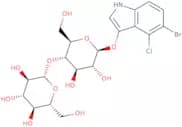
CAS:Chromogenic substrate for β-D-Cellobiosidase yielding a blue precipitate.Formula:C20H25BrClNO11Purezza:Min. 99.0 Area-%Peso molecolare:570.78 g/mol5-Bromo-4-chloro-3-indoxyl-beta-D-fucopyranoside
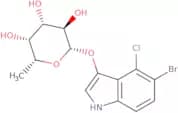
CAS:Chromogenic substrate for β-D-fucosidase yielding a blue precipitate.Formula:C14H15BrClNO5Purezza:Min. 99.0 Area-%Peso molecolare:392.64 g/mol6-Chloro-3-indoxyl-beta-D-glucuronic acid, cyclohexylammonium salt
CAS:6-Chloro-3-indoxyl-beta-D-glucuronic acid (cyclohexylammonium salt) is a chromogenic substrate for beta-glucuronidase yielding a salmon colored precipitate upon cleavage.Formula:C20H27ClN2O7Purezza:Min. 98.0 Area-%Peso molecolare:442.90 g/mol5-Bromo-4-chloro-3-indoxyl phosphate p-toluidine, micronized
CAS:A substrate for alkaline phosphatase yielding a blue insoluble product upon cleavage. Colour can be further enhanced when used together with Nitroblue tetrazolium. The substrate system is versatile and has functions in a variety of applications, including Northern, Southern, and Western blotting, in situ hybridization, ELISAs, microarray and immunohistochemistry. The micronized structure enhances solubility.Formula:C8H6BrClNO4P•C7H9NPurezza:Min. 95%Colore e forma:PowderPeso molecolare:433.63 g/mol5-Bromo-4-chloro-3-indoxyl-N-acetyl-beta-D-glucosaminide
CAS:Chromogenic substrate for N-acetyl-β-D-glucosaminidase yielding a blue precipitate. Contained in certain mycological culture media. Used in histochemistry.
Formula:C16H18BrClN2O6Purezza:Min. 99.5 Area-%Peso molecolare:449.69 g/molAldol® 458 nonanoate, Biosynth Patent: EP 2427431 and US 8940909
CAS:Prodotto controllatoAldol 458 nonanoate is a high quality, chromogenic and fluorogenic substrate for use in enzymatic, chemiluminescent, and immunochemical reactions. Aldol 458 nonanoate is used as a chromogenic substrate for the detection of glucose oxidase activity in culture media and as a fluorogenic substrate for the detection of glucose oxidase activity in environmental testing. This product has CAS number 2484872-52-6.Formula:C25H29NO4Purezza:Min. 98.0 Area-%Peso molecolare:407.5 g/molRef: 3D-A-4693_P00
-Unit-ggPrezzo su richiesta1gPrezzo su richiesta5gPrezzo su richiesta10gPrezzo su richiesta2500mgPrezzo su richiesta2-Naphthyl caprylate
CAS:Chromogenic substrate for carboxylesterase and lipase. 2-naphthol is released upon hydrolyzation. By simultaneous coupling with a diazonium salt, the corresponding azo-dye is formed. Naphthols can also be detected by fluorescence analysis. Used in an colorimetric assay for the extracellular lipase of Pseudomonas fluorescens B52.
Formula:C18H22O2Purezza:Min. 98.0 Area-%Peso molecolare:270.37 g/molRef: 3D-N-2220
-Unit-ggPrezzo su richiesta1gPrezzo su richiesta5gPrezzo su richiesta250mgPrezzo su richiesta500mgPrezzo su richiesta2500mgPrezzo su richiesta