Altri
Trovati 6310 prodotti di "Altri"
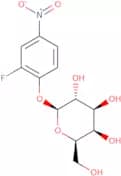
2-Fluoro-4-nitrophenyl b-D-galactopyranoside
CAS:2-Fluoro-4-nitrophenyl b-D-galactopyranoside is a chromogenic substrate in enzymatic assays with β-galactosidase. Commonly abbreviated as PFONPG, it is a hydrophilic compound that can be dissolved in saline and blood samples, which makes it a suitable candidate for diagnostic applications as a gene reporter probe by simple analytic methodologies. 2-Fluoro-4-nitrophenyl b-D-galactopyranoside have been used to detect and monitor the growth of prostate tumor cells.Purezza:Min. 95%Colore e forma:PowderPeso molecolare:319.24 g/mol5-Bromo-4-chloro-3-indoxyl-beta-D-glucuronic acid, sodium salt trihydrate
CAS:Chromogenic substrate for beta-glucuronidase (GUS) yielding blue precipitate upon cleavage. Used for identification of beta-glucuronidase. X-beta-D-glucuronide has been reported as chromogenic substrate in a number of chromogenic E. coli/ coliform culture media. About 95% of common E. coli possess beta-D-glucuronidase activity. Such chromogenic culture media are used for detection and enumeration of E. coli in food samples such as meat, dairy products and shellfish and have clinical applications in the assessment of urinary infections. It has gained international acceptance as highly accurate test for the presence of E. coli in drinking water samples. It is also used for the detection of the expression of GUS (E. coli beta-glucuronidase) gene fusion marker constructs in plants. The sodium salt has advantages over the cyclohexylammonium salt as being non-electrostatic and possessing a naturally-occurring cation.Formula:C14H18BrClNNaO10Purezza:Min. 99.0 Area-%Peso molecolare:498.65 g/mol3-Indoxyl choline phosphate
CAS:Please enquire for more information about 3-Indoxyl choline phosphate including the price, delivery time and more detailed product information at the technical inquiry form on this pageFormula:C13H19N2O4PPurezza:Min. 99 Area-%Peso molecolare:298.28 g/molRef: 3D-I-5696
-Unit-ggPrezzo su richiesta1gPrezzo su richiesta5gPrezzo su richiesta10gPrezzo su richiesta500mgPrezzo su richiesta2500mgPrezzo su richiesta4-Nitrophenyl 4,6-benzylidene-α-D-maltoheptaoside
CAS:4-Nitrophenyl 4,6-benzylidene-alpha-D-maltoheptaoside is a chromogenic substrate for alpha-amylase. Upon hydrolysis, para-nitrophenol is released yielding a yellowish colour. 4-Nitrophenyl 4,6-benzylidene-alpha-D-maltoheptaoside is used in different applications such as the Starch digestion studies, industrial enzyme optimizationFormula:C55H79NO38Purezza:Min. 95%Colore e forma:PowderPeso molecolare:1,362.2 g/mol6-Bromo-2-naphthyl b-D-glucopyranoside
CAS:6-Bromo-2-naphthyl b-D-glucopyranoside is an enzyme substrate used in chromogenic assays with beta-glucosidases. It has been used in culture media for the identification of Legionella pneumophila.Formula:C16H17BrO6Purezza:Min. 98 Area-%Colore e forma:PowderPeso molecolare:385.21 g/mol5-Bromo-4-chloro-3-indoxyl phosphate, dilithium salt hydrate
5-Bromo-4-chloro-3-indoxyl phosphate, dilithium salt hydrate is a chromogenic substrate used to detect the specific enzymatic activity of alkaline phosphatase. After cleavage, 5-bromo-4-chloro-indoxyl is released, resulting in a blue to blue-green color change in bacterial colonies or media. 5-Bromo-4-chloro-3-indoxyl phosphate, dilithium salt hydrate is used in ELISA and molecular biology assays such as lacZ reporter systems.
Formula:C8H4BrClLi2NO4P(anhydrousbasis)Purezza:Min. 98 Area-%Colore e forma:PowderPeso molecolare:338.34 g/molBCM® O157:H7(+)
BIOSYNTH Culture Medium for the isolation andidentification of Escherichia coli O157:H7
Aldol® 470 L-alanine ester, hydrochloride, Biosynth Patent: EP 2427431 and US 8940909
CAS:Prodotto controllatoAldol® 470 L-alanine ester, hydrochloride is a fluorescent chemiluminescent substrate. It is a ligand with high purity and high quality, which has been patented in the European Patent Office (EP 2427431) and the United States Patent and Trademark Office (US 8940909). The product can be used for chemiluminescence, staining, fluorescence, bioluminescence, enzyme substrate and food testing. Aldol® 470 L-alanine ester, hydrochloride is an excellent fluorescent chemiluminescent substrate that can be used for conjugation to enzymes or antibodies.Formula:C26H25ClN2O5Purezza:Min. 95%Colore e forma:PowderPeso molecolare:480.95 g/molAldol® 495 acetate, Biosynth Patent: EP 2427431 and US 8940909
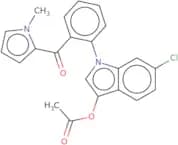
CAS:Prodotto controllatoAldol 495 is a chemiluminescent substrate for the detection of aldehyde reductase (ALR) activity. It is an acetate ester that reacts with ALR to form an aldehyde product, which then reacts with luminol in the presence of hydrogen peroxide to produce light. Aldol 495 is used in the diagnosis of ALR deficiency, which can cause acute intermittent porphyria and other diseases. Aldol 495 has been shown to be non-toxic and non-mutagenic.Formula:C22H17ClN2O3Purezza:Min. 95%Colore e forma:PowderPeso molecolare:392.83 g/mol5-Bromo-6-chloro-3-indoxyl sulfate, potassium salt
CAS:5-Bromo-6-chloro-3-indoxyl sulfate, potassium salt is a fluorogenic substrate for the enzyme alkaline phosphatase. This compound is used in the detection of alkaline phosphatase activity as well as in many other applications such as diagnostic tests and environmental testing. 5-Bromo-6-chloro-3-indoxyl sulfate, potassium salt is available at high purity and quality.Formula:C8H4BrClKNO4SPurezza:Min. 98 Area-%Peso molecolare:364.65 g/mol5-Bromo-4-chloro-3-indoxyl-α-D-mannopyranoside
CAS:Chromogenic substrate specific for α-D-mannosidase. Yields a blue precipitate upon cleavage. Identification of Listeria species.Formula:C14H15BrClNO6Purezza:Min. 99 Area-%Peso molecolare:408.64 g/molRef: 3D-B-7409
-Unit-ggPrezzo su richiesta1gPrezzo su richiesta5gPrezzo su richiesta10gPrezzo su richiesta25gPrezzo su richiesta2500mgPrezzo su richiesta5-Bromo-3-indoxyl phosphate, disodium salt
CAS:5-Bromo-3-indoxyl phosphate, disodium salt is an enzyme substrate that is used for environmental testing, bioluminescence, culture media, chemiluminescence, fluorogenic substrate and food testing. It is also used as a ligand for diagnostic purposes. 5-Bromo-3-indoxyl phosphate, disodium salt has CAS number 16036-59-2 and it is soluble in water. This product has high quality and purity with a conjugate of 5% phenol red. 5-Bromo-3-indoxyl phosphate, disodium salt reacts with the enzyme horseradish peroxidase to produce a red color. This product can be used to detect hydrogen peroxide in the presence of an oxidizing agent such as hydrogen peroxide or potassium permanganate. The reaction produces a blue color when the solution is viewed in daylight or under ultraviolet light.Formula:C8H5BrNNa2O4PPurezza:98.0 To 100.0 Area-%Peso molecolare:335.99 g/molNaphthol AS-BI β-D-galactopyranoside
CAS:Substrate for beta-galactosidaseFormula:C24H24BrNO8Purezza:Min. 95%Colore e forma:PowderPeso molecolare:534.35 g/molOstazin brilliant red H-3B starch
Ostazin Brilliant Red H-3B is a water soluble, non-toxic, and non-hazardous substrate for enzymes that catalyze reactions involving the cleavage of β-D-glucosides. It is used as a chromogenic or fluorogenic substrate in diagnostic tests. Ostazin Brilliant Red H-3B can also be used in bioluminescence reaction with luciferase to measure ATP levels in living cells.Purezza:Min. 95%4-Nitrophenyl 2-acetamido-6-O-(2-acetamido-2-deoxy-b-D-glucopyranosyl)-3-O-(b-D-galactopyranosyl)-2-deoxy-a-D-galactopyranoside
CAS:4-Nitrophenyl 2-acetamido-6-O-(2-acetamido-2-deoxy-b-D-glucopyranosyl)-3-O-(b-D-galactopyranosyl)-2-deoxy-a-D-galactopyranoside is a specific chromogenic substrate designed for the highly sensitive and accurate detection of glycosidase enzyme activity. Glycosidases are responsible for the cleavage of glycosidic bonds between saccharide units in various carbohydrates. The hydrolysis of this substrate by glycosidase enzymes produces 4-nitrophenol, a yellow-colored compound that can be easily monitored through spectrophotometric measurements due to its strong absorbance at 405 nm. This chromogenic substrate is widely used in the analysis of glycosidase activity in various biological samples, including bacterial, fungal, and plant tissues, as well as in environmental samples and biotechnological applications.Formula:C28H41N3O18Purezza:Min. 95 Area-%Colore e forma:White PowderPeso molecolare:707.63 g/mol2-Naphthyl-alpha-D-glucopyranoside
CAS:2-Naphthyl-α-D-glucopyranoside is a substrate for α-glucosidase. 2-Naphthol is released upon hydrolyzation. By simultaneous coupling with a suitable staining reagent, such as hexazonium p-rosaniline, the corresponding reddish-brown azo-dye is formed. Naphthols can also be detected by fluorescence analysis.Formula:C16H18O6Purezza:Min. 98.0 Area-%Peso molecolare:306.32 g/mol3,4-Cyclohexenoesculetine phosphate disodium
Please enquire for more information about 3,4-Cyclohexenoesculetine phosphate disodium including the price, delivery time and more detailed product information at the technical inquiry form on this page4-Nitrophenyl-N-acetyl-beta-D-galactosaminide
CAS:4-Nitrophenyl-N-acetyl-beta-D-galactosaminide is a synthetic substrate that is used in enzyme kinetics. It is a beta-galactosidase substrate that reacts with the enzyme to form a product. The rate of reaction can be measured by following the change in absorbance over time. This product will react with an acceptor, such as chondroitin sulfate, to produce an observable reaction product. 4NPBGA has been shown to be an effective carbon source for plant physiology studies and has been shown to have optimal activity at pH 6.5.Formula:C14H18N2O8Purezza:Min. 98 Area-%Peso molecolare:342.31 g/molAldol® 455 alpha-D-maltopyranoside, Biosynth Patent: EP 2427431 and US 8940909
Aldol® 455 alpha-D-maltopyranoside is a chromogenic substrate developed by Cymit Quimica, designed for the detection of maltosidases.Formula:C33H34ClNO12Purezza:Min. 95.0 Area-%Peso molecolare:672.08 g/mol1-Naphthyl β-D-glucopyranoside
CAS:1-Naphthyl β-D-glucopyranoside can be used as a chromogenic substrate for beta-glucosidases. It can also be used as a fluorogenic substrate to study carbohydrate metabolism and in screening enzyme inhitibitors in pharmacologic research.
Formula:C16H18O6Purezza:Min. 95%Colore e forma:White Off-White PowderPeso molecolare:306.31 g/molβ-Naphthyl stearate
CAS:Beta-naphthyl stearate is a chromogenic substrate for measuring enzymatic activity.Purezza:Min. 95%Colore e forma:PowderPeso molecolare:410.63 g/mol6-Chloro-3-indoxyl nonanoate
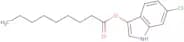
CAS:6-Chloro-3-indoxyl nonanoate is a fluorescent substrate that is used in the detection of beta-galactosidase activity. It has been used to detect the enzyme levels in various culture media and as a high quality, food testing, and environmental testing. The product is also used as a ligand for enzyme inhibition studies. 6-Chloro-3-indoxyl nonanoate has shown to be an excellent fluoroquinolone substrate for chemiluminescence assays. This product is CAS No. 133950-72-8 and is of high purity and high quality.
Purezza:Min. 95%Peso molecolare:307.81 g/mol5-Nitro-3-indoxyl-β-D-galactopyranoside
Please enquire for more information about 5-Nitro-3-indoxyl-β-D-galactopyranoside including the price, delivery time and more detailed product information at the technical inquiry form on this pageFormula:C14H16N2O8Purezza:Min. 95%Peso molecolare:340.29 g/mol5-Bromo-3-indolyl phosphate disodium salt
CAS:5-Bromo-3-indolyl phosphate disodium salt is a chemiluminescent substrate that is used for the detection of bacterial activity. It reacts with oxygen to produce light, which can be measured using a luminometer. It is also used as a chromogenic substrate for detection of bacterial activity in culture media. The enzyme reaction produces an intense blue fluorescence and is used for diagnostic purposes in food testing and medical diagnostics. 5-Bromo-3-indolyl phosphate disodium salt has been shown to be effective against many bacteria and fungi, including Staphylococcus aureus, Streptococcus pyogenes, Escherichia coli, Pseudomonas aeruginosa, Candida albicans and Aspergillus niger. This product is chemically stable at room temperature but should be stored at 4°C or below.
Formula:C8H5BrNO4PNa2Purezza:Min. 95%Colore e forma:PowderPeso molecolare:335.99 g/mol5-Bromo-6-chloro-3-indoxyl phosphate, disodium salt trihydrate
CAS:Water soluble substrate for visualizing alkaline phosphatase activity. Produces a magenta colored insoluble end product that is detected visually, when used together with nitroblue tetrazolium. The substrate system is versatile and functions in a variety of applications, including Northern, Southern, and Western blotting, in situ hybridization, ELISAs and immunohistochemistry.Formula:C8H10BrClNNa2O7PPurezza:Min. 99.0 Area-%Peso molecolare:424.49 g/mol5-Bromo-4-chloro-3-indoxyl oleate
CAS:5-Bromo-4-chloro-3-indoxyl oleate is a chromogenic substrate used to detect the specific enzymatic activity of lipase. After cleavage, 5-bromo-4-chloro-indoxyl is released, resulting in a blue to blue-green color change in bacterial colonies or media. 5-Bromo-4-chloro-3-indoxyl oleate is used in lipid metabolism disorder screening.Formula:C26H37BrClNO2Purezza:Min. 95%Colore e forma:PowderPeso molecolare:510.93 g/mol6-Chloro-3-indoxyl-beta-D-glucuronic acid, cyclohexylammonium salt
CAS:6-Chloro-3-indoxyl-beta-D-glucuronic acid (cyclohexylammonium salt) is a chromogenic substrate for beta-glucuronidase yielding a salmon colored precipitate upon cleavage.Formula:C20H27ClN2O7Purezza:Min. 98.0 Area-%Peso molecolare:442.90 g/mol4-Nitrophenyl palmitate
CAS:4-Nitrophenyl palmitate is a lipase-sensitive chromogenic substrate commonly used in the study of lipase and esterase activity. Its hydrolysis by lipases produces a yellow 4-nitrophenol, which can be easily detected spectrophotometrically, offering a quantitative measure of enzyme activity. This substrate is widely utilized in the screening of lipase-producing microorganisms and the optimization of enzyme-catalyzed reactions in various fields, including biotechnology and pharmaceutical research.Formula:C22H35NO4Purezza:Min. 95%Colore e forma:Off-White PowderPeso molecolare:377.52 g/molAldol® 535 myo-inositol-1-phosphate, ammonium salt, Biosynth Patent: EP 2427431 and US 8940909
CAS:Aldol 535 is a chemiluminescent substrate for the detection of myo-inositol-1-phosphate. It has been shown to have high purity and high quality, and is suitable for use in diagnostics, food testing, and as a bioluminescence substrate. Aldol 535 is also used as a ligand in various enzyme assays. It has been tested for its ability to react with the fluorogenic substrates: 4-methylumbelliferyl phosphate and 4-methylumbelliferone phosphate. The CAS number is 2484872-80-0.Formula:C29H32BrClN3O10PPurezza:Min. 95%Colore e forma:PowderPeso molecolare:728.91 g/mol2-O-(4-Nitrophenyl)-a-D-N-acetylneuraminic acid sodium salt
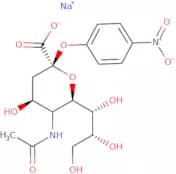
CAS:2-O-(4-Nitrophenyl)-alpha-D-N-acetylneuraminic acid sodium salt is a chromogenic substrate used to detect the enzymatic activity of neuraminidase or sialidase. After cleavage, the nitrophenyl moiety is released exhibiting a light yellowish color. 2-O-(4-Nitrophenyl)-alpha-D-N-acetylneuraminic acid sodium salt is used in bacterial neuraminidase activity assays.Purezza:Min. 95%Colore e forma:Yellow PowderPeso molecolare:452.35 g/mol2-Chloro-4-nitrophenyl a-D-maltotrioside
CAS:2-Chloro-4-nitrophenyl a-D-maltotrioside (2CNP) is a potent hypoglycemic agent that has been shown to decrease postprandial blood glucose levels in humans. 2CNP is a white crystalline solid that is soluble in water and ethanol. The transfer reactions of 2CNP are enhanced by benzalkonium chloride, which forms an organic complex with the drug. The optimum concentration for the hypoglycemic effect of 2CNP is determined to be 10 μM, which can be detected using an optical sensor. This compound also inhibits α-amylase and other enzymes involved in carbohydrate metabolism, leading to the accumulation of glycogen and lowering the blood glucose level.
Formula:C24H34CiNO18Purezza:Min. 95%Colore e forma:Off-White Yellow PowderPeso molecolare:659.98 g/molAldol® 495 beta-D-galactopyranoside, Biosynth Patent: EP 2427431 and US 8940909
CAS:Aldol® 495 beta-D-galactopyranoside is a chromogenic and fluorogenic enzyme substrate used for detection of beta-galactosidase activity. The colorless enzyme substrate is cleaved by lactose-utilizing bacteria in liquid or solid media, yielding orange color as well as green fluorescence if a fluorescence enhancer or a suitable matrix are present. Aldol® 495 beta-D-galactopyranoside can also be used in beta-gal reporter gene assays or for identification of beta-gal positive transformants on agar plates. Aldol® 495 beta-D-galactopyranoside can be used under aerobic and anaerobic conditions.Formula:C26H25ClN2O7Purezza:Min. 95.0 Area-%Peso molecolare:512.94 g/mol5-Bromo-4-chloro-3-indoxyl butyrate
CAS:Chromogenic substrate for carboxylesterase yielding a blue precipitate upon cleavage. It has been proposed for the rapid detection of Branhamella catarrhalis in a strip test because unlike most other members of the family Neisseriaceae, Branhamella catarrhalis produces a butyrateesterase.Formula:C12H11BrClNO2Purezza:Min. 98.0 Area-%Peso molecolare:316.59 g/mol3-Indoxyl phosphate, p-toluidine salt
CAS:Prodotto controllato3-Indoxyl phosphate, p-toluidine salt is a fluorogenic substrate that can be used for the detection of β-galactosidase. 3-Indoxyl phosphate, p-toluidine salt is a highly active chromogenic substrate that can be used as a diagnostic tool in the food industry to determine whether or not milk has been adulterated with animal milk. This product is also used in environmental testing to detect bacteria and fungi. 3-Indoxyl phosphate, p-toluidine salt is a high purity, high quality conjugate that can be used for the detection of β-galactosidase.
Formula:C8H8NO4P·C7H9NPurezza:Min. 98 Area-%Peso molecolare:320.28 g/molRef: 3D-I-6300
-Unit-ggPrezzo su richiesta5gPrezzo su richiesta10gPrezzo su richiesta25gPrezzo su richiesta50gPrezzo su richiesta6-Bromo-2-naphthyl-alpha-D-galactopyranoside
CAS:6-Bromo-2-naphthyl-alpha-D-galactopyranoside is a bioluminescent substrate for the enzyme luciferase that has been shown to be useful in detection of phenazines, antibiotics and other compounds in environmental testing. 6-Bromo-2-naphthyl-alpha-D-galactopyranoside can also be used for measurements of total microbial counts and for the measurement of the activity of enzymes such as beta galactosidase. It is also a ligand for the peroxidase enzyme, which makes it useful in staining techniques. 6BARG can be used as a fluorogenic substrate or as an indicator in chromogenic substrates. It is an important reagent for chemiluminescence and can also be used to measure the concentration of various substances.Formula:C16H17BrO6Purezza:Min. 98 Area-%Peso molecolare:385.22 g/molAldol® 458 beta-D-galactopyranoside, Biosynth Patent: EP 2427431 and US 8940909
CAS:Aldol® 458 beta-D-galactopyranoside is a chromogenic and fluorogenic enzyme substrate used for detection of beta-galactosidase activity. The colorless enzyme substrate is cleaved by lactose utilizing bacteria grown in liquid or solid media, yielding yellow coloration and green fluorescence. Aldol® 458 beta-D-galactopyranoside can also be used in beta-galactosidase gene reporter assays or immunoassay applications (ELISA). Aldol® 458 beta-D-galactopyranoside can be used under aerobic and anaerobic conditions.Formula:C22H23NO8Purezza:Min. 95 Area-%Colore e forma:PowderPeso molecolare:429.42 g/molChitin azure
CAS:Chitin azure is a chromogenic substrate for chitinases. It is one of the few specific substrates for this enzyme that produces chito-oligosaccharides from chitin.
Colore e forma:Powder4-Nitrophenyl-alpha-D-glucopyranoside, beta-Anomer < 0.1%
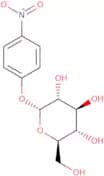
CAS:4-Nitrophenyl-alpha-D-glucopyranoside, beta-Anomer is a chromogenic sugar that can be used as an indicator for the presence of 4-nitrophenol. It is a highly reactive compound that spontaneously reacts with nitrobenzene to form a dinitroaniline. This anomeric structure is easily oxidized by air and light to form the corresponding o-dinitroaniline. When this reaction occurs, this substance changes color from yellow to red.
Formula:C12H15NO8Purezza:Min. 99.0 Area-%Peso molecolare:301.26 g/mol4-Nitrophenyl β-D-galactofuranoside
CAS:Chromogenic substrate for beta-galactofuranosidaseFormula:C12H15NO8Purezza:Min. 98 Area-%Colore e forma:White PowderPeso molecolare:301.25 g/molAldol® 515 L-alanine amide, hydrochloride, Biosynth Patent: EP 2427431 and US 8940909
CAS:Aldol® 515 L-alanine amide is a chromogenic and fluorogenic enzyme substrate used for detection of L-alanine aminopeptidase activity. The colorless enzyme substrate is cleaved by L-alanine aminopeptidase produced by microorganisms, grown in liquid or solid media yielding red color. In addition, red fluorescence is generated when a fluorescence enhancer or a suitable matrix is present. Aldol® 515 L-alanine amide can be used under aerobic and anaerobic conditions.
Formula:C26H27ClN4O2Purezza:Min. 95.0 Area-%Peso molecolare:462.97 g/mol5-Bromo-4-chloro-3-indolyl a-D-maltopyranoside
CAS:5-Bromo-4-chloro-3-indolyl a-D-maltopyranoside is a chromogenic substrate used to detect the specific enzymatic activity of alpha-glucosidase. After cleavage, 5-bromo-4-chloro-indoxyl is released, resulting in a blue to blue-green color change in bacterial colonies or media. 5-Bromo-4-chloro-3-indolyl a-D-maltopyranoside is used in Pompe disease screening and glycogen storage disorder diagnosis.Formula:C20H25BrClNO11Purezza:Min. 95%Colore e forma:PowderPeso molecolare:570.77 g/molOstazin brilliant red H-3B galactomannan
Ostazin Brilliant Red H-3B Galactomannan is a chemiluminescent substrate used for the detection of β-1,4-galactomannans. It reacts with the glucose residues on the mannan backbone to produce a red fluorescent product. This product can be detected by spectrophotometry at an excitation wavelength of 395 nm and emission wavelength of 510 nm. The Ostazin Brilliant Red H-3B Galactomannan substrate is useful in detecting Staphylococcus aureus, Streptococcus pyogenes, Streptococcus pneumoniae, Group A streptococci, Group B streptococci, Group D streptococci, Group G streptococci, and Group C streptococci.
Purezza:Min. 95%6-Chloro-4-(2-chlorophenyl)-2-quinazolinecarboxaldehyde
CAS:6-Chloro-4-(2-chlorophenyl)-2-quinazolinecarboxaldehyde is a colorimetric reagent that can be used to detect Cl. It has been shown to react with Cl in the presence of an acidic solution and produce a red color. The reagent is stable in organic solvents, such as chloroform, but decomposes in water. 6-Chloro-4-(2-chlorophenyl)-2-quinazolinecarboxaldehyde is also used to detect chloride by titrimetric or polarographic methods.Formula:C15H8Cl2N2OPurezza:Min. 95%Colore e forma:Off-White PowderPeso molecolare:303.14 g/mol2-Nitrophenyl-beta-D-galactopyranoside
CAS:Chromogenic β-galactosidase substrate yielding a yellow solution upon cleavage. Can be used for the detection of coliforms due to their beta-galactosidase activity.Formula:C12H15NO8Purezza:Min. 99.0 Area-%Peso molecolare:301.26 g/mol5-Bromo-4-chloro-3-indolyl b-D-fucopyranoside
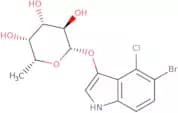
CAS:5-Bromo-4-chloro-3-indolyl b-D-fucopyranoside is a chromogenic substrate used is for the enzyme beta-fucosidase.
Formula:C14H15BrClNO5Purezza:Min. 98 Area-%Colore e forma:PowderPeso molecolare:392.63 g/mol5-Bromo-6-chloro-3-indoxylphosphat, disodium salt trihydrate
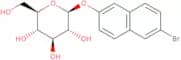
5-Bromo-6-chloro-3-indoxylphosphate, disodium salt trihydrate is a bioluminescent substrate that can be used in a variety of diagnostic applications. This compound reacts with luciferase to yield light and can serve as an indicator for various enzymes and chemical reactions. 5-Bromo-6-chloro-3-indoxylphosphate, disodium salt trihydrate has been shown to be compatible with both culture media and food testing.Purezza:Min. 95%6-Bromo-2-naphthyl β-D-galactopyranoside
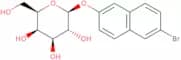
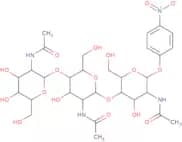
CAS:6-Bromo-2-naphthyl β-D-galactopyranoside is a chromogenic substrate commonly used for the detection of the enzymatic activity of β-galactosidase. It can produce a yellow precipitate upon hydrolysis by β-galactosidase, indicating the presence of the enzyme. It is often used in molecular biology applications to detect gene expression or to monitor cloning efficiency.Formula:C16H17BrO6Purezza:Min. 98 Area-%Colore e forma:PowderPeso molecolare:385.21 g/mol4-Nitrophenyl N,N',N''-triacetyl-b-D-chitotriose
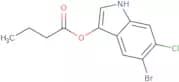
CAS:Substrate for determining hydrolytic activity of chitinasePurezza:Min. 95%Colore e forma:White PowderPeso molecolare:748.69 g/mol5-Bromo-6-chloro-3-indoxyl butyrate
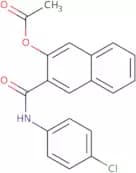
CAS:5-Bromo-6-chloro-3-indoxyl butyrate is a chromogenic substrate that yields a magenta-colored product after cleavage. The chromophore 5-bromo-6-chloro-indoxyl is released, generating the observable color. It is used in lipid digestion assays.Formula:C12H11BrClNO2Purezza:Min. 95%Colore e forma:PowderPeso molecolare:316.58 g/molNaphthol AS-E acetate
CAS:Modified naphtol AS substrate used in histochemical and cytochemical staining
Formula:C19H14ClNO3Purezza:Min. 95%Peso molecolare:339.77 g/mol