Antrachinoni e Derivati
Gli antrachinoni hanno una struttura basata su un nucleo benzenico fuso con un anello chinonico. Questa struttura conferisce loro un’elevata stabilità e reattività con una varietà di biomolecole. I derivati degli antrachinoni possono essere utilizzati per le loro proprietà biologiche, tra cui attività antibatteriche, antinfiammatorie e lassative, oltre a potenziali applicazioni nella sintesi di composti farmaceutici e nell’industria chimica.
Presso CymitQuimica, offriamo antrachinoni e i loro derivati con diverse applicazioni in chimica organica e farmaceutica.
Trovati 405 prodotti di "Antrachinoni e Derivati"
Ordinare per
Purezza (%)
0
100
|
0
|
50
|
90
|
95
|
100
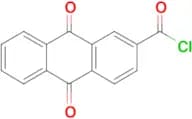
9,10-dioxo-9,10-dihydroanthracene-2-carbonyl chloride
CAS:Purezza:98.0%Peso molecolare:270.6700134277344Ref: 10-F493740
1gPrezzo su richiesta5gPrezzo su richiesta100mgPrezzo su richiesta250mgPrezzo su richiestaRef: 10-F300785
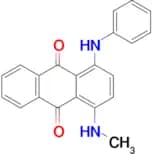
1g46,00€5g127,00€25g350,00€100g1.091,00€100mgPrezzo su richiesta250mgPrezzo su richiesta1-(Methylamino)-4-(phenylamino)anthracene-9,10-dione
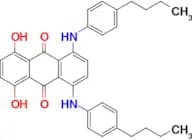
CAS:Purezza:95.0%Peso molecolare:328.37100219726561,4-Bis((4-butylphenyl)amino)-5,8-dihydroxyanthracene-9,10-dione
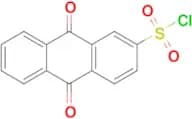
CAS:Purezza:98%Peso molecolare:534.6560058593759,10-Dioxo-9,10-dihydroanthracene-2-sulfonyl chloride
CAS:Purezza:97%Peso molecolare:306.7200012207031Ref: 10-F724446
1gPrezzo su richiesta5gPrezzo su richiesta10gPrezzo su richiesta500mgPrezzo su richiestaRef: 10-F801706
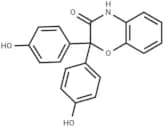
1gPrezzo su richiesta5gPrezzo su richiesta10mgPrezzo su richiesta25mgPrezzo su richiesta50mgPrezzo su richiesta100mgPrezzo su richiesta250mgPrezzo su richiestaBisoxatin
CAS:<p>Bisoxatin (LA 271A) is an oral laxative that can be used to study contact laxatives for chronic constipation.</p>Formula:C20H15NO4Purezza:99.47%Colore e forma:SolidPeso molecolare:333.34Ref: 10-F721470
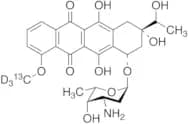
1gPrezzo su richiesta5gPrezzo su richiesta100mgPrezzo su richiesta250mgPrezzo su richiestaDaunorubicinol-13C,d3 (mixture of diastereomers)
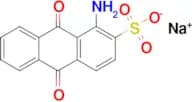
CAS:Prodotto controllato<p>Applications A metabolite of Daunorubicin. Used as an antineoplastic. Complexes with DNA. Inhibits DNA and RNA synthesis.<br>References Mizuno, N.S., et al.: Cancer Res., 35, 1542 (1975), Munger, C., et al.: Cancer Res., 48, 2404 (1988), Kobayashi, Y., et al.: J. Biol. Chem., 275, 17639 ( 2000), Burke, B., et al.: Cardiovasc. Toxicol., 2, 41 (2002),<br></p>Formula:CC26D3H28NO10Colore e forma:NeatPeso molecolare:533.55Sodium 1-amino-9,10-dioxo-9,10-dihydroanthracene-2-sulfonate
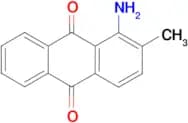
CAS:Purezza:95%Peso molecolare:325.26998901367191-amino-2-methylanthra-9,10-quinone
CAS:Purezza:98.0%Colore e forma:Liquid, No data available.Peso molecolare:237.25799560546875Doxorubicin impurity
CAS:<p>Doxorubicin is an organic compound that belongs to the class of polycyclic aromatic hydrocarbons. It is used as a cancer therapy, primarily in the treatment of breast cancer. The chemical sensing of impurities in doxorubicin can be done using phase transfer methods. The quantification of these impurities can be done using high-performance liquid chromatography (HPLC) or gas chromatography (GC).</p>Formula:C26H27NO11Purezza:Min. 90 Area-%Colore e forma:Red PowderPeso molecolare:529.49 g/molDaunomycinone
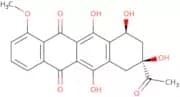
CAS:<p>Daunomycinone is a chemical compound that belongs to the group of antitumor agents. It is used in cancer therapy and has been shown to inhibit protein synthesis, leading to cell death. Daunomycinone can be synthesized by reacting adriamycin with trifluoroacetic acid in the presence of an organic base. This reaction produces a daunomycinone molecule that has a hydroxyl group at one end and a carbonyl group at the other. The binding constants between daunomycinone and human serum proteins have been determined experimentally using molecular modeling techniques. Hydrogen bonding interactions are also present in this complex, which may account for its high affinity for proteins found in human serum.</p>Formula:C21H18O8Purezza:Min. 95%Colore e forma:Red PowderPeso molecolare:398.36 g/molDaunorubicinol
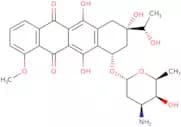
CAS:<p>Daunorubicin metabolite</p>Formula:C27H31NO10Purezza:Min. 95%Colore e forma:Red PowderPeso molecolare:529.54 g/mol