Carboidrati e Glicoconiugati
I carboidrati sono composti organici costituiti da carbonio, idrogeno e ossigeno, con una struttura di base formata da monosaccaridi. Questi possono unirsi per formare disaccaridi, oligosaccaridi o polisaccaridi, a seconda del numero di unità monomeriche. I carboidrati svolgono un ruolo fondamentale nell’immagazzinamento dell’energia, nella struttura cellulare e nella comunicazione cellulare. I loro derivati sono utilizzati nei prodotti farmaceutici, come dolcificanti ed eccipienti.
Presso CymitQuimica, offriamo un’ampia varietà di carboidrati e loro derivati per la ricerca e le applicazioni industriali.
Trovati 5013 prodotti di "Carboidrati e Glicoconiugati"
Ordinare per
Purezza (%)
0
100
|
0
|
50
|
90
|
95
|
100
A1 N-Glycan
CAS:<p>A1 N-glycan is a custom synthesis, complex carbohydrate that is an oligosaccharide and polysaccharide. It is modified with saccharides, methylation, glycosylation, and fluorination. A1 N-Glycan has high purity and is custom synthesized to order.</p>Formula:C73H121N5O54Purezza:Min. 95%Colore e forma:PowderPeso molecolare:1,932.74 g/molAsialo-GM1-pentasaccharide-APD-HSA
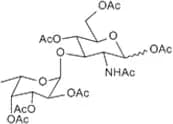
<p>Asialo-GM1-pentasaccharide-APD-HSA is a complex carbohydrate that is custom synthesized. It has high purity and CAS No. This product is a monosaccharide, methylated, glycosylated, polysaccharide with sugar and fluorinated saccharides.</p>Purezza:Min. 95%2-Acetamido-2-deoxy-1,4,6-tri-O-acetyl-3-O-(2,3,4-tri-O-acetyl-a-L-fucopyranosyl)-D-glucopyranose
CAS:<p>The chemical name of this product is 2-Acetamido-2-deoxy-1,4,6-tri-O-acetyl-3-O-(2,3,4-tri-O-acetyl-a-L-fucopyranosyl)-D--glucopyranose. This product is a synthetic carbohydrate that has been custom synthesized and modified. It is a complex carbohydrate with an acetamido group on the nonreducing end and an acetylated sugar moiety on the reducing end. This product can be used in methylation or glycosylation processes. The CAS number for this product is 309263-13--6 and it has a molecular weight of 569.</p>Formula:C26H37NO16Purezza:Min. 95%Peso molecolare:619.57 g/molGala1-3Galb1-4GlcNAcb1-3Galb1-4Glc
CAS:<p>Methylated glycans are carbohydrate-based molecules that are modified by the addition of a methyl group. These modifications can be used for many purposes, including as probes for enzymatic reactions and to block or enhance specific cell surface receptors. The modification is often done with a click chemistry reaction, which is a fast and efficient method that can also be used to modify other compounds such as proteins. Methylation of glycans is often done in the lab using methylamine gas, but it can also be accomplished through more complex methods like click chemistry or fluorination. Glycosylation is the process of adding sugars to other molecules and is one way to produce methylated glycans. Galactosamine (GalN) is an example of a monosaccharide that can be methylated and glycosylated, producing galactose-N-methyltransferase (Gal1MT) and Gal1M3GnT1. This product has been synthesized in</p>Formula:C32H55NO26Purezza:Min. 95%Peso molecolare:869.77 g/molPrimeverose
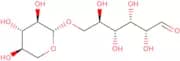
CAS:<p>Primeverose is a p-hydroxybenzoic acid that is found in the genus Primula and mammalian tissue. Primeverose has been shown to inhibit the activity of an enzyme called fatty acid activated, which is involved in the biosynthesis of anthraquinone glycosides. Primeverose is also able to hydrolyze enzymes such as primeverose and may act as a signal peptide for biological samples. The hydroxyl group on primeverose can form hydrogen bonds with other molecules and is present in food composition.</p>Formula:C11H20O10Purezza:Min. 95%Peso molecolare:312.27 g/molHeparin disaccharide III-H disodium salt
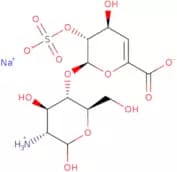
CAS:<p>Heparin is a polysaccharide consisting of repeating units of glucosamine and glucuronic acid that has been shown to have anti-coagulant, antithrombotic, and anti-inflammatory properties. Heparin disaccharide III-H disodium salt is a heparin disaccharide that has been modified by the addition of sodium ions. This heparin disaccharide has been shown to inhibit the proliferation of leukaemia cells in vitro, which may be due to its inhibition of DNA synthesis or cell cycle progression. The mechanism by which this heparin disaccharide inhibits cell growth is not yet known. Research into this mechanism could lead to new treatments for cancer and other diseases.</p>Formula:C12H18NNaO13SPurezza:Min. 95%Peso molecolare:439.33 g/molMan-3-Xyl-Fuc N-Glycan
<p>Man-3-Xyl-Fuc N-Glycan is a custom synthesis of mannose that has been modified with fucose and glycosylated with a conjugated xylose. This complex carbohydrate can be used in the manufacturing of pharmaceuticals, as well as in research for the production of biofuels.</p>Formula:C45H76N2O34Purezza:Min. 95%Peso molecolare:1,189.08 g/molHyaluronate fluorescein - Molecular Weight - 20kDa
<p>Hyaluronate fluorescein is a fluorinated carbohydrate that has been modified for use in the detection of methylation. It contains an oligosaccharide and polysaccharide that are attached to a 20kDa fluorinated saccharide. This product is available in high purity and is custom synthesized for your specific needs.</p>Purezza:Min. 95%O-(Methyl b-D-glucopyranosyluronate)-(1,3)-2-deoxy-2-trichloroacetamido-D-galactopyranose
<p>Methyl b-D-glucopyranosyluronate- (1,3)-2-deoxy-2-trichloroacetamido-D-galactopyranose is a fluorinated sugar that is synthesized from the glycosylation of methyl 2,3,4,6-tetrafluoro-b-D-(1,3) glucopyranoside with trichloroacetyl D-(1,3) galactopyranose. This compound is soluble in water and has a CAS number of 1058858. This product can be used as a reagent for glycosylation reactions such as Click chemistry and Methylation. It also has applications in carbohydrate modification and high purity custom synthesis.</p>Purezza:Min. 95%Sucrose monopalmitate
CAS:<p>Sucrose monopalmitate is a fatty acid that is used as a surfactant and emulsifier. It has been shown to have surface-active properties in vitro, which may be due to its ability to interact with the surface of cells. Sucrose monopalmitate is used in diagnostic agents such as active analogues, which are compounds that bind specifically to an analyte or target molecule. These compounds can then be detected by other methods such as radioactive labelling or enzyme-linked immunosorbent assay (ELISA). This product also has been shown to be useful in detergent compositions, including nanoemulsions and solid dispersions.</p>Formula:C28H52O12Purezza:Min. 95%Peso molecolare:580.71 g/molMethyl 3,6-di-O-(a-D-mannopyranosyl)-a-D-mannopyranoside
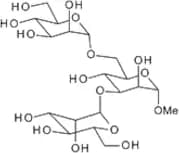
CAS:<p>Used for structural and conformational studies and as enzyme substrates</p>Formula:C19H34O16Purezza:Min. 95%Colore e forma:PowderPeso molecolare:518.46 g/molMethyl 2-O-a-L-fucopyranosyl-b-D-galactoside
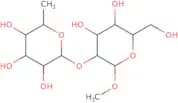
CAS:<p>Computational fluid dynamics (CFD) is the study of fluid flow, a subject which has been studied for over two thousand years. The idea of CFD is to use computers to solve the equations that govern fluid flow and to make predictions about the behavior of gases, liquids and complex fluids in various situations. Computational analysis can be used to calculate how air flows around an object such as a car or plane. This allows engineers to create designs with less drag. Computational analysis can also be used in designing buildings, bridges, and other structures that are exposed to large amounts of wind. <br>CFD is a "convective" computational method because it solves problems by using convection-diffusion equations with appropriate boundary conditions. A "transport" computational method solves problems by solving momentum equations and energy conservation equations simultaneously; this method is often more accurate than convective methods but computationally more expensive. A "laminar" computational method solves problems by solving continuity equations. A "nature</p>Purezza:Min. 95%GM2-Oligosaccharide-spacer-NH2 ammonium
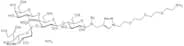
<p>GM2-Oligosaccharide-spacer-NH2 ammonium is a complex carbohydrate with an oligosaccharide spacer and a hydrophobic NH2 group. The product is custom synthesized to your specifications and is available in high purity. It can be modified with fluorination or click chemistry. GM2-Oligosaccharide-spacer-NH2 ammonium is used in the synthesis of polysaccharides, saccharides, and carbohydrates. Some of its applications include modifying proteins, monosaccharides, and sugars.</p>Formula:C44H75N7O27·NH3Purezza:Min. 95%Peso molecolare:1,151.13 g/molMan-7D2 N-Glycan
<p>Man-7D2 N-glycan is a custom synthesis of mannose. It is a modification of the glycan, which is an oligosaccharide that consists of many monosaccharides linked together. The process of glycosylation involves the addition of one or more sugars to an existing carbohydrate molecule. In this case, the sugar is mannose and it has been modified by fluorination, methylation, and click chemistry. This product can be used as a substitute for natural glycans in research applications. The CAS number for this product is 59569-81-1.</p>Purezza:Min. 95%a1,4-Mannobiose-BSA
<p>a1,4-Mannobiose-BSA is a complex carbohydrate that can be synthesized in the laboratory. It is composed of mannose and glucose units. This molecule has been modified with methyl groups, which can be used for click chemistry reactions. Mannobiose-BSA is a polysaccharide with CAS number 56938-64-2. It has been modified by Click chemistry and glycosylation to yield high purity compounds.</p>Purezza:Min. 95%Maltoundecaose
CAS:<p>Maltoundecaose is a glycogen storage molecule found in barley and other plants. Maltoundecaose is synthesized from maltotetraose by the enzyme isoamylase, which cleaves the alpha-1,4 glycosidic linkage between two glucose molecules. Maltoundecaose can be hydrolyzed by the enzyme maltodextrin phosphorylase to form maltotriose and glucose. Maltotetraose is synthesized from sucrose by UDP-glucose pyrophosphorylase. The enzyme has been shown to have a mutation that leads to an increase in activity, which may be due to its autocatalytic nature. Maltotetraose also has three glucosidic linkages, which are formed between two glucose molecules and one of four different residues: dodecyl, hydroxymethylpentadecyl, octadecyl or hexadecyl. Maltotetraose can be hydrolyzed by</p>Formula:C66H112O56Purezza:Min. 95%Colore e forma:PowderPeso molecolare:1,801.56 g/mol3-O-Methyl-4-O-(3-O-methyl-a-D-mannopyranosyl)-D-mannopyranose
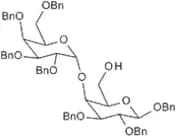
<p>3-O-Methyl-4-O-(3-O-methyl-a-D-mannopyranosyl)-D-mannopyranose is a synthetic sugar that can be modified to synthesize various oligosaccharides, polysaccharides, and complex carbohydrates. This fluorinated sugar has been modified with methyl groups at the 3' and 4' positions. It can be used for fluoroamination of glycosylation, Click chemistry, or other modifications. 3OM4OM3OM is soluble in water and glycerol, making it ideal for use in biological experiments. The chemical name for this compound is O-(3′,4′-dimethoxytrityl)-β--D--mannopyranosyl) -α--D--mannopyranoside and its CAS Registry Number is 836896-81-1.</p>Purezza:Min. 95%Benzyl 4-O-(2,3,4,6-tetra-O-benzyl-a-D-galactopyranosyl)-2,3-di-O-benzyl-b-D-galactopyranoside
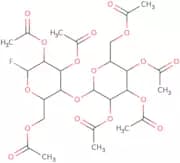
<p>Benzyl 4-O-(2,3,4,6-tetra-O-benzyl-a-D-galactopyranosyl)-2,3-di-O-benzylb -D-galactopyranoside is a Fluorination and Glycosylation product. It is a Custom Synthesis of Monosaccharide and Oligosaccharide. The CAS number for this product is 106835-99-8.</p>Formula:C61H64O11Purezza:Min. 95%Peso molecolare:973.15 g/mol2,3,6,2',3',4',6'-Hepta-O-acetyl-a-D-cellobiosyl fluoride
CAS:<p>2,3,6,2',3',4',6'-Hepta-O-acetyl-a-D-cellobiosyl fluoride is a glycosylation product of cellobiose. It has been synthesized by the Click reaction between 2,3,6,2',3',4',6'-hepta-O-acetyl-a-D-cellobiosylamine and ethylene oxide. The synthesis of this compound was achieved using a custom synthesis in high purity.</p>Formula:C26H35FO17Purezza:Min. 95%Peso molecolare:638.54 g/mol