Carboidrati e Glicoconiugati
I carboidrati sono composti organici costituiti da carbonio, idrogeno e ossigeno, con una struttura di base formata da monosaccaridi. Questi possono unirsi per formare disaccaridi, oligosaccaridi o polisaccaridi, a seconda del numero di unità monomeriche. I carboidrati svolgono un ruolo fondamentale nell’immagazzinamento dell’energia, nella struttura cellulare e nella comunicazione cellulare. I loro derivati sono utilizzati nei prodotti farmaceutici, come dolcificanti ed eccipienti.
Presso CymitQuimica, offriamo un’ampia varietà di carboidrati e loro derivati per la ricerca e le applicazioni industriali.
Trovati 5013 prodotti di "Carboidrati e Glicoconiugati"
Ordinare per
Purezza (%)
0
100
|
0
|
50
|
90
|
95
|
100
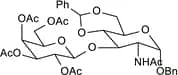
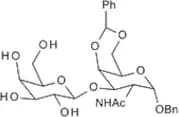
Benzyl 2-acetamido-4,6-O-benzylidene-2-deoxy-3-O-(b-D-galactopyranosyl)-a-D-galactopyranoside
<p>Benzyl 2-acetamido-4,6-O-benzylidene-2-deoxy-3-O-(b-D-galactopyranosyl)-a-D-galactopyranoside is a methylated and fluorinated monosaccharide. It is used in the synthesis of complex carbohydrates and oligosaccharides. The modification of this compound can be done with click chemistry, which is a process that allows for the rapid assembly of molecules on surfaces. This product has been shown to have high purity, making it suitable for use in research or production.</p>Formula:C28H35NO11Purezza:Min. 95%Peso molecolare:561.58 g/molAPF Sialoglycopeptide ammonium
CAS:<p>APF Sialoglycopeptide ammonium salt is a custom synthesis of sialoglycopeptides. The molecule is modified with fluorination, methylation and click modification. It contains a monosaccharide and an oligosaccharide. The saccharide is glycosylated to a complex carbohydrate. APF Sialoglycopeptide ammonium salt has CAS No.:</p>Formula:C63H107N11O29Purezza:Min. 95%Colore e forma:PowderPeso molecolare:1,482.58 g/molMethyl b-N-acetyllactosamine
CAS:<p>Methyl b-N-acetyllactosamine is a sulfated glycosaminoglycan (GAG) that is expressed in the brain and is involved in the development of myelin. This compound has been shown to inhibit the transfer of sulfate groups, which are essential for the synthesis of GAGs. Methyl b-N-acetyllactosamine inhibits transglycosylation reactions, which is a process by which sugar moieties are transferred from one molecule to another. This inhibition results in decreased cross-coupling reactions and decreases the production of GAGs. Methyl b-N-acetyllactosamine has been shown to have potent inhibitory properties against sulfonylating enzymes, such as regiospecifically catalyzed sulfonylation and transglycosylation. It also has been shown to inhibit the transition state in an enzymatic reaction involving triazoles.</p>Formula:C15H27NO11Purezza:Min. 95%Peso molecolare:397.38 g/molb-Cellobiosyl azide
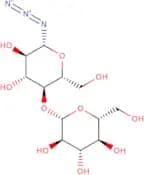
CAS:<p>b-Cellobiosyl azide is a carbohydrate that has been modified with fluorine. It has not been characterized by X-Ray diffraction and therefore has no known crystalline form. The chemical formula for b-Cellobiosyl azide is C6H9NO2F3. This product is available for custom synthesis to your specifications, please contact us for more information.</p>Formula:C12H21N3O10Purezza:Min. 95%Peso molecolare:367.3 g/molMethyl 3,6-di-O-(a-D-mannopyranosyl)-a-D-mannopyranoside
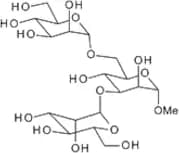
CAS:<p>Used for structural and conformational studies and as enzyme substrates</p>Formula:C19H34O16Purezza:Min. 95%Colore e forma:PowderPeso molecolare:518.46 g/mol(5aR,10aR)-Tetrahydro-3H,5H,8H,10H-bisthiazolo[3,4-a:3',4'-d]pyrazine-5,10-dione
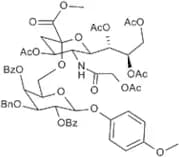
CAS:<p>(5aR,10aR)-Tetrahydro-3H,5H,8H,10H-bisthiazolo[3,4-a:3',4'-d]pyrazine-5,10-dione is a drug product that is an impurity standard for the API (Active Pharmaceutical Ingredient) 5α-tetrahydrospiro[benzofuran-1(3H),2'(3'H)]pyrido-[2,1'-cyclohexan]-6β,7β-(1'H)-dione. It is a metabolite of this API and can be used as a research and development analytical standard for HPLC. The CAS number for this compound is 72744-67-3. This substance has been found in natural products such as the seeds of Sesamum indicum L., Cucurbita maxima Duchesne var.</p>Formula:C8H10N2O42S2Purezza:Min. 95%Peso molecolare:870.29 g/mol4-Methoxyphenyl 2,4-di-O-benzoyl-3-O-benzyl-6-O-[methyl 5-(acetoxyacetamido)-4,7,8,9-tetra-O-acetyl-3,5-dideoxy-D-glycero-α-D-ga lacto-2-nonulopyranosylonate]-β-D-galactopyranoside
<p>The methylation of a glycosylation is an organic chemistry technique that can be used to modify the chemical structure of a carbohydrate. A glycosylation is the reaction between an alcohol and a sugar, which produces a glycoside. The addition of methyl groups at specific positions on the sugar molecule can lead to improved properties such as increased stability, increased solubility, or increased uptake by cells. This process has been shown to produce compounds with more desirable pharmacological properties than their parent compounds. Click chemistry is a versatile and powerful method for modifying carbohydrates. It involves the use of copper-catalyzed azide-alkyne cycloaddition reactions to form carbon-nitrogen bonds in place of conventional amide linkages in peptides and proteins. Carbohydrates are modified using this method by attaching small molecules such as fluorine atoms onto one or more carbons in the carbohydrate structure. This process can be used to create novel sugars with improved properties including high purity, high stability</p>Formula:C56H61NO23Purezza:Min. 95%Peso molecolare:1,116.08 g/molMaltotetradecaose
CAS:<p>1,4-glucotetradecaose derived from starch by hydrolysis and chromatography</p>Formula:C84H142O71Purezza:Min. 95%Peso molecolare:2,287.98 g/molLS-tetrasaccharide c-GEL
<p>LS-tetrasaccharide c-GEL is a modified oligosaccharide carbohydrate that is synthesized to have a high degree of purity. It can be used in the synthesis of other saccharides and sugar derivatives, such as fluorinated saccharides. LS-tetrasaccharide c-GEL is an important raw material for the modification of glycans and glycolipids.</p>Purezza:Min. 95%Benzyl 2-acetamido-3-O-(2,3,4,6-tetra-O-acetyl-b-D-galactopyranosyl)-4,6-O-benzylidene-2-deoxy-a-D-glucopyranoside
<p>3-O-Benzyl-2,6-dideoxy-a-D-galactopyranosyl b benzylidene 4,6-O-(2,3,4,6-tetraacetyl)-a D glucopyranoside is a complex carbohydrate with a molecular weight of 1.097 grams per mole. It has been synthesized by the modification of the sugar unit with methylation and glycosylation to yield 3-O-(2,3,4,6 tetraacetyl)-b benzylidene 4,6 O-(2,3,4 6 tetra acetyl) a D glucopyranoside. The carbohydrate is then modified with fluorination to yield 3-O-(2 3 4 6 tetraacetyl)-b benzylidene 4 6 O-(2 3 4 6 tetra acetyl) a D glucopyranoside. This product is offered at high purity and custom synthesis</p>Formula:C36H43NO15Purezza:Min. 95%Peso molecolare:729.72 g/molCarboxymethyl-dextran sodium salt 10-20% COOH - Average molecular weight 70000
CAS:<p>Drug carrier for cancer therapy & imaging, biocompatible, soluble, biodegradable</p>Purezza:Min. 95%Colore e forma:White Powderk-Carraheptaose tetrasulfate tetrasodium salt
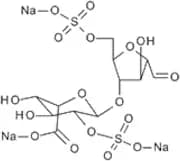
<p>k-carrageenan derived heptasaccharide tetrasulfate+(3-6 anhydrogalactose)</p>Formula:C42H62O45S4Na4Purezza:Min. 95%Peso molecolare:1,507.14 g/mol2,5-Anhydro-4-O-(a-L-idopyranosyluronic acid 2-sulfate)-D-mannofuranose 6-sulfate trisodium salt
<p>Methylation, Custom synthesis, Click modification, CAS No., Oligosaccharide, Polysaccharide, saccharide, Carbohydrate, Fluorination, complex carbohydrate, High purity, Modification. Monosaccharide sugar. Synthetic.<br>2-Anhydro-4-O-(a-L-idopyranosyluronic acid 2-sulfate)-D-mannofuranose 6-sulfate trisodium salt is a methylated and modified form of D-mannose. It is a monosaccharide with a molecular weight of 376.34 and a CAS number of 64459-77-5. This product can be used in the synthesis of oligosaccharides or polysaccharides as well as in the production of high purity mannose derivatives with modified linkages.</p>Formula:C12H15O17S2·Na3Purezza:Min. 95%Peso molecolare:564.34 g/mol6-O-(a-D-Maltotriosyl)-D-glucopyranose tetradecaacetate
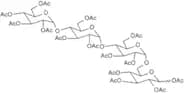
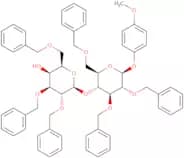
<p>6-O-(a-D-Maltotriosyl)-D-glucopyranose tetradecaacetate is a carbohydrate that belongs to the class of saccharides. It is synthesized from D-glucose by glycosylation and methylation. 6-O-(a-D-Maltotriosyl)-D-glucopyranose tetradecaacetate is a complex carbohydrate with a high purity and custom synthesis. It can be used in click chemistry, due to its reactive group on the C6 position.</p>Formula:C52H70O35Purezza:Min. 95%Peso molecolare:1,255.09 g/mol4-Methoxyphenyl 4-O-(2,3,6-tri-O-benzyl-b-D-galactopyranosyl)-2,3,6-tri-O-benzyl-b-D-glucopyranoside
CAS:<p>4-Methoxyphenyl 4-O-(2,3,6-tri-O-benzyl-b-D-galactopyranosyl)-2,3,6-tri-O-benzyl-b-D-glucopyranoside is a sugar that is custom synthesized. It is fluorinated and modified with saccharides. The molecular weight of this compound is 582.06 g/mol and the CAS number for it is 15041281.</p>Formula:C61H64O12Purezza:Min. 95%Peso molecolare:989.15 g/molLipid A monophosphoryl
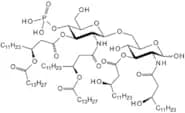
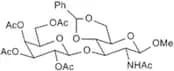
CAS:<p>Lipid A monophosphoryl (MPL) is an adjuvant that stimulates the immune response to vaccines so that optimal protection can be achieved. MPL immunostimulant, a monophosphoryllipid A preparation derived from the lipopolysaccharide (LPS) of Salmonella minnesota R595. MPL is being considered as an adjuvant for a number of human vaccines, and experience to date has shown that it is safe, well tolerated, and able to provide a heightened immune response to coadministered antigens.</p>Formula:C96H181N2O22PPurezza:Min. 95%Colore e forma:PowderPeso molecolare:1,746.44 g/molMethyl 2-acetamido-3-O-(2,3,4,6-tetra-O-acetyl-b-D-galactopyranosyl)-4,6-O-benzylidene-2-deoxy-b-D-glucopyranoside
CAS:<p>Methyl 2-acetamido-3-O-(2,3,4,6-tetra-O-acetyl-b-D-galactopyranosyl)-4,6-O-benzylidene-2deoxyb-Dglucopyranoside is a sugar that is used in the preparation of various drugs. It has a pyranose ring and a pyranose form. The IR spectrum displays three distinct peaks at 1730 cm−1, 1590 cm−1 and 1410 cm−1. The axial orientation of the carbon atoms can be determined by looking at the absorption spectra. There are six carbons in the molecule with two axial orientations. The methyl group has an axial orientation and the acetamido group has an equatorial orientation. This compound is not soluble in water but dissolves well in methanol or ethanol. Methyl 2-acetamido 3 O</p>Formula:C30H39NO15Purezza:Min. 95%Peso molecolare:653.64 g/molGalacturonan DP3/DP4 sodium salt
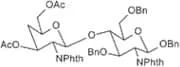
<p>A mixture of sodium trigalacturonate & tetragalacturonate (α-1,4 sodium galacturonotriose + α-1,4 sodium galacturonotetraose) is derived from pectin or pectic acid, by enzymatic or partial acid hydrolysis (Combo, 2012). It is used inâ¯galacturonic acidâ¯metabolism research as a substrate to identify, differentiate, and characterize endo- and exopolygalacturonase(s), and gluconase(s) (Jayani, 2005). The addition of very short fragments of homogalacturonan, tri-galacturonate, and tetra-galacturonate oligosaccharides, restore development in dark-grown, de-etiolated seedling mutants, suggesting that they are unable to generate de-methylesterified pectin fragments. A model of spatiotemporally separated photoreceptive and signal-responsive cell types has been proposed, that contains overlapping subsets of the regulatory network of light-dependent seedling development (Sinclair, 2017).</p>Purezza:Min. 95%Colore e forma:Powder1,3,6-Tri-O-benzyl-4-O-(3,6-di-O-acetyl-2,4-dideoxy-2-phthalimido-b-D-glucopyranosyl)-2-deoxy-2-phthalimido-b-D-glucopyranoside
<p>Methylated, saccharide-containing, polysaccharide-containing, carbohydrate-containing. CAS No.: 169800-74-1. Click modification: Click chemistry reaction with a reactive group on the saccharide or polysaccharide to form a bond with another molecule. Modification: The addition of one or more side chains to a saccharide or polysaccharide to produce a modified carbohydrate. Oligosaccharides: Carbohydrates that are composed of only two to ten monosaccharides. Glycosylation: The process in which a glycosyl group is transferred from an activated donor sugar to an acceptor molecule, forming glycosidic linkage (e.g., between sugars). High purity: The degree of chemical purity as expressed by the percent of impurities that may be present in the product (e.g., 99% pure). Carbohydrate: A class of organic compounds that includes sugars and starches and functions</p>Formula:C53H50N2O14Purezza:Min. 95%Peso molecolare:938.97 g/mol

![(5aR,10aR)-Tetrahydro-3H,5H,8H,10H-bisthiazolo[3,4-a:3',4'-d]pyrazine-5,10-dione](/_next/image/?url=https%3A%2Fstatic.cymitquimica.com%2Fproducts%2F3D%2Fthumb-webp%2FIT145578.webp&w=3840&q=75)